Key takeaways
- Cut cankered wood well back into clean, healthy wood using clean, sharp tools
- Prune apples and pears in dry winter weather, and cherries and plums only in summer
- Copper sprays such as Bordeaux mixture are no longer allowed for home gardeners
- Wet, badly drained soil makes canker much worse, so sort the drainage first
- On wet sites, choose apple varieties such as Bramley or Discovery
Canker causes sunken, dead patches on the bark of fruit trees and can kill whole branches if you leave it. The fix is to cut it out cleanly, prune at the right time of year and keep the tree healthy. It turns up on apples, pears, cherries and plums all over the UK, especially in wetter areas.
What is canker and why does it affect fruit trees?
Canker is a catch-all name for diseases that kill patches of bark. Different fungi and bacteria cause it on different trees. Working out which one you have tells you when to prune and how to treat it.
How to identify the three types of canker
Knowing which canker you’re dealing with matters, because the timing for apples is different from cherries and plums.
Apple canker (Neonectria ditissima)
This is the one you’ll meet most often in UK gardens, on apples and sometimes pears. Look for sunken, cracked bark that spreads in rings year after year. Small white spots can appear in summer, and tiny red dots in autumn and winter.
It gets in through pruning cuts, leaf scars, broken branches and woolly aphid damage. If it goes right round a branch, the branch dies back from the tip. It can also cause a brown rot that starts at the eye of the apple.
Bacterial canker (Pseudomonas syringae)
This is the big problem for cherry and plum trees. The bacteria get in through leaf scars in autumn, pruning cuts and frost cracks.
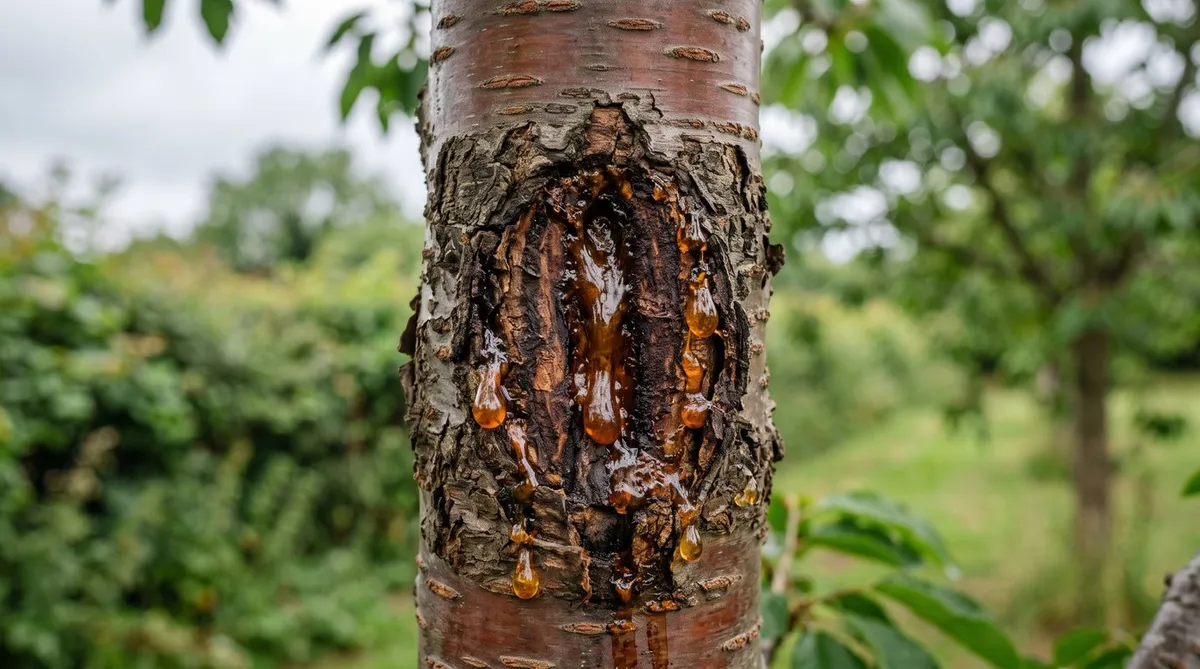
Look for flat, sunken patches of bark that ooze amber gum. In spring, leaves may get small brown spots that drop out and leave holes, a bit like shot holes. Whole branches can wilt and die in late spring or early summer, and young trees can be killed. The RHS bacterial canker page has more pictures.
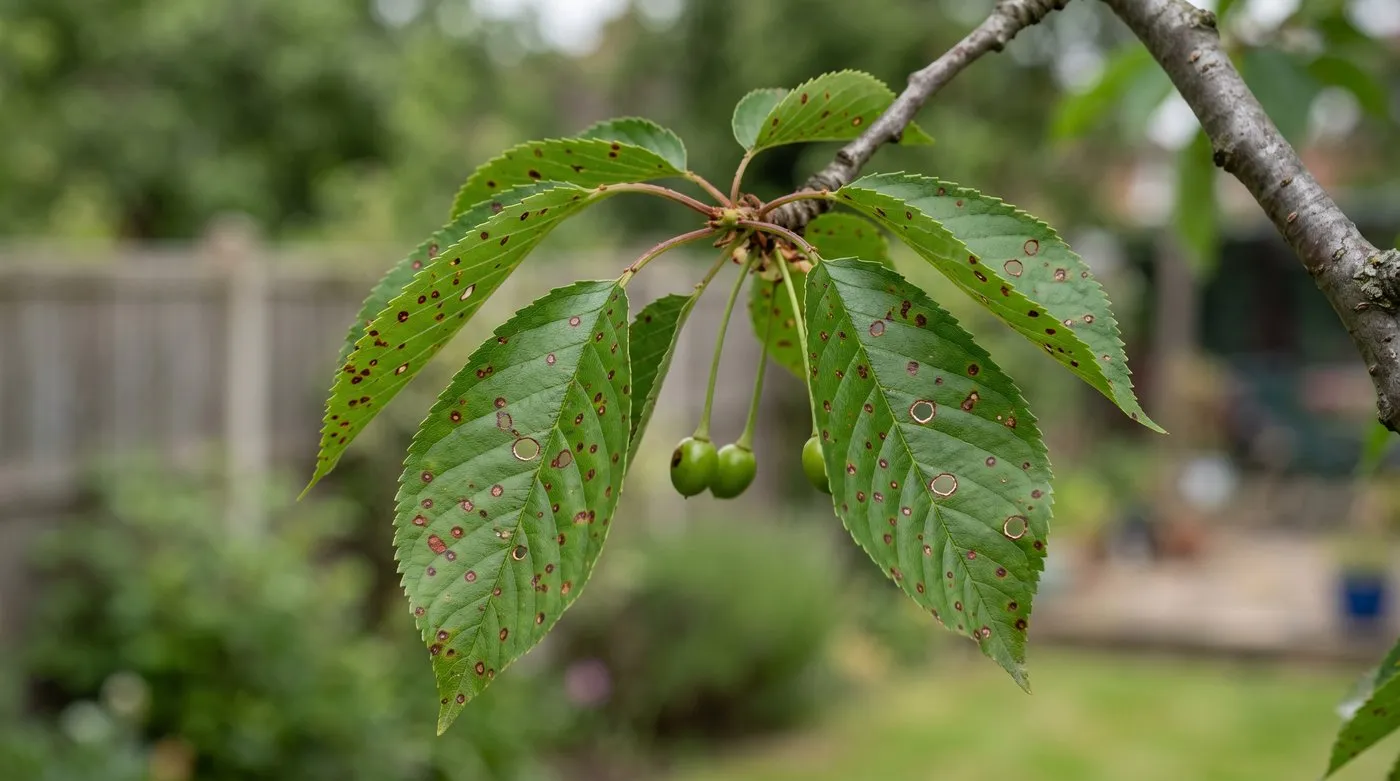
Small brown spots that drop out to leave holes are an early clue to bacterial canker on cherries and plums. Check the bark nearby for oozing gum.
Cytospora canker (Leucostoma species)
This one mainly hits plums and damsons, and now and then cherries. The bark darkens and sinks slightly, with tiny black dots in the dead patch and some resin oozing out. It goes for trees that are already struggling from drought, frost or other problems, so a healthy tree is the best defence.
Which fruit trees are most susceptible?
Some varieties shrug canker off and others catch it easily. On a wet site, picking a tough variety makes life much easier.
Apple varieties and canker susceptibility
Easily hit: Cox’s Orange Pippin, James Grieve, Spartan, Gala and Ribston Pippin. Cox struggles badly on heavy, wet clay.
In between: Braeburn, Egremont Russet and Fiesta. Fine on well-drained soil, less happy in the wet.
Tougher choices: Bramley’s Seedling, Discovery, Lane’s Prince Albert, Newton Wonder and Katy. If you’re planting new apple trees on wet clay, pick from this group.
Pear, cherry, and plum susceptibility
Pear trees get apple canker less often than apples do, but Conference and Doyenne du Comice can suffer on waterlogged ground.
Cherry trees mostly get bacterial canker. Morello and Stella cope better than many. Napoleon Bigarreau and Early Rivers are easily hit. Canker weakens cropping too, and it’s one of several reasons for cherry fruit drop.
Plum trees can get both bacterial canker and Cytospora. Victoria is middling. Marjorie’s Seedling and Czar tend to do better.
Conditions that cause canker outbreaks
Canker doesn’t turn up at random. A few things make it much more likely.
Wet weather. Spores and bacteria need moisture to get into the bark. Wetter western and northern areas see more canker than the drier east.
Poor drainage. Soggy roots stress the tree, so it heals wounds more slowly. If water sits on your soil after rain, fixing the drainage is the most useful thing you can do.
Pruning at the wrong time. Fresh cuts are open doors, especially in damp weather. That’s why cherries and plums should never be pruned in autumn or winter.
Leaf fall. Each fallen leaf leaves a small scar that takes a few weeks to seal over. Avoid wounding trees in autumn while those scars are fresh.
How to treat canker in fruit trees
Step 1: Cut out all cankered wood
This is the main job. With sharp, clean secateurs or a saw, cut the branch well below the canker, back into healthy wood. Look at the cut end. If there’s any brown staining, cut further back until the wood is clean and pale. The infection runs further than you can see on the bark.
On the trunk or a big main branch, where removing it would spoil the tree, you can pare away the diseased bark and wood back to clean tissue instead. Shape the wound like a long, narrow boat so it heals neatly. Keep your pruning tools sharp for clean cuts that heal faster.
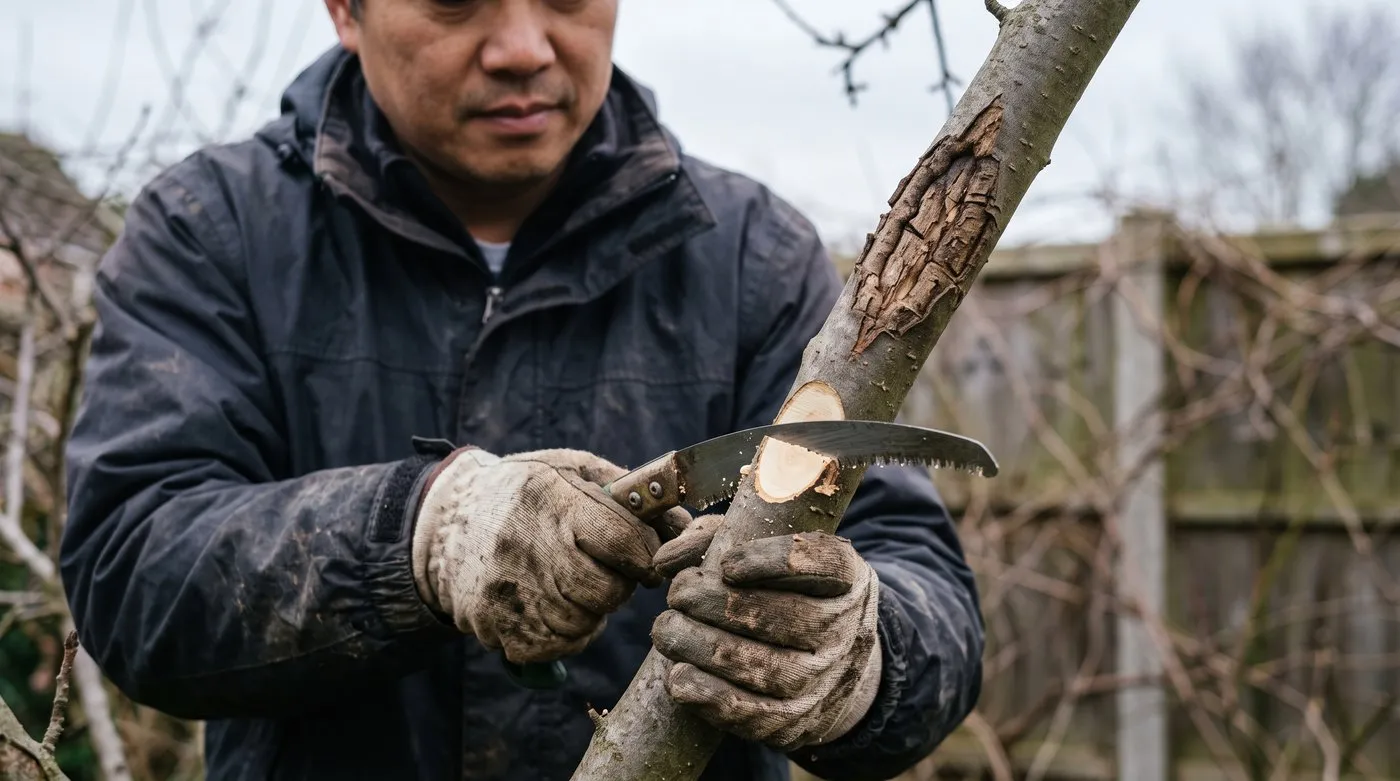
Cut well below the canker and check the cut end. If there’s any brown staining, keep going back until the wood is clean and pale.
Step 2: Sterilise tools between every cut
Wipe your blades with a garden disinfectant or methylated spirit between cuts on an infected tree, and before moving to the next tree. It only takes a moment and stops you spreading canker around the garden yourself.
Step 3: Dispose of infected material
Burn cankered wood or put it in the council green waste. Don’t add it to your compost heap or leave it lying on the ground, as it can keep releasing spores.
Step 4: Apply wound sealant to large cuts
Most cuts are best left to heal on their own. Some gardeners like to use a sealant or grafting wax on very large cuts. If you’re learning to graft fruit trees, it’s the same wax. Clean cuts made in dry weather matter much more than any paint.
Step 5: Do not rely on copper sprays
Older guides tell you to spray Bordeaux mixture or other copper sprays at leaf fall and in spring. Copper sprays are no longer allowed for home gardeners in the UK. Instead:
- Clear fallen leaves in autumn and keep an eye out for new patches
- Deal with woolly aphid, as its lumpy galls let canker in
- Check the label and the HSE approved list before using any fungicide
Comparison of canker types, symptoms, and treatment
| Feature | Apple canker | Bacterial canker | Cytospora canker |
|---|---|---|---|
| Main trees | Apple, pear | Cherry, plum | Plum, damson |
| What you see | Sunken bark in rings, red dots | Flat patches, amber gum, holes in leaves | Dark bark, black dots, resin |
| When it spreads | Wet weather, autumn to spring | Autumn and winter rain | Trees under stress |
| How to treat | Cut out, clear leaves | Cut out, prune in summer only | Cut out dead wood, keep tree healthy |
| Tougher varieties | Bramley, Discovery, Katy | Morello cherry, Marjorie’s Seedling plum | Czar plum |
Stopping canker in fruit trees
A little prevention saves a lot of sawing later. These steps all work together.
Improve soil drainage
If water sits around the roots, dig in plenty of organic matter, or plant new trees on a slight mound so they aren’t sitting in the wet. On very heavy ground, a drain or a raised bed can help.
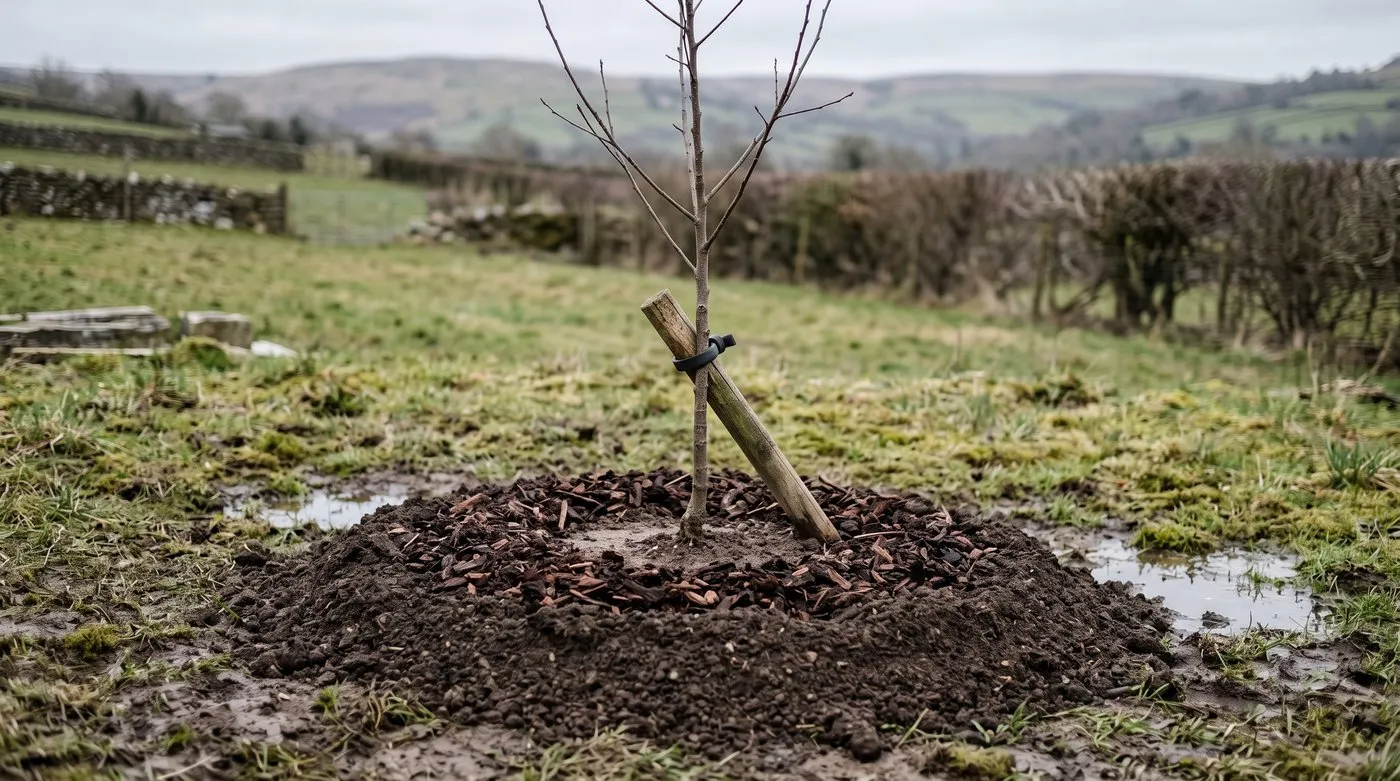
On heavy, wet ground, plant new fruit trees on a slight mound. Roots that aren’t sitting in water help the tree heal wounds faster.
Prune at the right time
Prune apples and pears in winter while they’re dormant, on a dry day. Never prune cherries or plums in autumn or winter. Prune them in summer, from June to August, when bacterial canker is least active and cuts heal fast. Our pruning guide covers the basic cuts.
Choose resistant varieties
When you plant new fruit trees, pick varieties that cope well with canker. Bramley, Discovery and Katy are good apples for this. Morello copes better than many sweet cherries.
Keep trees well fed but balanced
Give a balanced feed such as Growmore in early spring, following the rate on the pack. Go easy on nitrogen, which makes soft, sappy growth that canker gets into easily. A healthy tree heals wounds faster.
Maintain orchard hygiene
Rake up fallen leaves and old shrivelled fruit. Take out dead and crossing branches each year. This removes places where spores hang about and lets air flow through the tree. Open-centred trees and espaliers dry off quickly after rain, which canker doesn’t like.
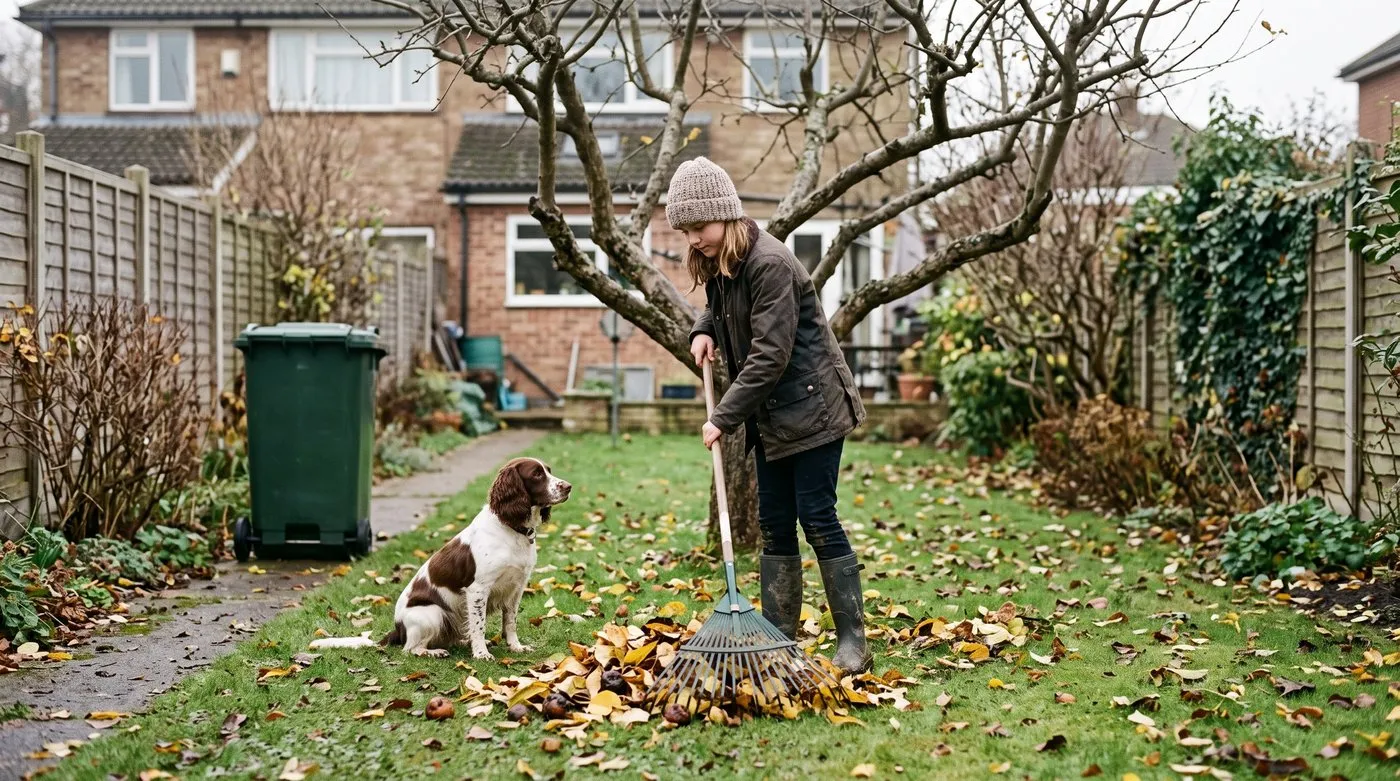
Raking up fallen leaves and old fruit clears away places where spores hang about. It goes in the green waste, not the compost heap.
When to remove a tree entirely
Sometimes a tree can’t be saved. If canker has spread right round more than half of the main trunk, the tree will struggle to move water and food and will go downhill. It’s also time to give up if canker keeps coming back fast despite careful pruning.
Take the tree out and burn the wood. Replant with a tougher variety, ideally in a fresh spot.
Monthly canker management calendar
January to February: Prune apples and pears on dry days. Cut out any canker you find, cleaning your tools as you go.
March: Check cherries and plums for new patches of oozing bark.
April to May: Look for small holes in cherry and plum leaves, a sign of bacterial canker.
June to August: Prune cherries and plums now. Cut out any canker on apples too.
September: Stop pruning cherries and plums as the autumn rain arrives.
October to November: Rake up and bin fallen leaves. Avoid pruning while the leaf scars are fresh.
December: Have a final look round. Mark any cankered branches with tape to deal with in January.
Not every apple blemish is a disease, so compare yours with bitter pit.
Frequently asked questions
What does canker look like on a fruit tree?
Look for sunken, cracked patches of bark. On apples, the bark often flakes in rings around a central wound, with tiny red dots in autumn. On cherries and plums, bacterial canker makes flat, sunken patches that ooze amber gum. Branches beyond the canker wilt and die back.
Can a fruit tree recover from canker?
Yes, most trees recover well once you cut it out. Remove the cankered wood back to clean, healthy wood and keep an eye out for new patches. A tree with canker right round its main trunk may be beyond saving.
When should I spray fruit trees for canker?
You can’t, as copper sprays are no longer allowed for home gardeners. Older guides mention Bordeaux mixture, but it’s off the list now. Instead, cut out cankers promptly, prune at the right time, clear fallen leaves and choose tougher varieties.
Is canker contagious between fruit trees?
Yes, it can spread from tree to tree. Spores and bacteria travel in rain splash and on the wind. Dirty pruning tools carry it too, so clean your secateurs and saw between trees, and between cuts on an infected tree.
Which apple varieties are resistant to canker?
Bramley, Discovery and Katy are good choices. Lane’s Prince Albert and Newton Wonder also cope well. On wet sites, steer clear of Cox, James Grieve, Spartan and Gala, which are easily hit.
Should I paint pruning wounds to prevent canker?
Usually not, as small cuts heal best left alone. Make clean cuts in dry weather and the tree will seal them itself. Some gardeners use a wound sealant on very large cuts, but good timing and clean tools matter far more.
Does canker spread in wet weather?
Yes, wet weather is when it spreads most. The spores and bacteria need moisture to get in. Autumn rain is a risky time, as falling leaves leave fresh scars. Trees on soggy, badly drained soil suffer much more than those on free-draining ground.
Our team produces practical UK gardening guidance from source research, contributor records and established horticultural practice. Editorial standards are overseen by Matt W.