Key takeaways
- Look for dark weeping bleeds from vertical bark cracks, D-shaped beetle holes and a thinning crown
- It mainly affects native oaks over 50 years old in central, southern and eastern England
- Bacteria cause the bleeds, often alongside the two-spotted oak beetle
- Badly affected trees can die within a few years, but some recover
- There is no cure, so report it through TreeAlert and keep the tree unstressed
- Never move logs or firewood from an affected oak, and clean boots and tools between trees
Acute oak decline, usually shortened to AOD, is one of the more worrying things you can find on a big old oak. Dark fluid weeps from cracks in the bark and runs down the trunk in tarry streaks. It looks as if the tree is bleeding, and in a way it is.
There is no cure, but there is plenty you can do. This guide shows you how to recognise the signs and rule out harmless weeping. It then covers what to report and how to give the tree its best chance.
What is acute oak decline?
Acute oak decline is a bacterial disease of mature oaks. It causes weeping bleeds on the trunk and can kill a tree within a few years. It mainly affects our two native oaks, pedunculate oak (Quercus robur) and sessile oak (Quercus petraea).
The word “acute” is there because it can move fast. Oaks have always had slow declines, but AOD can take a big, healthy-looking tree down in a few years. Many trees decline more slowly, though, and some recover.
Spotting it early won’t cure the tree. It does let you report it, avoid spreading it and reduce the stress on the tree. That matters, because a mature oak takes well over a lifetime to replace. Oaks are the backbone of many native trees for UK gardens lists for good reason.
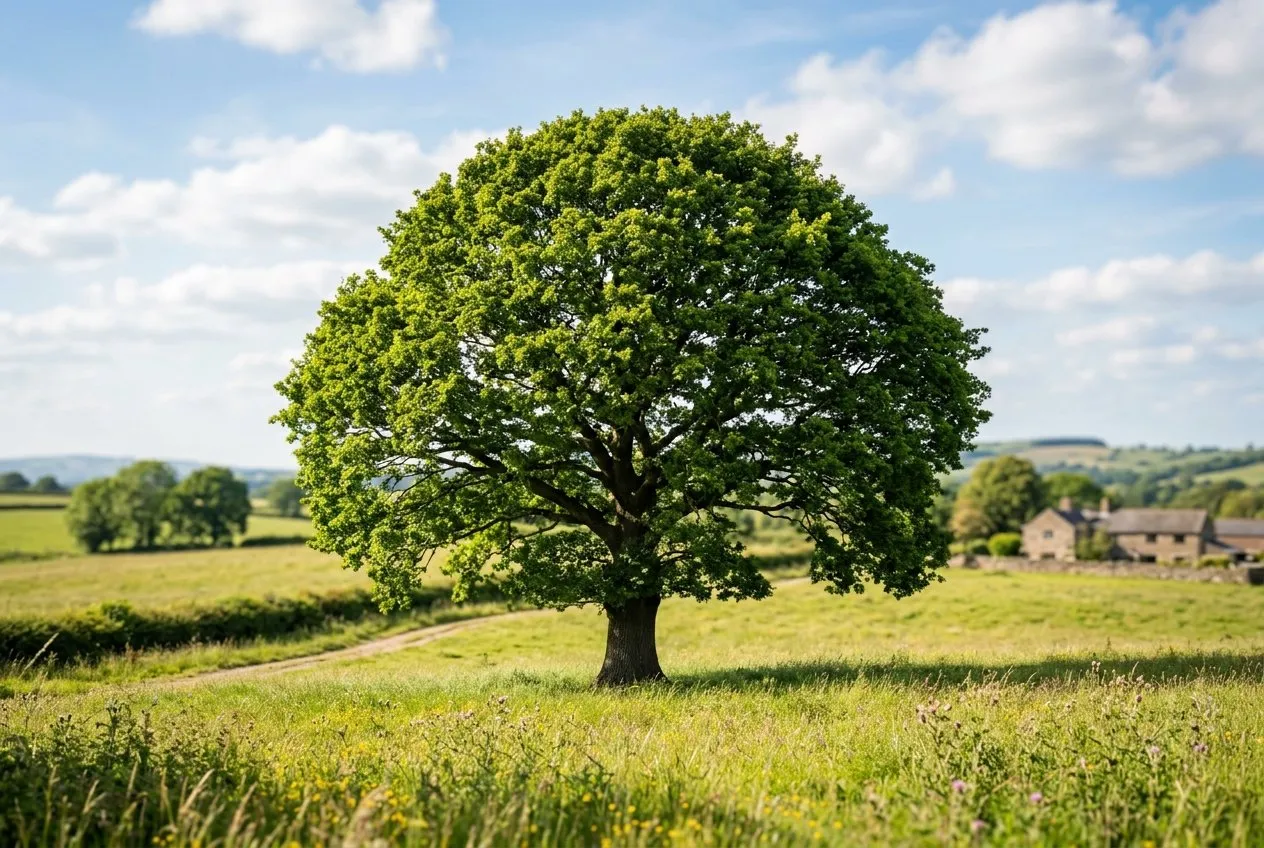
A healthy oak has a full, even crown and clean bark. Knowing what good looks like makes early problems easier to spot.
The four signs of acute oak decline
Look for four signs together: weeping stem bleeds, vertical bark cracks, D-shaped beetle exit holes and a thinning crown. No single sign proves AOD, but the full set is a strong pointer.
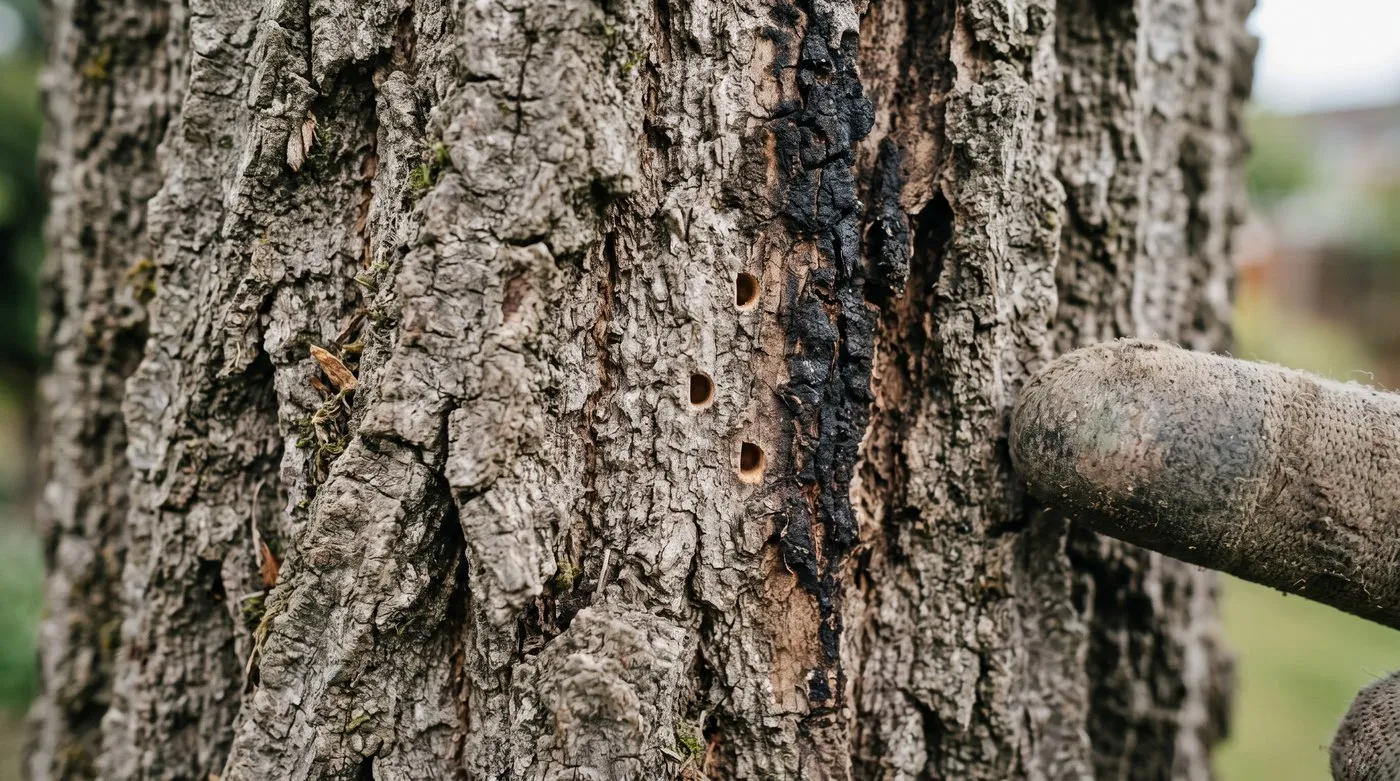
The beetle exit holes are tiny, about the size of a pencil lead, with one flat side. Seen next to bleeds, they make AOD much more likely.
Stem bleeds are the main sign. Dark, reddish-black fluid oozes from the trunk, usually on the lower few metres. It dries to a black crust and often weeps again after rain. Under each bleed, the living layer under the bark has died.
Bark cracks run up and down the trunk, between the plates of the oak’s ridged bark. The bleeds come out of these splits, not from an old wound or pruning cut. Don’t peel the bark back to look.
Exit holes are left by the two-spotted oak beetle (Agrilus biguttatus). They are a distinctive D-shape, only about 3-4mm across, with one flat side. Not every affected tree has them. When you see D-shaped holes alongside bleeds, AOD becomes much more likely.
Crown thinning is the slow sign. Leaves get sparse, more light shows through, and dead twigs appear at the top. Drought and age can also thin a crown, so it means little on its own.
Gardener’s tip: Photograph any bleed the day you find it, with a coin in shot for scale. Take the same photo a month later. A bleed that has spread, or new bleeds and holes nearby, show the problem is active.
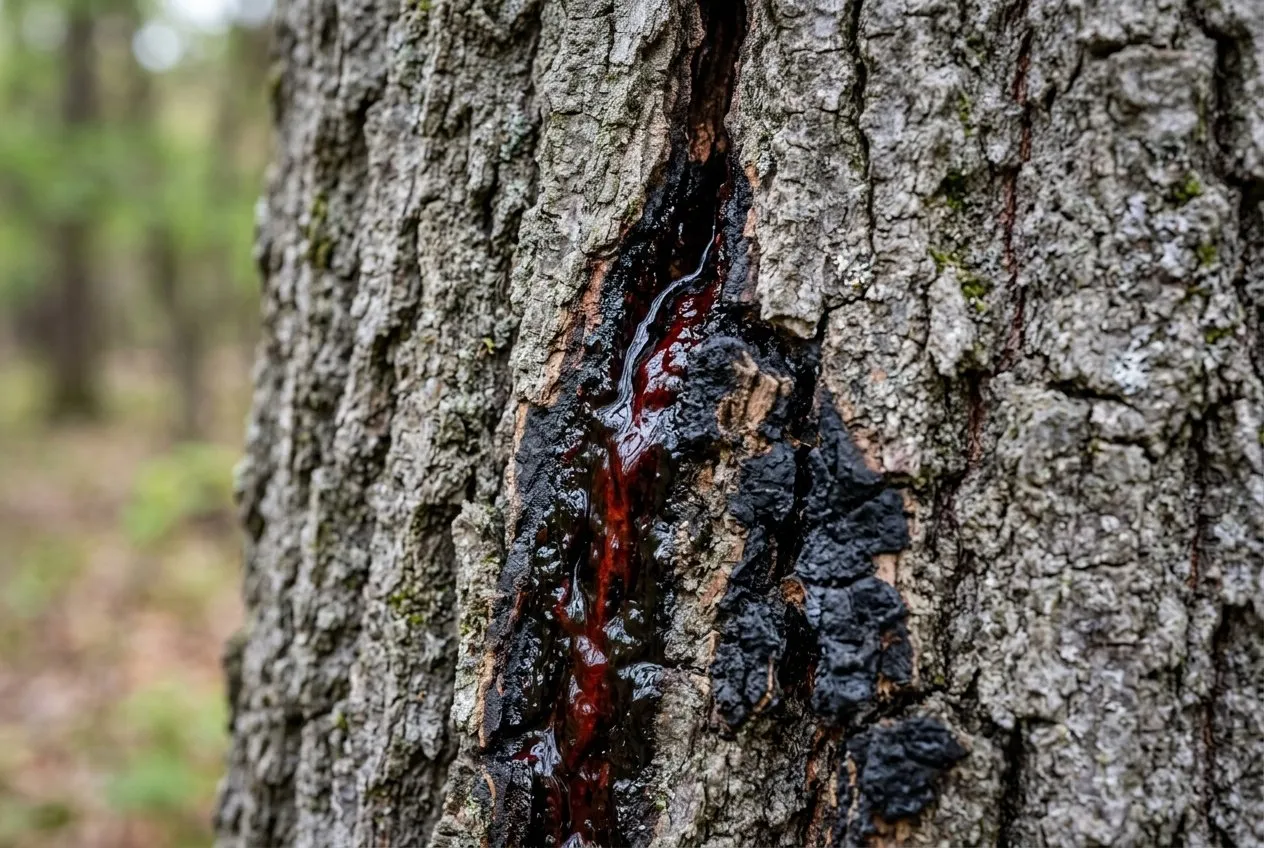
A typical stem bleed: dark fluid weeping from a crack in the bark and drying to a black crust at the edges.
Which oaks get acute oak decline, and where?
AOD mainly affects native oaks over 50 years old, often much older. Younger oaks are affected far less often.
Most cases are in central, southern and eastern England, East Anglia, the Welsh borders and south-east Wales. It seems to favour the warmer, drier parts of Britain. If your oak is elsewhere, AOD is less likely, but still worth reporting if you see the signs.
What causes the bleeds?
The bleeds are caused by bacteria killing the living layer just under the bark. Forest Research has found the same few bacteria in the bleeds again and again. The main one is Brenneria goodwinii. As this layer dies, fluid leaks out through the cracks, and that is the bleed you see.
The two-spotted oak beetle often plays a part too. It is a slim, metallic green beetle about 1cm long. Its larvae tunnel under the bark, and on a weak tree these tunnels can ring the trunk. The beetle may also carry the bacteria between trees.
Stress ties it all together. Drought, root damage, soil compaction and caterpillars stripping the leaves all weaken an oak. A weak oak is much more open to both the bacteria and the beetle. Stress is the one part of the problem you can do something about.
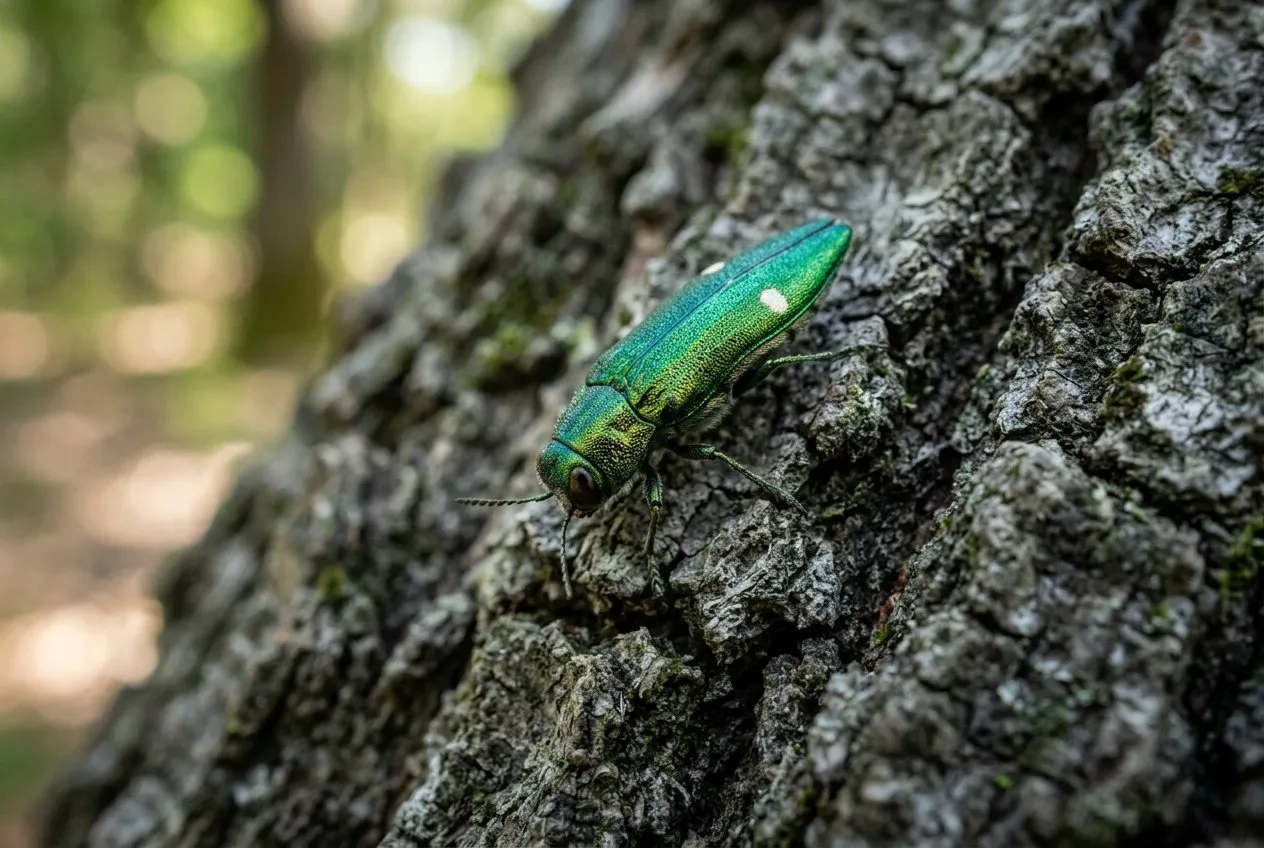
The two-spotted oak beetle. Its larvae tunnel under the bark, and the adults leave the small D-shaped holes.
How to tell acute oak decline from harmless weeping
Not every weeping oak has AOD. Several other problems cause dark patches or ooze, so rule them out first.
Slime flux, also called wetwood, is the one most often confused with AOD. It is a wet, sometimes frothy or smelly ooze. It usually comes from an old wound, branch stub or fork, not from vertical cracks. Slime flux looks unpleasant but rarely kills the tree, and it doesn’t come with D-shaped holes.
Old pruning wounds, frost cracks and squirrel damage can weep too, especially in spring. The giveaway for AOD is the combination: dark bleeds from vertical cracks, low on the trunk of a mature oak, often with D-shaped holes and a thinning crown.
| Feature | Acute oak decline | Chronic oak decline | Slime flux (wetwood) |
|---|---|---|---|
| Speed | Can kill in a few years | Slow, over many years | Long-lasting, rarely fatal |
| Fluid | Dark, tarry, from vertical cracks | Little or none | Wet, frothy, often smelly |
| Where | Splits between bark plates | Thin crown, dead twigs | Old wounds, forks, stubs |
| Beetle holes | Small D-shaped holes common | Not linked | Not linked |
If the crown is thinning and twigs are dying but there are no bleeds, chronic oak decline is more likely. It wears a tree down over years through drought, caterpillar attack and root problems such as honey fungus. Oaks also suffer leaf loss to caterpillars of the oak processionary moth in parts of England, which adds to the stress.
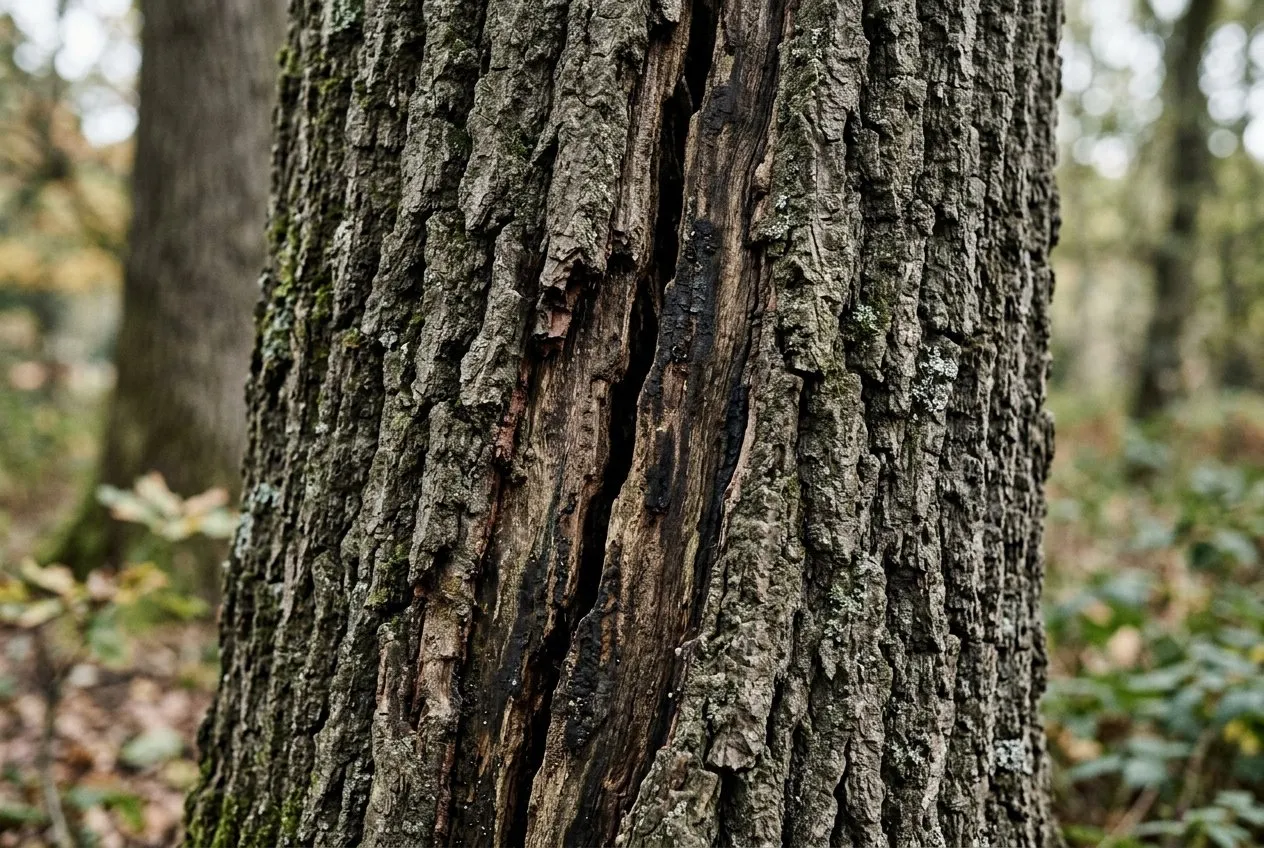
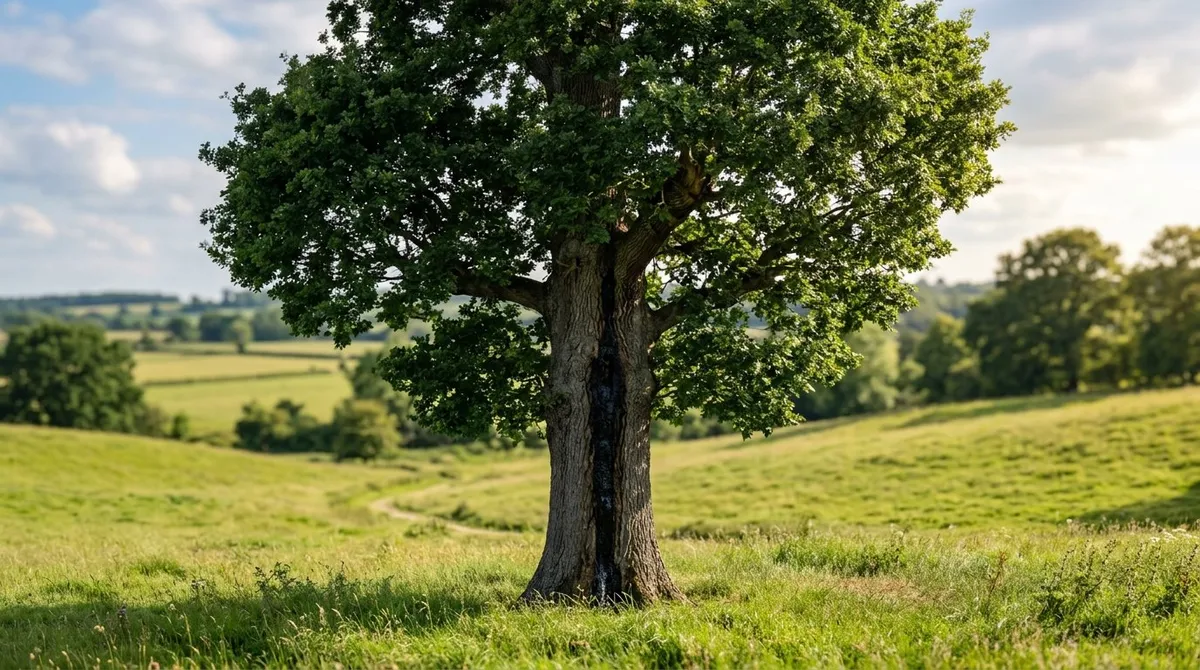
AOD bleeds come from vertical splits like this, between the bark plates. Slime flux usually oozes from old wounds and forks instead.
How fast does acute oak decline kill a tree?
A badly affected oak can die within a few years of the first bleeds. Many trees go downhill more slowly, or hold steady for years.
The danger point is when the bleeds join up and ring the trunk. The living layer under the bark carries food around the tree. Once it is dead all the way round, the tree starves. Beetle tunnels under the bark do the same damage, so a big oak can go downhill surprisingly quickly.
Warning: Don’t fell an oak the moment you find a bleed. Many affected trees live on for years and some recover. Ask a qualified arborist to check whether it is safe before you decide anything.
What to do if you find acute oak decline
Photograph it, report it and take care not to spread it. There is no treatment, so your jobs are to record, report and protect.
- Photograph the signs. Take close-ups of the bleeds and any D-shaped holes, a wider shot of the whole trunk, and note where the tree is.
- Report it through TreeAlert. AOD is not a notifiable disease, but Forest Research asks people to report it. Use the Forest Research TreeAlert form and add your photos.
- Keep the problem where it is. Never move logs, branches or firewood from the tree. Brush soil off your boots and clean tools before going to another oak.
- Leave the pruning saw alone. Fresh wounds are easy ways in, and moving pruned wood can spread the problem.
These are the same habits that help slow other tree diseases, such as ash dieback.
If you are thinking of felling or heavy pruning, check with your council first. Many old oaks have a Tree Preservation Order or sit in a conservation area. Old oaks often hold bat roosts and nesting birds too, which are protected by law. An arborist will check for them before any work.
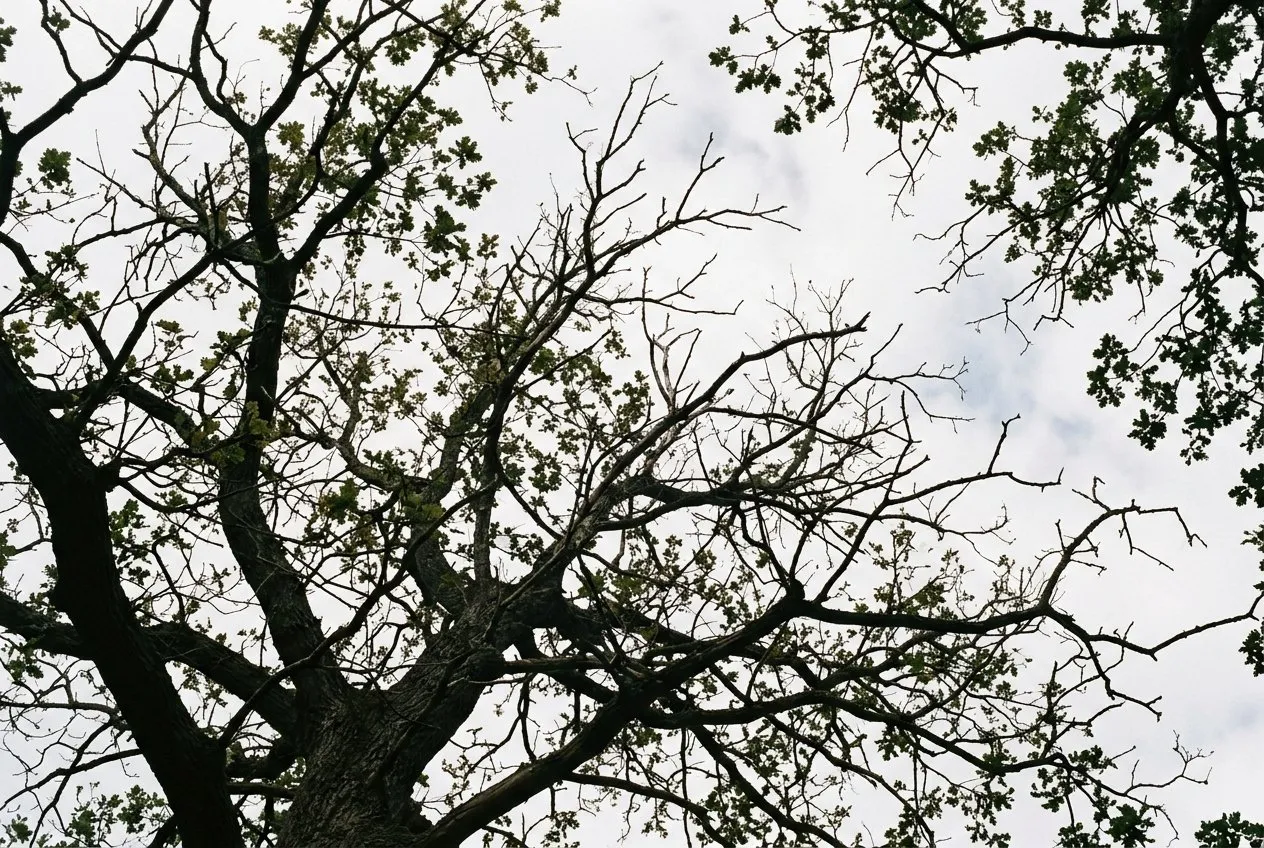
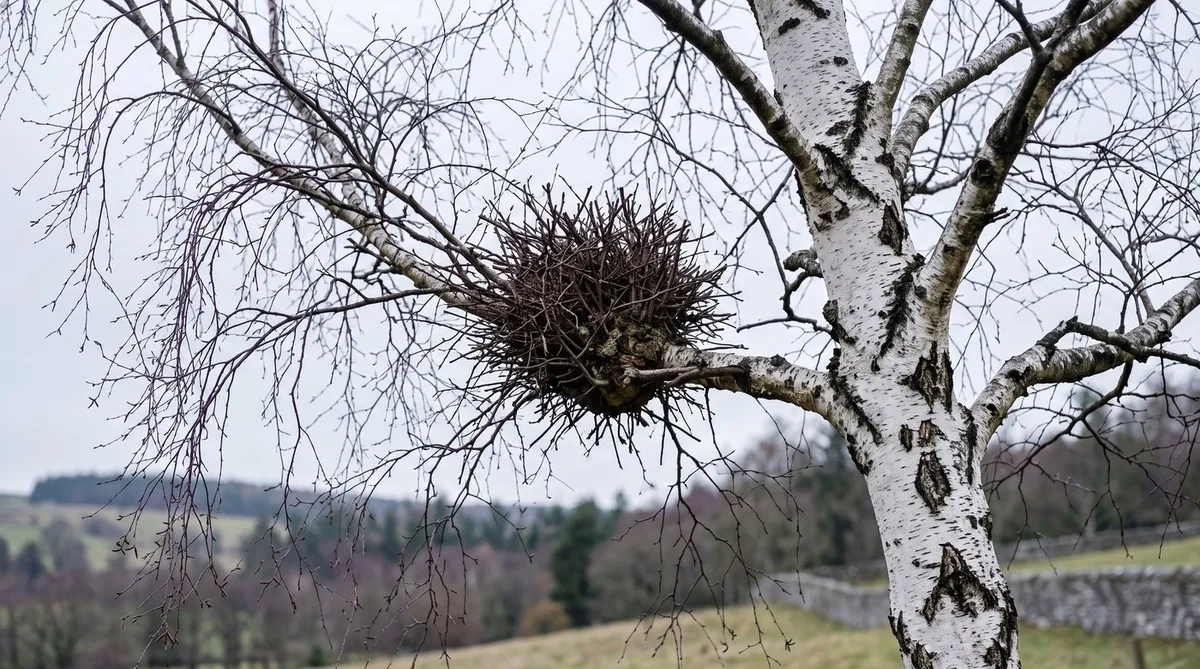
A thinning crown with dead twigs at the top. On its own it could be drought or age, but with bleeds it fits AOD.
How to help an affected oak
Reducing stress is the most useful thing you can do. You can’t kill the bacteria, but a stronger tree fights back better.
Protect the roots. Most of an oak’s feeding roots are near the surface and spread well beyond the edge of the canopy. Keep cars, machinery, building materials and new paving off this area. Squashed soil starves the roots of air.
Water in a drought. In a long dry summer, a slow, deep soak over the root area helps a stressed oak. Water under the outer part of the canopy, where the feeding roots are, not against the trunk.
Mulch, but never pile it up. A 5-7cm layer of bark or leaf mould over the root area keeps the soil damp and cool. Keep it well clear of the trunk, as mulch heaped against bark keeps it wet and can cause rot.
Don’t feed heavily. Strong fertiliser pushes soft growth and doesn’t fix the underlying problem. Mulch slowly improves the soil instead.
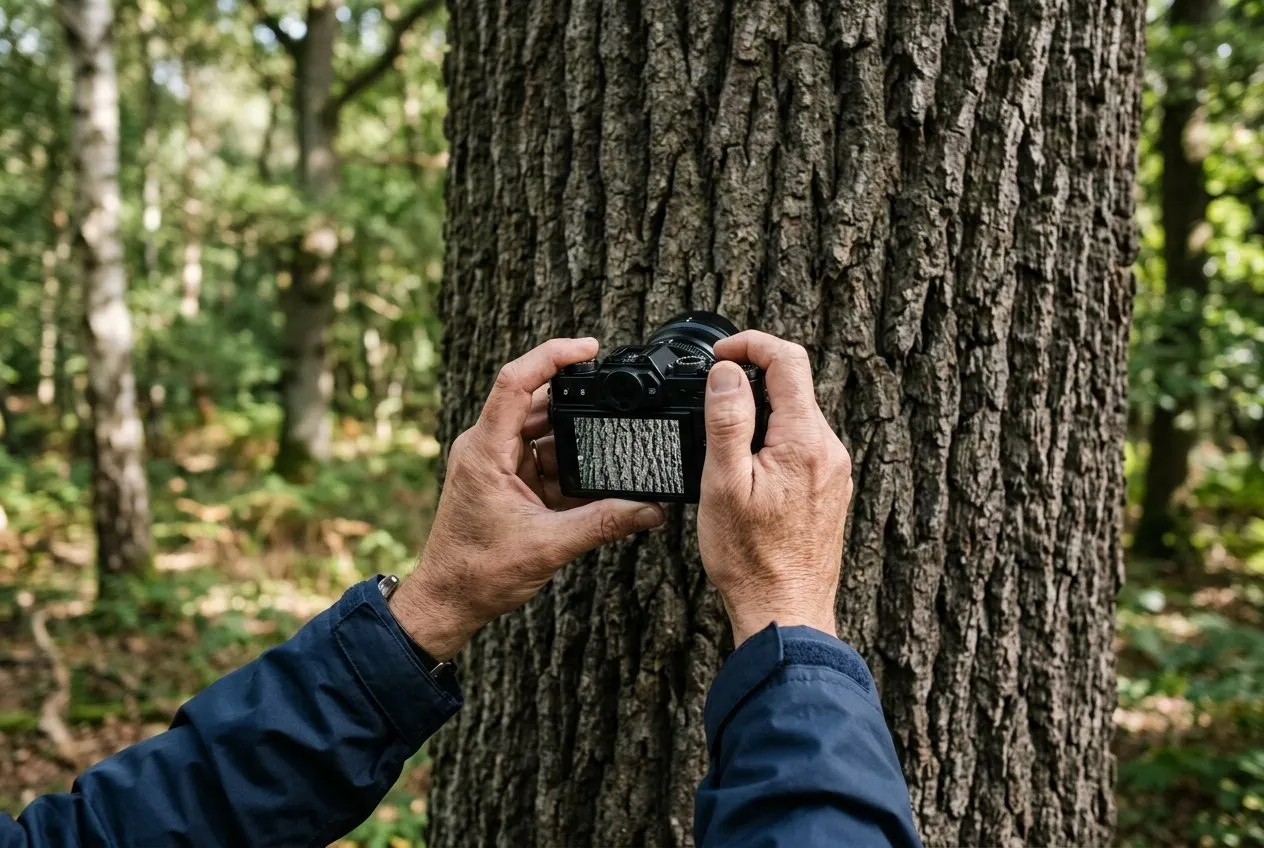
Taking the same photos from the same spots each year makes changes easy to see. It also gives an arborist something useful to look at.
A year of keeping an eye on an oak
| Month | What to check |
|---|---|
| January to February | Look for fresh bleeds on the bare trunk. Check for puddling or compaction over the roots |
| March to April | Watch for new bleeds as the sap rises. Note whether the leaves come out on time |
| May to June | Compare the crown with last year. Take your yearly photos from the same spots |
| July to August | Look for new D-shaped holes. Give a deep soak in a long drought |
| September to October | Note any early leaf drop beyond normal autumn |
| November to December | Top up mulch, kept clear of the trunk. Compare this year’s photos with last year’s |
Common mistakes with acute oak decline
- Felling too soon. Many affected trees live on for years and some recover. A felled oak can’t be put back.
- Moving the timber. Logs and firewood can carry the bacteria and beetle to new trees. Keep all wood on site.
- Using wound paint or “cures”. There is no cure, and wound paint can trap moisture against dead bark.
- Heaping mulch against the trunk. It keeps the bark wet and adds stress. Mulch the root area and leave a gap.
- Compacting the roots. Parking, building or laying paving over the roots can tip a struggling oak over the edge.
Frequently asked questions
What are the first signs of acute oak decline?
Dark, weeping patches on the trunk are usually the first sign. The fluid seeps from vertical cracks between the bark plates and dries to a black crust. Small D-shaped exit holes and a thinning crown often follow. AOD usually shows several of these signs together.
Is acute oak decline notifiable in the UK?
No, but Forest Research asks you to report suspected cases. You can do this online through TreeAlert. Every report helps track where the disease is spreading.
Can a tree recover from acute oak decline?
Yes, some oaks recover, especially when stress on the tree eases. Bleeds can stop weeping and the bark can callus over. Trees where the bleeds join up around the trunk usually die, though, so recovery is never certain.
What is the difference between acute and chronic oak decline?
Acute oak decline is faster and causes weeping stem bleeds. Chronic oak decline is a slow loss of health over many years. It is driven by drought, repeated leaf loss to caterpillars and root problems, without the bleeding cracks.
Do I need to remove an oak with acute oak decline?
Not usually, unless it becomes unsafe. Many affected oaks live on for years and some recover. Ask a qualified arborist to check it if it overhangs a path, road or building. If you do fell it, keep the timber on site.
Can I spread acute oak decline?
Yes, you could help it spread between trees. The bacteria may be carried in soil and water, and the beetle flies between oaks. Clean boots and tools between trees and never move logs or firewood from an affected oak.
Is there a treatment or spray for acute oak decline?
No, there is no cure, spray or injection for it. Wound paints don’t help and can trap moisture against the bark. The useful jobs are protecting the roots, watering in drought and mulching without piling it against the trunk.
Find more tree and plant problems in our problems hub. If a tree in your garden has gone downhill fast and you’re not sure why, our sudden tree death guide helps you narrow down the cause.
Our team produces practical UK gardening guidance from source research, contributor records and established horticultural practice. Editorial standards are overseen by Matt W.