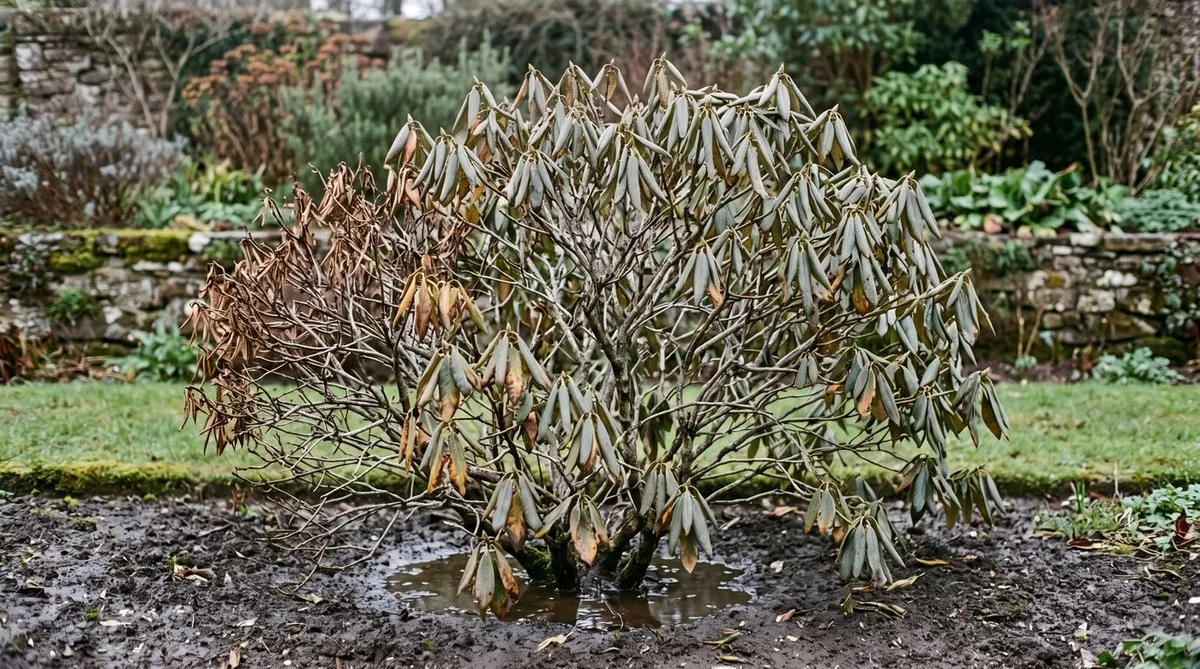
Key takeaways
- A white, mushroom-scented sheet under the bark at the base is the surest sign
- Black bootlace strands in the soil and autumn toadstools back up the diagnosis
- There is no chemical cure available to UK gardeners
- Dig out infected plants, stumps and big roots, and bin them rather than composting
- A rubber or heavy polythene barrier 45cm deep stops it creeping in from next door
- Replant with less susceptible plants such as yew, beech, holly or hornbeam
Honey fungus is the one tree problem most gardeners dread, and it’s worth taking seriously. It rots the roots of trees, shrubs and hedges until they die. There’s no spray that cures it, but you can stop it spreading and keep your garden planted.
This guide shows you how to confirm it’s really honey fungus, what to dig out, how to block it at the boundary and what to plant instead.
What is honey fungus?
Honey fungus is the common name for several Armillaria fungi that attack woody roots. It lives on dead stumps and roots, then spreads underground to living plants nearby.
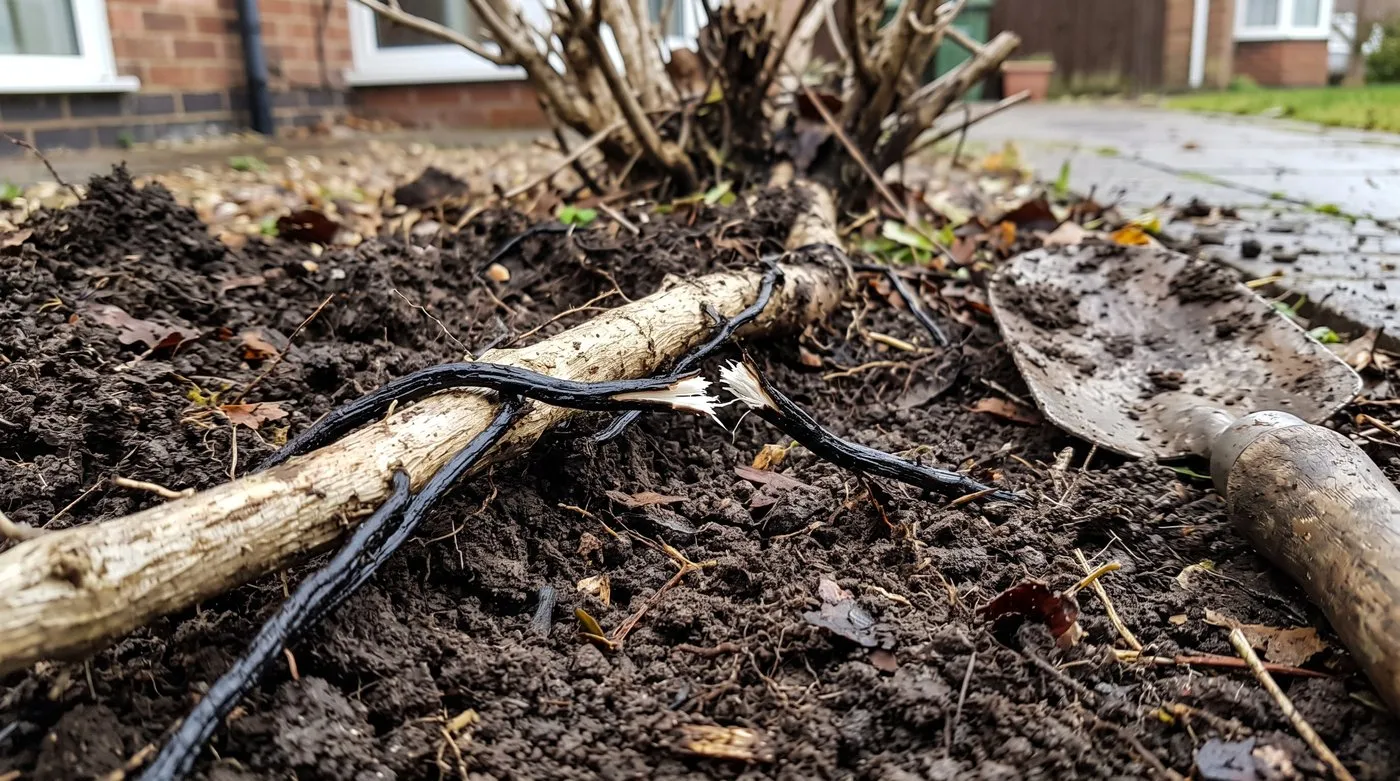
These black bootlaces are how honey fungus travels through the soil from one root to the next.
It travels through the soil using rhizomorphs: black, bootlace-like strands that can creep up to about a metre a year. When they reach a root, the fungus grows under the bark and rots it. The plant slowly starves and dies.
Not every honey fungus is equally nasty. Some kinds mostly finish off plants that are already weak, while others attack healthy trees. Either way, the fix is the same.
How to tell if it’s honey fungus
Look for at least two of the three signs below before you decide. Other problems, such as waterlogging and phytophthora root rot, can kill plants in a similar way.
White sheet under the bark
This is the surest sign. Scrape the soil away from the base of the plant and peel back some bark just above the roots. Honey fungus shows as a white or creamy sheet between the bark and the wood. It smells strongly of mushrooms. You can find it at any time of year.
Black bootlaces in the soil
Dig around the base and look for black, bootlace-like strands, from about 1-5mm thick. Snap one and it’s white inside. They aren’t always there, so don’t rule out honey fungus if you can’t find them. Don’t mix them up with ordinary dark roots, which are usually woody and branch more.
Honey-coloured toadstools in autumn
Clumps of honey-brown toadstools may appear at the base of infected plants or stumps from September to November. The caps have small dark scales and there’s a pale ring on the stem. They don’t always appear, especially in dry autumns.
Toadstools alone don’t prove anything. Other fungi, such as sulphur tuft, grow in similar clumps on old stumps.

Peel back the bark at the base and look for a creamy white sheet like this. A strong mushroom smell clinches it.
Which plants does honey fungus attack?
Most trees and shrubs can be infected, but some are hit far more often than others. Use this table when deciding what to watch closely and what to replant.
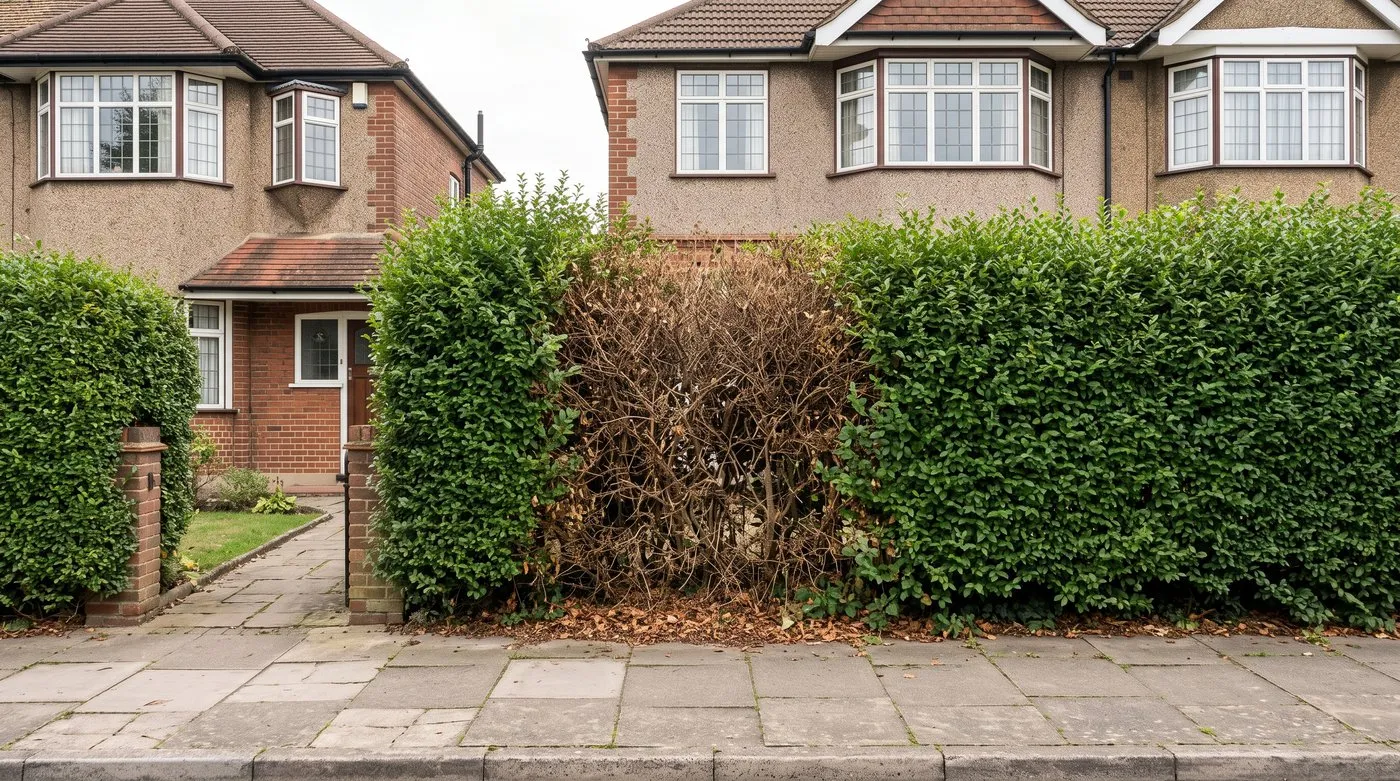
A section of privet dying while the rest looks fine is a classic reason to check for honey fungus.
| Often affected | Rarely affected |
|---|---|
| Privet | Yew (Taxus baccata) |
| Birch | Box (Buxus sempervirens) |
| Cherries, plums and cherry laurel | Holly (Ilex aquifolium) |
| Apples and crab apples | Beech (Fagus) |
| Willow | Hornbeam (Carpinus betulus) |
| Rhododendron and lilac | Bamboo |
| Roses | Judas tree (Cercis siliquastrum) |
| Leyland cypress | Indian bean tree (Catalpa bignonioides) |
| Walnut | Oregon grape (Mahonia aquifolium) |
No plant is fully immune. In heavily infected ground, even “rarely affected” plants can struggle, so clear out the infected wood before you replant. The RHS honey fungus page has a longer list.
If a laurel hedge is dying in sections, honey fungus is one of the first things to check.
How to get rid of honey fungus
There’s no chemical cure for gardeners. Instead, take away the dead wood it feeds on and stop it reaching new plants.
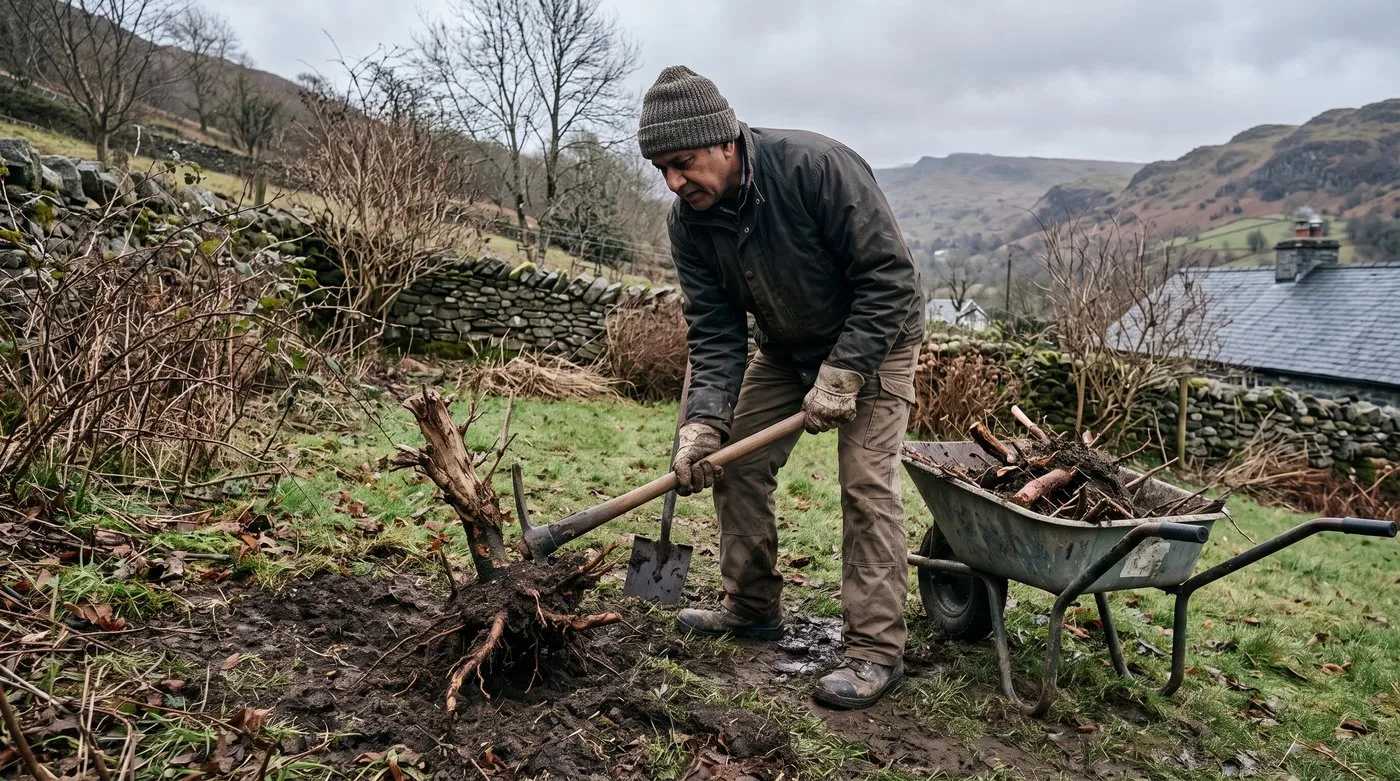
Getting the stump and bigger roots out takes away the food honey fungus lives on.
- Dig out the infected plant. Take as much of the root system as you can, not just the top growth.
- Remove the stump. Dig it out or have it ground out, then pull out the larger roots. A stump left behind can feed the fungus for years.
- Bin the wood. Use the council green waste bin or the tip, not your compost heap.
- Check the neighbours. Look at susceptible plants nearby for the white sheet under the bark.
- Wait, or replant wisely. Replant the spot with rarely affected plants rather than another privet or cherry.
Cutting off the toadstools does nothing for the fungus underground. It’s the stump and roots that matter.
Gardener’s tip: If a tree is felled anywhere near susceptible plants, get the stump out too. Old stumps are where honey fungus most often gets going.
How to stop honey fungus spreading from next door
A buried barrier stops the bootlaces creeping in from a neighbour’s garden or woodland. It’s worth doing along a boundary where you know there’s an infected stump.
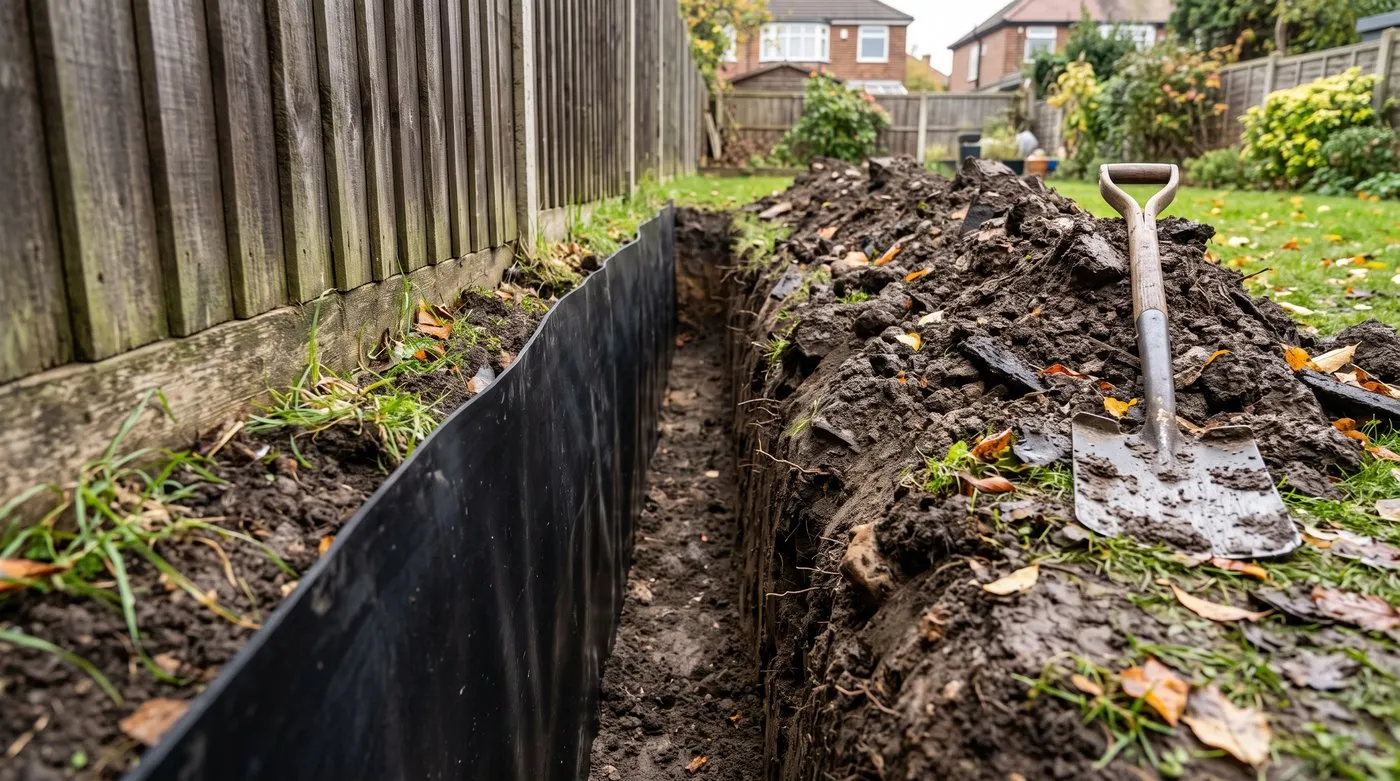
A barrier 45cm deep, standing a little proud of the soil, stops the bootlaces creeping in from next door.
- Dig a narrow trench 45cm deep along the line you want to protect.
- Line one side with butyl rubber (pond liner) or heavy-duty polythene.
- Overlap and seal any joins so there are no gaps.
- Leave a few centimetres of the sheet above the soil surface, so the strands can’t grow over the top.
- Backfill and firm the soil.
Check the top edge each year and pull away any soil or debris that builds up against it. If the source is on a neighbour’s side, a friendly chat helps. Few people know they have it.
What to plant after honey fungus
Choose from the “rarely affected” column above and plant into ground you’ve cleared of old roots. Good everyday swaps:
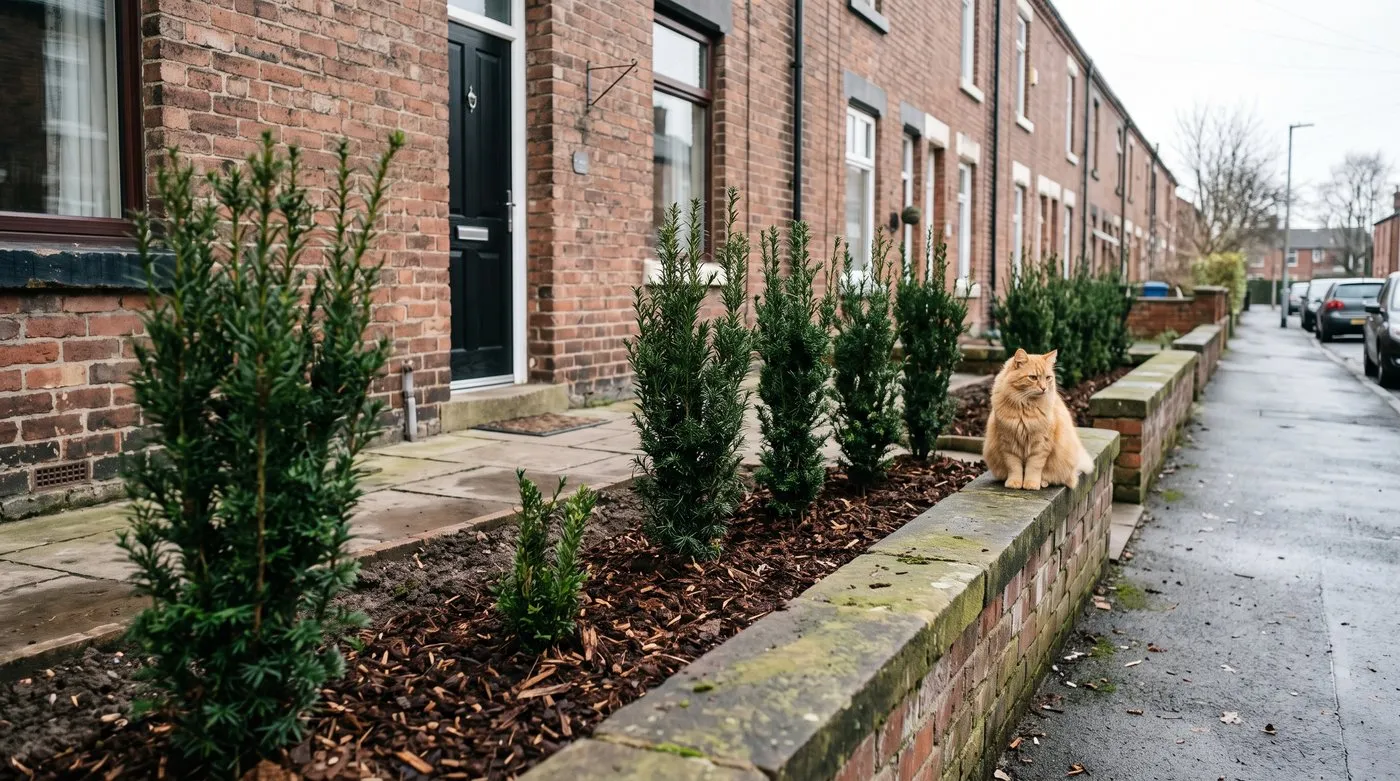
Yew is rarely troubled by honey fungus, so it makes a good replacement for a lost privet hedge.
- For a privet or laurel hedge: yew, holly or beech. A hornbeam hedge also does well, especially on clay.
- For a small ornamental tree: Judas tree or Indian bean tree. The guide to trees for small gardens has sizes and spreads.
- For shrubs: Oregon grape, box or bamboo in a container.
Keep new plants well watered in their first summers. A stressed plant is easier for honey fungus to get into. The hedge planting guide covers spacing and aftercare.
Honey fungus calendar
You can check for honey fungus at any time, but some months are easier than others.
| Month | What to do |
|---|---|
| January to February | Remove infected plants and stumps while the garden is bare. Plan any barrier |
| March to April | Watch for shrubs that fail to leaf up. Check their bases under the bark |
| May to August | Look for sudden wilting or die-back. Water new plants in dry spells |
| September to November | Look for honey-coloured toadstools at the base of plants and stumps |
| November to December | Dig barriers and plant resistant hedges and trees while soil is workable |
Common mistakes with honey fungus
Judging by toadstools alone. Plenty of harmless fungi grow on old stumps. Check for the white sheet under the bark before you dig anything out.
Leaving the stump. Felling the tree but leaving the stump gives the fungus a food store for years.
Replanting the same thing. A new privet in the same spot is likely to go the same way. Choose a rarely affected plant instead.
Composting the wood. A garden heap doesn’t get hot enough to kill the fungus. Bin it.
Using flimsy plastic for a barrier. Thin sheeting tears and breaks down in the soil. Use butyl rubber or heavy-duty polythene.
Frequently asked questions
What kills honey fungus in UK gardens?
Nothing you can buy will kill it in the soil. Dig out the infected plant, its stump and as many roots as you can. Then put in a buried barrier if it’s coming from next door, and replant with less susceptible plants.
How do I identify honey fungus?
Peel back the bark at the base and look for a white fungal sheet. It smells strongly of mushrooms. Black bootlace strands in the soil and honey-coloured toadstools in autumn back up the diagnosis.
Which plants are resistant to honey fungus?
Yew, box, holly, beech, hornbeam and bamboo are rarely affected. Judas tree and Indian bean tree are good small tree choices. No plant is completely immune, so remove infected wood before replanting.
How deep must a honey fungus barrier go?
Bury the barrier 45cm deep. Use butyl rubber or heavy-duty polythene, and leave a few centimetres sticking up above the soil so the fungus can’t creep over the top.
Can I compost plants killed by honey fungus?
No, keep infected wood and roots off your compost heap. A garden heap won’t kill the fungus. Put it in the council green waste bin or take it to the tip instead.
How long does honey fungus stay in the soil?
It can live for many years in dead stumps and roots. That’s why removing the stump matters so much. Once the woody food source has gone, the fungus slowly dies out.
What are the first signs of honey fungus in a garden?
Usually a shrub or tree that suddenly dies or slowly fails for no clear reason. Leaves may be small, pale or fail to appear in spring, and branches die back. Check the base for the white fungal sheet to be sure.
Next steps for a sick tree
If the white sheet isn’t there, something else is to blame. Work through the guide to sudden tree death to find the cause, or browse all the plant problem guides.
Our team produces practical UK gardening guidance from source research, contributor records and established horticultural practice. Editorial standards are overseen by Matt W.