Key takeaways
- Phytophthora thrives in soil that stays wet, so drainage is the real fix
- A reddish-brown stain under the bark at soil level is the key sign
- Honey fungus shows white fungal sheets and black bootlaces, phytophthora doesn't
- There is no cure for an infected plant, and fungicides won't save it
- Bin the dead plant, don't compost it, and clean tools and boots afterwards
- Don't replant the same kind of shrub in the same wet spot
Phytophthora root rot is one of the most common reasons a shrub that looked fine last year slowly gives up. It’s a soil-borne disease that rots roots in wet ground. Honey fungus often gets the blame, but phytophthora is common wherever water sits: heavy clay, a low corner, or a pot that never dries out.
This guide explains how to spot it, how to tell it apart from honey fungus, and what to plant once it has struck. If you’re trying to work out why one particular hedge is struggling, the laurel hedge diagnosis guide and the Photinia browning guide cover those plants symptom by symptom.
What is phytophthora root rot?
Phytophthora (say “fy-TOFF-thora”) is a group of water moulds. They look and behave a lot like fungi, but they’re a different kind of organism, which is why fungicides don’t help. They live in soil and spread by swimming spores that need wet ground to move.
When soil stays waterlogged, the spores reach the fine roots and rot them. The plant can no longer take up water. So you get the cruel signature of this disease: a shrub wilting while standing in mud.
The spores rest in soil and old roots for years. They only do serious harm when the ground stays wet for long spells, which is why poor drainage is the real problem.
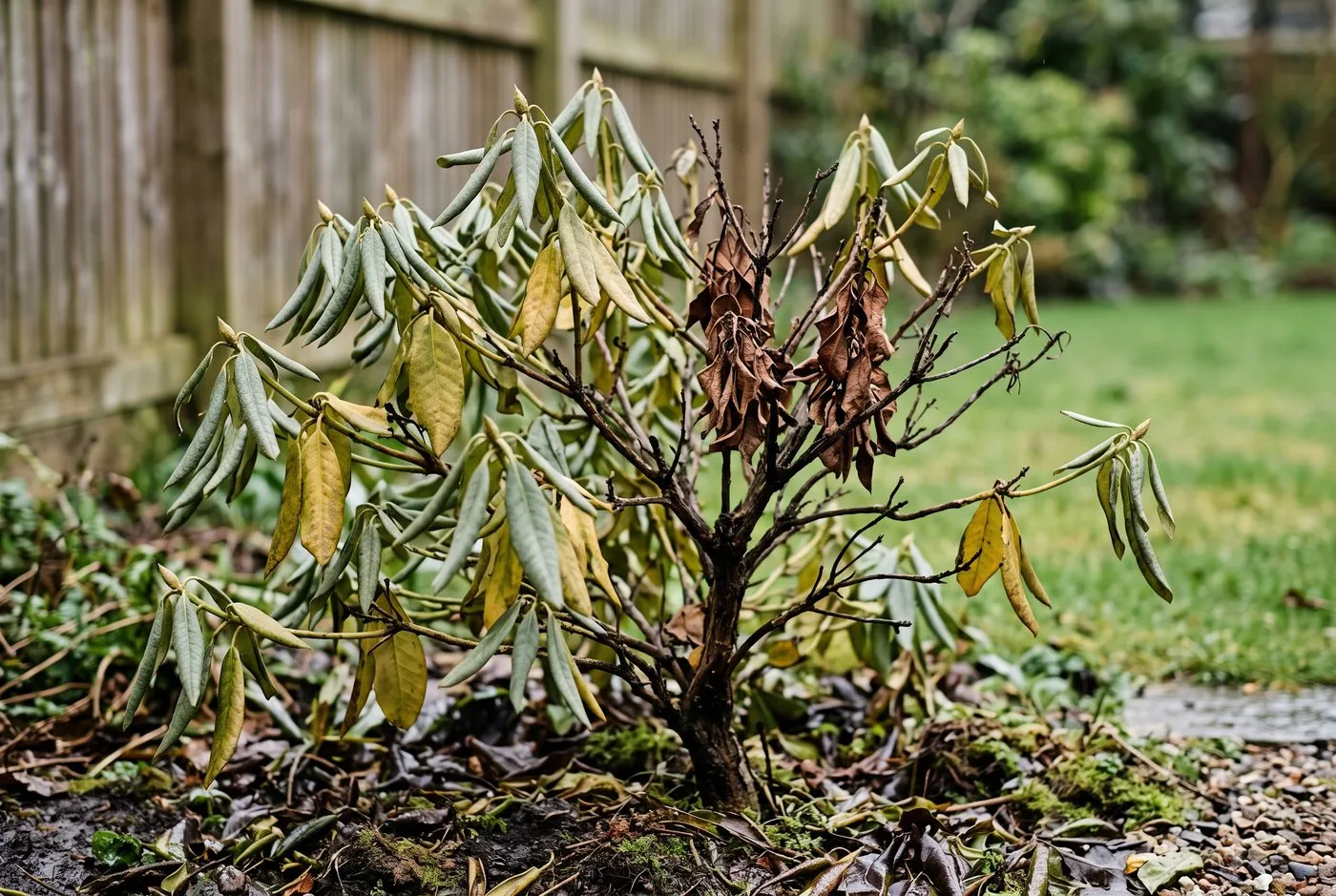
Thin, yellowing leaves and a whole branch dying back in a damp spot are often the first signs that the roots are rotting.
Symptoms of a shrub dying from the roots up
Phytophthora usually shows as a slow decline above ground. By the time you notice, the roots are already damaged. A hot spell can then tip a weakened plant into sudden wilting.
Look for:
- Sparse, small, dull leaves that yellow or bronze and drop early.
- Branches dying back, often on one side first.
- Short, weak new growth.
- Evergreens such as yew and rhododendron turning grey-green, then brown, and holding on to dead leaves.
- Brown, soft roots that peel easily, instead of pale, firm ones, when you dig gently at the edge.
- A dark, sticky ooze from the bark on some trees, called a bleeding canker.
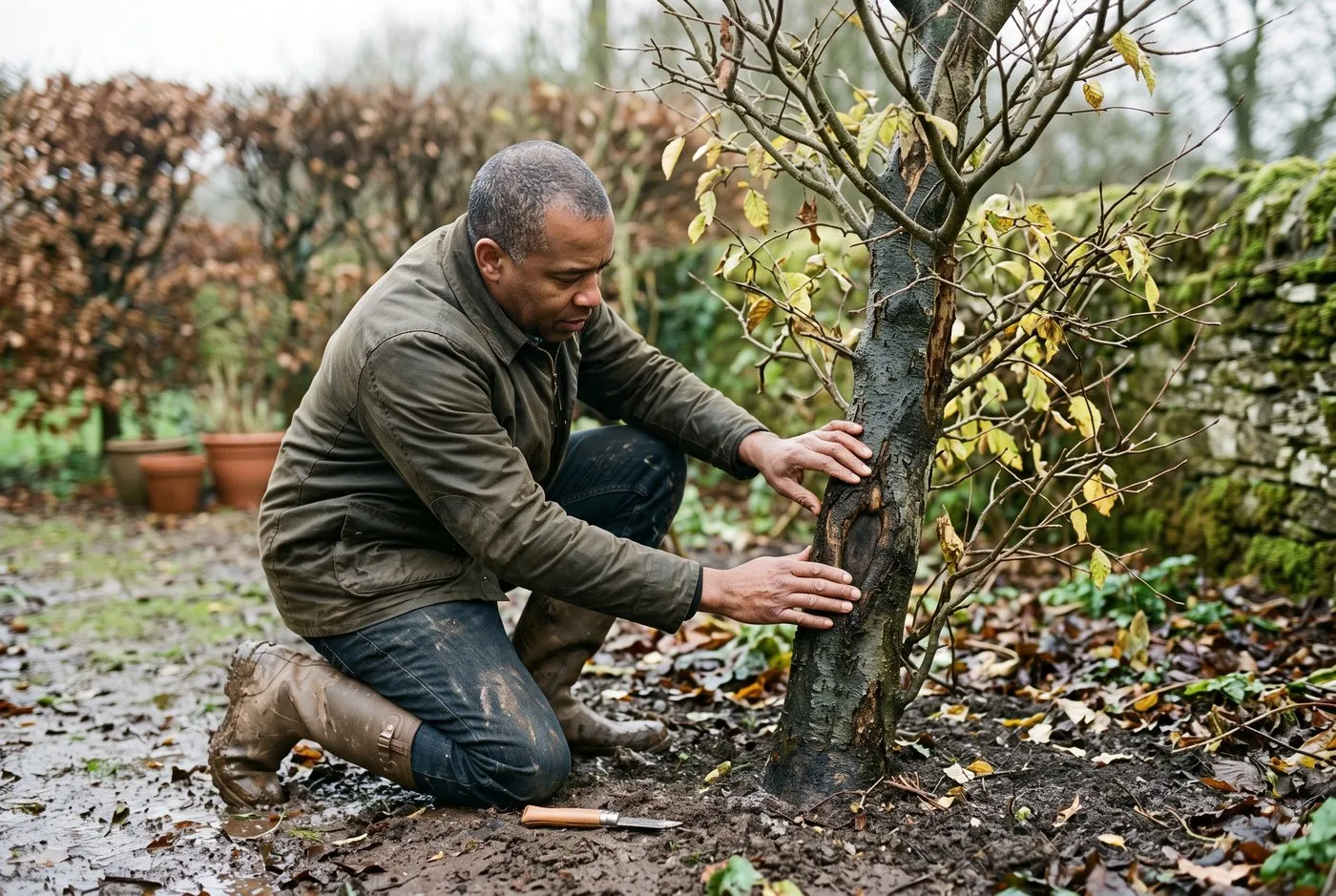
The base of the trunk is where the evidence is. Feel for soft or sunken bark at soil level before cutting a small window.
Phytophthora or honey fungus? The bark test
A small cut at the base usually settles it. With a clean knife, peel a thumbnail-sized window of bark at soil level.
Phytophthora leaves a reddish-brown stain in the inner bark. There’s often a clear line between dead brown tissue below and healthy cream tissue above.
Honey fungus shows white, papery fungal sheets under the bark that smell of mushrooms. You may also find black, bootlace-like strands in the soil and clumps of honey-coloured toadstools in autumn. Phytophthora gives you none of these.
Getting this right matters, because the replanting advice differs. The honey fungus guide covers that disease in full. If a tree died suddenly and neither fits, the sudden tree death guide runs through other causes.
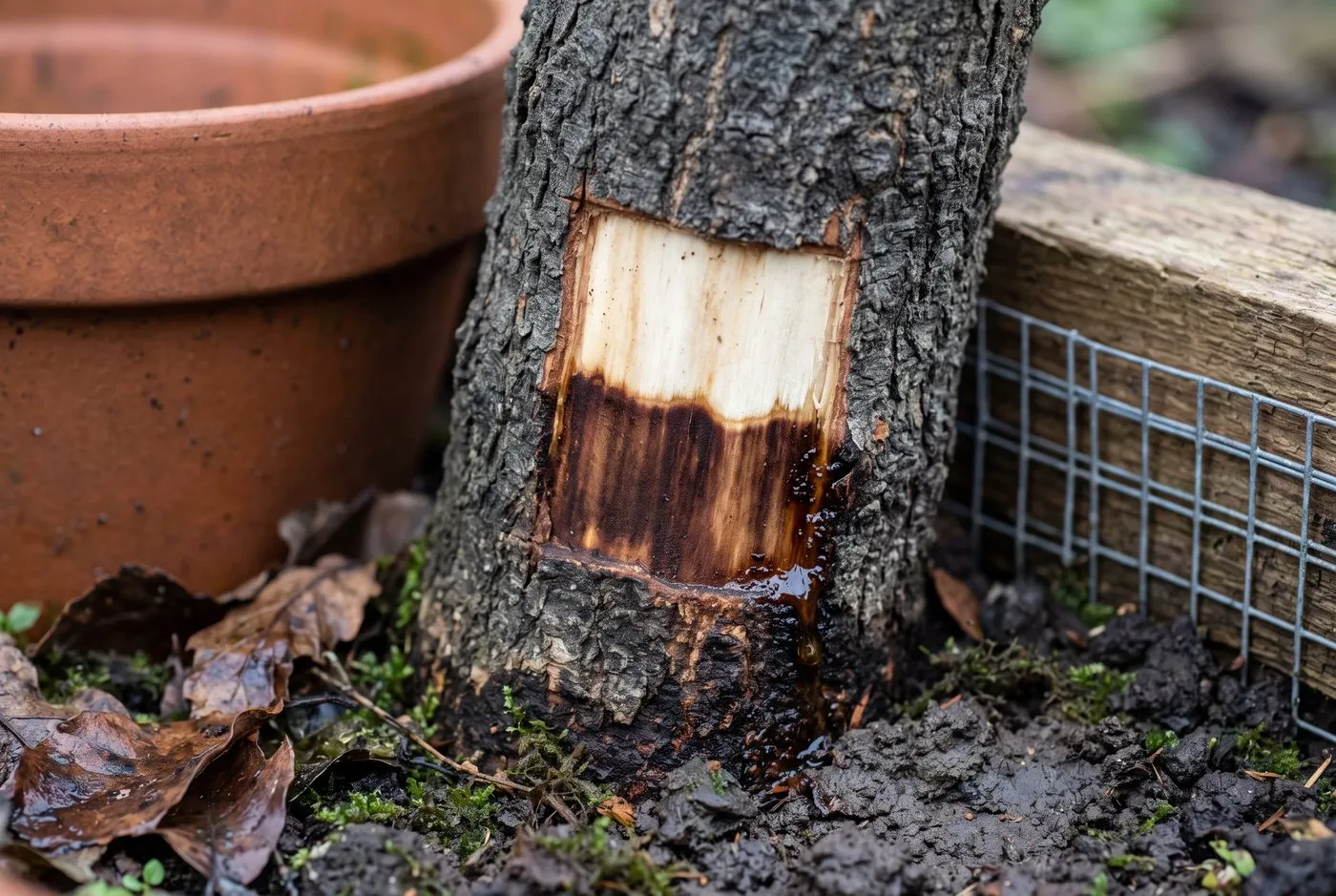
A reddish-brown stain with a sharp edge against pale healthy wood is the classic phytophthora sign.
Which plants does phytophthora hit hardest?
Almost any woody plant can rot if its roots sit in wet soil for long. Some plants are hit far more often than others.
| Plant | What you usually see |
|---|---|
| Rhododendron and azalea | Wilting, yellowing and branch dieback |
| Yew | Foliage going grey-green then brown, patchy dieback |
| Lawson cypress | Foliage browning, often a whole plant at once |
| Heathers | Plants turning grey and dying in patches |
| Apple and cherry | Collar rot at the base, slow decline |
| Shrubs in pots | Wilting despite wet compost |
If you’ve lost a rhododendron or yew to root rot, don’t plant another in the same place. The rhododendron growing guide explains the free-draining spot they need.
Phytophthora ramorum, the cause of “sudden oak death”, is a related but separate problem. In the UK it mostly attacks larch and rhododendron leaves and bark rather than roots. It’s notifiable, so report suspected cases on trees through the Forest Research TreeAlert service.
Why wet soil, not bad luck, killed your shrub
Poor drainage is almost always the real cause. The disease only turns deadly when the ground stays saturated. Fix the water and you take away its weapon.
That’s why phytophthora is common on heavy clay, compacted ground, the bottom of slopes and in pots with blocked drainage holes. It’s also why one wet corner can kill plant after plant.
In pots, the culprits are saucers full of water and dense compost that never dries. Raise pots on feet and let the top few centimetres dry between waterings.
Gardener’s tip: After heavy rain, walk round the garden and note where puddles are still standing a few hours later. Those are your danger spots. Don’t put a susceptible shrub there without raising the ground first.
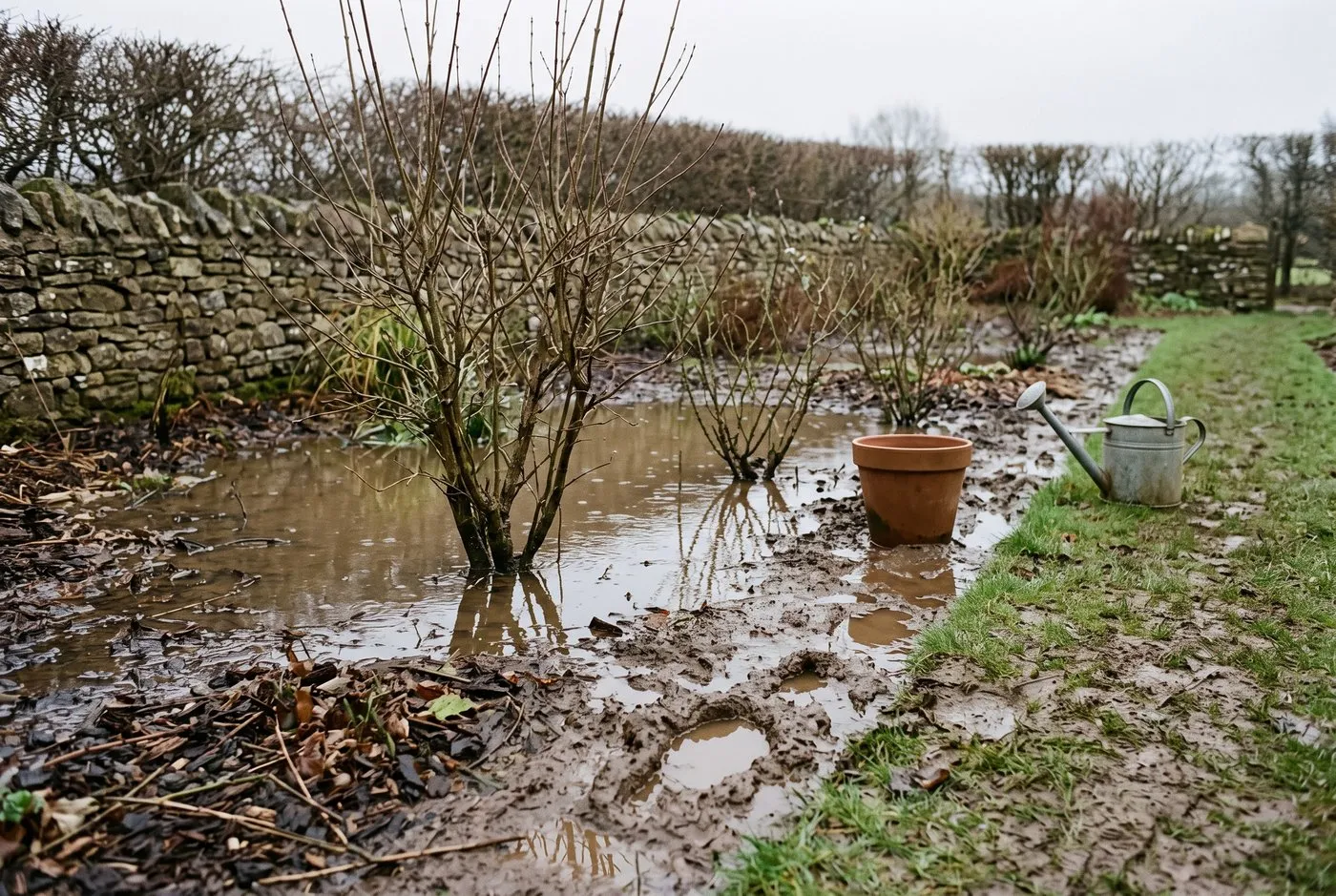
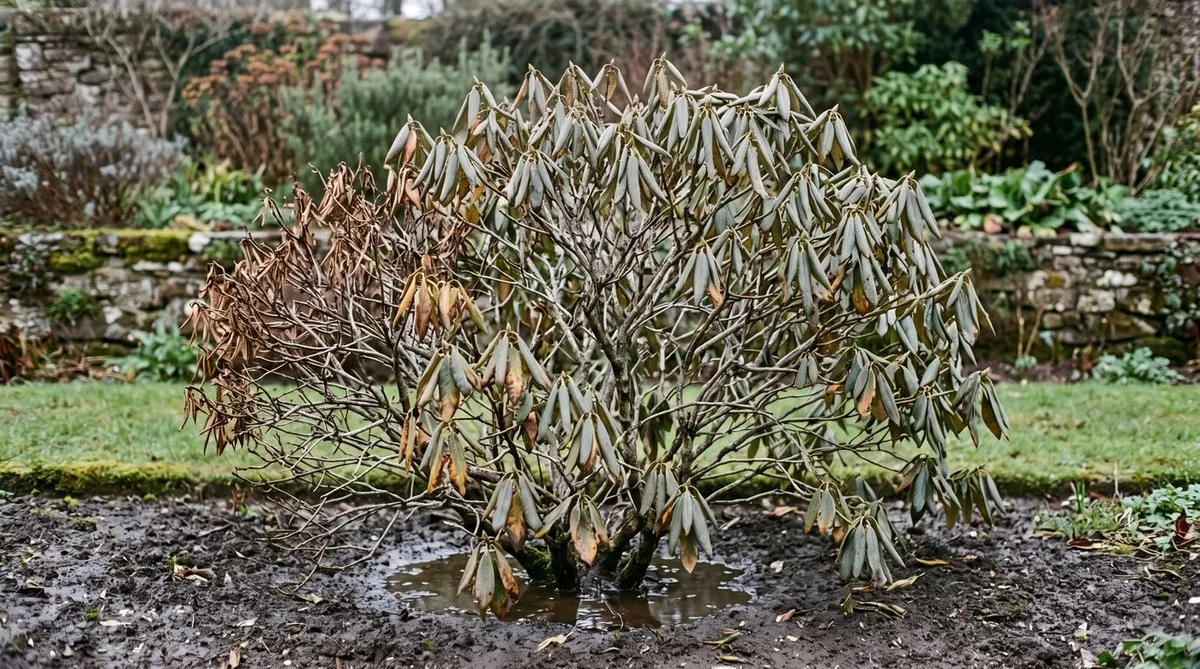
A border that stays flooded like this after rain is exactly where phytophthora does its worst.
Can you cure phytophthora root rot?
No. Once the roots and stem base have rotted, the plant can’t recover. Garden fungicides won’t save it, as the RHS advice on phytophthora root rots confirms, and watering more makes it worse. What you can do is stop it spreading and stop it happening again.
- Dig out the plant with as much root as you can.
- Bin it. Put it in general waste or take it to the tip. Don’t compost it.
- Clean up. Scrub soil off your spade, fork and boots before working in another bed.
- Fix the drainage. Break up compacted ground, dig in coarse grit and organic matter, or build the planting area up into a raised mound or bed. The guide to improving clay soil shows the methods.
- Replant with something different. Avoid the plant you just lost, and choose something happy in damp soil if the ground stays wet.
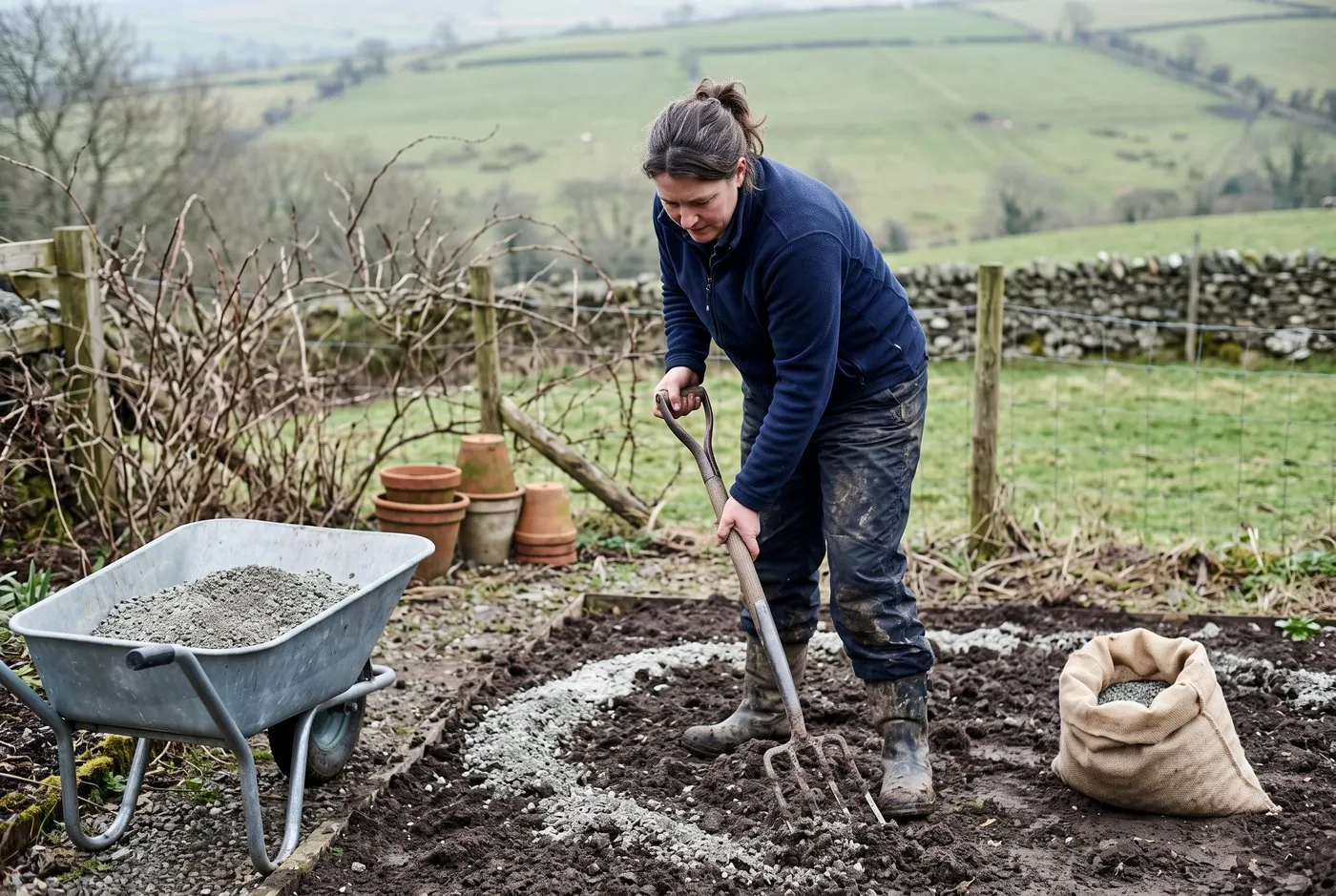
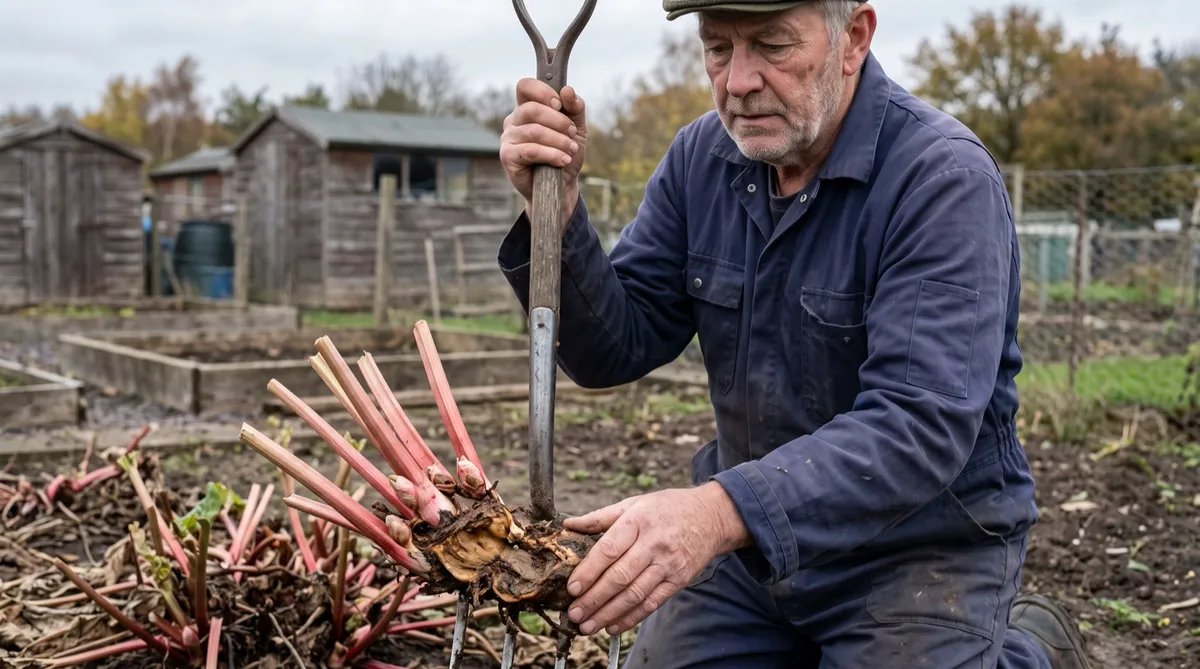
Opening up heavy soil with grit and raising the planting area tackles the wet conditions phytophthora needs.
What to plant in wet ground instead
Rather than fighting a spot that stays wet, plant things that like it. Plants that grow naturally in damp ground cope far better with wet roots than rhododendrons or conifers do.
Good choices for damp UK gardens include red-stemmed dogwoods (Cornus alba and Cornus sericea), shrubby willows (Salix), guelder rose (Viburnum opulus) and elder (Sambucus nigra). If the ground is boggy for much of the year, consider a bog or rain garden instead.
The best plants for wet, boggy soil has more ideas, including ideas for turning a soggy patch into a feature.
Phytophthora prevention through the year
| Month | What to do |
|---|---|
| January to February | Note spots that stay waterlogged. Dig in grit or build raised beds when the soil isn’t frozen or sticky |
| March to April | Plant new shrubs on a slight mound in well-drained soil. Check evergreens for thin, dull growth after winter |
| May to June | Watch rhododendrons, yew and conifers for one-sided dieback. Empty saucers under pots |
| July to August | If a plant wilts in a hot spell, check the soil before watering. Wet soil plus wilting means suspect the roots |
| September to October | Clear blocked drains and gullies. Raise pots onto feet before winter rain |
| November to December | Dig out and bin any plants confirmed dead. Plan different replacements |
Common mistakes with phytophthora
Blaming honey fungus without checking. Peel the bark at the base first. The wrong diagnosis leads to the wrong replacement plant.
Watering a wilting plant in wet soil. It looks thirsty, but more water feeds the rot. Check the soil with your fingers first.
Replanting the same plant in the same spot. The disease waits in the soil. Change the plant, the drainage or both.
Composting the dead plant. A home heap won’t kill it, and you’ll spread it round the garden. Bin it.
Forgetting muddy tools and boots. Soil on your spade carries the disease to the next bed. Scrub it off.
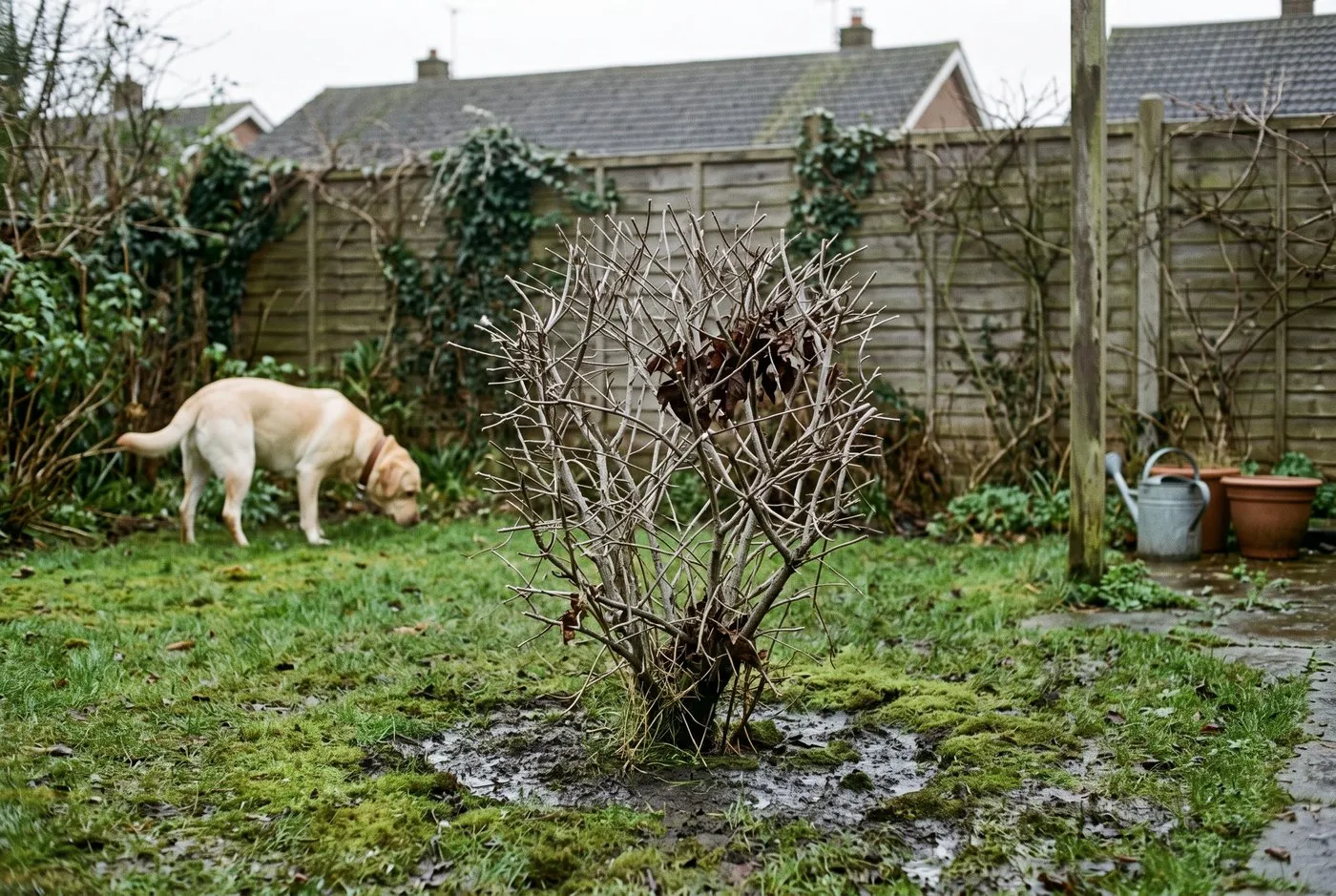
Once it’s down to bare twigs, there’s no saving it. Dig it out, bin it and fix that soggy patch of lawn.
Frequently asked questions
What is phytophthora root rot?
It’s a soil-borne disease that rots the roots of shrubs and trees. It is caused by water moulds that spread through wet soil. Infected plants thin, wilt and die back, sometimes over months and sometimes within a single season.
How do I tell phytophthora from honey fungus?
Peel a little bark at the base and look underneath. Phytophthora leaves a reddish-brown stain. Honey fungus leaves white, mushroom-smelling fungal sheets, often with black bootlace strands in the soil and honey-coloured toadstools in autumn.
Can phytophthora root rot be cured?
No, an infected plant can’t be cured. Garden fungicides don’t work against it. Dig out and bin the plant, improve the drainage, and replant with a different kind of plant.
Which plants are most at risk from phytophthora?
Rhododendrons, yew and Lawson cypress are among the most often hit. Heathers, apple and cherry trees and many potted shrubs also suffer. Almost any woody plant can be affected if its roots sit in wet soil for long.
Does phytophthora stay in the soil?
Yes, it survives in soil and old roots for years. It also moves in running water and on muddy tools and boots. That’s why the same wet spot can kill plant after plant.
Can I compost a plant killed by phytophthora?
No, don’t compost it. A home heap won’t get hot enough to kill the disease. Put it in the general waste or take it to the tip instead.
Is phytophthora root rot the same as sudden oak death?
No, though they are close relatives. Sudden oak death is caused by Phytophthora ramorum, which attacks leaves and bark, mainly on larch and rhododendron in the UK. It is a notifiable disease, so report suspected cases on trees through the Forest Research TreeAlert service.
Sort the soil, then replant
Phytophthora is really a drainage problem in disguise. Start with the soil drainage and structure guide to fix that wet spot for good, or browse more plant problem guides.
Our team produces practical UK gardening guidance from source research, contributor records and established horticultural practice. Editorial standards are overseen by Matt W.