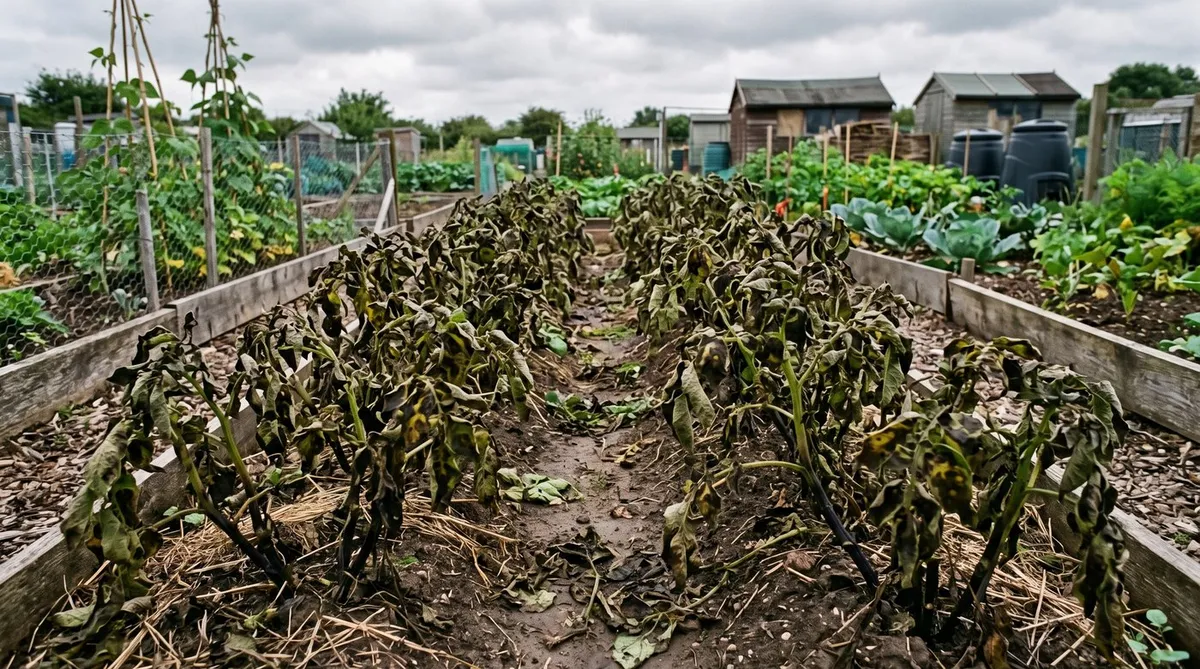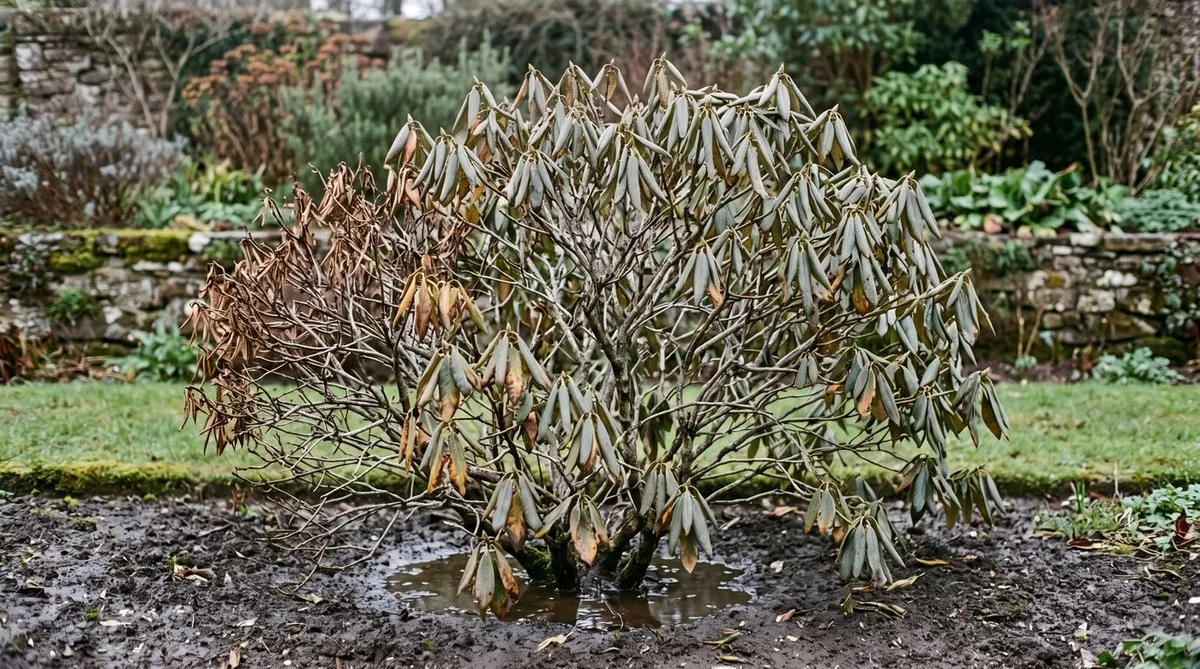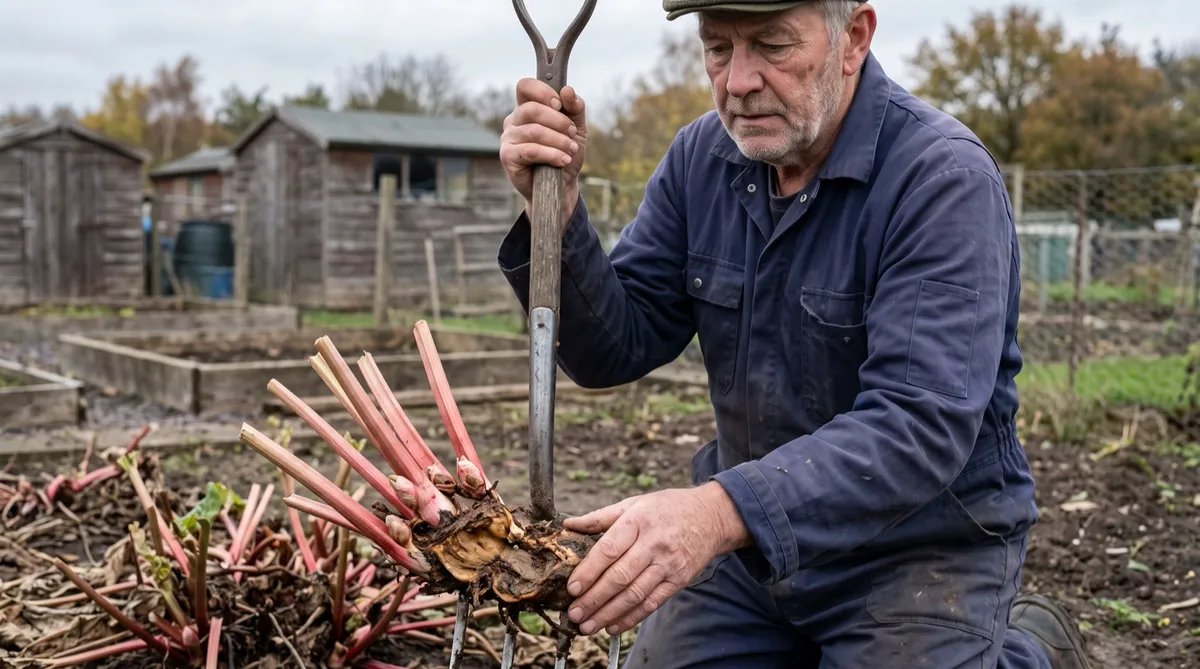
Key takeaways
- Check the base of a failing plant first: a soft, brown, smelly crown means crown rot
- Wet winter soil causes crown rot, so plant on a slight mound with the buds at soil level
- Honey fungus and viruses cannot be cured, so dig out the crown and replant elsewhere
- Spotty leaves are usually cosmetic and need no spray
- Bolting and thin stalks are signs of an old or tired crown, fixed by cutting out spikes and dividing
- Rhubarb leaves are poisonous to people and pets all year, but are fine on the compost heap
Most rhubarb never gets ill. When an established plant does fail, the cause is nearly always at the crown, and it is usually down to wet soil. Rhubarb problems fall into three groups: diseases such as crown rot and honey fungus, a short list of pests led by slugs, and harmless quirks like bolting, thin stalks and green stems.
This guide helps you tell those groups apart before you dig anything up. For planting, forcing and harvesting, see the guide on how to grow rhubarb in the UK.
How do I work out what is wrong with my rhubarb?
Start at the base, not the leaves. Serious rhubarb problems show up at soil level, and harmless ones usually don’t.
Grip a sickly stalk and pull gently. If it comes away from a soft, brown, wet base, you have crown rot. If the base is firm but the plant looks pale, mottled and smaller each year, suspect a virus. Spots on leaves with a firm crown point to a leaf disease, which is nearly always cosmetic. Chewed buds in early spring mean slugs. A tall spike of creamy flowers is bolting, which is not a disease at all.
| What you see | Most likely cause | How serious |
|---|---|---|
| Stalks collapse at the base, crown brown and soft | Crown rot | Often fatal, fix drainage |
| White fungal sheets under the crown skin, mushroom smell | Honey fungus | Fatal, and it spreads |
| Small round spots with pale centres on leaves | Leaf spot | Cosmetic |
| Pale angular patches, grey fuzz underneath | Downy mildew | Cosmetic in most years |
| Yellow mottling, ring marks, plant weaker each year | Virus | Incurable, dig out |
| Holes or grazing on new buds, February to April | Slugs and snails | Annoying, not fatal |
| Tall central spike with cream flowers | Bolting | Harmless, cut it out |
| Thin stalks on an older plant | Congested crown | Fixed by dividing |
Crown rot: the disease that kills rhubarb
Crown rot is the one that matters. It is caused by soil-borne fungus-like organisms and bacteria that get into the crown when it sits in wet soil. The buds go soft and brown, stalks flop outwards from the base and the plant collapses.
To confirm it, cut into the crown with a clean knife. Healthy tissue is firm and cream to pale pink. Rotten tissue is brown, wet and gives under your thumbnail, often with a sour smell.
Collapse often shows in spring, but the damage usually started in the wet winter before. So the time to act is when you plant or replant, not when the plant is already falling over.
Gardener’s tip: Dip your knife in boiling water between plants if you are checking several crowns. It stops you carrying rot from a sick crown to a healthy one.
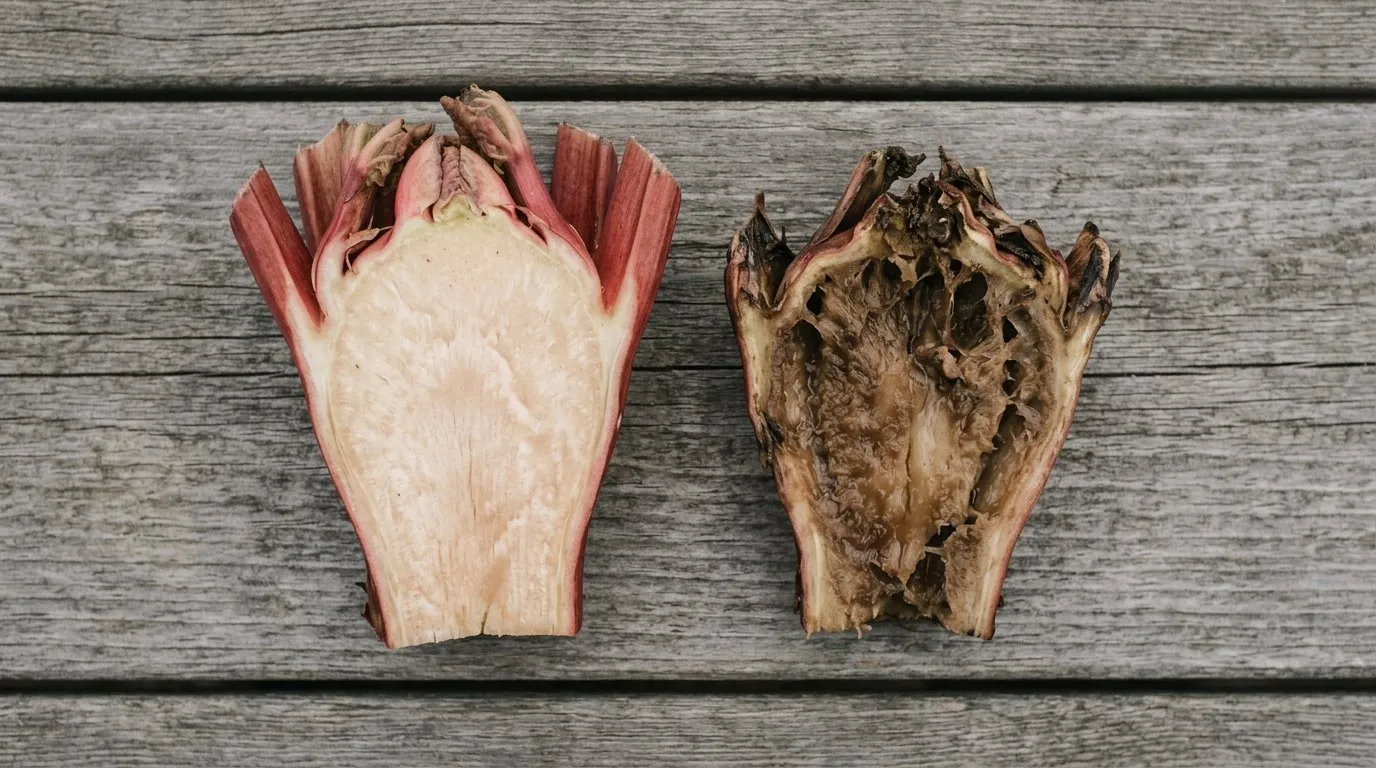
The knife test settles it. Healthy crown tissue (left) is firm and cream; rotten tissue (right) is brown, wet and soft.
Can a rotting crown be saved?
Sometimes, if the rot is only on one side. Lift the crown in late autumn and cut away every soft brown bit with a clean knife. Replant the firm pieces, each with at least one bud, in a better-drained spot. Leave them unpicked for a season while they settle. If the rot has reached the middle, dig it all out and bin it rather than composting it.
How to stop crown rot coming back
The fix is drainage and depth, not sprays. No fungicide is available to home gardeners for rhubarb crown rot.
- Plant shallow. Set the crown with its buds at soil level, or just above it on heavy clay.
- Raise it up. On clay, plant on a low mound or in a raised bed so rain runs away from the buds.
- Open up the soil. Dig in plenty of well-rotted organic matter. Some grit helps on heavy ground.
- Keep mulch off the buds. Spread manure around the crown in late winter, not heaped over the top.
- Move on. Don’t replant rhubarb where a crown has rotted. Choose a fresh spot for a few years.
If one corner of the plot is always soggy, the soil drainage and structure guide explains how to sort out the wider problem.
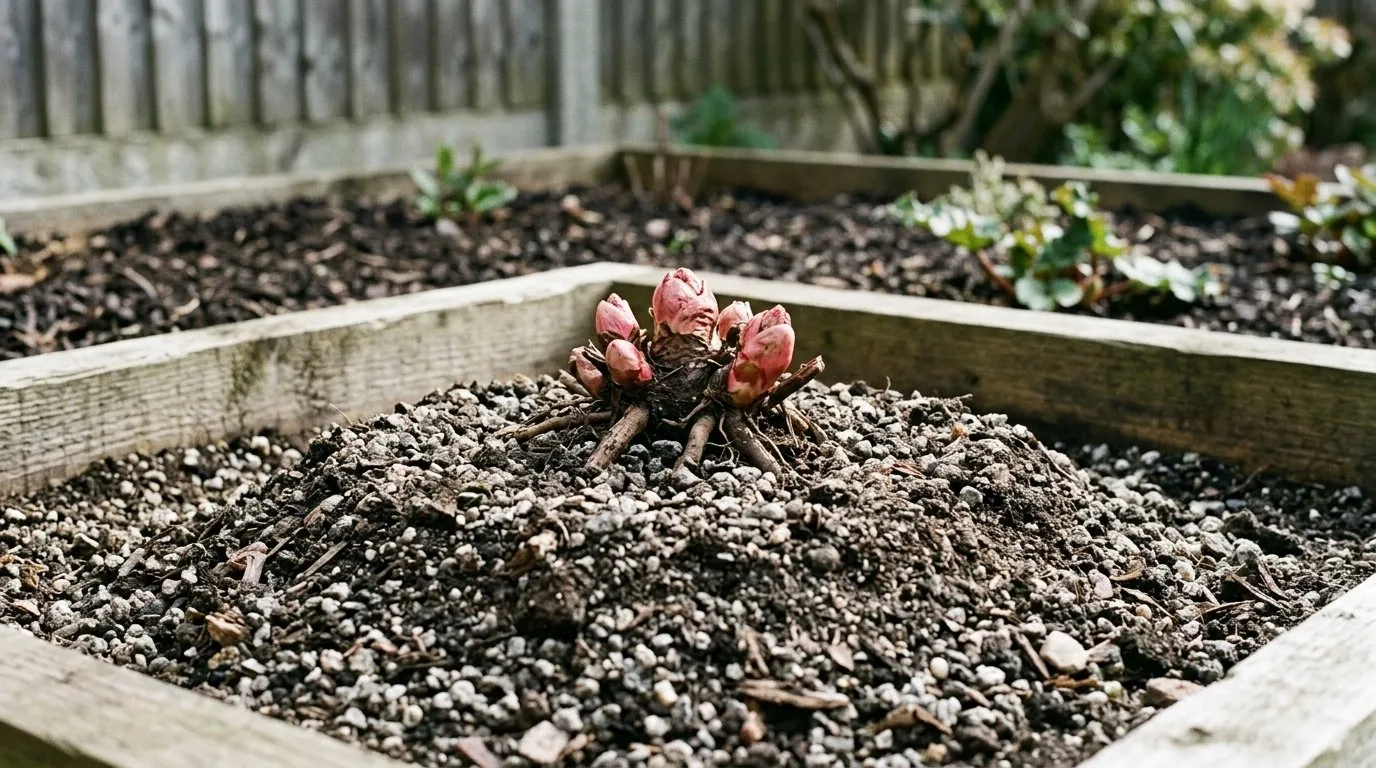
Planting on a slight mound keeps winter rain running away from the buds, which is the best protection against crown rot.
Honey fungus in a rhubarb bed
Rhubarb is one of the plants honey fungus attacks, even though it isn’t woody. It can kill a crown as surely as it kills a fruit tree.
Peel back the skin at the base of the crown and look for white, papery sheets of fungus that smell strongly of mushrooms. Crown rot smells sour; honey fungus smells like a mushroom punnet. You may also find black bootlace strands in the soil, which is how the fungus spreads from plant to plant. Honey-coloured toadstools can appear in clumps in autumn, though not always near the plant.
There is no chemical control for gardeners. Dig out the crown with as much root as you can find and don’t compost it. Don’t replant rhubarb in that spot. A buried barrier of heavy-duty plastic or butyl, about 45cm deep, can stop the bootlaces spreading into clean ground. The guide to dealing with honey fungus covers barriers and replacement plants, and the RHS honey fungus page has more photos.
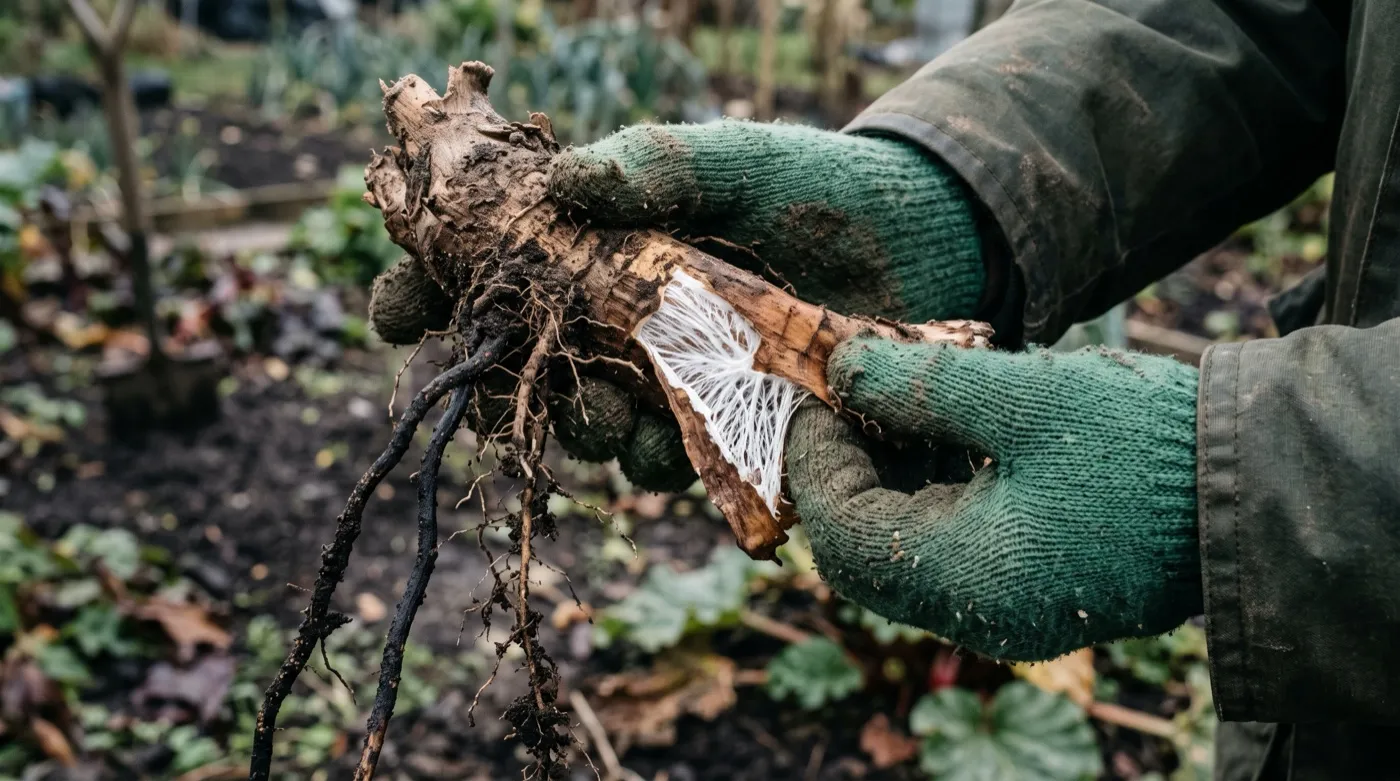
White sheets under the skin and black bootlace strands in the soil are the giveaway signs of honey fungus.
Spots and patches on rhubarb leaves
Spotty rhubarb leaves look worse than they are. The two common leaf diseases rarely harm the crown, and you can still eat the stalks.
Leaf spot makes small round spots with reddish edges and pale centres. The centres often dry and fall out, leaving holes. It turns up after wet spells, usually later in the season.
Downy mildew is less common. It makes pale patches bounded by the leaf veins, with grey-purple fuzz underneath in damp weather. Round spots mean leaf spot; angular patches mean downy mildew.
Neither needs a spray. Space plants 75-90cm apart, water at the base rather than over the leaves and pull off the worst leaves. Clear dead foliage in autumn so the spores have less to overwinter on.
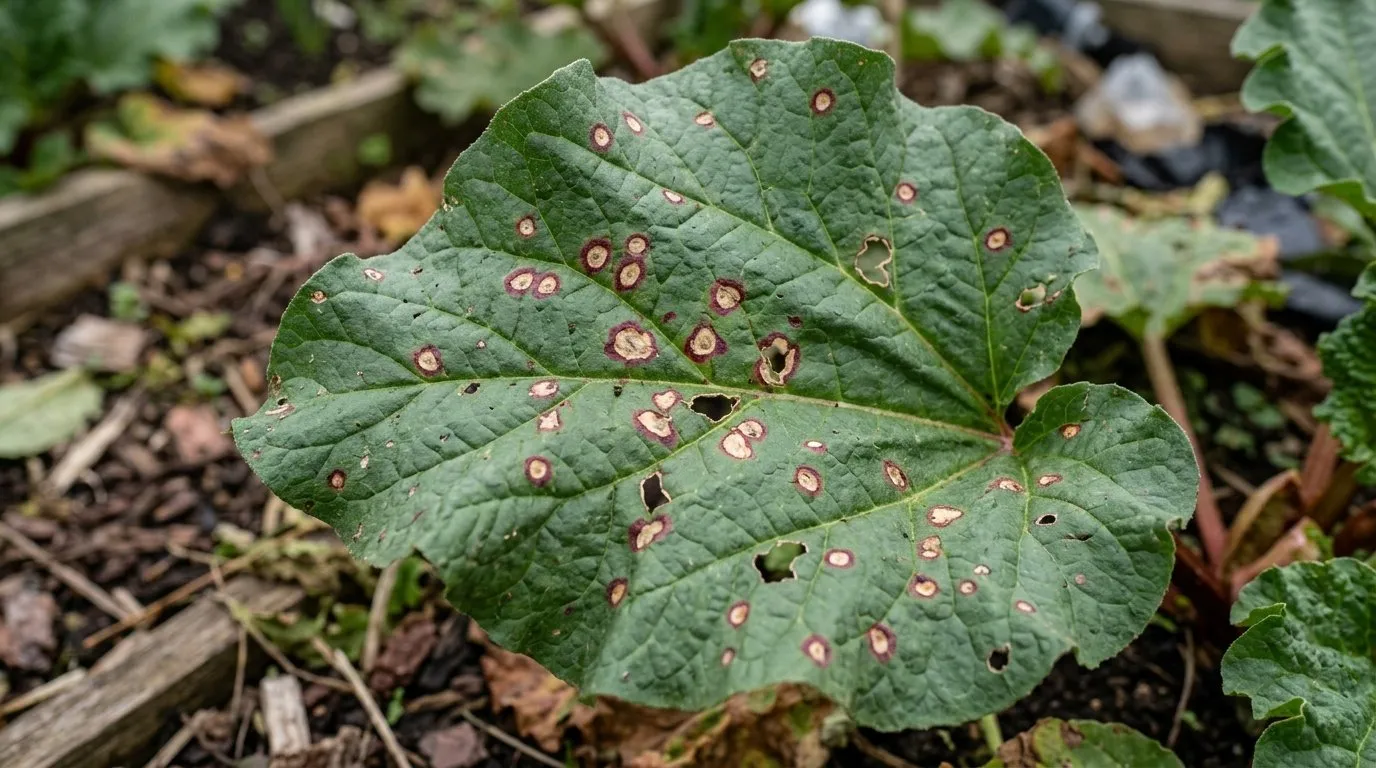
Leaf spot looks alarming but is cosmetic. Pick off the worst leaves and carry on harvesting.
Rhubarb viruses: mottling and slow decline
If a crown gets weaker every year despite feeding, dividing and good drainage, suspect a virus. Several viruses infect rhubarb, and the signs overlap: yellow mottling, pale rings, crinkled leaves and thin stalks that never improve. The decline is slow, which is why it is easy to blame the soil.
Viruses spread through divisions taken from infected plants, and some are carried by soil-living eelworms or sap-sucking insects. There is no cure. Dig the crown out and bin it.
The simple rule for the future: never take divisions from a plant that is mottled or declining, however tempting a free plant is. Buy healthy crowns from a reputable supplier instead.
Slugs and other rhubarb pests in the UK
The pest list for UK rhubarb is short. Slugs and snails are the main one, grazing new buds from February to April. Buds under a forcer are especially at risk, because it is dark and damp in there.
Check under forcers and around crowns at dusk and pick off what you find. Beer traps and slug nematodes also help. The guide to getting rid of slugs naturally covers the options in more detail.
You may read online about the rhubarb curculio, a weevil. It is a North American pest and is not found in UK gardens. Aphids sometimes cluster on flower spikes, and vine weevil grubs can eat the roots of rhubarb in pots. For the grubs, see the vine weevil treatment guide.
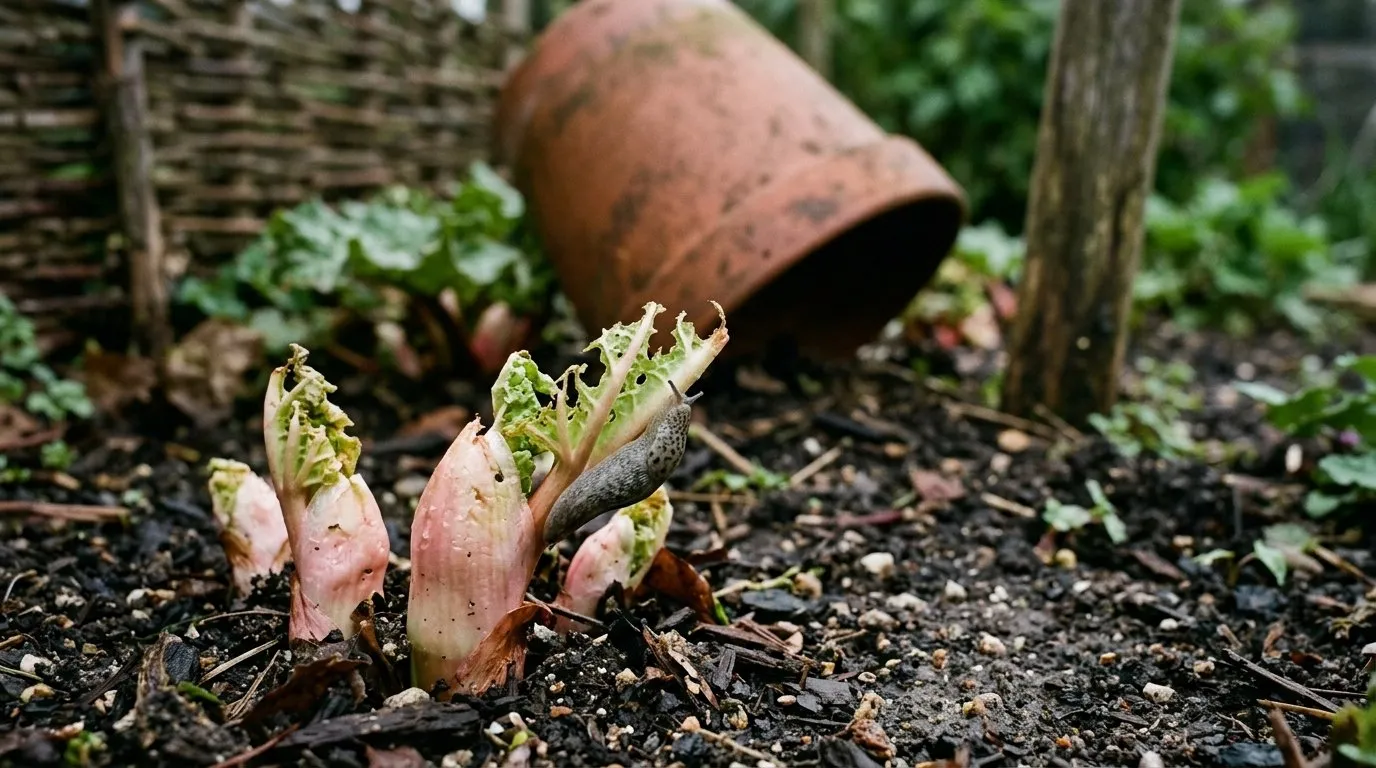
New buds in early spring are the slugs’ favourite. Check under forcers at dusk and pick off any you find.
Bolting, thin stalks and other things that aren’t diseases
Most worrying rhubarb symptoms aren’t disease at all. These three come up most often.
Why rhubarb sends up a flower spike
Bolting is a tall, thick central stem topped with creamy flowers. Older crowns, hot dry spells and stress all bring it on, and some varieties bolt more readily than others.
Cut the spike off at the base as soon as you see it, so the plant puts its energy back into stalks. The stalks are still safe to eat. A crown that bolts every year is telling you it is time to divide it.
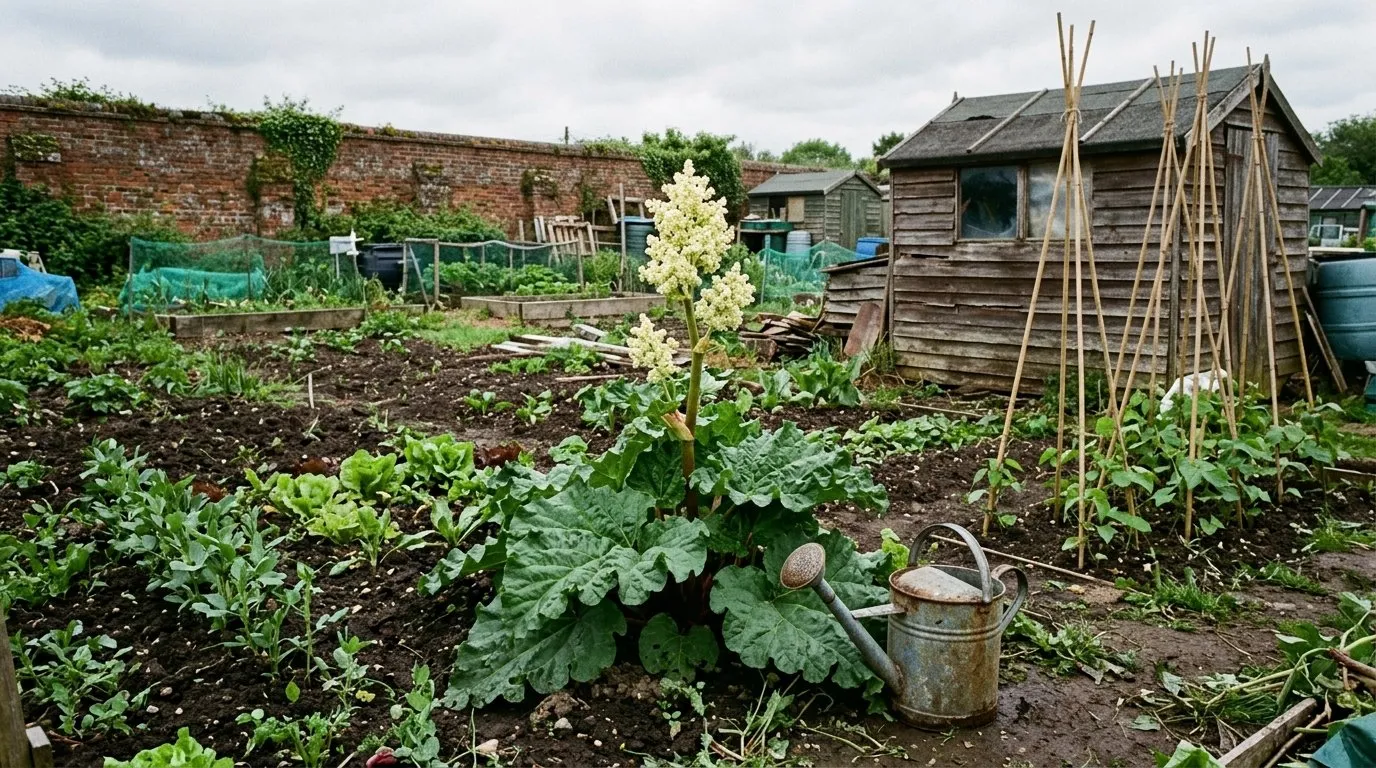
A bolting rhubarb plant. Snap or cut the spike out low down. It’s a sign of age or stress, not disease.
Thin, spindly stalks
Thin stalks on a mature plant usually mean one of two things. Either the crown is old and congested, or it was picked too hard last year.
Crowns over about five years old get woody in the middle. Lift and divide them in late autumn or winter, replanting healthy outer pieces with a bud each. Also stop picking by the end of June, so the leaves can feed the roots. The guide on when to stop picking rhubarb explains the timing.
Green stalks instead of red
Stalk colour comes from the variety. Rhubarb doesn’t ripen, so a green stalk isn’t unripe. Victoria has green stalks flushed red at the base and always will. Red varieties such as Raspberry Red colour further up. Green stalks are just as safe to eat. If you want red ones, plant a red variety.
Is rhubarb safe after a frost?
Firm, undamaged stalks are fine. Frost bursts the cells, so damaged stalks go limp and mushy and soon rot. Throw those away. If a hard frost is forecast after growth has started, fleece helps. The guide to protecting plants from frost covers what to use.
Warning: Rhubarb leaves are poisonous to people, dogs and cats all year. Never eat them, and keep pets away from cut leaves. They are fine to put on the compost heap.

Rhubarb leaves are poisonous to dogs too. Put cut leaves straight in the barrow or compost bin rather than leaving them on the path.
Month-by-month rhubarb problem calendar
| Month | What to check |
|---|---|
| January | Look under forcers for slugs grazing the pale buds |
| February | Lift any crown that failed last year. Rebuild the bed as a mound before replanting |
| March | New buds are most at risk from slugs. Check at dusk |
| April | Watch for stalks collapsing at the base. Cut into a suspect crown to check for rot |
| May | Crown rot from the wet winter often shows now. Remove dead crowns whole |
| June | Stop picking by the end of the month |
| July | Cut out flower spikes on older crowns, especially in hot spells |
| August | Leaf spot shows after wet weather. Remove only the worst leaves |
| September | Downy mildew may appear in damp weather. Improve air flow |
| October | Clear dead leaves as the plant dies back |
| November | Divide congested crowns. Raise wet beds and dig in organic matter |
| December | After heavy rain, check no crown sits in standing water |
Common mistakes that kill rhubarb
Planting too deep. Buried buds sit in wet soil all winter. Keep them at soil level, or just above on clay.
Replanting in the same hole. A new crown in the spot where one rotted usually rots too. Pick a fresh, better-drained spot.
Dividing a sick plant. Splitting a mottled, declining crown just spreads the virus round the plot.
Heaping manure over the crown. It holds water around the buds. Mulch around the plant instead.
Spraying spotty leaves. Leaf spot is cosmetic, and no spray reaches crown rot below ground. Put the effort into drainage.
Frequently asked questions
Why is my rhubarb rotting at the base?
It is almost always crown rot, brought on by wet soil or deep planting. Cut into the crown with a clean knife. Healthy tissue is firm and cream coloured, while rotten tissue is brown, soft and often smells sour. Sort out the drainage before you replant anything.
Can rhubarb recover from crown rot?
Sometimes, if only part of the crown is affected. Lift it in late autumn, cut away all the soft brown tissue with a clean knife and replant the firm pieces with a bud each on a slight mound in better-drained soil. If the rot has reached the centre, dig the whole crown out and start again elsewhere.
Why is my rhubarb green instead of red?
Stalk colour comes from the variety, not ripeness. Rhubarb does not ripen. Victoria has green stalks flushed red at the base, while varieties such as Raspberry Red colour further up. Green stalks are perfectly safe to eat. Grow a red variety if you want red stalks.
Why are my rhubarb stalks thin and spindly?
Usually the crown is old and congested, or it was picked too hard last year. Lift and divide crowns over about five years old in late autumn or winter. Stop picking by the end of June so the leaves can feed the roots for next spring.
Should I cut the flower stalk off my rhubarb?
Yes, cut it off at the base as soon as you see it. The flower spike uses energy the plant would otherwise put into stalks. Bolting is not a disease and the stalks are still safe to eat. A crown that bolts every year is usually due for dividing.
Is rhubarb safe to eat after a frost?
Firm, undamaged stalks are fine; throw away any that have gone limp or mushy. Frost bursts the cells, so damaged stalks soon soften and rot. Judge each stalk by its texture.
Does rhubarb get honey fungus?
Yes, rhubarb is one of the plants honey fungus attacks. Look for white, mushroom-smelling fungal sheets under the skin at the crown base and black bootlace strands in the soil. There is no chemical cure. Dig out the crown with as much root as you can and do not replant rhubarb there.
Now you know what is troubling your rhubarb, read the guide to improving clay soil to stop crown rot coming back, or browse more fixes in the garden problems section.
Our team produces practical UK gardening guidance from source research, contributor records and established horticultural practice. Editorial standards are overseen by Matt W.