Key takeaways
- Throw fleece over tender plants on frosty evenings and take it off in the morning
- Cloches and cold frames are best for seedlings and early veg
- Cover the crowns of tender perennials with 10-15cm of mulch before the first autumn frost
- Last frosts are usually mid-April in the south and later further north
- Water the soil, not the leaves, before a frost
- Leave frost-damaged growth in place until late spring to shelter the crown
A single surprise frost in late April can kill tender plants and flatten early veg. The good news? Protecting plants from frost is cheap and simple once you know what to do and when.
What causes frost and why it damages plants
Frost forms when things cool below 0C and moisture freezes on them. Plants are full of water, and when it freezes the ice damages them from the inside. That’s why frosted leaves go black and floppy.
Most UK frosts happen on clear, still nights. Without clouds to act as a blanket, the ground loses its warmth into the sky. Cloudy nights rarely bring frost. Now and then a blast of freezing air blows in from the north or east instead. That kind is harsher and harder to protect against, because the wind drives the cold everywhere.
Cold air sinks and flows downhill like water. It pools in hollows, at the bottom of slopes and behind solid walls or fences, making frost pockets. Spotting the frost pockets in your garden is a great first step.
When does frost hit UK regions?
It varies a lot. Coastal gardens rarely see hard frost. Inland valleys and high ground get frost earlier in autumn and later in spring.
| Region | Usual last spring frost | Usual first autumn frost |
|---|---|---|
| South-west England coast | Late March | Late November |
| South-east England | Mid-April | Late October |
| Midlands | Late April | Mid-October |
| Northern England | Early May | Early October |
| Central Scotland | Mid-May | Late September |
| Highland Scotland | Late May to early June | Mid-September |
Spring frost does more harm than autumn frost, because plants are full of soft new growth. A light frost will kill runner bean seedlings, courgettes and young dahlia shoots.
Frost protection methods ranked by effectiveness
Some methods work much better than others. Here they are, from the most useful down.
Horticultural fleece: the best all-round protection
Fleece is a light fabric you drape over plants. It traps a layer of still air round them and is light enough to rest on leaves. Air and rain get through, so plants don’t rot underneath.
It comes in different weights. Light fleece (around 17g) suits mild frosts. A 30g fleece handles most UK frosts. Heavier 50g fleece copes with harder frosts but lets less light through.
For most gardens, 30g is the one to buy. Keep a couple of rolls somewhere dry. Drape it loosely over plants on the evening before a frost and take it off next morning once it warms up. Weigh the edges down with bricks, pegs or soil so the wind can’t lift it.
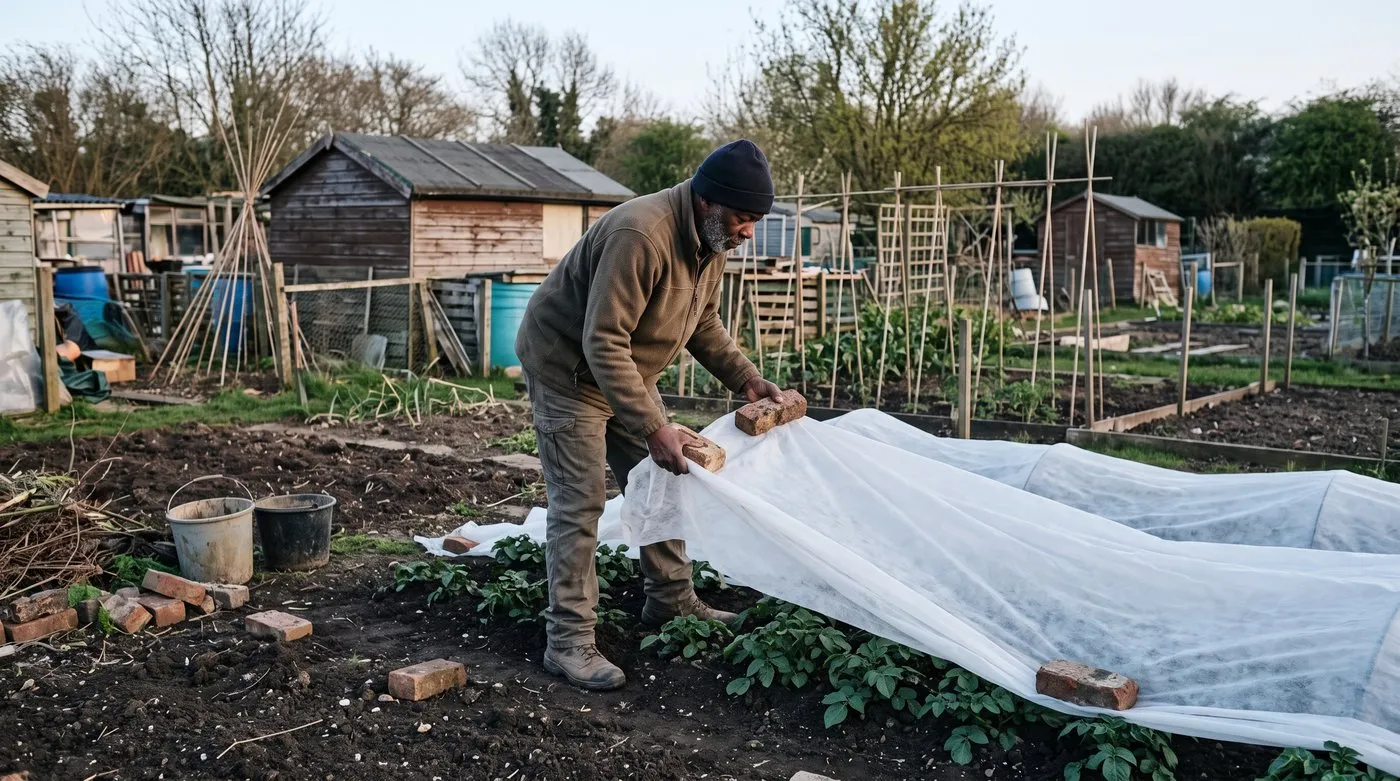
Put fleece on the evening before a frost and take it off the next morning once it warms up. Bricks or pegs on the edges stop the wind lifting it.
Cloches and cold frames: 3-5C of protection
Glass or plastic cloches make a mini greenhouse over single plants or short rows. They keep off wind as well as frost. Cold frame gardening lets you start earlier in spring and keep going later in autumn.
Bell cloches suit single plants. Tunnel cloches, made of plastic over wire hoops, cover a whole row. A cold frame gives the best shelter of the three, because it soaks up warmth by day and lets it out slowly at night.
Cloches and cold frames are also perfect for hardening off seedlings before planting out. They’re a halfway house between the warm windowsill and the open garden.
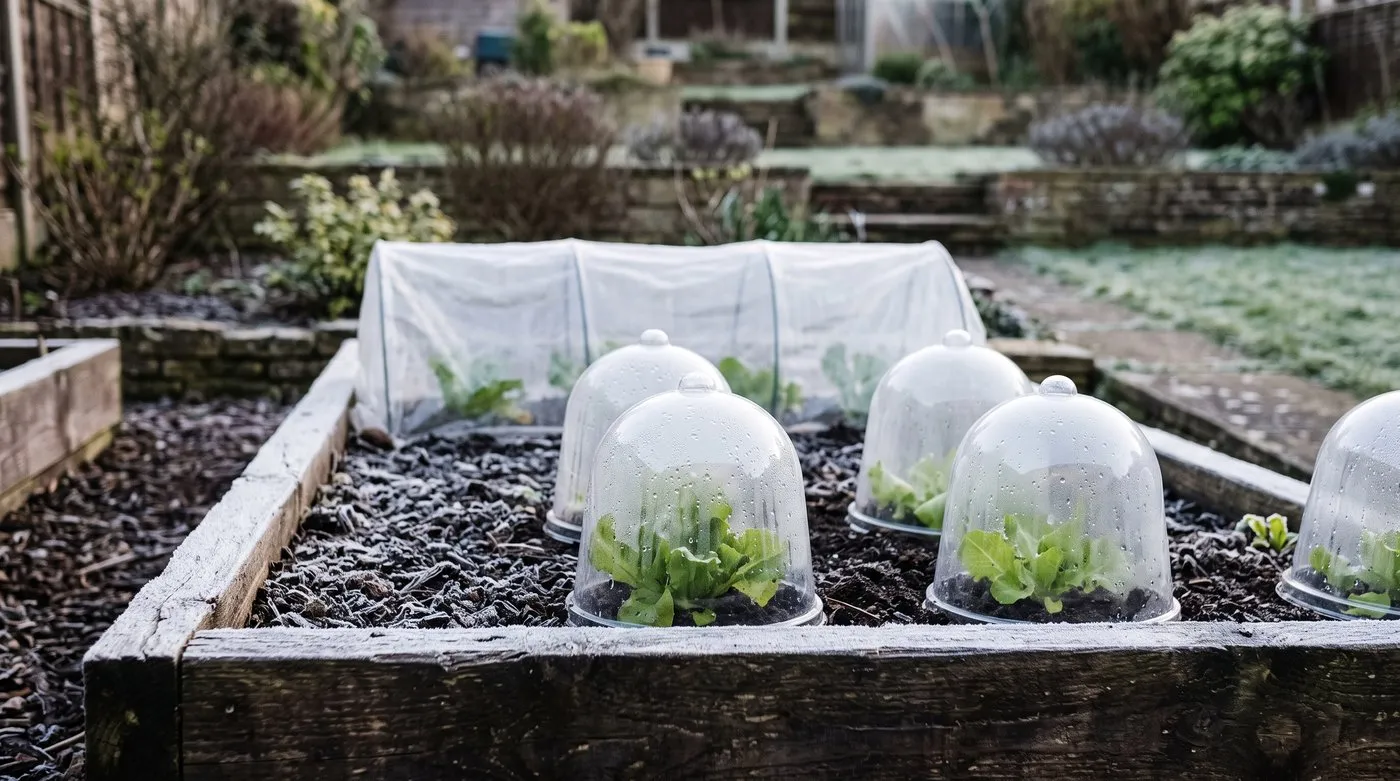
Cloches keep off wind as well as frost. They’re also a handy halfway house for hardening off seedlings before planting out.
Mulching: protecting roots and crowns
Mulch won’t stop frost reaching leaves, but it keeps the soil and the plant’s crown snug. That matters for tender perennials that die down in winter. Dahlias, cannas, agapanthus and tree ferns cope with harder frosts under 10-15cm of mulch.
Use bark chips, straw, bracken or leaf mould. Spread it in late October or early November, before the first hard frost. Even when the surface freezes, the soil underneath stays much warmer.
In spring, pull the mulch back bit by bit as shoots appear. A thick pile round new stems invites slugs and rot. A 5cm layer through summer is fine for holding moisture and keeping weeds down.
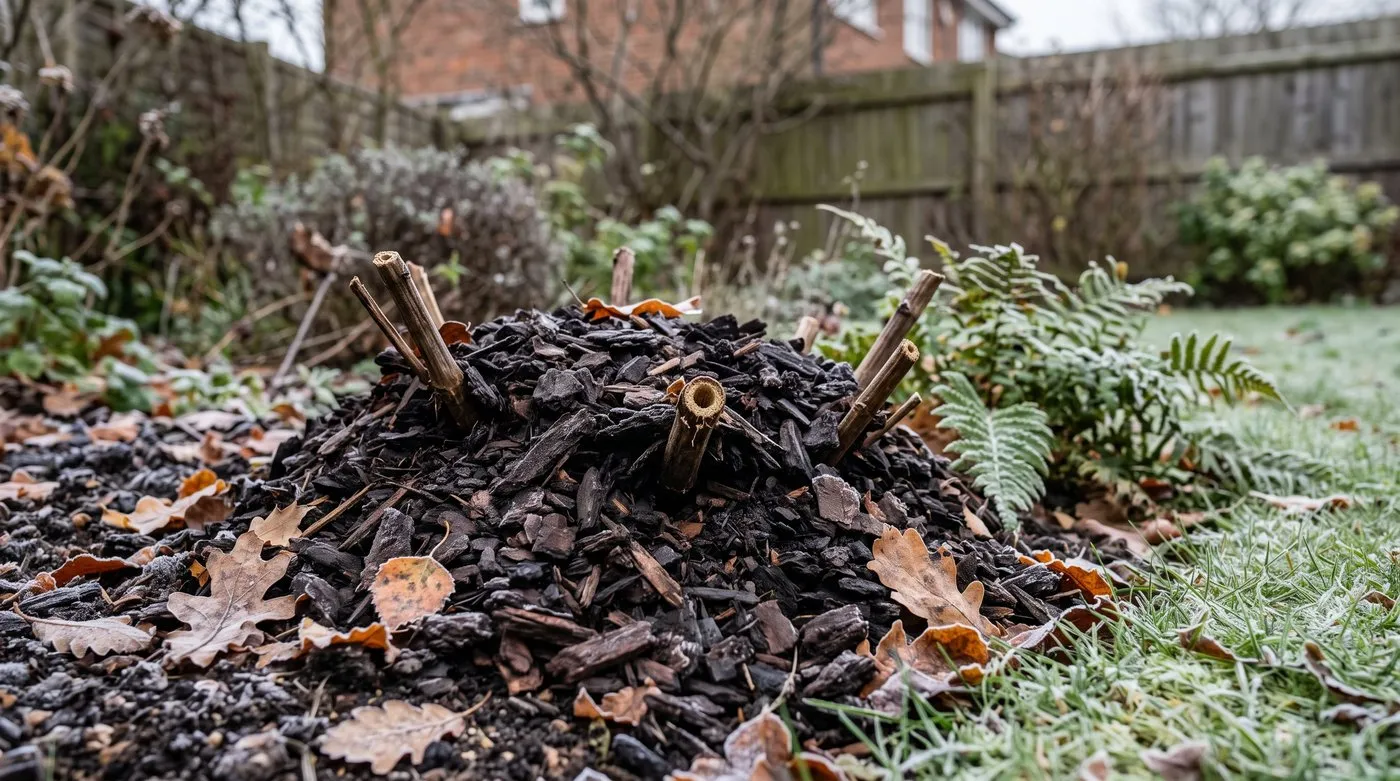
A deep layer of mulch keeps the soil and crown snug even when the surface freezes. Pull it back gradually in spring as shoots appear.
Moving pots to sheltered spots
Plants in pots feel the cold more than plants in the ground, because the pot freezes from every side. A terracotta pot left out on a frosty patio can even crack.
In late autumn, move tender pots against a south-facing house wall. The wall gives off stored warmth at night and blocks cold north winds. Grouping pots together helps too. Wrap pots in bubble wrap or hessian, leaving the top open.
Rosemary, bay and olive trees usually get through winter against a warm wall. Bring citrus trees indoors or into a frost-free greenhouse before the frosts start.
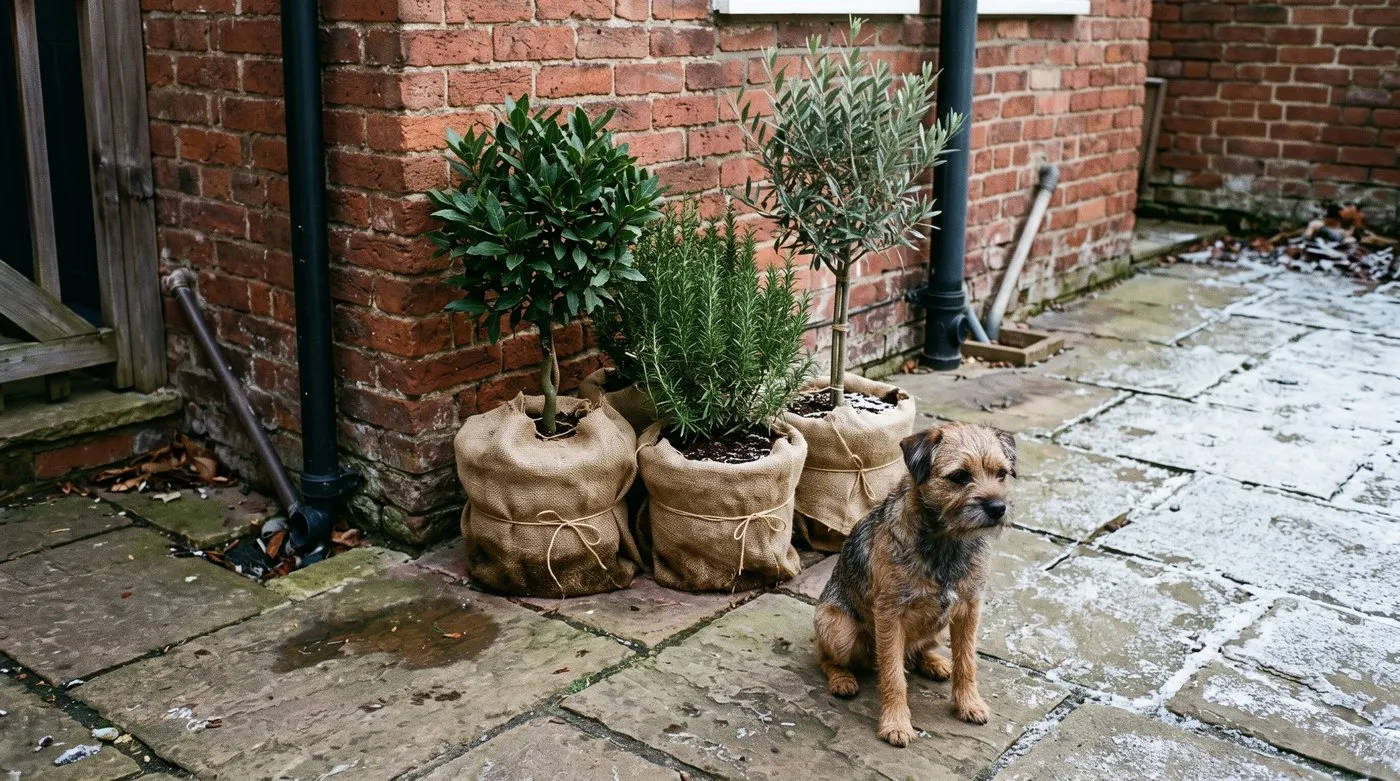
A south-facing wall gives off stored warmth at night. Grouping pots there and wrapping the sides helps stop roots freezing.
Watering before frost: the soil heat trick
It sounds odd, but it works. Damp soil holds onto the day’s warmth and gives it off slowly at night, keeping things a little warmer at ground level.
It works best with other methods. Water the soil, then put fleece over the top.
Emergency protection: newspaper and cardboard
Frost forecast and no fleece? Newspaper and cardboard boxes will do for a night. Drape a couple of sheets of newspaper over plants, or pop a cardboard box over a small one.
Take them off first thing in the morning. Paper and cardboard block the light and hold damp, so they do harm if left on. It’s a last resort, not a regular fix.
Which plants need frost protection?
Not everything needs covering. Knowing which plants are tough saves you time.
Plants that need protection
- Tender perennials: dahlias, cannas, bananas, tree ferns, agapanthus, osteospermum
- Bedding plants: French marigolds, petunias and busy Lizzies planted out before the last frost
- Early veg: potatoes (shoots come up in April), courgettes, runner beans, sweetcorn, and tomatoes moved outside
- Citrus and Mediterranean plants: lemons, olives, and bay in cold areas
- Fruit blossom: a frost on apple, pear, cherry or plum blossom can wipe out the year’s crop
- New plants: anything planted in autumn or early spring has shallow roots that freeze easily
Plants that do NOT need protection
Fully hardy plants (RHS H5 to H7) are fine on their own. Climate-resilient plants include most native trees and shrubs, evergreen hedging, hardy perennials like hellebores and hardy geraniums, and established grasses. Holly, hawthorn, birch and yew shrug off a hard winter.
Don’t waste fleece on established roses, lavender, hardy geraniums or spring bulbs. They’re made for cold winters.
Frost protection comparison table
| Method | Cost | Protection | Best for | Lasts |
|---|---|---|---|---|
| 30g fleece | Cheap | Good for most frosts | Beds, borders, veg rows | A few seasons |
| 50g fleece | Cheap | Better for harder frosts | Tender perennials, fruit blossom | A few seasons |
| Glass or plastic cloche | Medium | Good | Single plants, short rows | Many years |
| Cold frame | Medium to high | Very good | Seedlings, hardening off, salads | Many years |
| Bark mulch (10-15cm) | Cheap | Keeps roots and crowns snug | Crowns of tender perennials | Rots down in a year or two |
| Bubble wrap on pots | Cheap | Good | Pots, greenhouse glass | A few seasons |
| Watering the soil first | Free | A little | Alongside other methods | Every time |
| Newspaper or cardboard | Free | A little | One-night emergencies | Once |
Month-by-month frost calendar for UK gardeners
September
Keep an eye on forecasts from mid-month in the north. Move tender pots somewhere sheltered. Stop giving nitrogen-rich feeds, which make soft growth that frost loves.
October
First frosts arrive inland. Lift dahlias once frost blackens the leaves, or mulch them thickly if leaving them in. Spread 10-15cm of mulch over tender perennials. Insulate greenhouses with bubble wrap.
November
Hard frosts become common. Wrap pots of evergreens and citrus. Check fleece after windy nights. Make sure greenhouse heaters work.
December to February
The coldest stretch. Top up mulch if rain has washed it away. Open the greenhouse on mild days to stop mould. Don’t cut back frost-damaged growth yet, as it shelters the crown.
March
The last hard frosts in the south. Start sowing seeds indoors ready to plant out after your last frost. Keep fleece handy. Start pulling mulch back from new shoots.
April
Last frost risk in southern and central England. April plantings still need fleece on clear nights. Harden off seedlings in cold frames. Watch March sowings when mild days are followed by cold nights.
May
Last frost risk for the north of England and most of Scotland. Don’t plant out tender veg or bedding until after your local last frost. One frosty night can kill tomatoes, courgettes and runner beans.
What to do after frost damage
Frosted plants look awful, and it’s tempting to cut everything back. Hold off.
Do not prune until late spring
The dead leaves and stems shelter the living crown and buds underneath. Cut them off and the next frost hits the fresh growth. Wait until late April or May, when new shoots appear at the base, then cut back to healthy green growth.
This goes for fuchsias, hydrangeas and penstemons especially. The RHS frost damage guide has more on this.
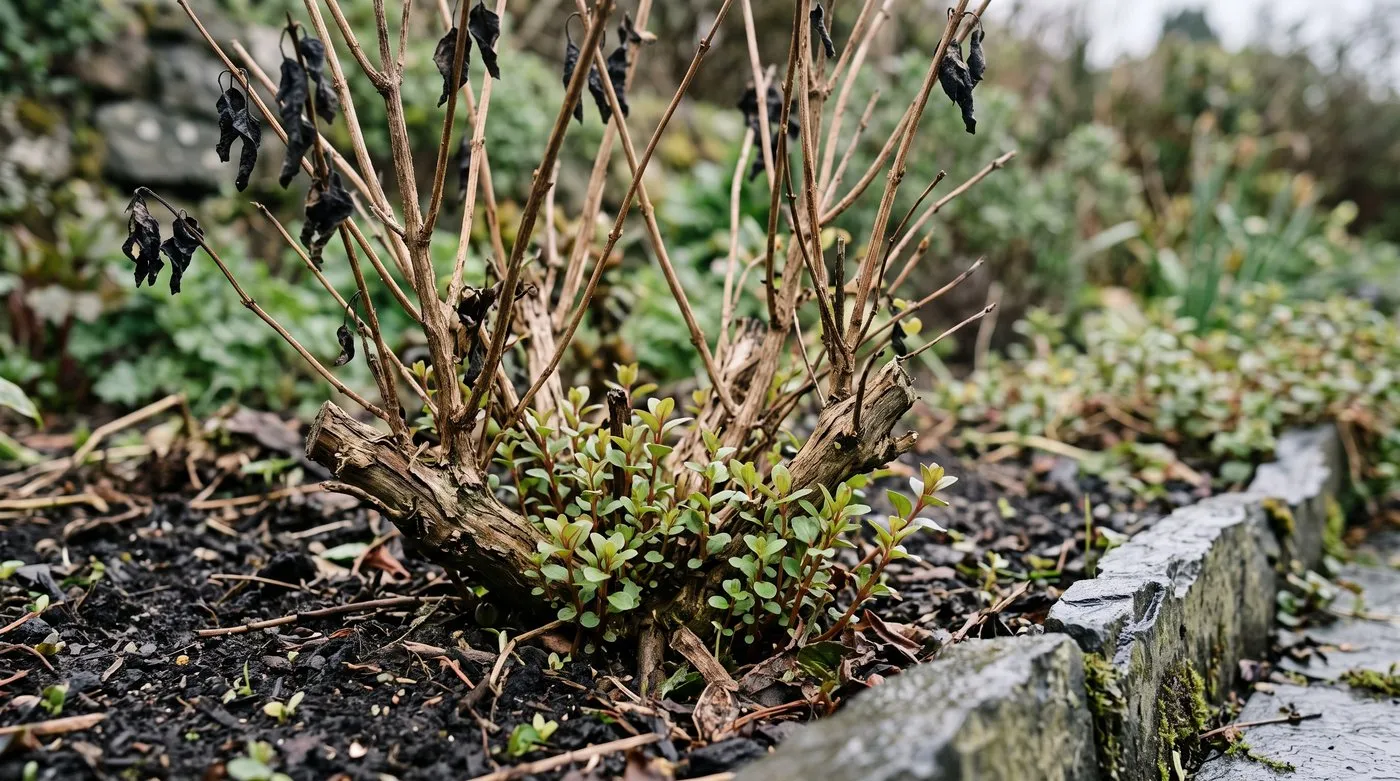
Leave frost-damaged growth on over winter, as it shelters the crown. Once new shoots appear at the base, cut back to healthy green growth.
Check for bark splitting
Hard frost can split the bark of young trees and thin-barked ones like acers and cherries. Check trunks in spring. Small splits usually heal on their own.
Revive container plants
If a pot plant looks dead after frost, don’t bin it yet. Scratch a stem with your thumbnail. Green underneath means it’s alive. Move it somewhere sheltered, water lightly and wait. Lots of “dead” plants sprout from the base in late spring.
How to prevent frost damage long-term
Prevention is easier than cure. A few changes make your garden less frosty year after year.
Pick plants that suit your spot. Check the RHS hardiness rating before you buy. In a frost pocket, stick to fully hardy plants in the ground and keep tender ones in pots you can move.
Let cold air drain away. A solid fence at the bottom of a slope traps cold air. A hedge, open fence or trellis lets it flow through.
Use your walls. South-facing walls soak up warmth by day and give it off at night. Plant tender shrubs and trained fruit trees against them, as it’s noticeably milder there.
Keep the soil moist. Good watering practice helps the soil hold warmth. Bone-dry soil freezes faster.
Block the wind. Cold wind makes frost feel much harsher. Windproofing a greenhouse and planting hedges as windbreaks both help on exposed sites.
Further reading
- How to harden off seedlings before planting out after the last frost
- Cold frame gardening for growing all year
- Climate-resilient plants for UK gardens that cope with frost, drought and odd weather
- How to insulate a greenhouse for winter
- What is mulch and how to use it
Frequently asked questions
What temperature is classed as a frost in the UK?
Anything at 0C or below. A ground frost is when the ground freezes. An air frost is when the air itself drops below zero. You can get a ground frost even when the air stays just above zero, because cold air sinks.
When is the last frost in the UK?
Usually mid-April in the south of England and coastal Wales. It’s late April to early May in the Midlands and the north. In highland Scotland it can be late May or early June. Late frosts do happen, so keep fleece handy until you’re sure.
Does horticultural fleece really protect plants from frost?
Yes, it keeps off light frosts nicely. It traps a layer of still air round the plant and slows the heat escaping from the soil. One layer of 30g fleece copes with most UK frosts. Use two layers on really cold nights.
Should I water plants before a frost?
Water the soil, but keep the leaves dry. Damp soil holds onto warmth and gives it off slowly overnight. Wet leaves are more likely to get damaged by ice.
Can I save a plant that has been frost damaged?
Often yes, so don’t cut it back straight away. The dead bits shelter the crown from the next frost. Wait until late spring when new shoots appear, then trim back to healthy growth. Dahlias, cannas and penstemons often bounce back from the roots.
What plants do not need frost protection in the UK?
Fully hardy plants, rated RHS H5 to H7, are fine on their own. That includes most native trees, shrubs like hawthorn and holly, and perennials like hellebores, hardy geraniums and pulmonaria. Spring bulbs, grasses and most hedging don’t need covering either.
Is bubble wrap better than fleece for frost protection?
They do different jobs. Fleece goes over plants and lets air and rain through. Bubble wrap is for lining greenhouses and cold frames and wrapping pots. On plants themselves it traps damp and causes rot, so use fleece outdoors.
Our team produces practical UK gardening guidance from source research, contributor records and established horticultural practice. Editorial standards are overseen by Matt W.