Key takeaways
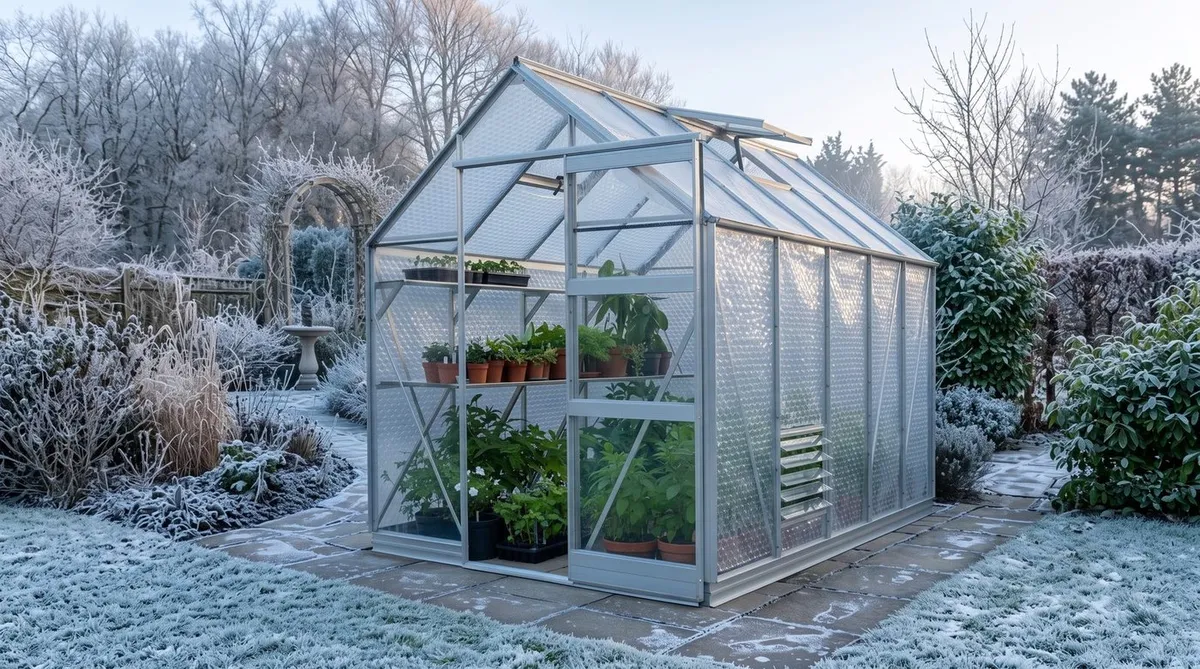
- Bubble wrap keeps a greenhouse warmer at night but blocks a little light
- Put it up in October and take it down by late March
- Fit it bubble side to the glass, and do the roof first
- Twin-wall polycarbonate already holds heat better than single glass
- For frost-free, aim for about 4C, and insulate before you heat
- Seal gaps around doors, vents and the base to keep cold air out
Insulating your greenhouse is one of the cheapest jobs you can do before winter. A layer of bubble wrap inside the glass keeps it warmer at night and cuts the cost of any heating. Add some draught-proofing and fleece and you’re well set for very little money.
If you already heat your greenhouse, our greenhouse heating guide compares heaters and running costs.
Why insulate a greenhouse?
Glass is poor at holding heat, so a greenhouse cools down fast at night. On a clear, still January night, an unheated glass greenhouse can get nearly as cold as outside. Frost can even form on the inside of the glass, and tender plants can be damaged or killed.
Insulation traps a layer of air between the cold glass and the air inside. The greenhouse stays warmer for longer after dark, and any heater doesn’t have to work as hard. If you’re overwintering pelargoniums, fuchsias or citrus, it makes keeping them frost-free much cheaper.
Hardy plants need it less. Bubble wrap cuts out about a tenth of the light, which matters for winter lettuce and alpines. If your greenhouse holds only hardy plants and winter salads such as lettuce, plenty of light and fresh air may suit them better.
How to insulate with bubble wrap
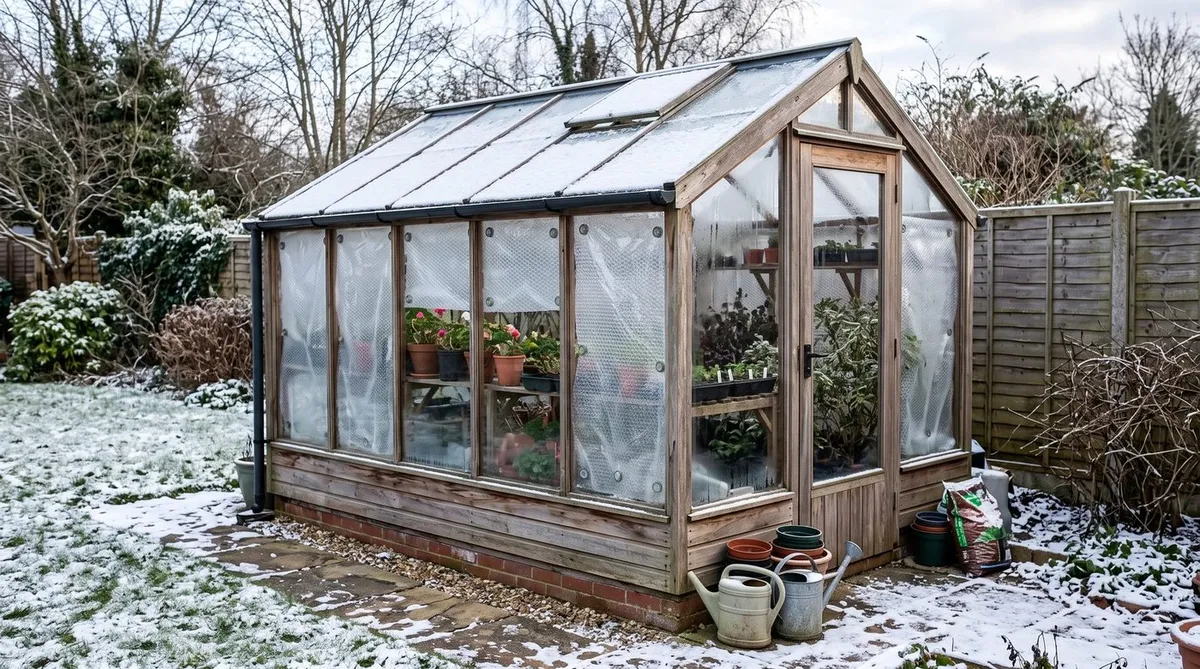
Clip bubble wrap to the inside of the frame, bubble side towards the glass. Horticultural bubble wrap is made to last in sunlight, so you can reuse it for several winters. Big-bubble types let in more light, but re-used packaging wrap is much better than nothing.
What you need
- Bubble wrap (horticultural, by the metre or in rolls)
- Glazing clips or Elite Lining Hooks, depending on your frame
- Scissors or a craft knife
- A tape measure
Step-by-step method
- Measure each panel separately. Cut the bubble wrap a few centimetres bigger than each opening.
- Fit the bubble side towards the glass. The flat side faces in, so it’s easy to wipe.
- Clip it to the glazing bars. Glazing clips snap onto aluminium bars every 30cm or so. Elite greenhouses have channels that lining hooks slide into.
- Start with the roof. Do the roof panels first, then the sides. Overlap the joins by about 5cm so there are no cold gaps.
- Keep the vents free. Cut the wrap around vents so you can still open them on mild days.
- Do the door last. Hang a curtain of bubble wrap inside the door, clipped at the top. It stops a rush of cold air every time you go in.
Gardener’s tip: In a big, half-empty greenhouse, put up a bubble wrap screen on battens to close off a smaller area. Heat just that bit and your heating bill shrinks with it.

Clipping bubble wrap to the inside of the glazing bars, bubble side to the glass.
How much difference does insulation make?
Insulation slows heat loss, but it doesn’t make heat. So it helps most in a heated greenhouse, where the heater runs for less time. In an unheated greenhouse it helps on borderline nights, but a hard frost will still get in.
| Method | What it does | The catch |
|---|---|---|
| One layer of bubble wrap | Slows heat loss through the glass | A little less light |
| Two layers of bubble wrap | Slows heat loss even more | Noticeably less light |
| Thick fleece over plants | Gives plants a couple of degrees of protection | Take it off by day |
| Twin-wall polycarbonate | Built-in air layer | Less light than glass all year |
| Draught-proofing | Keeps cold air out | You still need to be able to open vents |
For most UK growers, one layer of bubble wrap is plenty. Two layers only make sense for very tender plants in cold areas.
Polycarbonate vs glass insulation
Twin-wall polycarbonate holds heat better than glass. Its two layers with air channels between them work like permanent bubble wrap. A polycarbonate greenhouse like the Palram Hybrid stays warmer than a single-glazed glass one of the same size.
If you’re buying a new greenhouse to use through winter, polycarbonate is the warmer choice. Glass lets in more light, which summer crops love. But for overwintering plants and starting early in spring, polycarbonate has the edge. Our guide to polycarbonate vs glass greenhouses goes into more detail, and our best greenhouse for UK gardens guide helps you choose a model.
In very cold areas, a polycarbonate greenhouse still benefits from bubble wrap on the roof, where warm air gathers and escapes.
Using fleece for plant protection
Horticultural fleece keeps a pocket of warmer air around the plant. Drape it over tender plants or wrap individual pots. Thicker fleece gives a couple of degrees of frost protection.
Fleece and bubble wrap work best together. The bubble wrap insulates the greenhouse, and the fleece insulates the plant.
Take fleece off during the day so plants get light and air. Left on all the time, it can encourage mould. If you’re growing herbs through winter, fleece helps parsley and coriander on cold nights. Basil won’t survive in an unheated greenhouse, so bring it indoors.
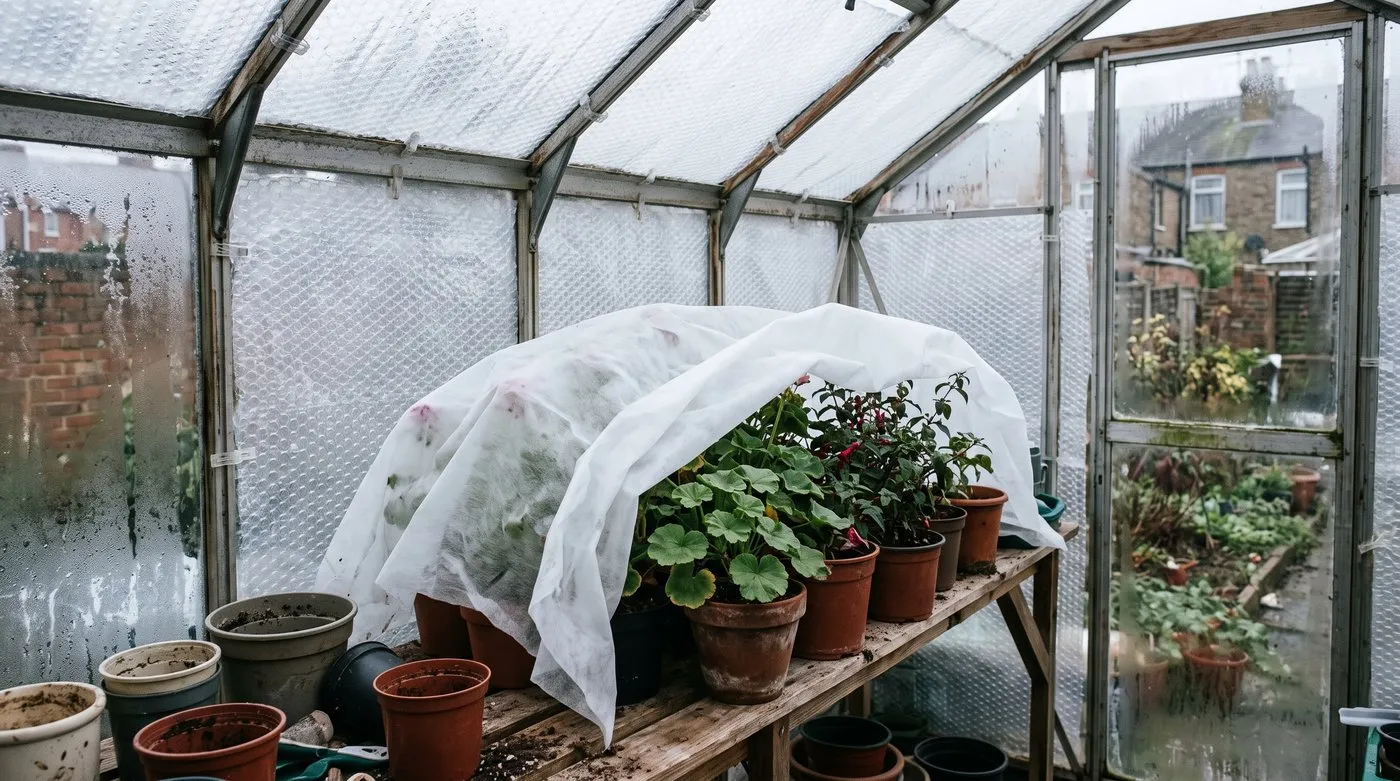
Bubble wrap insulates the greenhouse and fleece insulates the plant. Lift the fleece by day so plants get light and air.
What temperature should a greenhouse be in winter?
Aim for at least 4C if you want it frost-free. That’s warm enough to overwinter tender plants like pelargoniums and tender fuchsias. An insulated but unheated greenhouse suits half-hardy plants. Very tender plants, like many tropical houseplants, need more warmth than that. Check the plant label for its hardiness. Keep a couple of degrees above the minimum to be safe, as corners can be colder than you think.
How can you keep a greenhouse warm without electricity?
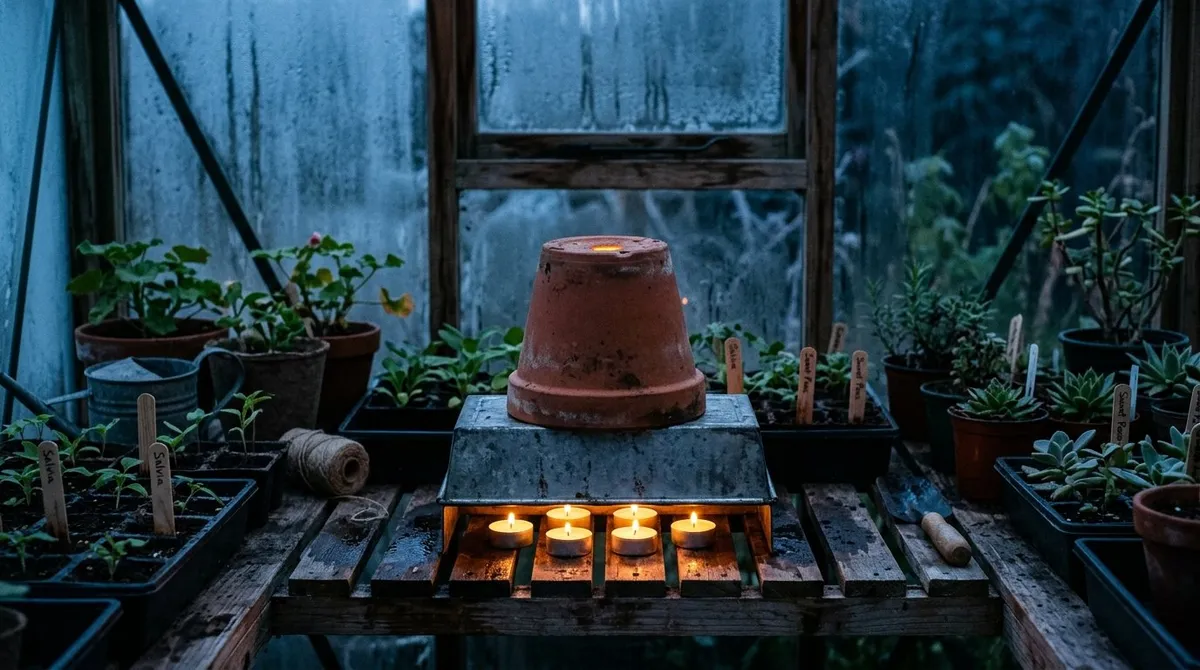
Without power, the trick is to trap the day’s warmth and hold on to it. Shut the vents and door by mid-afternoon on cold days. Big containers of water on the floor or under the staging soak up warmth by day and give it back at night. Group tender plants in the warmest spot, lift pots off the cold floor and cover them with fleece on frosty nights. Keep the compost on the dry side, as cold, wet roots rot. A paraffin heater is the main option without electricity, but it needs a little ventilation.
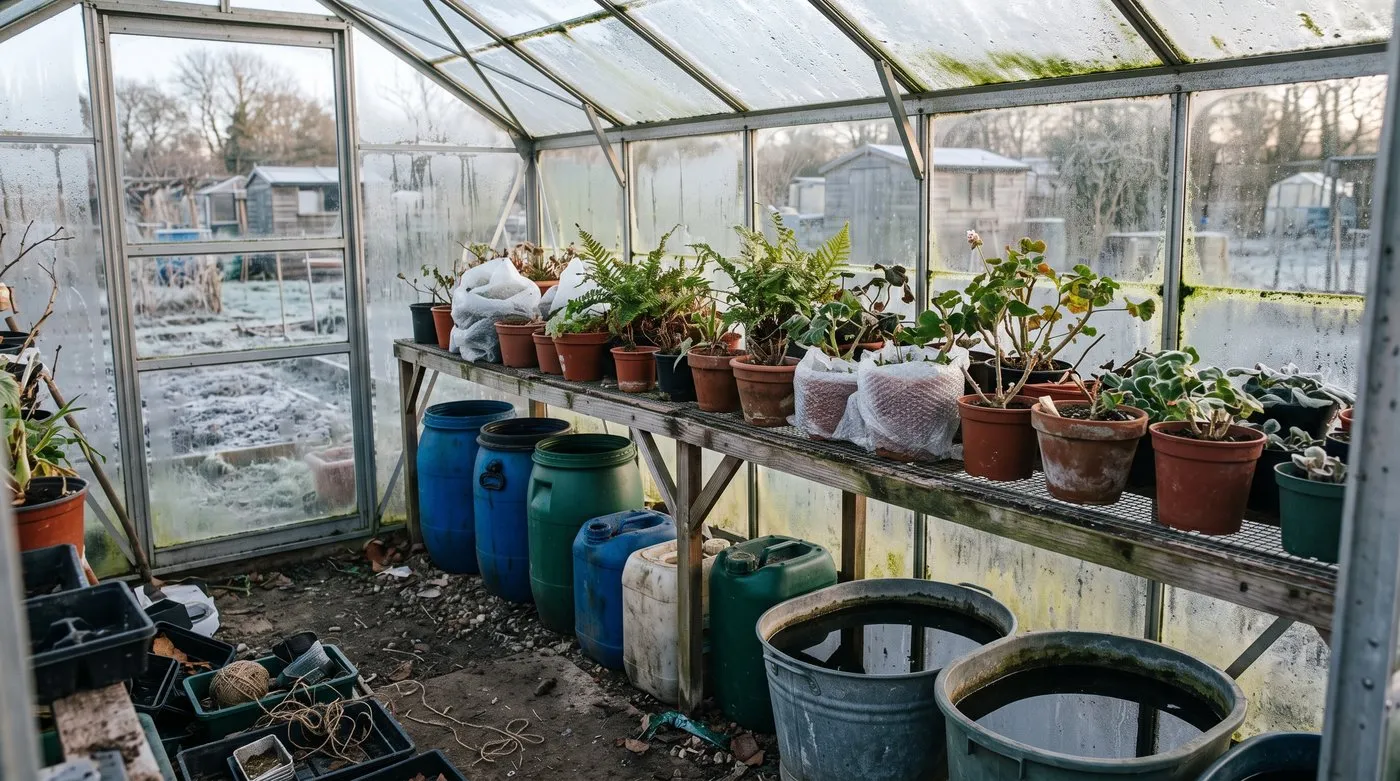
Big containers of water soak up warmth by day and give it back at night. Shut the vents and door by mid-afternoon to hold it in.
Combining insulation with heating
Insulate first, then heat. Without insulation, a heater is fighting heat pouring out through the glass. With it, the heater only needs to top up.
Set the thermostat no higher than you need. About 4C keeps the frost out, and every extra degree adds to the bill. Thermostat dials can be a few degrees out, so check with a max-min thermometer in the middle of the greenhouse, near your plants.
Three heaters that suit an insulated greenhouse:
- Elite Slimline Tube Heater: gentle background warmth for frost protection. Fixes to a wall or under the staging.
- Eden 2kW Greenhouse Heater: a fan heater with a thermostat. Moving the air around also helps keep damp down.
- Elite Super Warm 5 Paraffin Heater: needs no electricity, so it’s handy for allotments. Burning paraffin gives off fumes, including carbon monoxide, so always leave a little ventilation.
Have any electrics in a greenhouse put in by a qualified electrician, and only use heaters made for greenhouses. Never run a paraffin or gas heater in a fully sealed greenhouse.
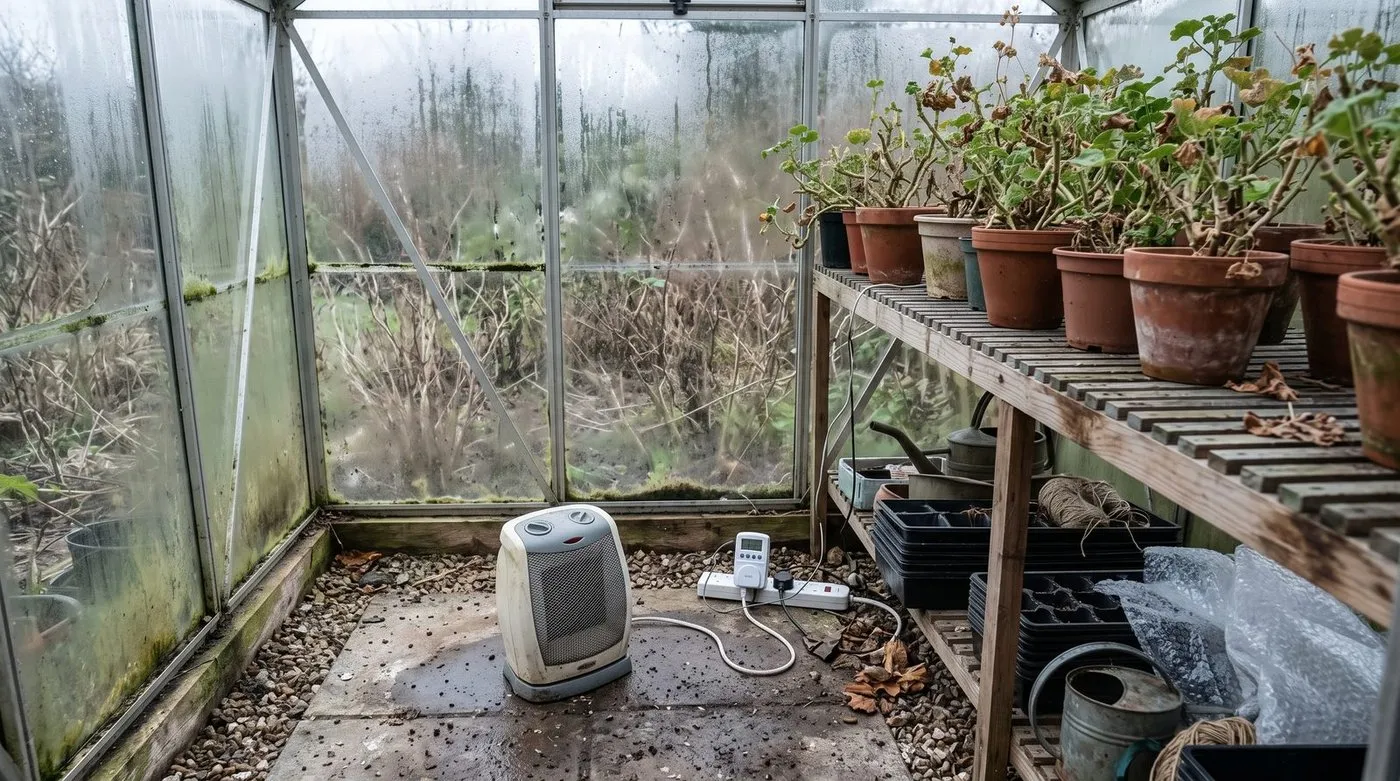
A fan heater with a thermostat moves warm air around and helps avoid cold corners.
If a fan heater suits you, you can shop the Eden 2kW Greenhouse Heater at Greenhouse Stores.
Draught-proofing gaps and leaks
Seal the gaps around doors, vents, the base and any cracked panes. Insulating the glass won’t help much if icy wind is whistling under the door. Check every seal before winter.
The usual trouble spots:
- Door edges: Stick foam draught strip along the door frame. Replace it each autumn as it squashes flat.
- Base: Pack any gap between the base and the ground with foam strip or silicone sealant.
- Broken or cracked panes: Replace broken glass quickly. Seal small cracks with clear silicone.
- Vents: Make sure roof vents close properly. Bent hinges or worn seals let heat escape all night.
- Small gaps: Tape over them with clear tape, but keep the vents free to open.
Draught-proofing costs very little and fits nicely into your autumn gardening jobs. The RHS guide to heating greenhouses efficiently has more tips on sealing and heaters.
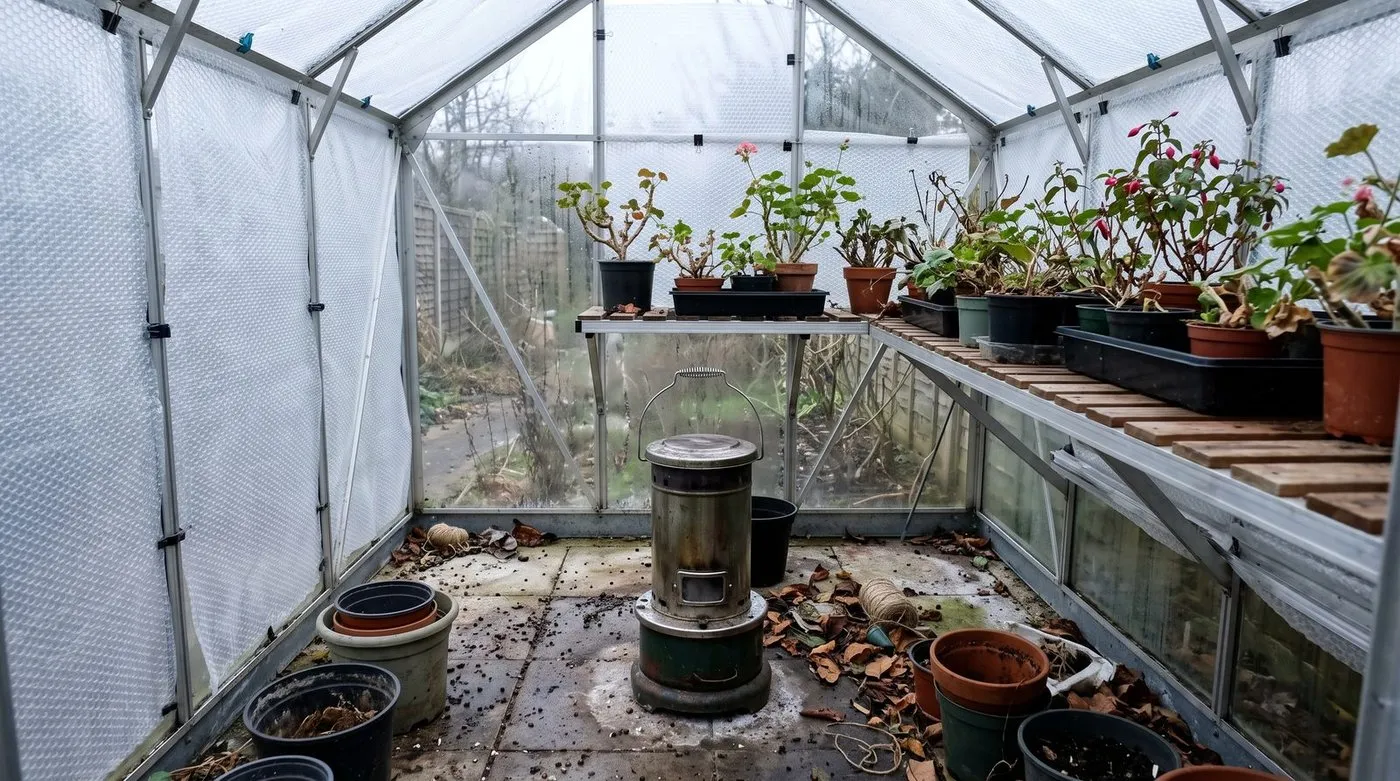
A paraffin heater needs no electricity, which makes it handy for allotments.
For an off-grid greenhouse, you can shop the Elite Paraffin Heater at Greenhouse Stores.
When to insulate and when to remove
Put insulation up in October. The first frosts usually arrive in October or November, earlier in the north and inland. Getting it up early gives you a buffer, and it’s a nicer job on a mild, dry day.
Take it down by late March. By then hard frosts are less likely and light matters more than warmth. Leave bubble wrap up into April and May and seedlings go leggy. Your spring sowings and seed starting need all the light they can get, and so do young plants when you start growing tomatoes.
| Month | What to do |
|---|---|
| September | Buy materials. Check the greenhouse for gaps and damage. |
| October | Fit bubble wrap. Draught-proof doors and vents. |
| November to February | Check it’s still secure after storms. Open a vent on mild days. |
| March | Take the bubble wrap down once hard frosts are unlikely. Clean the glass. |
| April | Roll up the wrap and store it in a dry shed for next year. |
Gardener’s tip: Roll bubble wrap to store it rather than folding it, so the bubbles don’t get squashed. A cardboard carpet tube makes a great core.
Common mistakes to avoid
Sealing it up completely. Even an insulated greenhouse needs fresh air. Open a vent for an hour on mild days to let damp out, or you’ll get grey mould and damping off. Our guide to greenhouse ventilation and humidity control has a winter routine.
Insulating when you don’t need to. Hardy plants and winter salads cope fine in an unheated greenhouse and may miss the light. Save the bubble wrap for tender plants or a heated greenhouse.
Leaving it up too long. Bubble wrap in April and May steals light just when seedlings need it most. Pop a reminder in your calendar for late March.
Doing only the sides. Warm air rises and escapes through the roof. If you’re short of wrap, do the roof and north-facing side first.
Forgetting the door. It’s the biggest opening. A bubble wrap curtain inside, clipped at the top, stops cold air rushing in every time you visit.
Planning what to grow in a heated greenhouse this winter? Our container vegetable gardening guide has plenty of ideas.
Frequently asked questions
Does bubble wrap insulation really work in a greenhouse?
Yes. Bubble wrap traps still air against the glass, a bit like double glazing, so the greenhouse loses heat more slowly at night. It’s most useful in a heated greenhouse, where it cuts running costs. The trade-off is a little less light.
When should I insulate my greenhouse for winter?
Put insulation up in early to mid October. That’s before the first hard frosts, which usually arrive in late October or November across most of the UK. Take it down by late March, when light matters more than warmth.
Can I use normal bubble wrap to insulate a greenhouse?
Yes, re-used packaging bubble wrap works fine. Horticultural bubble wrap is made to last in sunlight, so you can reuse it for several winters. It usually has bigger bubbles and lets in more light.
How do I attach bubble wrap to a greenhouse?
Use glazing clips or lining hooks. Clips snap onto aluminium glazing bars, and lining hooks slot into the frame channels on some brands. Fit the bubble side towards the glass. On wooden frames, use drawing pins or a staple gun.
Should I insulate a polycarbonate greenhouse?
Often it doesn’t need much. Twin-wall polycarbonate already holds heat better than single glass. Adding bubble wrap helps in very cold areas or if you heat it. In milder parts of the UK, it may be fine as it is for basic frost protection.
Is it worth heating an uninsulated greenhouse?
It works, but it costs more than it needs to. Single glass loses heat fast, so the heater runs longer. Insulate and seal draughts first, then heat only the space you need, with the thermostat set to about 4C.
Our team produces practical UK gardening guidance from source research, contributor records and established horticultural practice. Editorial standards are overseen by Matt W.