Key takeaways
- Protect the crown first, because every new frond grows from that one point
- Pack the crown with dry straw or bracken in late October or November
- Wrap the trunk in hessian or fleece, never plastic, which traps damp
- Tree ferns in pots need the pot insulated too, or moved somewhere sheltered
- Unwrap gradually in April and watch for new croziers in late spring
- Mild coastal gardens need less cover than cold inland ones
Tree fern winter protection comes down to one thing: keeping the crown alive. The crown is the growing point at the very top of the trunk, and every new frond comes from it. Dicksonia antarctica, the soft tree fern most UK gardens grow, can lose its crown in frosts below about -5C. Pack the crown with straw, wrap the trunk in something breathable and it will come through most winters.
This guide covers how to wrap a tree fern step by step, how much cover your garden needs, and how to unwrap safely in spring.
Why the crown matters more than the trunk
All growth comes from the crown. A tree fern has no buds down its trunk and can’t sprout from the side. Lose the crown and you usually lose the plant.
The “trunk” isn’t wood at all. It’s a column of tightly packed roots, and it copes with far more cold than the soft crown. That’s why a fern can look fine after a cold week, then fail to sprout in spring. The crown froze quietly and the damage wasn’t visible from outside.
So put most of your effort into the top 30cm: the crown and the young coiled fronds. The trunk just needs a light wrap to keep off driving rain and the worst of the cold.
Dicksonia antarctica is the hardiest common tree fern. Cyathea tree ferns are less hardy. In most of the UK they need a frost-free spot, a cold greenhouse or a conservatory over winter.

Left, a healthy crown full of coiled croziers. Right, a frost-killed crown gone black. Once the crown is gone, there’s no second growing point.
How much protection does your tree fern need?
It depends on how cold your garden gets. Match the cover to your own winters, not to advice from a milder part of the country.
| Where you garden | What to do |
|---|---|
| Mild coastal areas such as Cornwall, west Wales and sheltered city gardens | A straw plug in the crown is often enough. Add a trunk wrap in a hard winter |
| Most UK gardens | Straw-packed crown, fronds folded over, trunk wrapped in hessian or fleece |
| Cold inland gardens, frost pockets and exposed plots | All of the above, plus a chicken-wire cage packed with straw round the trunk |
| Tree ferns in pots | Wrap the crown and trunk, insulate the pot, and move it to a sheltered spot |
Frost pockets, exposed sites and cold, heavy soil all push you towards more cover, not less. The general guide to protecting plants from frost explains how to spot the coldest corners of your garden.
How to wrap a tree fern step by step
The job takes about ten minutes per plant. You need dry straw or bracken, a length of horticultural fleece or hessian and some garden twine. Keep the straw dry until you use it, because wet straw freezes into a solid block.
- Plug the crown. Push a generous double handful of dry straw or bracken into the centre of the crown. Pack it firmly so it fills the funnel.
- Fold and tie the fronds. Gather the old fronds up over the stuffed crown and tie them loosely with twine.
- Cap the crown. Drape fleece over the tied fronds. Leave a little gap for damp air to escape.
- Wrap the trunk. Spiral hessian or fleece up the trunk from the base, overlapping each turn. Tie it at intervals.
- Add a cage in cold gardens. Ring the trunk with chicken wire about 10cm out, then fill the gap with dry straw.
- Shed rain if needed. In a very wet, exposed spot, a loose sheet of plastic over the crown sheds rain. Keep it clear of the fleece so air can still move.
Warning: Never wrap plastic or bubble wrap directly round the trunk. It traps damp against the fibres, and a trunk left wet and airless all winter can rot.

A straw-packed crown and a hessian-wrapped trunk is all most UK gardens need. Get it on before the first hard frost.
For cold inland gardens, the chicken-wire cage turns the straw into a thick insulating jacket. It’s more work, but worth it in a frost pocket.

A straw-filled wire cage is the extra step for exposed, frosty plots. It keeps the whole trunk and crown in a pocket of dry air.
How to protect a tree fern in a pot
Potted tree ferns need their roots protected as well as the crown. Roots in a pot freeze far more easily than roots in the ground.

Pots need wrapping too, because roots in a pot freeze long before roots in the ground. A sheltered wall helps.
Move the pot against a sheltered house wall, out of cold winds. Wrap the pot in hessian, bubble wrap or fleece, since plastic round the pot itself is fine. Stand it on pot feet so it drains. Then protect the crown and trunk in the same way as a fern in the ground.
In a very cold spell, a small potted fern can go into an unheated greenhouse, garage with a window or porch. Bring it back out once the hard frosts pass. The wider guide to overwintering plants covers other tender pot plants that need the same treatment.
When to wrap and unwrap a tree fern
Wrap before the first hard frost, usually late October or November. Watch the forecast rather than the calendar. Cold inland gardens may need to act in mid-October.
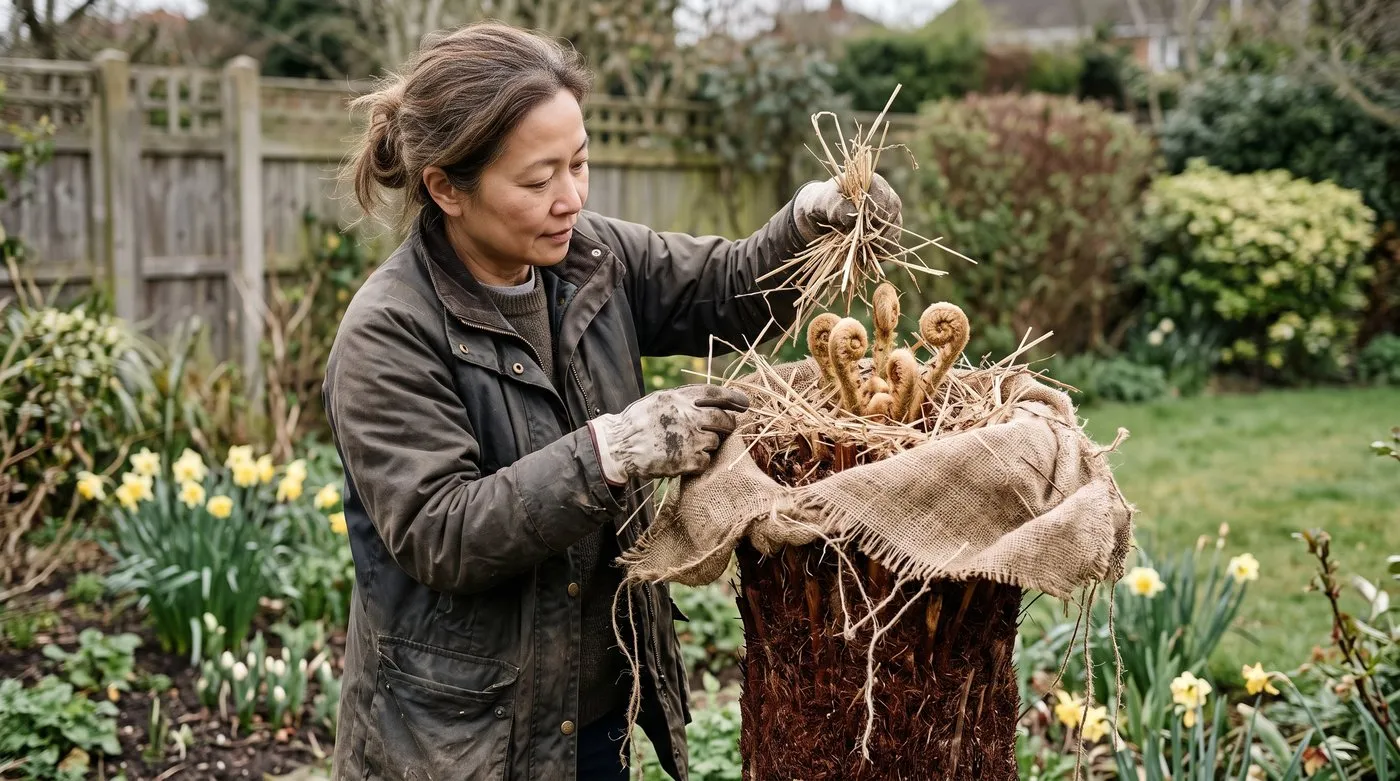
Unwrap gradually in April. Furry new croziers in the centre are the best sign the crown came through.
Unwrap gradually in April, once hard frosts have passed. Take the protection off over a week or two rather than all at once. Peel back the trunk wrap first, then the crown cap. Stripping a fern bare on a bright April day leaves the soft crown open to a late frost.
Watch through May for croziers, the tightly coiled new fronds. They tell you the crown survived. Once they appear, cut off the old fronds you folded over in autumn. Tree ferns grow slowly, only a few centimetres of trunk a year, so a lost crown is a big setback.
| Month | Task |
|---|---|
| October | Gather dry straw and fleece. Wrap early in cold gardens |
| November | Plug the crown, fold the fronds and wrap the trunk before hard frost |
| December to February | Check wraps after gales and keep the straw dry |
| March | Leave the protection on, even in warm spells |
| April | Remove protection gradually once hard frosts have passed |
| May to June | Watch for croziers, cut off old fronds, start regular watering |
How to water a tree fern
Tree ferns take up water through the trunk as well as the roots. That catches lots of people out.
From late spring to early autumn, water the trunk and the crown regularly, two or three times a week in warm, dry weather. A dry trunk in summer browns the fronds from the tips. Keep the soil round the base moist too.
In winter, cut right back. Don’t water into the crown, where cold water can sit and rot it. In a long dry, mild spell, a light sprinkle on the trunk is plenty.

A sheltered, damp courtyard like this is tree fern heaven. In mild coastal spots, a light crown plug is often all the winter cover needed.
Common tree fern winter mistakes
Wrapping the trunk in plastic. It traps damp and can rot the fibres. Use hessian or fleece next to the plant.
Forgetting the crown. Wrapping the trunk and leaving the crown open is the commonest way to lose a fern. Plug the crown first, always.
Unwrapping too early. A warm March is tempting. A sharp April frost on a bare crown can then kill a fern that survived the whole winter.
Using wet straw. Damp straw freezes solid and gives little protection. Use dry straw or bracken and cap it to keep the rain off.
Leaving pots unprotected. Roots in a pot freeze long before roots in the ground. Wrap the pot and move it to shelter.
Tree ferns pair beautifully with other big-leaved plants. The guide to hardy exotic plants has more tropical-looking survivors, and the jungle garden design guide shows how to use them together. For a shady spot full of native ferns, try a stumpery. Before the first frost, read the garden fleece guide to pick the right grade. More seasonal jobs are in the how-to hub.
Frequently asked questions
How cold can a tree fern survive in the UK?
An unprotected crown can be damaged in frosts below about -5C. The trunk copes with more cold than the crown. With a straw-packed crown and a wrapped trunk, Dicksonia antarctica comes through most UK winters. Mild coastal gardens often need very little cover.
Which part of a tree fern do I protect in winter?
Protect the crown, the growing point at the top of the trunk. Every new frond comes from this single point, so a frosted crown usually means a dead plant. The trunk is a mass of fibrous roots and is much tougher.
When should I wrap a tree fern for winter?
Wrap before the first hard frost, usually late October or November. Watch the forecast rather than the calendar. In a cold inland garden act sooner. Remove the protection gradually from April once hard frosts have passed.
Can I use bubble wrap or plastic on a tree fern trunk?
No, never put plastic directly against the trunk. Plastic traps damp against the fibres and can rot them over a wet winter. Use breathable hessian or fleece. Plastic is only fine as a loose rain shield clear of the breathable layer.
Should I cut the fronds off a tree fern before winter?
No, leave them on over winter. Folding the old fronds up over the crown and tying them adds insulation. They may brown in hard frost, but they shield the crown first. Cut them off in spring once new croziers appear.
How do I know if my tree fern survived the winter?
Look for new croziers uncurling from the crown in late spring. A healthy crown stays firm in the centre. If it’s black, mushy and smells rotten by May, it has probably died. Give a slow fern until June before giving up.
Our team produces practical UK gardening guidance from source research, contributor records and established horticultural practice. Editorial standards are overseen by Matt W.