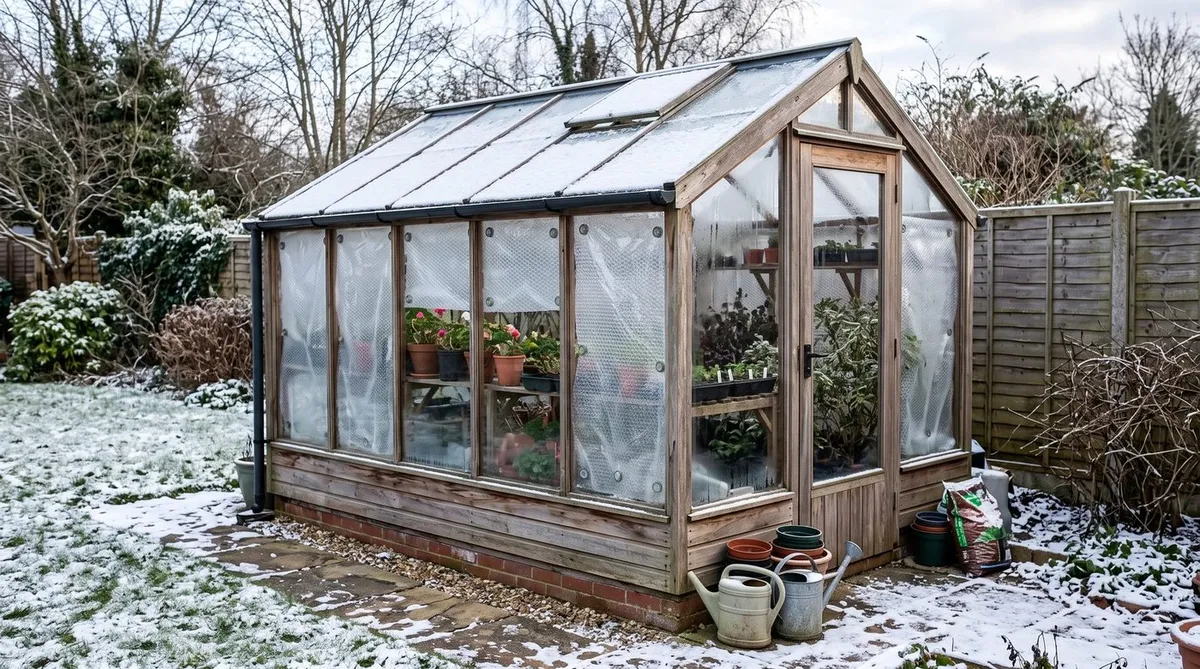
Key takeaways
- Pot roots are far more exposed than roots in the ground, so wrap the pot, not the branches
- Apples, pears, plums, cherries and damsons stay outside all winter with a wrapped pot
- Citrus must come into a bright, cool, frost-free room before the first frost
- Raise pots on feet so they drain and don't sit on frozen paving
- Check compost every week or two and water if dry, but never when frozen
- Unwrap, top-dress and start feeding in March or April
Potted fruit trees need winter help because the compost in a pot freezes much faster than garden soil. The branches of an apple or plum are tough, but the roots are not. Wrap the pot, move it somewhere sheltered and keep an eye on watering, and most fruit trees sail through.
This guide covers the winter months only, from October to March. For choosing trees, pots and compost in the first place, see the guide to growing fruit in pots and containers.
Why do potted fruit trees need winter protection?
Roots in a pot have no surrounding soil to keep them warm. Cold air hits the pot on every side, so the compost can freeze solid in a hard spell. Roots in the ground rarely freeze.
Wind and dry spells add to the problem. Compost in pots dries out in cold winds, and dry roots suffer more in frost. Pots also tend to sit in rain shadows by walls, so they miss the rain.
The job is simple: insulate the pot, shelter it from wind, keep the compost just moist, and bring truly tender fruit indoors.
Which potted fruit stays out and which comes in?
Most fruit trees sold for pots are hardy and stay outside all winter. Only a few need to come under cover.
| Fruit | Winter home | What to do |
|---|---|---|
| Apple, pear | Outside | Wrap pot, sheltered spot |
| Plum, cherry, damson | Outside | Wrap pot, no winter pruning |
| Fig | Outside in mild areas | Wrap pot; fleece branches in hard frost |
| Peach, nectarine, apricot | Outside, sheltered | Cover against rain for leaf curl; protect blossom |
| Olive | Outside in mild, sheltered spots | Wrap pot; move to cold greenhouse in cold areas |
| Citrus | Indoors | Bright, cool, frost-free room |
If you garden in a cold, exposed part of the country, err on the side of more shelter. A cold greenhouse or porch is a good halfway house for figs and peaches.
How to wrap a fruit tree pot for winter
Wrapping the pot is the single most useful thing you can do. Do it in late October or November, before the first hard frost.
Good materials:
- Hessian, which looks smart and lets the pot breathe
- Bubble wrap, cheap and very effective, though not pretty
- Garden fleece, light and easy to tie on
- Polystyrene sheets or thick cardboard tied round with twine
Wrap one or two layers round the pot and tie with garden twine. Cover the rim too. You don’t need to wrap the trunk or branches of hardy fruit. For tender extras such as a fig’s tiny overwintering fruits, the garden fleece guide explains which weight to use.

Bubble wrap round the pot is the quickest way to keep roots from freezing. Hessian does the same job and looks smarter.
Where to put potted fruit trees in winter
Move pots against a house wall, ideally facing south or west. The wall gives off a little warmth and blocks the coldest north and east winds.
Group pots together so they shelter each other. Put the most tender ones in the middle. A tight cluster is also less likely to blow over.
Raise every pot on pot feet, bricks or a slatted pallet. That stops the base sitting on frozen paving and lets water drain away. Waterlogged compost is far more likely to freeze hard and rot roots.
A layer of bark chips or leafmould 5cm deep on top of the compost adds a little extra insulation. Rake it back in spring to let the compost warm up.

Grouping wrapped pots against a sheltered wall means each one shields its neighbours from the wind.
Overwintering citrus in pots
Citrus such as lemons, oranges and kumquats are not frost hardy. Bring them in during October, before the first frost.
The ideal spot is bright and cool, such as a conservatory, porch or frost-free greenhouse, at around 10-15°C. A warm, dark living room leads to leaf drop and soft growth that pests love.
- Watering: let the top of the compost dry a little between drinks. Cold, soggy compost is the usual killer.
- Feeding: use a winter citrus feed if you have one. Otherwise go light until spring.
- Moving out: take them outside from late May, once frosts are over. Do it gradually over a week or two.
Some leaf drop after the move indoors is normal. Keep the room steady and away from radiators, and the tree usually recovers by spring. The guide to growing citrus trees covers year-round care.

A bright, cool conservatory is the perfect winter home for a lemon. Lemons often ripen through the winter months.
Figs, peaches and apricots in winter
Figs are hardy, but the pea-sized fruits that overwinter on the tips are not. These become next summer’s crop. In mild areas, wrap the pot and drape fleece over the branches in a hard frost. In colder areas, move the pot into an unheated greenhouse or shed. Figs like drier roots in winter, so water sparingly.
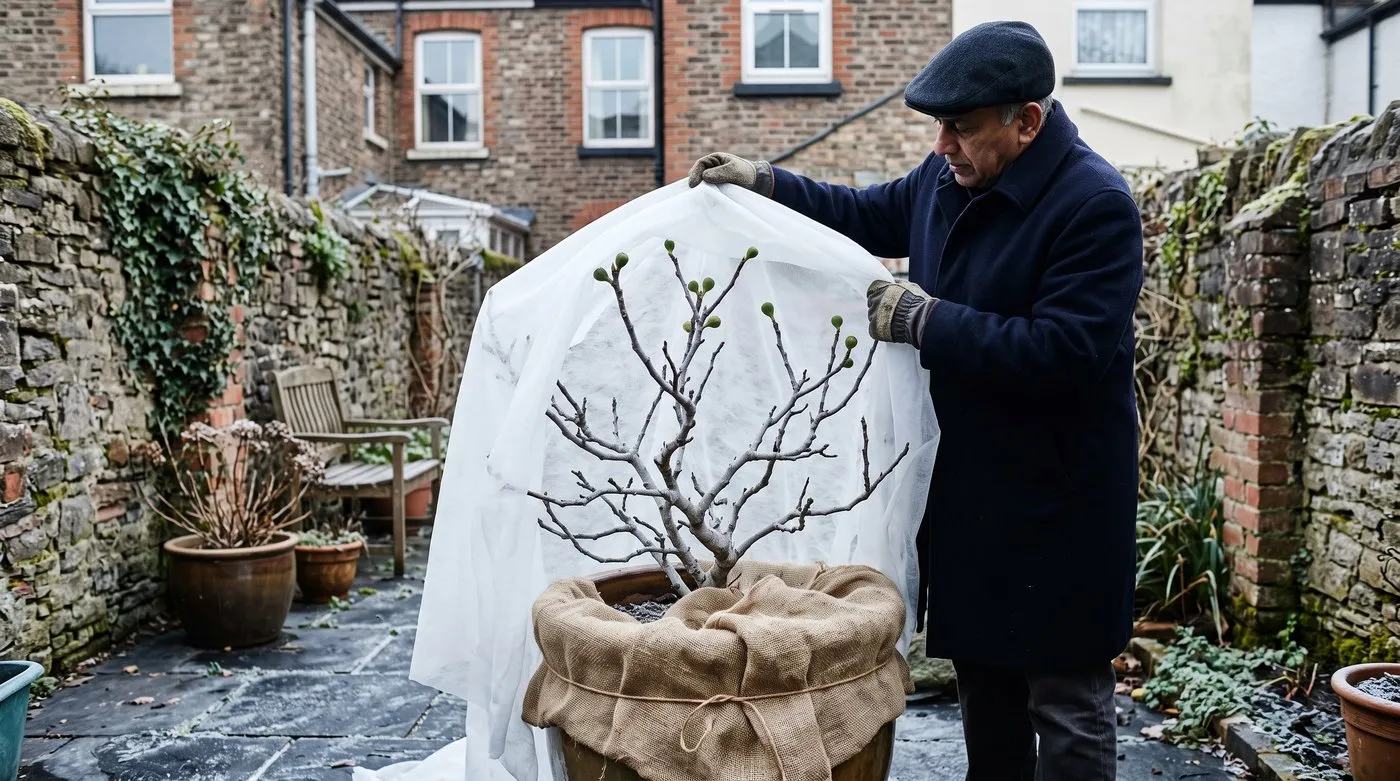
Those tiny figs on the branch tips are next summer’s crop. A fleece in a hard frost keeps them safe.
Peaches, nectarines and apricots are hardy trees with very early blossom. The big problem is peach leaf curl, a fungus spread by rain. Keep rain off the branches with a polythene cover or move the pot under cover from midwinter to late spring. When the tree flowers under cover, dab each blossom with a soft paintbrush to pollinate it.
Watering potted fruit trees in winter
Pots still need some water in winter. Rain often misses them, especially by walls and under eaves.
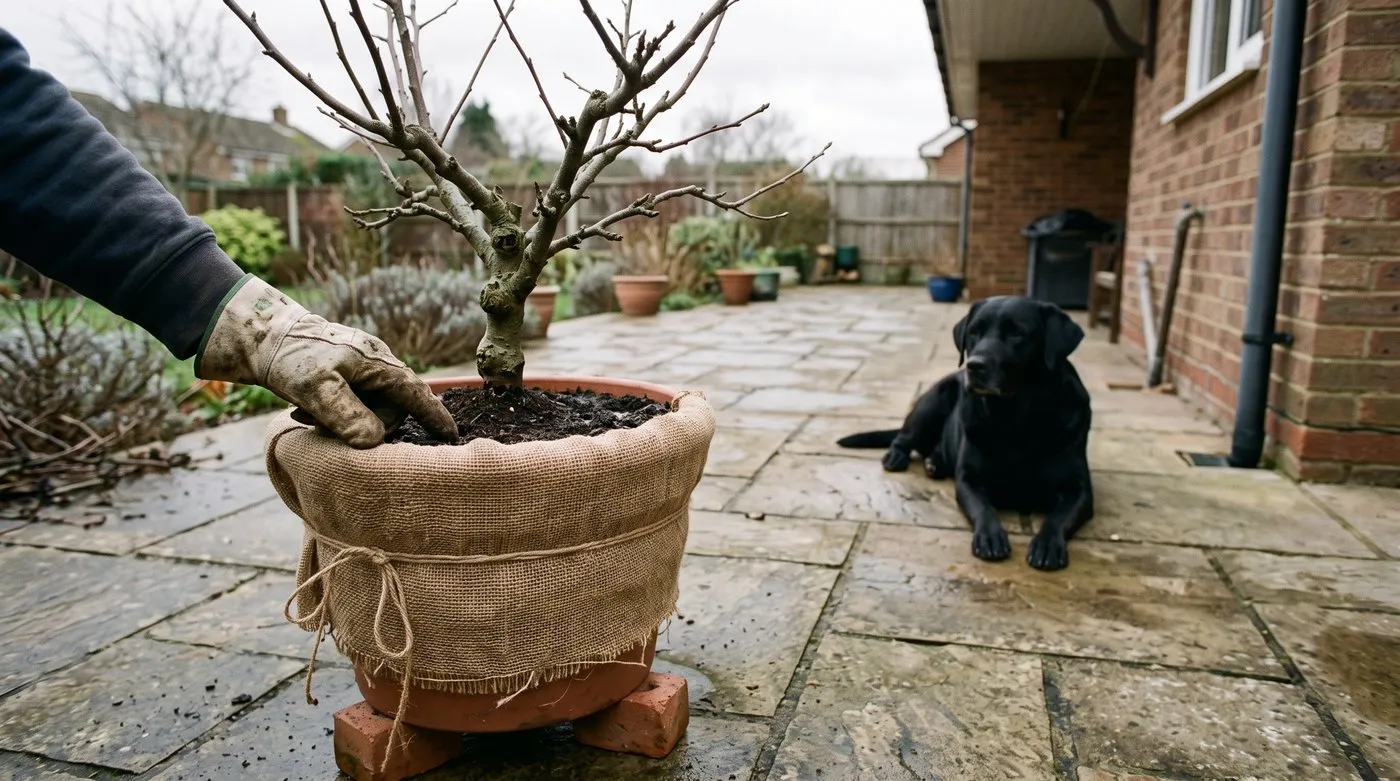
Pots under the eaves can stay dry all winter. A quick finger test every week or two tells you when to water.
Check every 7-14 days. Push a finger a few centimetres into the compost. If it feels dry, give a gentle drink so the root ball is moist but not sitting in water. Never water frozen compost; wait for a thaw. Hardy trees need very little. Compact trees on dwarfing rootstocks, like those in the dwarf fruit trees guide, sit in small pots that dry out fastest. Evergreen citrus and olives need a bit more because they keep their leaves.
Pruning and repotting through the winter
Winter is the time to prune apples and pears, from December to February. Never prune plums, cherries, damsons or apricots in winter, because cuts let in silver leaf disease. Prune those in summer instead. The fruit tree pruning guide shows where to cut.
Late winter or early spring, before the buds break, is the time to repot. Move young trees into a pot one size bigger every couple of years. Once a tree is in its final pot, scrape off the top few centimetres of compost each spring and replace it with fresh John Innes No. 3. You can also trim the root ball to keep a tree in the same pot for years; the root pruning guide shows how.
Month-by-month winter care for potted fruit trees
| Month | What to do |
|---|---|
| September | Last feed of the year with a high-potash feed. Check stakes and ties |
| October | Bring citrus indoors. Stop feeding hardy trees. Clear fallen leaves from pots |
| November | Wrap pots. Move pots against a wall and onto pot feet. Mulch the compost |
| December | Check wraps and watering every week or two. Start pruning apples and pears |
| January | Keep checking. Cover peaches and nectarines against leaf curl |
| February | Finish winter pruning of apples and pears. Hand-pollinate early peach blossom under cover |
| March | Unwrap pots as hard frosts ease. Repot or top-dress. Start feeding as buds break |
| April | Feed regularly. Cover blossom with fleece on frosty nights |
| May | Move citrus outdoors from late May, once frosts are over |

Unwrapping in March is the sign spring has arrived. It’s a good moment to top-dress the compost too.
Common winter mistakes with potted fruit trees
- Wrapping the branches, not the pot. Hardy fruit branches cope with frost. It’s the roots that need the insulation.
- Leaving pots on cold, wet paving. Pots without feet sit in puddles that freeze. Raise them up.
- Forgetting to water. Pots by walls stay bone dry even in a wet winter.
- Bringing hardy fruit into the house. Apples and plums need winter cold to flower. A warm room confuses them.
- Using ordinary terracotta. Cheap terracotta can crack in frost. Choose pots labelled frost-proof.
Frequently asked questions
How cold can container fruit trees survive?
Hardy fruit like apples and plums cope with UK winters if the pot is insulated. The roots are the weak point, not the branches. Tender fruit such as citrus needs frost-free shelter, and figs, peaches and apricots benefit from protection in colder areas.
Should I bring potted fruit trees indoors in winter?
Only tender ones such as citrus. Apples, pears, plums and cherries should stay outside with a wrapped pot. They need a spell of winter cold to flower and fruit well, and a warm room upsets that.
How do I stop a potted fruit tree pot from freezing?
Wrap the pot in hessian, bubble wrap or fleece. Move it against a sheltered house wall and raise it on pot feet so it drains freely. A layer of bark mulch on top of the compost adds a little extra insulation.
Does wind harm potted fruit trees in winter?
Yes, wind dries the compost and can rock or topple pots. Group pots together in a sheltered spot against a wall or fence. Stake tall trees firmly. Heavy terracotta or glazed pots are more stable than light plastic ones.
Do potted fruit trees need watering in winter?
Yes, a little, because rain often misses pots under walls and eaves. Check the compost every week or two. Water if it feels dry a few centimetres down, but avoid soggy compost and never water when it is frozen.
When should I repot a container fruit tree?
Late winter or early spring, before the buds break. Move young trees into a slightly bigger pot every couple of years. Once a tree reaches its final pot, replace the top few centimetres of compost each spring instead. John Innes No. 3 suits fruit trees well.
Your trees are tucked in for winter. For more ways to keep the rest of the garden safe in a cold snap, read our guide on how to protect plants from frost, or browse more how-to guides.
Our team produces practical UK gardening guidance from source research, contributor records and established horticultural practice. Editorial standards are overseen by Matt W.