Key takeaways
- Grow citrus in pots so you can move them under cover for winter
- Meyer lemon, calamondin and kumquat are good, reliable choices for beginners
- Summer outside on a sunny patio, winter in a bright, cool, frost-free spot
- Water less in winter, as cold, wet compost is the most common killer
- Use a summer citrus feed in spring and summer and a winter citrus feed in winter
- Citrus leaves and fruit are toxic to cats and dogs, so keep chewers away
Citrus trees grow happily in the UK, as long as they live in pots. They spend summer on a sunny patio and winter somewhere bright, cool and frost-free. Get that rhythm right and you’ll have scented white flowers and your own lemons or kumquats.
This guide covers choosing a citrus, where to keep it through the year, potting, feeding, watering and fixing common problems. If you’re new to fruit in containers, our guide to growing fruit in pots covers the basics first.
What are the best citrus trees to grow in the UK?
Meyer lemon is a great starting point. It’s a lemon crossed with a mandarin or orange, with slightly sweeter, thin-skinned fruit. It stays compact in a pot and flowers and fruits readily.

A pot-grown lemon with ripe fruit. A grafted tree from a nursery usually starts cropping within a couple of years.
| Citrus | What it’s like | Best for |
|---|---|---|
| Meyer lemon | Compact, sweetish lemons, fruits readily | Beginners, cooking and drinks |
| Calamondin | Small, sour oranges much of the year | Decoration, marmalade, drinks |
| Kumquat | Small oval fruit eaten whole, skin and all | One of the tougher citrus |
| Makrut lime | Grown mainly for its scented leaves | Thai cooking |
| Seville orange | Bitter oranges in winter | Marmalade, needs more warmth |
Kumquats and calamondins are among the tougher citrus, but all of them need protection from frost in a UK winter. Makrut lime needs more warmth than the others, so it suits a heated conservatory.
Where to keep citrus through the year
Moving your tree between summer and winter homes is the key to growing citrus in the UK. They aren’t true houseplants, and they don’t want to be outside all year either.
Summer: outside on a sunny patio
Move citrus outside in about June, once nights are reliably mild. Pick a sunny spot sheltered from wind. Put them in light shade for the first week, as leaves that have been indoors all winter can scorch in strong sun.

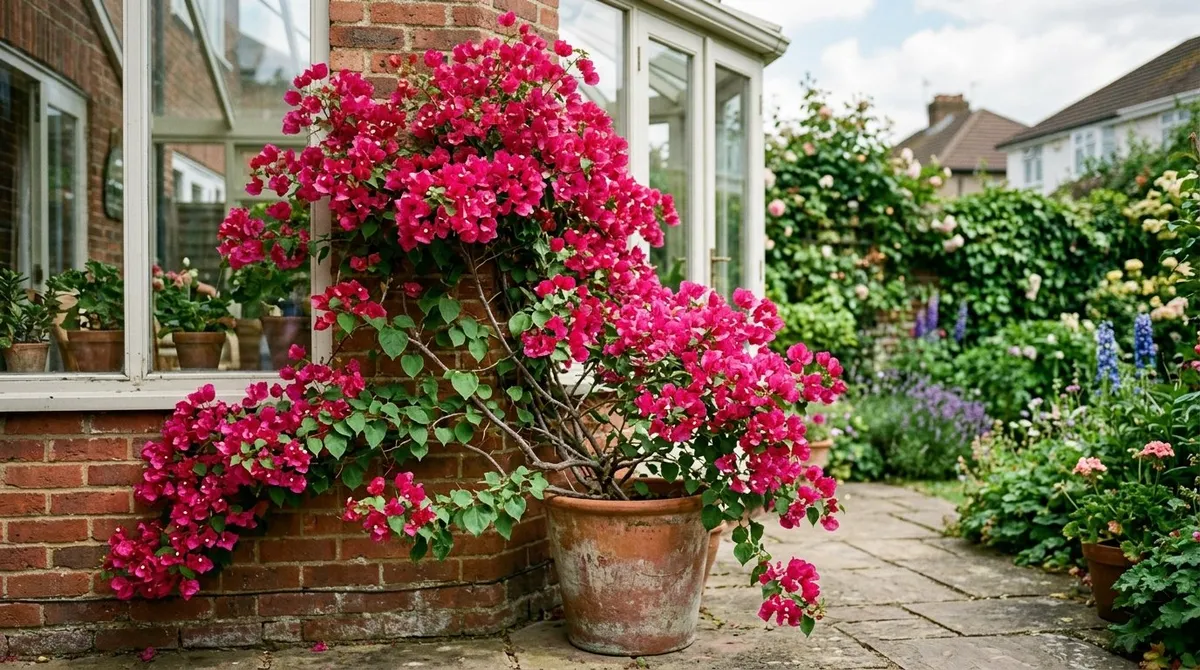
Summer on the patio gives citrus the light and warmth they need. Outdoor flowers get visited by bees too.
Winter: bright, cool and frost-free
Bring citrus back inside in September, before night temperatures drop below about 10°C. The ideal winter home is bright and cool, ideally around 10°C. An unheated or lightly heated conservatory, a cool greenhouse kept frost-free or a bright porch all work well.
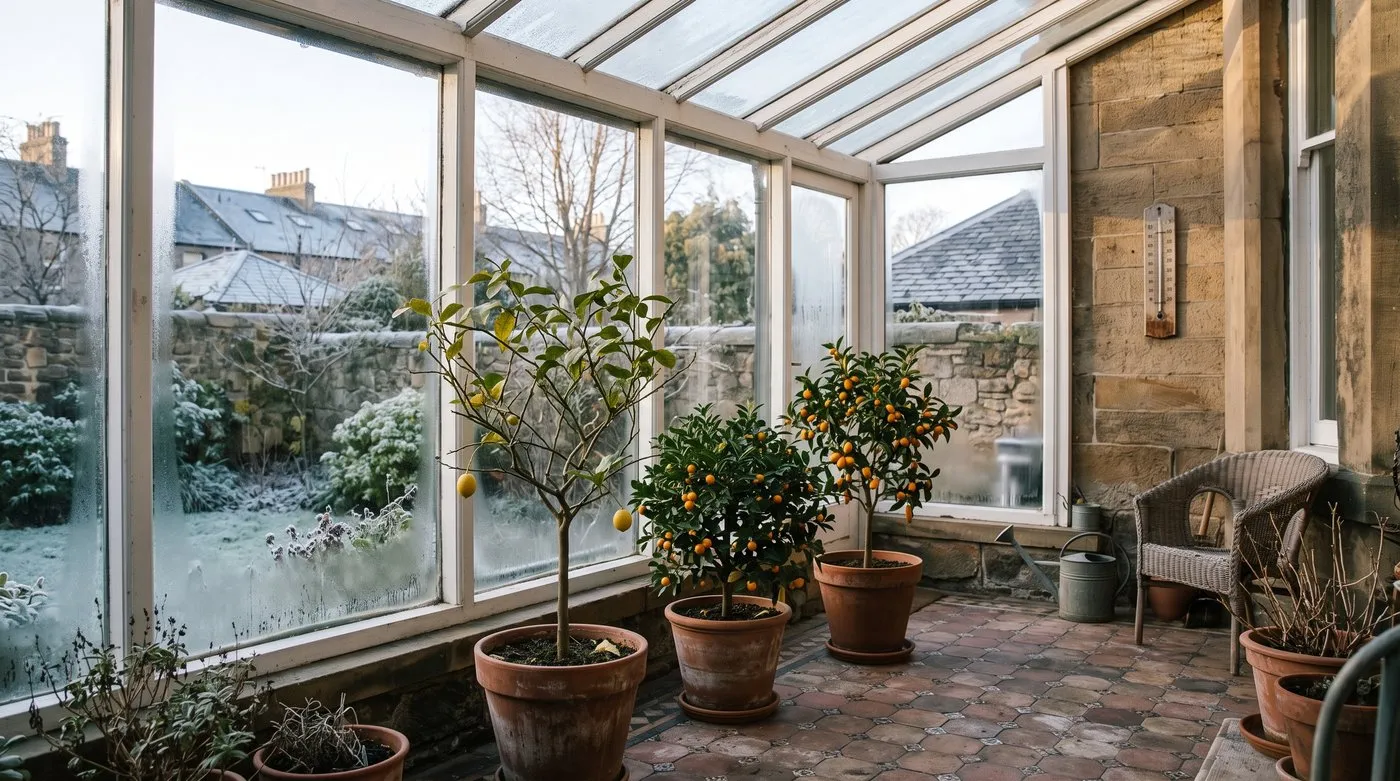
Bright and cool is the winter recipe. A frost-free conservatory beats a warm living room every time.
Keep citrus away from radiators and warm living rooms. Warm, dry air in poor winter light causes weak growth and leaf drop. Our guide to winter care for potted fruit trees has more tips on getting pots through the cold months.
Pet safety: Citrus leaves, peel and oils are toxic to cats and dogs. Keep trees where pets can’t chew them, and clear up fallen fruit.
How to pot and repot citrus trees
Pot: Use a terracotta or glazed pot with good drainage holes. Move up only one size at a time, as a huge pot of wet compost encourages root rot.
Compost: Use a specialist citrus compost, or a loam-based compost such as John Innes No. 3 mixed with some grit for drainage. Citrus like slightly acidic conditions and sharp drainage.
Repotting: Repot in spring as new growth starts, only when roots fill the pot. In between, scrape off the top few centimetres of compost each spring and replace it with fresh.
How to feed citrus trees
Citrus are hungry plants, and they need trace elements that ordinary plant food may lack. A specialist citrus feed is the easy answer.
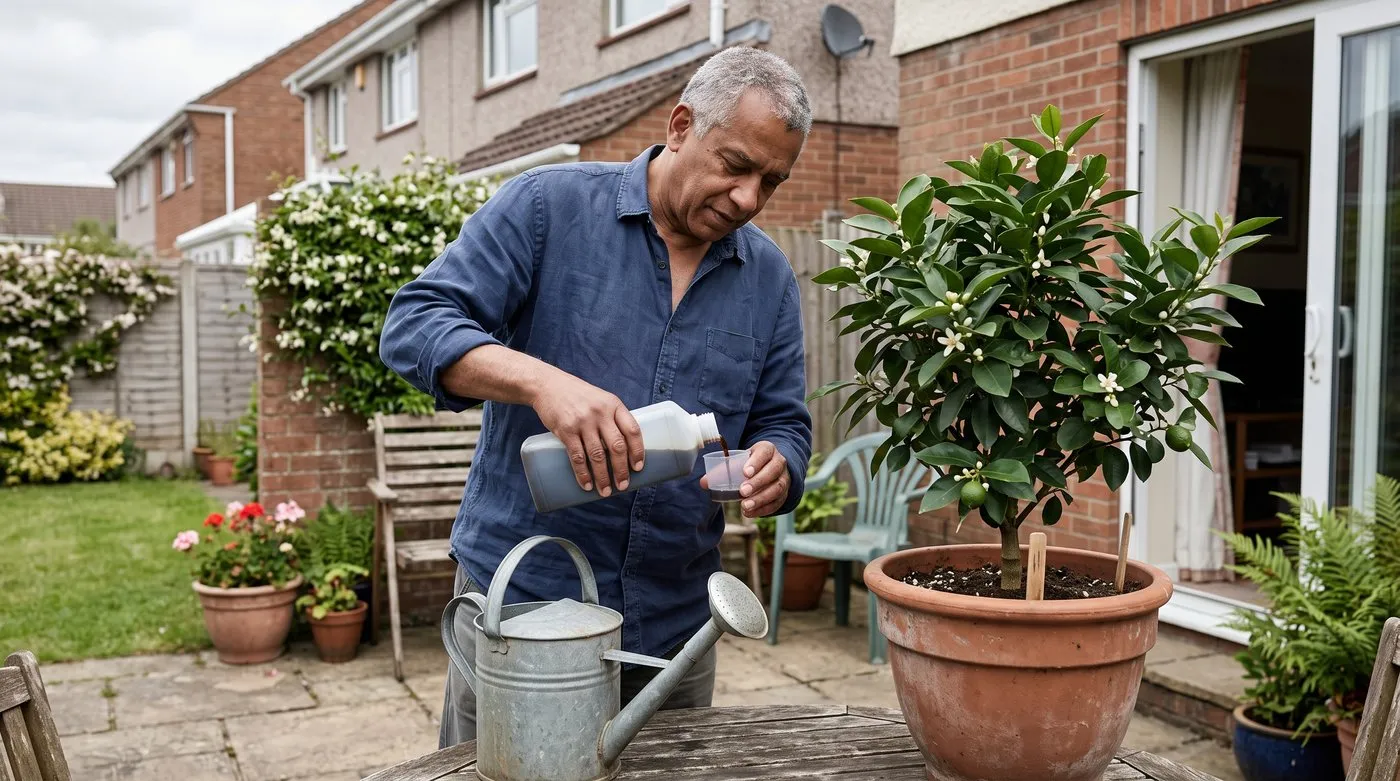
Measure the feed as the label says. Regular citrus feed keeps the leaves green and the fruit coming.
- Spring and summer: Use a summer citrus feed, which is higher in nitrogen for leafy growth.
- Autumn and winter: Switch to a winter citrus feed, which is more balanced.
Follow the label for how often to feed. Tomato feed isn’t a good substitute, as it’s made for fruiting veg rather than citrus.
How to water citrus trees
In summer, water thoroughly when the top few centimetres of compost feel dry. On a hot patio that might be every couple of days. Let excess water drain away and don’t leave the pot standing in a saucer of water.
In winter, water much less. Check with a finger and only water when the top of the compost is dry. Cold, wet compost is the most common way citrus are killed in UK homes.
Use rainwater if you can, especially in a hard-water area. Hard tap water slowly makes the compost less acidic, which can lead to yellow leaves.
Common citrus problems and how to fix them
Yellow leaves
This is the most common problem. Overwatering, cold draughts and hunger are the usual causes, so check those first. If the leaves turn yellow between the veins while the veins stay green, the tree is struggling to take up iron. That usually means hard water or compost that isn’t acidic enough. Switch to rainwater, keep feeding with citrus feed, and use citrus compost when you next repot.
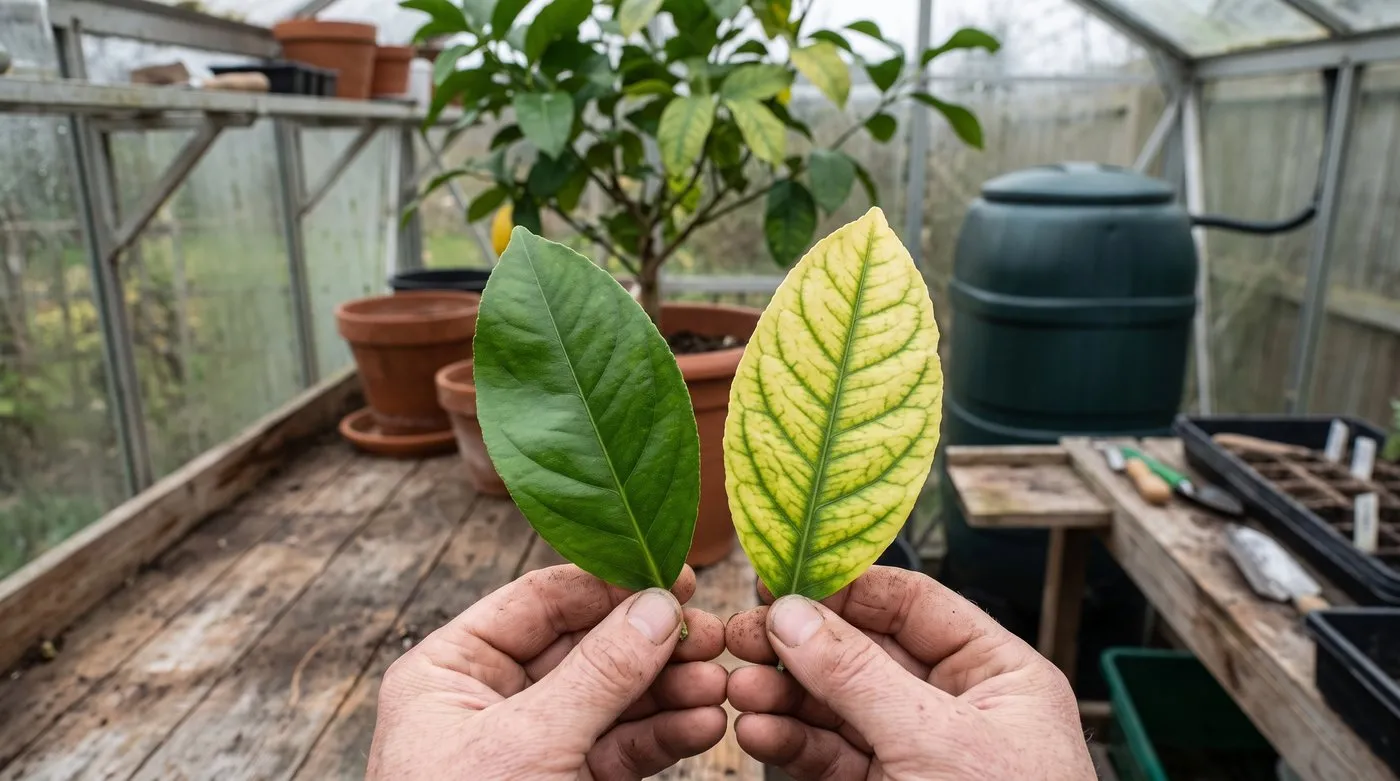
Yellow between green veins means the tree is short of iron. Hard water is often to blame, so switch to rainwater.
Leaf drop
Citrus often drop some leaves after a sudden change, such as moving indoors in autumn or a cold draught. Move trees gradually and keep them away from doors that open onto cold air. A few fallen leaves is normal. Heavy leaf drop means something needs fixing, usually watering, temperature or light.
Scale insects and sooty mould
Scale insects look like small brown bumps on stems and under leaves. They suck sap and leave sticky honeydew, which a black sooty mould grows on. Scrape small numbers off with a fingernail or a soft brush. For bigger outbreaks, use an approved product labelled for scale, following the label. Our guide to scale insects has more on spotting and clearing them. Wipe sooty mould off the leaves with a damp cloth once the scale has gone.
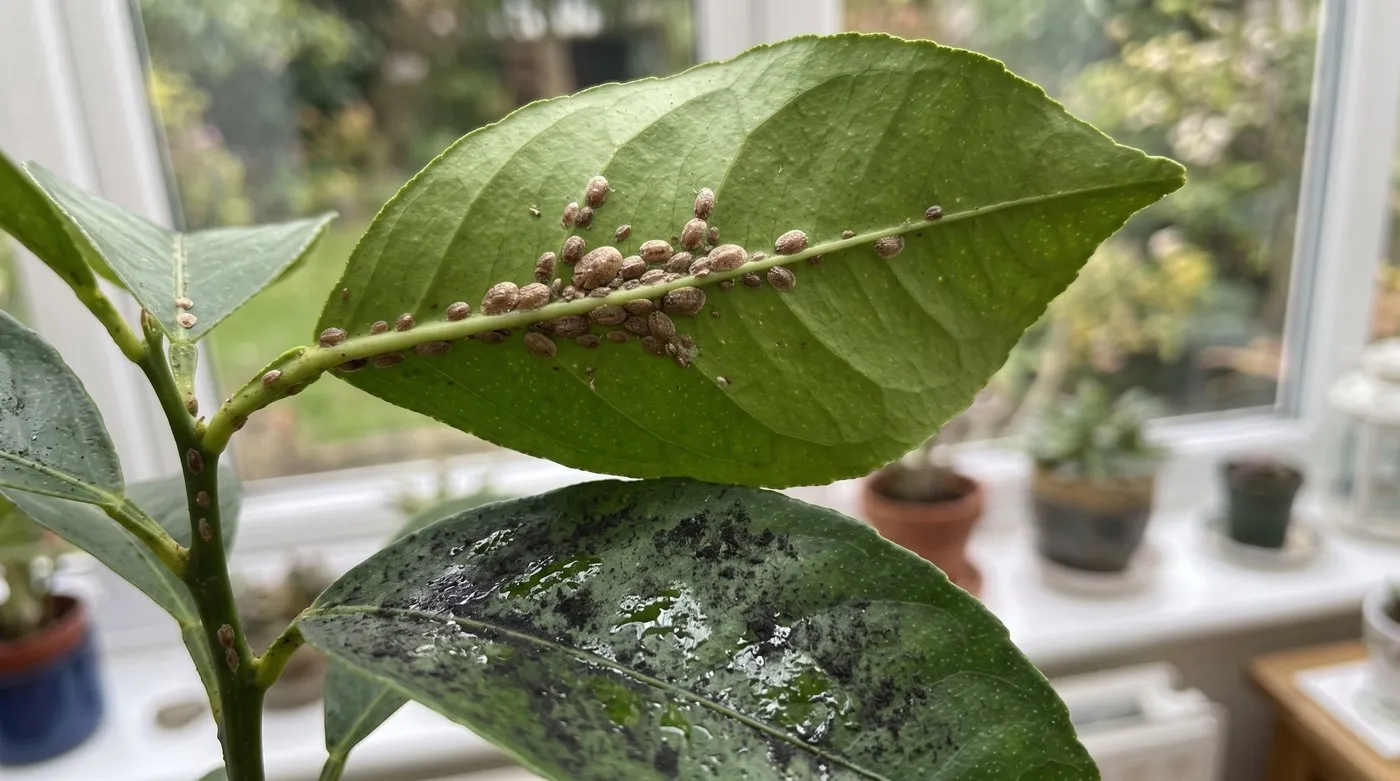
Brown bumps on the veins and black film on the leaves below are classic signs of scale. Deal with the scale and the mould goes too.
No fruit
Citrus need good light, regular feeding and pollination to fruit. Indoors, there are few insects about, so gently brush pollen from flower to flower with a soft paintbrush. Our guide to hand pollination shows how. Hungry trees often drop their tiny fruitlets, so keep up the feeding.
Pruning citrus trees
Citrus need only light pruning. Do it in late winter or spring, before new growth starts.
- Remove dead, damaged or crossing branches.
- Shorten long, leggy shoots to keep a bushy shape.
- Rub off any shoots growing from below the graft union, the swollen join near the base. These come from the rootstock.
- Thin crowded growth in the middle so light gets in.
Avoid hard pruning, which cuts off flowering wood and means fewer fruit.
Month-by-month citrus care calendar
| Month | What to do |
|---|---|
| January | Keep bright and cool. Water sparingly. Use winter citrus feed |
| February | Light prune to shape. Watch for scale insects |
| March | Repot or top-dress if needed. Switch to summer citrus feed as growth starts |
| April | Water more as growth picks up. Hand-pollinate any flowers indoors |
| May | Keep feeding and watering. Choose a sunny, sheltered spot outside |
| June | Move outside once nights are mild. Light shade for the first week |
| July | Water regularly and feed. Check for pests |
| August | Keep up watering and feeding as fruit swells |
| September | Bring indoors before nights fall below about 10°C |
| October | Water less. Switch to winter citrus feed |
| November | Keep bright and cool. Check for scale |
| December | Water sparingly. Keep frost-free |
Common mistakes when growing citrus
- Overwatering in winter. The number one killer. Let the top of the compost dry out between waterings.
- Keeping them in a warm living room. Too warm and too dark in winter gives weak growth and leaf drop.
- Moving them too suddenly. Harden them off when they go out, and bring them in before cold nights.
- Skipping the feed. Citrus need regular feeding with a proper citrus fertiliser.
For other plants that need a frost-free winter home, see our guide on how to overwinter plants. An olive tree makes a good patio companion, and there are more fruit guides in our growing section. Next, read our guide on how to grow fig trees for another Mediterranean fruit that’s much happier outdoors.
Frequently asked questions
Can you grow citrus trees outdoors in the UK?
Only in summer, in a pot that comes indoors for winter. Citrus won’t survive a typical UK winter outside. Put them on a sunny, sheltered patio from about June to September, then bring them in before cold nights arrive.
What is the best citrus tree for beginners in the UK?
Meyer lemon is a great first citrus. It is compact, flowers and fruits readily in a pot, and copes with UK conditions better than many lemons. Calamondin is another easy choice, with small sour oranges much of the year.
Why are the leaves on my citrus tree turning yellow?
Overwatering, cold or a lack of nutrients are the usual causes. Check the compost isn’t waterlogged and keep the tree away from cold draughts. Feed with a citrus fertiliser. Yellow leaves with green veins point to hard water or compost that isn’t acidic enough.
How often should I water a citrus tree in winter?
Only when the top few centimetres of compost feel dry. In a cool room that may be every week or two. Water less than in summer and never leave the pot standing in water. Cold, soggy compost rots the roots.
Do citrus trees need special fertiliser?
Yes, a citrus feed works best. Citrus need trace elements such as iron, magnesium and zinc as well as the main nutrients. Use a summer citrus feed in spring and summer and a winter formula in winter, following the label.
Can I grow a lemon tree from a pip?
Yes, pips sprout easily in warm compost and make attractive plants. But a pip-grown tree can take many years to fruit, if it ever does, and the fruit may not be good. Buy a grafted tree if you want lemons.
Are citrus trees poisonous to cats and dogs?
Yes, citrus plants are toxic to cats and dogs. The leaves, peel and oils can upset their stomachs and irritate their skin. Keep trees where pets can’t chew them and clear up fallen fruit.
Our team produces practical UK gardening guidance from source research, contributor records and established horticultural practice. Editorial standards are overseen by Matt W.