Key takeaways
- Scale insects look like small brown or grey bumps and are easy to mistake for part of the plant
- Sticky leaves and black sooty mould are usually the first clue
- Scrubbing them off with an old toothbrush is the best treatment on plants you can reach
- Bay trees, camellias, citrus, holly, euonymus and houseplants get it most
- The tiny young (crawlers) appear mainly in June and July, the best time to act
- Check new plants carefully before you buy, as that's how scale usually arrives
Scale insects are some of the easiest pests to miss. They sit still on stems and under leaves, looking like little brown, grey or white bumps. Most people think they’re part of the bark or a drop of dried sap. But under each bump is a tiny insect sucking sap and slowly weakening the plant.
Usually the first thing you notice is stickiness. Honeydew drips onto lower leaves, paving and windowsills, and black sooty mould grows on it. By the time you spot the mould, the scale may have been building up for a while.
What are scale insects?
Scale insects are small sap-sucking bugs. There are lots of different kinds in UK gardens and greenhouses, but they fall into two groups: soft scale and hard (armoured) scale.
They all live in a similar way. The tiny young, called crawlers, hatch and wander over the plant looking for somewhere to feed. Once they find a spot, they plug their mouthparts into the plant and never move again. Over a few weeks they grow a protective shell. In soft scale it’s part of their body. In hard scale it’s a separate cover on top.
The bumps you see are the adult females. Males are tiny winged insects you’ll probably never notice. Many kinds can breed without mating, so one scale insect can start a whole new colony.
Scale is very common on bay trees, camellias, citrus, holly, euonymus and lots of houseplants. It also turns up on ivy, viburnum, olive trees and shrubs grown against warm walls.
How to spot scale insects
The fingernail test is the easiest way to be sure. Scrape a suspicious bump with your thumbnail. If it comes away and leaves a wet mark, or there’s a tiny yellowish insect underneath, it’s scale. If it won’t budge and is clearly part of the bark, it isn’t.
Brown soft scale (Coccus hesperidum) is the one you’ll most often find on houseplants and conservatory plants. Adults are small, flat, shiny brown ovals. They line up along the middle vein under leaves and where leaf stalks join stems.
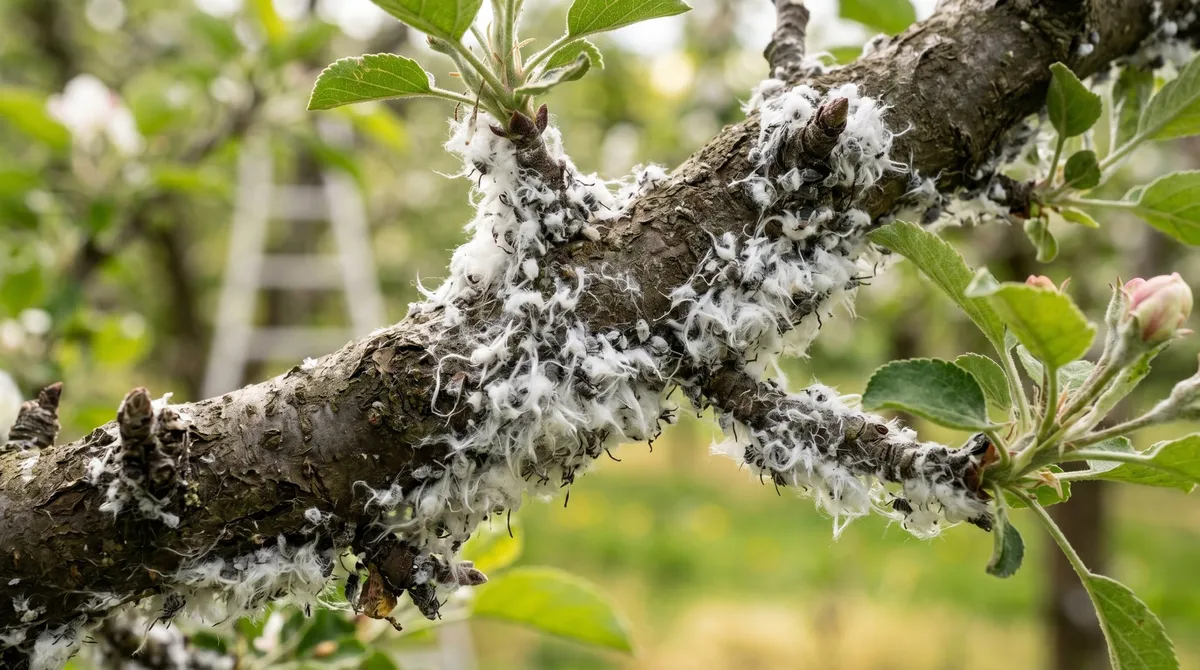
Mussel scale (Lepidosaphes ulmi) is the most common one outdoors. It goes for apple trees, cotoneaster, dogwood and lots of shrubs. It’s grey-brown and shaped like a tiny mussel. A bad attack makes the bark look grey and crusty.
Cushion scale (Pulvinaria floccifera) is hard to miss. The females make a big white, fluffy egg sac that sticks out behind them. It’s common on camellia, rhododendron and holly. You’ll usually notice the white blobs in May and June.
Woolly vine scale (Pulvinaria vitis) turns up on grape vines, trees and shrubs. It looks like cushion scale with a longer egg sac. It’s easiest to see in winter when the leaves have dropped.
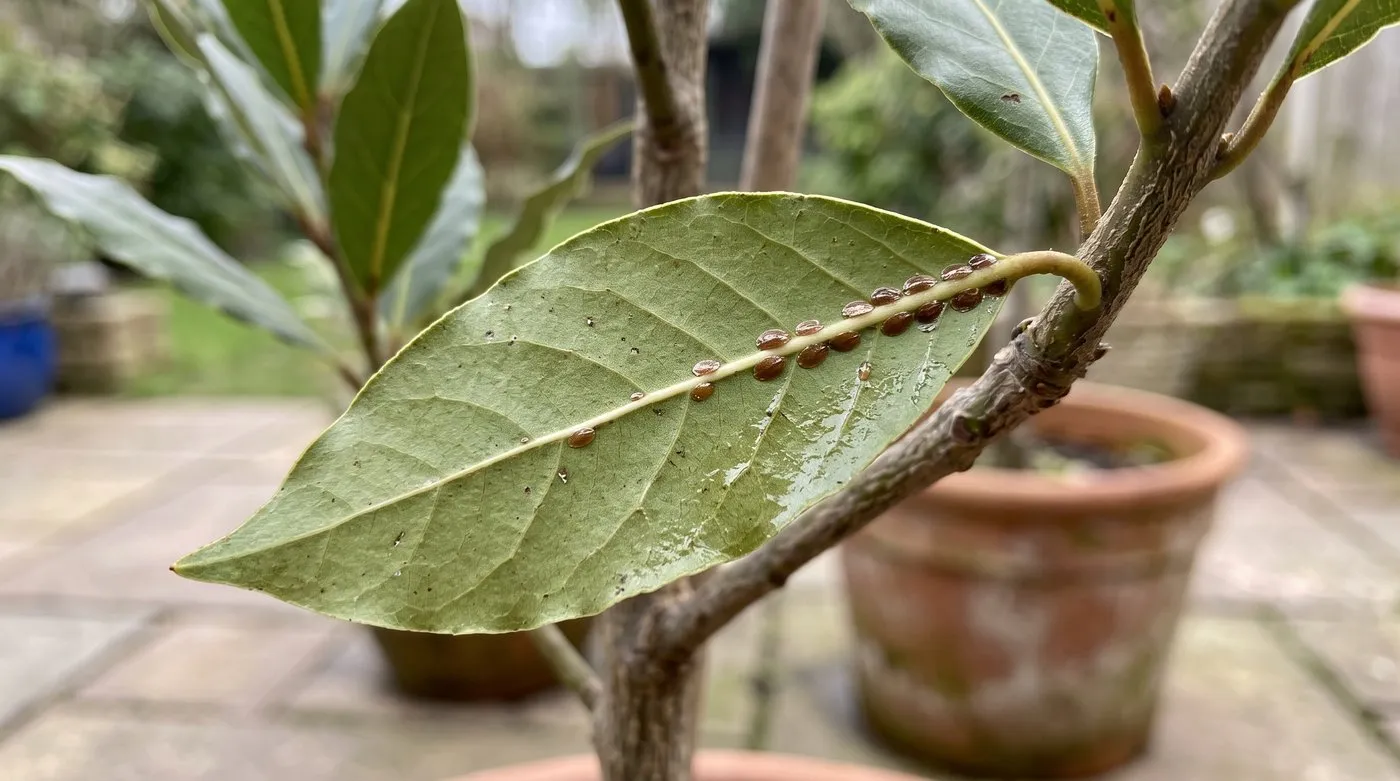
Turn the leaves over and look along the middle vein. Flat brown bumps that scrape off with a fingernail and leave a wet smear are scale.
Common UK scale insects at a glance
| Name | What it looks like | Where you’ll find it | Sticky honeydew? |
|---|---|---|---|
| Brown soft scale | Flat, shiny brown oval | Houseplants, bay, citrus, ferns | Yes, lots |
| Hemispherical scale | Dark brown dome | Houseplants, ferns, orchids | Yes |
| Brown scale | Reddish-brown, rounded | Fruit trees, shrubs | Yes, some |
| Mussel scale | Grey-brown, mussel-shaped | Apple, cotoneaster, dogwood | No |
| Cushion scale | Brown with a white egg sac | Camellia, holly, rhododendron | Yes |
| Boisduval scale | Tiny, white, round | Orchids, palms, ferns | No |
| Oleander scale | White-grey, round | Bay, oleander, ivy, olive | No |
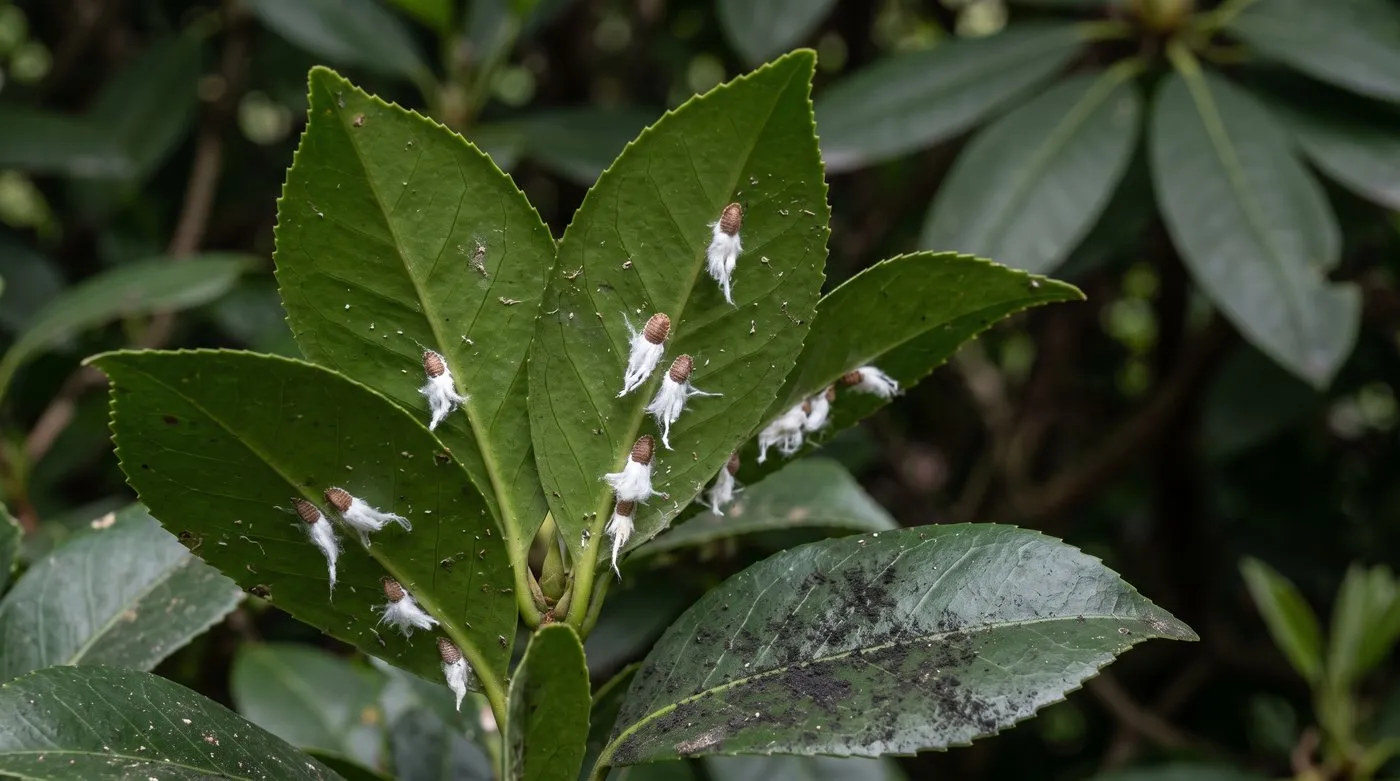
Cushion scale is the easy one to spot in early summer. Look for white, fluffy blobs under camellia, holly and rhododendron leaves.
What damage do scale insects do?
Scale causes trouble in three ways: drinking sap, making honeydew and letting mould in. One or two scale insects won’t hurt a plant. Hundreds, building up over months, slowly wear it down.
Losing sap is the main problem. Badly hit plants get yellow leaves, weak growth, fewer flowers and dying shoot tips. Plants in pots suffer more than those in the ground, because they have less in reserve.
Honeydew is the next problem. Soft scale gives off lots of this sugary waste. It coats leaves, stems and anything underneath, and black sooty mould soon grows on it. The mould blocks light and looks grubby. Hard scale makes little or no honeydew.
Sooty mould doesn’t feed on the plant itself, only on the honeydew. Get rid of the scale and the honeydew stops. The mould then washes off over a few months. Wiping the leaves with a damp cloth speeds things up.
Ants are often the first giveaway. They “farm” soft scale for honeydew, just as they do with aphids. If you see ants marching up and down a stem, check the top for scale. Ants also chase off the scale’s natural enemies, making things worse.
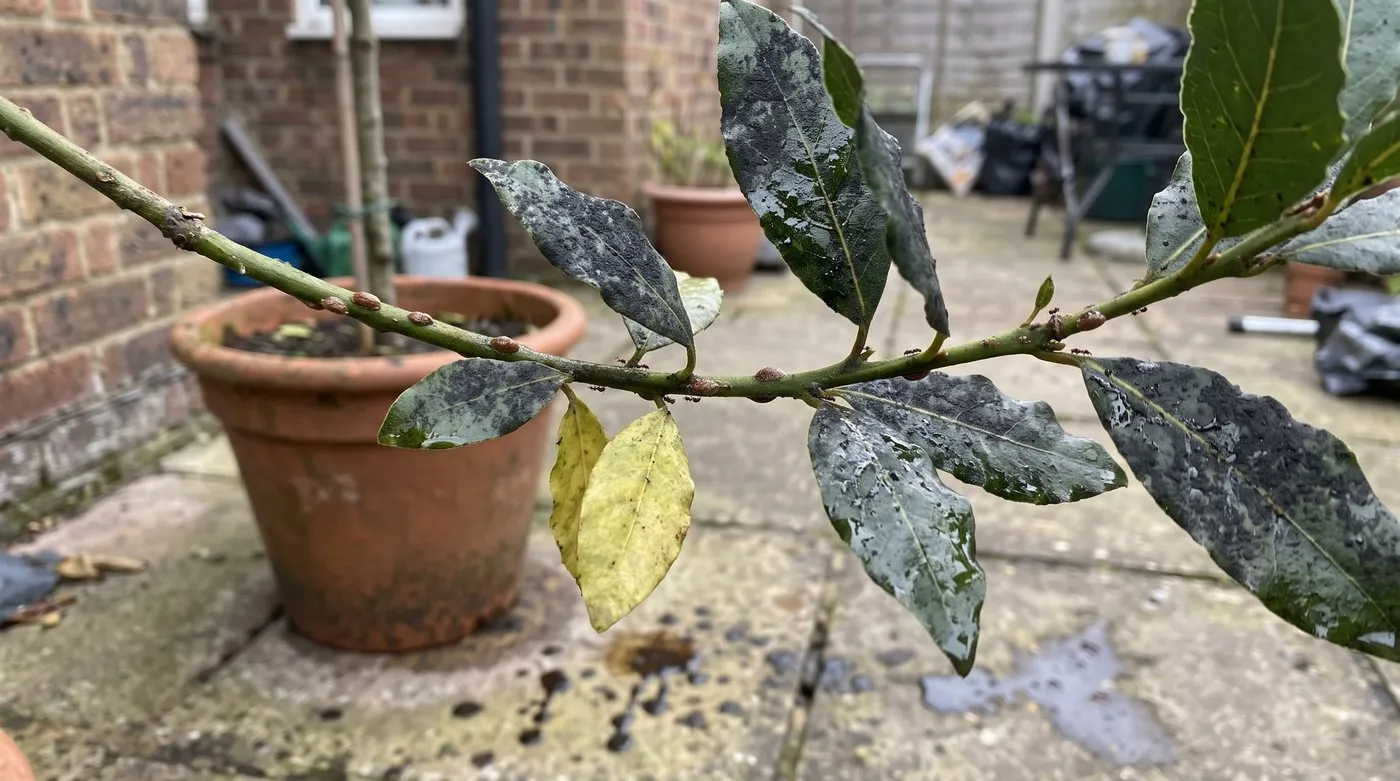
Black sooty mould is often the first thing you notice. It grows on the honeydew, so deal with the scale and the mould will slowly wash away.
How to remove scale insects by hand
Getting them off by hand is the best thing you can do. Sprays don’t get through the shell of adult scale. Scrubbing them off isn’t glamorous, but it works.
Dip an old toothbrush or small nail brush in warm water. Work along each stem, scrubbing both sides. Pay extra attention to where branches meet, where leaves join stems and the undersides of leaves.
On bay trees and camellias, start at the top and work down. Check every stem, as scale hides well and it’s easy to miss a patch. A magnifying glass helps you spot the tiny young ones.
Repeat every two weeks from April to September. Sticking at it matters more than being perfect in one go. You’ll miss a few each time, but regular scrubbing catches the young before they grow their shells.
On houseplants, flick each scale off with a fingernail or a damp cotton bud. It’s fiddly but precise, and it’s ideal for orchids and small plants where a toothbrush might damage the stems.
Cut out badly infested branches altogether and put them in the bin, not the compost. If a stem is mostly covered, pruning is quicker than scrubbing.
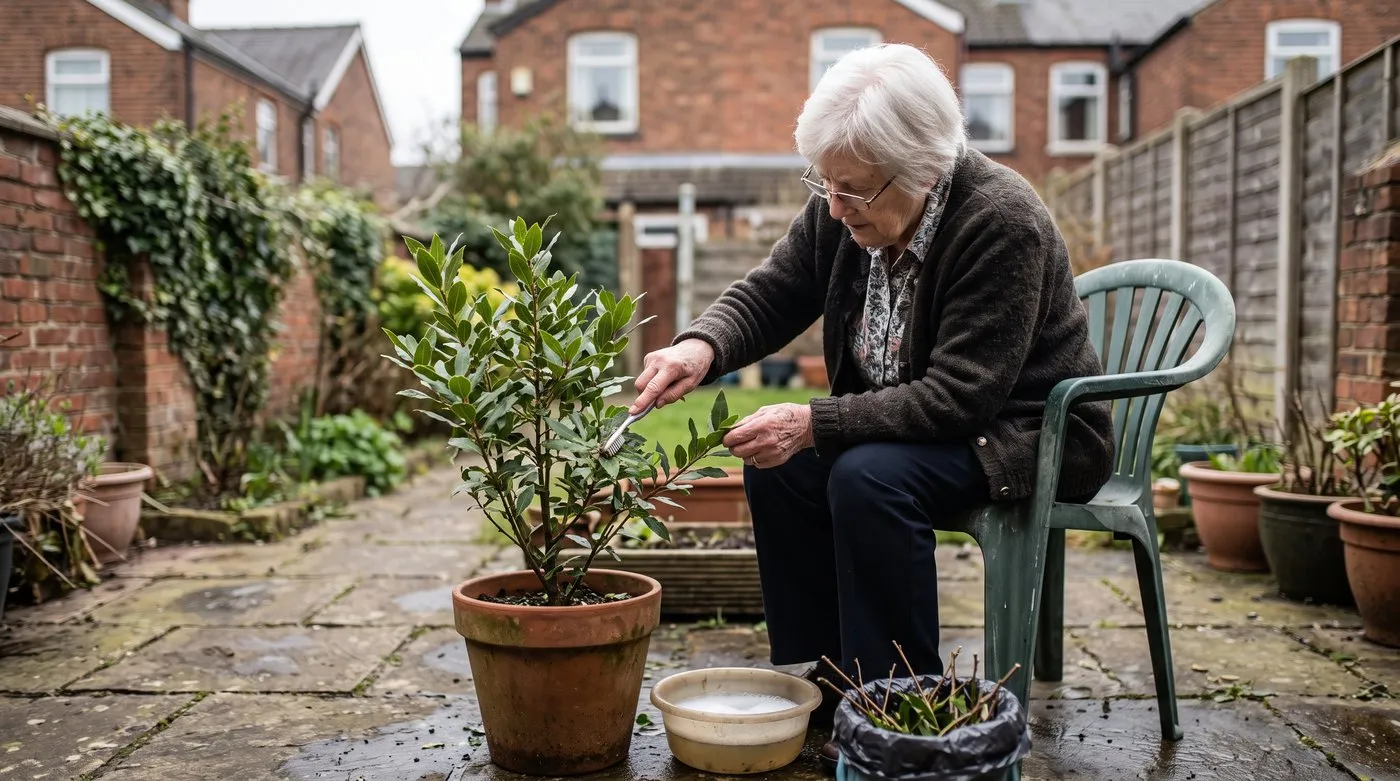
Scrubbing isn’t glamorous, but it’s the most effective fix. Repeat every couple of weeks through the season to catch the young before they harden.
Do sprays work against scale insects?
Not on adults. Their hard shell keeps sprays out, so scrubbing and pruning do most of the work. Only the young crawlers in June and July are really open to a spray.
Neem oil isn’t authorised as a pesticide in the UK, so it isn’t a legal option however often you see it suggested. Home-made mixes aren’t legal to use on pests either. If a spray is needed, an approved insecticidal soap kills the soft young crawlers on contact in June and July. Use it exactly as the label says. It won’t touch adults under their shells.
On deciduous trees and shrubs, an approved plant oil winter wash in December or January, when the plant is fully dormant, can cut down on the young scale hiding over winter. Again, follow the label.
Can natural enemies help?
In a heated greenhouse, a tiny parasitic wasp called Metaphycus helvolus can help with soft scale. It lays its eggs inside the scale, and the young wasp kills it from the inside. It needs steady warmth to work, so it’s only really useful in a heated greenhouse or conservatory.
You can buy it from biological control suppliers between May and September and release it straight onto infested plants. The wasps are tiny, harmless to people and won’t survive a British winter outside. In a warm greenhouse they can keep breeding and attacking scale through the season.
Outdoors, natural enemies give some help. The kidney-spot ladybird and its larvae feed on scale, and tiny parasitic wasps attack them in the wild. Encourage them by avoiding broad-spectrum sprays and growing a good mix of plants. Our guide to organic pest control shows how to build up your garden’s natural pest controllers.
If you’re thinking about a shop-bought insecticide, only use one whose label lists scale insects and your plant, and follow it exactly.
Scale on houseplants
Indoor scale is harder to beat, because there are no natural enemies and the warmth suits it. With no wind or rain to knock them back, numbers build quickly. One infested plant can spread scale through a whole collection.
Move any plant with scale away from your others straight away. The young can walk between plants whose leaves touch, and they hitch rides on hands, tools and watering cans.
For a light attack on a sturdy plant, wipe every leaf and stem with a cloth soaked in warm water. On delicate plants like orchids, lift each scale off with a damp cotton bud. Check the plant every week for a couple of months afterwards, as eggs can keep hatching for a while.
Give houseplants a lukewarm shower once a month. It knocks off young scale and washes away honeydew. It won’t clear an infestation on its own, but it slows things down and gets rid of sooty mould.
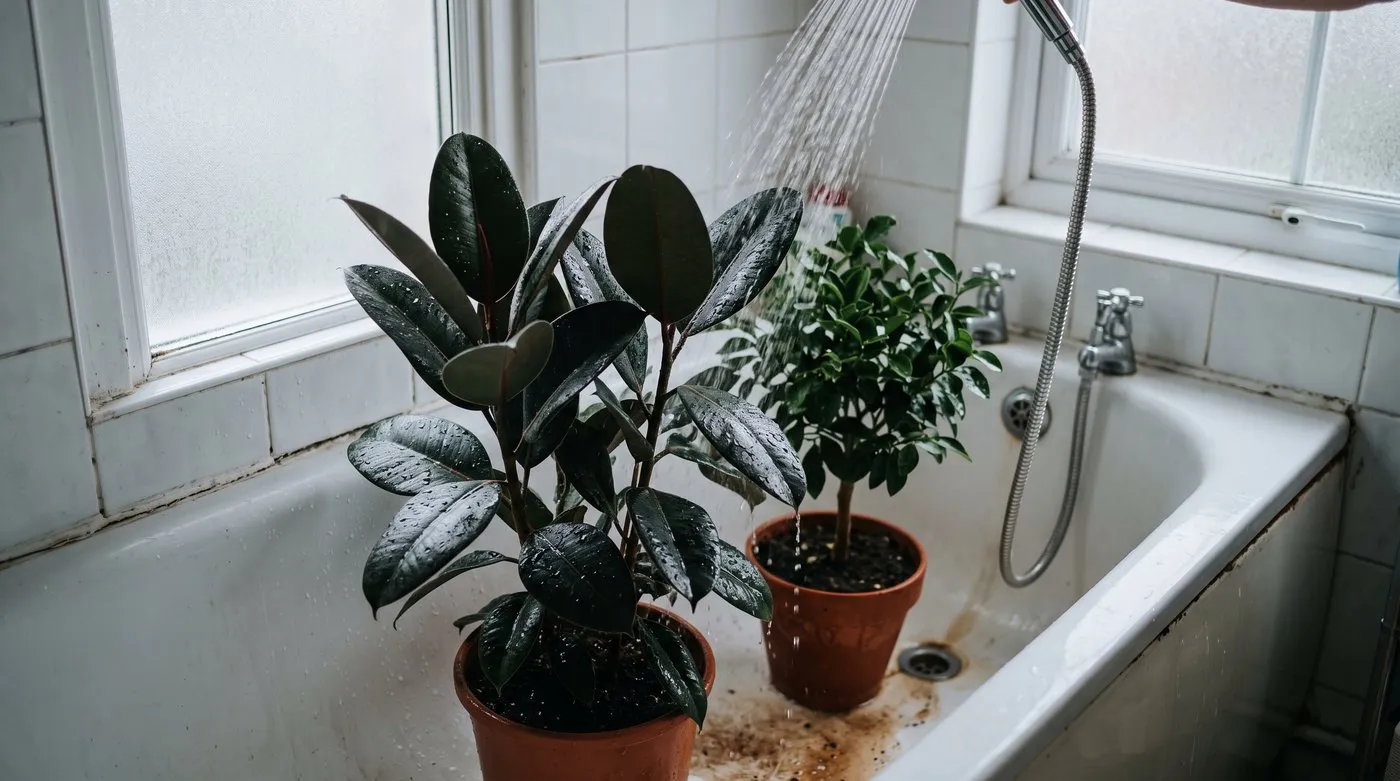
A lukewarm shower once a month washes off honeydew and knocks back young scale. It won’t clear an attack alone, but it slows things down.
Can scale insects spread to other plants?
Only when they’re young. The crawlers are tiny, have legs and can walk. They wander to new spots on the same plant or across to plants whose leaves or branches touch. They can also be blown by the wind or carried on clothes and tools.
Once a crawler settles down to feed, it never moves again. So adult scale can’t walk to a new plant. The risky time is the short crawler stage, mainly June and July.
In greenhouses, scale spreads easily because plants are close together and it’s warm and still. Check new plants before they go in. Keep new arrivals apart for a few weeks and check them weekly before they join the rest.
Most scale arrives on new plants. Always look at the stems, under the leaves and round the pot rim before you buy. Brown bumps on a bay tree at the garden centre aren’t character. They’re scale.
Related reading: Jade plants are a favourite target for scale, so read our guide to watering and feeding jade plants.
Frequently asked questions
What do scale insects look like on plants?
Small raised bumps on stems and under leaves. Brown soft scale is a flat, shiny brown oval. Mussel scale is grey and shaped like a tiny mussel. Cushion scale has a white, fluffy egg sac trailing behind it. Scrape a bump with your fingernail. If it comes off and leaves a wet mark, it’s scale.
Why do my plants have sticky leaves and black mould?
A sap-sucking pest is feeding higher up the plant. Scale insects and aphids give off a sugary liquid called honeydew that drips onto the leaves below. A black mould grows on it. The mould doesn’t feed on the plant, but it blocks light. Get rid of the pest and the mould slowly washes away.
How do I get rid of scale insects on a bay tree?
Scrub them off with an old toothbrush, working down each branch from the top. Repeat every two weeks from April to September, paying extra attention in June and July when the young appear. Prune out badly infested inner branches. If you want a spray, use an approved insecticidal soap on the young, exactly as the label says. Neem oil isn’t authorised as a pesticide in the UK.
Do scale insects kill plants?
Rarely, but they do wear plants down over time. A bad attack causes yellow leaves, weak growth and dying shoot tips. Young plants and plants in pots suffer most, as they have less in reserve. Citrus in pots can struggle badly if scale is left alone.
What is the difference between soft scale and hard scale?
Soft scale makes honeydew, and its shell is part of its body. Hard scale makes a separate waxy cover that you can lift off with a needle to see the insect underneath. Soft scale is more common on houseplants and bay trees. Hard scale, like mussel scale and oleander scale, is more common outdoors.
When are scale insect crawlers active in the UK?
Mainly in June and July. Crawlers are the tiny young, and it’s the only time scale insects move. Once they settle to feed, they stay put for life. They’re pale and tiny, so use a magnifying glass. Sticky tape wrapped round a stem will catch them and show you when they’re about.
Can I use neem oil to treat scale insects?
No, neem oil isn’t authorised as a pesticide in the UK. Scrubbing with a toothbrush or damp cotton bud, and pruning out the worst stems, do the real work. If a spray is needed, use an approved insecticidal soap on the young in June and July, exactly as the label says.
Our team produces practical UK gardening guidance from source research, contributor records and established horticultural practice. Editorial standards are overseen by Matt W.