Key takeaways
- Only female hollies have berries, and they need a male holly nearby
- 'J.C. van Tol' is self-fertile, so one plant is enough for berries
- Autumn is the best time to plant, and holly copes with most soils
- Trim holly hedges once a year in late July or August
- Holly leaf miner looks untidy but rarely harms the plant
- Wear thick gloves, because those leaves really are prickly
Holly is one of the easiest evergreens you can grow in a UK garden. Ilex aquifolium is happy on clay, chalk, sand and acid soil, in sun or shade, from Cornwall to the Highlands. It makes a thick hedge or a handsome tree, and its winter berries feed the birds when food is short.
Which holly variety should I grow?
Pick a female or self-fertile holly if you want berries, and a male or variegated one if you want leaves. Here are some good garden choices.
| Variety | Sex | Berries | Good for |
|---|---|---|---|
| Ilex aquifolium (common holly) | Male or female | Red on females | Native hedges and wildlife |
| ’J.C. van Tol’ | Self-fertile | Red, plenty | Small gardens with room for one |
| ’Alaska’ | Female | Red | Hedges and Christmas greenery |
| ’Silver Queen’ | Male | None | Cream-edged leaves, a pollinator |
| ’Golden King’ | Female | Red | Gold-edged leaves |
| ’Ferox Argentea’ (hedgehog holly) | Male | None | Fun spiky leaves, pots |
| ’Pyramidalis’ | Self-fertile | Red | Narrow spaces |
| Ilex crenata (Japanese holly) | Male or female | Black | Box-style clipped shapes |
Watch the names: ‘Silver Queen’ is a male with no berries, and ‘Golden King’ is a female. Check the label before you buy.
Want more year-round shape? Have a look at the best evergreen trees for UK gardens.
How do I plant holly in the UK?
Plant in autumn if you can. From September to November the soil is warm and moist, so roots get going before winter. Pot-grown holly can go in at other times, but avoid hot, dry spells.
Choosing a spot. Holly grows in sun, part shade or full shade, and shrugs off wind and sea air. Berrying females do best with some sun. Variegated types like ‘Golden King’ need more light to keep their colour.
Getting it in. Dig a hole as deep as the pot and a bit wider. Add a handful of blood, fish and bone, plant, then water well. Mulch with a thick layer of composted bark to keep the roots moist through the first summer.
Spacing for a hedge. Plant 45-60cm apart for a thick hedge, or 75-90cm for a looser screen. Our hedge planting guide explains layout in more detail.
Bare-root holly. It’s cheaper and sold in the dormant season. Soak the roots for a couple of hours, plant at the same depth as before (look for the soil mark on the stem), firm in and water. Our guide to planting bare-root trees walks you through it.
 Semi-ripe holly cuttings, 10-15cm long, taken in late summer and set in gritty compost.
How do I get my holly to produce berries?
Only female hollies have berries, and they need a male nearby. This is the number one reason for a berry-less holly.
Work out which you have. Look at the small white flowers in late spring. Male flowers have yellow, pollen-covered stamens. Female flowers have a little green bump in the middle, which becomes the berry. Young hollies may not flower for a few years, so be patient.
One male can serve several females. Bees carry the pollen, so a male in your garden or a neighbour’s is usually enough. Short on space? Grow ‘J.C. van Tol’ or ‘Pyramidalis’, which berry on their own.
Let the birds have some. Berries can last from November to March, but redwings and fieldfares can strip a tree in a cold snap. Want some for Christmas? Cut a few berried sprigs in early December.
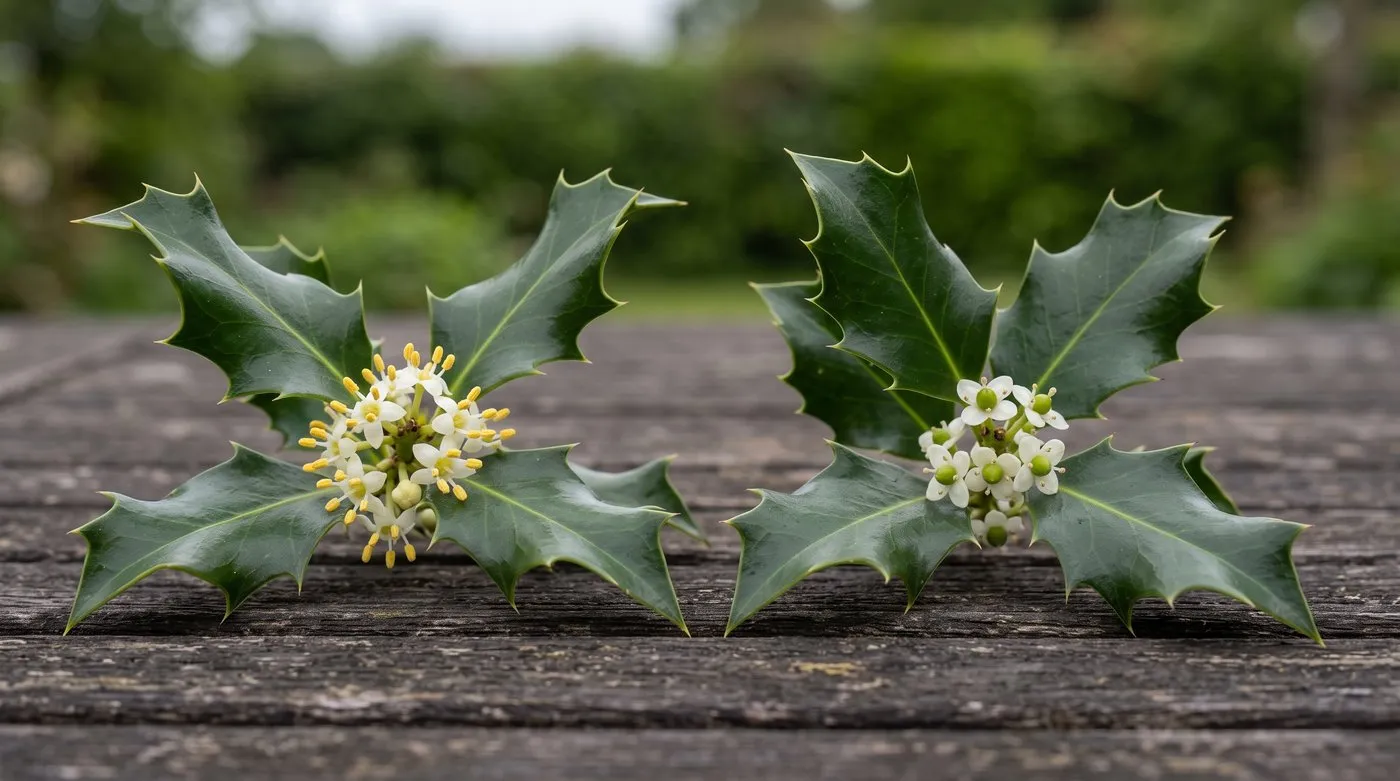
Male flowers have yellow, pollen-covered stamens. Female flowers have a little green bump in the middle, which becomes the berry.
How do I prune and shape holly?
Trim holly hedges once a year in late July or August. This leaves time for the cuts to firm up before winter. Always check for nests first, because it’s against the law to disturb an active bird’s nest. Use secateurs for single stems or a hedge trimmer for long runs.
Keep the base wider than the top. Slightly sloping sides let light reach the bottom, so the hedge stays leafy all the way down. Straight-sided hedges tend to go bare at the base over time.
Bring old, leggy holly back to life. Holly takes hard pruning well. Cut it back hard in late March and new shoots will appear from the old wood. Give it a balanced feed afterwards. It takes a couple of seasons to fill out again.
Holly trees need very little pruning. Take out dead, damaged or crossing branches in late winter. On variegated hollies, cut out any plain green shoots, as they grow faster and take over.
For the general rules, see our pruning guide.
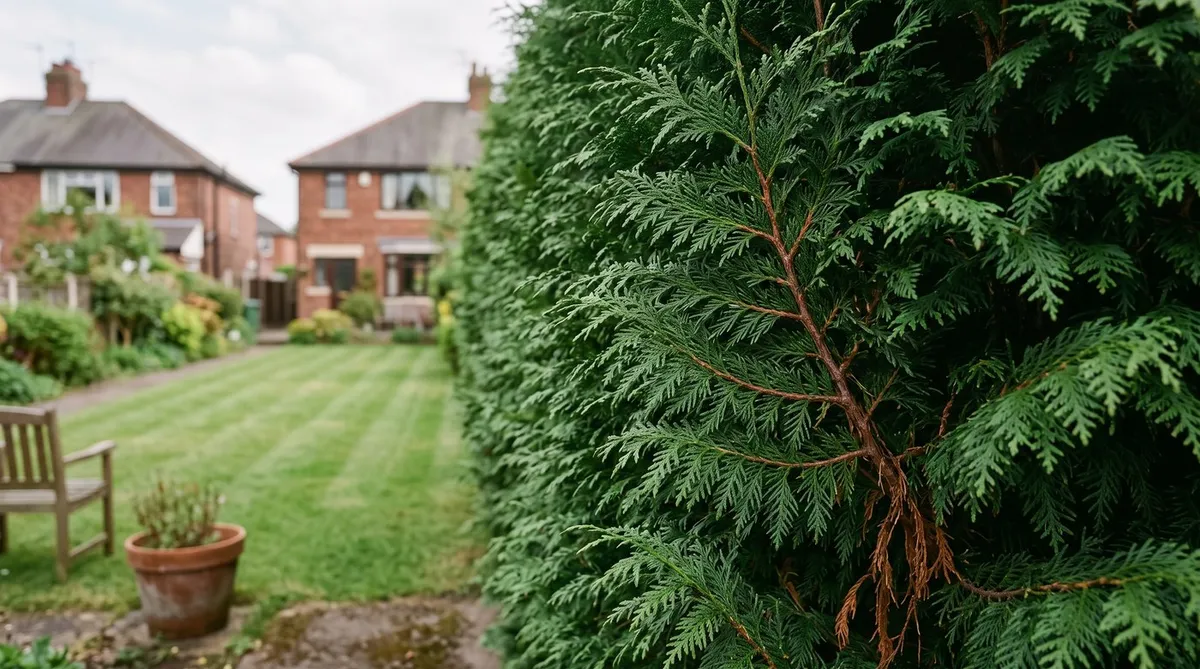
 A yearly trim in late summer keeps a holly hedge tight and leafy from top to bottom.
How do I propagate holly?
Semi-ripe cuttings in late summer are the easiest way to make more holly.
Taking cuttings (August to September):
- Choose healthy stems from this year’s growth, firm at the base and still a little bendy at the tip.
- Cut 10-15cm lengths just below a leaf joint.
- Strip the lower leaves, leaving a few at the top.
- Dip the end in hormone rooting powder.
- Push them into a mix of half perlite and half peat-free compost, about 5cm apart.
- Cover with a clear plastic bag, or pop them in a cold frame.
- Keep the compost moist but not soggy.
Rooting is slow, so allow a few months. Give a gentle tug after about 12 weeks. If you feel resistance, roots have formed. Pot them up in spring and grow on for a year before planting out.
Holly from seed is a real test of patience. The seeds need two winters outside before they sprout, which is why most people stick to cuttings.
What pests and diseases affect holly?
Holly is very low trouble. These are the things you might spot.
Holly leaf miner makes pale, blotchy tunnels inside the leaves, most obvious in late summer. It’s only cosmetic. Pick off the worst leaves if they bother you. Natural predators keep it in check over time.
Holly aphid clusters on soft new shoots in spring and curls the leaves. Squash them or blast them off with a jet of water. Ladybirds and lacewings soon move in, so skip the insecticide.
Root rot can strike holly in ground that stays waterlogged. Leaves yellow, brown, then the plant collapses, and there’s no cure. Avoid it by improving drainage before you plant.
Leaf blight causes black blotches on leaves in wet winters. Cut off and bin affected branches, and thin out crowded growth so air can move through.
Why is holly important for wildlife?
Holly is a brilliant plant for garden wildlife. It offers food and shelter all year round.
Safe nesting. Robins, blackbirds, dunnocks and goldcrests all nest in holly. The prickly leaves help keep cats away. Leave the lower branches on a holly tree so birds have cover near the ground.
Holly blue butterfly. Its spring caterpillars feed on holly flower buds and young berries, so a holly in the garden gives this pretty butterfly a home.
Moths and winter visitors. Many moths feed on holly, and its thick canopy gives them somewhere to hide by day. In winter, berries feed thrushes such as redwings and fieldfares.
The Woodland Trust has more on holly and the wildlife it supports.
 Redwings arrive from Scandinavia each winter and love holly berries.
Holly as a native hedgerow plant
Holly has been part of British hedgerows for centuries. A holly hedge is thick, evergreen and very hard to push through once it’s established.
Mixed hedgerow. Holly goes well with hawthorn, blackthorn, hazel and field maple in a native hedgerow. Add roughly one holly for every five deciduous plants. The holly keeps it green in winter, and the others bring flowers and autumn colour.
All-holly hedge. Plant 45cm apart for a neat, formal look and trim once a year in late summer. It’s slow to start, but once it’s established it needs very little work. It clips as neatly as yew and stands up to wind better.
A hedge animals can’t get through. Farmers have long used holly to keep livestock in. The spiny lower leaves do the job. Higher up on old trees, leaves often lose their spines, because no animals can reach them.
Month-by-month holly care calendar
| Month | What to do |
|---|---|
| January | Order bare-root holly. Check ties on young trees. |
| February | Sprinkle a general feed around established plants. |
| March | Hard-prune overgrown holly if needed. Plant pot-grown holly. |
| April | Mulch with composted bark. Water new plants in dry spells. |
| May | Look for aphids on new shoots and squash them. |
| June | Flowers open. Check which of your plants are male or female. |
| July | Pick off leaves badly marked by leaf miner. |
| August | Trim hedges. Take semi-ripe cuttings. |
| September | Start autumn planting of pot-grown holly. |
| October | Keep planting. Collect berries if you fancy trying seed. |
| November | Bare-root planting season. Berries turn red. |
| December | Cut berried sprigs for Christmas before the birds get them. |
Holly earns a place alongside the best winter flowering shrubs for winter colour, even though it brings berries rather than flowers.
Whether you plant a single ‘J.C. van Tol’ for berries or a long native hedge, holly is a plant that gives back for decades.
Frequently asked questions
Do you need two holly trees to get berries?
Usually, yes. Holly plants are either male or female, and only females have berries. A female needs a male nearby so bees can carry pollen across in late spring. If you only have room for one, choose ‘J.C. van Tol’, which berries on its own.
When is the best time to plant holly in the UK?
Autumn is best, from September to November. The soil is still warm and moist, so roots settle in before winter. Pot-grown holly can go in at other times if you keep it watered. Bare-root plants are planted in the dormant season. Avoid frozen or waterlogged ground.
How fast does holly grow in the UK?
Slowly, roughly 20-30cm a year. It grows a bit faster on rich, moist soil with some shelter, and slower on poor or windy sites. Be patient with a new hedge, because it thickens up nicely with a yearly trim.
Can holly grow in full shade?
Yes, holly copes with shade better than most evergreens. It grows wild under oak and beech trees. In deep shade it grows more slowly and has fewer berries, so give berrying females some sun. Variegated types need more light to keep their colour.
How do I prune a holly hedge?
Trim it once a year in late July or August. Shears or a hedge trimmer both work. Slope the sides in slightly so the base is wider than the top, which keeps the bottom leafy. Check for nesting birds first, and wear thick gloves.
Is holly poisonous to dogs and cats?
Yes, holly berries and leaves are toxic to pets. Eating them can cause sickness and an upset tummy. Most pets leave holly alone because the leaves are so spiky. Call your vet if your pet has eaten the berries.
Why has my holly got yellow leaves?
Usually wet roots or hungry soil. Holly sitting in waterlogged ground can’t feed properly, so the leaves go yellow. Improve drainage on heavy clay and mulch with composted bark. Yellowing on new spring growth can also be frost damage, which grows out.
Our team produces practical UK gardening guidance from source research, contributor records and established horticultural practice. Editorial standards are overseen by Matt W.