Key takeaways
- Hawthorn is the backbone of a native hedge, so make it about half your mix
- Plant bare-root whips from November to March, 30-45cm apart
- Cut new whips back by a third after planting to make them bushy at the base
- Holly gives evergreen cover, and clipped hornbeam keeps its brown leaves all winter
- Dog rose, elder, guelder rose and spindle add flowers and berries for birds
- Trim between September and February to keep clear of nesting birds
A native hedge is one of the best things you can plant for wildlife. Hawthorn, blackthorn, hazel and friends give birds somewhere to nest, bees early flowers, and thrushes a winter larder of berries.
Here are ten native plants that make a great UK hedge, with how to plant them and when to trim. Whether it’s a country boundary or a garden hedge in a suburban setting, a native mix is hard to beat for wildlife and toughness.
Which native species are best for a UK hedgerow?
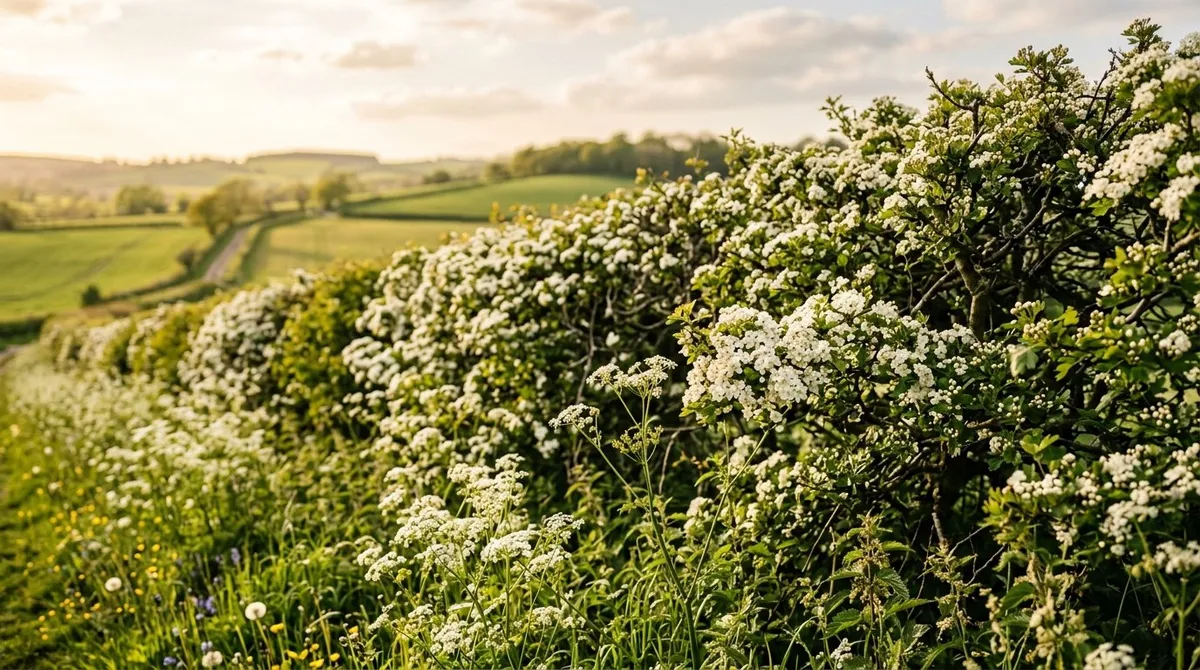
Hawthorn (Crataegus monogyna) is the star of the show. It grows on almost any soil, from heavy clay to thin chalk, and copes with windy spots. It makes a dense, thorny hedge that keeps animals in or out. White May blossom feeds early insects, and red haws feed blackbirds, redwings and fieldfares from September into winter. The RHS hawthorn page is a handy extra read. Make hawthorn about half your hedge, and see our guide on how to grow hawthorn for more.
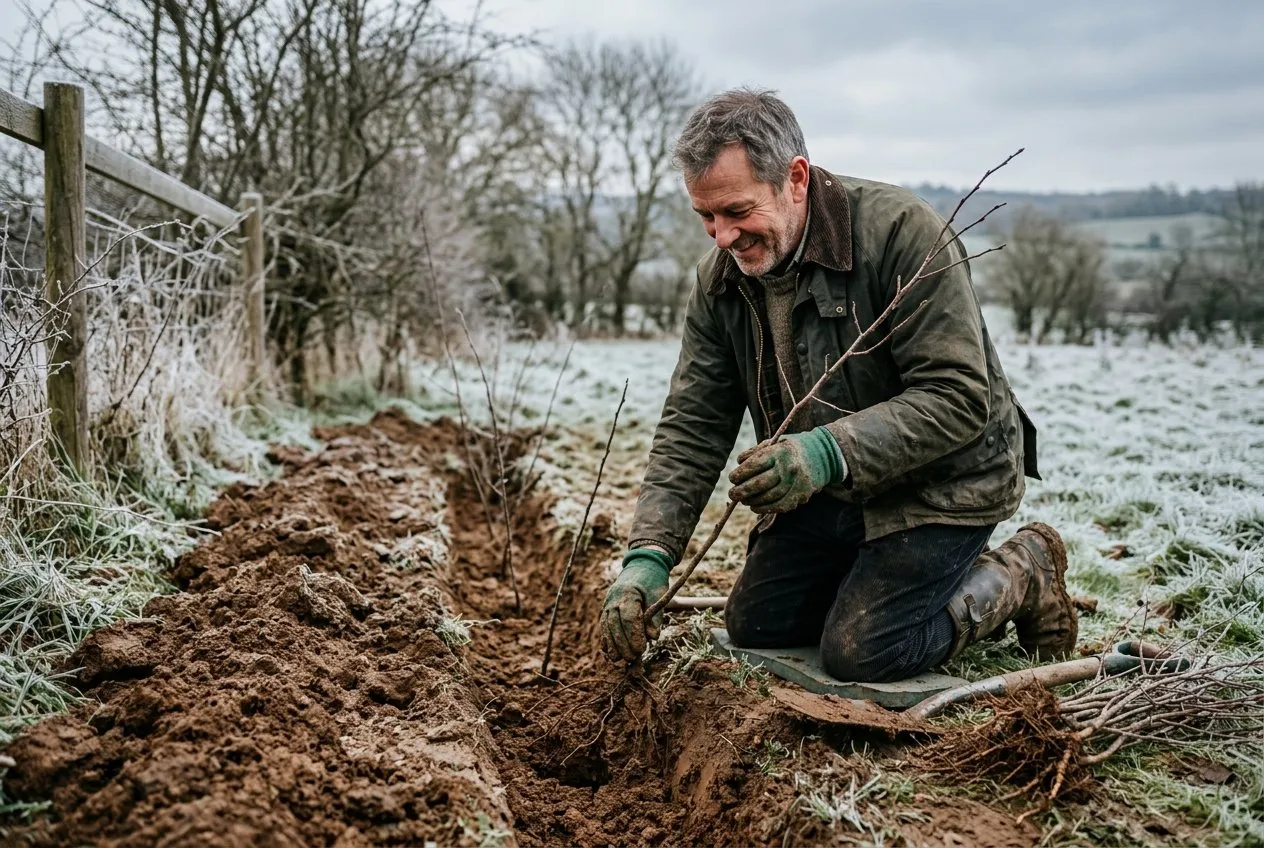
Bare-root hawthorn whips going into a trench in winter, when they’re dormant
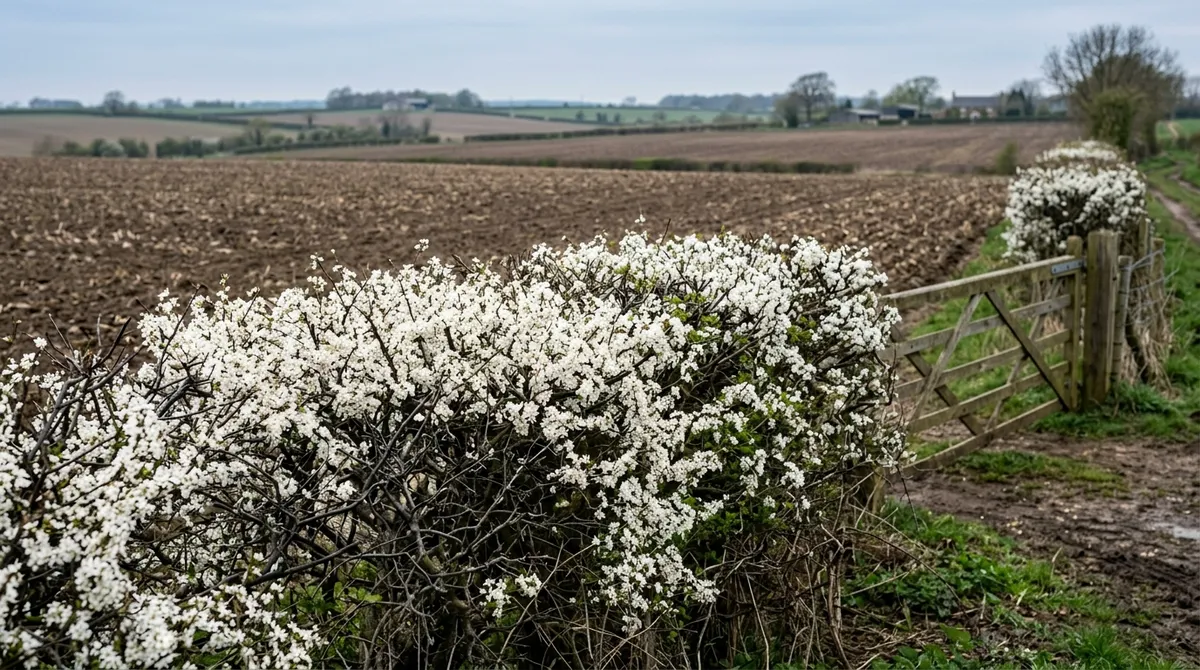
Blackthorn (Prunus spinosa) flowers before hawthorn, with white blossom on bare stems in March and April. That early nectar is a real help to queen bumblebees waking up in spring. Sloes ripen in October, ready for sloe gin or jelly. Blackthorn spreads by suckers, so give it room. It’s happy on clay, chalk or sand.
Hazel (Corylus avellana) hangs out its catkins in February, one of the first pollen sources of the year. Hazelnuts ripen in September for squirrels, dormice and nuthatches. Hazel grows quickly, copes with some shade, and bounces back from hard cutting. That makes it great for a thick hedge base, and the cut stems make handy bean poles.
Field maple (Acer campestre) is Britain’s only native maple. It gives the best autumn colour in the hedge, turning gold and amber in October. It copes with clay, chalk and windy sites, and it clips nicely alongside hawthorn and hornbeam.
Dog rose (Rosa canina) scrambles through the hedge with pink-white flowers in June and July. Bright red rosehips follow from September. Bees and hoverflies love the flowers. Plant it inside the hedge rather than on the edge, as it leans on its neighbours for support.
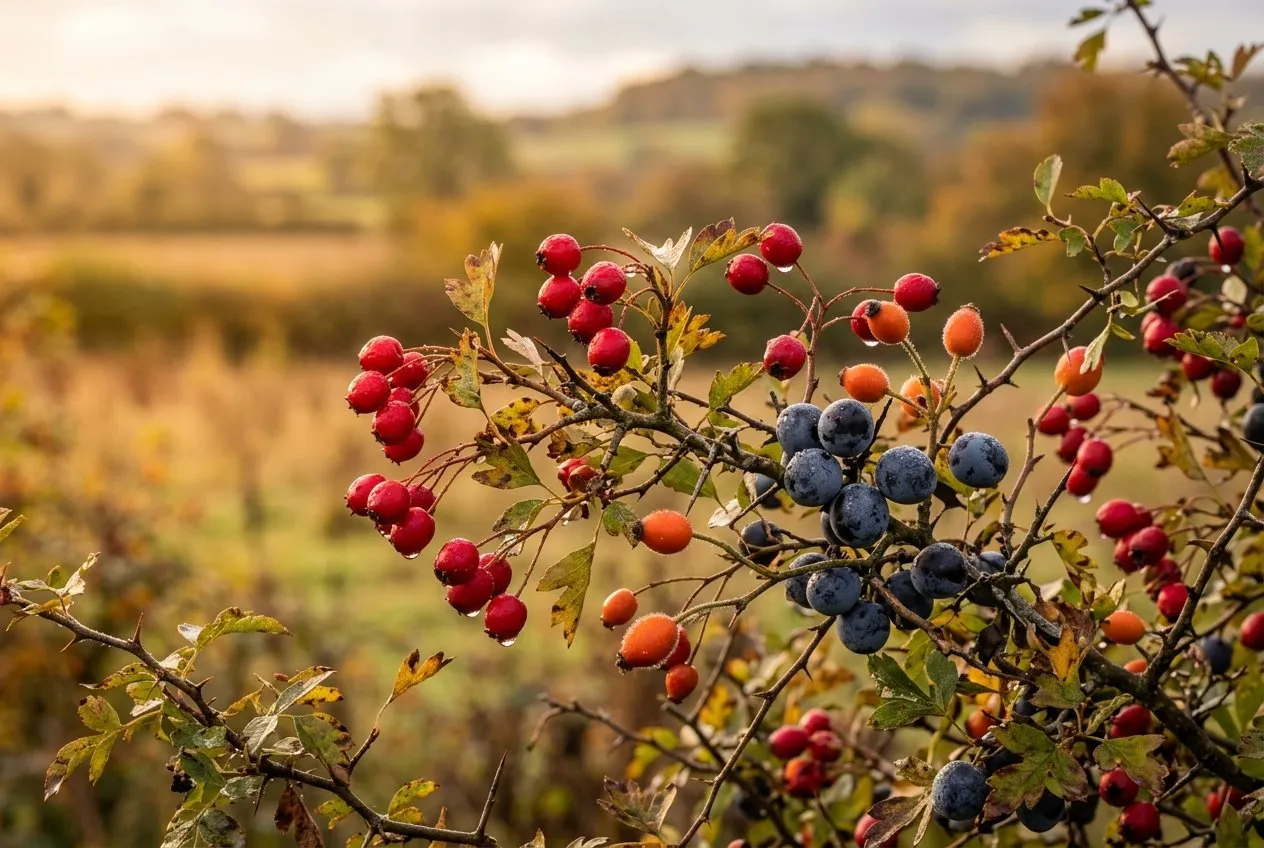
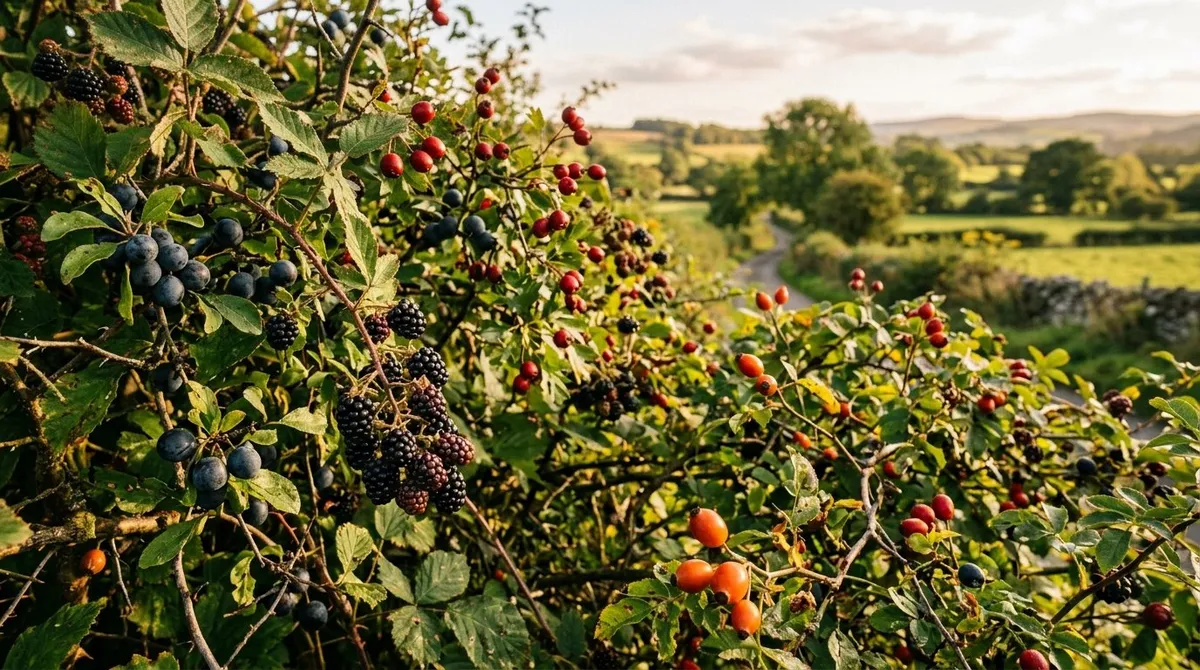
Haws, sloes and rosehips give birds and small mammals food through autumn and winter
Holly (Ilex aquifolium) is the best native evergreen for a hedge. Its prickly leaves give birds safe year-round cover. Female plants carry red berries in winter if there’s a male holly nearby, though ‘J.C. van Tol’ berries on its own. Holly grows slowly, so buy the biggest plants you can afford. It’s fine in shade and poor soil.
Guelder rose (Viburnum opulus) has flat white flowers in May and June, then glossy red berries that hang on into winter. The leaves turn deep crimson in autumn. Thrushes love the berries, but they can upset people, so don’t eat them. Guelder rose is happy in damp, heavy soil. Our guelder rose growing guide has planting and pruning tips.
Spindle (Euonymus europaeus) has the showiest fruit of any hedge plant. Pink capsules split in October to show bright orange seeds. The fruit is poisonous to people, but robins enjoy it. Spindle likes chalky soil and is a little smaller than hawthorn, so it suits the middle of a mixed hedge.
Hornbeam (Carpinus betulus) keeps its dead brown leaves through winter when clipped, so you get screening even though it isn’t evergreen. It copes with clay and wet ground better than beech. It clips into neat shapes and mixes well with hawthorn, field maple and holly in a privacy screening hedge. Our hornbeam hedge guide covers spacing, trimming and costs.
Native hedgerow species comparison table
| Plant | Soil | Flowers | Berries or fruit | Good for |
|---|---|---|---|---|
| Hawthorn | Any | White, May | Red haws, autumn | Nesting birds, the hedge’s backbone |
| Blackthorn | Any | White, March-April | Sloes, October | Early bees |
| Hazel | Moist, well-drained | Catkins, February | Hazelnuts, September | Dormice, nuthatches |
| Field maple | Clay, chalk, most soils | Small, green | Winged seeds, autumn | Autumn colour |
| Dog rose | Any | Pink-white, June-July | Rosehips, autumn | Bees and hoverflies |
| Elder | Rich, moist | Cream, June | Elderberries, September | Fast growth |
| Holly | Any | White, May | Red berries, winter | Evergreen cover |
| Guelder rose | Damp, clay | White, May-June | Red, autumn into winter | Thrushes |
| Spindle | Chalk, limestone | Green-white, May | Pink and orange, October | Robins, colour |
| Hornbeam | Clay, wet ground | Catkins, April | Small nuts, autumn | Winter screening |
How to plant a native hedgerow
Plant bare-root whips while they’re dormant, from November to March. They cost far less than pot-grown plants, and they settle in well.
Step-by-step planting method
-
Mark out the line with string and canes. Leave at least 30cm from a fence so the hedge has room to spread.
-
Dig a trench about 30cm wide and 30cm deep. On heavy clay, fork over the bottom.
-
Soak the roots in a bucket of water for an hour or two. Don’t let them dry out.
-
Space the whips 30-45cm apart. Hawthorn and blackthorn can go at 30cm, hazel and field maple at 45cm. Mix the species in little groups of three to five.
-
Plant at the soil mark you can see on the stem. Spread the roots, backfill and firm gently with your heel.
-
Cut every whip back by a third. This sounds harsh, but it makes the hedge bushy from the base instead of bare at the bottom.
-
Water well and mulch with bark or compost in a strip about 60cm wide. This keeps weeds down and holds in moisture for the first summer.
Our full hedge planting guide covers double rows and how to handle bare-root trees.
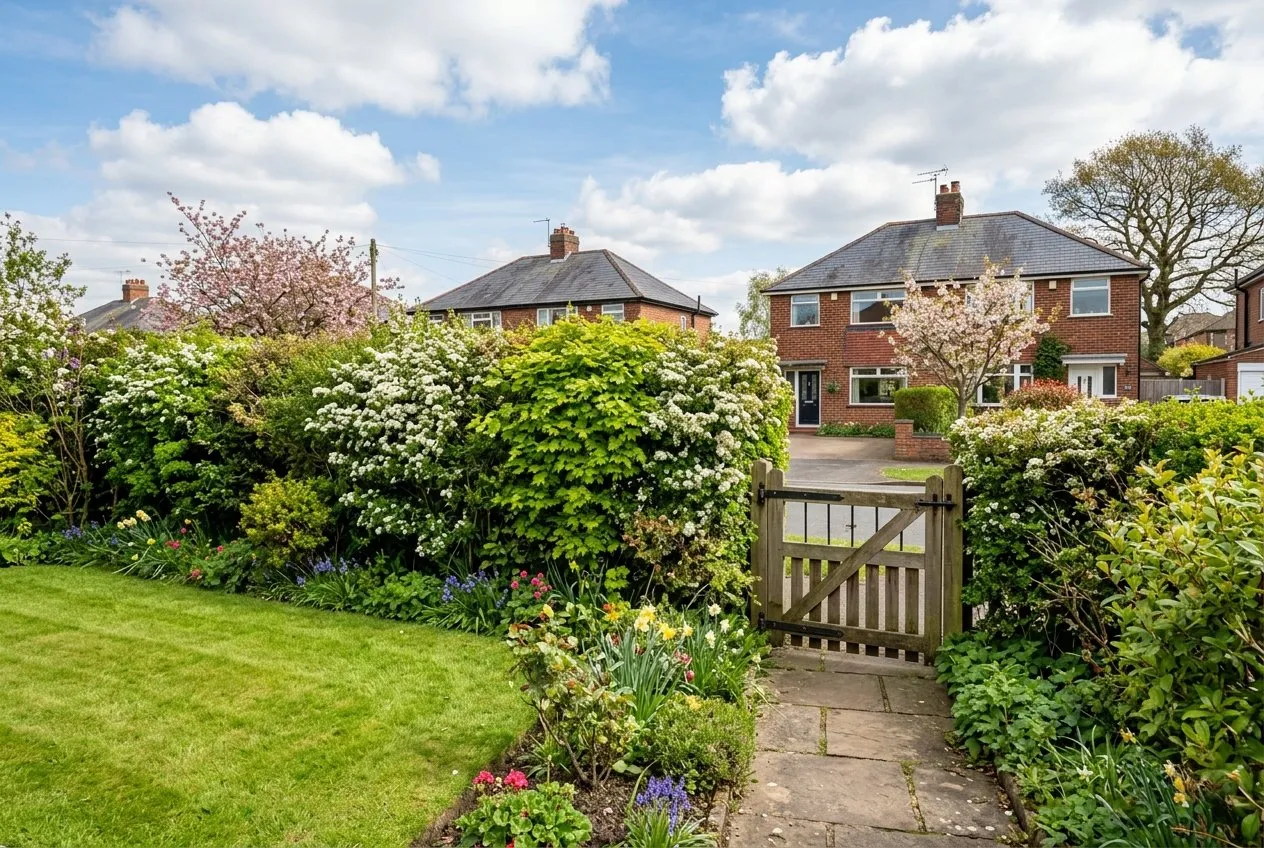
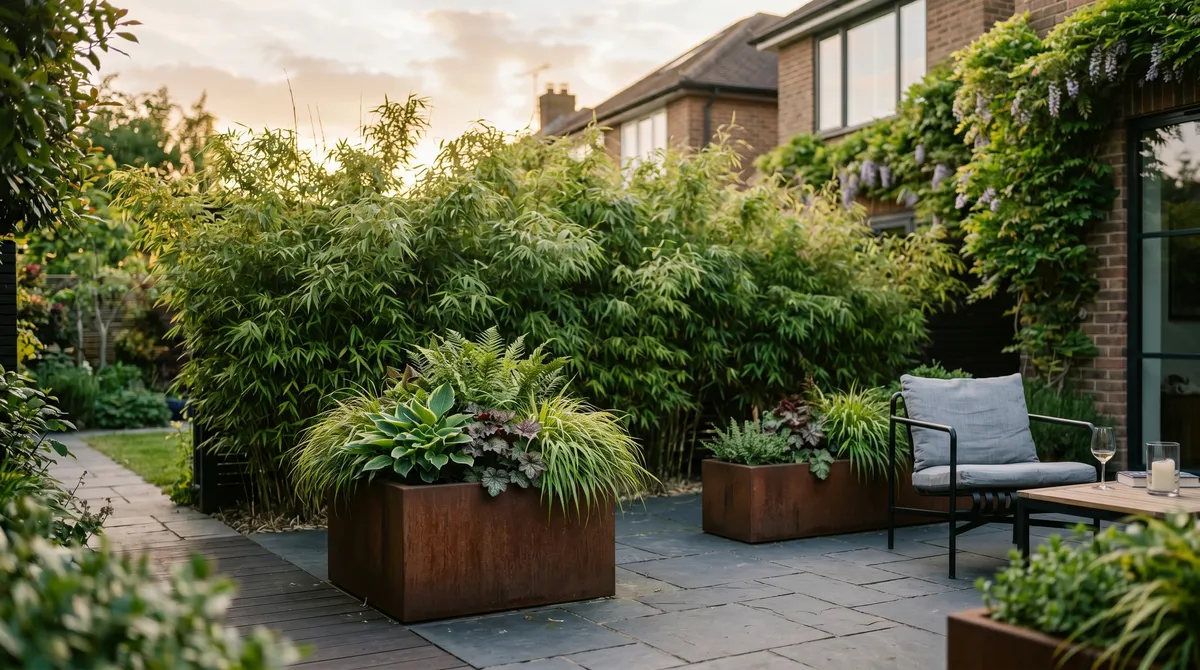
An established mixed native hedge makes a dense, good-looking boundary in a suburban garden
What soil do native hedgerows need?
Good news if you garden on clay: nearly all of these plants are happy in it. Hawthorn, blackthorn, field maple and dog rose grow in clay soil without any help. Holly and hornbeam handle wet ground too. Hazel likes slightly better drainage, and spindle prefers chalk.
You don’t need compost or fertiliser at planting. Native plants are used to ordinary British soil. Rich compost just makes soft, sappy growth that frost and nibbling animals find easier to damage.
When to trim a native hedgerow
Trim between September and February, not March to August. It’s against the law to damage or destroy a bird’s nest while it’s in use, and most hedge birds nest from March to August. Blackbirds, song thrushes, dunnocks and wrens all love a thick hedge.
Late January to mid-February is a lovely time to trim. Birds have had the berries all winter, and you get a neat shape before spring growth. Cut the sides into a slight A-shape, wider at the bottom, so light reaches the lower branches.
For the first two or three years, leave the hedge alone apart from that first cut at planting. Let it build strong roots and a thick base. From year three, clip once a year to the height and width you want.
Our guide on when to cut hedges has more on dates and seasonal care.
Why choose native species over non-native hedging?
Native hedges feed far more wildlife than cherry laurel, Leylandii or privet. Native leaves feed caterpillars, caterpillars feed baby birds, and the birds help keep garden pests down. A laurel hedge gives you screening and not much else.
Native hedges are cheaper too. Bare-root whips cost a fraction of the pot-grown laurel you’d need for the same length.
They’re tough as well. Hawthorn, blackthorn and field maple shrug off cold British winters, recover from hard pruning and live for a very long time. If you want a wildlife-friendly garden, a native hedge is one of the best things you can plant. Pair it with a pocket woodland in a spare corner for even more shelter.
How native hedgerows support UK wildlife
Think of a native hedge as a long, thin nature reserve. It gives food and shelter in every season.
Spring: Blackthorn blossom feeds queen bumblebees and early solitary bees. Hawthorn blossom in May feeds hoverflies and beetles. Blackbirds, song thrushes and dunnocks nest in the thorny cover.
Summer: Dog rose flowers bring in pollinators. Hazel leaves feed moth caterpillars, and elderflowers buzz with insects.
Autumn: Haws, sloes, rosehips, elderberries and spindle fruit feed fieldfares and redwings arriving from Scandinavia. Hazelnuts help dormice, which rely on hedges to get about.
Winter: Holly berries keep thrushes going. Clipped hornbeam keeps its leaves, giving roosting birds shelter from the wind. Hedgehogs and slow worms hide in the leafy base.
Our guide to native plants has ideas for wildflowers to grow at the hedge foot.
Frequently asked questions
What are the best native species for a UK hedgerow?
Start with hawthorn, blackthorn, hazel, field maple and dog rose. Make hawthorn about half the hedge, as it grows almost anywhere and feeds lots of wildlife. Then add holly for winter cover, elder for quick growth and guelder rose for autumn colour.
When should I plant a native hedgerow?
Plant bare-root whips from November to March. That’s when they’re dormant, cheap and easy to buy. An early start gives the roots longer to settle before spring. Just skip days when the ground is frozen or waterlogged.
How far apart should native hedgerow plants be?
Space whips 30-45cm apart in a single row. Hawthorn and blackthorn can go closer, at about 30cm, while hazel and field maple like a bit more room at 45cm. For a thicker hedge, plant a staggered double row with about 40cm between plants and 30cm between the rows.
How long does a native hedge take to establish?
Expect a decent hedge in three or four years. Hazel is one of the quickest growers, while holly is slow. Birds and insects will start using the hedge from its second year, well before it forms a solid screen.
Is it legal to cut a hedgerow during summer?
It’s legal, but you must not harm an active bird nest. Damaging or destroying a nest while it’s in use is against the law. As most hedge birds nest from March to August, the safe habit is to trim between September and February.
Can I plant a native hedgerow in clay soil?
Yes, and most native hedge plants love it. Hawthorn, blackthorn, field maple, dog rose and elder all grow happily in clay. Holly and hornbeam cope with wetter ground too. Fork over the bottom of the trench before planting, but there’s no need to add anything else.
How many species should a native hedgerow contain?
Aim for five to eight different species. Use hawthorn for about half the plants, then add the others in little groups of three to five. More variety means a longer season of flowers, berries and cover for wildlife.
Our team produces practical UK gardening guidance from source research, contributor records and established horticultural practice. Editorial standards are overseen by Matt W.