Key takeaways
- Running bamboos like Phyllostachys spread underground and can pop up in paving and next door
- Clumping Fargesia bamboos stay in a tight clump and need no root barrier
- Italian alder makes a fast, tall screen and copes with clay and wind
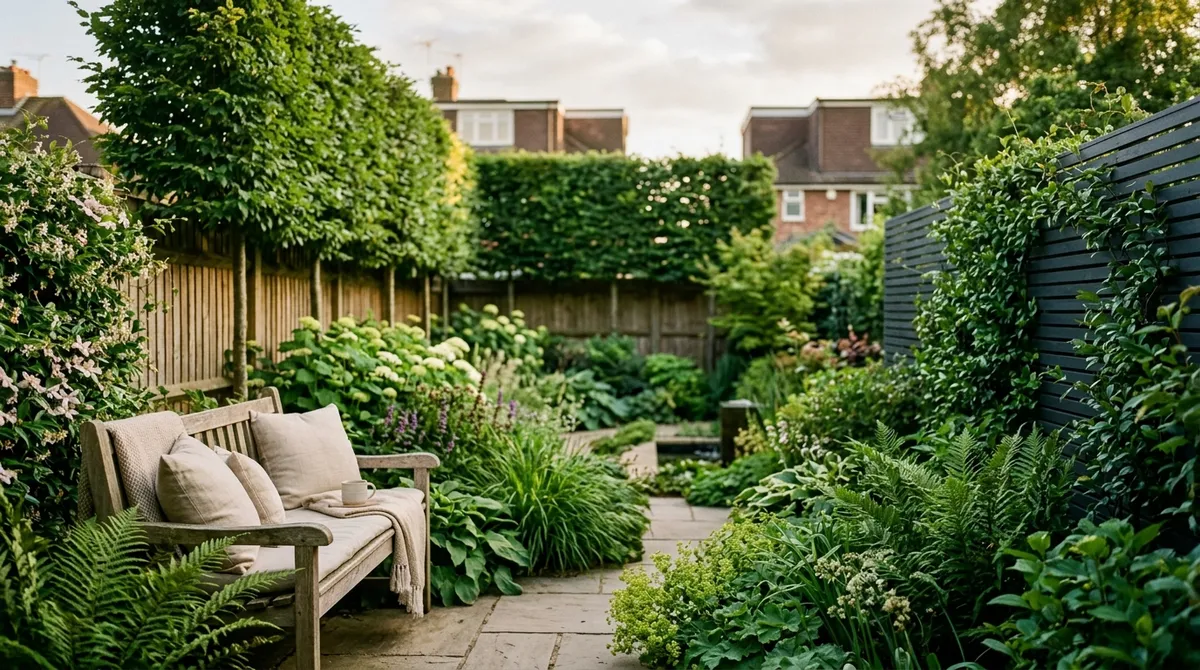
- Pleached hornbeam gives privacy at upstairs-window height in a narrow garden
- Holm oak and griselinia make good evergreen screens, especially near the coast
- Check the label: if it says Phyllostachys, Sasa or Pleioblastus, it's a runner
Bamboo gives a lovely modern look that’s hard to match. The trouble is that many bamboos sold in garden centres are running types. Left alone, they can push up through paving, lift fence posts and pop up in next door’s lawn.
The good news? There are plenty of safer ways to get the same leafy privacy.
Why running bamboo is the wrong choice
Running bamboo spreads through underground stems, and new shoots can come up a long way from the plant. Phyllostachys aurea, one of the most common in garden centres, is a runner. Shoots can come up through gravel, paving, lawns and into your neighbour’s beds.
The RHS has helpful advice on bamboo and lists Phyllostachys, Sasa, Sasaella, Pleioblastus and Pseudosasa as types that can spread. Bamboo isn’t on the same legal list as Japanese knotweed. But if yours spreads into a neighbour’s garden, you could be held responsible for the damage.
Clumping bamboo, mostly the Fargesia group, is different. It grows in a tight clump that widens only slowly. Its roots stay put, and you can lift, split or remove it with a spade.
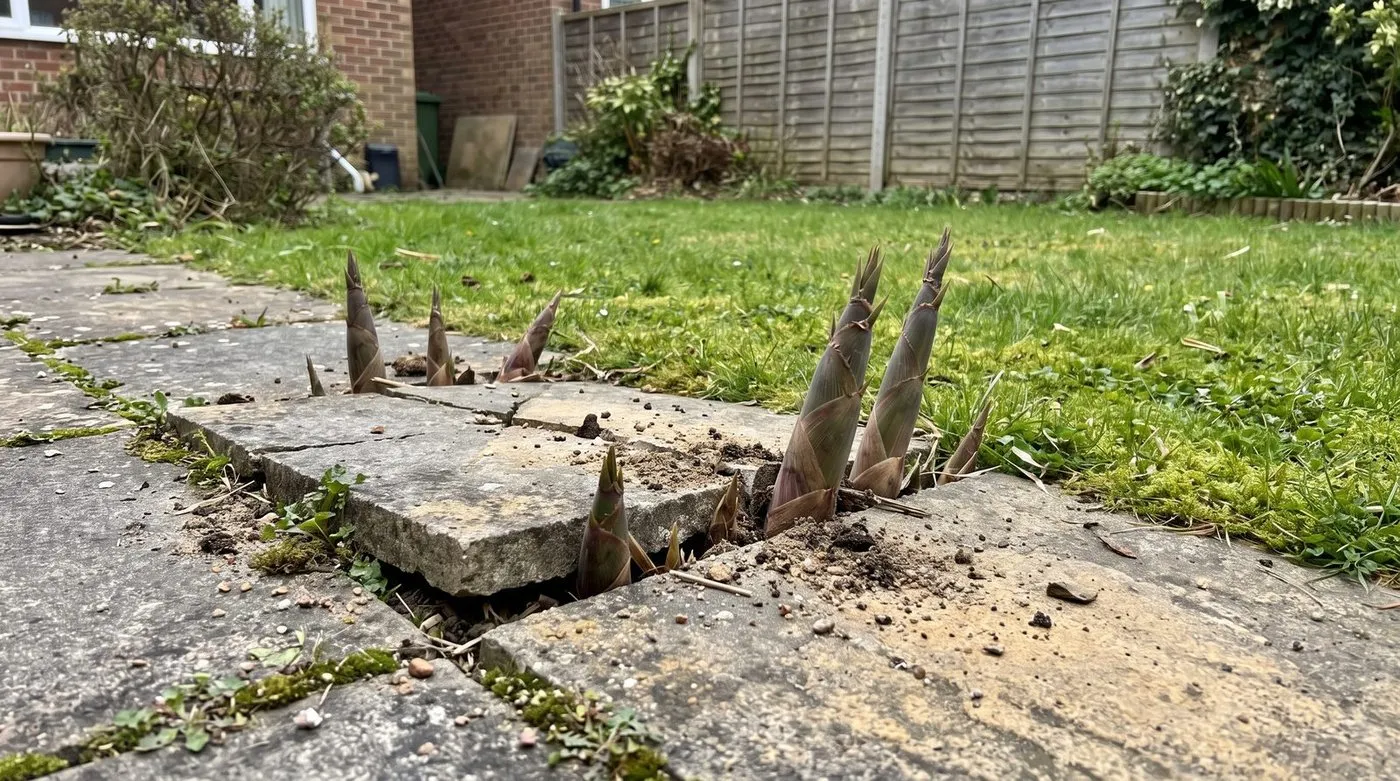 Running bamboo shoots can come up through paving and gravel a long way from where it was planted.
The 10 best bamboo alternatives
Here are ten good screening plants that won’t run riot. They range from bamboo lookalikes to trees and hedges.
| Plant | Type | Speed | Height | Evergreen | Best for |
|---|---|---|---|---|---|
| Fargesia rufa | Clumping bamboo | Medium | About 2.5m | Yes | The bamboo look, smaller gardens |
| Italian alder (Alnus cordata) | Tree | Fast | Tall tree | No | A tall screen in a bigger garden |
| Pleached hornbeam | Trained trees | Medium | 3-4m | No, but holds brown leaves | Privacy above the fence |
| Holm oak (Quercus ilex) | Tree or hedge | Medium | Tall unless clipped | Yes | Evergreen hedge, coast |
| Fargesia murielae | Tall clumping bamboo | Medium | About 4m | Yes | A taller bamboo screen |
| Griselinia littoralis | Hedge | Medium | About 4m | Yes | Seaside and mild gardens |
| Japanese holly (Ilex crenata) | Low hedge | Slow | 2-3m | Yes | Box-style hedges |
| Magnolia grandiflora | Flowering tree | Medium | Tall | Yes | Mild gardens, big flowers |
| Living willow | Woven screen | Very fast | About 3m | No | A cheap, quick screen |
| Native mixed hedge | Wildlife hedge | Medium | 3-4m | Mostly no | Wildlife and budget |
Bare-root hedging is the cheapest way to buy. Pleached trees and big specimens cost the most.
Fargesia rufa: the closest bamboo swap
If only bamboo will do, plant Fargesia rufa. It’s fully hardy in the UK. The canes are slim, the leaves are fine and pretty, and the clump spreads only slowly.
It grows to about 2.5m tall and 1-1.5m wide. Plant one per metre for a continuous screen. Water well and mulch for the first couple of summers. After that, it’s very easy-going.
For something taller, Fargesia murielae reaches about 4m, with slightly thicker canes and broader leaves. Give it at least 2m of width so the clump has room to grow.
Italian alder: the fast tree screen
Italian alder is one of the quickest ways to get a tall screen. It copes with clay, chalk, wind, salt and town pollution. It even makes its own fertiliser through little nodules on its roots.
Plant trees 2-3m apart in a single row, between November and March. Stake them for the first few years and mulch each spring. In a few years, you’ll have a tall, leafy screen.
 Italian alder grows fast and stays fairly narrow, so you don’t lose much border space.
Pleached hornbeam: privacy at upstairs height
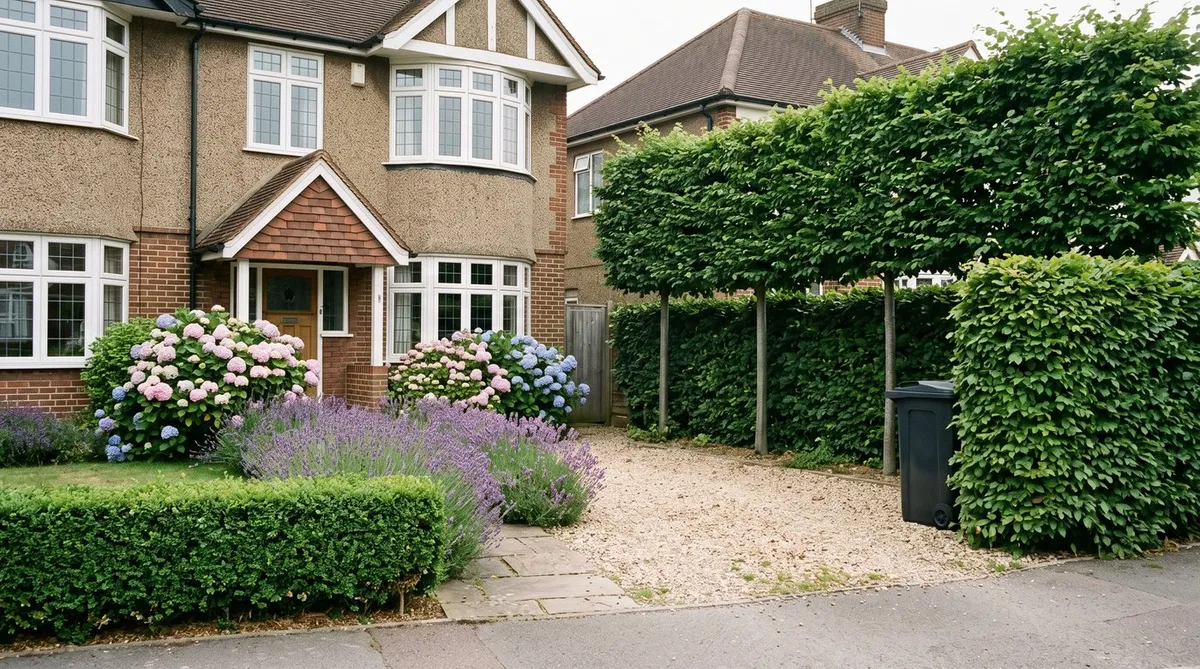
Pleached hornbeams are trees with a bare trunk and a flat panel of branches on top, like a hedge on legs. They come ready-trained with a clear stem of about 1.5-1.8m. With a summer trim each year, the panels knit together into a hedge in the sky. Plant them 1.5-2m apart.
In a narrow garden overlooked by upstairs windows, they block the view without eating up your border. You can still plant underneath.
 Pleached hornbeam in a city courtyard. The bare trunks leave room for planting below.
Holm oak: the evergreen oak screen
Holm oak (Quercus ilex) is a dense, tough evergreen that many gardeners overlook. Its leathery leaves are dark green on top and grey underneath. Left alone it becomes a big tree, but it clips well into a tall hedge.
It shrugs off salt wind, dry chalk and pollution, which is why it’s so popular in coastal gardens. Plant young plants 1-1.5m apart in a single row.
It’s slow for the first couple of years while it puts down deep roots. Be patient, as it speeds up after that.
 Holm oak clipped into a tall screen by the sea. Salt wind doesn’t bother it.
Griselinia and Japanese holly: lower screens
Griselinia littoralis has bright apple-green leaves and loves seaside gardens. It grows to about 4m. Plant two per metre. It’s happiest in mild southern and western areas and can struggle in very cold, exposed spots.
Japanese holly (Ilex crenata) looks a lot like clipped box but without the box tree caterpillar worry. It’s slow and stays 2-3m tall. It’s great for low formal hedges, cloud pruning or a Japanese-style garden. Plant three or four per metre.
 Japanese holly cloud-pruned for a modern look, the closest match to clipped box.
Magnolia grandiflora and other flowering options
Magnolia grandiflora is the pick if you want an evergreen screen with flowers. It has big, glossy leaves and large, scented white flowers in summer. It’s best in milder gardens, especially in the south.
‘Exmouth’ is a reliable variety for UK gardens. ‘Little Gem’ stays smaller and suits courtyards.
Willow screens and native hedges: the budget routes
Living willow is the quickest cheap screen of all. Push cut willow stems into the ground about 20cm apart in February or March. They root and shoot up fast in the first season. Weave the stems together for a living fence, or “fedge”.
Willow needs trimming every year and likes damp soil, so skip it for dry, sunny borders. It’s best at the back of big gardens, on allotments or in cottage-style borders. For a long-lasting boundary that birds love, a mixed native hedge is the cheapest option of all.
Good to know: If you really must plant a running bamboo like Phyllostachys, put in a proper bamboo root barrier at least 60cm deep before planting. Pond liner isn’t strong enough. Even then, check every year for shoots escaping. It’s far simpler to plant a clumping bamboo or one of the plants in this guide.
Bamboo vs tree vs hedge: which suits you?
The right choice depends on your space, budget and how fast you need cover.
| Option | Best for | Price | Time to a good screen | Upkeep |
|---|---|---|---|---|
| Clumping bamboo (Fargesia) | Modern look, narrow gardens | Medium | A few years | Very little |
| Fast tree (Italian alder) | Tall screens on new estates | Medium | A few years | A yearly trim |
| Pleached hornbeam | Upstairs privacy in narrow gardens | High | A few years to knit together | A summer trim |
| Evergreen hedge (holm oak, griselinia) | A permanent boundary | Low to medium | Several years | A yearly trim |
| Living willow | A cheap, quick, informal screen | Low | One or two seasons | Twice a year |
| Native mixed hedge | Wildlife and budget | Low | A few years | A yearly trim |
Common mistakes when choosing a bamboo alternative
1. Buying running bamboo by mistake. Garden centre labels don’t always make it clear. Look for Fargesia in the name. Anything starting Phyllostachys, Pleioblastus, Sasa or Pseudosasa is a runner.
2. Planting Magnolia grandiflora somewhere cold and exposed. It can lose its leaves or die in a hard winter. In colder northern gardens, choose holm oak or pleached hornbeam instead.
3. Planting a runner and hoping to keep an eye on it. Running bamboo spreads underground, out of sight. By the time you see shoots, the roots have already travelled a long way.
4. Forgetting that clumping bamboo still widens. Fargesia spreads slowly, but it does spread. Leave about 1.5m of width for each plant to grow into.
5. Planting Italian alder too close to a fence. Its roots are strong, so plant at least 1.5m away from fences. For more on planting by boundaries, see our guide to fast-growing climbers for fences and walls.
Month-by-month planting calendar
| Month | What to do |
|---|---|
| November | Plant bare-root Italian alder, hornbeam and pleached trees |
| December | Mulch new bamboo with bark, and firm in plants lifted by frost |
| January | Weed around the base and check stakes after storms |
| February | Last chance to plant willow stems |
| March | Last of the bare-root planting, and feed bamboo |
| April | Water bamboo and pleached trees weekly if it’s dry |
| May | Watch for nesting birds and don’t trim hedges with nests |
| June | A light first trim for pleached hornbeam |
| July | Water Fargesia weekly in dry spells |
| August | Main trim for pleached hornbeam, and tidy holm oak |
| September | Last trim for griselinia and Japanese holly |
| October | Plan winter planting and order bare-root plants |
Buying safe bamboo and tree screens
Buy from a specialist nursery if you can. They’ll know exactly which bamboos are clumpers and can supply bare-root hedging, pleached trees and bigger specimens.
For Fargesia rufa, a 3 or 5 litre pot settles in faster than a tiny one and gives you a screen sooner. Very cheap plants are often pot-bound and take longer to get going.
Turn the pot over and check the roots before you buy. If thick white roots are circling round and round, the plant has sat in its pot too long. A healthy Fargesia has fine, pale roots and tight canes.
Now you’ve picked a safe screen
Next, get the planting right. Read our hedge planting guide for the UK for a step-by-step method. Or see our pick of the best trees for privacy in UK gardens for more ideas.
Frequently asked questions
Is all bamboo invasive in the UK?
No, only the running types spread out of control. Running bamboos like Phyllostachys, Sasa and Pleioblastus send underground stems a long way from the plant. Clumping bamboos like Fargesia, Borinda and Chusquea spread slowly and stay in a tight clump. Check the name on the label before you buy. If in doubt, choose a Fargesia.
What is the safest bamboo for UK gardens?
Clumping Fargesia bamboos are the safest choice. Fargesia rufa makes a dense clump about 2-2.5m tall and needs no root barrier. Fargesia murielae grows taller, to around 4m, for a higher screen. Both are fully hardy and spread only slowly. Avoid running bamboos like Phyllostachys unless you fit a deep root barrier.
How fast does Italian alder grow?
Fast, often well over half a metre a year once settled. It copes with clay, drier soils, wind and town pollution. Mature trees can reach 15-20m but stay fairly narrow. It suits a tall screen in a bigger garden. Keep it well away from buildings and drains.
What is the best evergreen screen instead of bamboo?
Holm oak is one of the best dense evergreen screens. It grows at a steady pace, clips well and copes with coastal wind. For faster cover, griselinia and Portugal laurel make good evergreen hedges. Yew is slower but very dense and long-lived. Pick a plant that suits your soil, space and the height you need.
How tall do pleached hornbeams grow?
They’re usually kept at around 3-4m tall overall. Each tree has a bare trunk of about 1.5-1.8m, with a flat panel of branches on top. The panels take a few years to knit together into a solid screen. Plant them about 1.5-2m apart. They’re great for blocking the view from upstairs windows next door.
Our team produces practical UK gardening guidance from source research, contributor records and established horticultural practice. Editorial standards are overseen by Matt W.