Key takeaways
- Pleached hornbeam makes a smart screen and often holds brown leaves through winter
- Choose clumping Fargesia bamboo; running bamboo needs a deep root barrier
- Compact Pittosporum and Photinia standards give evergreen cover with little fuss
- Star jasmine and honeysuckle add scent to a summer bin corner
- Leave room for lids to open and a clear route to the kerb on bin day
- Keep willow well away from the house and drains
Pleached hornbeam, clumping bamboo, compact Pittosporum and star jasmine are four of the best plants for hiding wheelie bins. A living screen softens a front garden and gives you something lovely to look at instead of grey plastic.
This guide is all about plants. If you’d rather build a bin store or fit a slatted screen, our guide to clever ways to hide wheelie bins covers stores, sizes and costs.
Leave room for bin day
Before you plant, stand the bins where they’ll live and mark the space around them. Plants grow, and a screen that blocks a lid or the route to the kerb soon becomes a nuisance.
- Leave about 30-50cm between the bins and the plants, so lids open fully.
- Keep a clear, flat route to the pavement for wheeling bins out.
- Check your council’s website for anything they ask, such as where to leave bins on collection day.
- Bin corners are often dry and shady. Improve the soil with compost before planting and water well in the first year.
1. Pleached hornbeam: the smartest screen
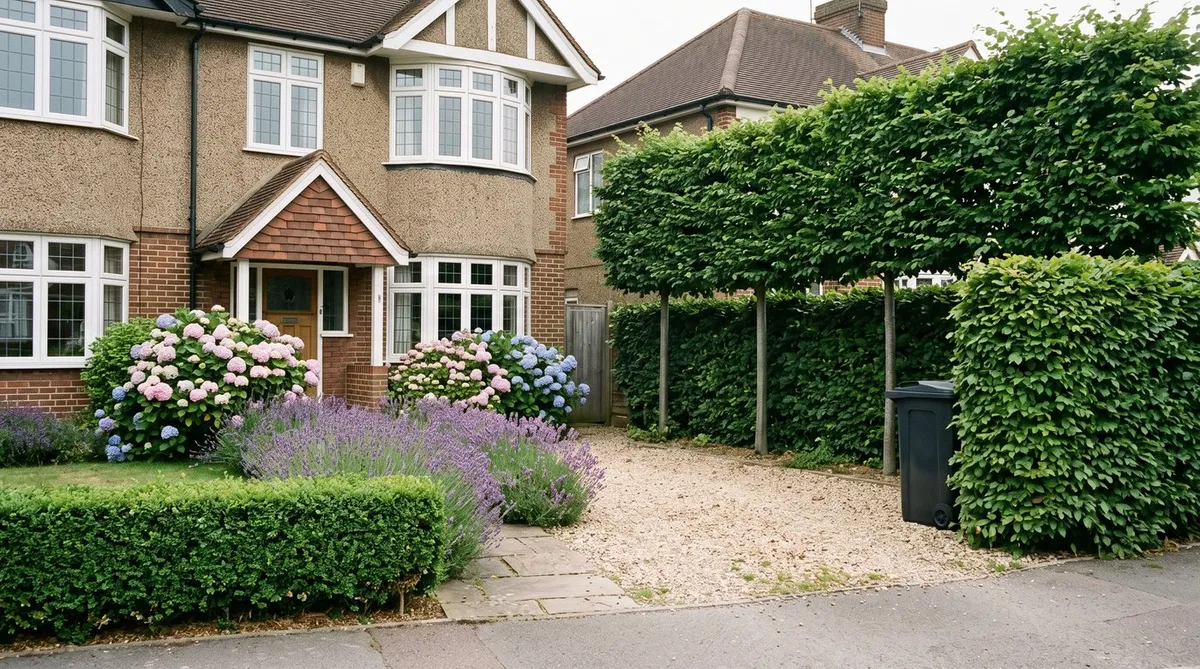
Pleached hornbeam gives a crisp, raised hedge on clear stems. The leafy panels sit at bin height and above, leaving space underneath to wheel the bins in and out.
Hornbeam (Carpinus betulus) is deciduous, but clipped plants often hold their brown leaves through winter. That keeps the screen working when bins are most on show.
Buy ready-trained panels from a specialist nursery and give them sturdy stakes. Trim once or twice in summer to keep the flat shape. Our guide to planting and supporting pleached trees walks you through it.

A hornbeam screen over a simple frame hides the bins completely and looks smart all year.
2. Clumping bamboo: quick evergreen cover
Clumping bamboo gives fast, evergreen cover that rustles gently in the breeze. Choose a Fargesia, such as Fargesia rufa or Fargesia murielae, which stays in a tidy clump.
Avoid running bamboos such as Phyllostachys in a small front garden. They send roots under paths and fences. If you do plant one, fit a proper bamboo root barrier around it, about 60cm deep, when you plant.
Water bamboo well in dry spells, as dry leaves curl and look tired.

A clump of Fargesia bamboo softens the bins and stays put, unlike running types.
3. Compact Pittosporum: low upkeep
Dwarf Pittosporum forms a neat, rounded evergreen mound that needs very little care. Pittosporum tobira ‘Nanum’ grows into a dense dome, perfect in front of a single bin.
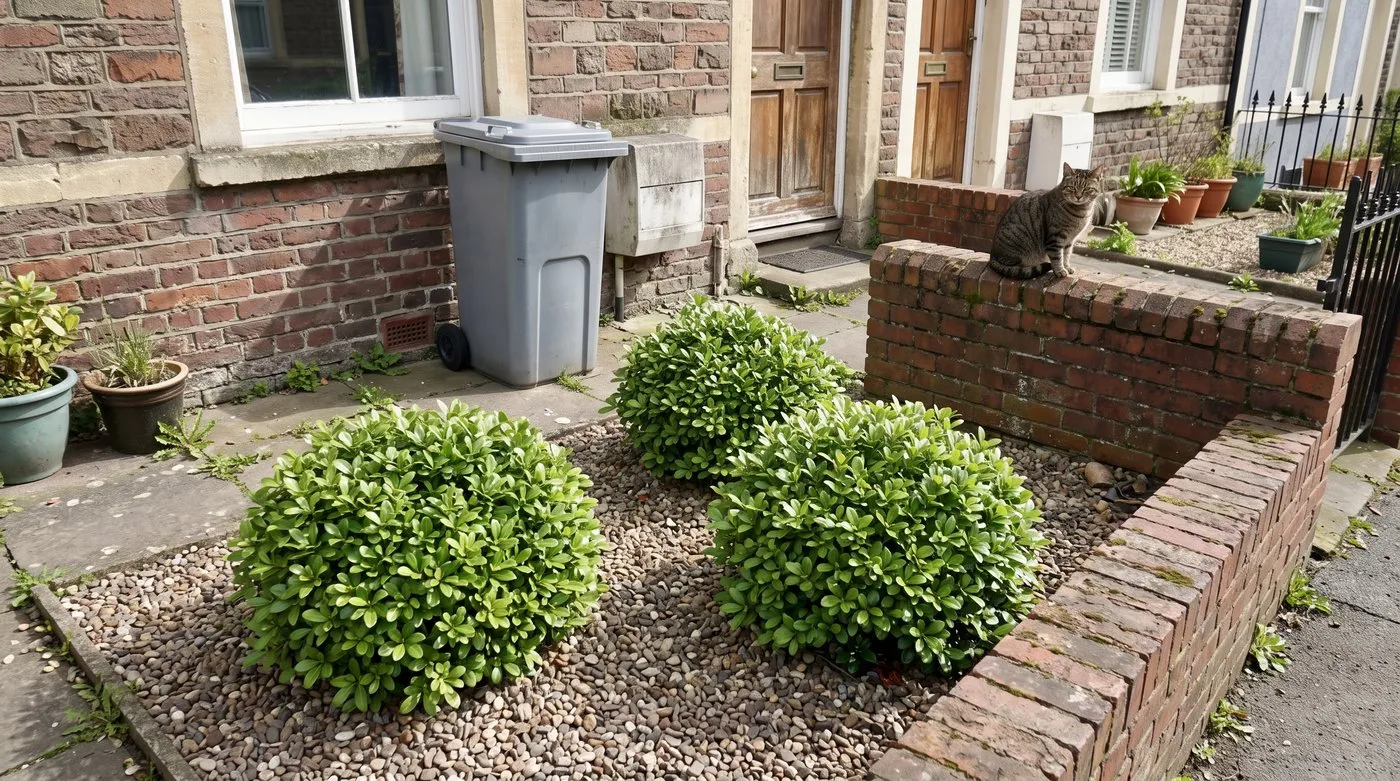
Compact Pittosporum forms neat evergreen domes that soften a bin area with almost no trimming.
It does best in milder, sheltered gardens and free-draining soil. In colder spots, try a compact Pittosporum tenuifolium such as ‘Golf Ball’, which forms a bright green ball. Give it a light trim in spring. Our guide on how to grow pittosporum has more on choosing a variety.
4. Photinia ‘Red Robin’ standard
A lollipop-shaped Photinia ‘Red Robin’ gives a raised evergreen screen with bright red new leaves. The clear stem leaves room to move the bins underneath.
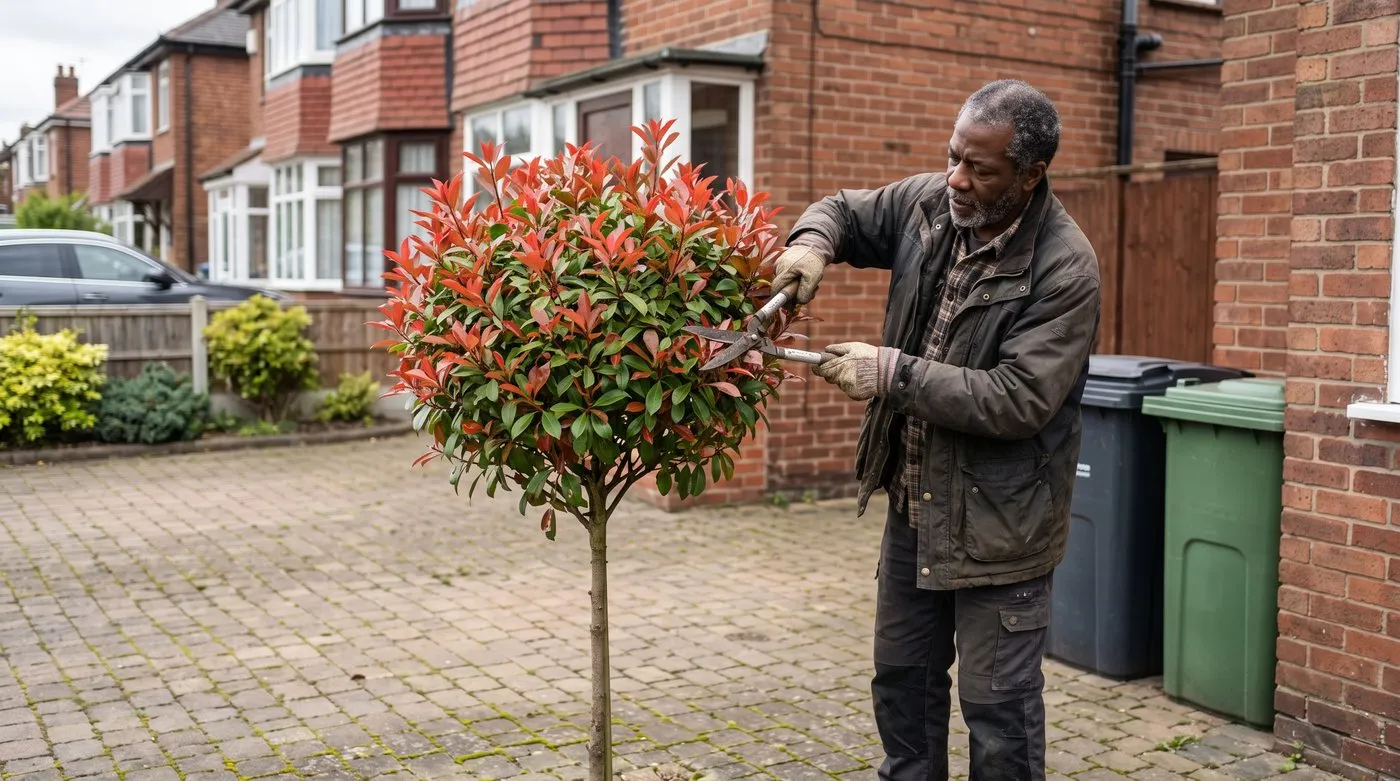
A light trim keeps the head tight and brings on a fresh flush of red leaves.
Trim it once or twice a year to keep the head tight, and each trim brings a new flush of red. Plant it somewhere with good air flow, as Photinia can get leaf spot in damp, crowded spots. See our guide on how to grow Photinia ‘Red Robin’ for care.
5. Willow fedge: cheap and rustic
A fedge is a living fence woven from willow rods. It’s cheap, quick and suits a country-style garden.
Push dormant willow rods into moist soil between November and February, then weave more rods diagonally between them and tie the crossings. Trim or weave in the new shoots each year, as willow grows fast.
Willow likes moist soil and sun, and dislikes dry, shallow ground. Keep it well away from the house, walls and drains, as its thirsty roots travel a long way. That often rules it out of a small front garden.
6. A hurdle or trellis with climbers
A woven hazel hurdle or a timber trellis gives instant cover, and climbers make it green. It’s a good middle way between a built store and a hedge.
| Climber | Evergreen? | Flowers | Good to know |
|---|---|---|---|
| Star jasmine (Trachelospermum jasminoides) | Yes | White, scented, summer | Slow at first, needs a sunny, sheltered spot |
| Honeysuckle (Lonicera periclymenum) | No | Cream and pink, scented, summer | Easy, loved by moths and bees |
| Clematis ‘Mrs N. Thompson’ | No | Purple and red, early summer | Compact enough for a small trellis |
| Sweet peas (annual) | No | Mixed, scented, summer | Quick cover in the first year |
Avoid very vigorous climbers such as Clematis montana on a small bin screen. They soon swamp it and need constant cutting back.
7. Ornamental grasses for low bin stores
Grasses make a soft, swaying screen in front of a low bin store. They suit modern front gardens and need just one tidy-up a year.
- Carex testacea (orange sedge) is evergreen with orange-tinted leaves that glow in winter. Good for a low screen.
- Calamagrostis ‘Karl Foerster’ grows in narrow upright clumps, with stems that stand through winter.
- Miscanthus ‘Morning Light’ makes a dense, fine-leaved clump for a taller screen.
Cut deciduous grasses back in late winter. Just comb dead leaves out of evergreen ones. Our ornamental grasses guide has many more to choose from.

Orange sedge keeps its warm colour all winter, softening the front of a low bin store.
8. Star jasmine on a trellis: for scent
Star jasmine on a trellis gives an evergreen screen with sweet-scented white flowers in summer. It’s lovely beside a front door or on a wall behind the bins.
Plant it against a sunny, sheltered wall or fence, and tie in new shoots as they grow. It’s slow for the first year or two, then fills out well. Scent helps a bin corner a little, but keeping lids closed and bins rinsed makes the biggest difference. Our guide on how to grow star jasmine covers pruning and care.

Star jasmine covers a trellis in scented white flowers through early summer.
Bin screening plants compared
Pick by how fast you need cover and how much trimming you want to do.
| Plant | Speed | Evergreen? | Trimming | Best for |
|---|---|---|---|---|
| Pleached hornbeam | Instant if bought as panels | Holds brown leaves | Once or twice a year | Smart front gardens |
| Clumping bamboo | Fast | Yes | Thin out old canes | Quick, tall cover |
| Compact Pittosporum | Slow to medium | Yes | Light trim in spring | Low upkeep |
| Photinia standard | Medium | Yes | Once or twice a year | Raised cover, red leaves |
| Willow fedge | Fast | No | Yearly weaving | Large, rustic gardens away from drains |
| Hurdle with climbers | Instant hurdle, climbers fill in | Depends on climber | Light | Small spaces |
| Grasses | Medium | Some | Once a year | Low bin stores |
| Star jasmine on trellis | Slow at first | Yes | After flowering | Scent near the door |
Common bin-screening mistakes
- Planting too close to the bins. Lids won’t open and bins scrape the plants. Leave a gap.
- Running bamboo without a barrier. It can spread under paths and into next door’s garden.
- Blocking the route to the kerb. Keep a clear path and trim anything that overhangs it.
- A screen that vanishes in winter. Bins are most on show from November to March. Choose evergreen plants or hornbeam.
- Willow near the house. Its roots seek out drains. Keep it well away from buildings.
For more ways to make the front of your home look good, see our front garden ideas and the wider garden design hub.
Frequently asked questions
What is the best plant to hide wheelie bins in the UK?
Pleached hornbeam for a smart look, Pittosporum for low upkeep. Hornbeam panels sit above the bins on clear stems and often hold brown leaves through winter. Compact Pittosporum is evergreen and needs only one light trim a year.
Is bamboo a good plant for hiding bins?
Clumping bamboo is, running bamboo is risky. Fargesia stays in a tidy clump and gives quick evergreen cover. Running types such as Phyllostachys spread under paths and fences unless you fit a deep root barrier when planting.
How much space should I leave around wheelie bins?
Leave enough room to open lids fully and wheel bins out easily. About 30-50cm between plants and bins works well. Keep the route to the kerb clear and trim anything that overhangs it.
Do screening plants help mask bin smell?
Scented plants can help a little on warm, still evenings. Star jasmine and honeysuckle are the best choices. The real fix is keeping lids shut, rinsing bins and keeping them out of full sun.
When is the best time to plant a bin screen?
Autumn is best, with spring the next best choice. The soil is moist and plants settle in before summer. Water well through the first dry spells, as bin corners are often dry and sheltered from rain.
Want a taller screen for the whole boundary? Our guide to privacy design for an overlooked garden is the next step.
Our team produces practical UK gardening guidance from source research, contributor records and established horticultural practice. Editorial standards are overseen by Matt W.