Key takeaways
- Autumn sowing in October gives the strongest plants and the earliest flowers
- Pinch out the tip at 7.5-10cm tall for bushier plants with more stems
- Give them something about 1.8m tall to climb, such as canes, an obelisk or netting
- Pick every 2-3 days, because seed pods stop the flowers coming
- Soak dark seeds overnight before sowing to help them sprout
To grow sweet peas from seed, sow in autumn or late winter, pinch out the tips, give them something tall to climb and keep picking. They flower from June to September, and the more you pick, the more you get.
Growing from seed is easy and much cheaper than buying plug plants. One packet gives you dozens of plants. The only real choices are when to sow and what they’ll climb. For exact dates, see our guide on when to plant sweet peas. A painted garden obelisk makes a lovely scented tower.
Should I sow sweet peas in autumn or spring?
Both work, but autumn sowing gives stronger plants and earlier flowers. Spring sowing is simpler.
Autumn sowing (October to November)
Sow one seed per deep pot or root trainer of multipurpose compost. Keep them in a cold frame, an unheated greenhouse or by a sheltered house wall. They grow slowly over winter but build big roots, then romp away in spring. Our seed sowing calendar shows what else to sow and when.
Spring sowing (February to March)
Sow indoors somewhere at about 15-18°C. Seedlings usually pop up in 10-14 days. There’s no winter babysitting, and the plants catch up well, flowering from late June or early July. Our guide to sowing seeds indoors runs through the method.
Getting seeds ready
Dark seeds have hard coats, so soak them in lukewarm water for 12-24 hours. If any haven’t swollen, nick them gently with a nail file on the side away from the “eye” (the little scar). Pale seeds usually sprout without help.
Can you sow sweet peas straight outside?
Yes, in April once the soil is warming. It’s the easiest way, though they flower later than ones started under cover.
Make a drill 2.5cm deep and sow a seed every 5-7.5cm, then thin to 20-30cm apart. For a wigwam, sow two seeds at the foot of each cane and keep the stronger one. Mice and slugs go for seeds and shoots, so sow a few spares and cover seedlings with a cut-off plastic bottle. In cold northern or hill gardens, wait until late April. Outdoor-sown plants usually start flowering in July.
Whether in pots or modules, sow 2cm deep. Sweet peas have long roots, so deep root trainers or loo roll tubes are perfect.

Deep root trainers or loo roll tubes let the long roots grow straight down.
How to pinch out sweet peas
When seedlings reach 7.5-10cm, nip off the tip just above a pair of leaves. Fingers or small scissors are fine. Autumn-sown plants often branch on their own, so they may not need it.
Pinching stops the plant growing as a single stem. It sends out side shoots instead, and each one carries flowers. More stems, more flowers.
If the side shoots grow strongly, you can pinch those too at about 10cm for an even bushier plant.
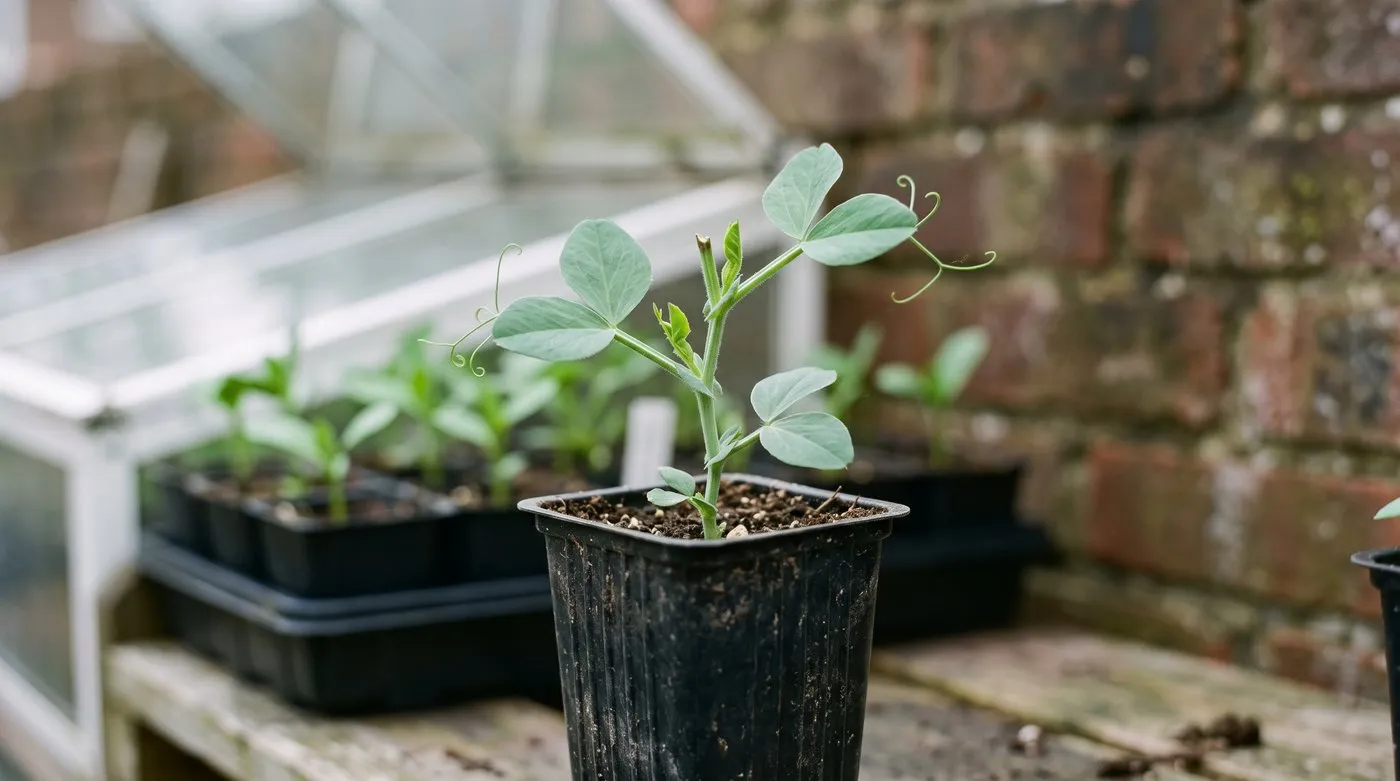
After pinching, side shoots grow from the leaf joints below the cut. Each one carries its own flowers, so you get a much bushier plant.
What should sweet peas climb up?
Something 1.5 to 2m tall. They climb with curly tendrils, and without support they collapse into a tangle.
Cane wigwams and obelisks
Push 5-8 bamboo canes into the ground in a circle and tie them at the top. Sweet peas scramble up to make a tower of colour. A metal obelisk does the same job year after year. Plant about 20cm apart around the base.
Netting on a fence or wall
Fix netting with a 15cm mesh to a fence, wall or between posts. It gives a wall of flowers and is the best way to grow rows for cutting. Plant 20-30cm apart along the bottom.
Cordons for long stems
For the longest stems and biggest flowers, grow each plant up its own cane as a cordon. Take off all side shoots and tendrils, and tie the stem to the cane with sweet pea rings. When it reaches the top, untie it, lay the bottom along the ground and tie it to a cane further along. It’s more work, but the stems can reach 45cm.

A cane wigwam is the easiest support. Push 5-8 canes in a circle and tie them at the top.
When to plant sweet peas outside
Plant autumn-sown ones in late March or April, and spring-sown ones from late April to mid-May. Harden them off first by standing them outside for longer each day over 10-14 days.
Get the bed ready ahead of time. Dig a trench 30cm deep, put well-rotted compost or manure in the bottom and fill back with soil. This holds moisture and keeps them growing through dry spells.
Plant 20-30cm apart, close to the support. Water well and add a 5cm mulch of compost or bark. Sweet peas cope with light frost, but cover new plants with fleece if a hard frost is forecast.
How to keep sweet peas flowering
Pick, pick, pick, every 2-3 days. As soon as seed pods form, the plant stops flowering and puts its effort into seed.
If you don’t want the flowers, snip off fading ones anyway. Back from holiday? Pull off every pod you can find and they’ll soon flower again. Tiny black beetles often come indoors on the flowers, and our guide to clearing pollen beetles from cut sweet peas has a simple trick for shifting them.
Water at the base in dry weather. Plants in moist, mulched soil flower much more steadily. Give a weekly liquid tomato feed once the first flowers open.

Pick every 2-3 days. The more you cut, the more they flower.
Best sweet pea varieties to try
For scent
‘Matucana’ is maroon and violet and famous for its strong perfume. ‘Cupani’ is purple and maroon and close to the original wild sweet pea. ‘High Scent’ has cream and lavender flowers and was bred for fragrance.
For big flowers
Spencer types have the largest, frilliest flowers on long stems, perfect for cutting. Try ‘Beaujolais’ (burgundy), ‘Jilly’ (cream), ‘Gwendoline’ (lilac-pink) or ‘Mollie Rilstone’ (cream flushed pink).
For pots
‘Patio Mixed’ and ‘Little Sweetheart’ are dwarf types about 30-45cm tall. They suit pots, window boxes and hanging baskets. The scent is lighter, but the colours are lovely.
For cottage gardens
Old-fashioned grandiflora types such as ‘Painted Lady’ (pink and white) and ‘America’ (red and white stripes) suit a cottage garden planting plan. The flowers are smaller than Spencers but they smell wonderful.
Common sweet pea problems
| Problem | Likely cause | What to do |
|---|---|---|
| No flowers | Seed pods forming, too much shade | Pick every 2-3 days, grow in full sun |
| White powder on leaves (mildew) | Dry roots, still air | Water the base regularly, remove bad leaves |
| Buds dropping | Dry soil, very hot weather | Mulch well, water deeply in hot spells |
| Short stems | Hot weather, poor soil | Add compost, water regularly, try cordons |
| Yellow lower leaves | Age, or hungry plants | Give a balanced liquid feed |
Do sweet peas come back every year?
No, ordinary sweet peas are annuals. They die after setting seed, so sow fresh each year. The everlasting pea (Lathyrus latifolius) does come back, but its flowers have little or no scent.
Everlasting pea is handy for covering a fence or bank with pink, white or magenta flowers from summer into autumn. See the RHS lathyrus growing guide for more. Cut its dead stems down in late winter rather than autumn, so they shelter insects through the cold. Annual sweet peas sometimes seed themselves, but the seedlings are unreliable.
Can you save sweet pea seeds?
Yes, it’s easy. Leave a few of the best flowers unpicked in late summer. Let the pods turn brown and papery on the plant, then pick them on a dry day.
Spread the pods on a tray indoors until they split. Store the seed in a labelled paper envelope somewhere cool and dry. Seed from a named, non-F1 variety usually comes true. Save from the plants with the best scent and longest stems. Leaving pods slows flowering, so save from one or two plants at the end of summer. The seeds are poisonous, so keep them away from children and pets.
Sweet peas bring in bees, butterflies and hoverflies, so they’re great for bee-friendly garden planting. Grow them with lavender, roses, cosmos and foxgloves for a border that buzzes all summer.
Now you’ve got the hang of sweet peas, read our guide on when to plant sweet peas for sowing dates around the country.
Frequently asked questions
When should I sow sweet pea seeds?
Sow in October or November for the strongest plants. February or March is easier if you don’t want to look after seedlings over winter. Autumn-sown plants sit in a cold frame or unheated greenhouse, build big roots and flower earlier.
Do I need to soak sweet pea seeds?
It helps dark seeds, which have hard coats. Soak them in lukewarm water for 12-24 hours before sowing. Pale seeds usually sprout fine without it. Or gently nick the seed coat with a nail file, on the side away from the little scar, and sow straight away.
Why are my sweet peas not flowering?
Usually because they aren’t being picked often enough. Once seed pods form, the plant stops making new flowers, so pick every 2-3 days. Too much shade, too much high-nitrogen feed and planting out late can also cut flowering.
Can I grow sweet peas in pots?
Yes, in a big pot at least 30cm across. Use multipurpose compost with some perlite mixed in, and add a 1.5m obelisk or cane tripod. Water daily in warm weather and give a weekly tomato feed once flowering starts. Dwarf types like ‘Patio Mixed’ and ‘Little Sweetheart’ are easiest.
How do I stop sweet peas getting mildew?
Keep the roots moist, as dry plants get mildew more easily. It shows as white powder on the leaves from midsummer. Water at the base, not over the leaves, mulch to hold in moisture and leave space for air to move. Pick off badly affected leaves.
What are the most fragrant sweet pea varieties?
Old-fashioned heritage varieties usually smell the strongest. ‘Matucana’ (maroon and violet) is famous for its scent. ‘Cupani’ is close to the original wild sweet pea, and ‘High Scent’ was bred for perfume. For big flowers with good scent, try Spencer types such as ‘Beaujolais’.
Are sweet peas poisonous?
Yes, the seeds and pods are poisonous if eaten. Don’t mix them up with edible garden peas, and keep the seeds away from children and pets.
Our team produces practical UK gardening guidance from source research, contributor records and established horticultural practice. Editorial standards are overseen by Matt W.