
Key takeaways
- Sow indoors in March or April, or outside from mid-May after the last frost
- Plain, unfed soil gives the most flowers, so skip the manure
- Deadhead every week from June to keep flowers coming until October
- Sensation Mix, Purity and Double Click are great for cutting
- Chocolate cosmos is tender, so lift or protect the tubers in autumn
- Leave a few flower heads in September for free seedlings next year
Cosmos is one of the easiest flowers you can grow from seed. One packet of Sensation Mix sown in March gives you armfuls of pretty daisy-like flowers from June until the first frosts. All it asks for is sun, plain soil and a weekly snip with the scissors.
This guide covers common annual cosmos and chocolate cosmos. For a full monthly plan, see our seed sowing calendar.
When to sow cosmos seeds in the UK
Sow indoors from early March to mid-April, or straight outside from mid-May once frosts are over. Cosmos can’t take frost, so outdoor timing depends on where you live.
Indoors: Sow from early March to mid-April in modules or small pots of seed compost, about 5mm deep. Keep them somewhere warm, like a sunny windowsill or a propagator. Seedlings usually appear in one to two weeks.
Outdoors: Wait until mid-May in the south, or late May in the north and Scotland. Rake the soil fine, sow thinly in rows 45cm apart, and thin to 30-45cm once seedlings are big enough.
Latest sowing: Early June. The RHS annuals growing guide explains that quick half-hardy annuals can still be sown outside in early summer. You’ll get a shorter season, but flowers by late summer.
| Region | Sow indoors | Sow outside | First flowers |
|---|---|---|---|
| Southern England | Early March | Early May | Mid-June |
| Midlands and Wales | Mid-March | Mid-May | Late June |
| Northern England | Late March | Late May | Early July |
| Scotland (lowlands) | Early April | Late May | Mid-July |
For more on raising seedlings, see our guide to sowing seeds indoors.
How long does cosmos take to flower from seed?
Usually about 10-12 weeks. A March sowing indoors starts flowering in June. A late May sowing outside flowers from late July or August.
Warmth and light make the difference. Seedlings on a cool, dim windowsill grow slowly and get stretched. Dwarf types often flower a little earlier. Pinching out the tip delays the first flower slightly, but gives you many more stems.
How to sow and grow cosmos from seed
Indoor sowing, step by step:
- Fill modules or small pots with seed compost and water them.
- Pop one or two seeds in each cell and cover with about 5mm of compost.
- Keep them warm on a windowsill or in a propagator.
- Take the lid off once shoots appear.
- When seedlings have two proper leaves, move them into 9cm pots.
- Pinch out the tip when plants are 20-30cm tall for a bushier plant.
- Harden them off over two weeks in late April or May. Put them out by day and bring them in at night.
- Plant out after the last frost, 30-45cm apart, in a sunny spot.
Sowing outside: Rake the soil fine and sow thinly in shallow drills 45cm apart. Water gently. Thin to 30-45cm once seedlings are 10cm tall. Slugs are the main danger now, so see our spring gardening jobs for ways to protect young plants.
Soil and feeding: This is the big one. Cosmos flower best in plain, free-draining soil in full sun. Rich soil or feeding gives lush green plants with few flowers, so skip the manure. On heavy clay, fork in some grit. The RHS cosmos page has more on their likes and dislikes.
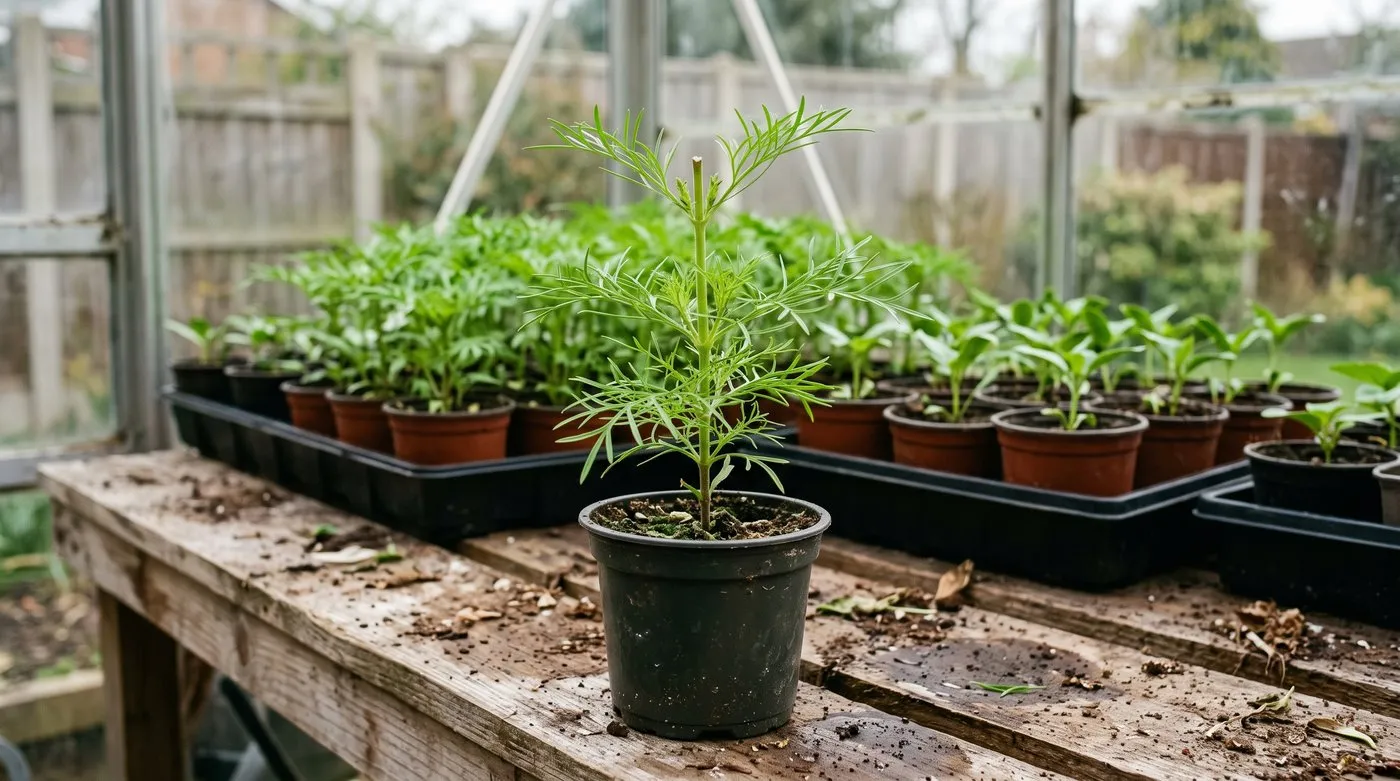
Nip out the tip at 20 to 30cm tall. It delays the first flower slightly, but you get a bushier plant with many more stems.
Best cosmos varieties for UK gardens
Sensation Mix, Purity and Double Click are reliable all-rounders.
| Variety | Height | Colour | Best for |
|---|---|---|---|
| Sensation Mix | 90-120cm | Pink, white, two-tone | Cutting, back of border |
| Purity | 90-120cm | Pure white | Cottage garden, cutting |
| Dazzler | 75-90cm | Deep magenta-pink | Wildlife border |
| Double Click | 80-100cm | Pink, white, two-tone (double) | Cutting |
| Cupcakes | 90-120cm | Pink, white, cup-shaped | Cutting, mid-border |
| Sonata Series | About 60cm | Pink, white, carmine | Front of border, pots |
| Chocamocha | 45-60cm | Dark maroon-red | Pots, warm spots |
| Daydream | 90-120cm | Pale blush-pink | Cottage garden |
For cutting: Sensation Mix and Double Click last about a week or more in a vase. Cut in the cool of the morning and pop them straight into clean water.
For wildlife: Dazzler and the single flowers in Sensation Mix are perfect for a bee-friendly garden. Bees and hoverflies can easily reach the open middles. For another tall, airy annual that bees love, try growing cleome from seed.
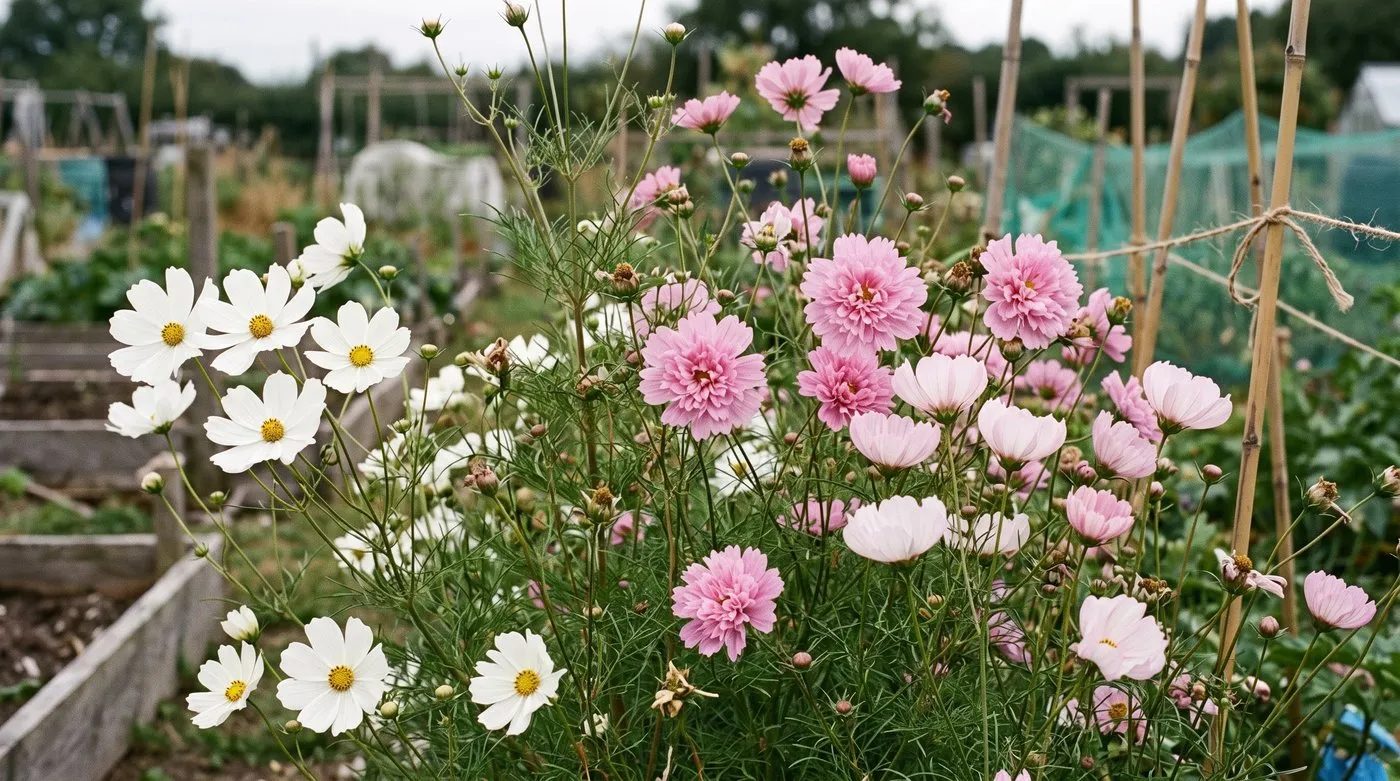
Singles like Purity are best for bees, while doubles and cup-shaped types make lovely cut flowers. They all thrive in plain soil and sun.
Can you grow cosmos in pots?
Yes. Dwarf types like the Sonata Series are great in pots at least 30cm wide. Tall types need a big pot, a cane and a sheltered spot.
Use multipurpose compost with a little grit. One plant in a 30cm pot, or three in a 45cm pot, looks full and pretty. Pots dry out fast, so check them daily in hot weather. Unlike border plants, potted cosmos like a weekly tomato feed once they start flowering, as the compost runs low on food. For more ideas, see our guide to container gardening.
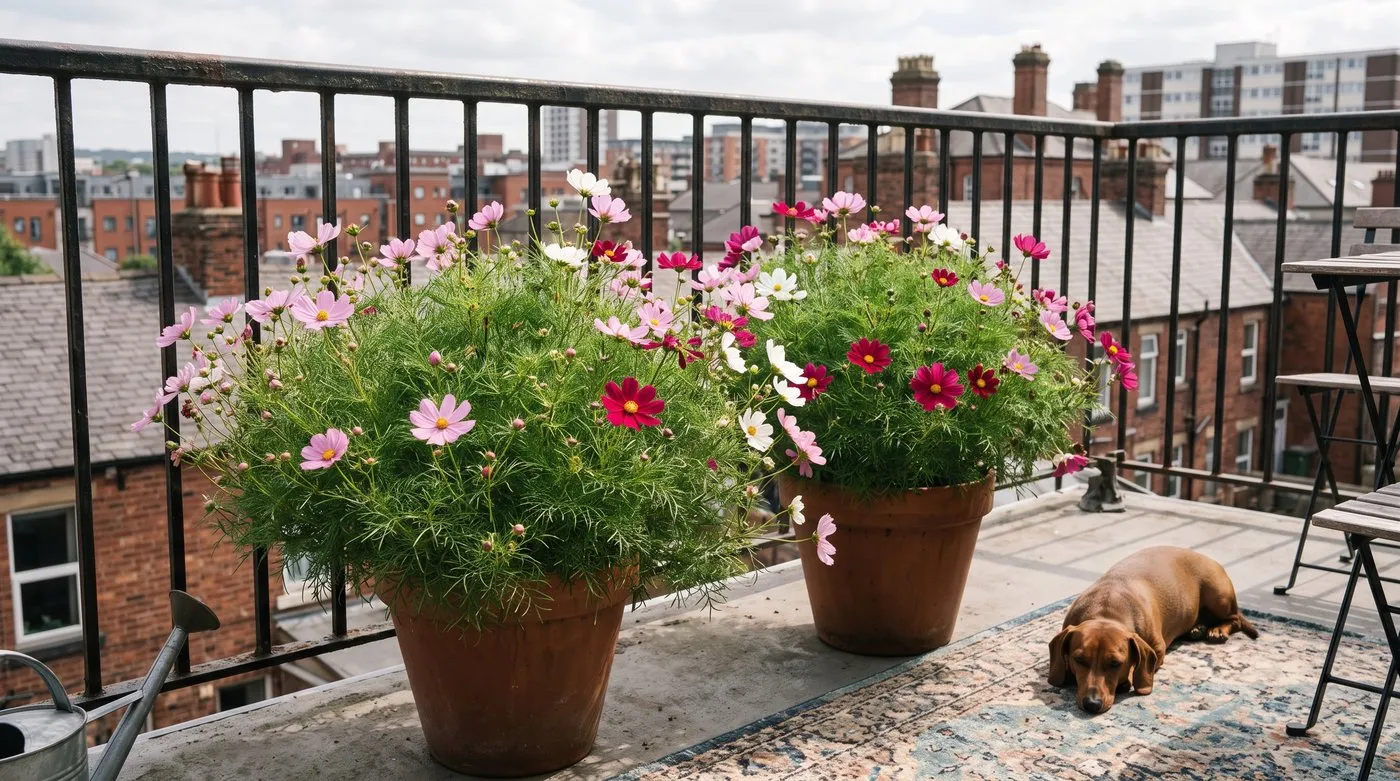
Dwarf types suit pots best. Unlike border plants, potted cosmos likes a weekly tomato feed once flowering starts, as the compost soon runs low.
How to deadhead cosmos for continuous flowering
Snip off faded flowers every week, cutting back to the next bud or leaf. This is the best way to keep cosmos flowering. If you leave old flowers, the plant puts its energy into seed instead of new blooms.
How to do it: Cut off the whole faded head, not just the petals, just above the next leaves or buds. Check every week from June.
Picking for the vase counts too. The more you cut, the more it flowers.
Want free plants? Stop deadheading a few stems in September and let them set seed. Seedlings appear the next May, though colours from a mix may vary.

Snip off the whole faded head just above the next leaves or buds every week. Picking for the vase counts too, and keeps more flowers coming.
Cosmos month-by-month growing calendar
| Month | What to do |
|---|---|
| March | Sow indoors in modules |
| April | Pot on seedlings. Sow a second batch. Pinch out tips |
| May | Harden off and plant out after the last frost. Sow outside from mid-May |
| June | Water in dry spells. Start deadheading |
| July | Deadhead weekly. Cut for the vase. Check for aphids |
| August | Peak flowering. Keep deadheading. Feed pots |
| September | Keep deadheading. Leave a few stems to seed |
| October | Frost ends the season. Collect seed. Lift chocolate cosmos |
| November to February | Store saved seed somewhere cool, dry and dark |
Cosmos and sunflowers make a cheerful cutting patch. See our guide to growing sunflowers. For evening scent nearby, nicotiana (tobacco plant) is sown at the same time and smells lovely after dusk.
Growing chocolate cosmos (Cosmos atrosanguineus)
Chocolate cosmos needs a warm, sunny, sheltered spot and protecting from frost in winter. It’s a different plant from the annual kind. It grows from small tubers and has dark maroon flowers that smell faintly of chocolate on warm afternoons.
Planting: Buy tubers or young plants in spring. Plant out from late May, after the last frost, about 5-7cm deep in a sunny, sheltered spot with good drainage. In the north, grow it in a pot you can move under cover in autumn.
Growing: It needs warmth and drainage, and dislikes wet soil and cold winds. A sunny wall is ideal. It doesn’t usually seed itself, so make more by dividing tubers or taking cuttings in spring.
Winter care: It isn’t frost-hardy. Lift the tubers in October before the first hard frost. Shake off the soil and let them dry for a few days. Store them in dry compost somewhere cool and frost-free, then replant in May. In mild areas you can leave them in the ground under a thick layer of straw. Care is much like growing dahlias.
Varieties: Chocamocha is the easiest to find. It’s compact, about 45-60cm, so it’s great in pots.
Do cosmos come back every year?
Annual cosmos doesn’t. The first hard frost finishes it off, usually in October or November. New plants only appear if seed dropped and survived the winter.
Self-sown seedlings turn up most after a warm, dry autumn on light soil. They come up late, so they flower later. For a reliable show, sow fresh seed each spring and treat seedlings as a bonus. Chocolate cosmos is the exception, as it regrows from its tubers if kept frost-free. Pull out spent annual plants after frost and pop them on the compost heap.
Common cosmos problems and how to fix them
Lots of leaves, few flowers: Soil too rich, too much feed or too much shade. Skip the manure and choose a sunnier spot next year.
Leggy, floppy plants: Not enough light. Pinch out the tip and give tall types a cane in windy spots.
Aphids: Blackfly and greenfly gather on soft new growth. Rub them off with your fingers or blast them with a jet of water. Don’t spray home-made washing-up liquid mixes, which aren’t approved pesticides in the UK. Avoid systemic insecticides too, which harm the bees cosmos brings in. Ladybirds, hoverflies and lacewings eat aphids, and companion planting can help draw them in.
Powdery mildew: A white dusty coating in late summer. It rarely kills plants. Thin crowded stems and remove the worst leaves.
Slugs on seedlings: Young plants are at risk until they’re about 10cm tall. Grow them on in pots until they’re bigger, and check for slugs on damp evenings. Our guide to growing sweet peas has more tips on protecting seedlings.
Collecting and saving cosmos seeds
Saving cosmos seed is easy and free.
- Let a few flower heads dry on the plant in September.
- When the petals have dropped and the heads look brown and papery, cut them.
- Hold them over a paper bag and rub out the long, thin seeds.
- Spread them on a plate to dry for another week indoors.
- Store in a labelled paper envelope somewhere cool, dry and dark.
Cosmos cross freely, so seed from a mixed border may give different colours. F1 varieties don’t come true from saved seed. For a match, grow one variety like Purity on its own.
Clearing out at the end of the season? Our guide to making compost shows what to do with the old plants. And if you’ve enjoyed cosmos, growing dahlias is a lovely next step.
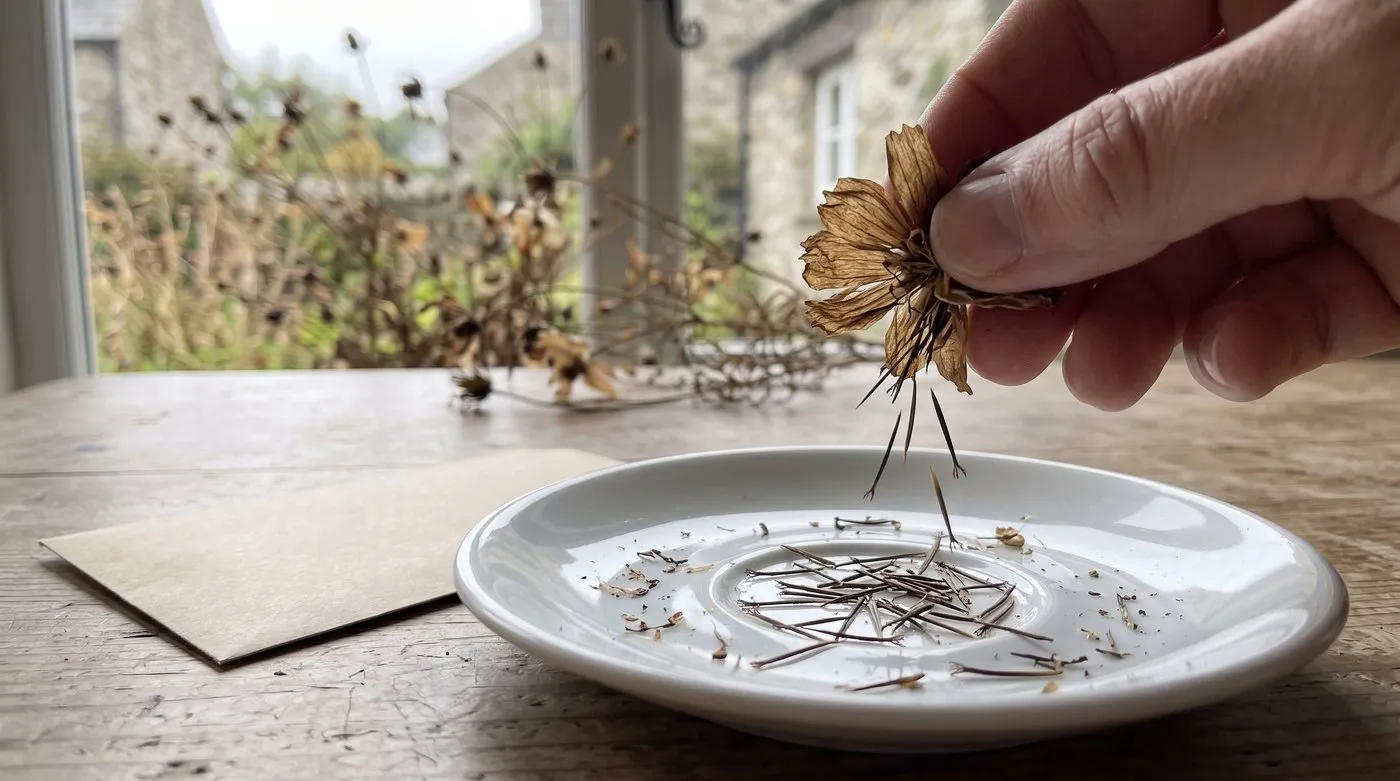
Wait until the heads are brown and papery, then rub out the long thin seeds. Seed from a mixed border may come up in different colours.
Frequently asked questions
When should I sow cosmos seeds in the UK?
Sow indoors in March or April for flowers from June. Sow straight outside from mid-May once the last frost has passed. In the south you can often start in early May. In Scotland and the north, wait until late May.
Do cosmos need full sun or shade?
Cosmos need full sun. In part shade they flower less and lean towards the light. A south or west-facing border is ideal.
Should I feed cosmos plants?
No, cosmos flower best in plain, unfed soil. Rich feed gives lots of leaves and few flowers. On very thin, sandy soil, one light feed at planting is plenty. Pots are different, so give those a weekly tomato feed once flowering starts.
How tall do cosmos grow?
It depends on the variety. Dwarf Sonata types reach about 60cm. Sensation Mix grows to about 90-120cm. Purity can reach 1.2-1.5m, so give tall ones a cane in a windy garden.
How do I stop cosmos from going leggy?
Pinch out the tip when seedlings are 20-30cm tall. That makes them bushier with more flowers. Give them plenty of light, and deadhead every week in summer.
Do cosmos self-seed in UK gardens?
Yes, especially after a warm, dry summer. Leave a few flower heads on in September. Seedlings pop up the next May. They flower a bit later than plants raised indoors.
What is chocolate cosmos and is it hard to grow?
It’s a tender perennial with dark maroon, chocolate-scented flowers. It grows from small tubers. Plant it out after the last frost in a warm, sunny, sheltered spot. Lift the tubers in October and store them frost-free, just like dahlias.
Our team produces practical UK gardening guidance from source research, contributor records and established horticultural practice. Editorial standards are overseen by Matt W.


