Key takeaways
- Cleome grows about 1.2-1.5m tall, so it belongs at the back of a sunny border
- Seed needs warmth to germinate, around 21-24°C, so sow indoors in a propagator
- Sow on the surface and just cover with vermiculite, from March to April
- Plant out after the last frost, usually late May or early June, 45-60cm apart
- Stems have small prickles, so wear gloves or grow the thornless Senorita types
Cleome, the spider flower, is a tall, airy annual for the back of a sunny border. The trick to growing it is warmth at the start. Sow the seed indoors in March or April at about 21-24°C, plant it out after the last frost, and it’ll flower from July until the frosts arrive.
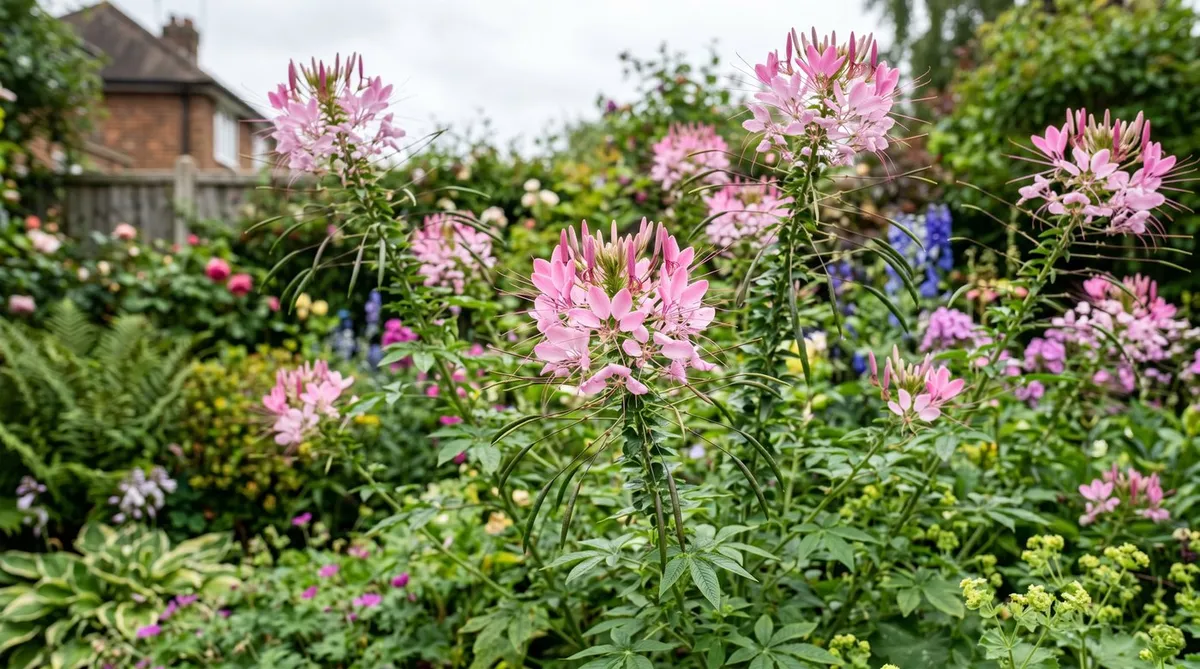
The name comes from the long whiskery stamens that stick out of each flower, like spider legs. Plants reach about 1.2-1.5m tall in pink, white or purple. They add height and a light, see-through look among dahlias, cosmos and salvias. Our round-up of the best half-hardy annuals has more tender annuals that like the same treatment.
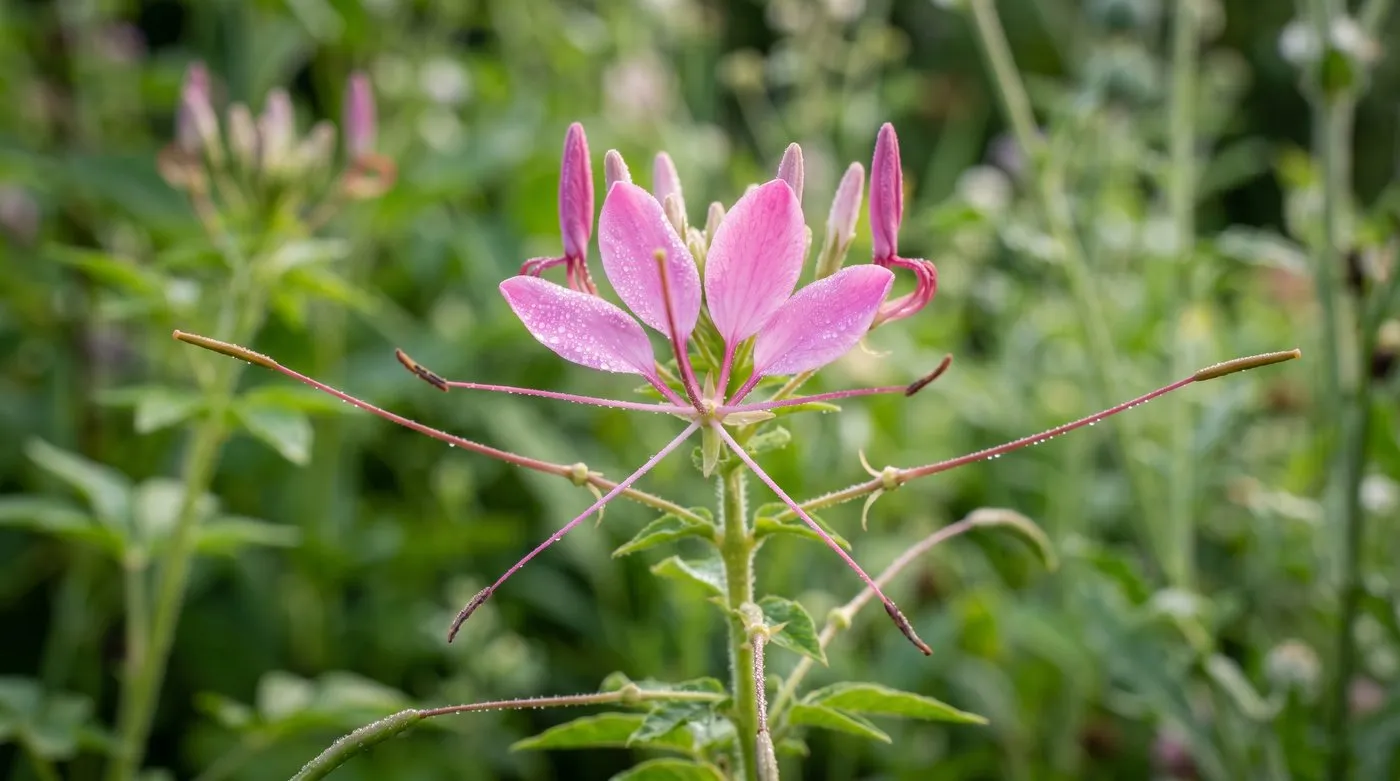
Those long, whiskery stamens are what give the spider flower its name.
Why cleome seed is slow to germinate
Cleome seed needs warmth. In a cool spare room at 15°C, very little comes up. At about 21-24°C, in a heated propagator or on a warm windowsill, it germinates much better.
The seed is fine and should sit on or very near the surface. Bury it under a thick layer of compost and it often fails. Some growers find a slightly cooler night helps too. Turning a heated propagator down or off overnight gives that.
Even in good conditions, seedlings can take two to three weeks to appear, and they come up unevenly. Be patient and don’t give up on the tray too soon.
How to sow cleome seed
Sow cleome indoors in March or April. February sowings work if you have a grow light, but they get leggy on a dull windowsill.
- Fill a seed tray or small pots with moist seed compost and firm it level.
- Scatter the seed thinly over the surface.
- Cover with a light sprinkling of vermiculite, just enough to hold the seed in place.
- Put the tray in a heated propagator at about 21-24°C, in good light but out of hot sun.
- Keep the compost just moist. Mist it rather than pouring water on.
- Once seedlings appear, open the vents to let air through.
Good airflow helps stop damping off, where seedlings suddenly collapse at the base. Our guide to damping off explains how to prevent it. For general sowing tips, see our guide to growing annuals from seed.
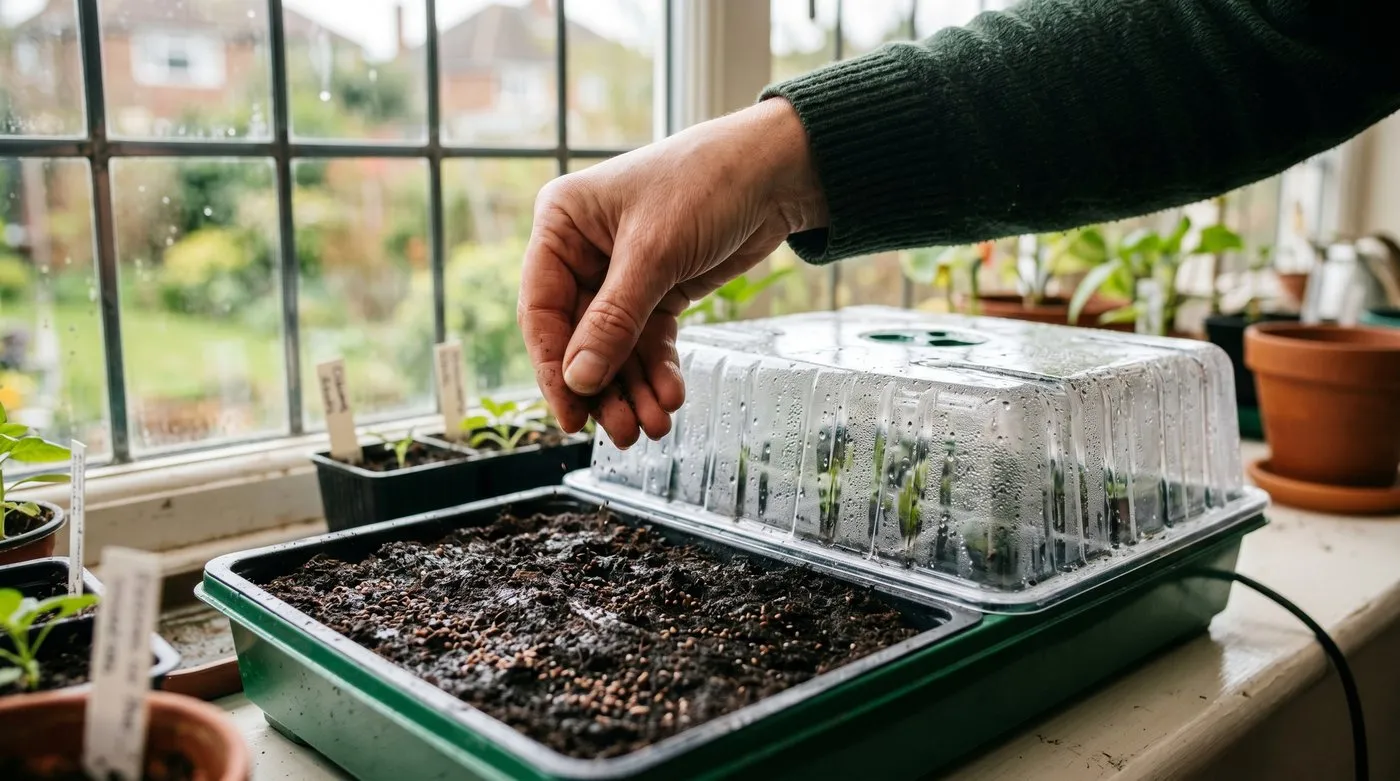
A heated propagator gives cleome seed the warmth it needs. Lift the lid once seedlings appear.
Pricking out and growing on
Prick out seedlings once they have their first true leaves, usually a couple of weeks after they come up. Lift each one with a pencil or dibber, hold it by a leaf rather than the stem, and pot it into a 9cm pot of multipurpose compost.
Grow them on somewhere bright and a little cooler, about 15-18°C. Too warm or too dark and they stretch. Early sowings benefit from a grow light. Our guide to grow lights for seed starting explains what to buy.
Pinch out the growing tip when plants are about 20cm tall. This makes them branch, so you get more flower stems. If cold weather delays planting out, move them into bigger pots so they don’t get starved.
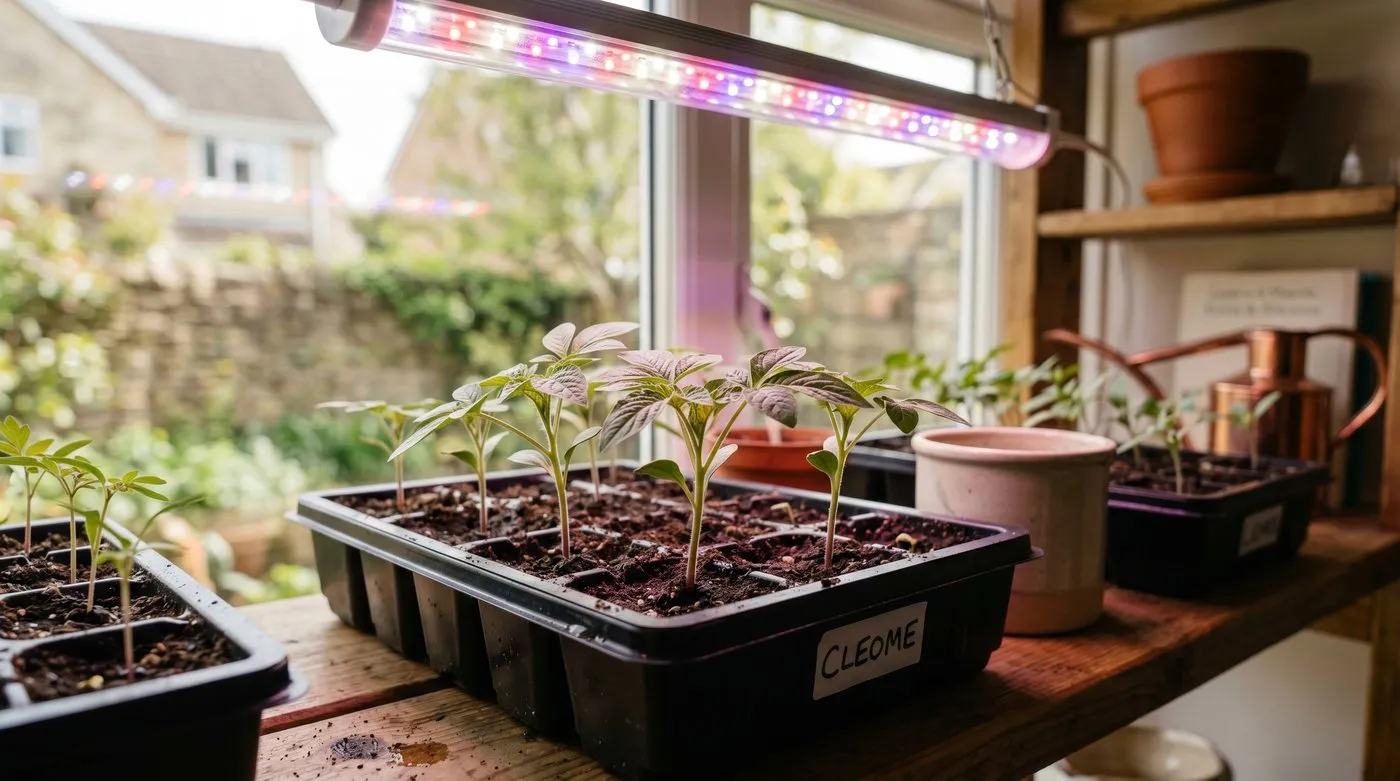
A simple grow light keeps early-sown cleome short and sturdy until it can go outside.
Hardening off and planting out
Cleome is half-hardy, so a frost will kill it. Plant out only once the last frost has passed. In most of the UK that’s late May, or early June in the north and Scotland.
Harden plants off over 10-14 days first. Put them outside in a sheltered spot during the day and bring them in at night. After a week, leave them out at night too unless frost is forecast. Our guide to hardening off half-hardy plants has a simple timetable.
Plant in full sun and free-draining soil, 45-60cm apart. Water them in well. Once settled, cleome copes with dry spells. Very rich, wet soil gives soft, floppy plants, so go easy on feeding. In windy gardens, push in a cane or two before plants get tall.
Where to plant cleome in a border
Cleome belongs at the back of a sunny border, where it rises above shorter summer plants. Plant in groups of three or five for the best effect, rather than dotting single plants about.
It looks lovely with dark-leaved dahlias, cosmos and salvias, which flower at the same time. The pink, white and purple forms mix well, or stick to one colour for a calmer look. For bold, tropical-style partners, try the big leaves of cannas and the rich colours in our guide to growing dahlias.
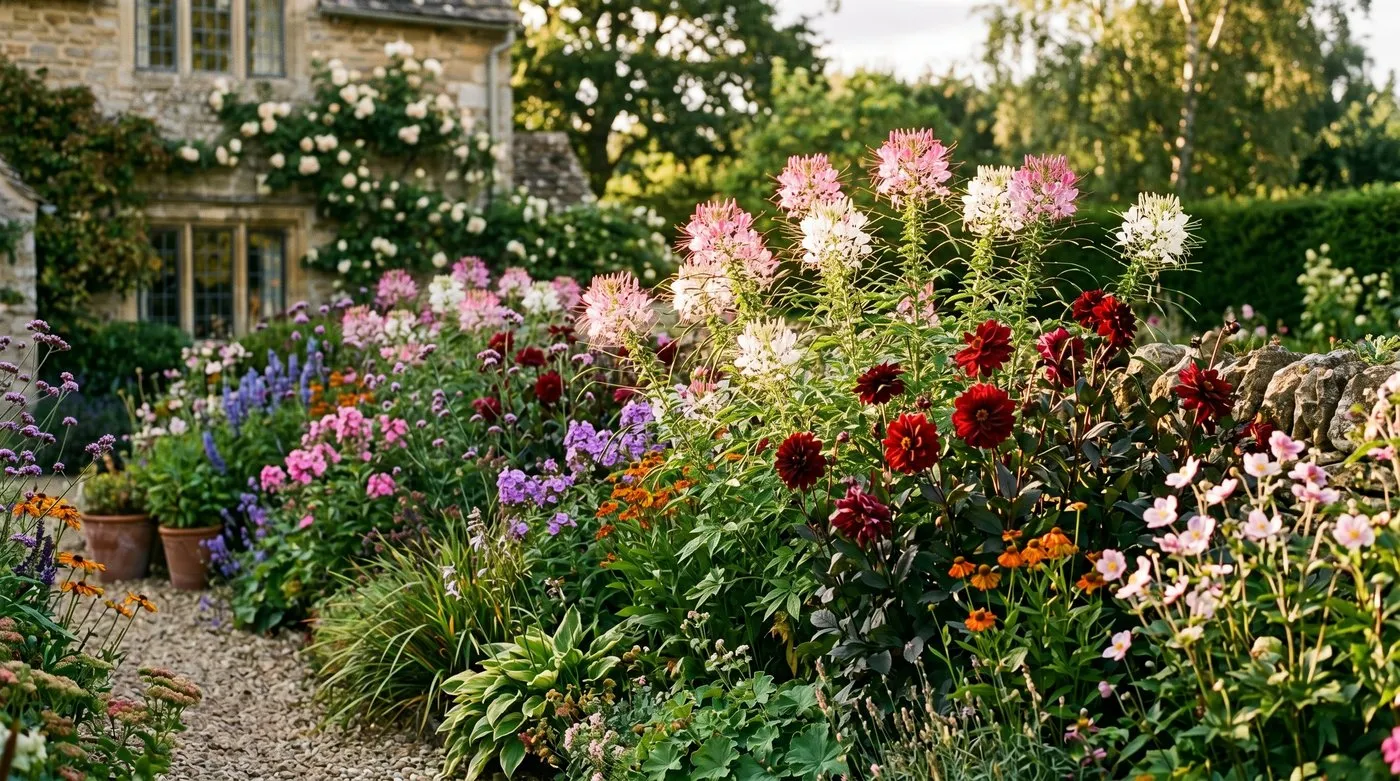
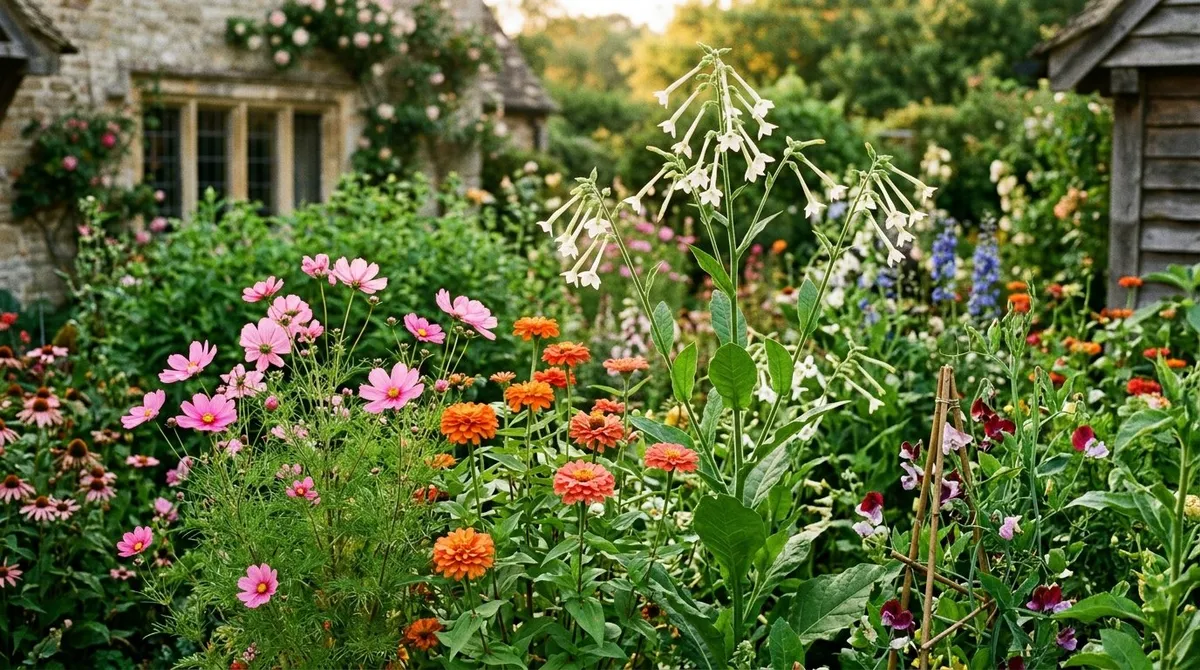
Cleome stands above the dahlias at the back of a border and keeps the planting light and airy.
Cleome also works well in small city gardens. Its narrow, upright shape takes up little ground for the height it gives. Bees visit the flowers through late summer.
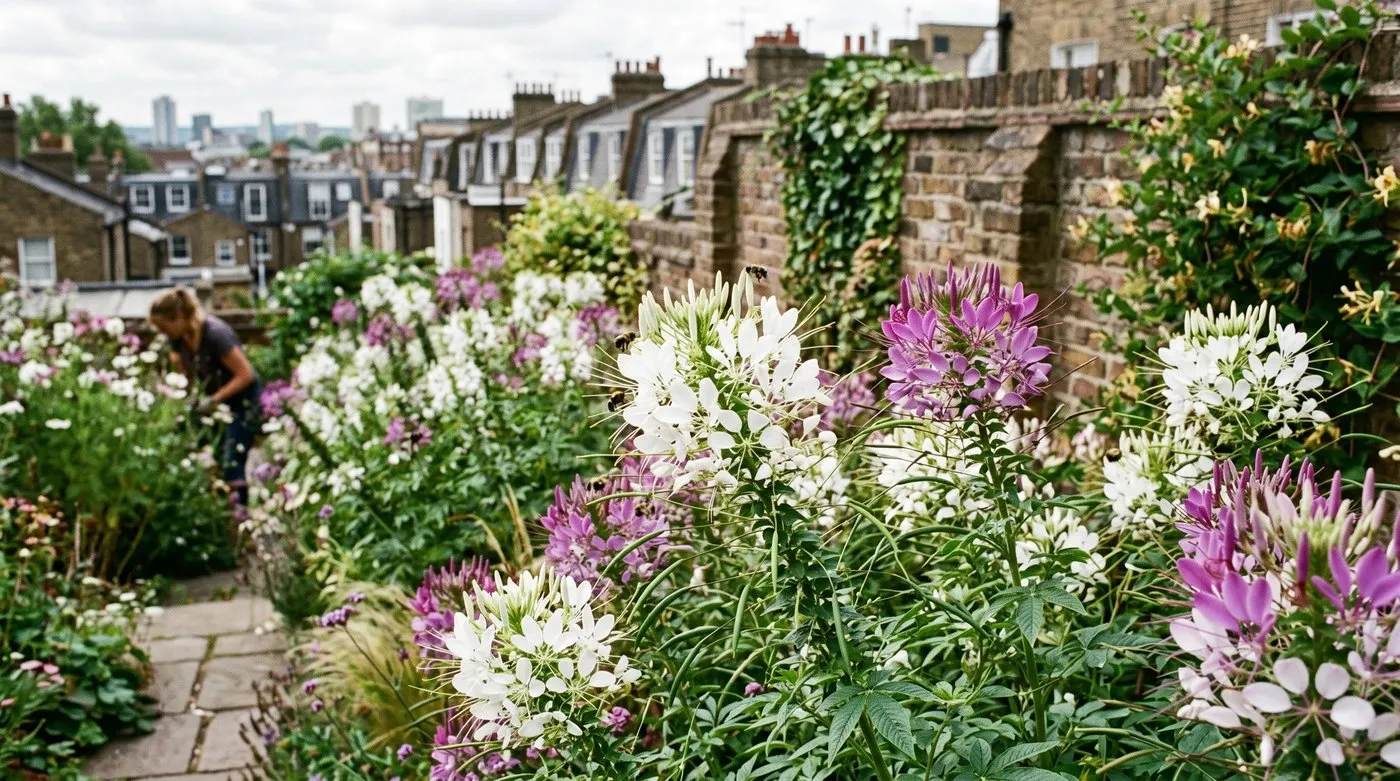
Even a small city garden has room for cleome. It grows up rather than out.
Best cleome varieties
Seed-raised mixes give the classic tall spider flower. The Senorita types are shorter, thornless and sold as young plants.
| Variety | Colour | Height | Prickles | Grown from |
|---|---|---|---|---|
| ’Colour Fountain’ mix | Pink, white and purple | 1.2-1.5m | Yes | Seed |
| ’Violet Queen’ | Deep purple | About 1.2m | Yes | Seed |
| ’Helen Campbell’ | White | About 1.2m | Yes | Seed |
| ’Senorita Rosalita’ | Lavender-pink | About 90cm | No | Young plants |
| ’Senorita Blanca’ | White | About 90cm | No | Young plants |
The Senorita varieties don’t set seed, so they won’t self-sow. They suit patio pots and smaller borders where tall, prickly plants would get in the way.
Saving cleome seed
Cleome makes long, thin seed pods that stick out sideways from the stem. The lowest pods ripen first, turning from green to pale brown.
Snip ripe pods on a dry day before they split. Dry them indoors in a paper bag for a week, then shake out the small round seeds. Store them in a labelled envelope somewhere cool and dry, and sow them the following spring.
In mild, sunny gardens, a few seeds may self-sow. Self-sown seedlings come up late, so sow a tray indoors as well if you want a good show.
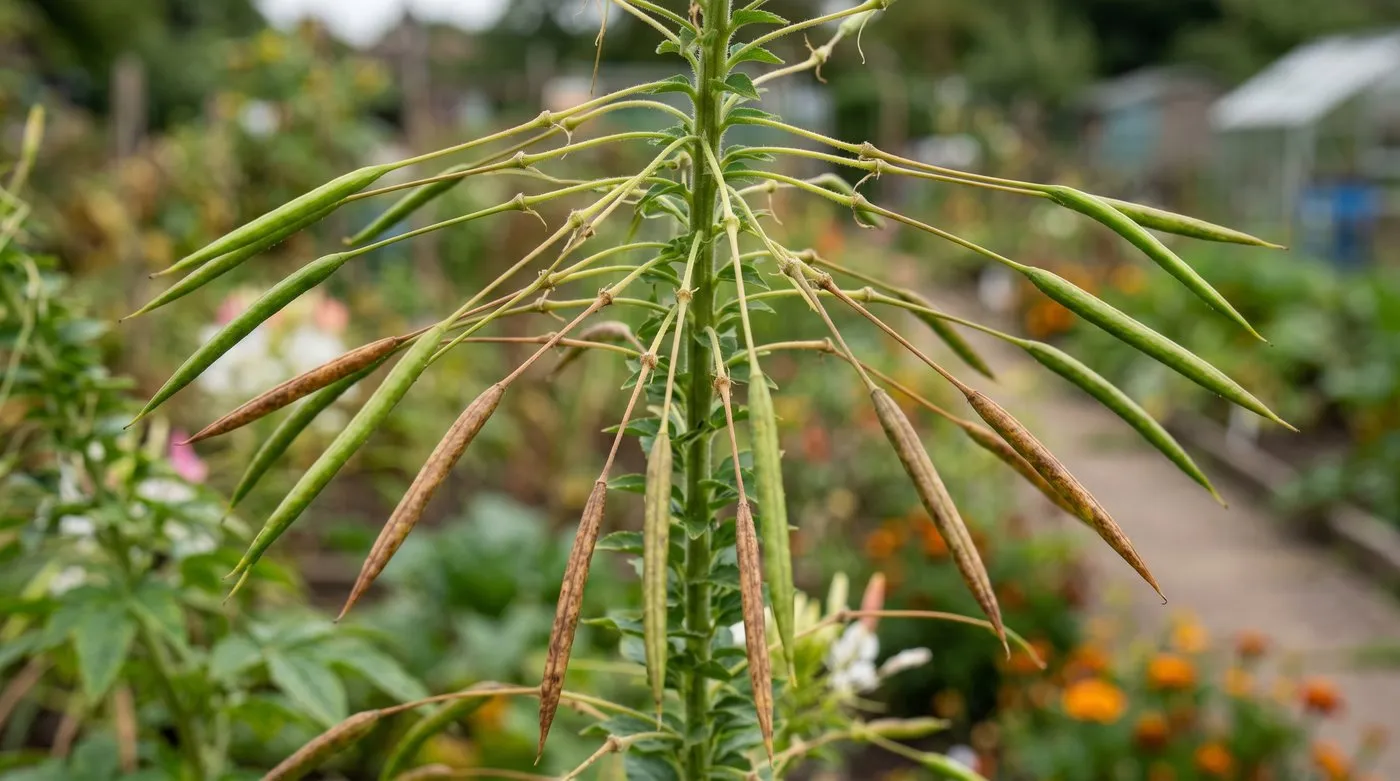
Collect the pods once they turn pale brown and you’ll have free seed for next spring.
Common mistakes with cleome
- Sowing in a cold room. Seed barely germinates at 15°C. Use a heated propagator at about 21-24°C.
- Burying the seed. A thick covering of compost stops it coming up. Just sprinkle vermiculite over the top.
- Planting out too early. One frost kills it. Wait until late May or early June and harden off first.
- Overfeeding. Rich, wet soil gives floppy plants. Lean, free-draining soil gives sturdier stems.
- Handling bare-handed. The small prickles catch your skin. Wear gloves, or grow a thornless Senorita.
Gardener’s tip: Keep cleome a little back from paths, so bare legs and arms don’t brush the prickly stems.
Cleome calendar
| Month | What to do |
|---|---|
| February | Sow only if you have a grow light |
| March | Main sowing month. Sow on the surface at 21-24°C |
| April | Last sowings. Prick out earlier seedlings into 9cm pots |
| May | Pinch out tips at 20cm. Harden off. Plant out after the last frost |
| June | Plant out in colder areas. Water until settled |
| July | First flowers. Stake tall plants in windy spots |
| August | Peak flowering. Leave some pods to ripen |
| September | Collect ripe seed pods on a dry day |
| October | Last flowers. Pull plants after the first frost |
| November to January | Store seed somewhere cool and dry. Order fresh seed |
Frequently asked questions
Why won’t my cleome seeds germinate?
Usually because they are too cold. Cleome seed wants about 21-24°C, so a heated propagator helps a lot. Sow on the surface, cover only with a sprinkle of vermiculite, and keep the compost just moist. Seedlings can take two to three weeks.
When should I sow cleome seeds in the UK?
Sow indoors in March or April with gentle heat. You can start in February if you have a grow light or very bright windowsill, otherwise seedlings get leggy. Outdoor sowing is unreliable because the soil stays too cool.
How tall does cleome grow?
Most cleome grow about 1.2-1.5m tall. That makes them a back-of-border plant. The Senorita varieties are shorter, at around 90cm, and suit pots and smaller beds.
Does cleome come back every year?
No, it’s an annual that dies with the first frost. It sometimes self-seeds in mild, sunny gardens. Seedlings appear late, though, so sow a fresh tray each spring to be sure.
Is cleome good for bees?
Yes, bees and other insects visit the flowers. Cleome flowers from July into autumn, so it keeps feeding pollinators late in the season. Grow it in a group in full sun for the best show.
Why does my cleome have prickles?
Most cleome have small spines on the stems and where the leaves join. The leaves are also a bit sticky and smell strong. Wear gloves when staking, or grow a thornless Senorita variety.
Want another easy annual to grow alongside it? Our guide to growing zinnias covers a bright partner for the front of the border, and growing cosmos from seed gives you a tall, easy companion. Browse the plants hub for more.
Our team produces practical UK gardening guidance from source research, contributor records and established horticultural practice. Editorial standards are overseen by Matt W.