Key takeaways
- Hardy annuals cope with frost and can be sown outside from March in milder areas
- Half-hardy annuals need sowing indoors and planting out after the last frost
- Seed is far cheaper than buying plug plants
- Most annuals flower from June through to October
- Sowing again every few weeks keeps fresh flowers coming
- Snip off faded flowers to keep plants blooming
Growing annuals from seed is the cheapest way to fill borders, pots and a cutting patch with colour from June to October. A single packet of cosmos seed gives you plenty of plants for the price of a couple of plugs. Hardy annuals go straight into the ground from March. Half-hardy ones need a warm windowsill or propagator first, then go out after the last frost.
Hardy and half-hardy annuals: what’s the difference?
Knowing which kind you’re growing tells you when and where to sow. Mixing them up is the most common way new growers lose seedlings.
Hardy annuals cope with frost. You can sow them straight into the ground from March in milder areas, or April further north. They’re the easiest and cheapest annuals to grow, with no indoor kit, hardening off or transplanting needed. Many can also be sown in September for earlier flowers next year.
Half-hardy annuals are killed by frost. Sow them indoors in the warmth from late February to early April. Harden them off, then plant out after the last frost, usually late May in England and early June in Scotland. They’re a bit more work, but they flower for ages. Cosmos, zinnia and French marigold are all half-hardy.
There’s a third group, tender annuals like begonias and impatiens. These need steady warmth to come up and are best for growers with a heated propagator or greenhouse. The RHS guide to annuals has more background, but for most of us, hardy and half-hardy types are the way to go.
Best annuals to grow from seed in the UK
These reliable favourites give plenty of flowers with very little fuss.
| Annual | Type | When to sow | How easy | Best for |
|---|---|---|---|---|
| Calendula (pot marigold) | Hardy | March-May, outside | Very easy | Borders, cutting, edible petals |
| Cornflower | Hardy | March-April, outside | Very easy | Cutting, wildflower look |
| Nigella (love-in-a-mist) | Hardy | March-April, outside | Very easy | Borders, seedheads |
| Nasturtium | Half-hardy | May, outside | Very easy | Edible, pots |
| Sweet pea | Hardy | Oct-Nov or Feb-Mar, under cover | Easy | Cutting, scent |
| Cosmos | Half-hardy | March-April, indoors | Easy | Borders, cutting |
| French marigold | Half-hardy | March-April, indoors | Easy | Edging, pots |
| Zinnia | Half-hardy | April, indoors | Medium | Cutting, hot colours |
| Sunflower | Half-hardy | April indoors or May outside | Very easy | Cutting, children |
| Nicotiana (tobacco plant) | Half-hardy | March, indoors | Medium | Evening scent |
How to sow hardy annuals outdoors
Sowing straight into the ground is the simplest way to grow from seed. No pricking out, no hardening off. The seeds go in where they’ll flower.
Getting the soil ready: In March or early April, rake the soil until it’s fine and crumbly. Pick out bigger stones. On heavy clay, rake some grit into the top few centimetres so the surface doesn’t crust over.
Sowing: Mark out loose patches with a trickle of sand. In each patch, draw shallow lines 15-20cm apart with a stick. Sow seeds thinly along the lines and cover with a little sieved compost. Water gently with a fine rose. Sowing in lines makes it easy to tell your seedlings from weeds, which pop up all over the place.
Thinning: When seedlings have two pairs of proper leaves, thin them to the spacing on the packet, usually 15-25cm. It feels harsh, but crowded plants flower less and get mildew more easily. Snip spare seedlings off at soil level with scissors so you don’t disturb the ones you keep.
Timing around the UK: In southern England and the Midlands, sow from mid-March. In northern England and Wales, wait until early April. In Scotland, mid to late April. Our flower planting calendar has timings for all sorts of flowers.
 Sowing seeds into module trays. Label each tray straight away, as lots of seedlings look alike at first.
How to sow half-hardy annuals indoors
Half-hardy annuals need warmth to come up. A heated propagator, airing cupboard or warm windowsill does the job. Our guide to sowing seeds indoors covers the basics. Here are the extra tips for annuals.
Timing: Sow about eight to ten weeks before you plan to plant out. For most of England, that’s late February to mid-March for planting out in late May. Sow too early and you’ll get big, leggy plants that sulk when they go outside.
What you’ll need:
- Module trays or small pots (modules mean less root disturbance)
- Peat-free seed compost, with some perlite mixed in
- A clear propagator lid or cling film
- Labels and a waterproof pen
- A watering can with a fine rose
Sowing: Fill modules with damp compost and press it down gently. Sow one or two big seeds, like cosmos, zinnia or marigold, per module. Cover lightly with vermiculite, to the depth on the packet. Tiny seeds like nicotiana need light to come up, so sprinkle them on top and don’t cover them.
Once they’re up: Take the lid off and move the trays to your brightest spot. Too much warmth makes seedlings leggy. Without a bright window, grow lights a little way above the seedlings give you sturdy plants. Water from below by standing trays in a little water for ten minutes. This helps prevent damping off, a fungus that makes seedlings flop over at soil level.
Pricking out: When seedlings have two pairs of proper leaves, move each into its own small pot of multipurpose compost. Hold them by a leaf, never the stem. A pencil makes a handy tool for easing them out. Water straight away.
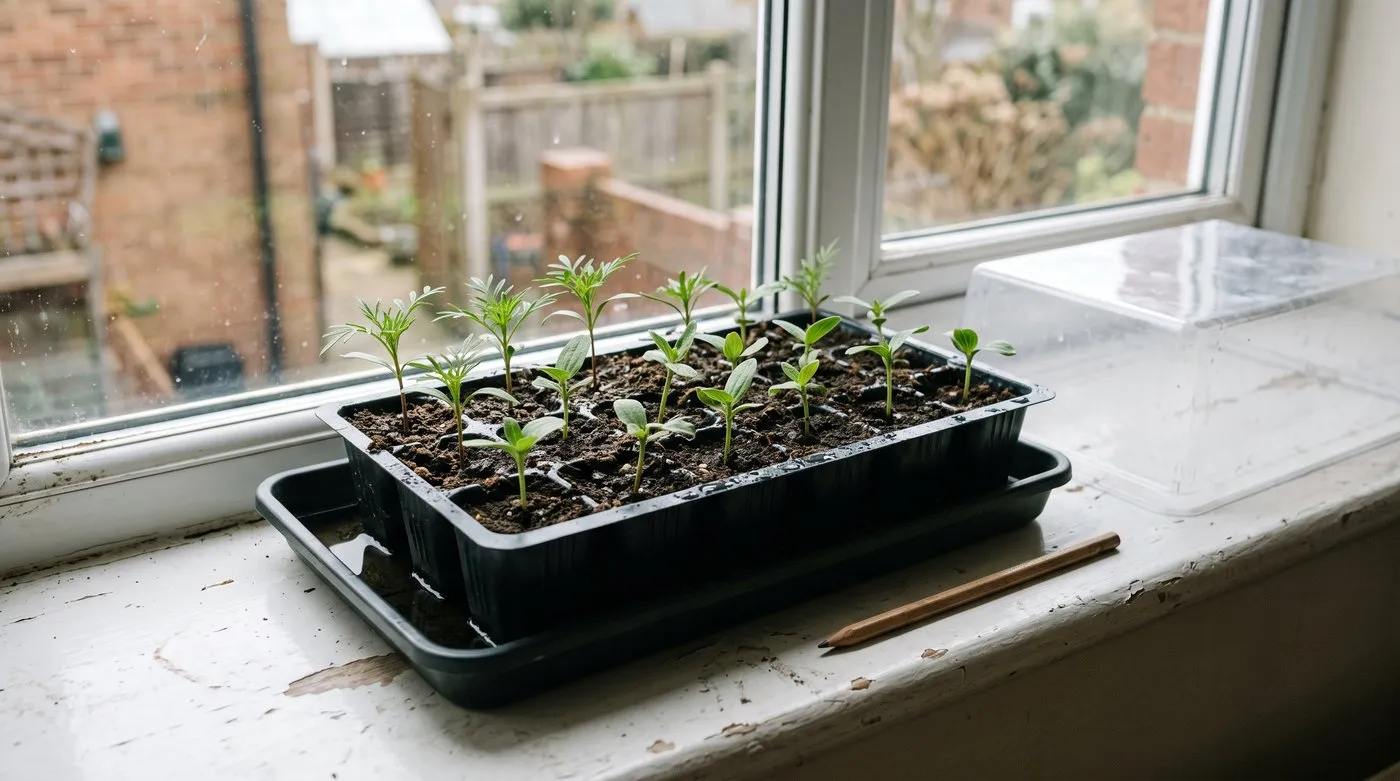
Standing trays in a little water for ten minutes keeps the compost surface drier, which helps stop seedlings flopping from damping off.
How to harden off annual seedlings
This is the step most people rush. Plants raised indoors and moved straight outside can be badly set back, and tender ones may die. Hardening off takes about two weeks and is well worth it.
Week 1: Put seedlings outside in a sheltered spot for a couple of hours on day one. Leave them out a little longer each day, and bring them in every evening. Keep them out of strong wind and midday sun. A cold frame with the lid propped open is perfect.
Week 2: Leave them out all day, and bring them in only if frost is forecast. Towards the end of the week, leave them out overnight if nights are mild. By day 14 they’re ready to plant.
 A cold frame makes hardening off easy. Open it a little wider each day.
Month-by-month annual calendar
This is for central England. In northern England, Wales and Scotland, do things two or three weeks later.
| Month | What to do |
|---|---|
| January | Order seeds. Sketch out your borders. Wash seed trays. |
| February | From the third week, sow half-hardy annuals indoors: cosmos, zinnia, French marigold, nicotiana. |
| March | Keep sowing indoors. Sow hardy annuals outside in mild areas: calendula, cornflower, nigella. |
| April | Main month for sowing hardy annuals outside. Prick out indoor seedlings. |
| May | Harden off half-hardy annuals and plant out after the last frost. Sow sunflowers and nasturtiums outside. Sow more hardy annuals. |
| June | First flowers open. Start deadheading. Sow again for late colour. |
| July | Flowers in full swing. Deadhead every few days. Water pots daily in hot weather and feed every two weeks. |
| August | Peak flowering. Collect seed from your best plants. |
| September | Sow hardy annuals for next year (cornflower, calendula, nigella). Pull out tired plants. |
| October | Keep autumn sowing in mild areas. Clear spent annuals and add compost to empty beds. |
| November | Last autumn sowings in the south only. Label autumn-sown rows. |
| December | Look back on the season and order next year’s seeds early. |
Sow again for months of flowers
Sowing little and often turns a few weeks of flowers into a few months. Sow the same annual every three weeks or so from March to June, and fresh plants keep coming into flower right up to the first frosts.
As the first batch starts to fade in late summer, the later ones are just getting going.
Good annuals for this: calendula, cosmos, French marigold, sunflower and zinnia. Sweet peas and cornflowers do best from one early sowing.
It’s especially handy if you grow flowers for cutting, as you get a steady supply rather than everything at once.
Common mistakes when growing annuals from seed
Sowing too early. Half-hardy annuals sown in January without extra light get weak and stretched. Wait until late February, or use grow lights.
Too much water. Seed compost should be damp, not soggy. Wet compost leads to damping off, which can wipe out seedlings overnight. Water from below and let trays drain. Never leave them standing in water.
Skipping hardening off. Plants moved straight outside get battered by wind, scorched by sun and shocked by cold. Give them their two weeks.
Overcrowding. Sowing too thickly and not thinning gives you spindly plants fighting for light and water. Thin to the spacing on the packet. One strong plant flowers better than five squashed ones. Companion planting works best when each plant has room to grow.
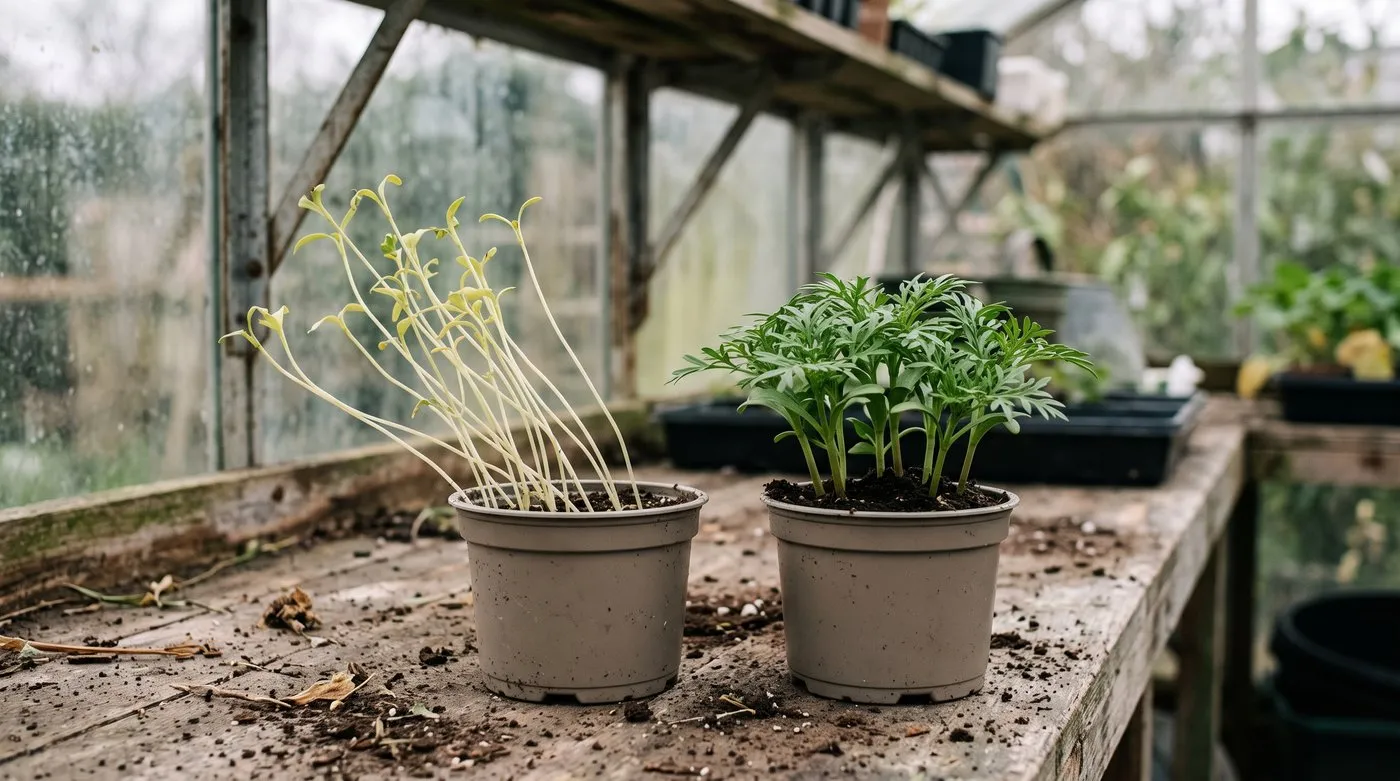
Pale, stretched seedlings were sown too early or kept too warm and dark. Stocky ones like those on the right settle in far better.
Growing annuals in pots
Annuals are brilliant in containers, as they flower all summer and cost very little from seed. A 30cm pot holds five to seven French marigolds, three compact cosmos, or one nasturtium tumbling over the edge.
Compost: Use peat-free multipurpose compost with some perlite. Mix in slow-release fertiliser granules at planting, so you don’t need to liquid feed every week.
Watering: Pots of annuals need watering every day in summer, and twice a day in a heatwave. Terracotta dries out faster than plastic. Lining a terracotta pot with a plastic bag, with holes cut in the bottom, slows things down.
Best annuals for pots:
- Trailing: nasturtium, trailing lobelia, sweet alyssum
- Compact: French marigold, dwarf zinnia ‘Thumbelina’, ageratum
- Tall centrepiece: cosmos ‘Sonata’, dwarf sunflower ‘Teddy Bear’
- Scented: nicotiana, stocks
- Edible: calendula, nasturtium, violas
The same plants work well in hanging baskets with trailing petunias and pelargoniums.
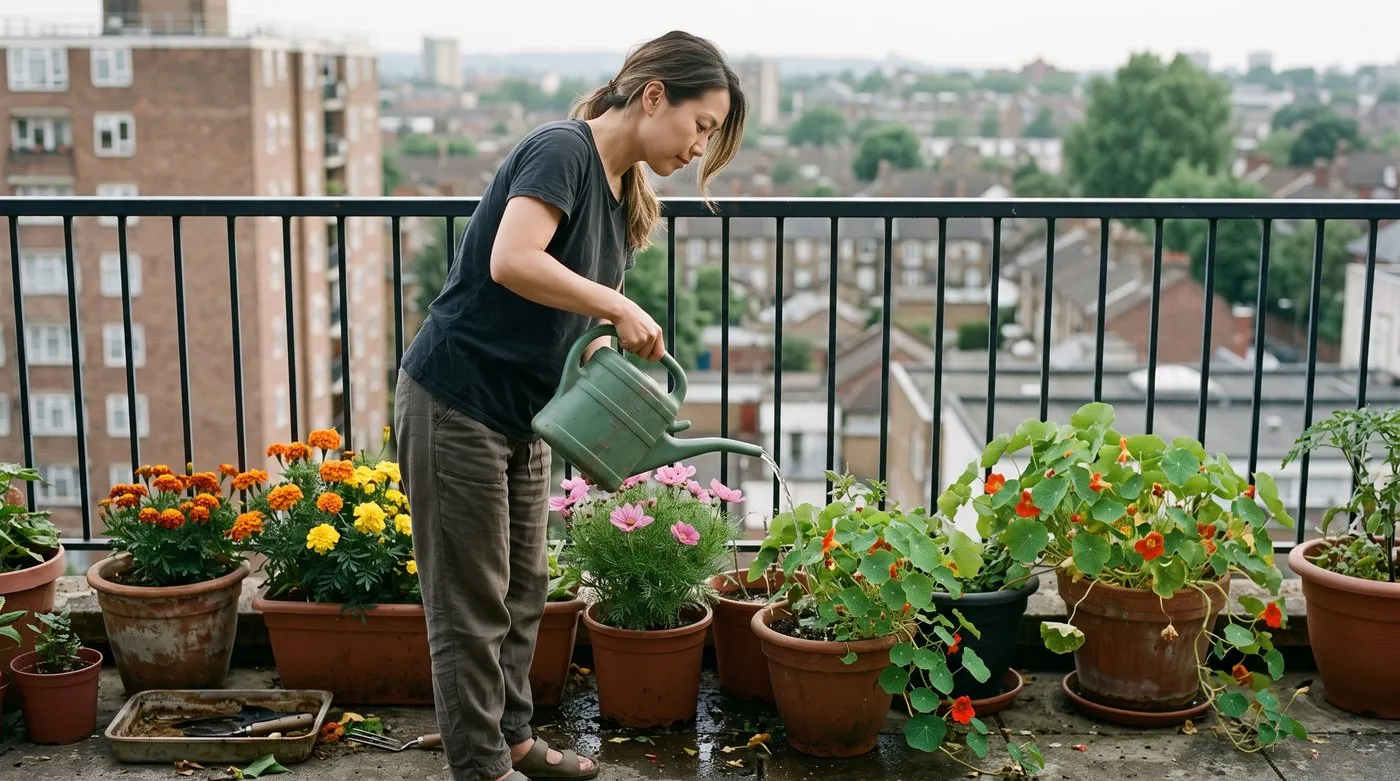
Pots of annuals give a balcony colour all summer for the price of a few seed packets. In hot spells they’ll need a drink every day.
How to save seed from annuals
When to collect: Let your best flowers go to seed. Seed is ready when the pods turn brown and papery, or the head feels dry and crackly. Pick on a dry afternoon, as damp seed goes mouldy.
How: Pick big seeds, like sunflowers and nasturtiums, by hand. For small seeds, like cosmos, nigella and calendula, snip the whole head into a paper bag and give it a shake. Leave the bag open somewhere warm and dry for a week.
Storing: Put dry seed in labelled paper envelopes inside an airtight tin, somewhere cool and dark. The fridge is ideal. Most annual seed stays good for two or three years. To check old seed, sprinkle ten seeds on damp kitchen paper in a sealed bag somewhere warm. If most come up within two weeks, it’s fine to use.
Will saved seed come true? Older, open-pollinated kinds like calendula, cornflower, nigella, poppy and nasturtium do. F1 hybrids, which include many modern cosmos, zinnias and marigolds, won’t grow the same as the parent. If the packet says “F1”, buy fresh seed.
 A cottage border of cosmos, calendula, sunflowers and zinnias, all grown from a few packets of seed.
Annuals for tricky spots
Shade (a few hours of sun): nicotiana, begonias and impatiens cope with dappled shade under trees or by a north-facing wall.
Heavy clay: calendula, cornflower, sunflower and nasturtium all cope. Rake some grit into the surface before sowing. Zinnias dislike cold, wet soil, so they’re not a great match for clay.
Dry, sandy soil: nasturtium, California poppy, annual poppy and marigold all do well in poor, dry ground. Our guide to the best hardy annual flowers from seed has more ideas for dry spots.
Windy gardens: calendula, dwarf sunflowers, French marigold and sweet alyssum. Short plants cope best. Tall cosmos and sunflowers need staking.
For more beginner-friendly picks, see our guide to the easiest flowers to grow from seed.
Frequently asked questions
When should I start sowing annual seeds in the UK?
Sow hardy annuals outside from March in milder areas. Sow half-hardy annuals indoors in the warmth from late February to April, then plant them out after the last frost, usually late May. In northern England and Scotland, sow outside two or three weeks later. Wait until the soil feels a little warm rather than going by the calendar.
What is the difference between hardy and half-hardy annuals?
Hardy annuals cope with frost, half-hardy ones don’t. Hardy annuals, like cornflower, calendula, nigella and annual poppy, can be sown straight into the ground. Half-hardy annuals, like cosmos, zinnia, French marigold and nicotiana, need starting indoors or sowing outside once frosts are over. Hardy annuals are the easiest place to start.
Can I sow annual seeds directly into the ground?
Yes, hardy annuals are happy sown straight into the soil. Rake it fine and crumbly, scatter seed thinly and cover lightly with sieved compost. Water gently. It’s the best way for plants that hate being moved, like poppies and cornflowers. Wait until late May or early June for half-hardy annuals.
Why are my annual seedlings leggy and thin?
They aren’t getting enough light. Seedlings on a windowsill stretch towards the glass. Move them to your brightest window or use a grow light, and turn trays a quarter turn each day. Too much warmth makes it worse, so keep them a little cooler at night if you can.
How much does it cost to grow annuals from seed?
Much less than buying plants. One packet of seed can give you dozens of plants for the price of one or two plugs. You’ll also need seed compost and some trays or pots if you’re sowing indoors, but those last for years.
Do annuals come back every year?
Not the same plants, but many seed themselves. True annuals grow, flower and die in one year. Leave some faded flower heads in autumn and calendula, nigella, cornflower and annual poppy often pop up again next spring. Thin the seedlings out so each has room. Half-hardy types like cosmos and zinnia self-seed less often.
What are the easiest annuals to grow from seed for beginners?
Try nasturtiums, sunflowers and calendula. Nasturtium seeds are big enough for children to handle. Sunflowers grow so fast you can almost watch them. Calendula copes with poor soil and flowers quickly. Calendula can go straight outside from spring. Wait until May for nasturtiums and sunflowers, as frost can harm them.
Our team produces practical UK gardening guidance from source research, contributor records and established horticultural practice. Editorial standards are overseen by Matt W.