Key takeaways
- Sow straight into the ground from March to May, or in September for earlier flowers
- Don't transplant it. Nigella hates being moved
- Sun and poor to ordinary soil give the most flowers, so skip the feed
- Leave some seed pods on and it will self-seed for years
- The puffy seed pods dry beautifully for winter arrangements
- Miss Jekyll is the classic blue variety and a great first choice
Nigella might be the easiest cottage garden flower you’ll ever grow. Scatter seed on raked soil in March, water it, and wait. Little green seedlings soon appear. By summer the feathery leaves are topped with blue, pink, white or mulberry flowers, like jewels floating in a green mist. That’s where the name love-in-a-mist comes from.
Here’s how to choose a variety, when to sow, how to dry the pretty seed pods for winter arrangements and what to plant it with.
What is nigella?
Nigella damascena is a hardy annual from southern Europe and North Africa, and a member of the buttercup family. Each flower sits in a ruff of fine, thread-like leaves, which gives the misty look. It also goes by the names devil-in-a-bush and ragged lady.
It grows to around knee height with soft, fern-like leaves. Flowers come through summer in sky blue, deep blue, pink, white and mulberry. Afterwards, the seed pods swell into puffy, striped balls with little horns on top.
Don’t mix it up with Nigella sativa, a different plant grown for the black seeds used in cooking. Sativa has plainer flowers and is rarely grown for show. Only sativa seeds are for eating, so leave your garden nigella seeds out of the kitchen.
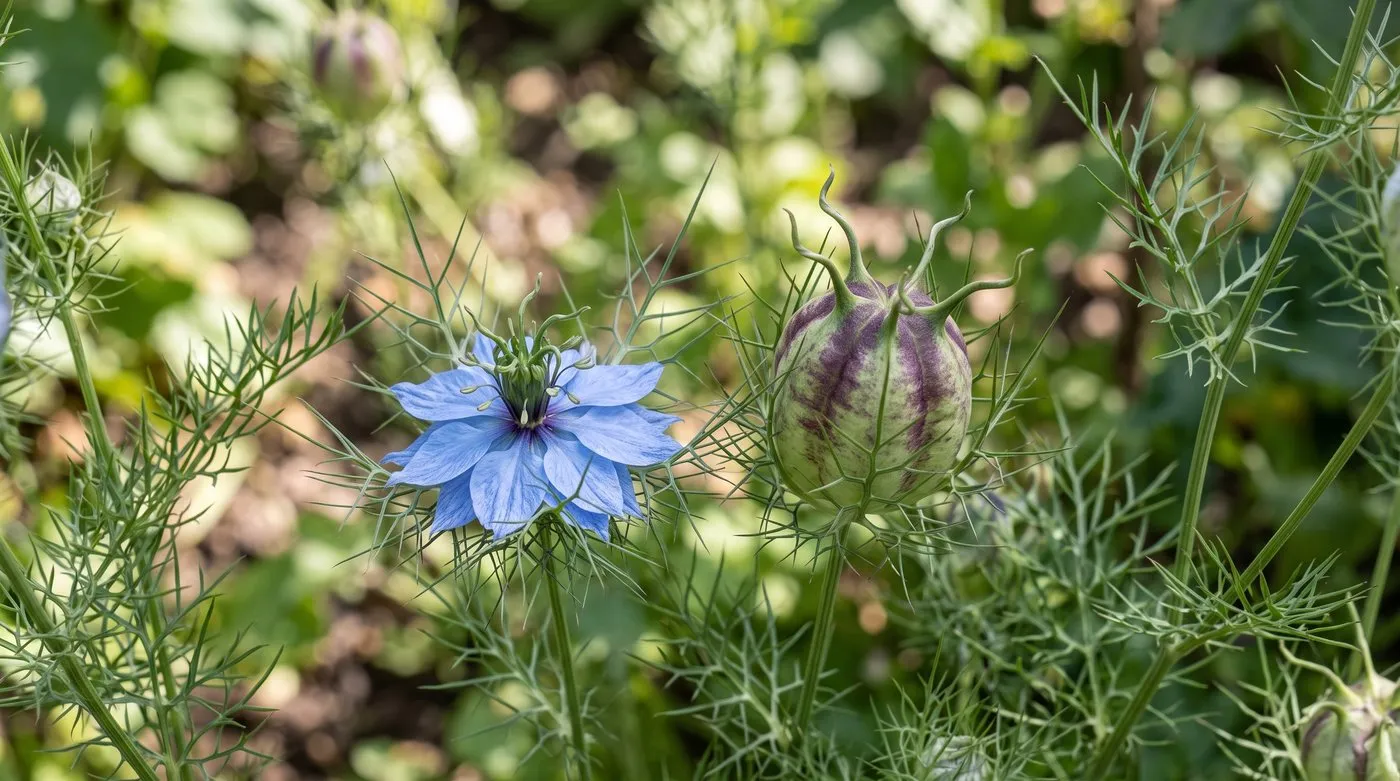
The misty ruff around each flower gives love-in-a-mist its name. Afterwards come the puffy seed pods, which are half the fun.
Which nigella variety is best for UK gardens?
There are some lovely choices. Here are six of the best.
Miss Jekyll
The classic cornflower-blue nigella and still a favourite. It has strong stems and is perfect for cottage gardens and cutting beds. It self-seeds happily and is the best first choice if you’re new to nigella.
Persian Jewels Mix
A colourful mix of pink, mauve, blue, purple, rose and white flowers. Great for a cottage border where you want a bit of everything. The seed pods are a little smaller than Miss Jekyll’s but still pretty.
Miss Jekyll Alba
The pure white form of the classic. Elegant in white borders and wedding flowers. It pairs nicely with larkspur, Sweet William and cornflowers. A touch less vigorous than the blue one.
Mulberry Rose
Dusty pink flowers that deepen to mulberry as they age. A favourite with cut flower growers. The unusual colour looks great with silver plants like artemisia and lavender. Its compact shape suits small gardens and pots.
African Bride
Big white flowers with dark centres on tall stems, and striking seed pods to match. Less vigorous than Miss Jekyll, so use it as a feature rather than in big drifts.
Nigella papillosa ‘Midnight’
A different species with deep navy, almost black flowers. It looks best against pale partners like white cosmos or lemon calendula. A little trickier to get going and it self-seeds less, but the colour is worth the effort.
Nigella varieties at a glance
| Variety | Height | Colour | Seed pods | Self-seeds |
|---|---|---|---|---|
| Miss Jekyll | Medium | Cornflower blue | Excellent | Lots |
| Persian Jewels Mix | Medium | Mixed | Very good | Freely |
| Miss Jekyll Alba | Medium | White | Excellent | Freely |
| Mulberry Rose | Short to medium | Dusty pink | Good | Some |
| African Bride | Tall | White, dark centre | Very good | Some |
| N. papillosa ‘Midnight’ | Medium to tall | Navy-black | Dramatic | A little |
How to sow nigella seeds
Sow nigella straight into the ground where you want it to flower. It has a long, delicate root and hates being moved.
When to sow
| Sow in | Flowers |
|---|---|
| September | Late May to July (biggest plants) |
| March | July to August |
| April | July to August |
| May | August to September |
Autumn sowings make the biggest, strongest plants. Spring sowings flower later and stay a bit smaller. Sow a little every three weeks or so through spring for flowers all summer. Our seed sowing calendar helps you plan.
Step by step
- Pick a sunny, well-drained spot where you want flowers
- Rake the soil until it’s fine and crumbly on top
- Firm it gently with the back of the rake
- Scatter the seed thinly over the area
- Cover with a thin layer of fine soil
- Water gently with a fine rose on the can
- Keep it moist until the seedlings appear
Seedlings come up in a week or two in warm weather, a bit longer when it’s cool. Thin them to 15-20cm apart once they’re a few centimetres tall.
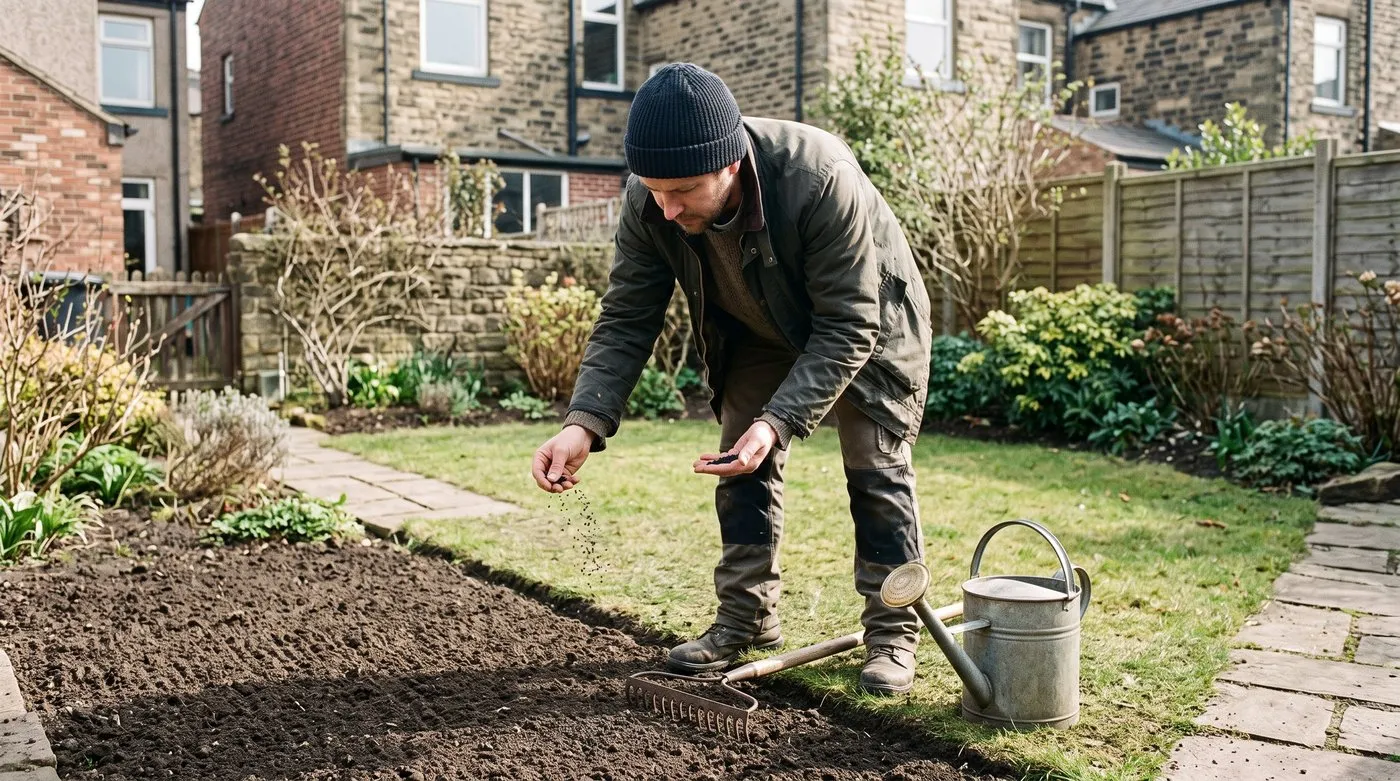
Scatter thinly where you want it to flower, as nigella hates being moved. Cover lightly and keep it moist until seedlings appear.
How to grow nigella
Nigella needs sun, decent drainage and almost no looking after. It’s perfect if you’re new to growing flowers from seed.
The right spot
Full sun gives the most flowers. It copes with a little shade but gets leggy and flowers less. Avoid low, damp spots where water sits in winter, as seedlings can rot.
Soil
Nigella grows in most soils, from sand to clay. On very heavy clay, fork in a little garden compost before sowing to loosen it. Avoid rich or freshly manured soil, which gives leaves instead of flowers.
Watering
Water seedlings in dry spells in spring. Once plants are a good size they cope well with dry weather and rarely need watering. Too much water can make them rot.
Feeding
None needed. Feeding makes nigella tall and floppy with fewer flowers.
Support
Most varieties stand up by themselves. In a windy spot, push a few twiggy sticks between the taller ones in May. They’ll soon be hidden by the leaves.
How to harvest and dry the seed pods
Nigella seed pods are among the best things to dry for winter vases. The puffy balls keep their shape for months.
When to pick
Cut the pods once they turn from bright green to papery beige, usually in July or August. Pick too early and they shrivel. Leave them too late and they split and spill their seeds.
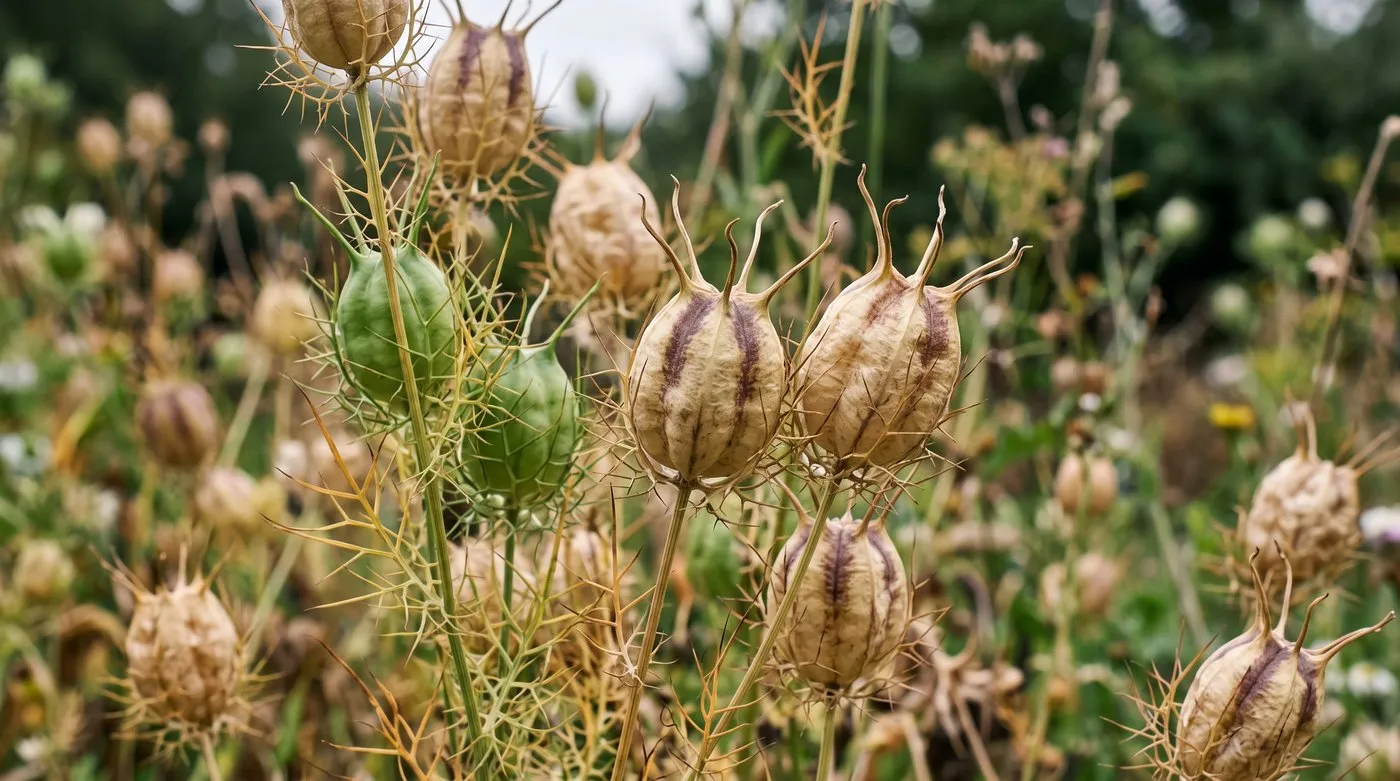
Cut the pods once they turn papery beige. Too early and they shrivel, too late and they split.
How to dry them
- Cut the stems with sharp scissors, leaving them long
- Pick on a dry afternoon once any dew has gone
- Strip off most of the leaves
- Tie them in small bunches with twine or a rubber band
- Hang them upside down somewhere cool, dark and airy
- Leave them a few weeks until they’re crisp
- Store them in a cardboard box out of the light
Dried pods are lovely in flower arrangements, wreaths, Christmas decorations and table centres. They look great with dried larkspur, achillea and grasses.
Using nigella in a cottage border
Nigella is a lovely supporting act. Its soft, misty leaves and delicate flowers fill the gaps between bolder plants.
Good partners
| Partner plant | Why it works |
|---|---|
| Larkspur | Tall spires rise above the mist |
| Cornflower | Blue with blue looks calm and pretty |
| Calendula | Orange pops against the blue |
| Old-fashioned roses | A classic cottage pairing |
| Lady’s mantle | Lime-green froth at the front |
| Sweet William | Flat flower heads contrast with the mist |
Sow it in loose drifts rather than rows. Because it self-seeds, it wanders a little each year, giving that relaxed cottage look. Our self-seeding plants guide has more easy plants that come back by themselves.
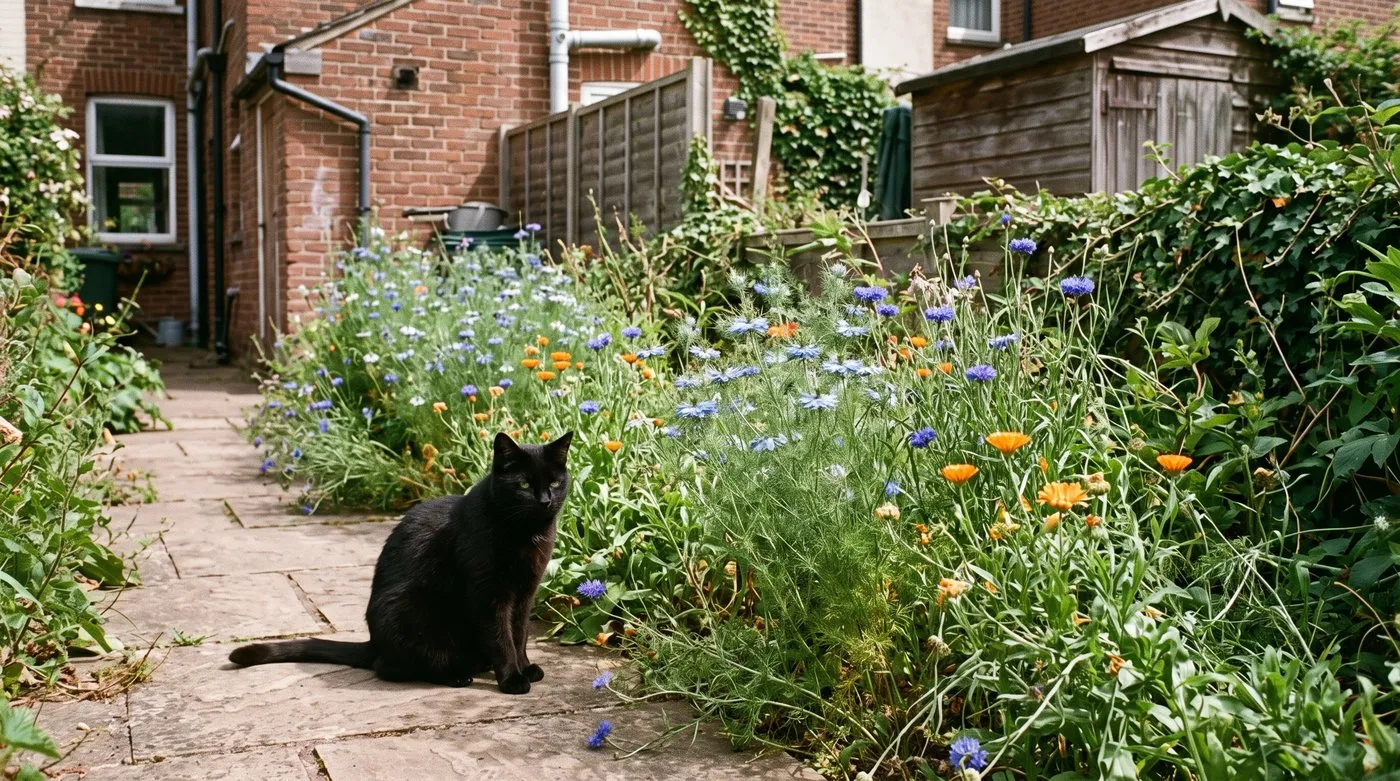
Sow nigella in loose drifts and let it self-seed among its neighbours. Orange calendula makes the blue really sing.
Month-by-month nigella calendar
| Month | What to do |
|---|---|
| February | Buy fresh seed for spring sowing |
| March | First sowing. Thin out autumn sowings |
| April | Water autumn sowings in dry spells |
| May | Second sowing. Autumn-sown plants nearly in flower |
| June | Flowers start. Make a third sowing |
| July | Peak flowering. Pick the first seed pods for drying |
| August | Still flowering. Pick the rest of the pods |
| September | Sow for flowers next year |
| October | Autumn seedlings come up |
| November | Seedlings sit through winter without any cover |
| December | Nothing to do |
Common nigella mistakes
Moving seedlings
Nigella’s long root hates being disturbed, and moved plants usually sulk or die. Sow where you want it to flower and leave self-sown seedlings where they come up.
Sowing in rich soil
Rich or freshly manured soil gives tall, leafy plants with few flowers. Ordinary or poor soil is better.
Deadheading
Deadheading takes away the seed pods, which are half the fun, and stops it self-seeding. Enjoy the flowers, then enjoy the pods.
Using old seed
Nigella seed doesn’t keep long. Buy fresh seed or save your own from last year’s pods.
Overwatering
Grown-up plants rarely need water except in a long drought. Too much can make them rot. Let the soil dry out between drinks.
For more easy annuals, see our guide to the easiest flowers to grow from seed. The RHS nigella growing guide is handy too.
Frequently asked questions
When do you sow nigella seeds in the UK?
Sow it where it will flower, from March to May or in September. Autumn-sown plants sit through winter as small seedlings and flower from late May. Spring-sown ones flower from July. Sowing a little every few weeks in spring keeps the flowers coming. Nigella doesn’t like being moved, so always sow it where it is to grow.
Does nigella come back every year?
Yes, it self-seeds so freely that it usually comes back by itself. Leave a few plants to make seed pods each summer instead of deadheading. The seeds drop and come up in autumn and spring. Thin the seedlings in April so they have room to grow strong.
Why is my nigella not flowering?
It usually needs more sun or poorer soil. Plants in shade get leggy with few flowers. Rich compost or too much water gives leaves instead of blooms. Crowded seedlings and soil that stays wet all summer don’t help either. Next time, sow in a sunnier, better-drained spot and thin the seedlings.
What is the difference between Nigella damascena and Nigella sativa?
Nigella damascena is the garden flower, grown for its blooms and seed pods. Nigella sativa is black cumin, a different plant grown for the black seeds used in cooking. Only sativa seeds are for eating. Don’t eat the seeds from your garden love-in-a-mist.
How do you harvest and dry nigella seed pods?
Cut the pods once they turn from green to papery beige. Pick on a dry day, leaving long stems. Strip off the leaves, tie them in small bunches and hang them upside down somewhere dark and airy for a few weeks. They’re lovely in wreaths, winter vases and Christmas decorations.
Can I grow nigella in pots?
Yes, use a pot at least 25cm across. Fill it with multipurpose compost with some grit mixed in. Sow a few seeds in March or September and thin to the strongest two or three. Water regularly but don’t let it get soggy. Compact ‘Mulberry Rose’ is a good one for pots.
How long does nigella flower for?
Each flower lasts a few days, but each plant keeps flowering for several weeks. To stretch the show, sow a little every few weeks from March to May, or grow both autumn-sown and spring-sown plants. Don’t deadhead if you want the seed pods.
Our team produces practical UK gardening guidance from source research, contributor records and established horticultural practice. Editorial standards are overseen by Matt W.