Key takeaways
- Sow outdoors from March to May, or in September for earlier flowers next year
- The petals are edible, with a mild, slightly peppery taste
- Hoverflies love it, and their larvae eat aphids on nearby veg
- Deadhead every few days to keep it flowering until the frosts
- It seeds itself freely, so you rarely need to buy seed twice
Calendula might be the most useful annual flower you can grow. It looks cheerful, feeds the bees, helps your veg, seeds itself for free and keeps flowering from June until the first hard frost. That’s a lot from one packet of seed.
Also known as pot marigold, calendula has been grown in British gardens for hundreds of years. Its name comes from the Latin for the first day of the month, because it was said to flower in every month of the year. In a mild winter, that’s not far off.
How do I sow calendula seeds?
Sow calendula straight into the ground from March to May. The big, curved seeds are easy to handle and come up reliably, and plants sown where they’ll flower are the strongest.
Wait until the soil has warmed a little. Make shallow drills 1cm deep and 30cm apart. Drop a seed every 10cm, cover lightly and water. Seedlings usually appear in one to two weeks.
Thin to 25 to 30cm apart when they have two pairs of proper leaves. You can move the thinnings, but calendula isn’t keen on root disturbance. Water them well and shade them for a few days.
For earlier flowers, sow in September. The young plants sit through winter as small rosettes and flower several weeks before spring-sown ones. This works well in southern and central England. In colder, exposed gardens, cover them with fleece in harsh weather.
What soil and position does calendula need?
Full sun is best, but calendula copes with light shade too. That makes it handy for east-facing borders that only get morning sun. You’ll get fewer flowers in shade, but the plants stay healthy.
The only thing it really dislikes is soggy soil. On wet ground, grow it in raised beds or add grit. In pots, any multipurpose compost with a handful of perlite is fine.
Calendula doesn’t need rich soil. Too much goodness gives lots of leaves and fewer flowers, so skip the compost and manure. Save those for hungry crops like courgettes.
Why is calendula such a good companion plant?
It brings in the good bugs that eat aphids. It’s a star of companion planting. The open, daisy-like flowers are full of nectar and pollen, which attract hoverflies, lacewings and tiny parasitic wasps. Their larvae eat huge numbers of aphids.
Calendula also acts as a bit of a decoy. Blackfly sometimes gather on calendula stems rather than your beans or cabbages. Leave them be. The hoverflies will find them.
It fits easily into your vegetable bed rotations, as it’s happy almost anywhere.
Dot calendula every 60cm or so along the edges of veg beds. Tuck it between rows of broad beans, lettuces and cabbages. The flowers also bring in bees to pollinate runner beans and courgettes.
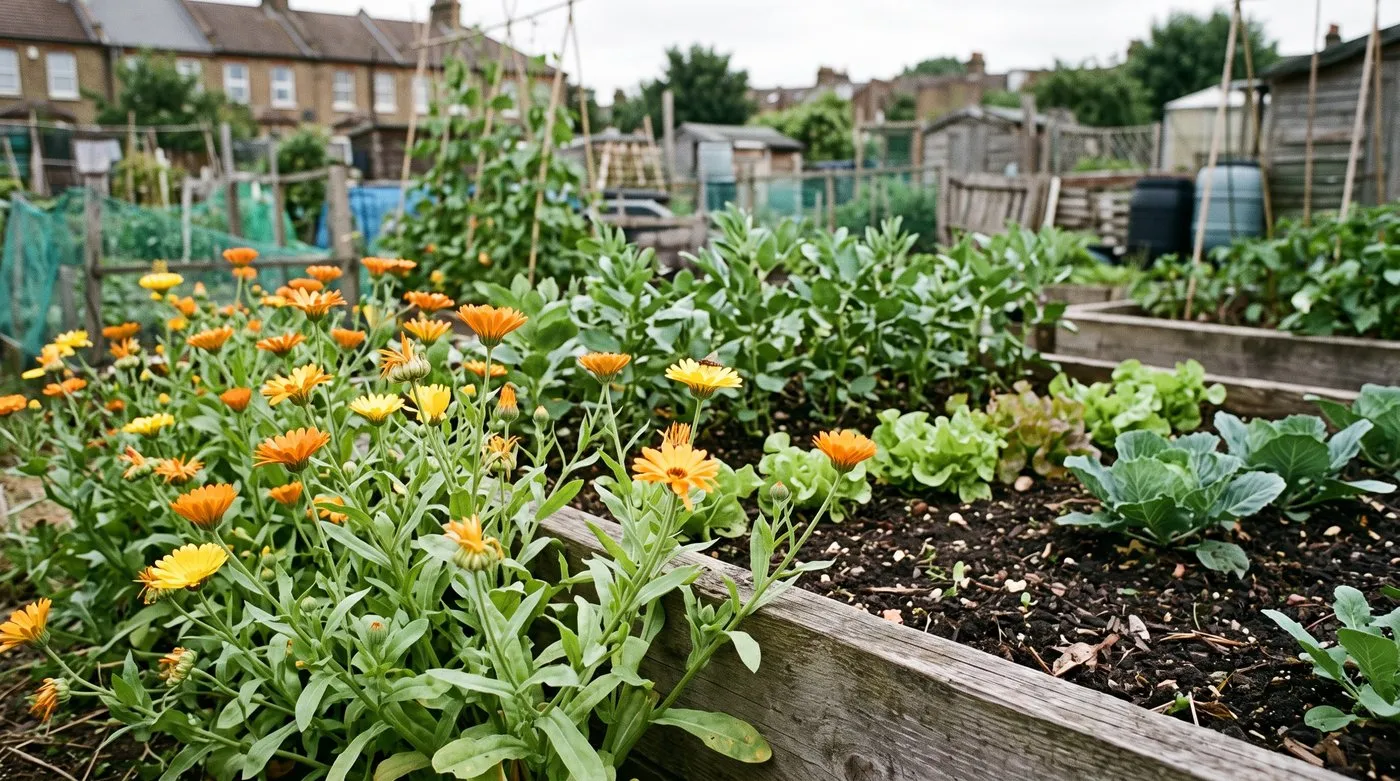
Dot calendula along the edges of veg beds every 60cm or so. Its open flowers bring in hoverflies, whose larvae eat aphids.
Are calendula petals really edible?
Yes, and people in Britain have eaten them for centuries. They were once used to colour and flavour soups, stews, rice and cheese, earning the nickname “poor man’s saffron”.
Only eat Calendula officinalis, not French or African marigolds (Tagetes), which are completely different plants. Pull the petals off the flower and throw away the green base, which tastes bitter.
Fresh petals taste mild and slightly peppery. Scatter them over salads, stir into risotto at the end, melt into butter for a golden colour or freeze in ice cubes. Dried petals lose most of their flavour but keep their colour.
Pick in the morning once the dew has dried. Only use flowers from plants that haven’t been sprayed.
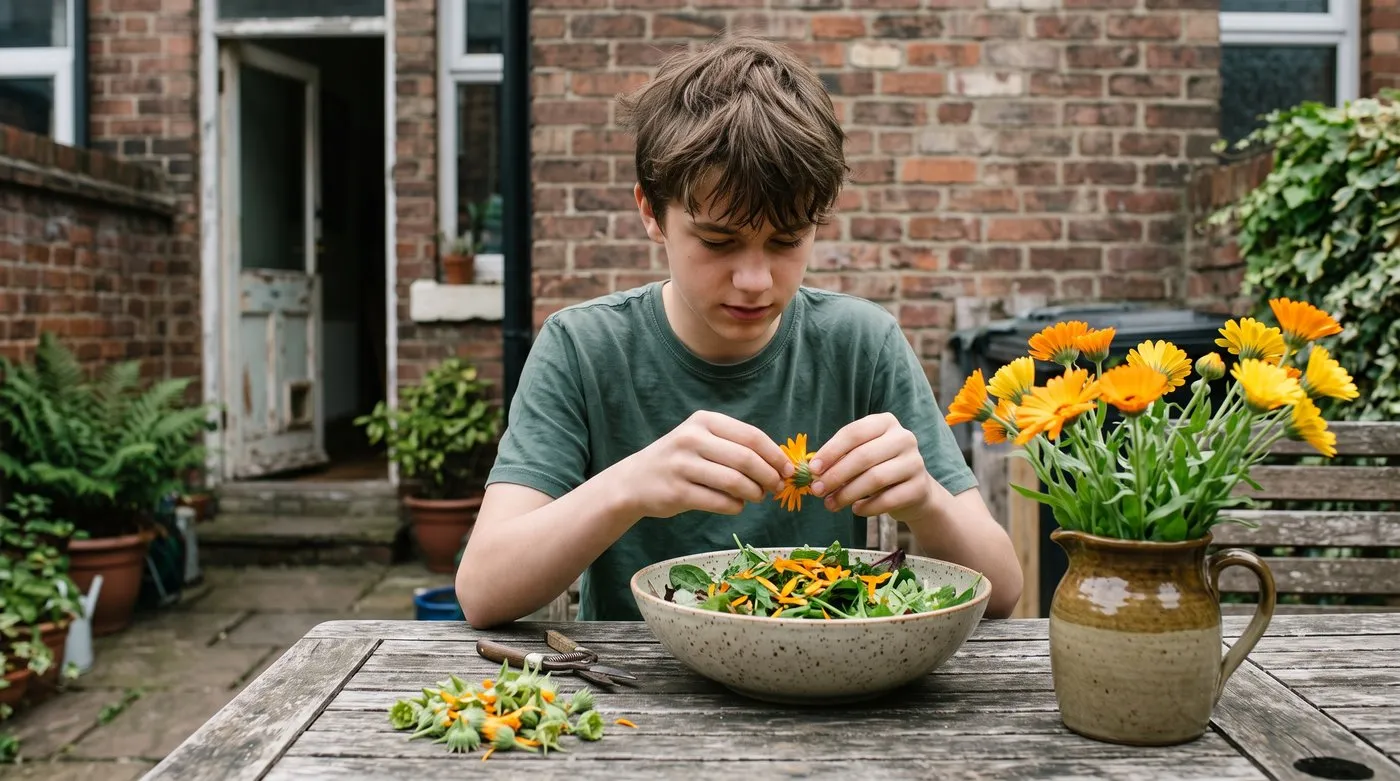
Pull the petals off and throw away the green base, which tastes bitter. Only eat pot marigold, Calendula officinalis, not French or African marigolds.
What are the best calendula varieties for UK gardens?
Pick by what you want: cut flowers, petals for the kitchen or something compact for pots. Here are six lovely ones to try.
| Variety | Height | Colour | Best for |
|---|---|---|---|
| ’Indian Prince’ | About 60cm | Orange with a dark red reverse | Cutting, borders |
| ’Snow Princess’ | About 50cm | Creamy white | Cutting, kitchen |
| ’Art Shades’ | About 55cm | Apricot, cream and orange mix | Cottage borders |
| ’Neon’ | About 45cm | Bright orange | Borders, pots |
| ’Erfurter Orangefarbige’ | About 50cm | Deep orange | Kitchen, herbal use |
| ’Porcupine’ | About 50cm | Orange, quilled petals | Something different |
‘Indian Prince’ is fab for cutting. The petals are rich orange on top with a deep mahogany-red underside, which glows when the light catches it. The stems are long enough for a tall vase, and it seeds itself happily.
‘Erfurter Orangefarbige’ is a traditional deep orange variety often chosen for a herb garden.
How do I keep calendula flowering all summer?
Deadhead every few days. Once a plant sets seed, it slows down on flowers. Keep picking off the faded heads and it’ll keep going from June right through to the frosts.
Snip each faded head back to the next bud or leaf joint. Don’t just pull off the petals and leave the seed head behind. A quick weekly tour of your calendula only takes a few minutes.
If plants get leggy in mid-July, cut them back hard to about 15cm. Water and give a light liquid feed. Fresh growth and a new flush of flowers should follow in a few weeks.
If you want seed to save, stop deadheading the last flowers from late September.
How do I save calendula seeds?
Let the last flowers ripen on the plant, then rub off the dry seeds. The big, curved seeds are some of the easiest to save. Seed from named open-pollinated varieties comes true. F1 hybrids won’t, but most calendula isn’t F1.
From late September, leave the last flowers to ripen. They’re ready when the heads are brown, dry and papery. The ring of curly seeds loosens and rubs off easily. If wet weather is on the way, cut the heads and dry them indoors on newspaper.
Pick out any bits and store the seeds in labelled paper envelopes somewhere cool and dry. They’ll keep for a few years.
Self-sown seedlings will also pop up round the old plants in autumn or spring. Thin them to 25cm apart and let them flower where they land, or move them while small.
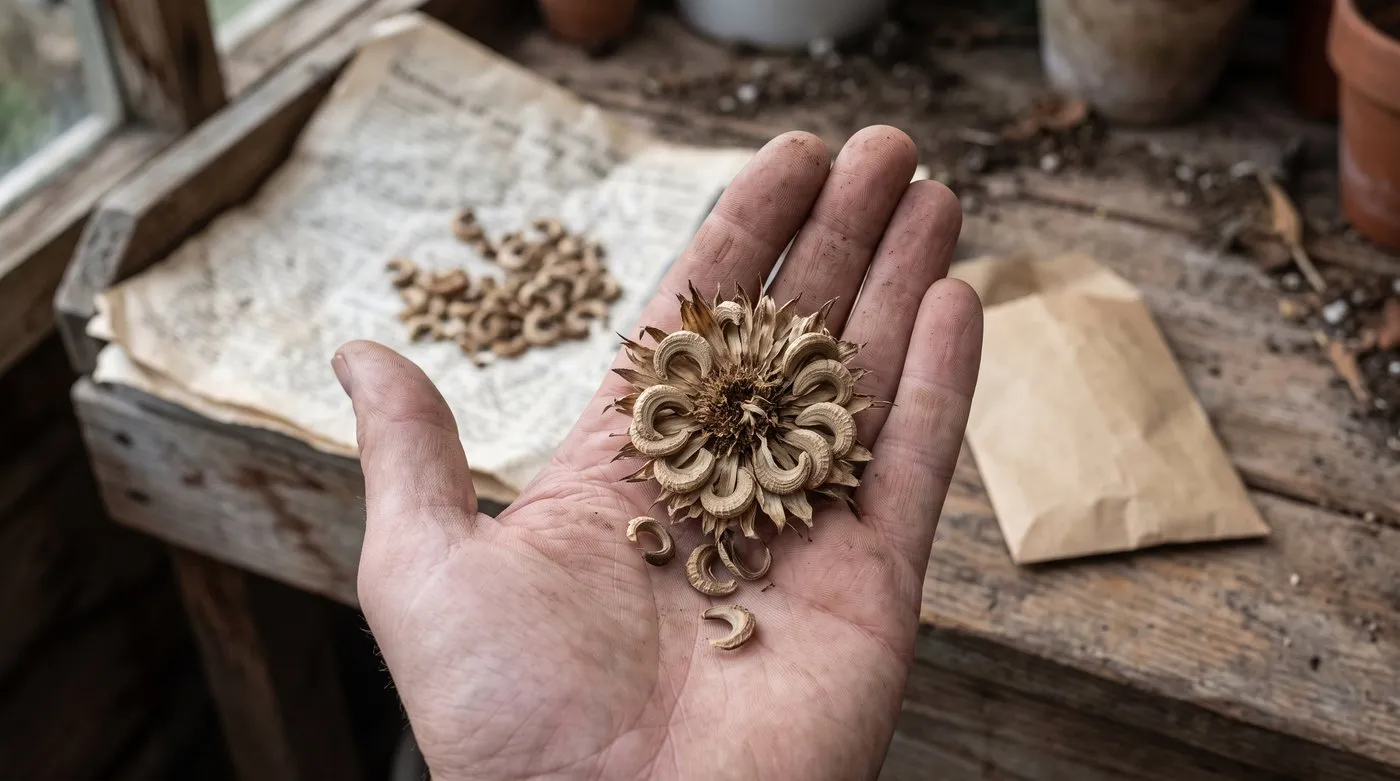
Seed heads are ready when they’re brown and papery and the curly seeds rub off easily. Store them in paper envelopes somewhere cool and dry.
How do I make calendula salve and oil?
Infuse dried petals in oil, then thicken it with beeswax for a simple balm. Calendula has a long history in home-made skin balms. The RHS calendula page is a nice extra read.
To make calendula oil, dry fresh petals on a rack for a few days until papery. Half-fill a clean glass jar with them and cover completely with olive or sweet almond oil. Seal and stand on a sunny windowsill for four to six weeks, giving it a shake now and then. Strain through muslin into a dark glass bottle.
To make a balm, gently warm 100ml of the oil in a bowl over a pan of simmering water. Stir in 12 to 15g of beeswax pellets until melted. Pour into small tins and leave to set. It makes a lovely balm for dry skin and chapped lips.
How do I manage powdery mildew on calendula?
Space plants well and keep the leaves dry. Powdery mildew is the most common calendula problem. It shows as a white, dusty coating on leaves and stems, usually from mid-July as the nights get dewier.
Space plants about 30cm apart so air can flow. Water at the base in the morning rather than over the leaves.
Good spacing and dry leaves do far more than any spray, so don’t bother with home-made remedies.
Pick off badly affected leaves as soon as you see them and put them in the bin. If it gets really bad, cut the plants back hard and let fresh, clean growth come through.
What is the difference between calendula and marigolds?
Calendula (pot marigold) and Tagetes (French and African marigolds) are completely different plants. They just share the name “marigold” and orange flowers.
Calendula comes from southern Europe and has been grown in British gardens for centuries. It’s a hardy annual that copes with frost and seeds itself. Its petals are edible, and its leaves are long and a little sticky.
Tagetes come from the Americas. French marigolds and African marigolds are half-hardy, so frost kills them. Their flowers have a strong smell that not everyone likes. They’re popular bedding plants and companion plants, but they aren’t the ones to eat.
When you buy seed, check the Latin name. Calendula officinalis is the pot marigold in this guide. Tagetes is something else.
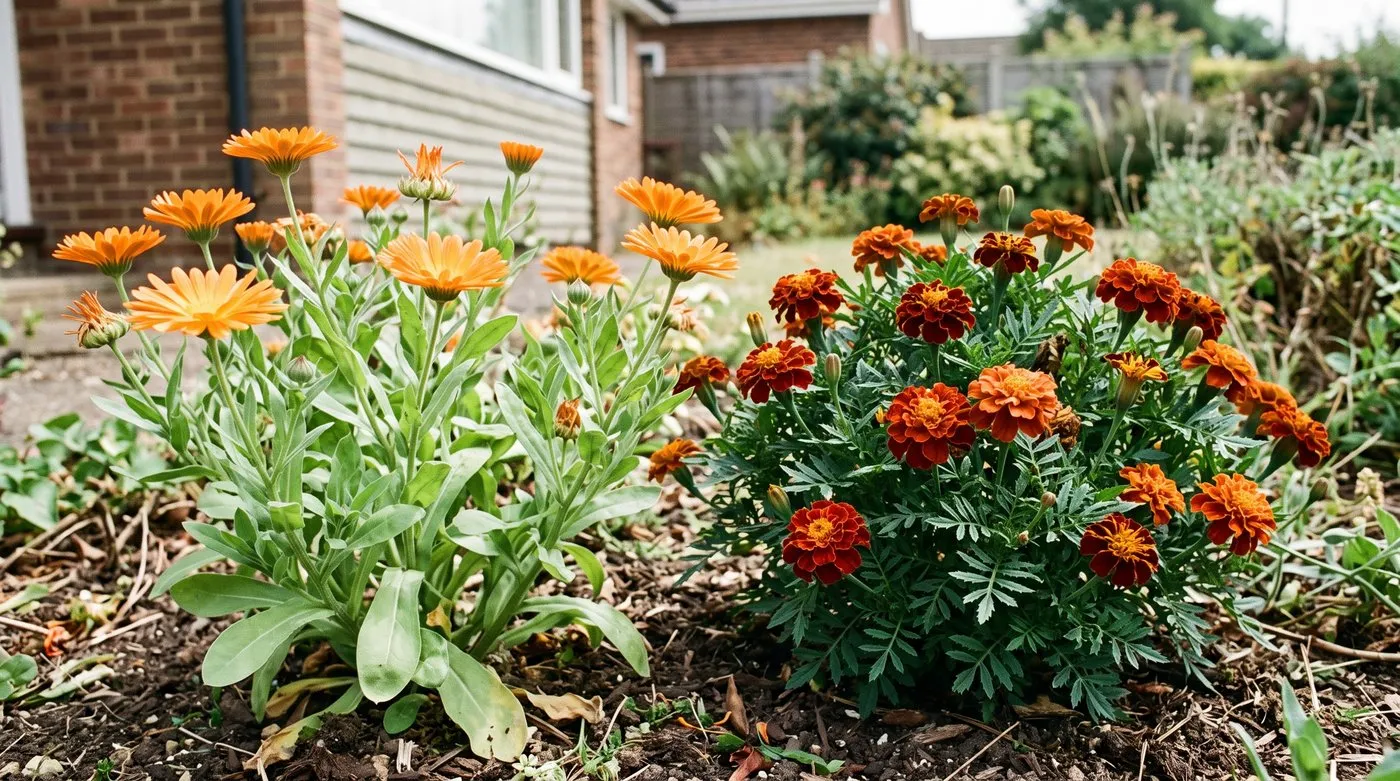
Calendula has simple oblong leaves and open daisy flowers, while French marigolds have feathery leaves and ruffled heads. Only calendula petals are for eating.
How does calendula fit into an edible flower garden?
Calendula is the backbone of any edible flower patch. It flowers for ages, seeds itself and gives you plenty of petals.
Pair it with nasturtiums for peppery leaves and flowers, borage for its cucumber-flavoured blue stars, and violas for pretty colours. Together they’ll give you edible flowers from May to November with very little effort.
Grow a little bed near the kitchen door for easy picking, or scatter calendula through your veg beds where it helps out as a companion plant too.
The more you pick, the more it flowers. A small patch gives plenty of petals for salads and cooking, with lots left over for the bees.
Frequently asked questions
When should I sow calendula seeds in the UK?
Sow calendula outdoors from March to May. Seedlings usually appear in one to two weeks once the soil warms up. For earlier flowers, sow in September and let young plants sit through winter. You can also start seeds indoors in February in modules, as they don’t like their roots disturbed.
Are calendula petals safe to eat?
Yes, calendula petals are edible and widely eaten. Only eat Calendula officinalis, not Tagetes marigolds. The petals taste mild and slightly peppery. Scatter them on salads, stir into risotto or melt into butter. Only use flowers that haven’t been sprayed, and pull off the bitter green base.
Does calendula really deter aphids?
Not directly, but it attracts the insects that eat them. Hoverflies, lacewings and tiny wasps love calendula flowers. Their larvae then eat aphids on nearby plants. It works best when calendula grows close to the crops you want to protect.
How do I stop calendula getting powdery mildew?
Give plants space so air can move around them. Space them 30cm apart and water at the base, not over the leaves. Mildew shows as white dust on the leaves, usually from late July. Pick off badly affected leaves straight away. Rely on spacing and tidying rather than sprays.
Will calendula self-seed in my garden?
Yes, it seeds itself freely if you let the seed heads ripen. Leave the last flowers to go to seed from September. Seeds drop round the plant and come up in autumn or spring. Thin seedlings to 25 to 30cm apart. If you’re getting too many, deadhead more in late summer.
Can I make calendula oil at home?
Yes, it’s an easy and fun project. Dry the petals on a rack for a few days until papery. Half-fill a clean jar with them and cover with olive or sweet almond oil. Leave it on a warm windowsill for four to six weeks, shaking now and then, then strain. Use it to make simple skin balms and lip salves.
Our team produces practical UK gardening guidance from source research, contributor records and established horticultural practice. Editorial standards are overseen by Matt W.