Key takeaways
- Sow outdoors from late April, or indoors in small pots from March
- Poor soil and full sun give the most flowers, so skip the feed
- Flowers, young leaves and green seed pods are all edible and peppery
- Blackfly head for nasturtiums first, which helps keep them off your beans
- Choose climbing types for fences, trailing types for baskets and dwarf types for edging
Nasturtiums are one of the most useful and cheerful annuals you can grow. You get bright orange, red and yellow flowers from June until the first frost. The flowers and leaves are edible with a peppery kick, and blackfly love them, so they help keep the pests off your veg.
They’re also about as easy as gardening gets. Whether you have an allotment or one pot on a balcony, nasturtiums earn their place.
When and how to sow nasturtium seeds
Sow straight into the ground from late April, once frost has passed. In southern England, mid-April is usually fine. In Scotland and the north, wait until early May.
Push each seed 2cm deep and space them 20-30cm apart. The seeds are big, so they’re easy to handle, and great for children to sow. Water gently and keep the soil moist. Seedlings usually appear in a couple of weeks once the soil has warmed up.
For an earlier start, sow indoors from mid-March. Put one seed in each small pot of multipurpose compost on a bright windowsill. Nasturtiums don’t like their roots being disturbed, so use single pots rather than seed trays. Harden the seedlings off for a week in late May, then plant them out.
Soaking the seeds overnight in lukewarm water softens the hard coat and helps them come up a little faster.
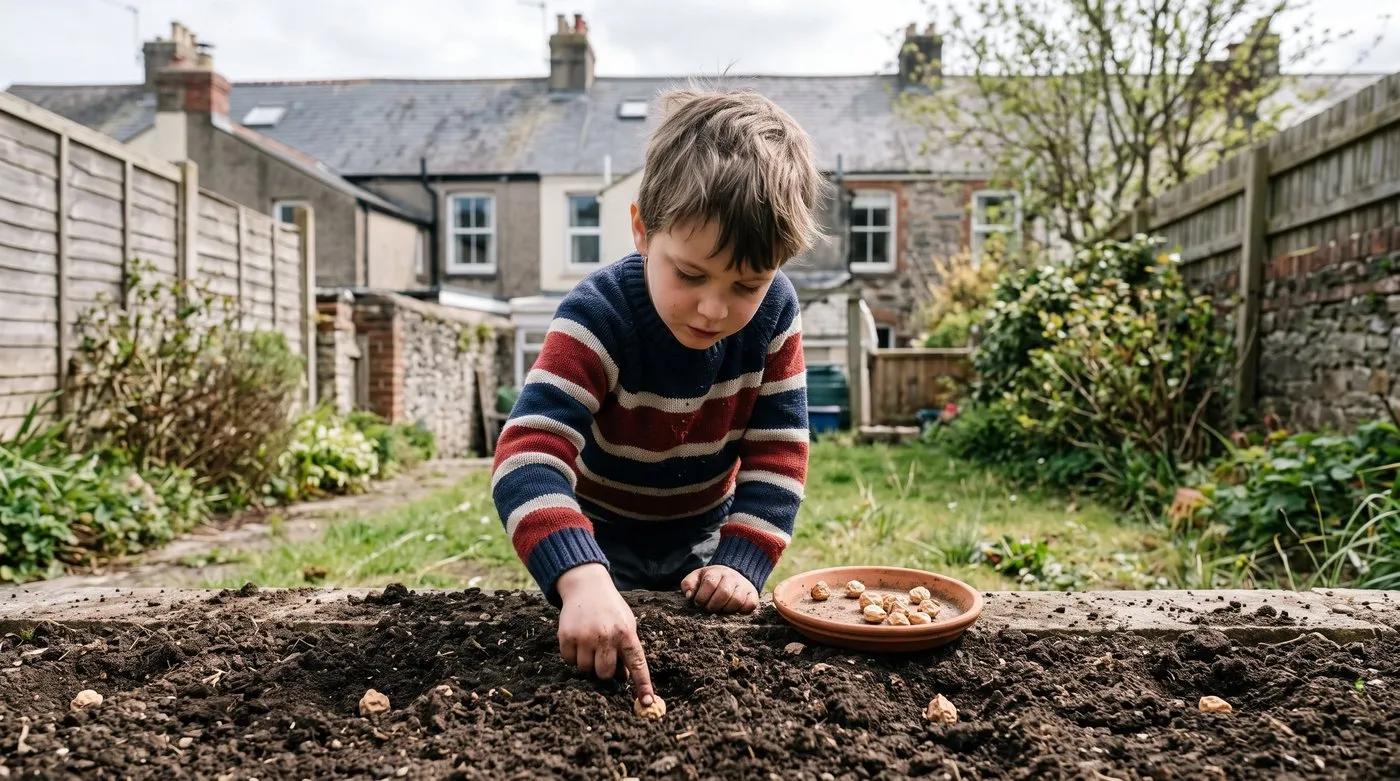
The big seeds are easy for little hands to sow. Push each one 2cm deep and space them 20-30cm apart.
What soil and position do nasturtiums need?
Nasturtiums like poor soil, and this is where most people go wrong. Rich soil gives you lots of round, lily-pad leaves but hardly any flowers. If you want flowers, don’t feed them and avoid freshly composted beds.
Full sun gives the most flowers and the brightest colours. They’ll grow in part shade, but they flower less and get leggy.
Almost any soil will do: clay, loam, sand or chalk. The only thing they hate is waterlogged ground. On heavy clay, add a handful of grit to each planting hole.
 Trailing nasturtiums bring a splash of colour to small spaces.
Nasturtiums sprawl. Climbing types need a trellis, fence or wigwam, and even dwarf ones spread out. Give them space, or use them on purpose to fill gaps in borders and along paths.
Climbing, trailing and dwarf types
There are three main kinds of nasturtium. Pick the one that fits your spot.
| Type | Size | Best for | Varieties to try |
|---|---|---|---|
| Climbing | Up to about 1.8m | Fences, trellis, wigwams | Tall Trailing Mixed |
| Trailing | Spreads well over the edge | Hanging baskets, window boxes, pots | Gleam Series |
| Dwarf | Low and bushy | Borders, edging, pots | Tom Thumb, Alaska, Empress of India |
Climbing types are the most vigorous. They scramble up supports by twining their leaf stalks around them. Plant them at the foot of a fence or obelisk in a cottage garden and they’ll cover it by midsummer.
Trailing types suit hanging baskets and pots where the stems can tumble over the edge. The Gleam Series has semi-double flowers in orange, scarlet and yellow.
Dwarf types are compact and flower freely. Tom Thumb stays small and comes in lots of colours. Alaska has cream-and-green splashed leaves that look good even before it flowers. Empress of India has dark blue-green leaves and deep crimson flowers.
A packet of seed is cheap and goes a long way, enough to fill a big bed or several pots.
Using nasturtiums to protect your veg
Nasturtiums make a brilliant decoy, or “trap crop”. Blackfly tend to pick nasturtiums before broad beans, runner beans and cabbage-family crops.
 Nasturtiums between veg rows give blackfly somewhere else to go.
The idea is simple. Blackfly crowd onto the nasturtiums and leave your crops mostly alone. Once the nasturtiums are covered, pull them up and put them in the green waste bin.
Plant them at the ends of bean rows or around the edge of a cabbage bed. One plant per metre of row is plenty. Sow them at the same time as your crops so they grow up together. Our companion planting guide has more good pairings.
The flowers also bring in hoverflies, whose young eat aphids. So you get a decoy and a pest patrol in one. For more ways to deal with aphids without chemicals, see our guide on how to get rid of aphids.
Eating the flowers, leaves and seed pods
The flowers, leaves and green seed pods are all edible, with a peppery taste a bit like watercress. The RHS has more on growing them for the kitchen.
Flowers are the mildest. Pick them in the morning when fully open and use them the same day. Toss them into salads, float them in summer drinks or use them to dress up a plate.
Leaves pack more punch. Small young leaves are tender and lovely in salads. Bigger leaves get tougher and hotter. Use them like rocket in sandwiches, wraps and pasta.
Green seed pods can be pickled in vinegar to make “poor man’s capers”. Pick them just after the flower drops, while they’re still green and soft.
 Nasturtium flowers and young leaves add colour and a peppery kick to summer salads.
| What to eat | Taste | How to use it | When to pick |
|---|---|---|---|
| Flowers | Mildly peppery, a little sweet | Salads, drinks, garnish | June to October, when fully open |
| Young leaves | Hot and peppery | Salads, sandwiches, pesto | June to September, while small |
| Green seed pods | Sharp, like capers | Pickle in vinegar | July to September, before they harden |
For more flowers you can cook with, see our edible flowers guide.
Growing nasturtiums in pots
Nasturtiums are perfect container plants because they like poor soil and cope with a bit of drought. Use a pot at least 20cm wide with drainage holes. Trailing types look great in hanging baskets and window boxes.
Use ordinary multipurpose compost and don’t add slow-release feed. Less food means more flowers.
Water when the top few centimetres of compost feel dry. In hot weather, pots may need watering every day. Nasturtiums wilt quickly when thirsty but perk up fast after a drink.
Dwarf Tom Thumb and Alaska stay neat in pots, while the Gleam Series drapes nicely over the rim. Pots self-seed less than beds, so collect some seed pods in autumn for next year.
Common problems and how to fix them
Blackfly are the most common pest. If you’re using nasturtiums as a decoy, that’s the plan working. On flower displays, a jet of water from the hose knocks most off, and ladybirds and hoverflies soon move in to help.
Caterpillars of cabbage white butterflies sometimes chew holes in the leaves. Check under the leaves from May to September, rub off yellow egg clusters and pick off any caterpillars. The damage looks untidy but doesn’t stop flowering.
Slugs and snails nibble young seedlings. Keep an eye on new sowings and protect them until they’re about 10cm tall. Bigger plants are rarely bothered.
All leaves and no flowers means the soil is too rich. Stop feeding and move pots somewhere sunnier. In a rich border, either enjoy the leaves or try a poorer patch next year.
Powdery mildew, a white dusty coating, can appear on leaves in late summer, especially when it’s dry and still. It’s mostly cosmetic at that point. Pick off the worst leaves and give plants some air.
Saving nasturtium seed
Nasturtium seeds are some of the easiest to save. Leave the seed pods on the plant until they turn from green to pale brown and feel hard.
Pick them and spread them on newspaper indoors for a week to finish drying. Store them in a labelled paper envelope somewhere cool, dry and dark. They keep for a few years.
Each plant makes dozens of seeds, so one summer gives you plenty to share with neighbours.
Nasturtiums also self-seed in sheltered spots. Seedlings appear from April and are easy to spot by their round, shield-shaped leaves. Move or pull them while small if they’re in the wrong place.
Month-by-month nasturtium calendar
| Month | What to do |
|---|---|
| March | Sow indoors in small pots on a bright windowsill |
| April | Sow outdoors in late April once frost has passed |
| May | Harden off indoor plants and plant out after the last frost |
| June | First flowers appear. Start picking for salads |
| July to August | Peak flowering. Deadhead for more blooms and pickle green seed pods |
| September | Flowers keep coming. Collect ripe seed pods |
| October | First frosts finish them off. Clear old plants and collect the last seed |
| November to February | Nothing to do. Keep saved seed cool and dry |
Frequently asked questions
When should I sow nasturtium seeds in the UK?
Sow outdoors from late April, once frost has passed. In mild southern areas, mid-April is often fine. For an earlier start, sow indoors in small pots from March and harden them off before planting out in late May. Push the seeds about 2cm deep. They usually come up within a couple of weeks in warm soil.
Are nasturtium flowers and leaves safe to eat?
Yes, and they taste peppery, a bit like watercress. Pick flowers when fully open and choose young, tender leaves. Only eat plants that haven’t been sprayed, and give them a gentle wash first. The green seed pods can be pickled as a stand-in for capers.
Do nasturtiums come back every year in the UK?
No, they are annuals and the first hard frost kills them. They often self-seed, though, so new plants pop up the next spring. To save seed, let the pods dry on the plant in autumn and keep them in a paper envelope somewhere cool and dry.
Why do nasturtiums attract blackfly?
Blackfly simply love them. They often settle on nasturtiums before nearby crops, which is why gardeners grow them as a decoy. Once the nasturtiums are covered, pull them up and put them in the green waste bin. This can help protect beans and other crops nearby.
Can I grow nasturtiums in pots and containers?
Yes, they are great in pots. Use one at least 20cm across with drainage holes. Fill it with multipurpose compost and don’t add extra feed. Trailing types suit hanging baskets and window boxes. Water when the top of the compost dries out.
Why are my nasturtiums all leaves and no flowers?
The soil is usually too rich. Rich soil or regular feeding gives lots of leaves and few flowers. Stop feeding, avoid fresh compost and give them as much sun as you can. Compact types such as ‘Tom Thumb’ tend to flower more freely than big trailing ones in rich soil.
What grows well next to nasturtiums?
Beans, courgettes and cabbage-family crops are good neighbours. Nasturtiums lure blackfly away from them, and the bright flowers bring in pollinators. Plant them around the edges of veg beds, where they can sprawl without smothering anything.
Our team produces practical UK gardening guidance from source research, contributor records and established horticultural practice. Editorial standards are overseen by Matt W.