
Key takeaways
- Sow Aquadulce Claudia in October or November for the earliest beans, from late May or June
- Spring sowings from February to April are the most reliable, cropping from July
- Plant in double rows 23cm apart, with 60cm between each pair of rows
- Pinch out the tips once the lowest flowers have formed small pods, to put off blackfly
- Pick pods while the bean scar is still white or green, before it turns black
- After picking, leave the roots in the ground to rot down
Broad beans are one of the oldest crops grown in Britain and a brilliant choice for beginners. They don’t mind the cold or ordinary soil, and a short double row gives you a lovely summer crop with some left over to freeze.
The timing is a bonus too. You can sow them in October or November, long after most crops are done, or start again in February as one of the first sowings of the year. If you’re setting up your first veg patch, our guide to starting a vegetable garden covers the basics.
Which broad bean varieties should I grow?
Grow Aquadulce Claudia for autumn sowing, and a spring variety like Witkiem Manita or The Sutton for spring. Tall varieties can reach 1m or more and need support. Dwarf varieties stay at about 50cm and suit pots and small plots.
Best varieties for UK gardens
- Aquadulce Claudia (RHS AGM): the classic autumn variety, bred to sit through winter. Long pods with pale beans.
- Super Aquadulce: another long-pod type for autumn sowing.
- Jubilee Hysor: a spring variety with short, well-filled pods. Good for smaller gardens.
- The Sutton (RHS AGM): a dwarf at about 50cm that rarely needs staking. Great for pots, raised beds and windy sites.
- Masterpiece Green Longpod: long pods with beans that stay green when cooked.
- Karmazyn: a fun Polish variety with pinkish-red beans.
- Witkiem Manita (RHS AGM): a quick spring variety with an early crop.
- Dreadnought (RHS AGM): an old favourite with long, slim pods.
Variety comparison table
| Variety | Sow | Size | Best for |
|---|---|---|---|
| Aquadulce Claudia | Oct to Nov or Feb | Tall | Earliest beans from overwintering |
| Super Aquadulce | Oct to Nov or Feb | Tall | Autumn sowing |
| Witkiem Manita | Feb to Apr | Tall | Quick spring crop |
| Jubilee Hysor | Feb to Apr | Medium | Smaller gardens |
| The Sutton | Feb to Apr | Dwarf, about 50cm | Pots, windy sites |
| Masterpiece Green Longpod | Feb to Apr | Tall | Green beans |
| Dreadnought | Feb to Apr | Tall | Long pods |
| Karmazyn | Mar to Apr | Medium | Pinkish-red beans |
Handy tip: Sow Aquadulce Claudia in autumn and a spring variety like Jubilee Hysor in February. You’ll be picking from June right through to September.
When to sow broad beans
Sow in October to November for an early crop, or February to April for a summer one. Our guide on when to plant broad beans has timings by region. The UK vegetable planting calendar shows how they fit in with everything else.
Autumn sowing (October to November)
Sow hardy types like Aquadulce Claudia straight into the ground from mid-October to mid-November. They come up before winter, sit tight as short, sturdy plants, then race away in spring. They crop several weeks before spring sowings.
Autumn sowing works best in southern and central England. Further north it depends on your spot. A sheltered, well-drained bed gives the best chance. Soggy soil kills overwintering beans more often than frost does.
Mice love digging up freshly sown beans. To dodge them, start autumn beans in deep pots in a cold frame and plant them out in March.
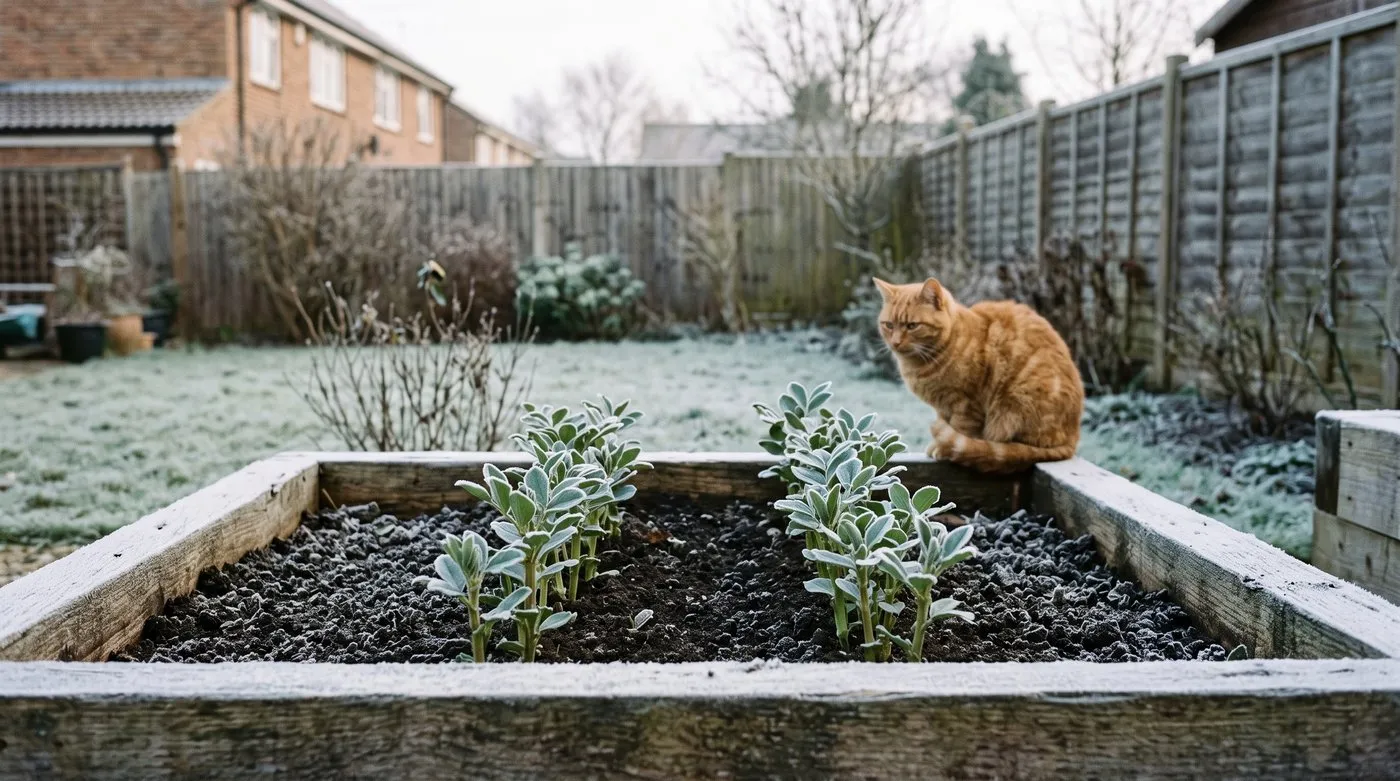
Autumn-sown beans sit tight as short, tough plants through winter. A well-drained raised bed helps, as wet soil kills them more often than frost.
Spring sowing (February to April)
Spring sowing is the reliable choice everywhere in the UK. Start in February under cloches or in a greenhouse, or wait until March and April to sow outside. Broad beans cope with cold soil better than most veg. New to seeds? Our guide to sowing seeds indoors will help.
February sowings in pots under cover give you sturdy plants to set out in March. Use deep pots or root trainers, as broad beans grow long roots quickly.
March and April sowings go straight into the ground. It’s the simplest way and works everywhere. Sowings after mid-April tend to get more blackfly.
How to sow and plant broad beans
Preparing the ground
Choose a well-drained, weed-free spot with reasonably good soil. Broad beans aren’t greedy. A bed that was manured for last year’s crop is ideal. If your soil is poor, dig in some garden compost a few weeks before sowing. Our composting guide shows how to make your own.
Avoid soggy ground for autumn sowings, as wet roots rot over winter. Raised beds solve this nicely.
Sowing method
- Mark out a double row with string or a cane
- Make holes 5cm deep and 23cm apart along each row
- Keep the two rows 23cm apart
- Drop one bean into each hole
- Cover with soil and water gently
- Leave 60cm before the next double row
Double rows are the classic way. The two rows lean on each other, so you need less staking. The 60cm path lets you get in to weed and pick.
Pop a few spare beans at the end of the row to fill any gaps later.
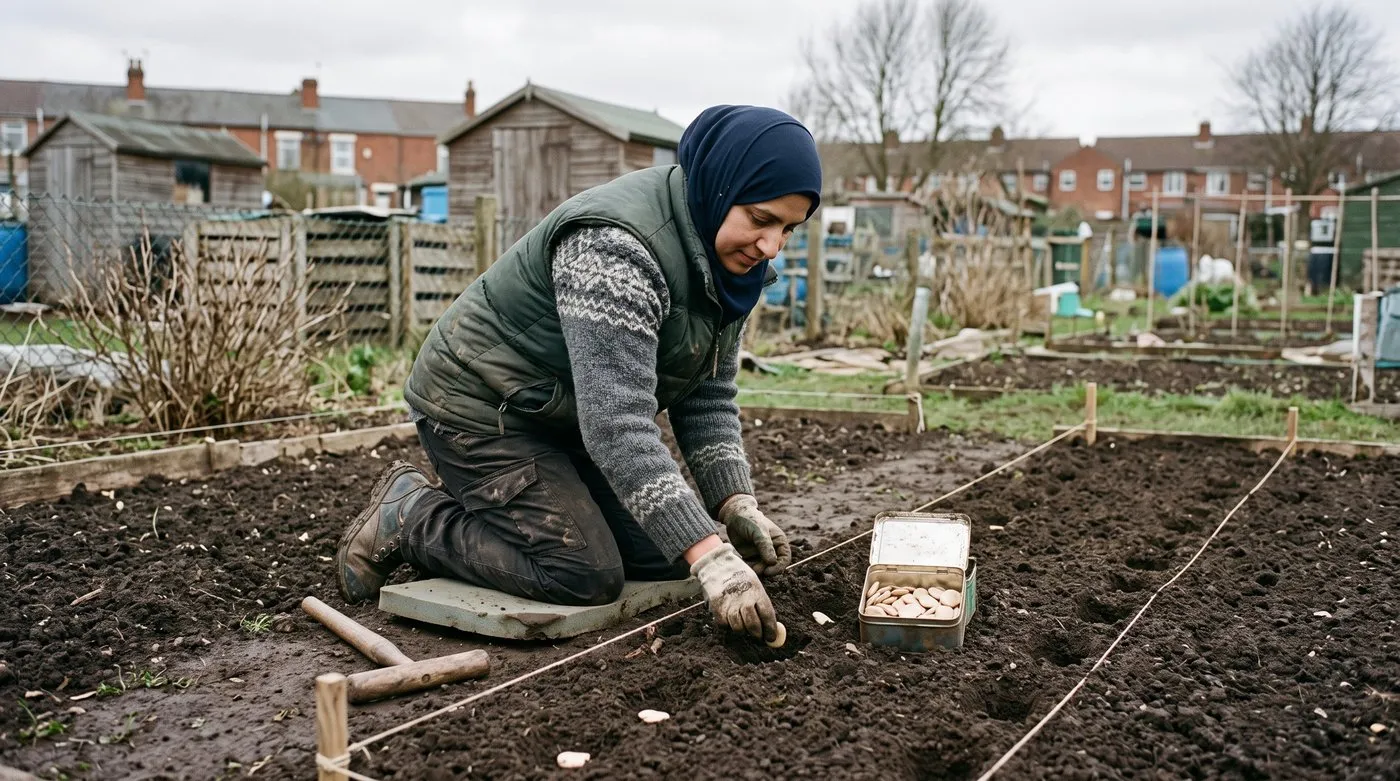
Double rows 23cm apart lean on each other as they grow, so they need less staking. Pop a few spare beans at the end to fill any gaps.
Sowing in pots
Fill 8cm pots or root trainers with multipurpose compost. Sow one bean per pot, 5cm deep. Keep them in an unheated greenhouse, cold frame or porch.
Plant out when they’re 10 to 15cm tall, usually after four to six weeks. Harden them off first by putting them outside in the day and bringing them in at night for a week.
Supporting tall varieties
Tall varieties need support, especially in windy spots. Without it, heavy pods and summer storms can flatten them. Dwarf types like The Sutton usually stand on their own.
The easiest way is canes and string. Push a sturdy cane in at each corner of the double row and every 1.5m along the sides. Run string along both sides every 30cm as the plants grow.
Or push hazel twigs or pea sticks along both sides of the row. The plants lean on the twigs, and it looks lovely and natural.
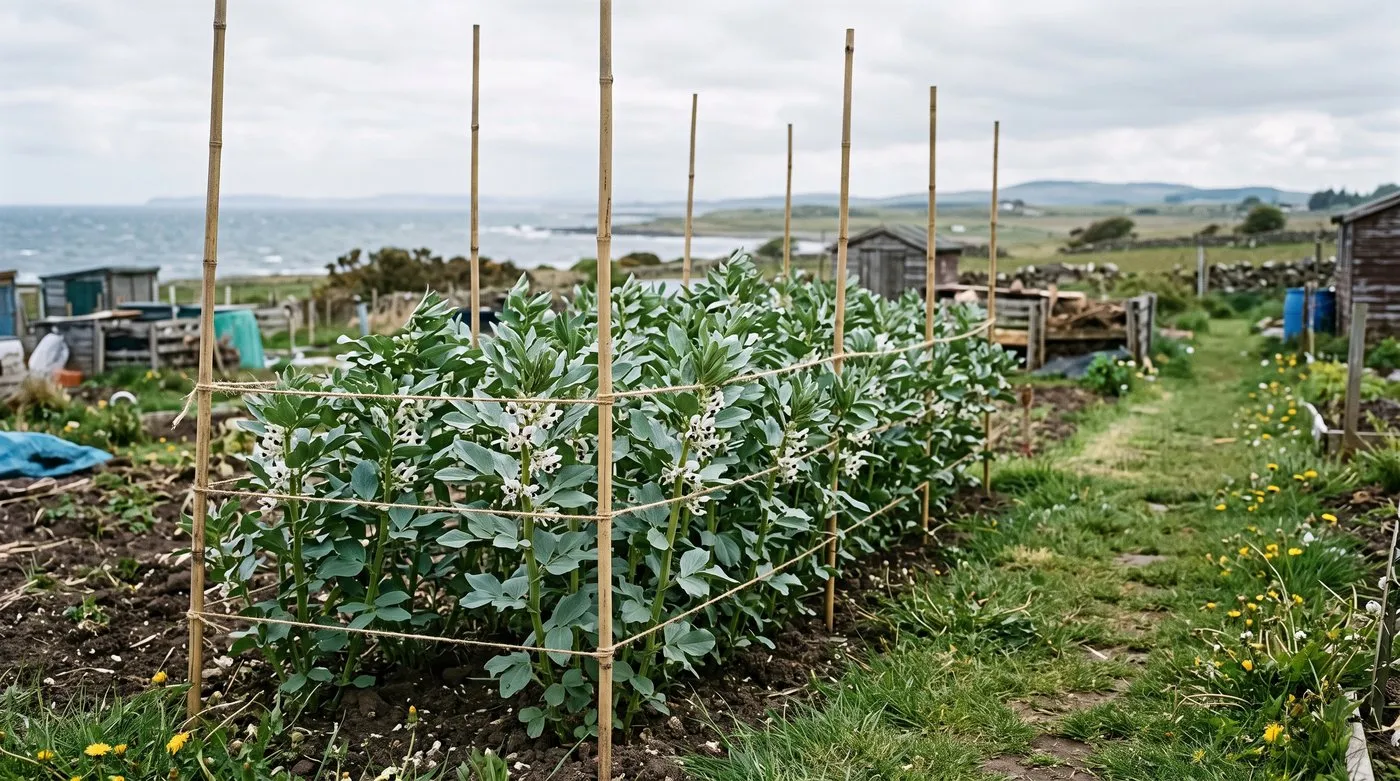
Canes at the corners with string along both sides stop tall beans being flattened by summer storms. Add a new string every 30cm as they grow.
Do broad beans need much watering?
Not much, except at flowering time. In the ground, they rarely need watering unless your soil is sandy or spring is dry. Give a really good soak when flowering starts and again two weeks later.
Water at the base, not over the leaves, to help keep chocolate spot away. One big soak is better than lots of little sprinkles. A mulch of compost after watering keeps the moisture in. Plants in pots are different. They dry out fast and may need water every day once they’re flowering.
Pinching out tips and managing blackfly
Why pinch out?
Pinching out puts off blackfly and helps the pods fill. Once the lowest flowers have formed small pods, nip off the soft top few centimetres of each stem.
Blackfly adore those soft tips, so removing them takes away their favourite feeding spot. The plant also stops growing taller and puts its energy into the pods instead.
The tips are tasty too. Steam them for two minutes or toss them into a stir-fry.
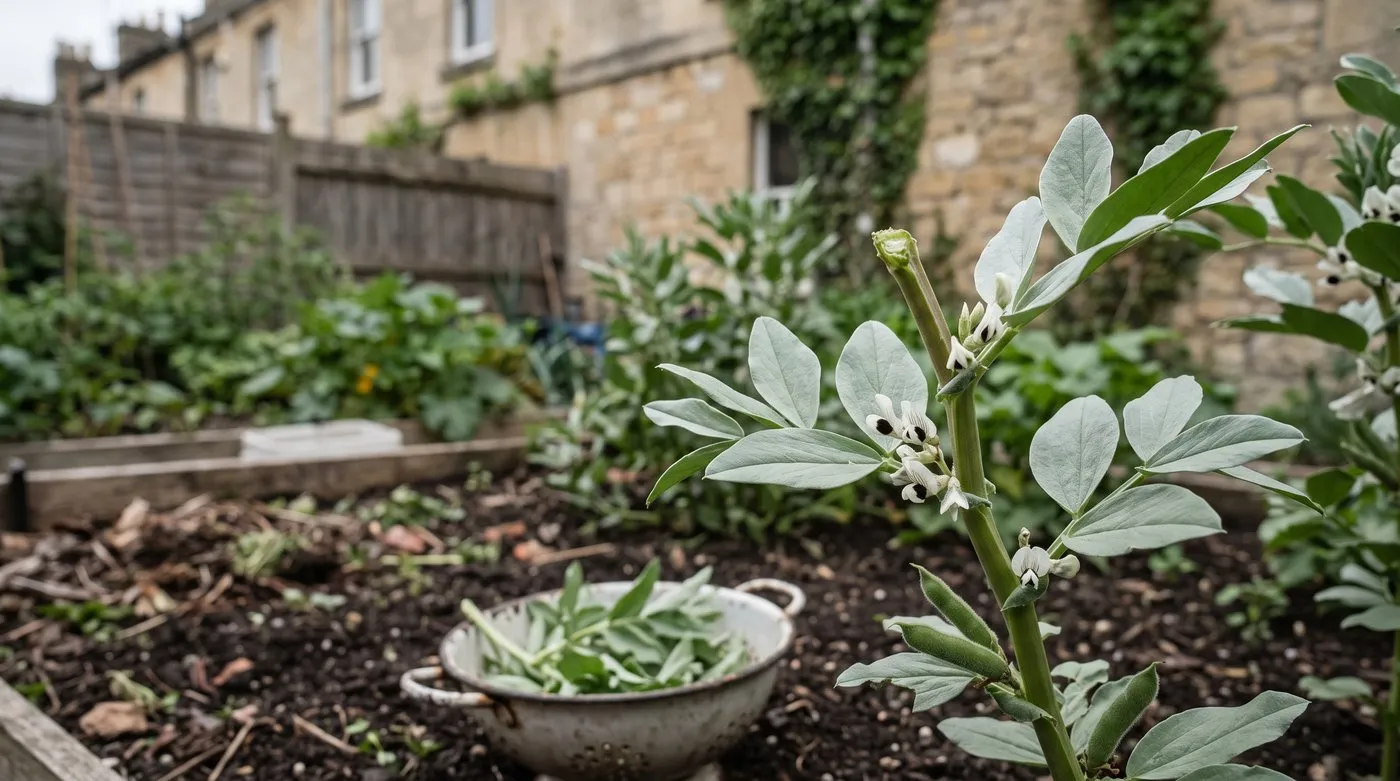
Nip off the soft tops once the lowest pods have set. It takes away the blackfly’s favourite spot, and the tips are lovely steamed.
Dealing with blackfly
Blackfly are the most common broad bean pest. They cluster on the tips and young leaves and suck the sap. The RHS broad bean guide is a handy extra read.
The RHS blackfly advice is to put up with them where you can, as the beans are still fine to eat and blackfly feed lots of wildlife. If they turn up before you’ve pinched out:
- Squash or pinch off: rub out small groups with your fingers, or remove badly hit tips.
- Hose them off: a strong jet of water knocks them off.
- Welcome the predators: ladybirds, hoverfly larvae, tiny wasps and earwigs all eat them. Their numbers usually catch up by early summer.
- Sprays: best avoided. If you do spray, only use a product authorised for edible crops and follow the label exactly. Home-made soap sprays aren’t authorised pesticides in the UK.
- Summer savory: gardeners traditionally grow this herb nearby to put off blackfly. There’s no proof it works, but it’s lovely in the kitchen anyway.
Handy tip: Autumn-sown broad beans often miss the worst blackfly, because they’ve flowered and set pods before the aphids build up.
Other pests and diseases
Chocolate spot, pea and bean weevil and mice are the main ones to watch for. Rust and seed beetle crop up now and then too.
Chocolate spot
This fungal disease causes dark chocolate-brown spots on leaves, stems and pods. They can join up into bigger patches. It’s worst in damp, crowded beds and mild, wet winters.
Space plants properly, water at the base and remove badly affected leaves. Good drainage and airflow help most. Autumn-sown plants get it more because they sit through the wet months.
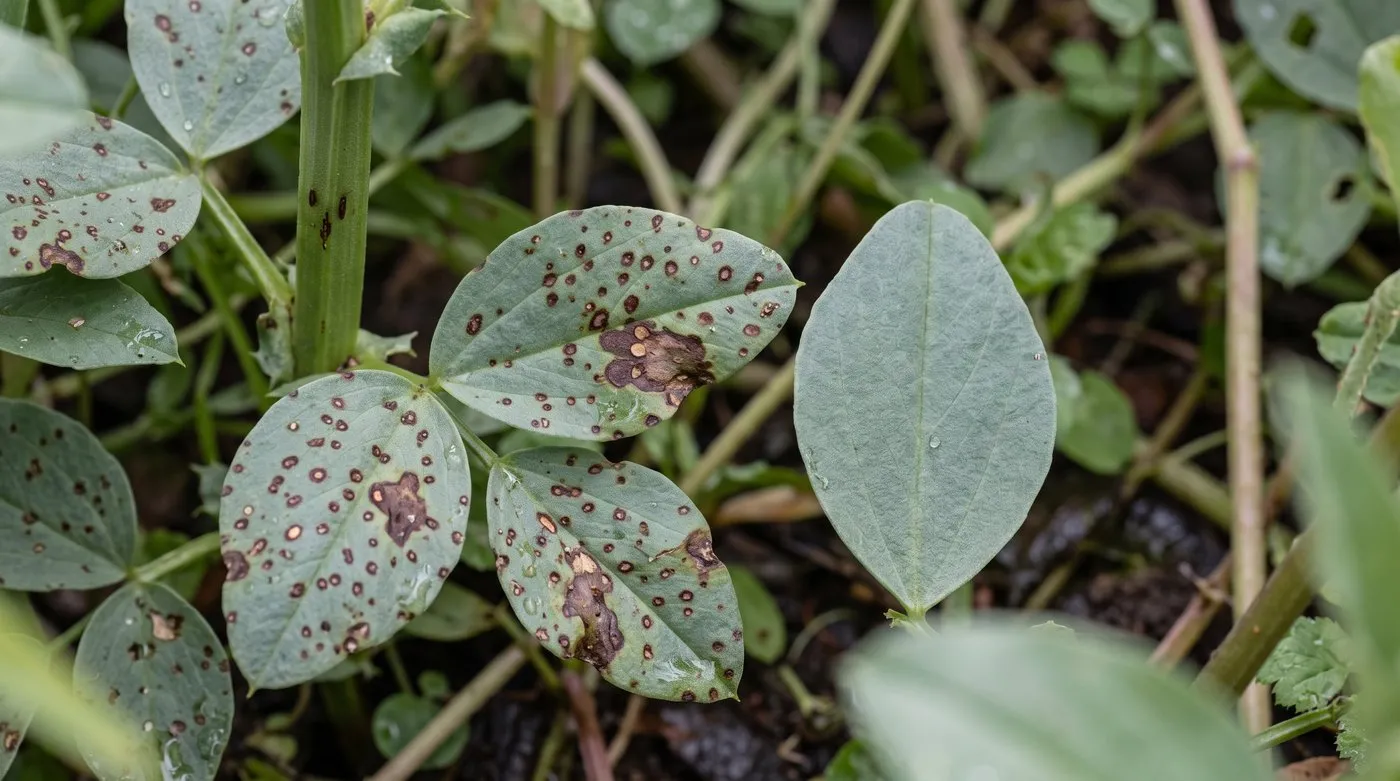
Chocolate spot loves damp, crowded beds. Proper spacing and watering at the base go a long way to keeping it in check.
Pea and bean weevil
Small grey-brown beetles nibble U-shaped notches in leaf edges. It looks bad but rarely affects the crop, as bigger plants simply outgrow it. Cover young seedlings with fleece if weevils are a problem in your garden.
Mice
Mice love freshly sown beans, especially in autumn. Starting beans in pots under cover avoids the problem. For beans sown outside, some gardeners lay prickly holly leaves along the row. Traps work best if mice keep coming back.
Why are my broad bean flowers not setting pods?
Usually dry soil or not enough bees. Thirsty plants drop flowers instead of setting pods.
Bumblebees do most of the pollinating. In a cold, wet or windy spring, fewer bees fly, so fewer flowers set. Some flower drop is normal anyway. Water well as flowering starts, and grow early bee plants like comfrey or lungwort nearby. Pods usually form once it warms up and the bees are busy.
Month-by-month broad bean calendar
| Month | What to do |
|---|---|
| January | Order seed. Start Aquadulce Claudia in pots under cover if you missed autumn |
| February | Sow spring varieties in pots or under cloches |
| March | Sow outdoors. Plant out pot-grown beans. Weed autumn sowings |
| April | Last outdoor sowings. Start supporting tall varieties |
| May | Water when flowering starts. Watch for blackfly. Pinch out tips once small pods form |
| June | Pick autumn-sown beans. Pinch out spring-sown plants. Keep picking |
| July | Main harvest for spring sowings. Pick pods young |
| August | Last pickings. Clear plants but leave the roots in |
| September | Get beds ready for autumn sowing |
| October | Sow Aquadulce Claudia for overwintering. Protect from mice |
| November | Last autumn sowings |
| December | Check autumn sowings. Nothing else to do |
How to harvest broad beans
Pick pods when they’re full but the beans inside are still small, and the scar where the bean joins the pod is white or pale green. Once the scar turns black, the beans get floury.
The lowest pods are ready first, so work your way up over a few weeks. Snap or cut the pods off rather than pulling, which can uproot the plant.
Check every few days at peak time, as pods quickly grow past their best.
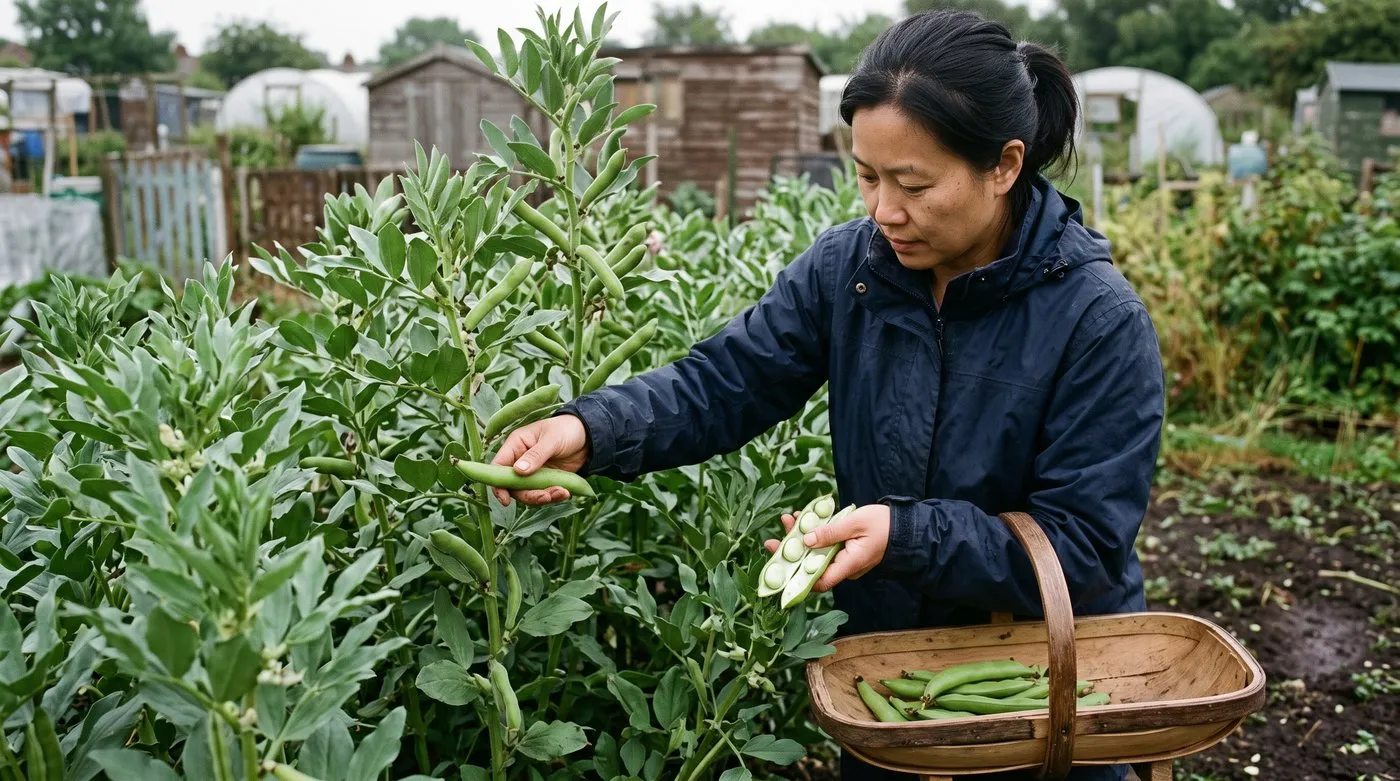
Pick while the beans are about thumbnail size and the scar is still pale. Once it turns black, the beans go floury.
Harvesting for different uses
| Stage | Beans | Best for |
|---|---|---|
| Very young | Pods about 5cm long | Eat the whole pod |
| Young | Small, about thumbnail size | Eating fresh, salads, risotto |
| Medium | A bit bigger, still pale green | Steaming, everyday cooking |
| Old | Large and grey-green | Soups, stews |
Handy tip: Very young pods, about 5cm long, can be eaten whole. Slice them on the slant and stir-fry for a minute or two.
Storing and freezing broad beans
Freeze them for later, as fresh beans only keep a few days in the fridge.
How to freeze broad beans
- Pop the beans out of their pods
- Blanch in boiling water for 2 minutes
- Plunge straight into iced water for 2 minutes
- Drain well
- Spread on a tray and freeze for an hour
- Tip into labelled freezer bags
Tray-freezing first stops them sticking together, so you can pour out just what you need. They keep their flavour and colour for months.
Double podding
For the best beans, double pod them. After shelling, blanch briefly, then slip off the pale inner skin to reveal the bright green bean inside. They’re more tender and look gorgeous on the plate.
What should I do with broad bean plants after harvest?
Cut the plants off at ground level and compost the tops. Leave the roots in the soil to rot down, or dig the whole plants in.
Clear away plants badly hit by chocolate spot or rust straight away. The bed is then free for a follow-on crop in mid to late summer, like quick salads, a green manure or spring cabbage. Don’t grow broad beans or peas there again for three or four years.
If you spot notches on the leaf edges, see our guide to controlling pea and bean weevil.
Common mistakes when growing broad beans
The big ones are sowing late, skipping the pinch-out, picking late and crowding.
Sowing too late. Beans sown after mid-April hit peak blackfly time and hot weather. Get spring sowings in by early April.
Not pinching out. Soft tips left on are an open invitation to blackfly, and the plant grows taller instead of filling its pods.
Picking too late. Big fat pods look impressive, but the beans inside are tough and floury. Pick at thumbnail size. Any big ones can go in soups.
Crowding. Plants squeezed together get more chocolate spot. Stick to 23cm in the row and 60cm between double rows.
Skipping crop rotation. Growing beans in the same spot every year builds up problems in the soil. Move them around on a three or four-year cycle.
Pulling up the roots. When you clear plants, cut the stems and leave the roots in the ground to rot down.
Broad beans and soil fertility
Broad beans add a little nitrogen to the soil. Like peas and other legumes, they team up with soil bacteria that live in small lumps, called nodules, on their roots. These turn nitrogen from the air into plant food.
Most of it ends up in the beans you eat, so the boost to the soil is modest. Still, it’s a good idea to follow them with hungry crops like cabbage, broccoli or kale next year.
Want a look? Lift one plant at the end of the season and check the roots. The nodules are small, round lumps. Pink inside means they’ve been busy working.
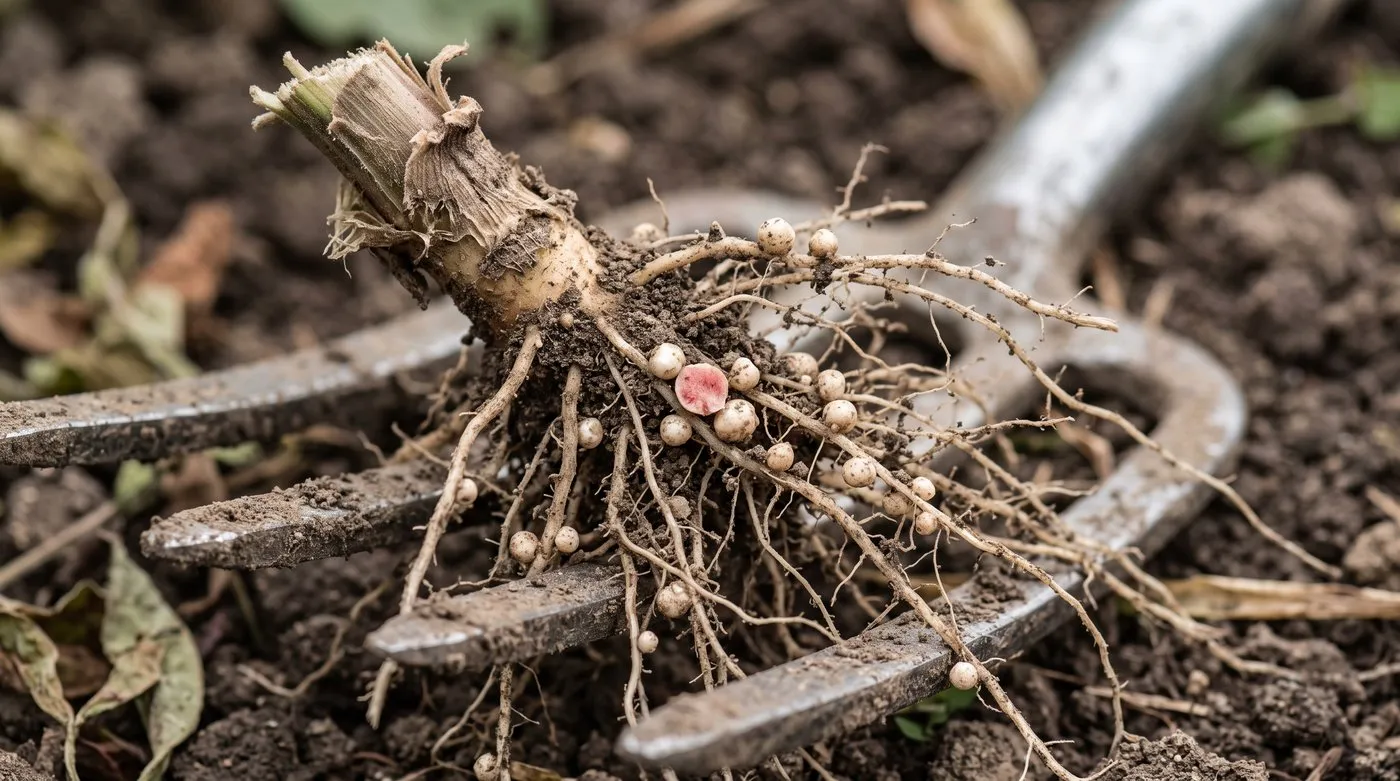
Those little lumps on the roots are nodules, where soil bacteria fix nitrogen. Pink inside means they’ve been busy, so leave the roots in to rot down.
Growing broad beans in containers
Grow a dwarf variety like The Sutton in pots. At about 50cm tall it usually needs no staking. Use a pot at least 30cm deep and 40cm wide, or a growing bag for four to six plants.
Fill with multipurpose compost and sow beans 5cm deep and 15cm apart. Water regularly but don’t let the compost get soggy. Feed every two weeks with tomato feed once the first flowers appear.
Pots of broad beans look great on patios and balconies. They also do well in raised beds, where the good drainage suits them.
Companion planting with broad beans
Low crops like lettuce and spinach grow happily in the light shade between rows.
Good neighbours include potatoes, spinach, lettuce, sweetcorn and summer savory.
Gardeners traditionally keep them away from onions, garlic and other alliums, though that’s based on tradition rather than proof.
After clearing the beans in late summer, use the bed for a follow-on crop. Quick salads, green manures or overwintering cabbages all work well. Check our planting calendar for timings.
Now you’ve got broad beans sorted, read our guide on growing peas in the UK for your next legume.
Growing broad beans is easy and rewarding
Broad beans ask very little of you. Sow in October, sow again in February, and you’ll have fresh beans from early summer into late summer, with plenty to freeze.
Frequently asked questions
When should I sow broad beans in the UK?
Sow in October to November or February to April. Autumn sowings of hardy varieties like Aquadulce Claudia give the earliest beans in June. Spring sowings crop from July. In northern England and Scotland, sowing from March is more reliable than autumn, as more plants are lost over winter.
Can I sow broad beans in autumn?
Yes, autumn sowing works well in most of the UK. Sow Aquadulce Claudia or Super Aquadulce in late October or November. They grow slowly over winter and crop weeks earlier than spring sowings. Use cloches on very exposed sites. It’s less reliable in Scotland and the north.
How do I stop blackfly on broad beans?
Pinch out the tips once the lowest flowers have formed small pods. Blackfly love the soft tips, so removing them takes away their favourite spot. If they’ve already arrived, squash small groups, pinch off infested tips or blast them off with water.
How far apart should I plant broad beans?
Space plants 23cm apart in double rows, with 23cm between the two rows. Leave 60cm between each pair of rows so you can get in to pick. The plants in a double row lean on each other, which helps keep them upright.
Why are my broad beans going black?
It’s usually chocolate spot, a common fungal disease. You’ll see dark brown spots on leaves, stems and pods. It’s worse in damp, crowded conditions. Space plants properly, water at the base and remove badly affected leaves. Autumn-sown plants get it more, as they sit through a wet winter.
Do broad beans need staking?
Tall varieties over 90cm need support. Push a cane in at each corner of the row and run string along both sides every 30cm as they grow. Dwarf varieties like The Sutton stay at about 50cm and usually don’t need staking.
Can I freeze broad beans?
Yes, broad beans freeze really well. Pick them young, blanch for two minutes, cool in iced water, drain and freeze on a tray before bagging. Double-podded beans, with the pale inner skin slipped off, freeze best and stay bright green for months.
Our team produces practical UK gardening guidance from source research, contributor records and established horticultural practice. Editorial standards are overseen by Matt W.


