
Key takeaways
- Sow outdoors from March to June once the soil has warmed, or in modules indoors from February
- Sow a new batch every three or four weeks for peas from June to October
- Peas make their own nitrogen, so most soils need no fertiliser
- Put supports in when you sow or as soon as the seedlings show
- Dodge pea moth by timing sowings or growing under insect mesh
- Water well when they start to flower and again two weeks later, then pick every two or three days
Peas are one of the joys of a British veg patch. Eaten straight from the plant, they’re far sweeter than shop-bought, because their sugar starts turning to starch soon after picking. They’re easy too. They make their own nitrogen and need little fuss once they’re up.
Our cool, damp climate suits peas well. They only really struggle in hot, dry summers. Sow a few batches from March to June and you can pick from early summer to October. To compare shelling peas, mangetout and sugar snaps, see our guide to the best pea varieties for UK gardens.
Types of peas to grow
There are four main types: garden peas, mangetout, sugar snaps and petit pois. Each one suits a different job in the kitchen.
Garden peas (shelling peas) are the classic. You pop the peas out of the pod and throw the pod away. They freeze well and taste wonderful fresh.
Mangetout have flat, tender pods picked before the peas swell. You eat the whole pod, usually stir-fried or steamed.
Sugar snap peas have plump, round pods with peas inside, but the pod is still tender enough to eat whole. Lovely raw.
Petit pois are small, sweet garden peas. The pods are smaller and you get fewer, but the flavour is excellent.
The seed comes in two kinds too. Smooth, round seeds are tougher, so they suit early and autumn sowings. Wrinkled seeds are sweeter and best sown from late spring.
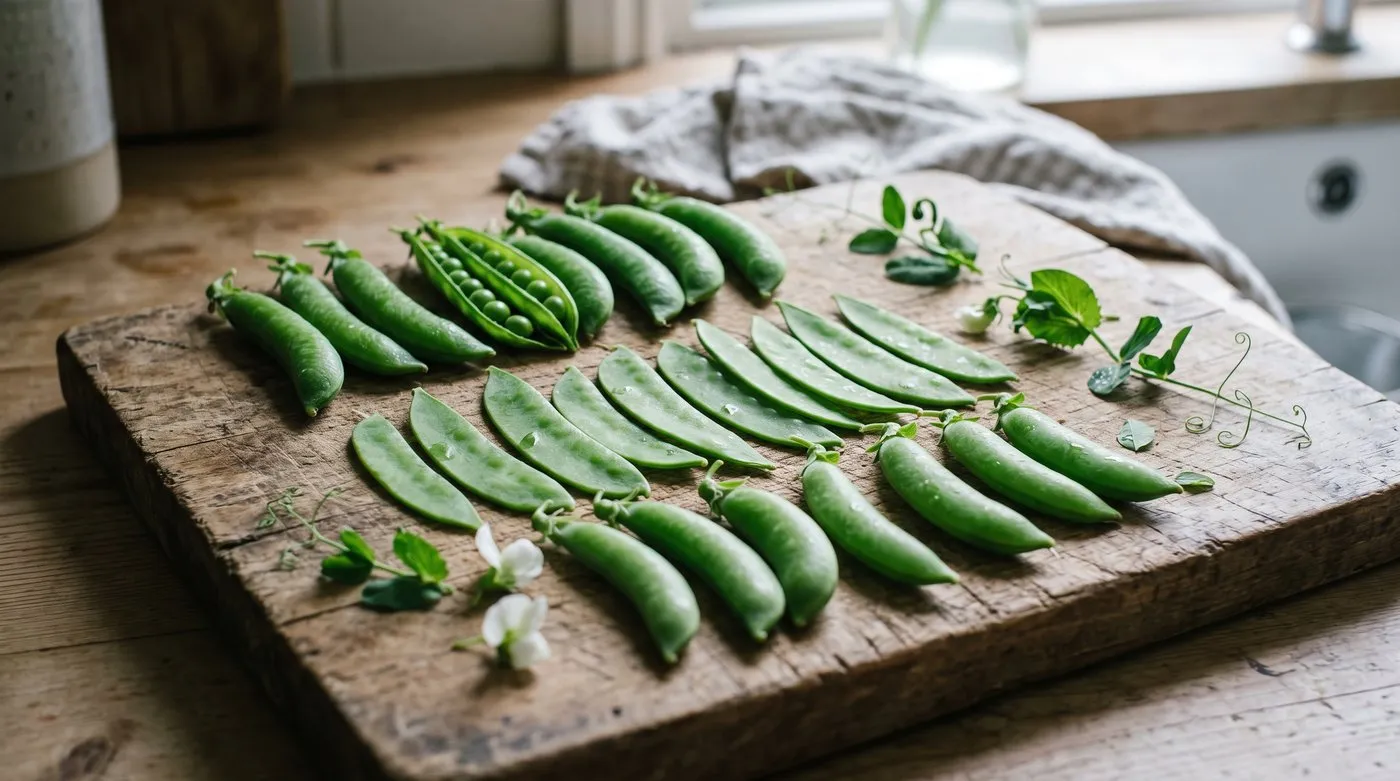
Shelling peas on the left, flat mangetout in the middle and sugar snaps on the right. You eat the whole pod of the last two.
Choosing varieties for UK gardens
Pick varieties to suit your space, when you’d like to pick, and how you like to eat them. The RHS pea growing guide lists varieties with its Award of Garden Merit (AGM).
Varieties side by side
| Variety | Type | Height | When it crops | Good for |
|---|---|---|---|---|
| Kelvedon Wonder (AGM) | Garden pea | 45cm | Early | Beginners, small gardens, pots |
| Hurst Green Shaft (AGM) | Garden pea | 75cm | Main season | Big crops |
| Jaguar (AGM) | Garden pea | Medium | Second early | Resisting powdery mildew |
| Alderman | Garden pea | 150-180cm | Main season | Tall supports, big gardens |
| Meteor | Garden pea | Dwarf | Early, round-seeded | Autumn and very early sowings |
| Oregon Sugar Pod | Mangetout | 100cm | Early | Stir-fries |
| Delikett (AGM) | Sugar snap | Dwarf | Early | Eating raw, children’s gardens |
| Waverex | Petit pois | 50-60cm | Main season | Cooking, freezing |
Early varieties start cropping about 12 weeks after sowing. Second earlies take a week or two longer, and main-season varieties a little longer again.
Early and dwarf varieties
Kelvedon Wonder is a compact early pea with an RHS AGM. It grows to about 45cm, needs only light support, and you can also sow it later in the season. Great for beginners and small spaces.
Meteor is a dwarf, round-seeded pea. It’s tough, so it’s a traditional choice for autumn sowings that sit through winter, and for the earliest spring sowings under cloches.
Main-season varieties
Hurst Green Shaft is a popular main-season pea with an RHS AGM. It grows about 75cm tall and makes long pods, usually in pairs, so picking is quick.
Alderman is a tall old variety that needs strong supports. It crops for several weeks and suits gardeners with room.
Mangetout and sugar snap
Oregon Sugar Pod gives wide, flat, tender pods. Pick mangetout and sugar snaps when they’re about 7.5cm long.
Delikett is a dwarf sugar snap with an RHS AGM. Eat the pods whole or leave them to fill out for shelling. Children love picking them straight off the plant.
When and how to sow peas
Sow outdoors from March to June, once the soil has warmed to about 10C. Peas like it cool and crop poorly in hot, dry spells.
When to sow
| When | How | Varieties | Pick |
|---|---|---|---|
| October to November | Outside in mild, well-drained spots, or under cover | Hardy round-seeded types such as Meteor, Feltham First | May to June |
| February to March | Modules indoors or under cloches | Early types such as Kelvedon Wonder, Meteor | June |
| March to April | Straight into the ground | All types | June to July |
| April to May | Straight into the ground | Main-season types such as Hurst Green Shaft | July to August |
| May to June | Straight into the ground | Quick early types, sugar snaps | August to October |
Sowing little and often is the secret to a long season. Sow a new batch every three or four weeks from March to June, or sow early, second early and main-season varieties together. Our UK vegetable planting calendar shows how peas fit in with everything else.
Sowing straight into the ground
Peas don’t like having their roots disturbed, so most gardeners sow them where they’ll grow. For dwarf varieties, a wide, shallow trench works well.
- Make a flat-bottomed trench 5cm deep and 15cm wide with a hoe
- Sow the peas about 7.5cm apart in three staggered rows in the trench
- Cover with soil and firm gently
- Water well if the soil is dry
- Cover with netting or fleece to keep off mice and pigeons
For tall varieties, sow 7.5cm apart in a single or double row. Leave a gap between rows about as wide as the plants are tall.
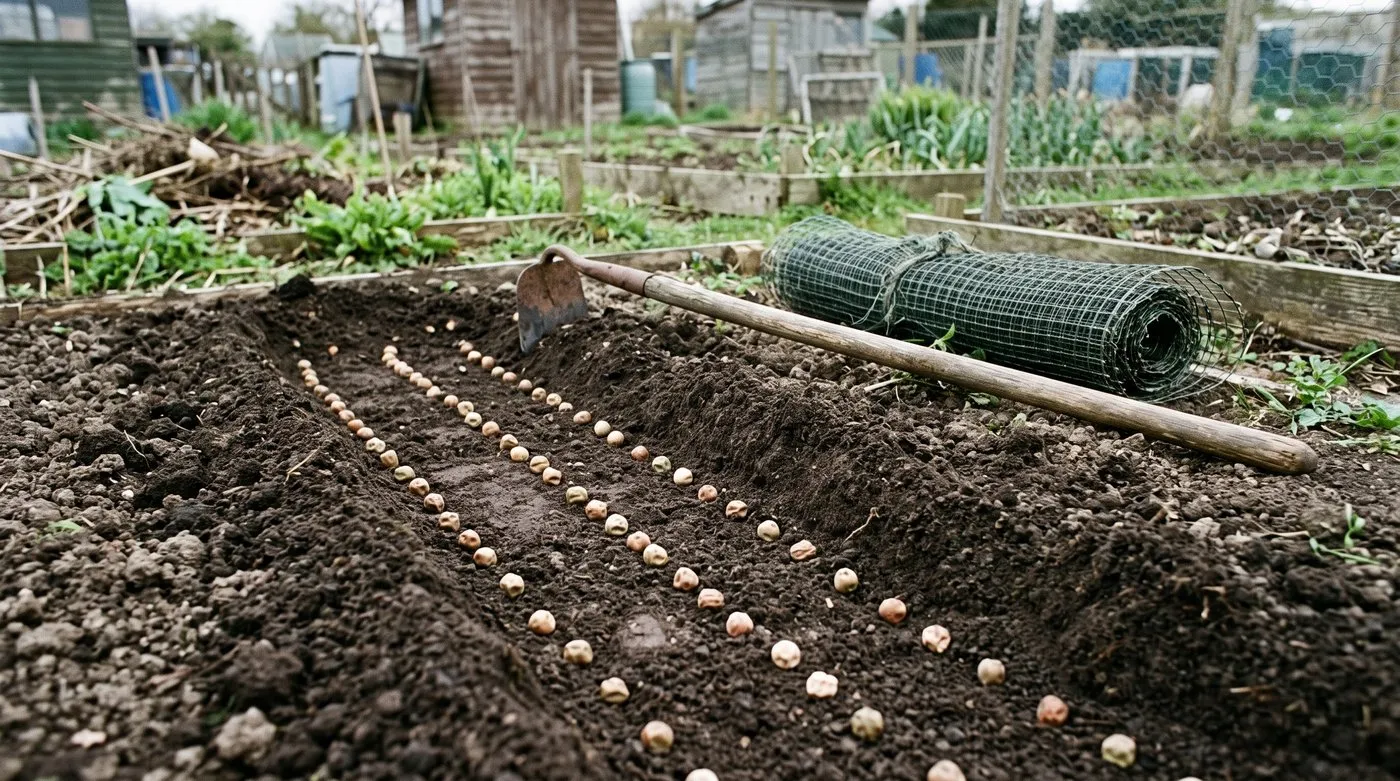
Three staggered rows in a wide trench suits dwarf peas well. Cover with netting straight away, as mice and pigeons love fresh pea seed.
Starting peas indoors
In a cold, wet spring, or if mice keep stealing your seed, start peas indoors. Sow them about 5cm deep in a length of guttering filled with compost. Keep it in a greenhouse, cold frame or on a bright windowsill. When the seedlings are 8-10cm tall, slide the whole row out of the gutter into a ready-made trench. Our guide to sowing seeds indoors shows how.
Deep modules, toilet roll tubes or root trainers work too, with up to three seeds per pot. Toilet roll tubes simply rot away in the soil.
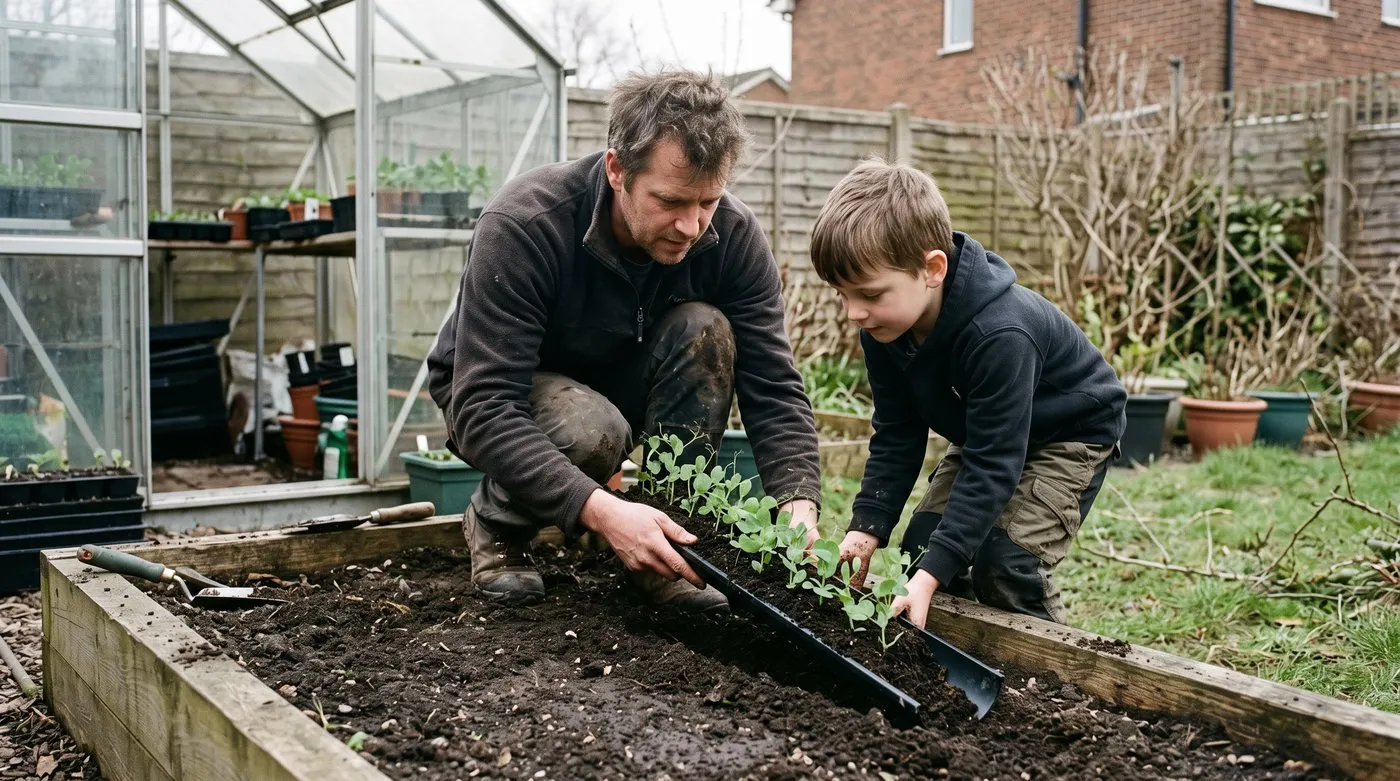
Gutter-sown peas slide straight out into a trench with their roots barely disturbed. It’s a handy way round cold soil and hungry mice.
Supporting pea plants
Every pea needs some support. Without it, the plants flop, pods rot on wet soil, and picking becomes a chore.
Support options
Pea sticks are the traditional choice for dwarf varieties. These are twiggy branches pushed into the soil along the row. Hazel and birch are best, as their fine twigs give the tendrils plenty to grab. Push them in firmly when the seedlings appear.
Netting or chicken wire stretched between posts or canes suits tall varieties and long rows. Fix it at both ends and along the top so it stays tight. Make sure the supports are tall and sturdy, especially in a windy spot.
Canes and string suit small spaces. Push canes in 30cm apart and run string across between them every 15cm.
For tall varieties like Alderman, use 2m canes or posts with wires. A row heavy with pods catches a lot of summer wind.
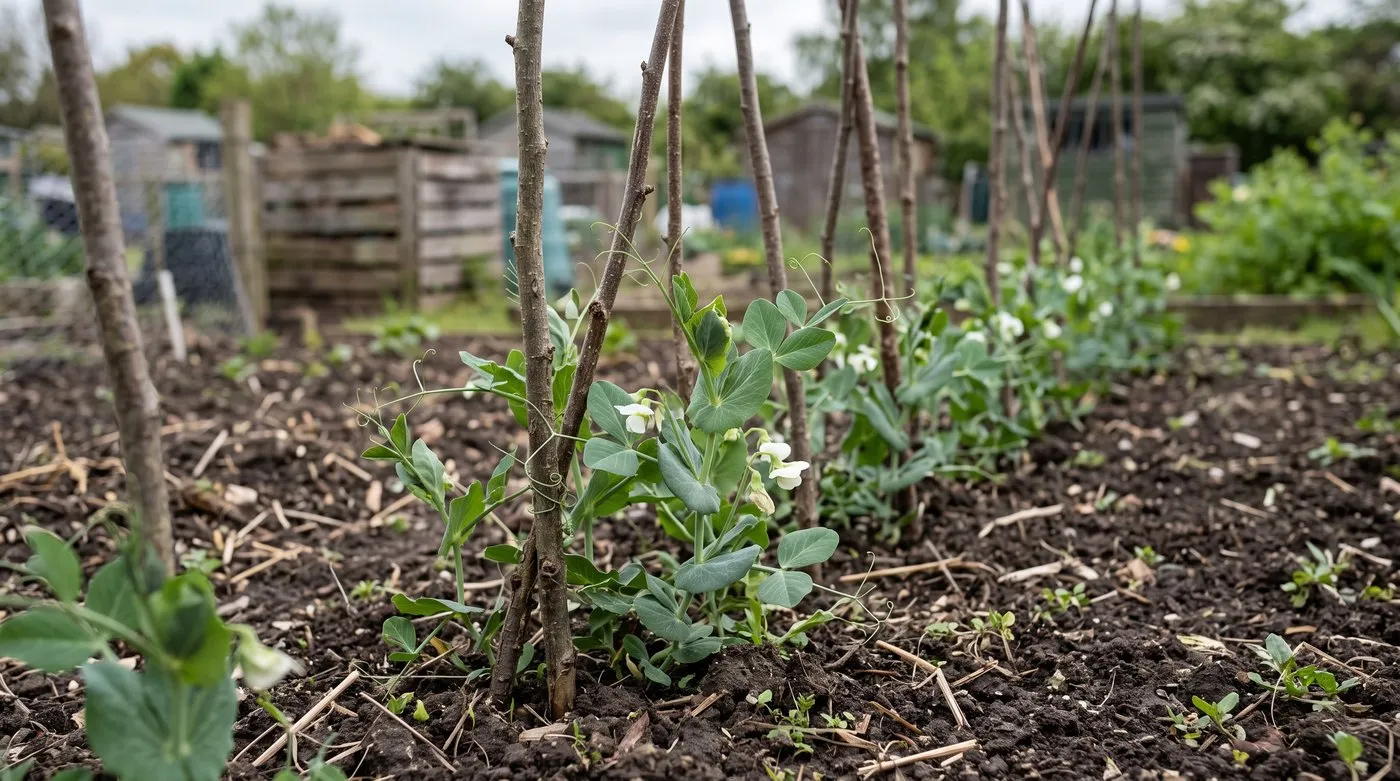
Twiggy hazel or birch gives tendrils lots to grab. Push the sticks in as soon as the seedlings show, before the peas flop.
Watering, feeding and soil care
Peas need very little feed, but they do need steady moisture when they flower. Their roots have little lumps, called nodules, that take nitrogen from the air and feed the plant.
That means peas usually need no fertiliser. Extra nitrogen just gives you leaves instead of pods. Dig in some garden compost before sowing, and mulch with about 5cm of compost afterwards to hold in moisture.
How often should you water peas?
Water well when they start to flower, and again two weeks later. That helps the pods swell, and it’s when dry soil hurts the crop most.
Before flowering, peas in the ground rarely need watering unless there’s a long dry spell. Too much water early on gives you leaves rather than pods. Once they’re cropping, check the soil often and give a good soak when it’s dry a few centimetres down. Water the soil, not the leaves, to help keep mildew away. Peas in pots dry out fast and may need water every day in warm weather. Give pot-grown peas a tomato feed every two weeks once they flower.
Leaving the roots in
When you clear your peas, cut the stems at ground level and leave the roots in the soil. They break down and give a little goodness back to the soil, though most of it has gone into the peas. That’s why peas are traditionally followed by cabbages and other brassicas in a vegetable garden.
Gardener’s tip: When your peas finish, cut the stems at ground level and compost them. Leave the roots to rot down over winter.
Growing peas in raised beds and containers
Peas grow well in raised beds and pots, which is handy if you don’t have much open ground.
Raised beds
A standard 1.2m wide raised bed is ideal. Sow two or three rows along the bed, with supports for each. The better drainage helps in wet springs, when seed can rot in heavy clay.
Containers
Dwarf varieties like Kelvedon Wonder and Half Pint grow well in big pots and troughs. Use a container at least 30cm deep and 45cm wide. Fill with multipurpose compost and sow 5cm deep and about 5cm apart. Push in some twiggy sticks or a little trellis for support.
Mangetout and sugar snaps look great in large pots with a trellis against a sunny wall. Their white or purple flowers make a pretty patio display.
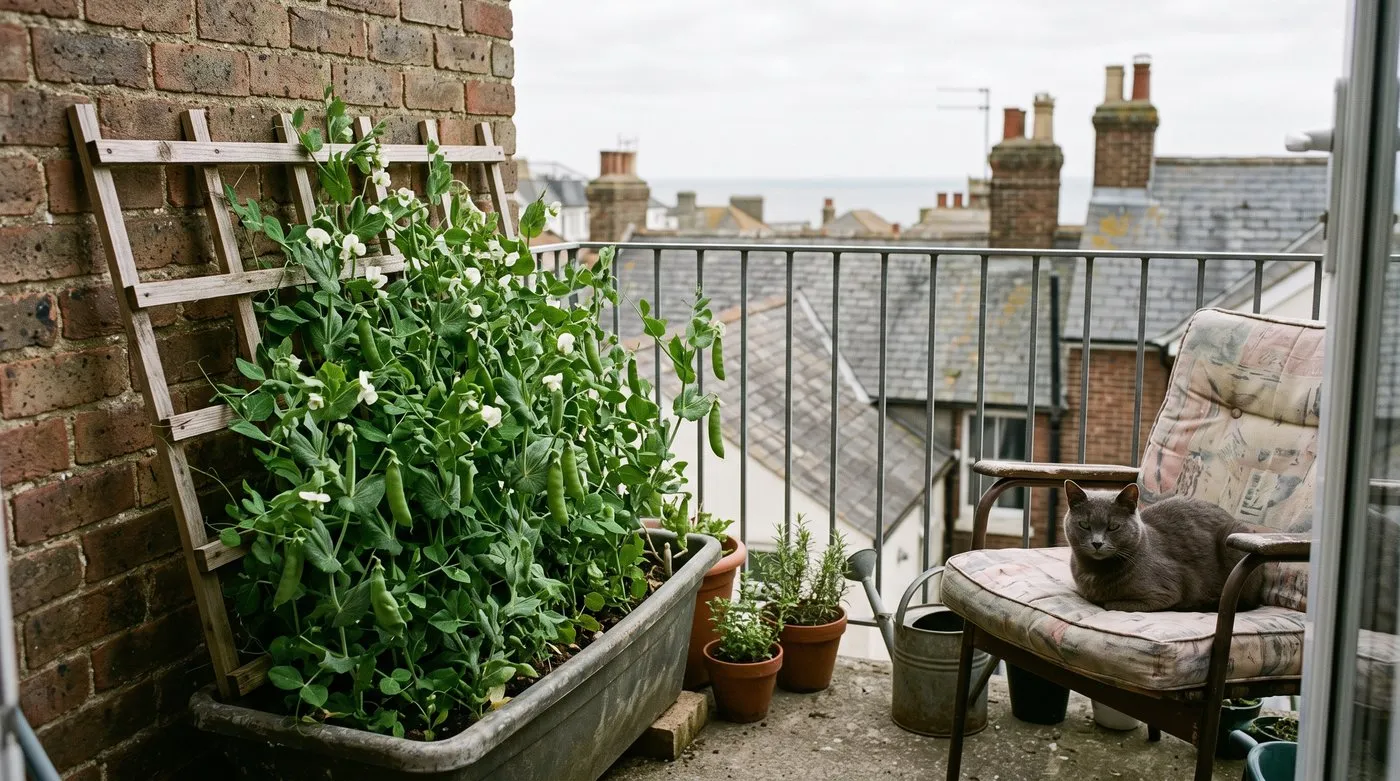
Dwarf peas are happy in a trough at least 30cm deep. A little trellis against a sunny wall gives them something to climb.
How do you grow pea shoots?
Pea shoots are young pea plants snipped at 10-15cm tall, usually three or four weeks after sowing. You can grow them indoors any time of year.
Fill a seed tray with peat-free multipurpose compost. Sow peas about 2.5cm deep and 2.5cm apart, much closer than for pods. Any variety works, and some seed is sold just for shoots. Keep the tray watered and somewhere bright, like a sunny windowsill. Cut the stems about 2.5cm above the compost, and they’ll often regrow for a second, smaller cut. They’re a great winter crop when little grows outside. You can pinch a few tips off garden peas too, but take too many and you’ll get fewer pods.
Month-by-month pea calendar
| Month | What to do |
|---|---|
| January | Order seed. Plan where your supports will go |
| February | Sow in modules indoors, or under cloches in mild areas. Add compost to beds |
| March | First outdoor sowing once the soil has warmed. Cover with fleece in cold spells |
| April | Second sowing. Put supports in for earlier sowings |
| May | Third sowing. Water when plants start to flower |
| June | Last sowing. Start picking early peas every two or three days. Pea moth about |
| July | Main picking time. Keep picking to get more pods. Pea moth about |
| August | Pick later sowings. Leave some pods to dry for seed |
| September | Clear finished plants, leaving the roots in. Plant brassicas or sow green manure |
| October | Sow hardy round-seeded peas like Meteor to overwinter in mild areas |
Dealing with pea moth
Pea moth is a common pest of garden peas in the UK. The moths fly in June and July and lay eggs on peas in flower. The caterpillars then tunnel into the pods and eat the peas. You usually find out when you’re shelling: a little caterpillar next to some half-eaten peas. The RHS pea moth page has photos.
Beat it with timing
The easiest fix is making sure your peas aren’t in flower while the moths are laying.
- Early sowings of quick varieties, made indoors or under cloches in February and March, can flower before the moths are about.
- Late sowings of quick varieties, made in late May or June, flower after the busiest time.
- April sowings usually flower right when the moths are busiest.
Mangetout are picked before the peas swell, so they usually escape.
Other ways to stop it
Cover plants with fine insect mesh or fleece from first flowering until the pods have filled. Peas pollinate themselves, so covering them doesn’t harm the crop. This is the best fix for April sowings.
Pheromone traps hung near the plants from June tell you whether moths are about, but they don’t stop them. Once the caterpillars are inside the pods, nothing can reach them, so prevention is the only answer.
Why do pea leaves turn white?
A white, powdery coating on leaves and pods is powdery mildew. It’s common from midsummer, especially on later sowings and plants that are dry at the roots.
Mildew rarely kills peas, but it weakens them and cuts the crop. Prevention works best. Space rows so air can move, water the soil in dry spells and mulch to hold in moisture. Jaguar resists mildew well, so it’s a good choice for summer sowings. Clear badly affected plants once they’ve finished, so they don’t spread it to later sowings nearby.
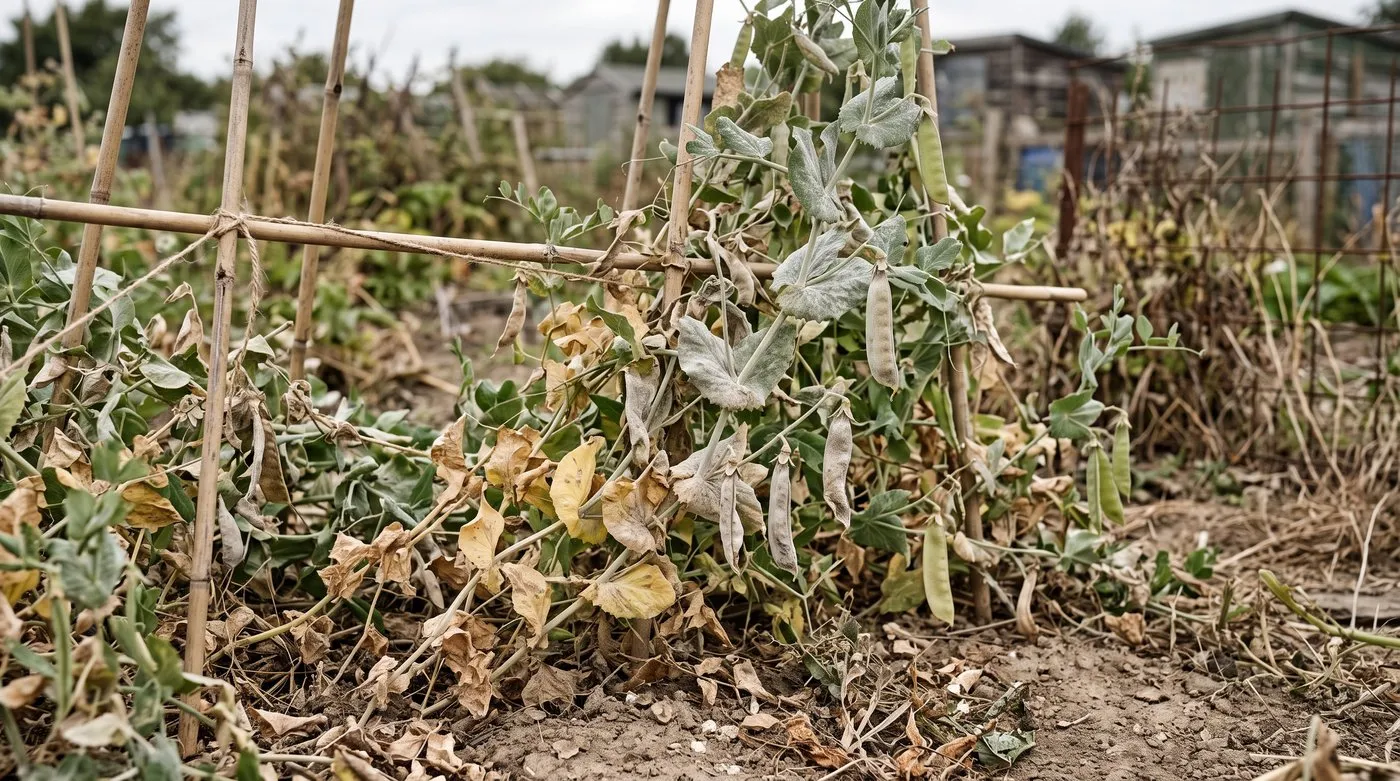
That white dusty coating is powdery mildew, common on later sowings in dry spells. Watering the soil and mulching helps keep it at bay.
Picking peas at the right time
Pick garden peas when the pods are well filled but still bright green. Peas turn from sweet to starchy within a few days, so don’t wait too long.
Garden peas
Pick when the pods are plump and you can feel the peas inside, before the pods start to dull. Try one. If the peas are sweet and tender, start picking. If they taste starchy, you’re a day or two late. Start at the bottom of the plant and work up, as the lowest pods ripen first.
Pick every two or three days. Leaving ripe pods on the plant slows down new ones.
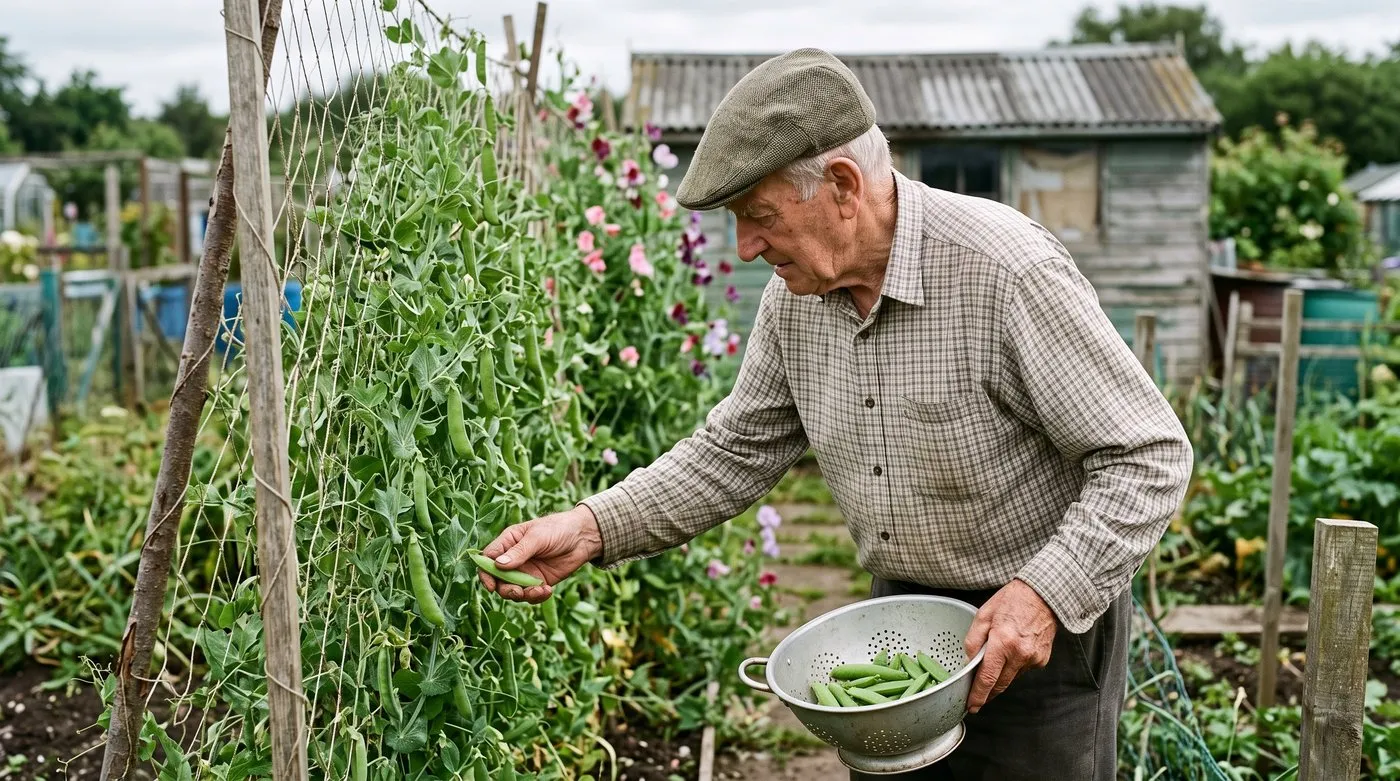
Start at the bottom of the plant, where the pods ripen first. Picking every two or three days keeps new pods coming.
Mangetout
Pick when the pods are flat, about 7.5cm long, and you can barely see the peas inside. Once you can see the bumps of the peas, they’re past their best for eating whole.
Sugar snap peas
Wait until the pods are plump and round, with peas inside. The pod should still be bright green and snap crisply when you bend it.
Saving pea seed
Peas are one of the easiest crops to save seed from. They pollinate themselves, so seed from ordinary (not F1) varieties usually grows just like the parent.
Choose your healthiest plants and leave a few pods unpicked. Let them dry on the plant until they’re brown and papery.
Pick the dry pods on a dry day. Shell the peas and spread them on a plate indoors for a week or two to finish drying. They should be rock hard. Store them in a labelled paper envelope, not plastic, somewhere cool and dry.
Kept like this, pea seed usually lasts about three years. To check it in spring, put 10 seeds on damp kitchen paper in a sealed bag. If most sprout within a week or so, it’s still good.
Gardener’s tip: Don’t save seed from F1 varieties, as the young plants won’t be the same. Stick to varieties like Kelvedon Wonder, Alderman and Hurst Green Shaft.
Common mistakes when growing peas
Sowing into cold, wet soil
Pea seed rots in cold, soggy ground. Wait until the soil has warmed to about 10C, or warm it under a cloche or fleece for a week first. On heavy clay, start peas indoors instead.
Leaving supports too late
Peas grow tendrils early. If there’s nothing to grab by the time they’re 10-15cm tall, they flop and tangle. Put supports in when you sow or as soon as the seedlings show.
Missing the moment to pick
In warm weather, garden peas go from perfect to starchy in a few days. Check every other day once the pods start filling, and keep picking.
Sowing everything at once
Sowing a whole packet at once gives you a glut, then nothing. Sow small batches every three or four weeks, or grow early and main-season varieties together.
Forgetting about mice and pigeons
Mice dig up freshly sown peas, and pigeons strip young seedlings. Cover rows with wire mesh, netting or cloches until the plants are growing well, or start them indoors.
Good companions and what to grow next
Peas fit into any veg rotation. The traditional order is potatoes, then peas and beans, then brassicas, then root crops.
Radishes are a great quick crop to sow between pea rows, as they’re ready before the peas need the room. Lettuce likes the light shade of taller peas in summer.
After clearing your peas, leave the roots in and plant autumn brassicas like kale, sprouting broccoli or spring cabbage. Our guide to making compost helps you keep your soil in good heart between crops.
Peas ask for little more than decent soil, some twiggy sticks and regular picking. In return you get peas far sweeter than anything in the shops.
Next, read our guide to growing radishes in the UK for a speedy crop to tuck between your pea rows.
If little notches appear on the leaf edges in spring, see our guide to controlling pea and bean weevil.
Frequently asked questions
When should I sow peas in the UK?
Sow outdoors from March to June, once the soil has warmed to about 10C. In cold areas that may mean waiting until April. You can start them in modules indoors from February. Sow a new batch every three or four weeks for a steady supply. Hardy round-seeded peas can also go in during autumn in mild, well-drained spots.
Do peas need feeding?
Usually not. Peas have little lumps on their roots that take nitrogen from the air and feed the plant. Extra nitrogen just gives you leaves instead of pods. Dig in compost before sowing. Peas in pots like a tomato feed every two weeks once they flower.
How do I support pea plants?
Push twiggy pea sticks into the soil along the row as the seedlings come up. Hazel and birch are ideal. For tall varieties, fix netting or chicken wire to sturdy posts or canes. Without support, plants flop, pods rot on wet soil and picking is a pain.
What is the best pea variety for beginners?
Kelvedon Wonder is a reliable choice. It’s a compact early pea with an RHS Award of Garden Merit, and you can sow it later in the season too. For eating pods and all, try the dwarf sugar snap Delikett, which also has the award.
Why are there maggots in my peas?
They’re pea moth caterpillars. The moths lay eggs on peas in flower in June and July, and the caterpillars feed inside the pods. Avoid them by sowing quick varieties early or late, so they flower outside that window, or grow peas under insect mesh.
Can I grow peas in containers?
Yes, dwarf varieties do well in pots. Try Kelvedon Wonder or Half Pint in a pot at least 30cm deep and 45cm wide, filled with multipurpose compost. Sow 5cm deep and add twiggy sticks for support. Water often, as pots dry out quickly.
How do I save pea seed for next year?
Leave the best pods on healthy plants until they turn brown and papery. Pick them, shell the peas and spread them on a plate indoors for a week or two to dry. Store them in a labelled paper envelope somewhere cool and dry, and use within about three years.
Our team produces practical UK gardening guidance from source research, contributor records and established horticultural practice. Editorial standards are overseen by Matt W.


