
Key takeaways
- Most healthy plants cope with a few aphids, so don't panic at the first sighting
- Squash small colonies or wash them off with a hose every few days
- Ladybirds, hoverflies and lacewings are your best helpers, so don't spray them away
- Pinch out broad bean tips once pods start forming to beat blackfly
- If you must spray, use an authorised product and spray in the evening when bees have gone home
Aphids are the most common pest in UK gardens. You’ll know them as greenfly on your roses, blackfly on your broad beans, or the curled, sticky leaves on your plum tree. They’re tiny, soft-bodied bugs that suck sap from soft new growth.
The good news is they’re one of the easiest pests to deal with. A garden full of different plants brings in ladybirds, hoverflies and birds that keep aphid numbers down for you. When numbers do get out of hand, there’s plenty you can do.
How to identify aphids
Aphids are small, pear-shaped bugs, from pinhead size up to a few millimetres long. They cluster under leaves, on shoot tips and around flower buds. Look closely and most have two little tubes sticking out of their back end.
Common UK aphids
Not all aphids are green. The colour depends on the type and sometimes on the plant.
| Aphid | Colour | Found on |
|---|---|---|
| Rose aphid | Green or pink | Roses |
| Black bean aphid (blackfly) | Black | Broad beans, runner beans, dahlias |
| Peach-potato aphid | Green, yellow or pink | Potatoes, lettuce, brassicas, peaches |
| Cabbage aphid | Grey-green and waxy | Cabbage, broccoli, kale, sprouts |
| Woolly aphid | Brown under white fluff | Apple, pyracantha |
| Lettuce root aphid | Yellow-white | Lettuce roots |
| Lupin aphid | Grey-green, large | Lupins |
Signs of aphid damage
You often spot the damage before the bugs. Look for:
- Curled or twisted leaves, especially on new shoots
- Sticky honeydew on the leaves below, which can turn black with sooty mould
- Ants running up and down stems, as they “farm” aphids for honeydew
- Yellow leaves and slow growth on young plants
- White papery skins that aphids shed as they grow

The honeydew doesn’t hurt plants itself, but black sooty mould on it blocks light from the leaves. A heavy attack can hold back young plants, and some aphids also spread plant viruses.
How aphids build up so fast
Knowing how aphids breed helps you see why a few become hundreds so quickly.
Spring and summer
Most aphids spend winter as eggs on woody plants. The eggs hatch in spring as the weather warms. Every aphid that hatches is female, and they give birth to live babies without needing to mate. Those babies are soon having babies of their own. That’s why a small colony can become a big one in a couple of weeks.
Winged aphids
When a plant gets crowded, aphids grow wings and fly off to find new plants. That’s why a clean plant can be covered almost overnight.
Autumn
In autumn, aphids mate and lay tough eggs on woody plants to get through winter. Blackfly use spindle trees and viburnum, and rose aphids lay on rose stems.
Organic ways to control aphids
No one method gets rid of every aphid. Use a few together and you’ll keep them down to numbers your plants can live with.
Squash them or wash them off
The simplest way is often the best. Squash small colonies between finger and thumb, or blast them off with a strong jet from the hose. Repeat every few days for a couple of weeks. On soft plants like lettuce, wipe them off with your fingers or a damp cloth.
On roses and fruit trees, you can also snip off badly covered shoot tips back to a healthy bud.
Broad bean tip: check your broad beans often from mid-May. Pinch out the top 10cm of each plant once the lowest four trusses have set pods. That removes the soft tips blackfly love. Our broad bean growing guide has more.
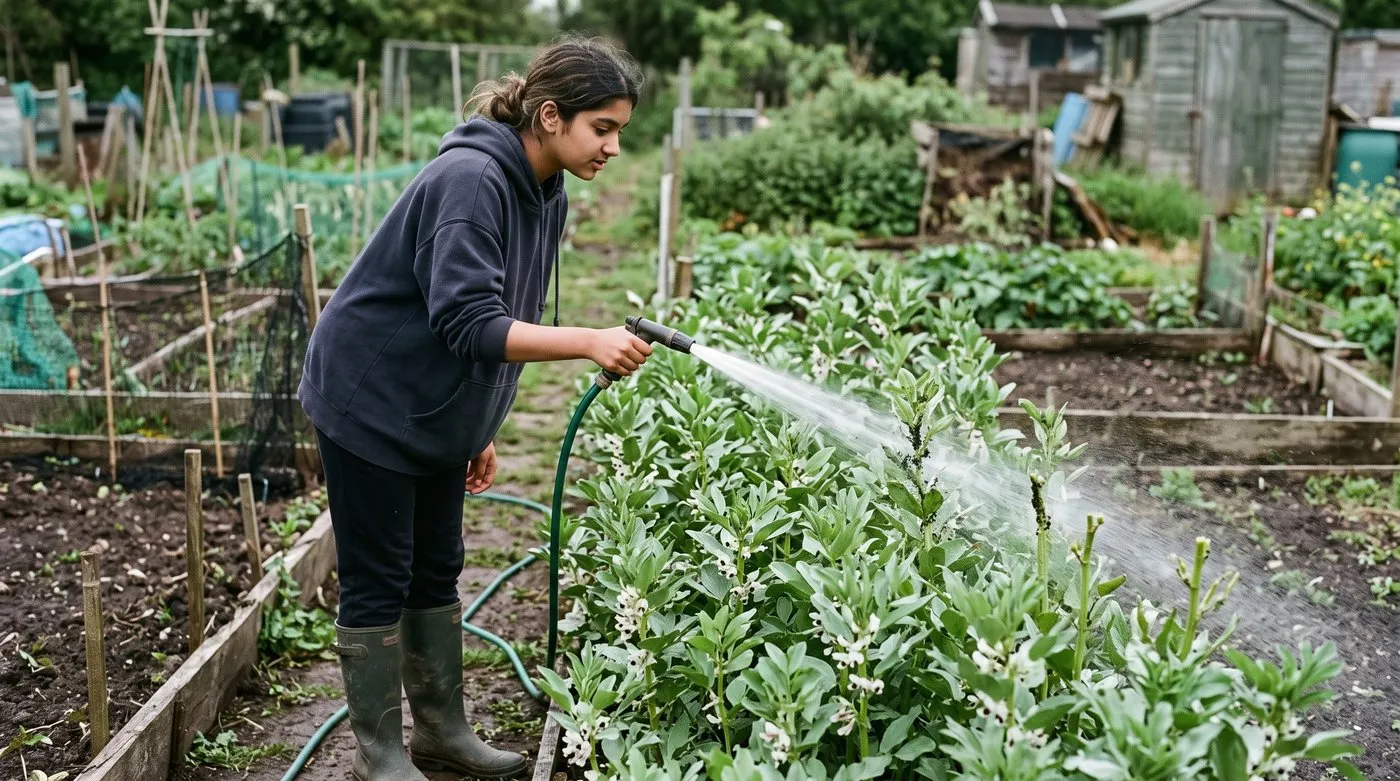
A strong jet of water knocks aphids off without harming the ladybirds and hoverflies that eat them. Repeat every few days for a couple of weeks.
Let nature help
Natural predators are your best long-term help, and they’re free.
Ladybirds and especially their larvae eat huge numbers of aphids. You can also buy ladybird larvae to release on badly hit plants.

Hoverfly larvae are aphid-eating machines too. The adults need flowers, so grow poached egg plant, fennel and yarrow to bring them in.
Lacewing larvae are hungry aphid hunters as well. You can buy them for greenhouses and polytunnels.
Parasitic wasps are tiny wasps that lay their eggs inside aphids, leaving behind hard, puffy “mummies”. You can buy them for use under glass. Release them as soon as you see the first aphids.
If you need a spray
Only reach for a spray after squashing, hosing and giving predators a chance. Use a product authorised for garden use and follow the label exactly. Home-made mixes such as washing-up liquid or neem oil aren’t authorised as pesticides in the UK.
- Insecticidal soap (fatty acids) only kills on contact, so spray the undersides of leaves too.
- Natural pyrethrum sprays kill fast on contact, but harm bees while wet.
Never spray while bees and hoverflies are about. Spray in the evening, and keep sprays off open flowers. Even organic sprays kill helpful insects they touch.
Companion planting for aphid control
Some plants may help keep aphids away, or lure in the insects that eat them. Results are mixed, so think of it as a helping hand rather than a cure. The RHS guide to aphids explains why a bit of patience pays off.

Strong-smelling companions
| Companion plant | Grow it near |
|---|---|
| French marigold | Tomatoes, beans, lettuce |
| Chives | Roses, carrots, tomatoes |
| Garlic | Roses, fruit trees |
| Lavender | Roses, paths and borders |
| Oregano | Brassicas, beans |
Trap crops
Nasturtiums are the classic trap crop, because aphids love them. Plant them at the ends of runner bean rows and around brassica beds. When they’re covered in aphids, pull them up and add them to the compost heap.
A few sacrificial broad beans, sown a couple of weeks before the main crop, catch the first blackfly. They also bring in ladybirds and hoverflies early, ready for your main crop.
Flowers that bring in the helpers
- Poached egg plant: a hoverfly magnet and easy to grow
- Fennel: let it flower for hoverflies and lacewings
- Calendula: sow it straight into the ground in spring
- Dill: sow a little every few weeks from April to July
- Yarrow: a tough perennial that tiny parasitic wasps love
Chemical sprays
If gentler ways haven’t worked, garden bug sprays are available. Always read the label and follow it exactly.
Contact sprays
These kill aphids they touch but don’t last. Cover the undersides of leaves well. Many contain a synthetic pyrethroid such as deltamethrin, which also kills ladybirds, hoverflies and bees. Keep them for a real emergency, and never spray open flowers.
Systemic sprays
Systemic bug killers are taken up into the plant and kill aphids as they feed. They last longer than contact sprays. Check the label for which plants they can be used on, especially fruit and veg.
Some older insecticides containing neonicotinoids, such as imidacloprid, are no longer allowed. Check the label if you have old bottles in the shed and dispose of them safely.
When to spray, if at all
| When | What to do |
|---|---|
| March to April | Watch for eggs hatching on rose stems and fruit buds |
| Late April to May | Deal with small colonies before they spread |
| May to June | Busiest time, so repeat as the label allows |
| July | Ease off, as predators are catching up |
| August to September | Treat odd spots only |
Month-by-month aphid calendar
| Month | What aphids are doing | What to do |
|---|---|---|
| January | Eggs on woody stems | Look over rose stems |
| February | Eggs still waiting | Prune roses and remove crossing stems |
| March | Eggs hatching | Check new growth often. Order any bought-in predators |
| April | First colonies | Release parasitic wasps under glass. Hose off colonies outside |
| May | Numbers rising fast | Pinch out broad bean tips. Release ladybird larvae |
| June | Peak numbers | Keep checking lettuce and brassicas |
| July | Winged aphids on the move | Predators busy, so spray less. Pull out badly hit plants |
| August | Numbers falling | Spot treat only |
| September | Mating begins | Clear old crops. Sow green manures |
| October | Eggs laid on woody plants | Tidy up. Thin out crowded rose growth |
| November | Quiet | Tidy the veg patch |
| December | Quiet | Plan next year’s companion planting |
Common mistakes with aphids
Spraying too early
A few aphids in April don’t need treating. They’re food for the first ladybirds and hoverflies. Kill them all and the predators have nothing to stay for. Wait until a colony is clearly growing.
Killing the good bugs too
Broad sprays wipe out ladybird, hoverfly and lacewing larvae along with the aphids. The aphids bounce back in days, the predators take weeks, and you end up spraying again and again. Squashing, hosing and helping predators are kinder.
Ignoring the ants
Ants guard aphids for their honeydew and chase off predators. If ants are marching up a stem, there are aphids at the top. A sticky band around the stem or trunk stops the ants getting up.
Relying on one method
Companion plants cut aphid numbers but won’t stop them. Sprays kill today’s aphids, but more fly in. Predators take a while to build up. Mix all three for the best results.
Not looking under leaves
Aphids hide under leaves. By the time you see curled leaves or sticky honeydew, the colony is big. From late April, turn over a few leaves on favourite plants every few days.
Aphids on popular UK plants
Roses
Green or pink aphids crowd onto rose buds and shoot tips from May. Squash them, pinch out the worst shoots, and grow chives or garlic chives nearby. Blue tits eat lots of aphids off roses, so a nest box nearby helps. Our guide to pruning roses shows how to keep bushes open and airy.
Broad beans and runner beans
Blackfly hit broad beans from mid-May. Pinch out the tips once pods start setting. For runner beans, check under the leaves every week. Nasturtiums nearby help both. Our runner bean guide covers timing and varieties.
Brassicas
Waxy grey cabbage aphids appear on brassicas from June, and water-based sprays just roll off them. Rub colonies off by hand. Fine insect mesh over the crop keeps aphids off, and cabbage white butterflies too. It’s the best protection for brassicas.
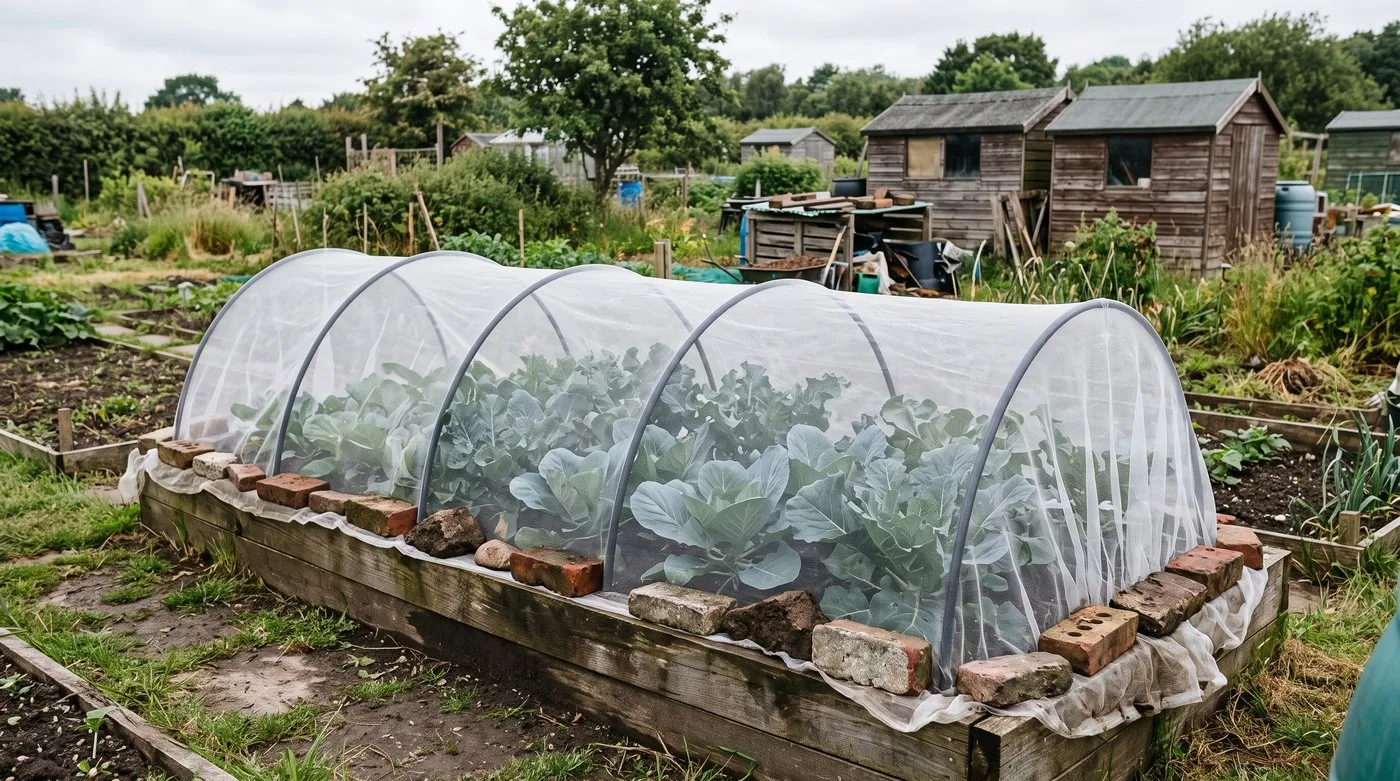
Cabbage aphids have a waxy coat that water just runs off. Fine mesh over hoops keeps them out, along with cabbage white butterflies.
Greenhouse and polytunnel crops
Aphids build up even faster in the warmth under glass. Release parasitic wasps in spring, before aphids get going. Open vents and doors on warm days. Keep an eye on cucumber and pepper plants, as aphids love them.
Related pest problems
If aphids are bothering you, a few other common problems may turn up too. Vine weevils love plants in pots. Tomato blight is the big worry for outdoor tomatoes in wet summers. Powdery mildew is common on stressed plants in dry weather.
Now you’ve got aphids under control, read our guide on organic pest control for a gentle approach to slugs, vine weevils and other common pests.
Frequently asked questions
What is the fastest way to get rid of aphids?
Squash them or blast them off with a hose. Repeat every few days for a couple of weeks. For a bad attack, use an authorised bug spray in the evening, and repeat as the label says. Then let ladybirds and hoverflies carry on the good work.
Do aphids come back after spraying?
Often, yes, within a few weeks. Winged aphids fly in from nearby gardens and hedges. Encouraging their natural enemies and checking plants regularly works better than spraying again and again.
What plants do aphids hate?
Strong-smelling plants like chives, garlic and French marigolds may help. Results are mixed, so treat them as a bonus rather than a cure. Nasturtiums work the other way, as aphids love them and leave your veg alone. Flowers that bring in hoverflies help most of all.
Are aphids harmful to humans?
No, they’re completely harmless to people. They can’t bite or sting. Their sticky honeydew can coat garden furniture and cars under trees, but it washes off.
When is aphid season in the UK?
Roughly late April to September. Numbers peak in May, June and July when it’s warm. A mild winter and warm spring usually means a bad aphid year. Numbers drop after the first autumn frosts.
Can I use washing-up liquid to kill aphids?
No, home-made washing-up liquid sprays aren’t authorised as pesticides in the UK. They can also damage soft leaves. Squash the aphids or wash them off with water instead. If you need a spray, buy an insecticidal soap made for the job and follow the label.
Do ladybirds really control aphids?
Yes, ladybirds and their larvae eat loads of aphids. The larvae are the real heroes, gobbling them up all day. Leave small colonies alone in spring so ladybirds have food and settle in. Avoiding sprays keeps them around.
Related guides
For more on the worst bean pest, see black bean aphid identification and control, with the broad bean tip-pinching method. For rabbits, deer, pigeons and badgers, our mammal and bird pests guide covers fencing and the law on badgers.
Our team produces practical UK gardening guidance from source research, contributor records and established horticultural practice. Editorial standards are overseen by Matt W.


