Key takeaways
- Prevention, barriers and helpful predators do most of the work
- Nematodes are a safe, targeted way to tackle slugs, vine weevil grubs and chafer grubs
- Fine insect mesh keeps carrot fly, cabbage whites and flea beetles off your crops
- Flowers like fennel, yarrow and poached egg plant bring in ladybirds and hoverflies
- Homemade sprays such as garlic, neem and soap mixes aren't legal pesticides in the UK
- Healthy soil grows strong plants that shrug off pests more easily
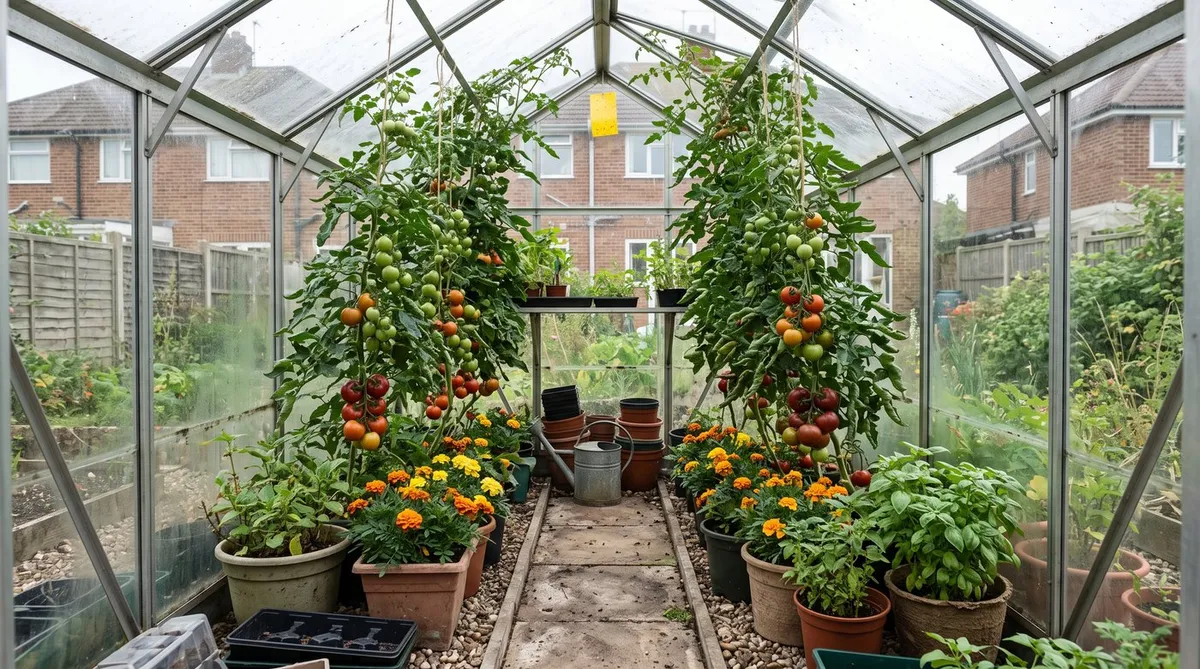
Organic pest control isn’t about putting up with nibbled plants and hoping for the best. It’s about stopping pests before they start, letting nature help, and stepping in gently when you need to.
The UK is full of ladybirds, hoverflies, beetles, birds, frogs and hedgehogs that love eating garden pests. Give them healthy soil, plenty of different plants and somewhere to live, and they’ll do much of the work for you.
Here’s how to do it, from nematodes and companion plants to netting and traps. It works for veg, fruit and flowers alike.
Why organic pest control works
Chemical insecticides kill the good bugs along with the bad. One spray can wipe out ladybirds, hoverflies, lacewings and ground beetles. When the pests come back, and they always do, there’s nothing left to eat them.
Organic gardening works with that balance instead. A few aphids feed the ladybirds. A few slugs feed the hedgehogs and thrushes. Most of the time, pests never get bad enough to need any action.
Garden Organic has lots of helpful advice on this. The longer you garden this way, the more settled things become, as predators move in and stay.
Biological controls for UK gardens
Biological controls use living creatures to tackle a particular pest. They’re the most targeted organic option you can buy.
Nematodes
Nematodes are tiny worms, far too small to see, that hunt down one kind of pest. You buy them by post, mix them with water and pour them on with a watering can.
| Nematode for | When to use | Soil needs to be |
|---|---|---|
| Slugs | March to October | Above 5C |
| Vine weevil grubs | Spring, and late summer to autumn | As the pack says, some work from 5C |
| Sciarid fly and thrips | March to October | Above 10C |
| Chafer grubs | July to October | Above 12C |
| Leatherjackets | September to October | Above 12C |
Water them in on an evening and keep the soil moist for two weeks. One dose lasts about six weeks, so a second dose later in the season helps with stubborn slug problems. Our guide on vine weevil treatment has more on using them.
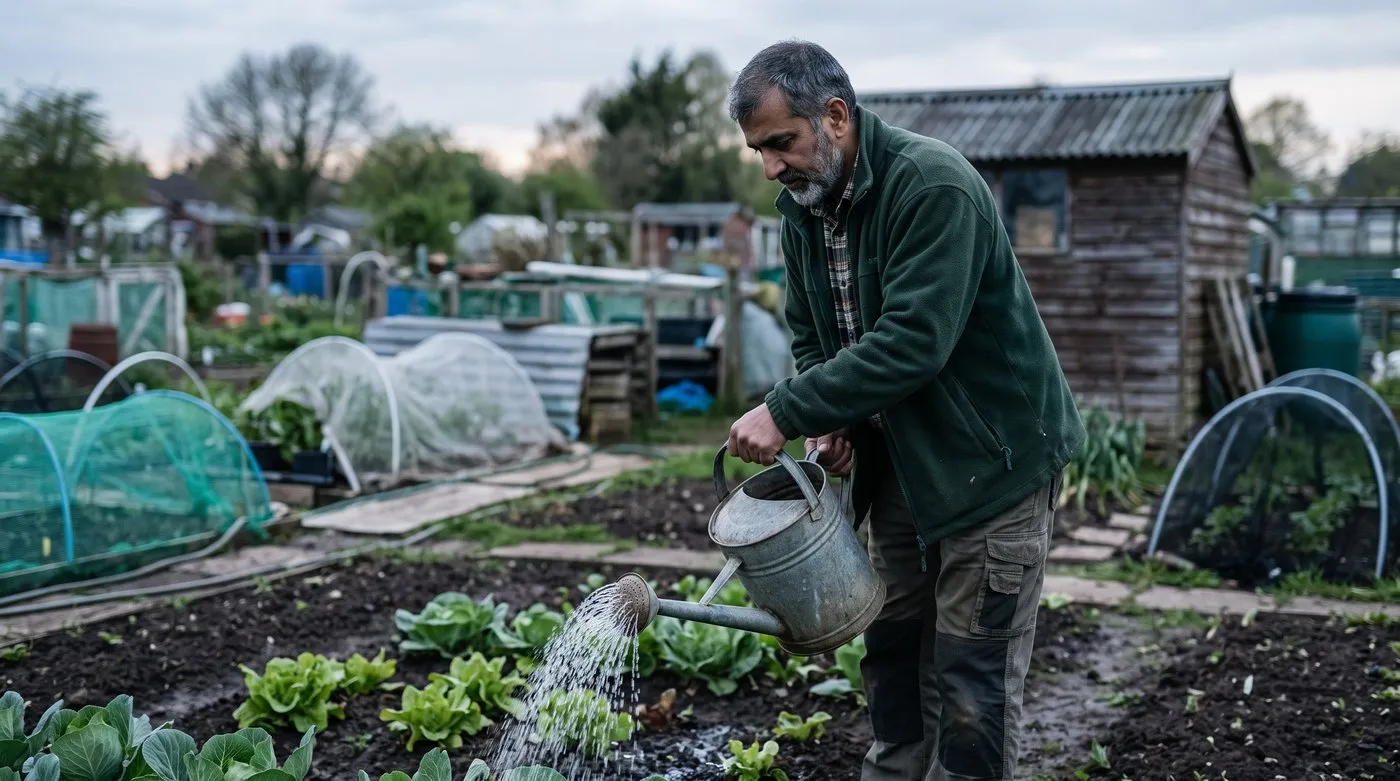
Nematodes go on with a watering can like any other drink for the bed. Do it on a mild evening and keep the soil moist for a couple of weeks after.
Ladybirds and lacewings
Ladybirds and lacewing larvae both eat huge numbers of aphids. You can buy them by post for greenhouses and gardens.
Release ladybirds onto aphid-covered plants in the evening. Lacewing larvae work best in greenhouses and polytunnels. Outdoors, it’s usually better to attract wild ones, as bought ones often fly off.
Parasitic wasps
These are tiny wasps, far too small to sting you. Encarsia tackles greenhouse whitefly, and Aphidius tackles aphids. They lay their eggs inside the pest, which kills it. They’re popular with professional growers and work best in a warm greenhouse.
Companion planting that actually works
Some companion planting tips are more folklore than fact. The ones below are the most useful. Our guide to common gardening myths looks at a few more.
Proven companion planting combinations
| Companion plant | Helps with | Plant it near |
|---|---|---|
| French marigolds | Whitefly | Tomatoes, peppers |
| Nasturtiums | Draws aphids away from crops | Beans, cabbages, courgettes |
| Onions, garlic and chives | Carrot fly | Carrots, parsnips |
| Poached egg plant | Brings in hoverflies | All through veg beds |
| Fennel, dill and yarrow | Brings in ladybirds and tiny helpful wasps | Edges of beds |
Plant companions right next to the crop. A row of marigolds 3 metres from your tomatoes won’t do much. Tuck them in between or around the plants instead.
Gardener’s tip: Nasturtiums are brilliant all-rounders. They lure aphids away from crops, their flowers are edible, and they seed themselves around. Plant them at the edges of raised beds and let them tumble over the sides.
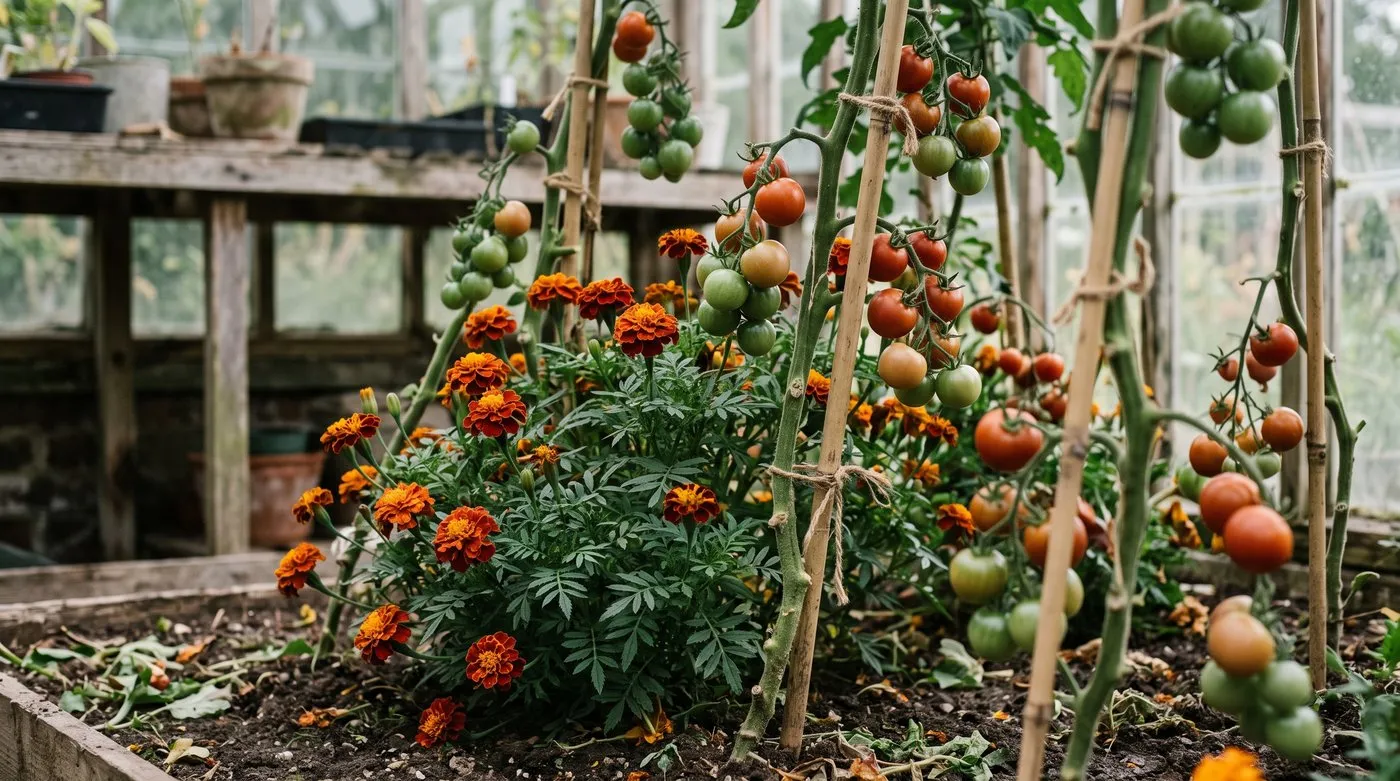
Companions need to be right next to the crop to help. Tuck marigolds in between the tomatoes rather than in a separate row.
Trap cropping
A trap crop is a plant the pest likes even more than your crop. Let the pests pile onto it, then pull it up and get rid of it.
Nasturtiums are the classic trap crop for blackfly on broad beans. Sow them a few weeks before the beans. Chinese mustard can draw flea beetles away from rocket and cabbages. Once the trap crop is covered in pests, pull it up and bag it for the green waste bin.
Physical barriers and traps
Barriers simply stop pests getting to your plants. No sprays, no fuss, and they work straight away.
Enviromesh and insect netting
Fine insect mesh keeps out carrot fly, cabbage white butterflies, flea beetles and most other flying pests. Drape it over hoops or straight over the crop and hold the edges down with soil or pegs. Light and rain get through fine.
Use it over carrots, cabbages and salads from sowing to harvest. Make sure there are no gaps at the edges. Stored carefully, a roll lasts several seasons.
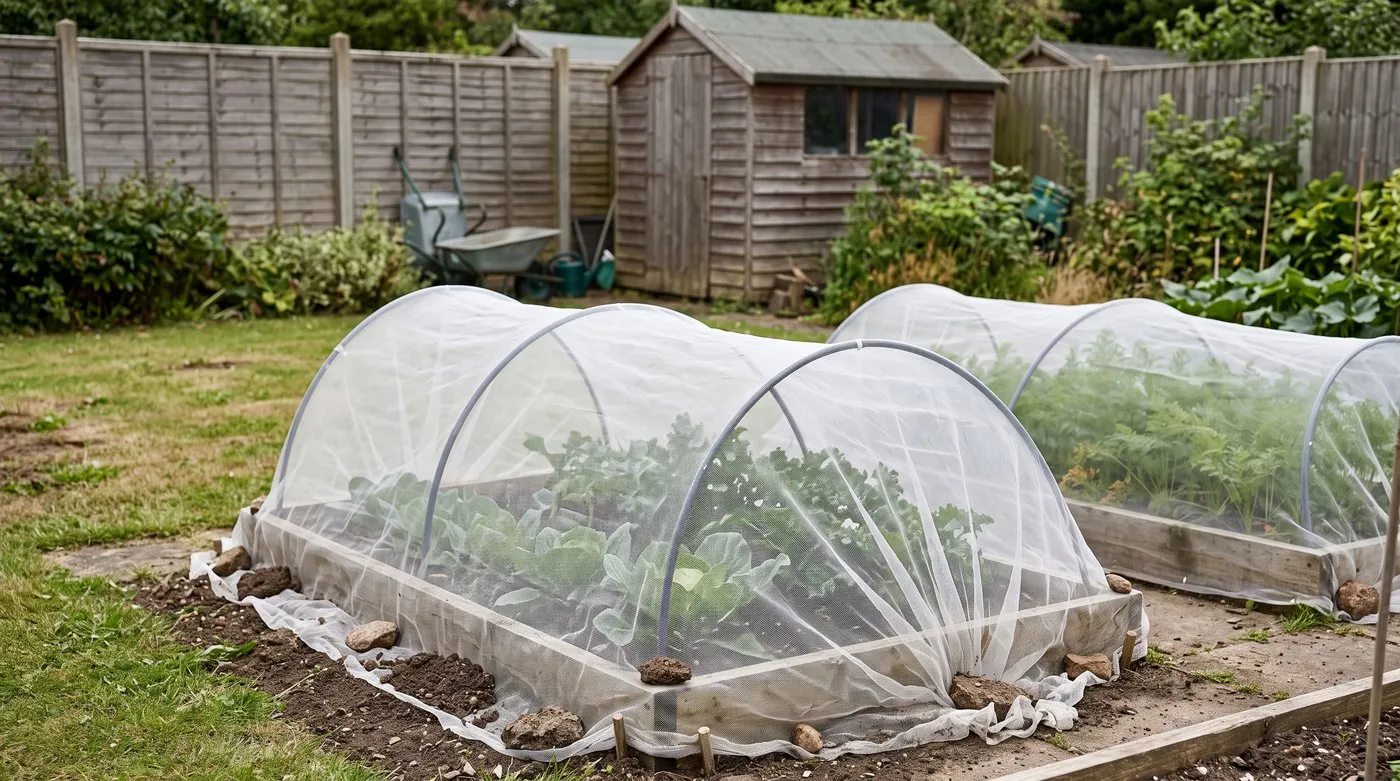
Mesh only works if the edges are sealed. Weigh them down all the way round and cabbage whites and carrot fly simply can’t get in.
Copper barriers
Copper tape around pot rims and raised beds may put off some slugs and snails. Results are mixed, so treat it as a small extra rather than your main defence. Use wide tape and keep it clean.
Beer traps
Sink a yoghurt pot or jam jar into the soil, leaving the rim about 2cm above the ground. Fill it with cheap lager. Slugs are drawn to the smell, fall in and drown. Empty and refill every few days. Beer traps work best alongside nematodes and hand-picking.
Tip: Ground beetles are slug hunters, so you don’t want them in your traps. Keeping the rim 2cm above the soil helps them avoid falling in. If you catch more beetles than slugs, take the traps out.
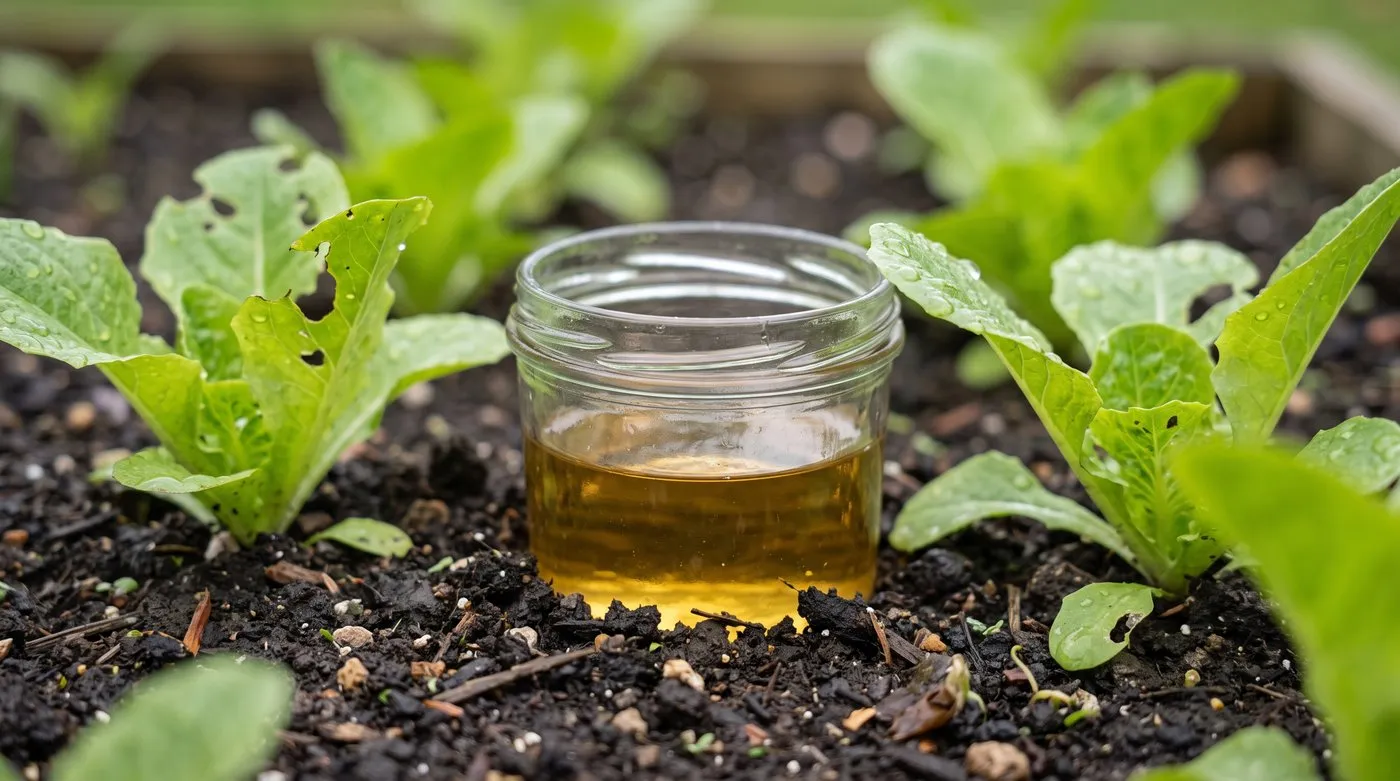
Leave the rim a couple of centimetres above the soil. Slugs still climb in, but ground beetles that hunt slugs are far less likely to tumble in.
Sprays: what is legal in the UK
Sprays are the last resort, not the first. In the UK, only authorised products can legally be used to control pests. Homemade mixes like garlic, rhubarb-leaf, neem or washing-up liquid sprays aren’t authorised, however often they’re shared online. The methods above do the real work. If you genuinely need a spray, use an authorised product and follow the label exactly.
Authorised pyrethrum products
Pyrethrum comes from a type of chrysanthemum and is sold in authorised ready-to-use sprays. It kills aphids, whitefly and small caterpillars on contact and breaks down quickly in sunlight. It also kills helpful insects it touches, so only spot-treat badly affected plants. Spray in the evening when bees have gone home, and follow the label.
Encouraging natural predators
The best pest control of all is a garden full of creatures that eat pests.
Key predator species in UK gardens
| Predator | Eats | How to bring them in |
|---|---|---|
| Ladybirds | Aphids | Fennel, dill and yarrow, hollow stems left over winter |
| Hoverflies | Aphids (the larvae) | Poached egg plant, marigolds, flat-topped flowers |
| Lacewings | Aphids, mites, small caterpillars | Leave some leafy debris, put up a lacewing home |
| Ground beetles | Slugs, snails, vine weevil grubs | Ground cover, log piles, stones |
| Hedgehogs | Slugs, snails, grubs | Gaps in fences, log piles, no slug pellets |
| Frogs and toads | Slugs, snails, flies | A pond, even a sunken washing-up bowl |
| Song thrushes | Snails | Hedges, berry shrubs, a flat stone to smash snails on |
| Blue tits | Caterpillars, aphids | Nest boxes, native trees, no insecticides |
A pond is one of the best things you can add. Even a tiny one brings in frogs and toads, and they love slugs. Our guide on how to make compost also helps, as a compost heap and log pile give beetles and hedgehogs somewhere to shelter.
Building predator habitats
Log piles in a shady corner shelter beetles, centipedes, frogs, toads and hedgehogs. Stack the logs loosely to leave gaps. A pile about 1m square is plenty.
Wildflower strips along the edges of veg beds feed hoverflies, lacewings and tiny helpful wasps. Sow cornflower, ox-eye daisy, red clover and yarrow. A strip about 30cm wide is enough.
The base of a hedge is a great winter hideaway for ladybirds, lacewings and spiders. Leave the leaves and dead stems there rather than tidying them away.
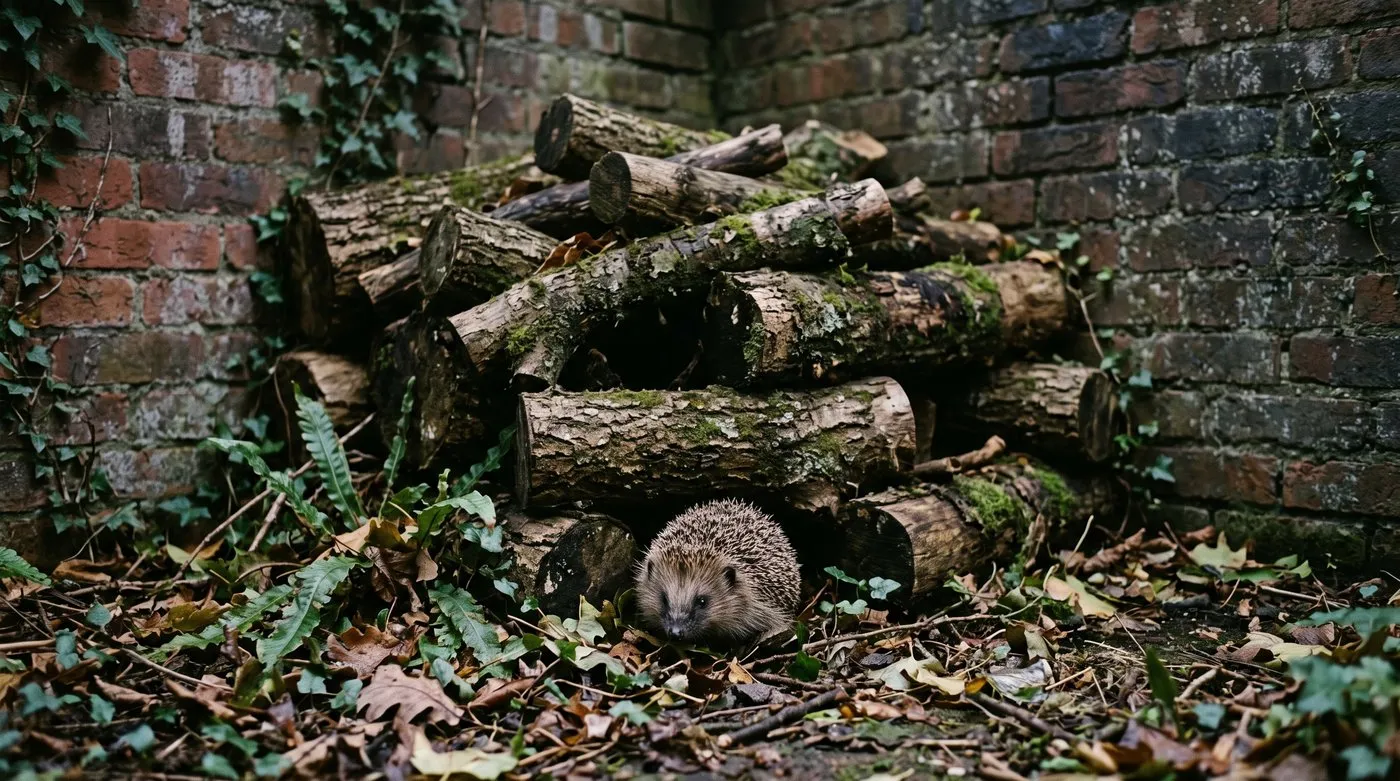
A loose log pile gives beetles, toads and hedgehogs somewhere to live. They pay you back by eating slugs.
Soil health and pest resistance
Healthy soil grows strong plants, and strong plants cope with pests much better. Weak, stressed plants are the ones pests pick on.
Building healthy soil
Spread 5-10cm of compost or well-rotted manure over your beds each autumn or spring. It feeds the worms and soil life that keep plants healthy.
Keep off the beds. Squashed soil grows weaker plants. Use paths between beds and mulch with organic matter to keep the soil in good shape.
Rotate your crops. Don’t grow the same veg family in the same spot two years running. Move cabbages, peas and beans, onions and roots around four beds. Soil pests then lose their favourite food.
Seasonal pest control calendar
Timing makes a big difference. Here’s what to do when.
| Month | Pests about | What to do |
|---|---|---|
| January-February | Slugs and snails hiding | Check under pots, clear debris, set beer traps |
| March | Slugs, flea beetles waking up | First slug nematodes once the soil reaches 5C |
| April | Aphids, carrot fly | Cover carrots with mesh, release ladybirds |
| May | Caterpillars, blackfly, lily beetle | Net cabbages, pinch out broad bean tips, pick off beetles |
| June | Whitefly, spider mites, gooseberry sawfly | Add Encarsia in greenhouses, use an authorised spray only if really needed |
| July | Slugs at their peak, cabbage white caterpillars | Second slug nematodes, check cabbage netting |
| August | Red spider mite, earwigs, wasps | Damp down greenhouses, set earwig traps |
| September | Vine weevils laying eggs | Use vine weevil nematodes, check container plants |
| October | Chafer grubs, leatherjackets | Use the right nematodes on lawns |
| November-December | Pests tucked up for winter | Leave seed heads for birds, keep log piles and ponds |
Common mistakes with organic pest control
These slip-ups catch out plenty of gardeners when they switch to organic methods.
1. Expecting instant results. Nematodes and other living controls take a week or two to work. Be patient, especially in your first season.
2. Spraying in the sun. If you do use an authorised contact spray, apply it in the evening. Sunlight breaks it down, and bees are less busy later on.
3. Squishing everything that moves. That black beetle in your lettuce may be a ground beetle hunting slug eggs. The odd little larva on your roses may be a hoverfly grub eating aphids. Learn to spot the good guys first.
4. Forgetting the soil. Tired soil grows weak plants that pests love. Add compost every year, keep off the beds and rotate crops.
5. Relying on one trick. No single method sorts out every pest. Mix barriers, nematodes, companion plants and homes for predators. For particular pests, see our guides on lily beetle and pigeon control. Some pests need nothing at all, as our guide on why pollen beetles need no spraying explains.
Next, our guide on vine weevil treatment is a great place to go.
Spotted little notches on the edges of pea or bean leaves? See our guide to controlling pea and bean weevil.
Frequently asked questions
What is the most effective organic pest control in the UK?
Nematodes are the best single treatment for many soil pests. These tiny worms are watered into the soil and target slugs, vine weevil grubs or chafer grubs, depending on the type. Use them when the soil is warm and moist enough, and allow a week or two to see results. They’re safe for children, pets and wildlife.
Does companion planting actually work?
It can help, but it reduces pests rather than stopping them. French marigolds near tomatoes may help with whitefly. Nasturtiums can draw aphids away from beans and cabbages. Onions and garlic can help hide carrots from carrot fly. Plant companions right next to the crop, not at the end of the row.
How do I attract ladybirds to my garden?
Grow flowers like fennel, dill and yarrow. They give adult ladybirds the nectar and pollen they need. Leave a few aphids in spring so the ladybirds have something to eat. Don’t cut back all your hollow stems in autumn, as ladybirds shelter in them over winter.
Is neem oil safe for bees?
Neem oil isn’t authorised as a pesticide in the UK, so don’t spray it. To protect bees, rely on prevention, barriers and natural predators. If you really need a spray, use an authorised product, follow the label, and never spray open flowers or when bees are about.
When should I apply nematodes in the UK?
Slug nematodes go on from March to October when the soil is above 5C. Vine weevil nematodes are used in spring and again from late summer into autumn, following the soil temperature on the pack. Water them in on an evening and keep the soil moist for two weeks. One dose lasts about six weeks.
Can I make my own organic pest spray?
No, homemade pest sprays aren’t legal in the UK. Only authorised products can be used to control pests, and garlic, rhubarb-leaf and similar mixes aren’t authorised. Stick to netting, predators, companion plants, nematodes and keeping the garden tidy. If you truly need a spray, use an authorised product exactly as the label says.
How do I control slugs organically?
Slug nematodes are the most reliable organic option. Water them in when the soil is above 5C and moist. Beer traps catch plenty of slugs too. Go out with a torch on damp evenings and collect them by hand. Hedgehogs, frogs and thrushes are great slug hunters, so make them welcome.
Our team produces practical UK gardening guidance from source research, contributor records and established horticultural practice. Editorial standards are overseen by Matt W.