Key takeaways
- Watering at midday won't burn smooth leaves, but early morning is still best
- Coffee grounds and crushed eggshells won't keep slugs away, so put them in the compost
- Marigolds bring in helpful hoverflies but won't stop a whitefly outbreak on their own
- Skip the gravel in the bottom of pots and use a free-draining compost instead
- Water established beds deeply and less often so roots grow down
- Don't paint pruning cuts, let them dry and heal on their own
Every gardener has been told to put eggshells round the lettuces, scatter coffee grounds for slugs, or never water in the middle of the day. These tips get handed down, printed in books and shared online. The trouble is, lots of them are wrong.
Here are 15 of the most popular UK gardening myths, what’s really going on, and what to do instead. Some are plain false, and a few are partly true. Knowing which is which saves time, money and a lot of wasted eggshells.
Myth 1: Watering at midday burns plant leaves
Verdict: FALSE.
This is probably the best-loved myth in Britain. The idea is that water drops act like tiny magnifying glasses and burn the leaf. It sounds believable, but on normal smooth leaves the drops sit too close to the surface to focus the sun, and they dry off long before they could do any harm.
So what does cause scorched leaves? Heat and thirst. On a hot day with dry soil, leaves lose water faster than the roots can replace it, and the edges and tips go brown and crispy. That happens whether the leaves are wet or dry.
Early morning is still the best time to water, but don’t let a plant go thirsty in a heatwave just because it’s lunchtime.
 Water drops in full sun. They’ll dry off without harming these smooth leaves.
Myth 2: Coffee grounds repel slugs
Verdict: FALSE.
The thinking is that caffeine puts slugs off. Strong caffeine can, but used coffee grounds have very little left after brewing, so a ring of them won’t protect your plants.
Thick layers of grounds can also hold back seedlings and go mouldy on top of the soil.
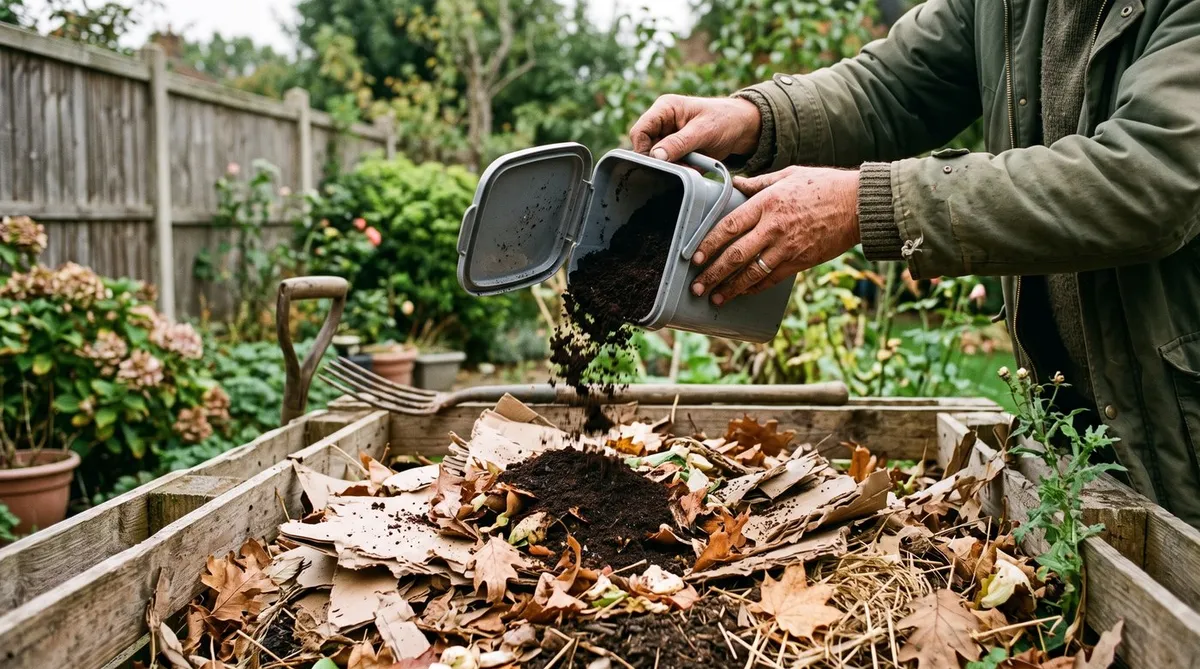
The best use for coffee grounds: Add them to your compost bin in thin layers. They break down quickly and add useful goodness. Just don’t expect them to save your hostas.
For slug ideas that really help, see our slug management guide, which covers nematodes, beer traps and encouraging slug-eating wildlife.
 Coffee grounds are lovely in the compost heap, but they won’t keep slugs away.
Myth 3: Crushed eggshells deter slugs
Verdict: FALSE.
The myth that won’t go away. The idea is that sharp shell bits make a barrier slugs won’t cross. In real life, slugs make lots of thick slime that protects their soft bodies. They glide over gravel and rough surfaces with no fuss, and eggshells are no obstacle at all.
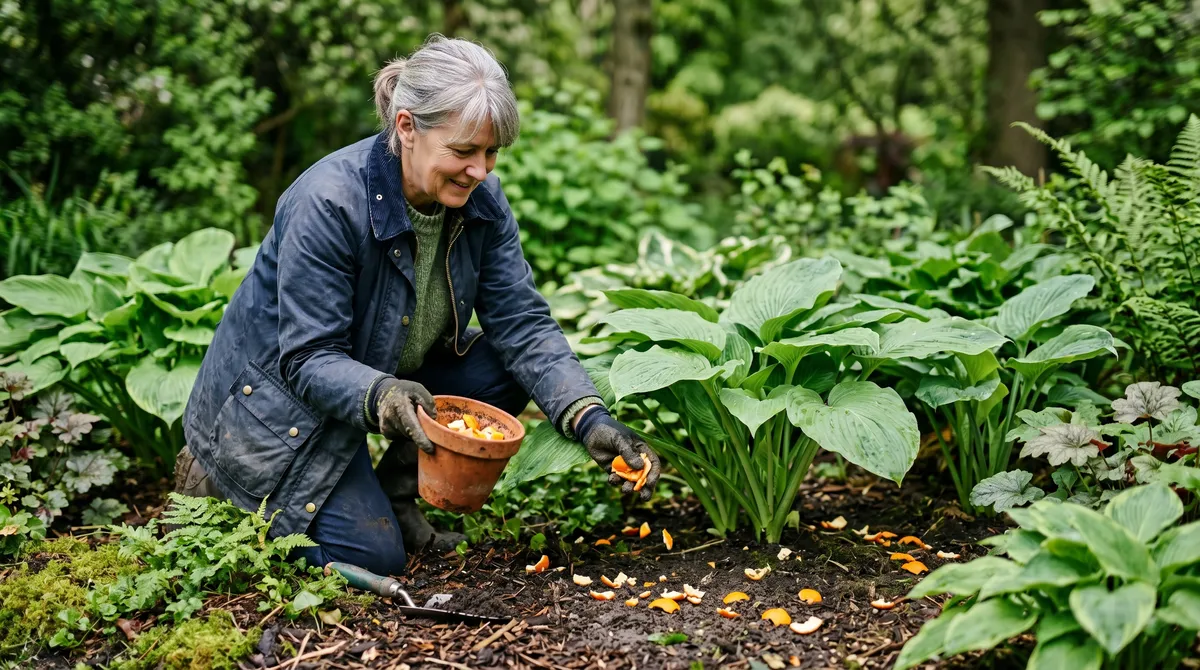
Are eggshells any use? Yes, in the compost. Crushed finely, they add a little calcium as they break down. It’s slow, though, and you’ll spot bits of shell in the soil for years.
What does work against slugs? Nematodes (a natural biological control watered into the soil), beer traps, slug pellets based on ferric phosphate used sparingly, and welcoming ground beetles, hedgehogs and thrushes.
 Crushed eggshells look the part, but slugs just slide over them.
Myth 4: Marigolds protect tomatoes from pests
Verdict: PARTLY TRUE, but not how most people think.
French marigolds (Tagetes patula) are planted beside tomatoes in greenhouses all over the UK to keep whitefly away. It’s one of the best-known companion planting tips, but the truth is a bit different.
What marigolds really do:
- Their roots can help against some soil pests called nematodes, but only after a whole season of growing in the same soil. A few dotted among the tomatoes won’t do it.
- Their flowers bring in hoverflies, whose larvae eat aphids. That’s a real plus, but it’s aphids, not whitefly.
- Some research suggests their scent can help keep whitefly off nearby tomatoes, but they won’t stop a real outbreak on their own.
What to do: Grow marigolds because they’re cheerful and bring in helpful insects. For whitefly in the greenhouse, a tiny parasitic wasp called Encarsia does the heavy lifting.
Our companion planting guide sorts the pairings that help from the folklore.
 Marigolds bring hoverflies into the greenhouse, but they won’t clear whitefly from your tomatoes on their own.
Myth 5: Add gravel to the bottom of pots for drainage
Verdict: FALSE, it makes drainage worse.
Even some garden centres still suggest this one. The idea is that gravel, crocks or stones at the bottom give water somewhere to go. In fact, water doesn’t like moving from fine compost into coarse gravel. It hangs about in the compost just above the gravel until that layer is soaked, so you get a soggy zone right where the roots are. That can lead to root rot.
What to do instead: Use a free-draining compost all the way through the pot. For plants that like it sharp and dry, such as Mediterranean herbs, succulents and alpines, mix in some perlite or grit. Keep the drainage holes clear and stand pots on feet. Our container gardening guide covers potting mixes for every crop.
 Water lingers in the compost above the gravel, leaving the roots wetter, not drier.
Myth 6: You should water little and often
Verdict: FALSE for established plants, deep and less often is better.
A light sprinkle every day only wets the top few centimetres. Roots stay near the surface, where they dry out and suffer in heat.
A better way: For established beds, give a good soak so the water goes well down, then let the top dry a little before the next drink. Roots follow the water down and become tougher. In a dry summer that often means a good soak about twice a week rather than a daily sprinkle. Seedlings and pots are different, as they dry out fast and need checking more often.
A thick layer of composted bark or straw helps the soil hold its water, so you’ll need to water less.
Myth 7: Talking to plants makes them grow
Verdict: MOSTLY FALSE.
Every so often a story claims plants grow better when people talk or read to them. The experiments behind those headlines were small and loosely run, and any difference was tiny. The breath you’d add is nothing compared with what’s already in the air.
 Chatting to your plants is harmless fun, but watering and feeding will do far more.
Myth 8: Organic pest control is always safe
Verdict: FALSE.
“Organic” doesn’t mean “harmless”. Some organic sprays harm helpful insects as well as pests.
Pyrethrum, made from a type of chrysanthemum, kills bees, ladybirds and hoverflies as well as aphids. Copper fungicides such as Bordeaux mixture, once popular with organic growers, build up in the soil and harm earthworms, and they are no longer allowed for home garden use in the UK.
What to do: Read the label on every product, organic or not. Use biological controls such as nematodes, parasitic wasps and lacewing larvae where you can. A garden with hedgehogs, ground beetles and birds rarely needs any spray at all. Our pest control guide covers the gentlest options.
Myth 9: You must dig your garden every year
Verdict: FALSE, and often unhelpful.
Digging every year was standard advice for a century. But it breaks up the helpful fungi in the soil that help roots feed, brings buried weed seeds up to sprout, and wrecks worm burrows.
The no-dig method, made popular in the UK by Charles Dowding, is less work. Spread 5-10cm of compost on top each year and let the worms pull it in. The soil gets better each year, and you get fewer weeds because buried seeds stay buried.
It doesn’t suit every spot. Hard, compacted clay that’s never been worked can do with one good dig to break it up. After that, leave the spade in the shed.
Myth 10: Native plants are always best for wildlife
Verdict: PARTLY TRUE, but non-natives help too.
Native plants do feed more of the fussy insects that rely on one particular plant. But plenty of non-native garden plants give pollen, nectar and berries that wildlife happily uses, and they help fill gaps in the flowering season.
What to do: Grow a mix, leaning towards natives. Add hawthorn, blackthorn, dog rose and ox-eye daisy for specialist insects. Then add lavender, buddleja and other bee-friendly flowers to keep the flowers coming into autumn. The best wildlife gardens have something in bloom from February to November.
 Native foxgloves and buttercups alongside lavender and geraniums. The bees visit them all.
Myth 11: Sandy soil is always well-drained
Verdict: MOSTLY TRUE, but it depends what’s underneath.
Sandy soil drains fast at the top. But if there’s clay or a hard, packed layer below, water can still pool. Some coastal areas have sandy topsoil over clay, which can catch gardeners out in winter.
Check before you plant. Dig a hole 30cm deep, fill it with water and time how long it takes to drain. Under an hour is good. Over four hours means there’s a problem. Our soil testing guide has more on checking your soil.
Myth 12: Compost tea is a miracle feed
Verdict: MOSTLY FALSE.
Compost tea is water that compost has soaked in, sometimes bubbled with air. It’s said to stop diseases and boost growth. In practice, results are patchy and vary a lot from batch to batch.
What works better: Spread compost straight onto the soil. It does far more for your soil than a watery extract. For a liquid feed, home-made comfrey or nettle feed gives plants a proper boost.
Myth 13: You should seal pruning cuts with wound paint
Verdict: FALSE.
For years, gardeners painted pruning cuts to keep out disease. It turns out the paint can trap damp under the seal, which is just what fungi like. Trees and shrubs seal their own wounds as the cut dries. The Forestry Commission and the RHS no longer recommend wound paint.
The one thing to watch: Plums and cherries can catch silver leaf disease if pruned in winter. Prune them in summer, from June to August, rather than reaching for the paint. Our pruning guide covers timing for other plants too.
Myth 14: Lawns need feeding four times a year
Verdict: MOSTLY FALSE, twice is enough for most lawns.
Lawn feed boxes often suggest four feeds a year. Most UK lawns on reasonable soil only need two: one in spring (April) and one in autumn (September to October).
A spring feed gets growth going after winter. An autumn feed helps toughen the roots for winter. The summer feeds are only worth it on very sandy or chalky soil that loses goodness quickly.
Too much feed gives soft, lush grass that suffers more from disease, drought and wear, and means more mowing. Our lawn care guide covers feeding for different soils.
Myth 15: You need to remove every weed
Verdict: FALSE, some weeds are really useful.
Not every uninvited plant is an enemy. Dandelions give bees early spring food. Nettles feed the caterpillars of red admiral, peacock and small tortoiseshell butterflies. Clover feeds the soil.
So manage weeds rather than wage war on them. Pull out the thugs like bindweed, ground elder and couch grass. Let dandelions, clover and self-heal be in lawn edges, and leave a nettle patch in a corner for the butterflies.
The myths at a glance
| Myth | Verdict | What’s really going on |
|---|---|---|
| Watering at midday burns leaves | FALSE | Drops dry off before they can scorch |
| Coffee grounds repel slugs | FALSE | Too little caffeine left after brewing |
| Eggshells deter slugs | FALSE | Slugs slide straight over them |
| Marigolds protect tomatoes | PARTLY TRUE | Bring in hoverflies, only a small help with whitefly |
| Gravel in pot bottoms aids drainage | FALSE | Leaves a soggy layer above the gravel |
| Water little and often | FALSE | Deep watering grows deeper roots |
| Talking to plants helps growth | MOSTLY FALSE | Tiny effect at best |
| Organic pest control is always safe | FALSE | Some organic sprays harm helpful insects |
| You must dig every year | FALSE | No-dig is often kinder to soil |
| Only native plants support wildlife | PARTLY TRUE | A mix supports the most wildlife |
| Sandy soil is always well-drained | MOSTLY TRUE | Depends what’s underneath |
| Compost tea is a miracle feed | MOSTLY FALSE | Plain compost does more |
| Seal pruning cuts with wound paint | FALSE | Traps damp and helps fungi |
| Feed lawns four times a year | MOSTLY FALSE | Twice is enough for most lawns |
| Remove every weed | FALSE | Some weeds feed bees and butterflies |
Gardening myths stick around because they sound sensible and get passed on by people you trust. The best gardeners stay curious, try things for themselves and aren’t afraid to question advice that’s “always been done that way”.
Frequently asked questions
Does watering in the sun burn plant leaves?
No, not on everyday garden plants. Water drops on smooth leaves dry off long before they could scorch anything. Summer leaf scorch comes from heat and dry soil, not from water on the leaves.
Do coffee grounds repel slugs?
No, used coffee grounds won’t keep slugs away. Most of the caffeine is gone after brewing. Thick layers can also hold back seedlings, so add your grounds to the compost heap in thin layers instead.
Do eggshells stop slugs?
No, slugs glide straight over them. Their thick slime protects them from rough surfaces. Crushed eggshells are fine in the compost heap, but they take years to break down.
Do marigolds protect tomatoes from pests?
Only a little, and not in the way people think. French marigolds bring in hoverflies, whose larvae eat aphids. Their scent may put whitefly off a little, but they won’t stop an outbreak, so use them alongside other controls.
Should I add gravel to the bottom of plant pots?
No, it actually makes drainage worse. Water hangs about in the compost just above the gravel, right where the roots are. Use a free-draining compost all the way through and keep the drainage holes clear.
Is it true that you should never water at midday?
No, you can water at any time of day. Early morning is best, because less water evaporates and leaves dry off before night. Evening is next best. But in a heatwave, a midday drink is far better than none.
Does talking to plants help them grow?
Probably not much, but it does no harm. There’s no good evidence that a chat makes a real difference in the garden. Spend the time watering and feeding, and chat away while you do.
Our team produces practical UK gardening guidance from source research, contributor records and established horticultural practice. Editorial standards are overseen by Matt W.