Key takeaways
- Spent coffee grounds are roughly 2% nitrogen by weight, released slowly once microbes break them down
- Spent grounds test at pH 6.5 to 6.8, near neutral, so they will not acidify soil for blueberries
- Grounds make a weak, unreliable slug barrier: in trials slugs crossed a fresh ring within minutes
- Never mulch thickly: layers over a few mm mat, shed water and can suppress seed germination
- The best use is the compost heap, kept under 20% of volume with a carbon to nitrogen ratio near 20:1
- Many UK cafes give spent grounds away free, including Starbucks 'Grounds for your Garden'
Coffee grounds in the garden are the subject of more myths than almost any kitchen waste. The advice is everywhere: sprinkle coffee grounds to feed plants, acidify soil for blueberries, and stop slugs in their tracks. Most of it is wrong. Spent coffee grounds are a useful material, but only when you understand what they actually are and where they belong.
What spent coffee grounds actually contain
Spent coffee grounds are the wet, dark residue left after brewing. By weight they hold roughly 2% nitrogen, plus smaller amounts of potassium, magnesium and phosphorus. That nitrogen figure sounds useful, and it is, but only over time.
The nitrogen in grounds is locked inside organic compounds. It is not plant-available the moment you scatter it. Soil microbes must first break the grounds down, which takes weeks to months. This makes grounds a slow-release material, not a quick feed. Sprinkle them fresh around a hungry plant and nothing happens fast.
There is a catch most articles miss. While microbes digest the grounds, they draw nitrogen out of the surrounding soil to do it. For a short window, a thick dose of fresh grounds can leave less nitrogen for your plants, not more. This is why grounds work best pre-digested, in compost, where that nitrogen tie-up happens away from your roots.
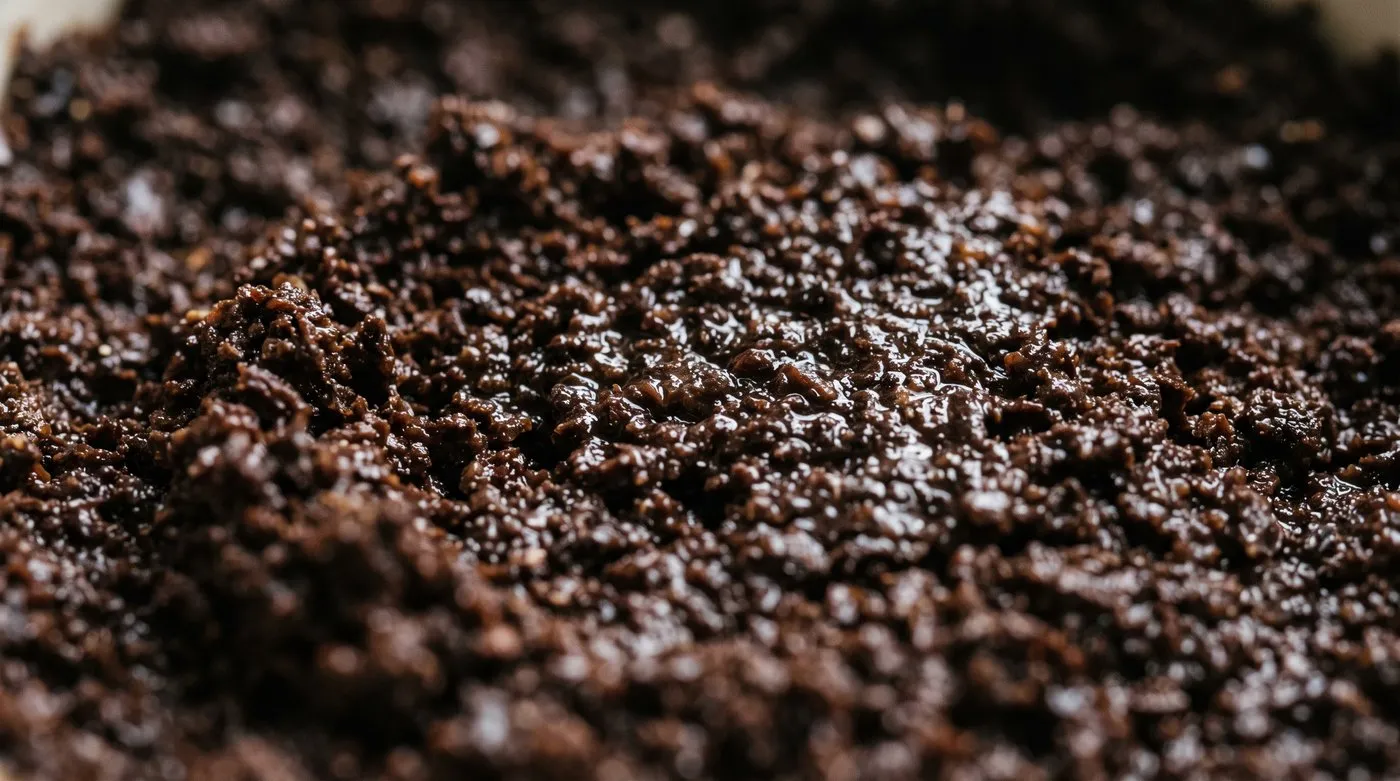 Spent grounds are a fine, damp material at around 2% nitrogen. The particles are so small they pack together and shed water when piled thick.
Do coffee grounds acidify soil? The pH myth
Fresh coffee is acidic, so the assumption follows that grounds must acidify soil. Spent grounds do not meaningfully change soil pH. Most of the acidity is water-soluble and leaves in the liquid brew. What stays behind in the used grounds is close to neutral.
Measured spent grounds sit at about pH 6.5 to 6.8. That is barely below neutral and nowhere near acidic enough to matter for fussy plants. To shift a bed toward the acid end you would need an impossible quantity, applied for years, and even then the soil buffers it straight back.
If you actually need to change soil pH, read our guide to soil pH explained for UK gardens before reaching for any kitchen remedy.
Coffee grounds and blueberries: use ericaceous compost instead
Blueberries and other ericaceous plants need acidic soil, ideally pH 4.5 to 5.5. Coffee grounds cannot deliver that. This is the single most repeated coffee-grounds myth, and it costs people healthy plants.
A blueberry starved of the right pH shows pale, yellowing leaves and refuses to fruit well. Gardeners then add more grounds, see no change, and lose the plant. The grounds were never going to work. At pH 6.5 to 6.8 they sit two full points above what a blueberry wants.
The reliable route is proper ericaceous compost, topped up with sulphur or a specific ericaceous feed. For the full method, see our guide to growing blueberries in the UK and the companion piece on how to make soil acidic. Both use materials that genuinely move pH, unlike grounds.
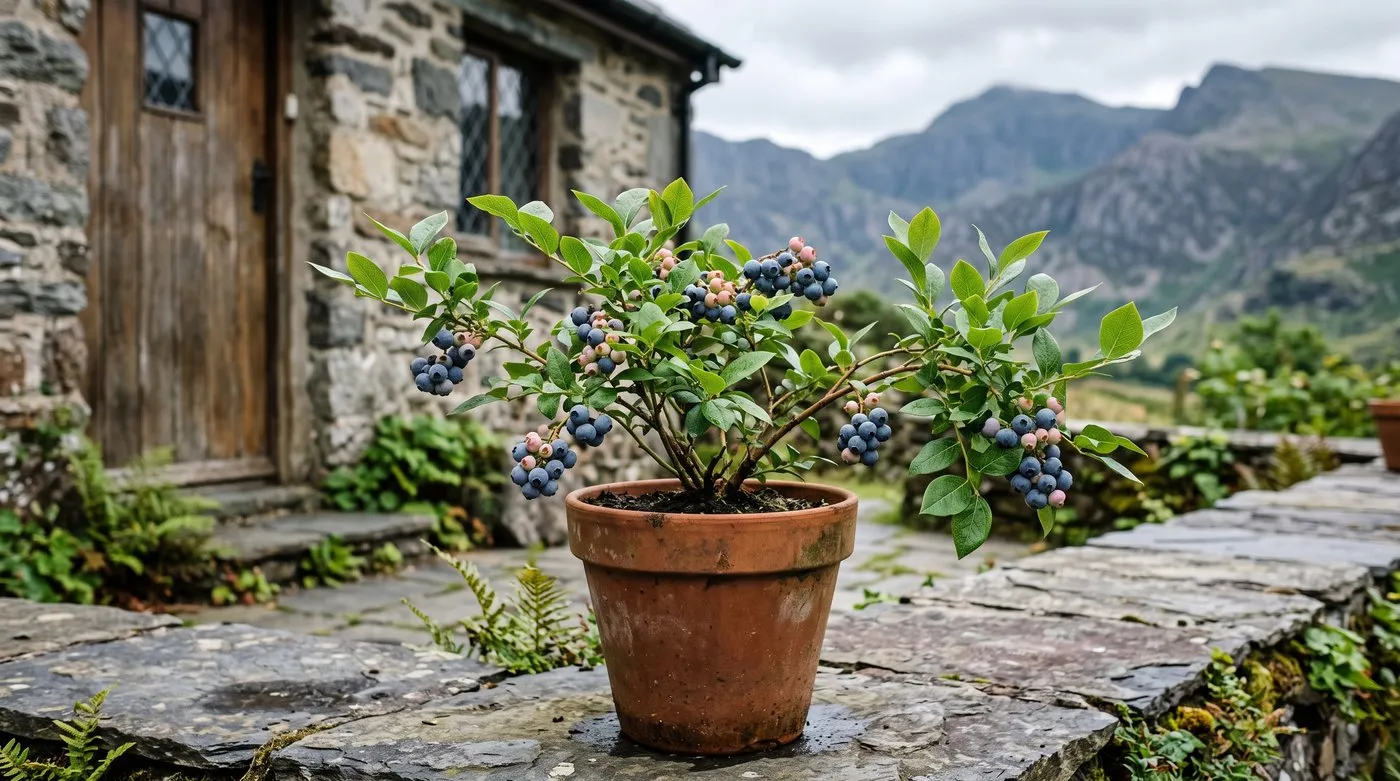 A container blueberry in true ericaceous compost. Coffee grounds cannot reach the pH 4.5 to 5.5 these plants need, so use the right compost from the start.
Do coffee grounds stop slugs and snails?
Coffee grounds are a weak and unreliable slug barrier. The idea is that caffeine and the gritty texture repel slugs and snails. In practice the effect is small, short-lived and easily beaten.
The science backs this up. Only strong caffeine solutions deter slugs in lab conditions, far stronger than anything a used ground pile releases. For real control, use the ranked methods in our guide to getting rid of slugs: nematodes, beer traps, evening hand-picking and copper. Grounds belong nowhere near that list.
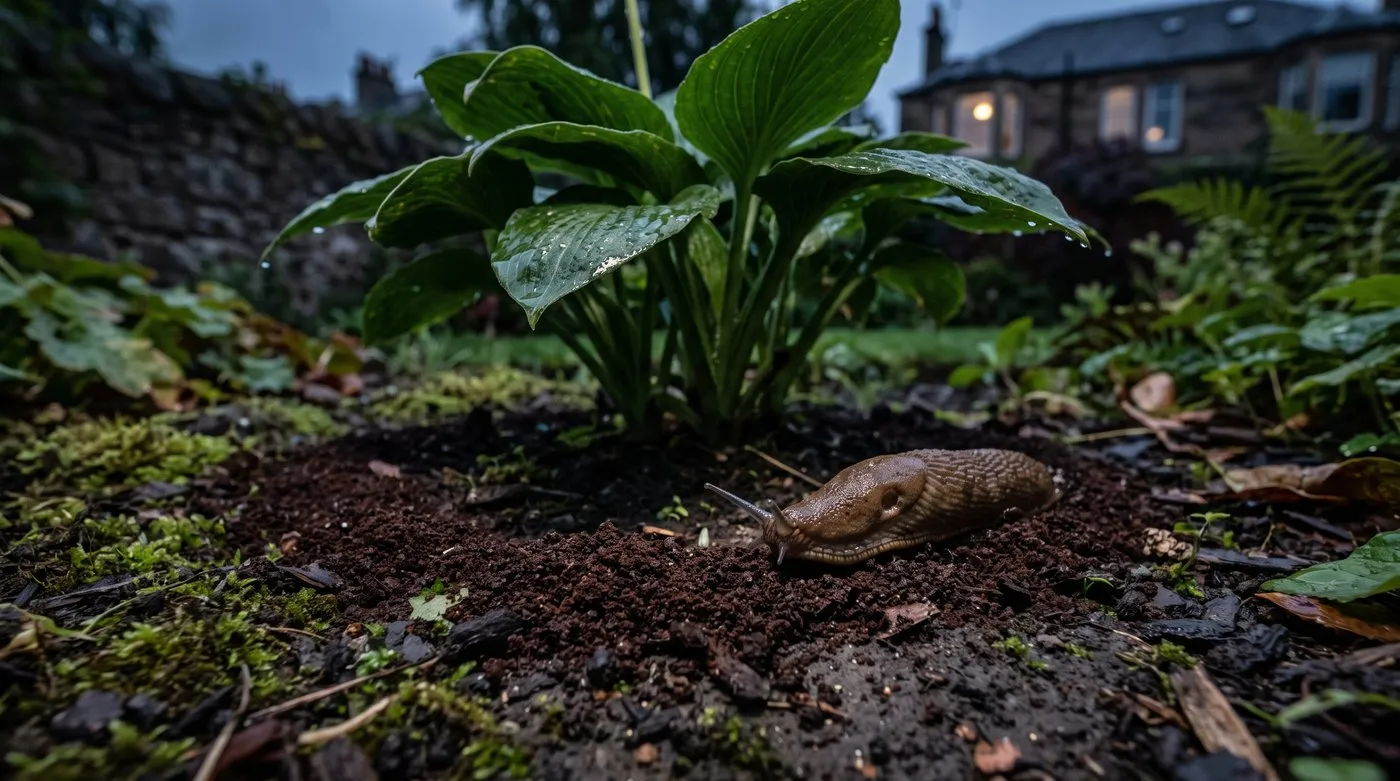 A slug crossing a fresh ring of grounds in our shade border. Once rain wets the barrier, slugs ignore it entirely.
Why thick layers of coffee grounds harm plants
Piling grounds around plants is the most damaging myth of the lot. Fresh grounds spread thicker than a few millimetres mat into a crust. The fine particles pack so tightly they shed water rather than let it through. Rain runs off the top and the soil below dries out.
That crust can also go anaerobic. Starved of air, it sours and can grow a skin of mould. Worse, fresh grounds are mildly allelopathic. The caffeine and phenolic compounds they release suppress seed germination and slow young roots, a defence the coffee plant evolved to see off competition.
Our germination trays proved it plainly. An 8mm topping of fresh grounds dropped lettuce germination from 89% to 38%, and the seedlings that did emerge were stunted. Never mulch a seedbed, salad row or young plant with raw grounds. If you want a true mulch, learn the difference between mulch and compost first, because grounds are neither used correctly.
Warning: Never spread fresh coffee grounds thicker than 3 to 4mm on soil, and never over seeds or seedlings. A thick layer mats into a water-shedding crust and the caffeine and phenols suppress germination. Compost the grounds for six months first, then apply the finished compost safely.
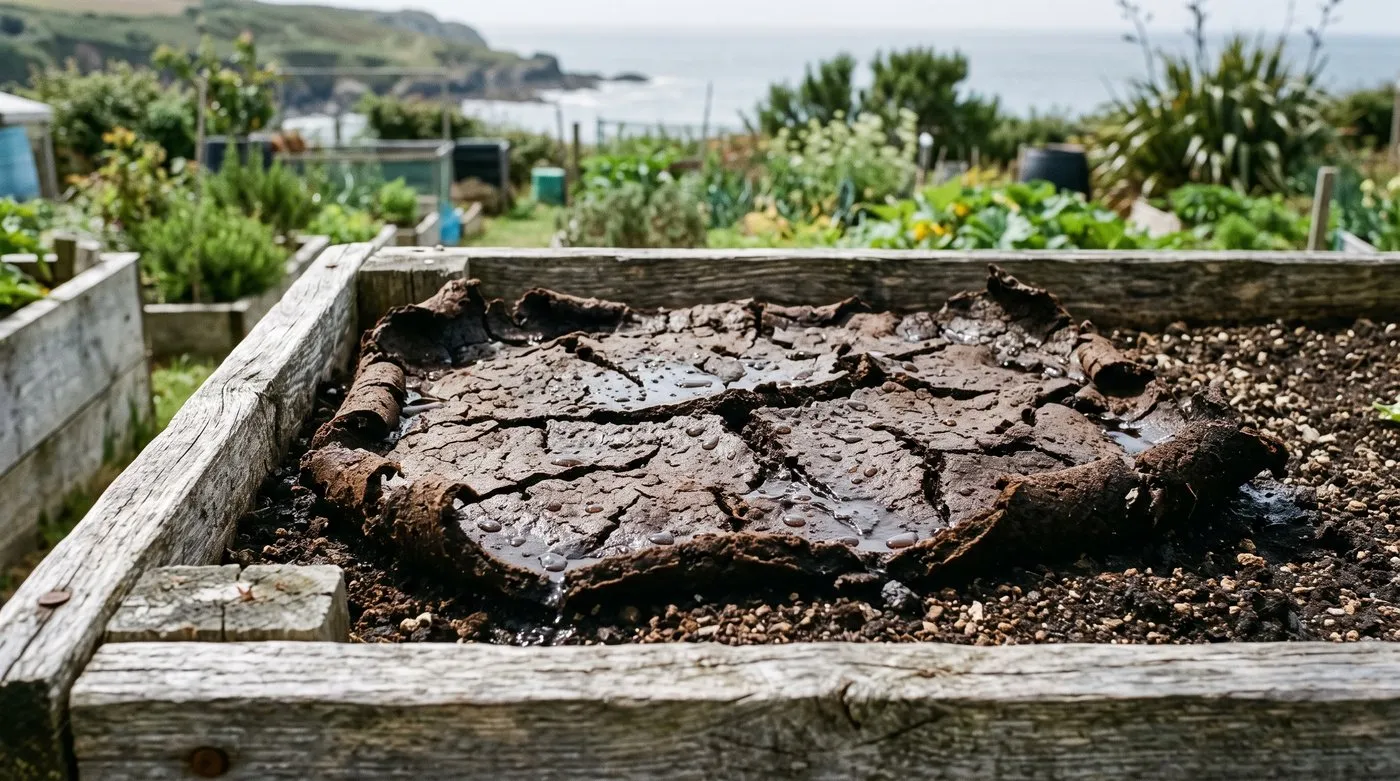 A thick layer of grounds dried into a hard, cracked crust. Water runs straight off, and the soil beneath stays bone dry.
Myth versus reality: coffee grounds in the garden
Only two rows come out as genuinely useful, and both involve breaking the grounds down first. That is the pattern to remember. Grounds help most when composted, not applied raw.
The best way to use coffee grounds, ranked
Not every use is equal. The table ranks them by how well they work in a real UK garden, with the role each plays. Order runs from most effective to actively harmful.
| Use | How to do it | Effectiveness | Role |
|---|---|---|---|
| Compost green or activator | Under 20% of heap, layered with browns | High | Primary |
| Wormery feed | Thin, occasional sprinkle with other waste | Moderate | Supplementary |
| Leaf-mould or brown-heap booster | Small addition to speed slow, cold heaps | Moderate | Maintenance |
| Thin top-dressing, composted first | Finished compost only, at 30-50mm | Moderate | Supplementary |
| Direct thick mulch, raw | Do not: mats, sours, suppresses growth | Negative | Avoid |
| Slug barrier | Do not: unreliable and short-lived | Very low | Avoid |
Composting is the gold standard. Grounds act as a nitrogen-rich green that helps a heap heat up and rot faster. For the full method behind a fast, hot heap, see our guide to how to make compost. A wormery is the strong second option, covered in how to start a wormery.
Gardener’s tip: Keep a lidded caddy by the kettle and empty it onto the heap every two or three days. Grounds left damp in a bucket grow mould within a week. Fresh to the heap, layered straight into browns, they never smell and never mat.
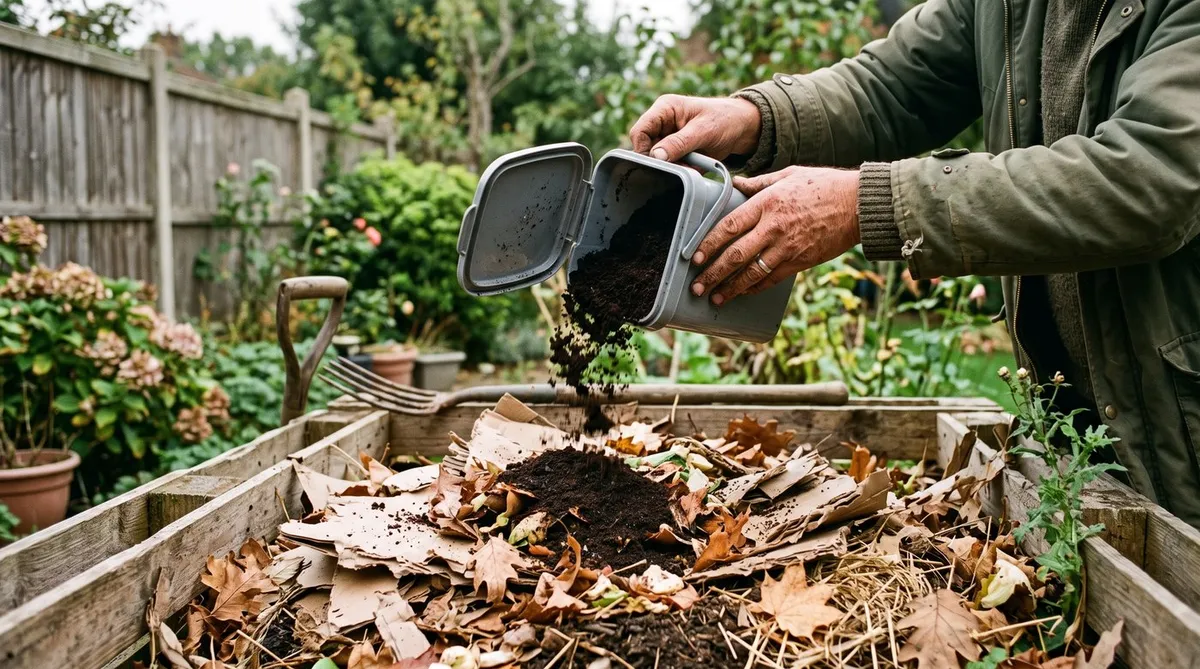
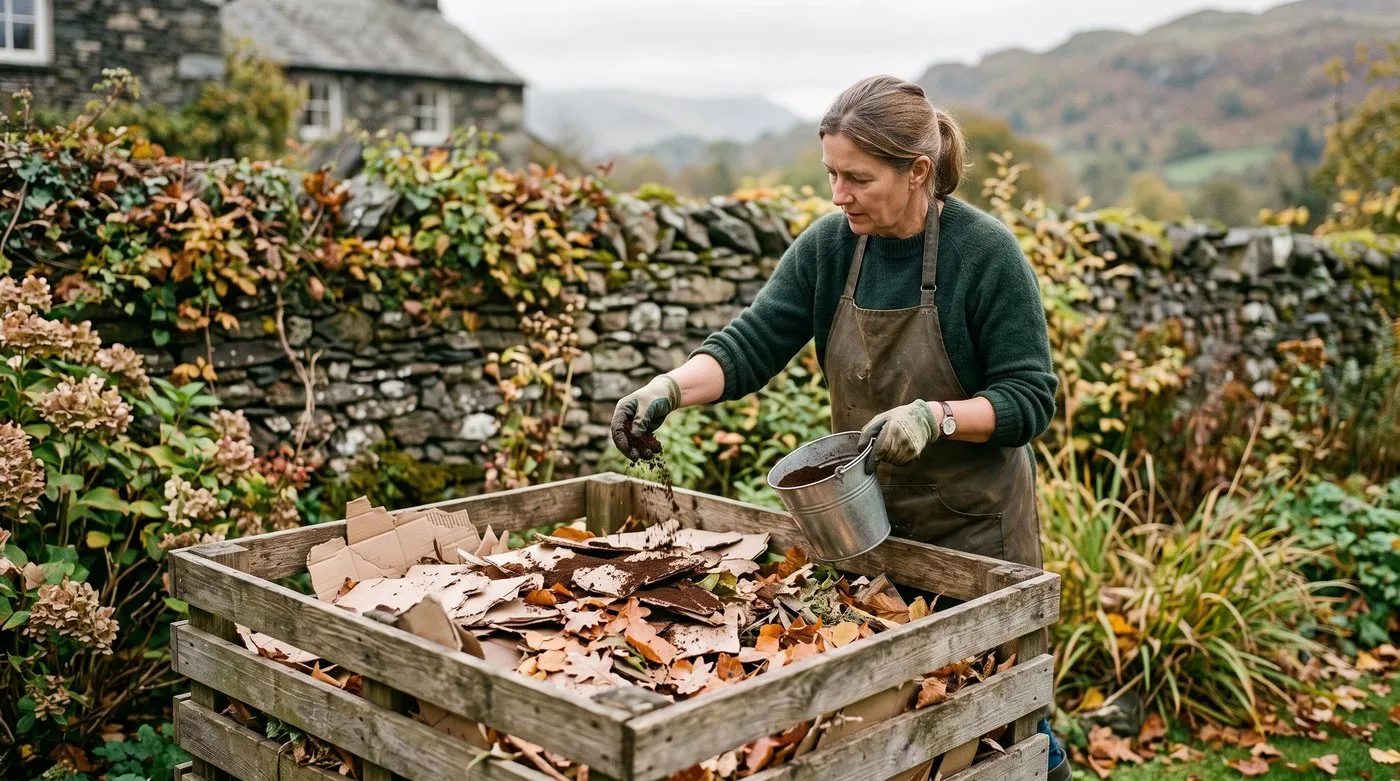 Grounds going onto the heap in a thin layer, straight onto torn cardboard and leaves. This is the one use that genuinely works.
How to compost coffee grounds correctly
Composting is simple once you treat grounds as a green, not a brown. Greens are wet and nitrogen-rich. Grounds sit at a carbon to nitrogen ratio near 20:1, which counts as a green even though they look brown.
The balance that matters is browns to greens. For every bucket of grounds, add at least three buckets of brown carbon: torn cardboard, dead leaves, straw or shredded paper. Browns keep the heap open and airy so it never turns into a dense, sour block.
Spread each addition thin, no more than 30 to 40mm, and keep grounds under 20% of the total heap across the season. Keep the heap as damp as a wrung-out sponge and turn it every two to four weeks. In summer a grounds-boosted heap reaches 40 to 60C and can finish in three to four months. Let it mature to dark, crumbly compost before you use it. At that point the caffeine and phenols are gone, and any germination-suppressing effect goes with them.
If you have too many grounds for one heap, reusing spent compost and running a second bin keeps everything moving without overloading either one.
The germination trial ran in 2021 and repeated in 2023. Six seed trays, identical peat-free compost, ‘Little Gem’ lettuce. Three trays topped with 8mm of fresh grounds, three left bare. Bare trays hit 89% germination in 12 days. Grounds-topped trays reached just 38%, with stunted, pale seedlings. The 2023 repeat landed within a few percent. Fresh grounds clearly suppress germination.
The pH bed trial ran from 2016 to 2020. Four buckets of grounds a year into one 1.44 square-metre bed, none into its twin. After four years the treated bed measured pH 6.6 against a starting 6.7, and the control held at 6.7. Heavy grounds over four years shifted pH by 0.1. Both results point the same way: grounds do little raw, and real value only appears once they are composted.
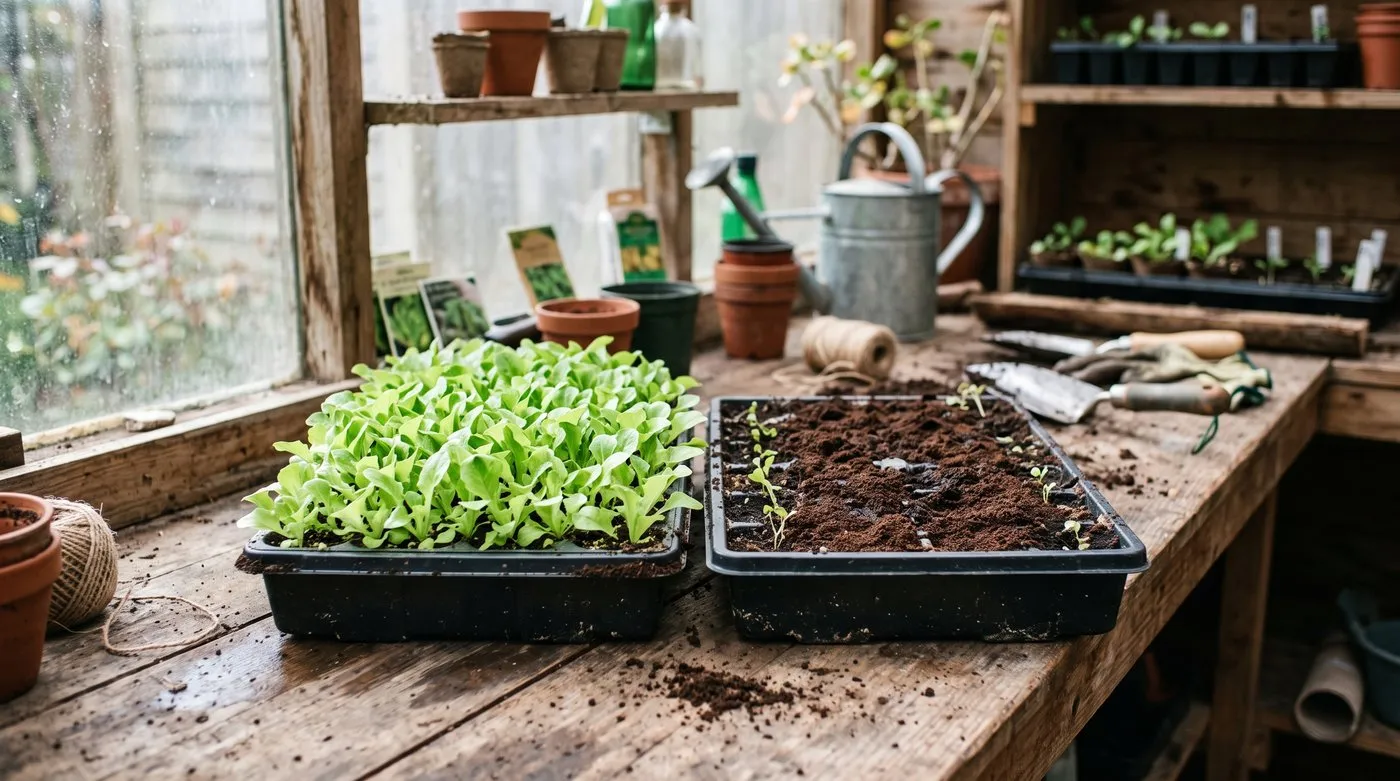 The 2021 germination trial. The bare tray reached 89% germination; the tray topped with 8mm of fresh grounds managed just 38%.
When to use coffee grounds through the year
Grounds are a year-round material, but the job changes with the seasons. This timing table keeps your heap balanced and your beds safe.
| Month | What to do with grounds |
|---|---|
| January | Keep adding to the heap, but pair with extra cardboard as browns run low in winter. |
| February | Cold, slow heaps benefit most from a nitrogen green. Layer grounds thin to nudge activity. |
| March | Turn the heap as it warms. Grounds added now feed the spring surge of microbial heat. |
| April | Start collecting free grounds from cafes ahead of the busy composting season. |
| May | Never mulch new seedbeds with raw grounds. Add to the heap only, layered with browns. |
| June | Heaps run hot now. Grounds help hit 40 to 60C, so keep the mix moist and turned. |
| July | Peak breakdown. A well-balanced grounds heap can finish in three to four months. |
| August | Feed a wormery a thin sprinkle. Avoid large single doses in summer heat. |
| September | Spread finished, matured compost on beds. Save fresh grounds for the autumn heap. |
| October | Mix grounds with the flood of fallen leaves for a fast, balanced autumn heap. |
| November | Grounds keep a cooling heap ticking over. Cover to hold warmth and shed rain. |
| December | Store dry cardboard indoors so you can always balance winter grounds with browns. |
Common mistakes with coffee grounds
Where to get free coffee grounds in the UK
You never need to buy grounds. Cafes throw away huge volumes daily and most are glad to hand them over. Many UK cafes give spent grounds away free, including independents, supermarket cafes and chains.
Starbucks runs a scheme called Grounds for your Garden, offering bags of used grounds to customers at participating stores. Independent coffee shops will often fill a tub if you ask and bring your own container. A single busy cafe can produce several kilos a day.
Take only what you can compost within a week, since damp grounds go mouldy fast in a sealed bag. If you are building soil health more broadly, grounds are just one input among many. Our guide to natural and organic fertilisers puts them in context alongside better-value materials. For the wider evidence, the RHS advice on composting and Garden Organic on home composting both back the compost-first approach.
Now you know the truth about coffee grounds in the garden, read our guide to how to make compost for the next step, or browse more practical how-to guides to put your grounds to work properly.
Frequently asked questions
Do coffee grounds acidify soil for blueberries?
No, spent coffee grounds do not meaningfully acidify soil. They test at pH 6.5 to 6.8, close to neutral. The acidity in coffee stays mostly in the liquid brew, not the used grounds. For blueberries, use ericaceous compost or sulphur instead.
Are coffee grounds good for the garden?
Yes, but only as a composting ingredient, not a direct feed or mulch. Add them to the heap as a nitrogen-rich green, kept under 20% of the volume. Mixed with brown carbon, they help the compost heat up and break down faster.
Do coffee grounds keep slugs and snails away?
Can you put coffee grounds straight on the soil?
Only a very thin scatter, never a thick layer. Fresh grounds over a few millimetres mat together, shed water and can suppress seedlings. Compost them first, then apply the finished compost. That gives all the benefit and none of the harm.
How much coffee grounds can you add to compost?
Keep grounds under 20% of the total heap volume. Above that, the heap goes dense and can turn sour or anaerobic. Mix each addition with plenty of brown carbon like cardboard, dead leaves or straw to balance the nitrogen.
Are coffee grounds good for worms in a wormery?
In small amounts, yes. Worms tolerate spent grounds mixed with other kitchen waste. Too much at once heats and acidifies the bin and stresses the worms. Add a thin sprinkle occasionally rather than a bucketful.
Which plants do not like coffee grounds?
Seedlings and young plants dislike fresh grounds most. The caffeine and phenols slow germination and root growth. Avoid grounds around newly sown beds, salad rows and container seedlings. Established shrubs are less affected but still gain nothing from raw grounds.
Our team produces practical UK gardening guidance from source research, contributor records and established horticultural practice. Editorial standards are overseen by Matt W.