
Key takeaways
- Compost is a material: rotted organic matter that feeds the soil
- Mulch is a job: any layer laid on top of the soil to cover and protect it
- Garden compost does both jobs, but bark, gravel and straw are mulch only
- Use compost to feed hungry beds, and bark or gravel where you mainly want fewer weeds
- Keep fresh woodchip off seedlings and never dig bark into the soil
No, mulch and compost are not the same thing, though people often use the words as if they were. Compost is rotted-down organic matter that feeds the soil. Mulch is any layer you spread on top of the soil to smother weeds, hold in moisture and protect roots.
The mix-up is fair, because garden compost can do both jobs. Dig it in and it’s a soil improver. Leave it on the surface and it’s a mulch. Here’s how to tell them apart, and how to choose the right one for each part of your garden.
What is the difference between mulch and compost?
Compost is a material. Mulch is a job. That one line clears up most of the confusion.
Compost is what you get when garden waste, kitchen scraps or manure rot down until you can’t see the original bits. It’s dark, crumbly and full of nutrients and soil life. You either mix it into the soil or spread it thinly on top to feed plants.
Mulch is anything laid on the soil surface. It can be organic, like bark, leaf mould, straw or compost. It can also be inorganic, like gravel or slate. Something counts as a mulch because of where it sits and what it does, not what it’s made of.
So compost spread on top of a bed is a mulch. Gravel spread on top is a mulch too, but it will never be compost.

Fine, dark compost on the left, chunky bark on the right. One feeds the soil, the other mostly covers it.
Compost vs mulch at a glance
The quickest way to see the difference is side by side. Garden compost shows up in both columns because it’s the one material that does both jobs.
| Compost | Mulch | |
|---|---|---|
| Main job | Feeds the soil and improves its texture | Smothers weeds, holds moisture, protects roots |
| Where it goes | Dug in, or spread thinly on top | Always laid on top, never dug in |
| Examples | Garden compost, well-rotted manure | Bark, woodchip, leaf mould, straw, gravel, compost |
| How long it lasts | Months, as worms pull it in | Bark lasts a few years, gravel for good |
| Feeds plants? | Yes | Only if it’s organic and rots down |
The row that matters most is where it goes. Compost can go in or on the soil. Mulch stays on top. Dig bark into a bed and you cause problems, as the next section explains.
Which mulches are compost and which aren’t?
Garden compost and well-rotted manure are the only common mulches that are also compost. They feed the soil most, but they rot down within a year, so they need topping up every season.
Leaf mould sits in between. It’s rotted leaves, so it’s a kind of compost, but it’s low in nutrients. It’s brilliant for improving soil and makes a lovely woodland-style mulch. Our guide on how to make leaf mould shows how easy it is.
Bark and woodchip are mulch only. They last much longer but add little food. Straw is a light mulch for strawberries and veg paths. Gravel and slate never rot, so they’re great for weed control and drainage around alpines and Mediterranean plants, but add nothing to the soil.
Grass clippings can go round veg as a thin mulch. Keep the layer under about 2cm, or it turns into a slimy, smelly mat.

Seven common mulches side by side. Only the first two are true compost. The rest mainly cover and protect the soil.
Why fresh woodchip and bark can starve young plants
Fresh woodchip borrows nitrogen from the top of the soil as it starts to rot. The microbes breaking down the wood need nitrogen, so they take it from the thin layer of soil underneath.
This only affects the surface, so established trees and shrubs with deeper roots barely notice. Seedlings, salads and other shallow-rooted plants can turn yellow and stall.
So use fresh woodchip on paths and round established woody plants. Keep it off bare soil around young or leafy crops. Better still, pile it up for 6-12 months until it darkens, then use it anywhere. Our woodchip mulch guide goes into which chips to use and where.
Warning: Never dig fresh woodchip or bark into a bed as a “soil improver”. Mixed through the roots, it can leave a whole bed yellow and slow for a season. Woody material stays on top. Compost can go in.

Fresh woodchip next to young leafy crops can leave them pale and hungry. Keep it for paths and shrubs until it has rotted.
When should you use compost instead of mulch?
Use compost when the soil needs feeding. Use a bark or gravel mulch when it mainly needs covering. Often you want both.
Reach for compost on veg beds, new borders, hungry plants like roses and dahlias, and tired soil in pots and raised beds. It’s also what you dig into heavy clay or sandy soil to improve it. In a no-dig garden, a yearly layer of compost on top does the feeding and the mulching in one go.
Reach for bark, woodchip or gravel on established shrub borders, under hedges and around trees. These areas rarely need feeding, so a long-lasting mulch that cuts weeding and watering makes more sense. Gravel suits dry gardens, alpines and herbs like thyme and rosemary.
Use both where you want feeding and long-lasting weed control. Spread a thin layer of compost, then bark on top. Keep the total to about 7cm.

Spreading bark on an established border in spring. Shrub borders like this rarely need feeding, so bark suits them.
How deep should mulch or compost be?
Spread organic mulch 5-7cm deep over moist, weed-free soil. Thinner than 5cm and weeds push straight through. Much thicker than about 8cm and rain struggles to soak in.
Compost used just to feed can go thinner, around 2-5cm. Gravel works at 3-5cm because it doesn’t rot or settle.
Keep any mulch about 5cm clear of plant stems and tree trunks. Mulch piled against bark stays damp and can cause rot. Don’t bury the crowns of perennials like hostas, or the spots where bulbs are about to come up.
Spring and autumn are the best times to mulch, after rain, while the soil is moist. Never mulch over dry or frozen soil, because mulch locks in whatever is underneath. For a season-by-season plan, see our full guide to what mulch is and how to use it.

A 5-7cm layer is the sweet spot. Notice the little clear ring around the stem, which stops it rotting.
Common mistakes with mulch and compost
Mulching dry soil. Mulch keeps the soil the way it found it. Lay it on dust and the rain struggles to get in. Mulch after a good soaking.
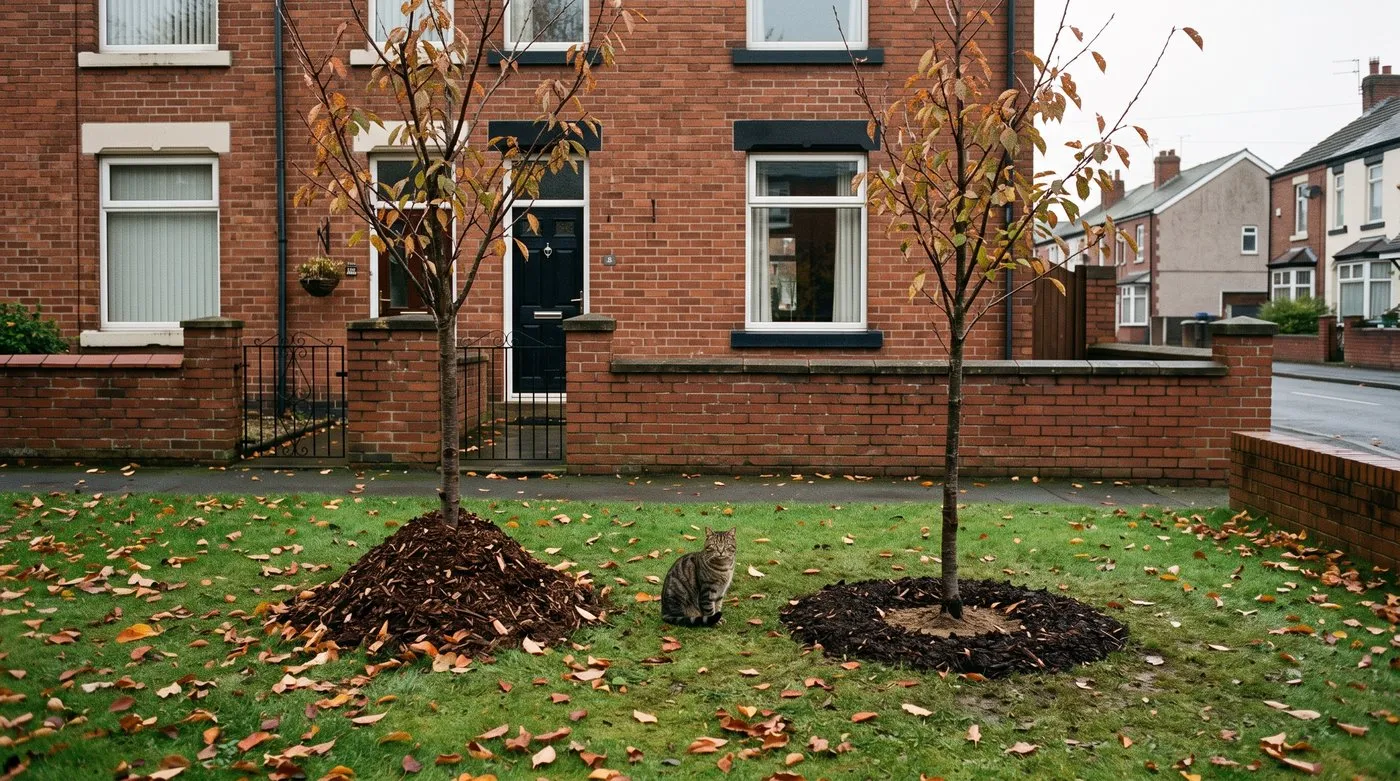
Left, the dreaded mulch volcano. Right, a flat ring with a clear gap round the trunk, which keeps the bark dry and healthy.
Digging bark in. Bark and woodchip belong on top. Mixed into the soil, they starve plants of nitrogen.
Using fresh manure. Fresh manure is too strong and can scorch plants. Use it only once it’s well rotted, dark and crumbly with no strong smell.
Going too thin. A 2cm scatter of bark looks tidy but does very little. Weeds push through and the soil still dries out.
Piling it against stems. A “mulch volcano” round a tree trunk keeps the bark damp and invites rot.
For more ways to keep beds clear, see our tips to prevent weeds without chemicals. You’ll find more soil and compost guides in our how-to section.
Now you know which is which, read our guide to how to make compost at home and start making your own for free.
Frequently asked questions
Is mulch the same as compost?
No, but they overlap. Compost is rotted organic matter that feeds and improves soil. Mulch is any material spread on the surface to smother weeds, hold moisture and protect roots. Garden compost makes a good mulch, but bark, gravel and straw are mulches that are not compost.
Can I use compost as a mulch?
Yes, well-rotted garden compost makes a good mulch. Spread it about 5cm deep over moist soil. It feeds plants as well as covering the soil, but breaks down faster than bark, so top it up each year.
Which is better, mulch or compost?
Neither, because they do different jobs. Compost feeds the soil. A mulch such as bark covers it to cut weeds and watering. Hungry veg beds want compost, while established shrub borders often do better with a longer-lasting bark mulch.
Can you put mulch over compost?
Yes, and it works well. Spread a thin layer of compost to feed the soil, then add bark on top to smother weeds. Keep the total to about 7cm so rain still soaks through.
Does mulch rob nitrogen from the soil?
Fresh woodchip can, but only at the soil surface. Soil microbes borrow nitrogen from the top layer while they break the wood down. Established shrubs barely notice, but seedlings and leafy crops can turn yellow. Composted bark and garden compost don’t cause this.
Will mulch stop weeds completely?
No, it stops most new seedlings but not tough perennial weeds. A good thick mulch blocks the light weed seeds need. Bindweed, couch grass and dandelions push through, so dig those out first.
Our team produces practical UK gardening guidance from source research, contributor records and established horticultural practice. Editorial standards are overseen by Matt W.


