Key takeaways
- Many lawns grow fine without feed, so only feed if you want thick, all-grass turf
- Spring feed is rich in nitrogen for green growth, autumn feed is rich in potassium for toughness
- Never feed in drought, frost or when the ground is waterlogged
- Use the rate on the pack and a spreader, because doubling up scorches the grass
- Water granules in if no rain falls within a day or two
Feeding your lawn is simple once you know the timing. A nitrogen-rich feed in spring greens it up, an optional top-up in summer keeps it going, and a potassium-rich feed in autumn toughens it for winter. Spread it evenly, water it in, and don’t overdo it.
Grass gets mown all summer, and each cut takes a little goodness with it. On poor soil, an unfed lawn can turn thin and pale, which lets weeds and moss move in.
Do you need to feed your lawn at all?
Not always. The RHS notes that most lawns grow perfectly well without it, and a relaxed lawn full of clover and daisies needs no feed at all.
Feeding is worth it when you want a thick, all-grass lawn, or when turf is thin and pale on poor soil. It also helps when children and dogs give it a hammering. Use the least feed that keeps the grass looking good. Before you buy anything, check the real problem isn’t hard ground, shade or drought, because feed won’t fix those.
What does NPK mean on lawn feed?
NPK is the three numbers on every bag of feed. They show how much nitrogen, phosphorus and potassium is inside. Our guide to NPK explained goes into a little more detail.
- Nitrogen (N) makes leaves. It gives grass its rich green colour, so spring and summer feeds have the most.
- Phosphorus (P) helps roots. Established lawns need only a little, so it’s usually the smallest number.
- Potassium (K) toughens grass against frost, disease and wear. Autumn feeds are high in it.
A bag marked 20-5-10 is high in nitrogen, so it’s a spring feed. A bag marked 3-5-12 is high in potassium, so it’s an autumn feed. Bigger numbers aren’t better. The balance is what matters.

Granular lawn feed sitting on the grass before it’s watered in.
Spring feed: give it a nitrogen boost
Spring is when grass wakes up and starts growing hard, so it wants nitrogen to build new leaf. A nitrogen-rich feed thickens the turf and helps it crowd out weeds.
When: Late March to mid-April in most of England and Wales. In Scotland and northern England, wait until mid-April when the ground has warmed up. It fits nicely into a weekend of spring garden jobs.
Which feed: Pick a spring lawn feed rather than a general fertiliser. Some also contain a weedkiller (feed and weed) or a moss killer such as lawn sand. If your lawn has few weeds, a plain spring feed is cheaper and simpler. Stick to the iron rate on the label, as too much iron sulphate scorches the lawn black.
How much: Weigh out what the pack says per square metre. Doubling up doesn’t give a greener lawn. It gives brown, scorched patches.

Fed grass on the left, unfed on the right. Pale, thin grass is an open door for weeds and moss.
Summer feed: an optional top-up
A summer feed is optional. It helps lawns that take a lot of wear from children, pets and barbecues. The RHS advises no spring or summer feed after August. If dogs are doing most of the damage, feeding is only part of the answer. Our guide to dog-proofing your lawn covers tougher grasses and toilet areas too.
- First summer feed: early to mid-June, using a more balanced feed with less nitrogen than in spring.
- Second summer feed: early August, only for hard-working lawns or poor soil. Skip it if the lawn looks happy.
Leaving short clippings on the lawn also returns some goodness to the soil. Our guide on whether to leave grass clippings on the lawn explains how.
If there’s a hosepipe ban and you can’t water, don’t feed. Feed needs moisture to reach the roots, and on dry grass it just scorches.
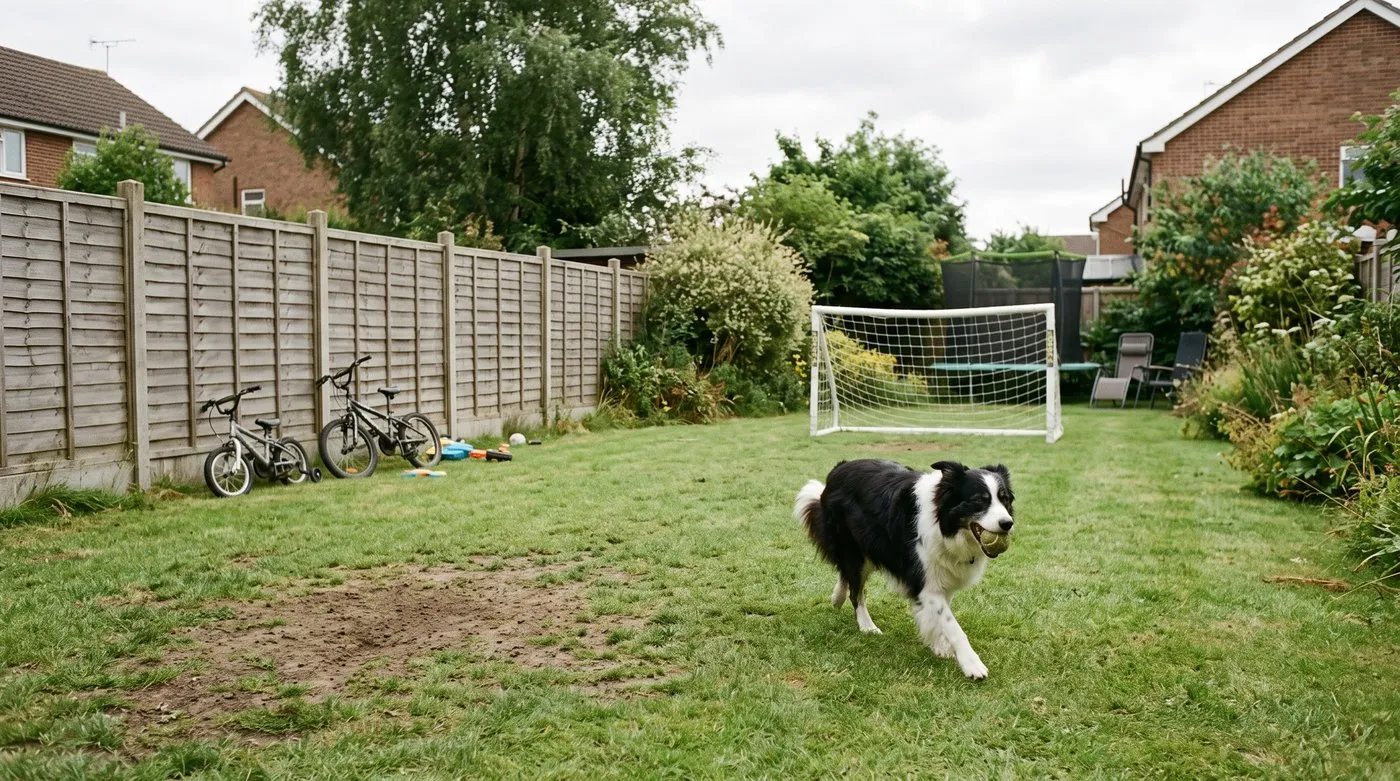
Lawns that get plenty of wear from children and dogs are the ones that benefit most from a summer top-up. A happy, quiet lawn can skip it.
Autumn feed: toughen it up for winter
An autumn feed is low in nitrogen and high in potassium. It builds roots and toughness rather than soft new leaf, which helps the grass cope with frost, wet and diseases like red thread.
When: September to mid-October, while the grass is still growing a little.
Never use a spring feed in autumn. All that nitrogen pushes out soft, lush growth just as the cold arrives, and frost and fungus love it. It’s one of the most common lawn mistakes.
Autumn is also a good time to ease compaction after a busy summer. Push a garden fork into the lawn every so often, or use a hollow-tine aerator, before you feed. On heavy clay, improving the drainage helps too.
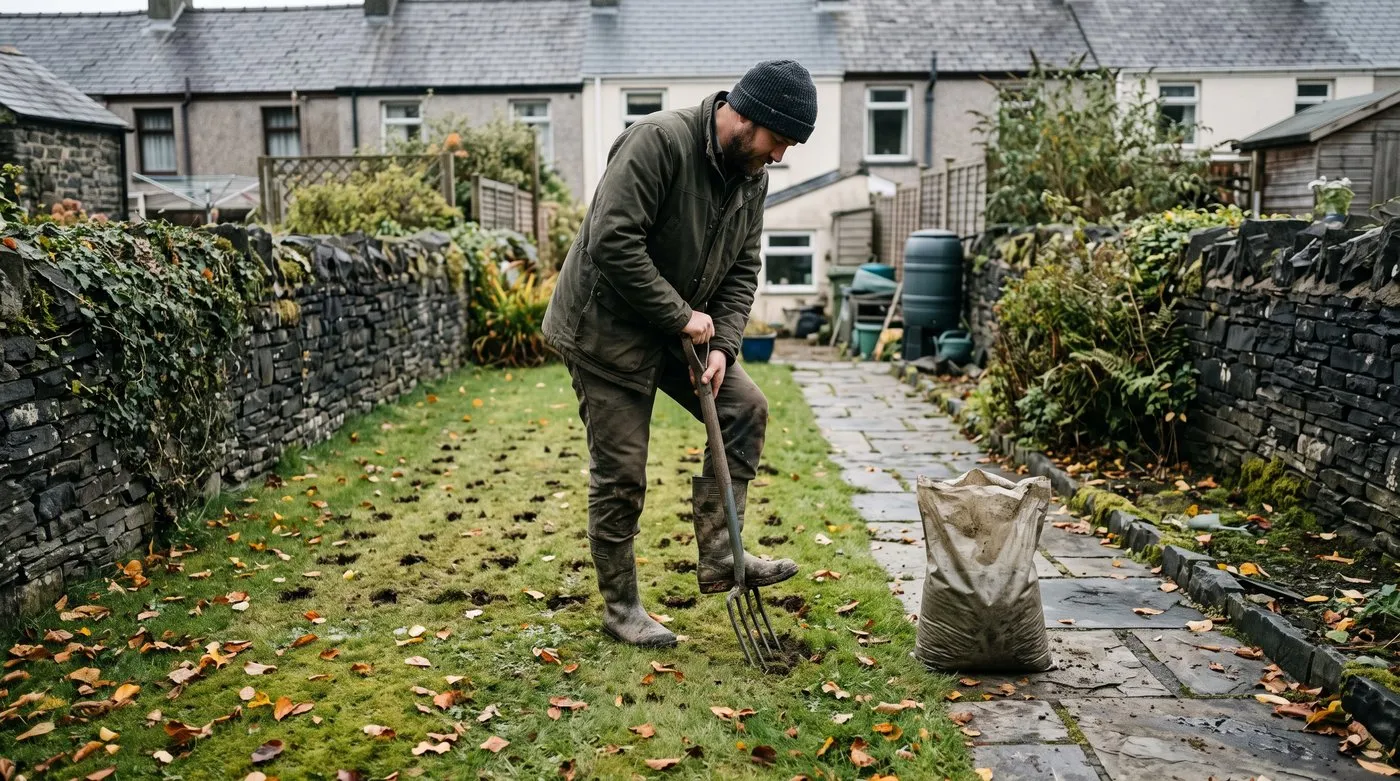
Spiking a tired lawn before the autumn feed lets air, water and goodness reach the roots. Push the fork in every 10cm or so.
Spring, summer or autumn feed: which one when?
| Season | Feed type | What it does |
|---|---|---|
| Spring (late March to April) | High nitrogen | Greens up and thickens the lawn |
| Early summer (June) | Balanced | Keeps growth steady |
| Late summer (August, optional) | Balanced | Helps a worn lawn recover |
| Autumn (September to October) | High potassium, low nitrogen | Builds roots and winter toughness |
Month-by-month lawn feeding calendar
| Month | What to do |
|---|---|
| January | No feeding. Stay off frozen grass. |
| February | No feeding. Check your spreader and buy feed. |
| March | Spring feed from late March if the grass is growing. |
| April | Spring feed if you didn’t in March. |
| May | No feeding. Mow regularly. |
| June | First summer feed. |
| July | No feeding. Raise the mower blades in dry spells. |
| August | Optional second summer feed for busy lawns. |
| September | Autumn feed. Spike compacted areas first. |
| October | Autumn feed if you didn’t in September. |
| November | No feeding. Last mow on a high setting. |
| December | No feeding. Keep off frosty grass. |
In Scotland and the north, shift the spring feed to mid-April and do the autumn feed in early September.
Organic or synthetic lawn feed?
Neither wins every time. It depends on how fast you want results.
Synthetic (mineral) feeds
These dissolve quickly and green the lawn up within a week or so. They’re easy to find and good value, and slow-release versions keep feeding for weeks. On the downside, they do nothing for the soil itself and scorch more easily if spread unevenly.
Organic feeds
These are made from things like seaweed, chicken manure and bone meal. Soil life breaks them down slowly, so they feed gently over several weeks and rarely scorch. It’s the same idea as adding homemade compost to your borders. They take a couple of weeks to show and cost a bit more.
A handy middle way is a quick synthetic feed in spring, then organic feeds for summer and autumn.
How to apply lawn feed evenly
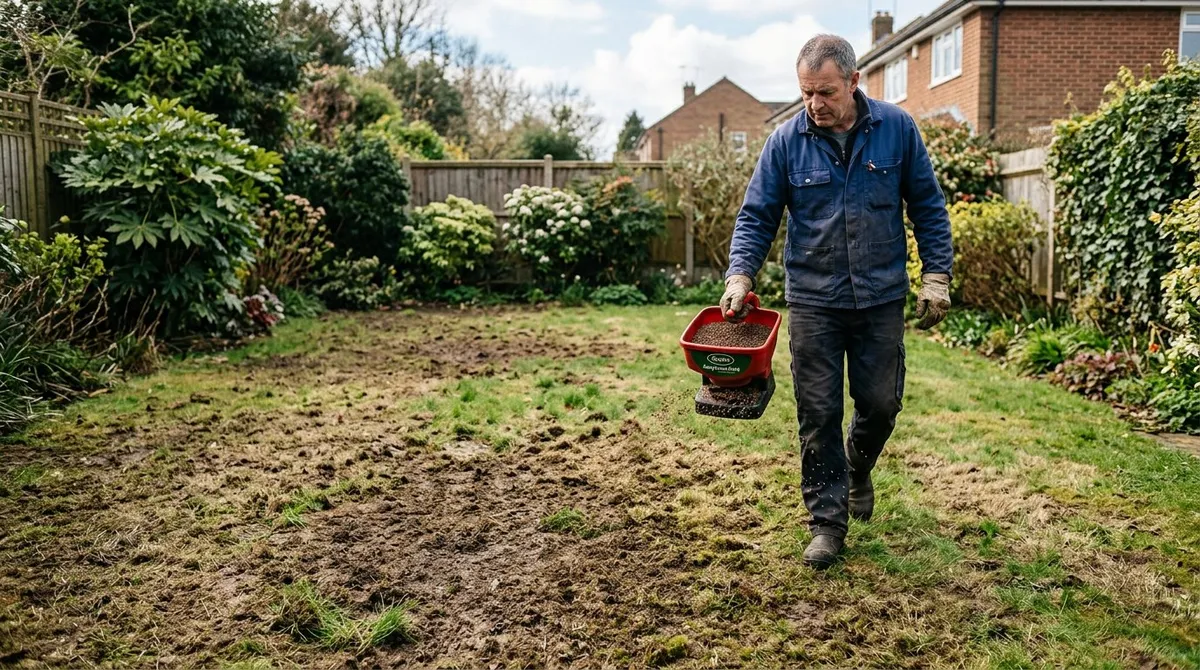
Spread feed evenly at the rate on the pack, ideally on a calm day with rain on the way. Patchy spreading leaves green stripes next to pale or scorched ones, and they take weeks to grow out.

A rotary spreader. Walk at a steady pace in overlapping strips for even cover.
Using a broadcast spreader
A wheeled broadcast spreader is the easiest way to feed most lawns. Set the dial to the rate on the feed pack. Spread half the feed walking up and down, then the other half walking across. That criss-cross pattern stops you missing strips.
Using a drop spreader
A drop spreader lets granules fall straight down in a narrow band. It’s neat for small lawns and edges next to flower beds. Any gap between passes shows up as a yellow stripe, so overlap each pass slightly.
Should you mow before or after feeding?
Mow a day or two before you feed. Shorter grass lets the granules drop to the soil. Then leave it a few days so rain can wash the feed in and the mower doesn’t pick it up.
Feed-and-weed is different. The weedkiller needs leaf to land on, so the label usually says not to mow for a few days either side. Follow the label, and don’t compost the first clippings unless it says you can.
Feeding by hand
Scattering by hand is fine for a tiny lawn. Wear gloves, measure the feed into a bucket and throw it in gentle sweeps. For anything bigger than a couple of parking spaces, get a spreader. Hand spreading is almost always patchy.
Watering in your lawn feed
Water granules in if no rain falls within a day or two. They need moisture to dissolve and reach the roots.
- Rain forecast? Spread the feed and let the weather do the work. This is the easiest way.
- No rain coming? Give the lawn a gentle, thorough soak with a sprinkler. Around 15-20 minutes is usually enough.
- Liquid feed? No need to water in. Apply it early or late in the day, not in hot midday sun.
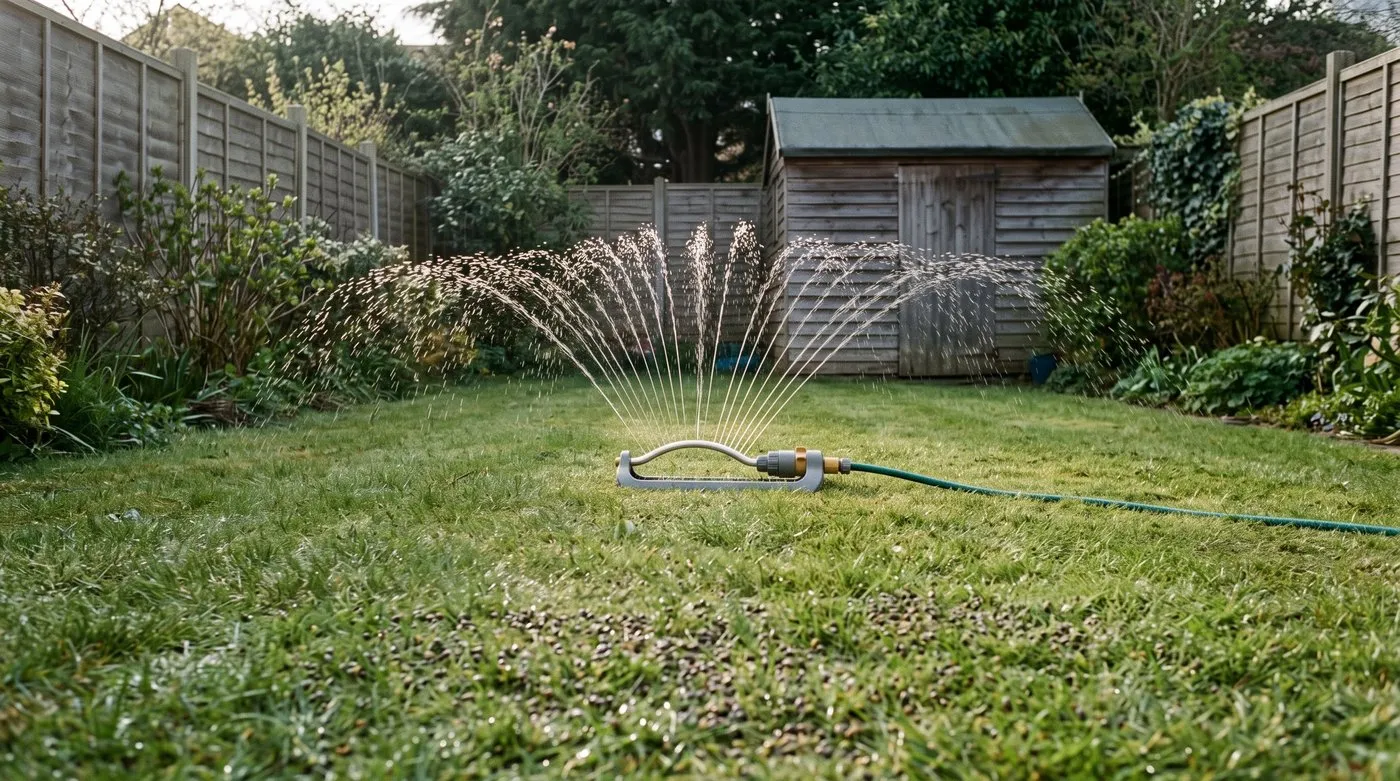
No rain on the way? A gentle 15 to 20 minutes under the sprinkler dissolves the granules and washes them down to the roots.
When not to feed your lawn
Hold back in these four situations. Feed does more harm than good.
During drought
Dry, stressed grass can’t use the feed, and the granules scorch it. Wait until rain returns and the grass starts to green up.
During frost
Frozen grass can’t take anything in, so the feed washes away in the thaw. Keep off frozen lawns altogether, as footprints damage the grass.
On waterlogged soil
Roots can’t work in soggy ground, and the feed just runs off. If your lawn floods often, sort the drainage before spending money on feed.
When grass is newly sown
Normal lawn feed is too strong for seedlings. Wait until new grass has been mown three times, then use a gentle starter feed. Most seed packs give feeding advice.
Can you feed and seed at the same time?
Yes with a plain feed or a pre-seed feed, but never with feed and weed. Lawn weedkillers stop grass seed coming up and harm young seedlings. Labels usually give a wait of several weeks before you can sow. If moss is a problem, kill it first and rake it out before sowing. Our guide to fixing bare and patchy areas walks you through it.
Common lawn feeding mistakes
Most feeding problems come from a handful of easy mistakes.
1. Overfeeding
More isn’t better. Too much feed means soft growth that needs mowing every few days, and too much can scorch the lawn brown. Measure your lawn and weigh out the right amount. At 35g per square metre, a 50 square metre lawn needs 1.75kg, and no more.
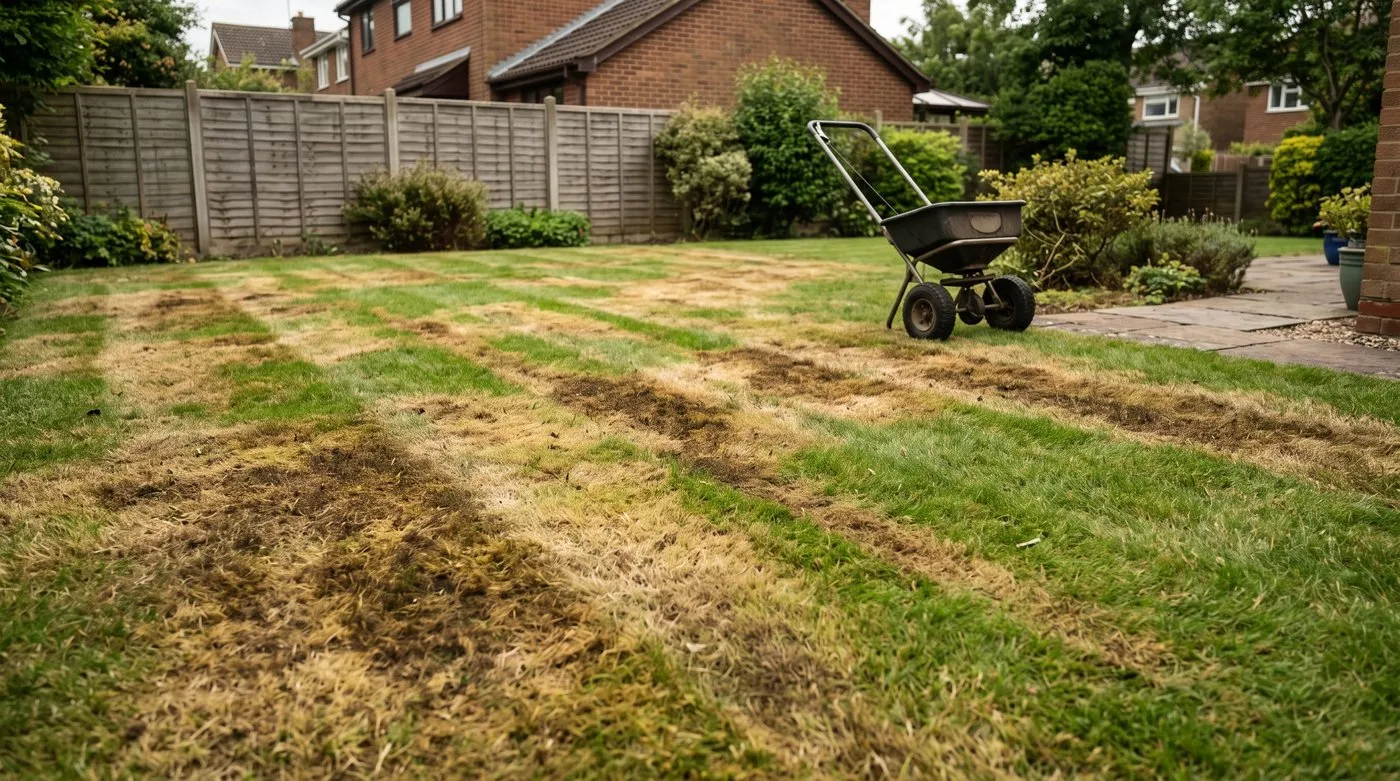
Doubling up doesn’t give a greener lawn, just scorched brown patches like these. Weigh out the amount on the pack for your lawn’s size.
2. Feeding at the wrong time of year
A spring feed in October pushes out soft growth for the first frost to kill. An autumn feed in spring gives the grass the wrong thing just when it wants to grow. Match the bag to the season.
3. Uneven spreading
Rushing, running the hopper empty or skipping overlaps all leave stripes. A good layer of mulch hides bare soil in borders, but nothing hides stripy feeding on a lawn. Take your time.
4. Not watering in
Granules left on dry grass in warm sunshine can bleach the blades yellow. If rain isn’t on the way, water the feed in.
5. Ignoring very acid soil
Lawn grasses like slightly acid soil, so most lawns don’t need lime. On very acid soil, though, feed doesn’t work as well. A cheap pH test kit tells you in minutes. Only lime if the test shows very acid soil, and do it in winter.
Liquid feeds for a quick green-up
Liquid feeds work faster than granules but don’t last as long. Apply them with a watering can or hose-end feeder.
They green the grass up within days, which is handy before a party. They’re also gentler in hot weather, because there are no granules to scorch the blades. The catch is they only last a few weeks, so you need to reapply more often. They suit small lawns where a spreader isn’t worth buying, or a top-up between granular feeds.
Feeding a lawn on clay or sandy soil
Feed clay a little less often, and sandy soil little and often.
Clay soil holds on to feed well but drains slowly. Spiking it before you feed helps the goodness reach the roots. If your garden is on heavy clay, our guide to improving clay soil covers the basics.
Sandy soil drains fast, and feed washes through quickly. Use lighter, more frequent feeds, and pick slow-release or organic ones. A top-dressing of fine compost in autumn helps sandy soil hold on to goodness.
Loam is the easy one. Normal rates and timings work just as they say on the bag.
A simple feeding plan for every year
Sticking to a plan matters more than any one feed. Test your soil in the first year, then feed in spring, summer and autumn at the rates on the pack. Watch how the lawn responds and adjust next year.
Once the lawn is thick and healthy, try dropping the summer feed or switching to organic feeds. In autumn, after spiking, brush a thin layer of loam, sand and compost into the holes to improve the soil.
That’s really all there is to it. Pick the right feed for the season, spread it evenly, water it in and don’t overdo it. For every other lawn job through the year, see our lawn care calendar.
Frequently asked questions
When should I start feeding my lawn in the UK?
Late March to early April is the time to start. Wait until the grass is growing again and the soil has warmed up. Feed on cold, dormant grass just sits there and washes away.
How often should I feed my lawn?
Up to three or four times a year. Give a spring feed in late March or April, a summer feed in June, an optional one in August, and an autumn feed in September or October. More than that is too much.
Can I feed my lawn in winter?
No, skip feeding from November to March. The grass is barely growing, so it can’t use the feed. It just washes off into drains instead.
What does NPK mean on lawn feed?
It stands for nitrogen, phosphorus and potassium. The three numbers on the bag show how much of each is inside. Nitrogen greens up the grass, phosphorus helps roots, and potassium toughens the grass for winter.
Is organic lawn feed better than synthetic?
Both work, just at different speeds. Organic feeds act slowly and feed the soil life too. Synthetic feeds green the lawn up faster. Plenty of gardeners use a quick feed in spring and organic ones later in the year.
What happens if I put too much feed on my lawn?
The grass scorches and goes brown or yellow in patches. Water the area well for a couple of weeks and mild scorch usually grows out. Badly scorched patches may need reseeding.
Should I water my lawn after feeding?
Yes, if no rain is due within a day or two. Water washes the granules down to the roots. Granules left sitting on dry grass in the sun can scorch it.
When can pets and children go on the lawn after feeding?
Check the label, because products differ. With a plain granular feed, most labels say it’s fine once the feed is watered in and the grass is dry. Feed-and-weed and moss killers often need a longer wait, and iron can stain paws and paving.
Related guides
Has your lawn gone brown in a heatwave? Our lawn drought recovery UK guide shows how to check the grass is still alive and nurse it back.
Our team produces practical UK gardening guidance from source research, contributor records and established horticultural practice. Editorial standards are overseen by Matt W.