Key takeaways
- Too much nitrogen gives leafy, floppy plants with fewer flowers for bees
- Most established pollinator borders need no regular feed at all
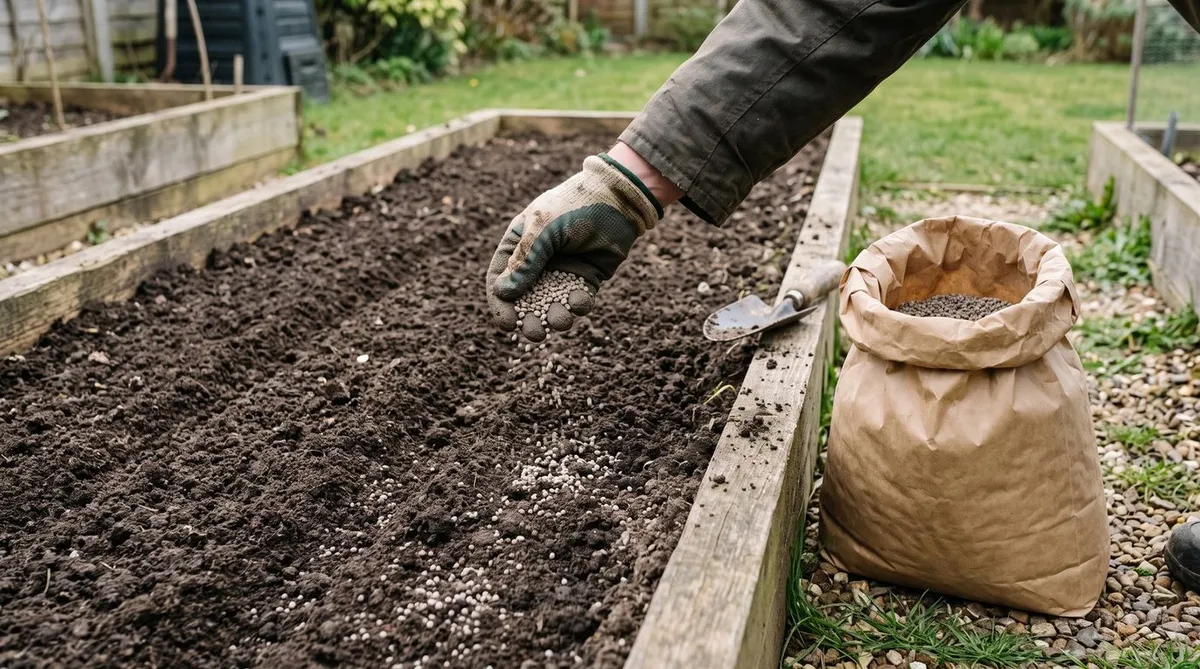
- A 5cm mulch of garden compost each autumn feeds the soil gently
- If you do feed, pick one with more potassium than nitrogen, such as a tomato-style or seaweed feed
- Many wildflowers and Mediterranean herbs flower best on poor soil
- Test the soil before adding anything if plants look weak
Most pollinator borders need far less feeding than you might think. Too much fertiliser, especially nitrogen, gives you big leafy plants with fewer flowers. Fewer flowers means less food for bees, butterflies and hoverflies.
So the best feeding plan for a bee-friendly border is often the simplest one: a layer of compost in autumn, and not much else. Here’s how NPK affects flowers, when a feed helps and when to leave well alone. For general feeding of veg, fruit and pots, see our guide on how to feed garden plants.
What NPK means for flowering plants
NPK stands for the three main plant nutrients, always listed in this order on the bag:
- N - nitrogen grows leaves and stems.
- P - phosphorus helps roots get going.
- K - potassium supports flowers, fruit and sturdy stems.
The numbers show how much of each the feed contains. A lawn feed is high in N. A tomato feed is high in K. A general feed such as Growmore has roughly equal amounts of each.
For a flowering border, nitrogen is the one to watch. Our guide to NPK explained goes into reading a fertiliser label in more detail.
Why too much nitrogen means fewer flowers
Nitrogen tells a plant to grow leaves. Give it lots and the plant puts its energy into lush green growth rather than flower buds.
That soft, sappy growth brings other problems:
- Floppy stems that collapse in wind and rain
- More aphids, which love soft, fast growth
- More slug damage on tender leaves
- A shorter show, as tall plants flop and get cut back early
Plants grown a little hungry stay shorter and wirier. They hold themselves up better and tend to flower for longer. Many of the best bee plants, such as lavender, thyme, marjoram and salvias, come from dry, poor hillsides and are happiest without feeding.

Lavender is happiest in lean, well-drained soil. Skip the feed and it’ll reward you with masses of flowers for the bees.
Does fertiliser change nectar for bees?
Fertiliser can change how much nectar and pollen a plant makes, but the effect varies a lot between plants. What’s clear is that a big leafy plant with few flowers offers bees less food than a smaller plant covered in blooms.
So don’t judge a border by how lush it looks. Judge it by how many flowers it has and how busy the bees are. For plants that bees love, browse our list of bee-friendly garden plants.
When a pollinator border does need feeding
Feed only when plants show they need it. Signs include pale, yellowing leaves, very slow growth or poor flowering on plants that usually do well.
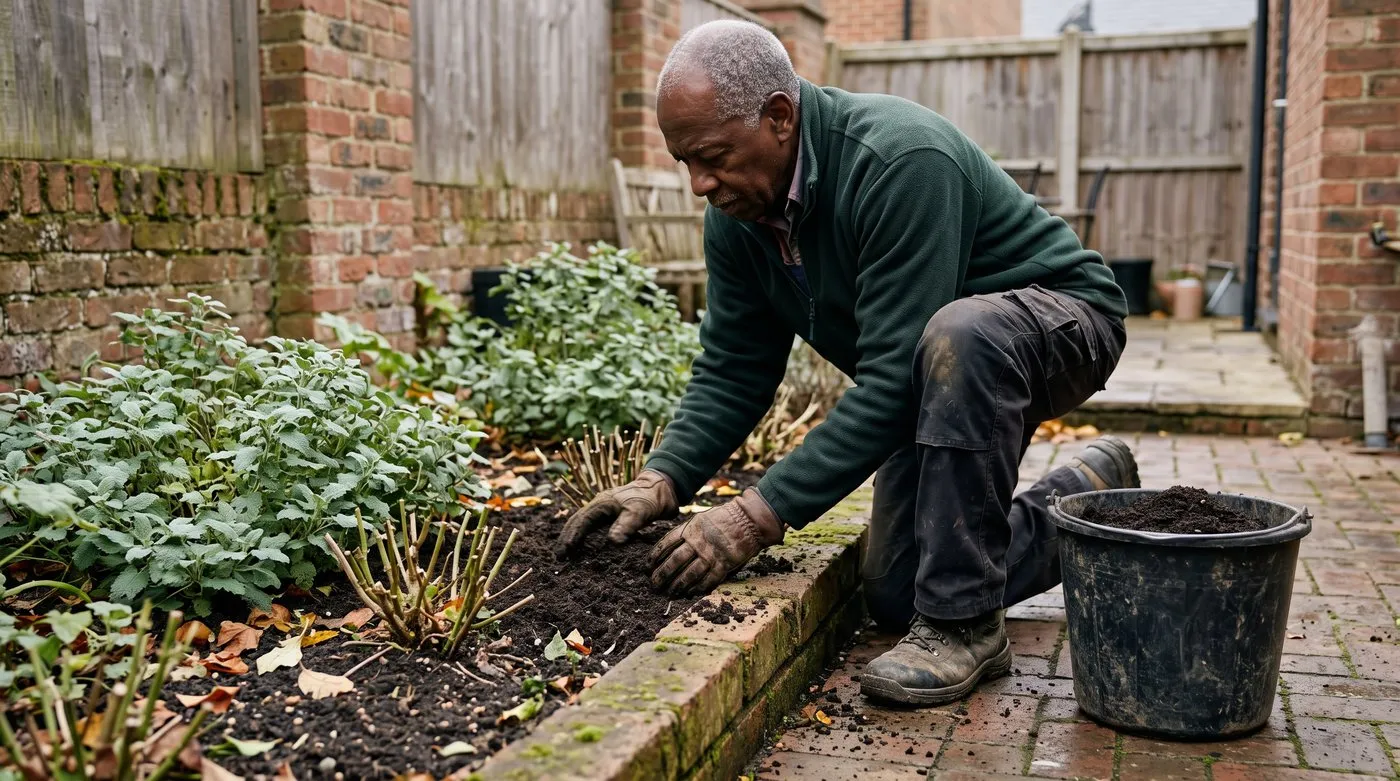
An autumn layer of compost is usually all the feeding a bee border needs.
Before reaching for a bag, check the basics. Poor flowering is more often down to shade, drought, overcrowding or a plant that needs dividing. If you’re unsure, a simple soil test will show whether anything is really missing. Our guide to soil testing explains how.
If a feed is needed:
- Choose a low-nitrogen feed where the K number is higher than the N.
- Feed once in spring, as growth starts, at the rate on the label.
- Leave first-year plants unfed. The compost they were planted in is enough.
- Stop by midsummer. Late feeding pushes soft growth that won’t ripen before winter.
Which feeds suit a pollinator border?
The gentlest options are slow, natural feeds that build the soil rather than force growth.
| Feed | What it gives | Use it for |
|---|---|---|
| Garden compost or leaf mould | Gentle all-round goodness | Autumn mulch on every border |
| Seaweed feed | Mild feed with trace elements | A spring pick-me-up |
| Comfrey liquid feed | Rich in potassium | Hungry flowering plants in pots |
| Tomato feed | High potassium | Containers and long-flowering annuals |
| Lawn feed or high-N pellets | Mostly nitrogen | Keep away from flower borders |
Garden compost is the best all-rounder. Spread a 5cm layer in autumn, keeping it clear of plant crowns. It feeds the soil slowly and helps it hold water.
Seaweed comes as a liquid or a meal and is a mild, gentle feed. Our seaweed feed guide covers how to use it. Comfrey liquid is a free, potassium-rich feed you can make from your own plants. See our comfrey liquid feed recipe.

Comfrey tea and seaweed are gentle, natural feeds. Use them lightly on flowering plants, and only when they need a boost.
Pollinator plants that prefer poor soil
Lots of top bee plants flower best when they’re left hungry. Plant these in sunny, well-drained spots and don’t feed them:
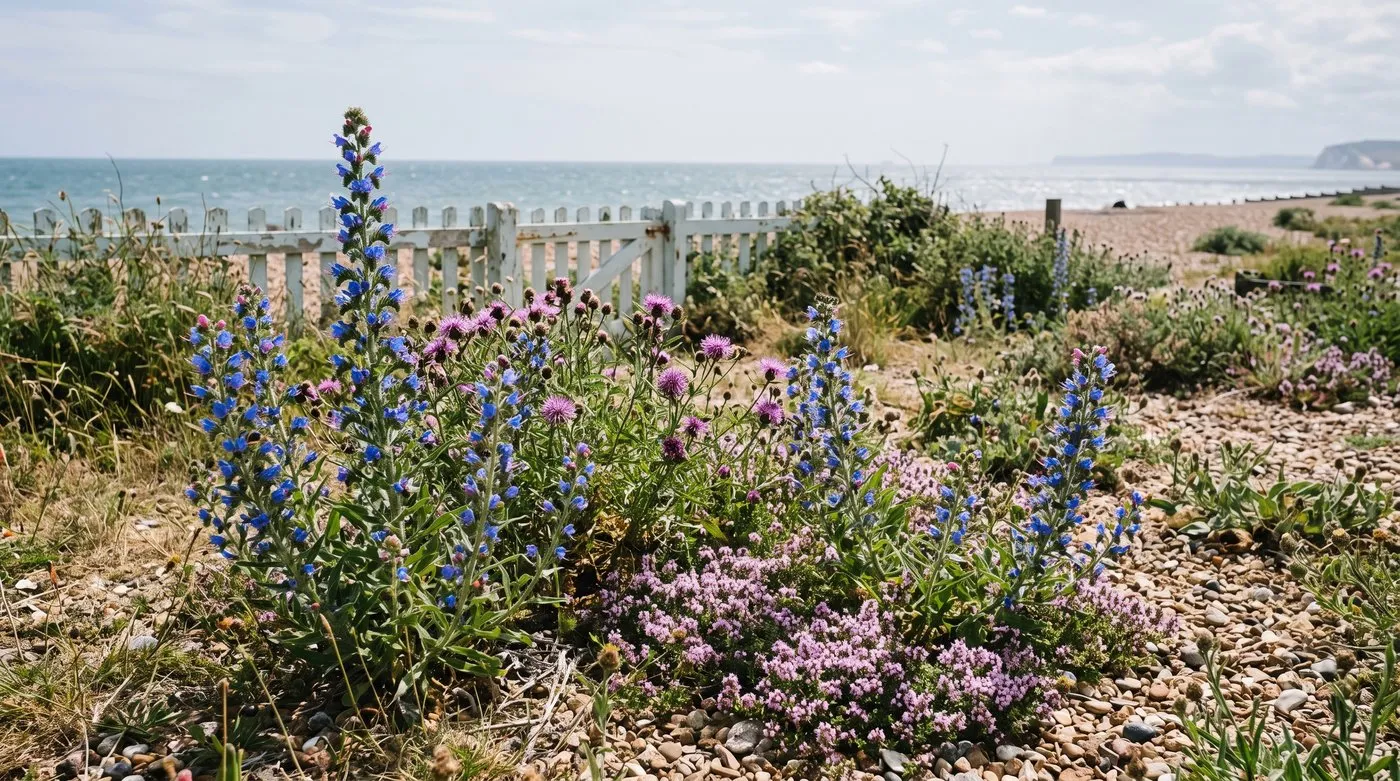
Viper’s bugloss and knapweed thrive in thin, stony soil. No feed needed, and the bees love them.
- Lavender (Lavandula angustifolia)
- Thyme and marjoram
- Catmint (Nepeta)
- Viper’s bugloss (Echium vulgare)
- Knapweed (Centaurea)
- Bird’s-foot trefoil
- Wild flowers in a meadow or lawn patch
Wildflowers in particular need poor soil. Feeding helps grasses take over and crowd out the flowers. Our guide on how to create a wildflower lawn shows how to keep fertility low.
Pet note: Lavender and catmint are not pet-safe if eaten in quantity, so keep an eye on dogs that like to chew plants.
Common feeding mistakes in pollinator borders
- Using lawn feed near borders. Weed-and-feed and high-nitrogen lawn feeds drift onto beds and push leafy growth.
- Feeding on autopilot. A “feed every two weeks” label on a bottle doesn’t mean your border needs it.
- Digging in fresh manure. Fresh manure is strong. Only use well-rotted manure, and only as a thin mulch on hungry plants.
- Feeding Mediterranean herbs. Lavender, thyme and rosemary go soft and short-lived when fed.
- Blaming the soil for shade. Poor flowering is often down to too little sun, not too little feed.
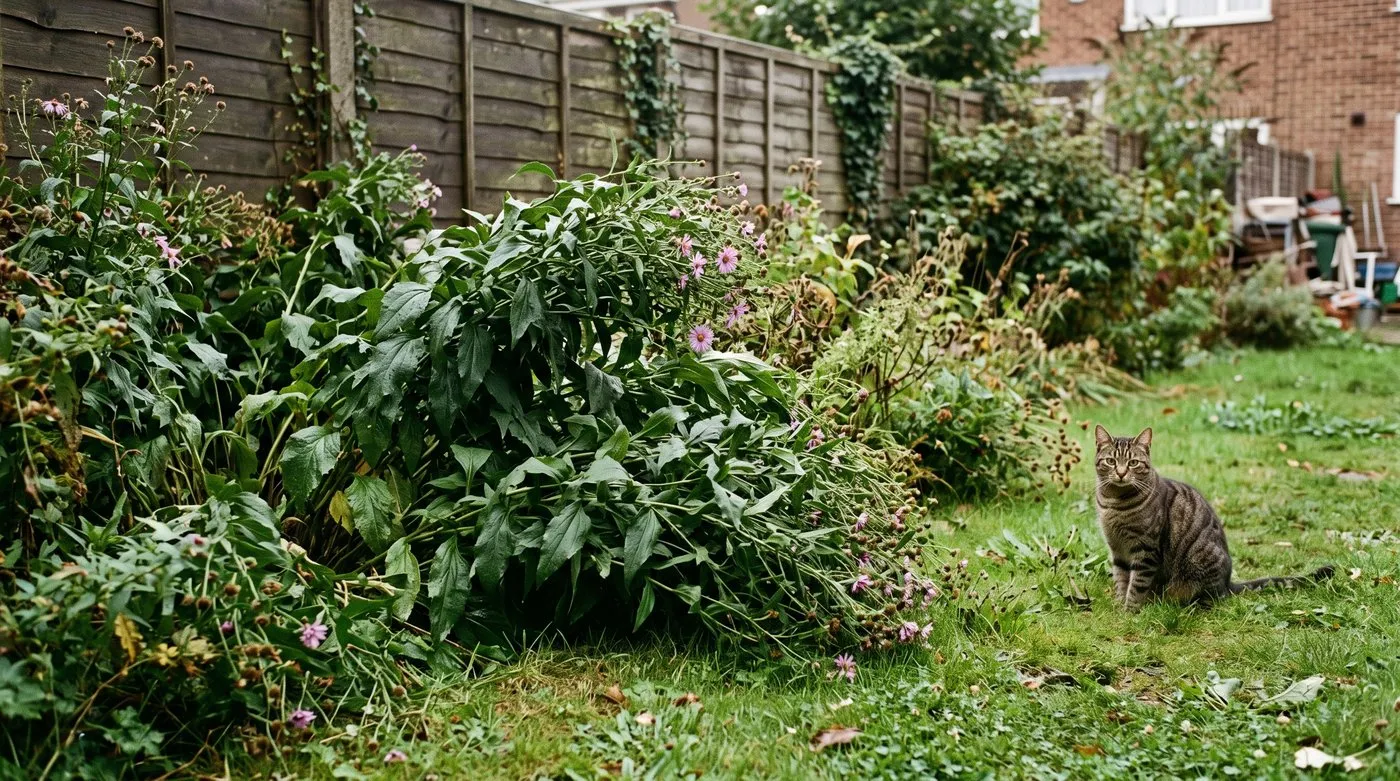
Lush, floppy growth with hardly any flowers is the classic sign of too much nitrogen.
Month-by-month feeding calendar for a pollinator border
| Month | What to do |
|---|---|
| January to February | Plan new planting. Test the soil if plants struggled last year |
| March | Cut back old stems once new growth shows. Feed only plants that need it, with a low-nitrogen feed |
| April to May | No feeding needed. Water new plants in dry spells |
| June to August | Deadhead to keep flowers coming. Use tomato or comfrey feed on flowering pots only |
| September | Divide crowded clumps. Leave seedheads for birds |
| October to November | Spread 5cm of garden compost or leaf mould around plants |
| December | Leave hollow stems standing for overwintering insects |
Frequently asked questions
Does high-nitrogen fertiliser reduce flowering?
Yes, too much nitrogen usually means more leaves and fewer flowers. The soft, sappy growth also flops in rain and attracts aphids. Flowering perennials, annuals and herbs show it most. Keep lawn feeds and high-nitrogen pellets away from flower borders.
What NPK ratio is best for pollinator plants?
Most need no feed, but if you feed, choose one low in nitrogen. Look for a feed where the K (potassium) number is higher than the N. Tomato feed and seaweed feeds fit the bill. Potassium supports flowering and sturdy stems.
Does fertiliser affect nectar for bees?
It can, but the effect varies from plant to plant. Overfed plants often grow bigger without offering bees any more food. Fewer flowers on a leafy plant means less nectar and pollen overall. For pollinator borders, light or no feeding is the safest choice.
How often should I feed a pollinator border?
Most established pollinator borders need no regular feeding. A 5cm mulch of garden compost each autumn is usually plenty. Many wildflowers and nectar-rich perennials prefer poorer soil. Test the soil if plants look weak before you add anything.
Are organic fertilisers better for pollinators?
They are gentler, because most release nutrients slowly. That makes a sudden flush of soft leaf less likely. Garden compost, seaweed and comfrey feed are all good choices. Organic or not, the main thing is not to overfeed.
Should I feed wildflowers?
No, wildflowers do best on poor, unfed soil. Feeding helps grasses and coarse weeds crowd out the flowers. If a wildflower patch is too lush, remove the cuttings after mowing to slowly lower fertility.
Ready to weigh up your options? Read our comparison of artificial and natural fertilisers, or find more ideas in our wildlife gardening guides.
Our team produces practical UK gardening guidance from source research, contributor records and established horticultural practice. Editorial standards are overseen by Matt W.