Key takeaways
- Use about 1kg of chopped comfrey leaves to 10 litres of water
- The water method takes 4 to 6 weeks and smells strongly, so keep it away from the house
- The no-water method gives a stronger, less smelly concentrate after about 3 weeks
- Dilute water-method feed about 1 to 10, and concentrate about 1 to 15 or 1 to 20
- Feed tomatoes, peppers and cucumbers weekly once the first flowers set
- Don't feed seedlings; wait until plants are established and growing strongly
To make comfrey liquid feed, pack chopped comfrey leaves into a bucket of water, leave them to rot for a month or so, then strain and dilute. It’s a free, potassium-rich feed that tomatoes and other fruiting crops love.
This guide is the quick recipe card: amounts, timings, two brewing methods and a dilution table for each crop. If you’d like to brew nettles too, see our guide to making comfrey and nettle feed. For planting and cutting your own comfrey, read our comfrey growing guide.
Which comfrey should you use?
Any comfrey leaves will make a feed. Bocking 14 is the one most gardeners grow for it. It’s a sterile variety, so it doesn’t self-seed around the garden, and it regrows quickly after cutting.
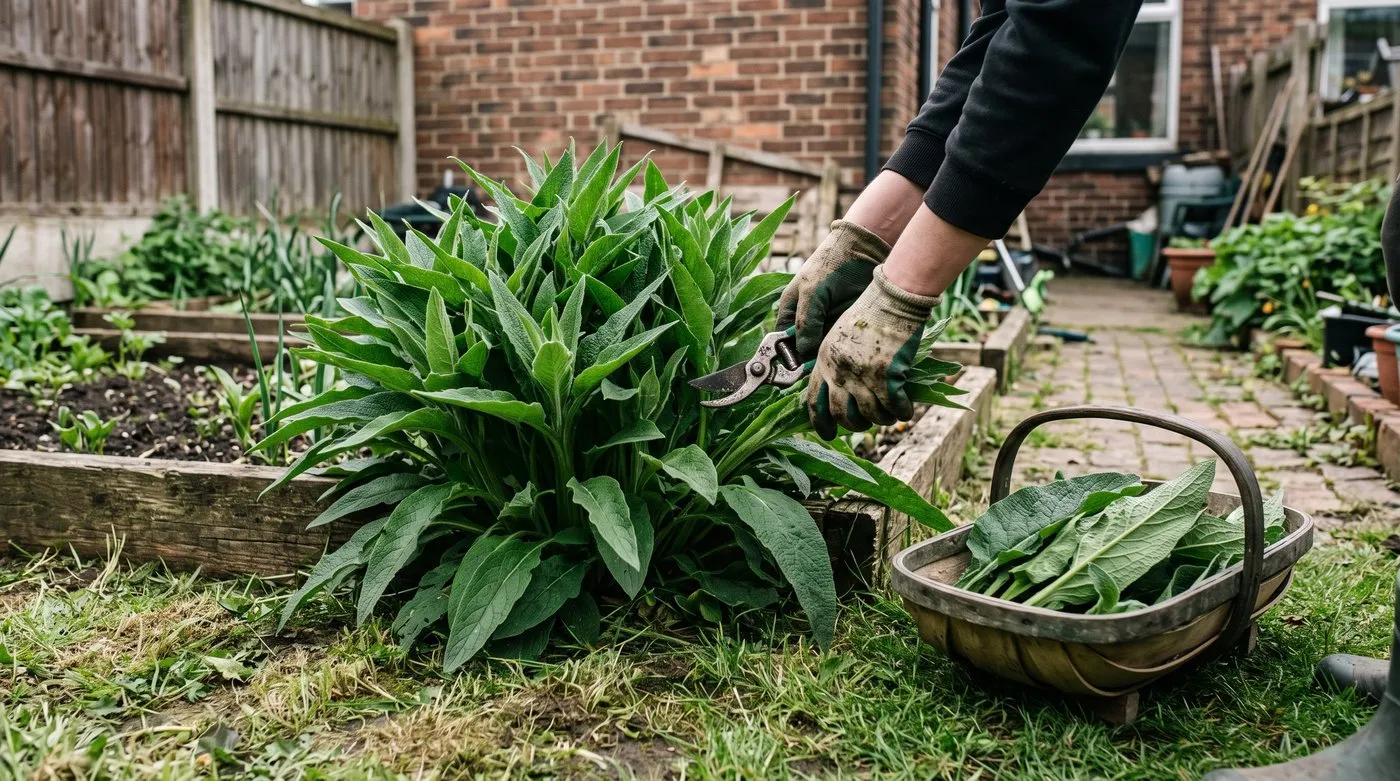
Cut comfrey when it’s about knee high, before it flowers. It soon grows back for another cut.
Cut the leaves when the plants are about 60cm tall, before they flower. You can cut an established plant several times between spring and early autumn. Wear gloves, as the bristly leaves can irritate skin. If you’d like more plants, our guide to Bocking 14 propagation shows how to grow them from root cuttings.
What you need
- A bucket or water butt with a lid
- Comfrey leaves and shears or secateurs
- Rainwater if you have it, or tap water
- An old pillowcase or fine net for straining
- Labelled containers with caps for storing the feed
- A watering can and a measuring jug
For the no-water method, you’ll also need a second bucket, a drill, a few bricks and something heavy to press the leaves down.
Recipe 1: the water method
This is the classic recipe. It’s easy, but it smells strongly while it brews.
- Chop the leaves roughly. Chopped leaves rot down faster than whole ones.
- Weigh them. Use about 1kg of leaves for every 10 litres of water.
- Pack them into the bucket and top up with water. Leave a little space at the top.
- Cover loosely with a lid. Don’t seal it airtight.
- Leave it for 4 to 6 weeks. Give it a stir now and then. It’s ready when the leaves have turned to sludge and the liquid is dark brown.
- Strain it through an old pillowcase into a second bucket. Put the sludge on the compost heap.
Put the bucket at the far end of the garden or plot, away from windows and neighbours. On a still day, you’ll smell it from a distance.

Chop the leaves roughly as they go in. They break down much faster than whole leaves.
Recipe 2: the no-water concentrate
This method makes a stronger, darker concentrate and smells much less. The leaves rot in their own juice and the liquid drips out of the bottom.
- Drill a few small holes in the base of one bucket.
- Stand it on bricks over a second bucket that will catch the liquid.
- Pack the top bucket firmly with comfrey leaves.
- Weigh them down with a plate and a brick.
- Cover it to keep the rain out, as rain dilutes the concentrate.
- Collect the dark liquid as it drips through. The first usually appears after two or three weeks.
Top up with fresh leaves after each cut to keep it going through the summer.

Leaves pressed down under a plate and brick slowly drip a dark, strong concentrate into the bucket below.
Water method or no-water method?
| Water method | No-water concentrate | |
|---|---|---|
| Ready in | 4 to 6 weeks | About 3 weeks for the first drips |
| Strength | Medium | Strong |
| Dilution | About 1 to 10 | About 1 to 15 or 1 to 20 |
| Smell | Very strong | Much milder |
| Best for | Big batches, simple kit | Small spaces, storing for later |
How much to dilute comfrey feed
Dilute water-method feed about 1 part to 10 parts water. Dilute the concentrate about 1 to 15 or 1 to 20. The diluted feed should look like weak tea.

Measure it out with a jug. Diluted feed should look like weak tea, not strong coffee.
If your feed looks very dark and thick, add more water. Stronger isn’t better: feed that’s too strong can scorch roots and leaves, just like a bought feed used too strongly.
Water it onto damp soil round the base of the plant, not over the leaves.
Dilution and feeding by crop
These rates are for water-method feed. For concentrate, add roughly half as much water again.
| Crop | Dilution | How often | When |
|---|---|---|---|
| Tomatoes | 1 to 10 | Weekly | From first flowers setting until the last fruits ripen |
| Peppers and chillies | 1 to 10 | Weekly | From first flowers |
| Cucumbers and aubergines | 1 to 10 | Weekly | From first fruits setting |
| Courgettes and squash | 1 to 10 | Every 10 to 14 days | From first flowers |
| Runner and French beans | 1 to 15 | Every couple of weeks | From first flowers |
| Flowering pots and baskets | 1 to 15 | Every couple of weeks | Summer |
| Fruit bushes and strawberries | 1 to 15 | Now and then | Spring and after fruiting |
Skip it for: seedlings and young plants, leafy crops such as cabbage and lettuce, which want nitrogen more than potassium, and root crops, which rarely need feeding in decent soil.
Our guide to feeding garden plants explains how to match feeds to different plants.
Comfrey feed through the season
Comfrey is mostly potassium, which helps flowering and fruiting. Earlier in the season, young plants need more nitrogen for leafy growth.
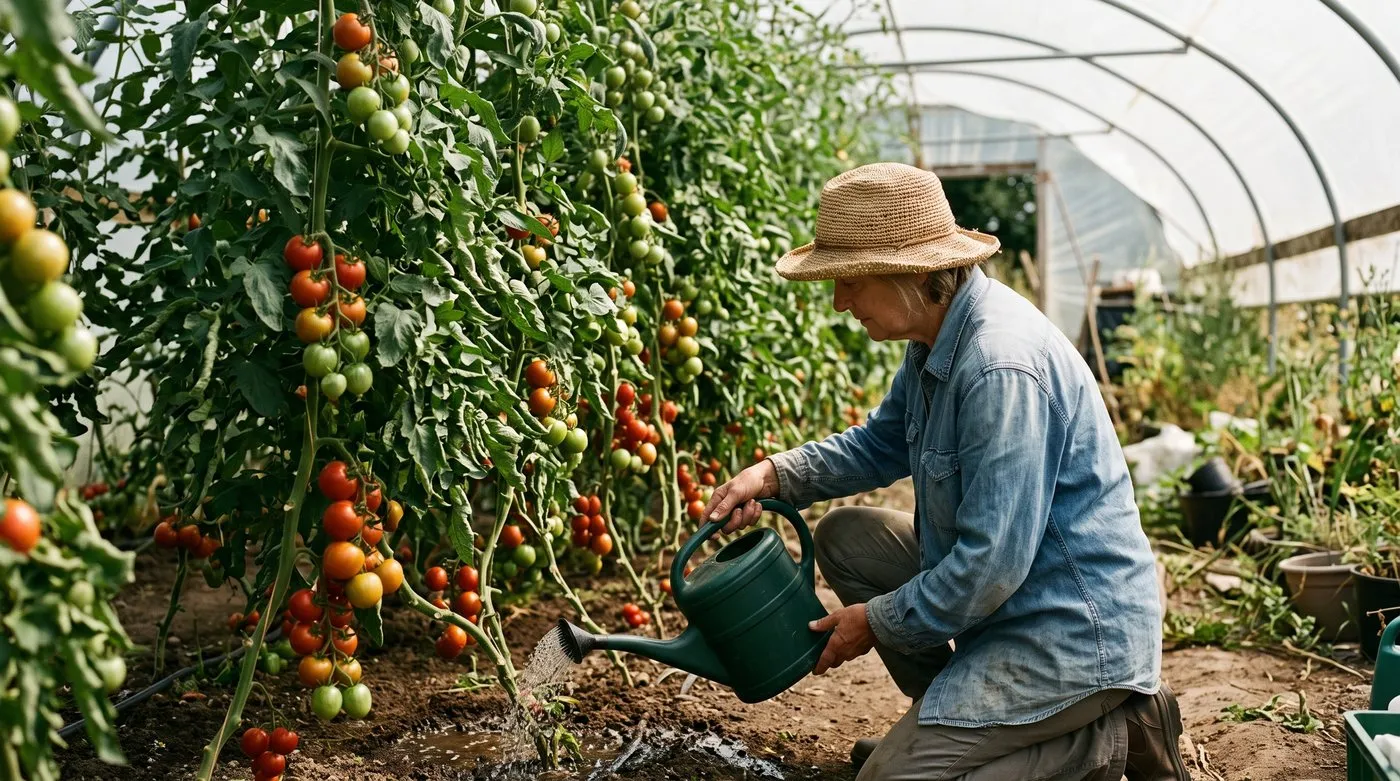
Pour the feed onto damp soil round the base of each plant, not over the leaves.
Many gardeners start with a nitrogen-rich feed such as nettle feed in spring, then switch to comfrey once the first flowers appear. For tomatoes, that means weekly comfrey from the first truss until the last fruits are ripening. Our tomato growing guide for beginners covers the rest of their care.
| Month | Comfrey feed jobs |
|---|---|
| April to May | First cut of comfrey. Start a brew so it’s ready for summer |
| June | Start feeding tomatoes and peppers as the first flowers set. Cut again |
| July | Feed fruiting crops weekly. Top up the no-water bucket |
| August | Keep feeding. Make a last brew for late crops |
| September | Ease off as crops finish. Last cut of the year |
| October | Strain and store any concentrate. Clean the buckets |
Storing comfrey feed
Strain the feed, then pour it into clearly labelled containers with caps. Write the date on each one and keep them in a cool, dark shed or garage.
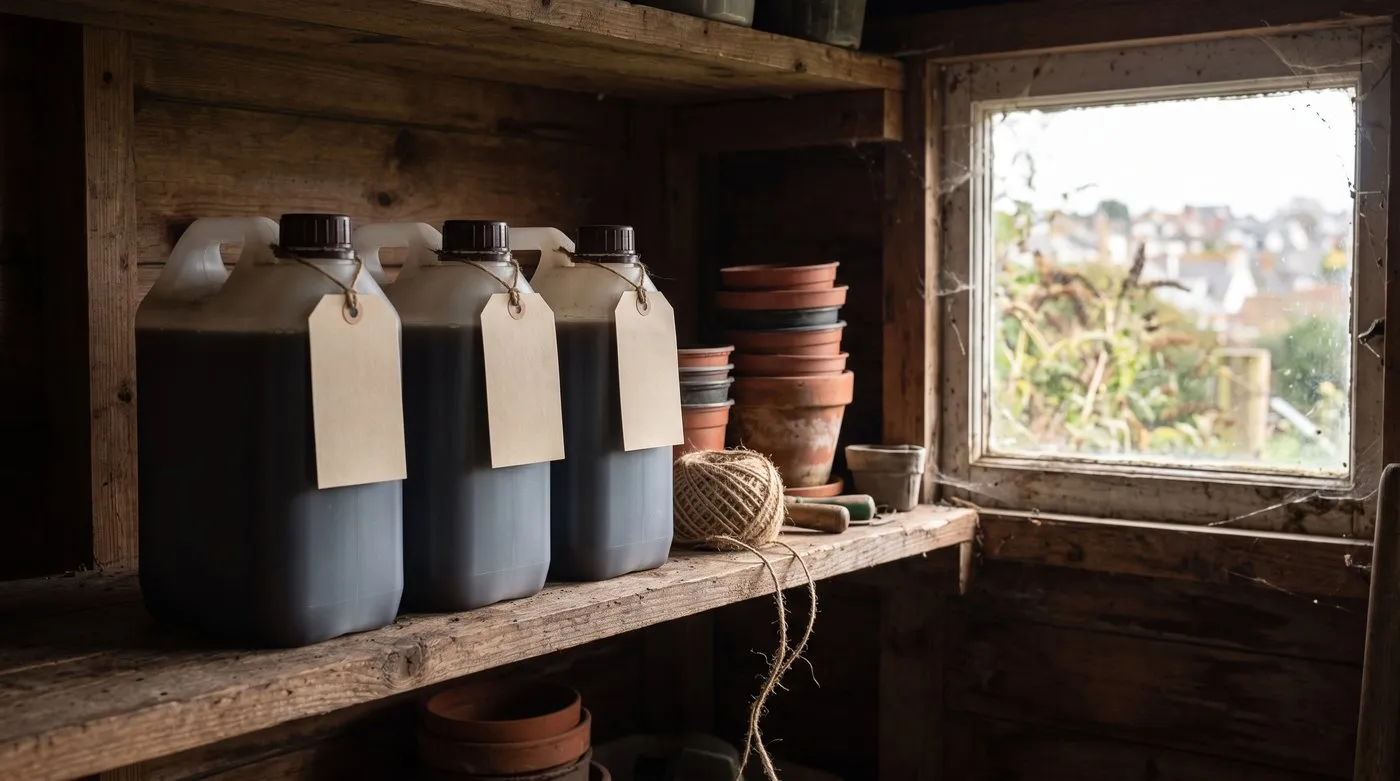
Label every container with the date and keep it on a high shelf, well away from children and pets.
Keep the caps a little loose for the first few weeks. The feed can carry on fermenting and build up pressure. Don’t use old drinks bottles that anyone could mistake for a drink, and keep the feed out of reach of children and pets.
Water-method feed is best used in the season you make it. It gets smellier over time. Concentrate usually keeps for several months.
Safety tips
- Wear gloves when cutting comfrey and handling the feed. The leaves are bristly and the feed stains skin.
- Keep buckets covered. Dogs are drawn to the smell, and children are curious.
- Don’t pour leftovers down drains or into ponds. Tip them on the compost heap instead.
- Comfrey is not for eating. It’s a feed for plants, not people or pets.
Common mistakes with comfrey feed
Using it too strong. Dilute until it looks like weak tea. Strong feed can scorch roots.
Feeding seedlings. Wait until plants are established and growing strongly.
Sealing the lid tight. The brew needs to let off gas. A loose lid stops pressure building.
Leaving leaves whole. Chop them so they rot down faster.
Straining through coarse mesh. Bits of leaf clog the watering can rose. A pillowcase works well.
Troubleshooting a brew
It’s slimy and smells awful. Comfrey brews always smell, but a sealed lid makes it worse. Loosen the lid and give it longer, or tip it on the compost heap and start again.
It’s drying out. In hot weather the water evaporates. Top up with rainwater and move the bucket into shade.
There’s white mould on top. A surface film is common and harmless. Skim it off.
There are maggots in it. Flies have got in. Fit the lid better and strain the feed before use.
For other homemade and natural feeds, read our guides to seaweed feed and natural fertilisers. You’ll find more feeding guides in our how-to section.
Frequently asked questions
How long does comfrey liquid feed take to make?
About four to six weeks with the water method. The no-water method gives its first concentrate after about three weeks. Warm weather speeds both up.
What dilution ratio should I use for tomato plants?
About 1 part water-method feed to 10 parts water. No-water concentrate is stronger, so dilute it about 1 to 15 or 1 to 20. The diluted feed should look like weak tea.
Why does my comfrey feed smell so bad?
Comfrey leaves rotting in water always smell strongly. Keep a loose lid on the bucket and put it well away from the house and neighbours. The no-water method smells much less.
Can I use comfrey feed on seedlings and young plants?
No, it’s too strong for seedlings. Wait until plants are established and growing strongly. Fresh seed and potting compost already hold enough food for early growth.
How long does homemade comfrey feed keep?
Use water-method feed within the season you make it. Concentrate usually keeps for several months in a cool, dark place. Label every container with the date.
Which plants benefit most from comfrey feed?
Fruiting crops such as tomatoes, peppers, cucumbers and courgettes. Comfrey feed is rich in potassium, which helps flowering and fruiting. Leafy crops like cabbages and lettuce need nitrogen more.
Our team produces practical UK gardening guidance from source research, contributor records and established horticultural practice. Editorial standards are overseen by Matt W.