Key takeaways
- Comfrey feed is rich in potash, ideal for tomatoes, courgettes and other fruiting crops
- Nettle feed is richer in nitrogen, better for leafy crops and young plants in spring
- Pack leaves into a lidded plastic bucket, weigh down, cover with water and wait 3-6 weeks
- Always dilute before use, around 1 part to 10 parts water for a water-based brew
- Grow Bocking 14 comfrey, which doesn't seed about and can be cut several times a year
- It smells strongly, so keep the lid on and the bucket away from the house
Comfrey and nettle feed costs next to nothing, just a bucket and some water. A small patch of comfrey grows back year after year and can keep your tomatoes and veg well fed all summer. It’s a satisfying job, even if it’s a bit smelly.
Why homemade comfrey and nettle feeds are worth making
They’re free, and they work. Comfrey leaves are rich in potash, the nutrient that helps plants flower and fruit. That makes comfrey feed a natural fit for tomatoes, courgettes, peppers and beans. Nettles are richer in nitrogen, the nutrient for leafy growth, so nettle feed suits cabbages, salads and young plants in spring.
You also put weeds and spare leaves to good use, rather than buying in bottles of feed. For a wider look at feeding options, see our best fertilisers for gardens UK guide.
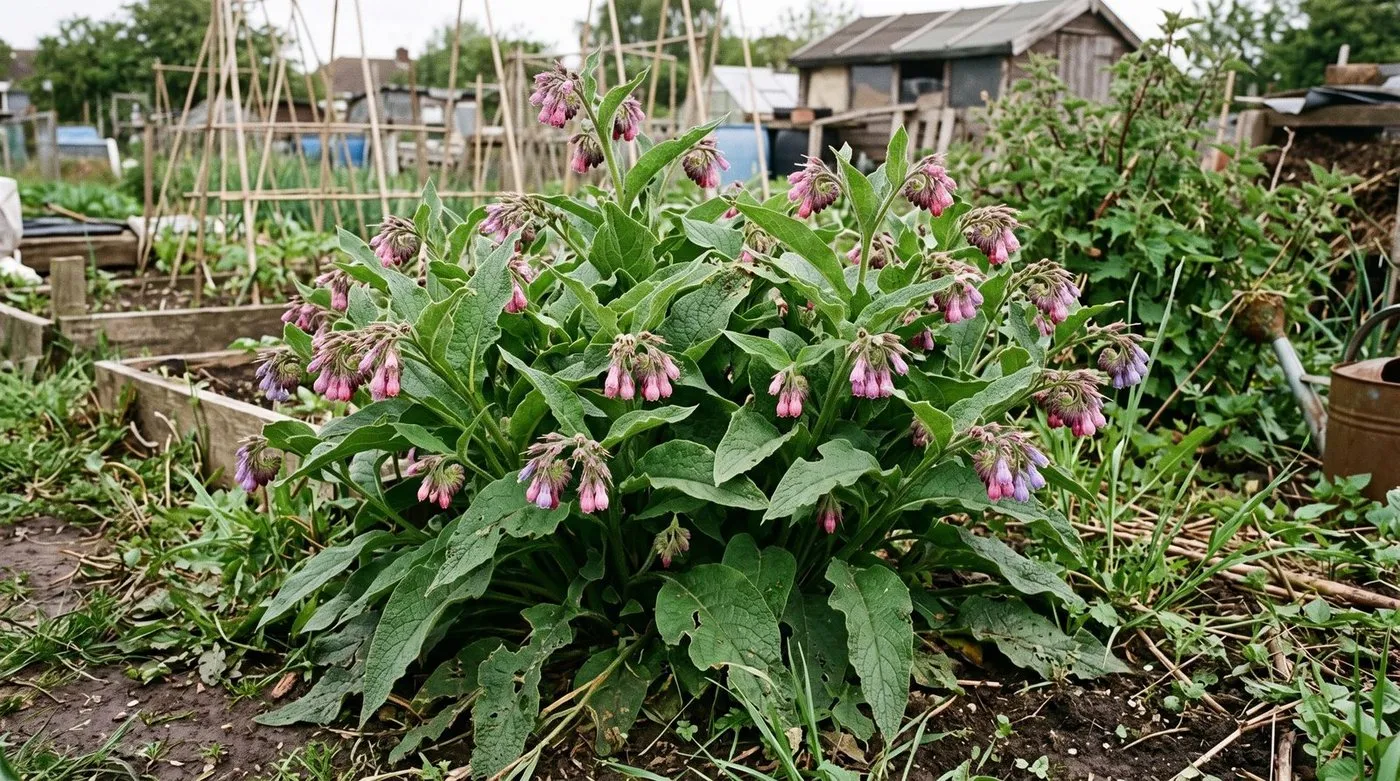
Bocking 14 is the comfrey to grow. It was selected by Lawrence Hills of the Henry Doubleday Research Association, the charity now called Garden Organic.
Why gardeners love Bocking 14:
- It stays put: It doesn’t set seed, so it won’t pop up all over the garden
- Lots of leaf: An established plant gives you a good armful each cut
- Quick regrowth: Cut it back and it’s ready again in about 6-8 weeks
- Long-lived: Once settled, it carries on for many years
A word of warning: comfrey is very hard to move once established, as any bit of root left behind regrows. So pick its spot carefully.
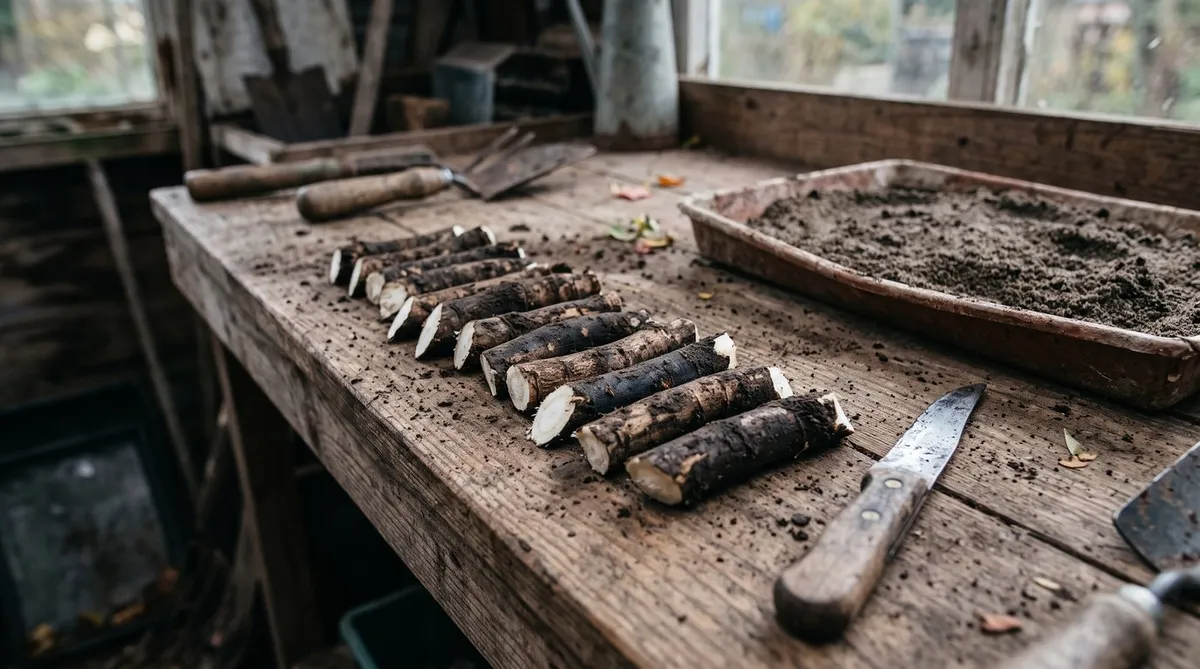
You can buy Bocking 14 as root cuttings online. Plant pieces of root about 5-7cm long, lying flat, 10cm deep, in spring or autumn. Space plants about 60cm apart. You’ll get your first proper harvest in the second year.
Comfrey, nettle and shop-bought feeds compared
Here’s a simple guide to which feed to reach for.
| Feed | Rich in | Best for |
|---|---|---|
| Comfrey | Potash | Tomatoes, courgettes, fruiting crops |
| Nettle | Nitrogen | Leafy crops, young plants, early spring |
| Comfrey and nettle mix | A bit of both | General use, flowers, beans |
| Shop-bought tomato feed | Potash, plus more nitrogen and phosphorus | Tomatoes, when you want a measured dose |
| Liquid seaweed | Trace elements | A general tonic |
Homemade feeds are gentler and vary from batch to batch. Shop-bought feeds give you an exact, stronger dose. Plenty of gardeners use both: homemade most of the time, with a bought feed in pots or when plants look hungry.
For feeding the soil life rather than the plant, our guide to how to make compost tea is worth a look.
The fermentation process: what happens week by week
Turning leaves into feed is simple. The leaves just rot down in water in a closed bucket. No special kit needed.
Equipment you need
- A big plastic bucket with a lid (a builder’s bucket is perfect)
- A brick or heavy stone to hold the leaves down
- A stick for stirring
- Rubber gloves, as the brew stains skin and clothes
- An old watering can or jug for diluting
Use plastic rather than metal, as the brew can corrode metal buckets.
Step-by-step brewing method
Day 1: Fill the bucket with fresh comfrey leaves, nettles or a mix, and press them down. Weigh them down with a brick, then top up with water to cover. (Some growers skip the water and let the leaves slowly turn into a thick, dark concentrate. That works too, but it needs much more diluting, see below.)
Week 1: The leaves wilt and start to break down. The water turns brown and it starts to smell.
Week 2: The leaves collapse into a mushy mass and the liquid darkens. The smell gets much stronger. Warm weather speeds things up. Keep the lid on.
Weeks 3-4: Most of the leaf has dissolved and the liquid is very dark.
Ready: In summer it’s usually ready after 3-5 weeks. A skin on the top is normal. Strain the liquid through old tights or a sack. The sludge left at the bottom can go on the compost heap.
In cold weather: Everything slows right down. A bucket started in March outdoors can take twice as long. Standing it in a greenhouse or cold frame helps.
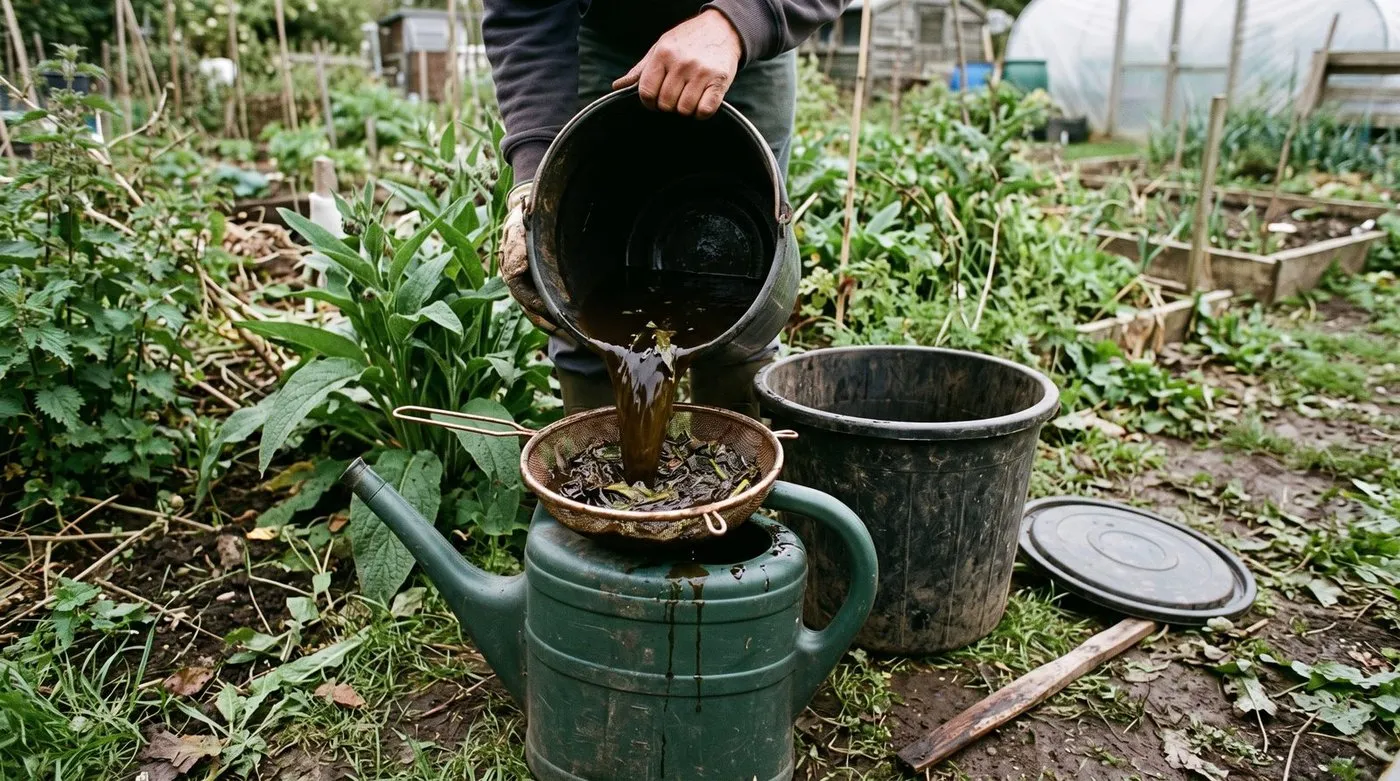
Straining a finished comfrey brew. It should be dark and very smelly.
Why the smell matters
The smell is all part of it. That strong farmyard whiff means the leaves are breaking down properly. A brew that only smells faintly earthy probably needs longer.
If it smells of rotten eggs, there’s probably too much water for the amount of leaves. Pour some off, add more fresh leaves and give it longer.
How to dilute and use the feed
Always dilute before use. For a brew made with water, mix about 1 part feed to 10 parts water. A thick concentrate made without water is much stronger, so use around 1 part to 15-20 parts water. It should look like weak tea.
Water it onto the soil around the plants, ideally in the evening or on a dull day. Store any spare strained feed in labelled bottles with lids, somewhere cool and dark.
How to establish a comfrey bed
Planting: Plant root cuttings in March to April or October to November. Lay the pieces flat in a 10cm deep trench, 60cm apart, cover and water. Shoots should appear within a few weeks. Don’t cut in the first year, so it can build strong roots.
First proper harvest: In year two, from late spring. Cut the leaves back to about 5cm above the ground with shears. Wear long sleeves and gloves, as the bristly leaves can irritate skin. It regrows in about 6-8 weeks.
Later years: You can cut several times a season, from May to mid-September. Stop cutting after September so it can build up for winter.
Easy care: Comfrey needs no feeding, little watering once settled and no staking. Just keep grass away from young plants in the first year.
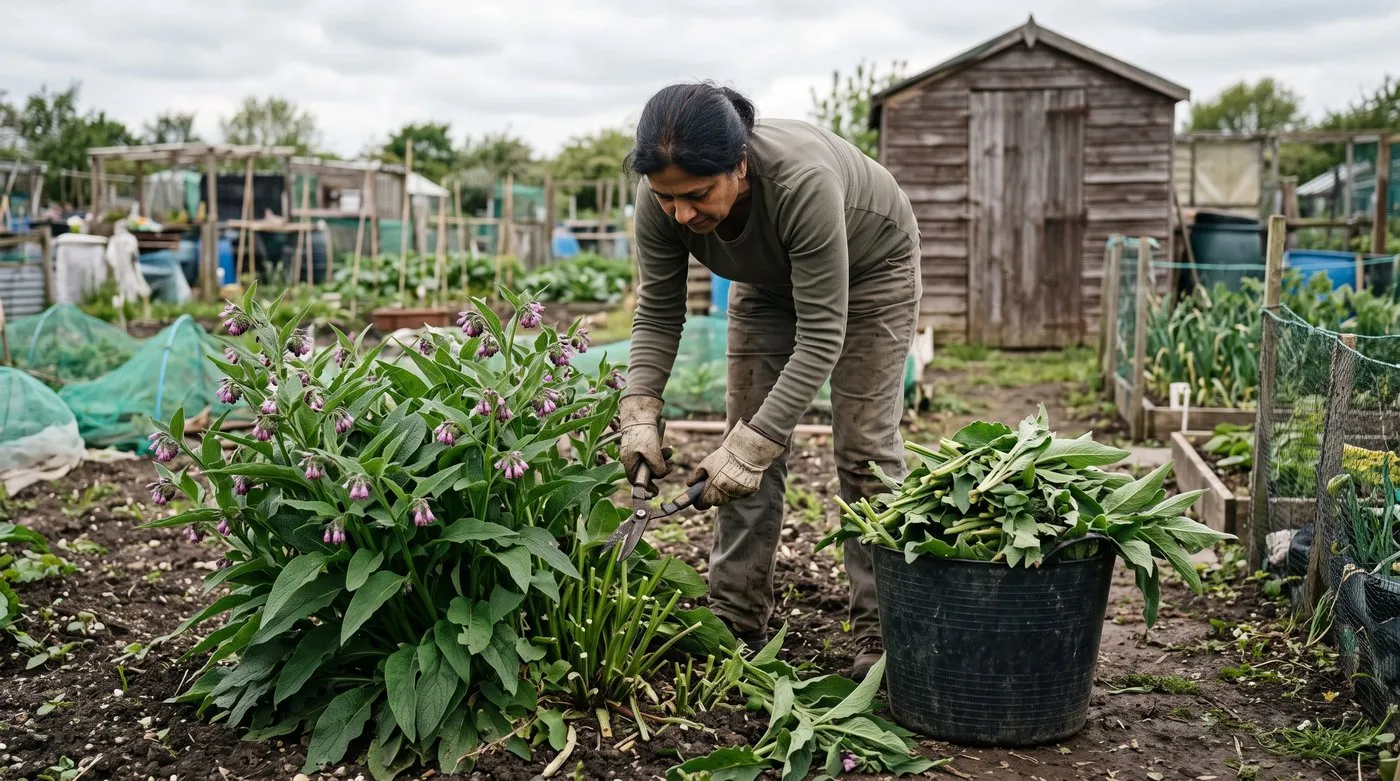
Cut comfrey back to about 5cm and it regrows in six to eight weeks. Long sleeves and gloves stop the bristly leaves irritating your skin.
Harvesting nettles for liquid feed
Pick nettles young, before they flower. Young tips break down faster than tough, stringy older stems.
When: Late March to early May for the first fresh growth. Cut a patch back in June and you’ll get another flush of young leaves.
Where: Your own garden, hedges and field edges where you have permission. Steer clear of busy roadsides and anywhere that might have been sprayed.
How: Thick gloves and long sleeves. Collect them in a sack or open bag rather than a sealed plastic one, so they don’t sweat.
Brew nettles with comfrey, or on their own for a spring feed that gives leafy crops a boost. Leaving a patch of nettles is great for wildlife too, as lots of butterfly caterpillars feed on them.
For more on growing useful plants together, see our companion planting guide.
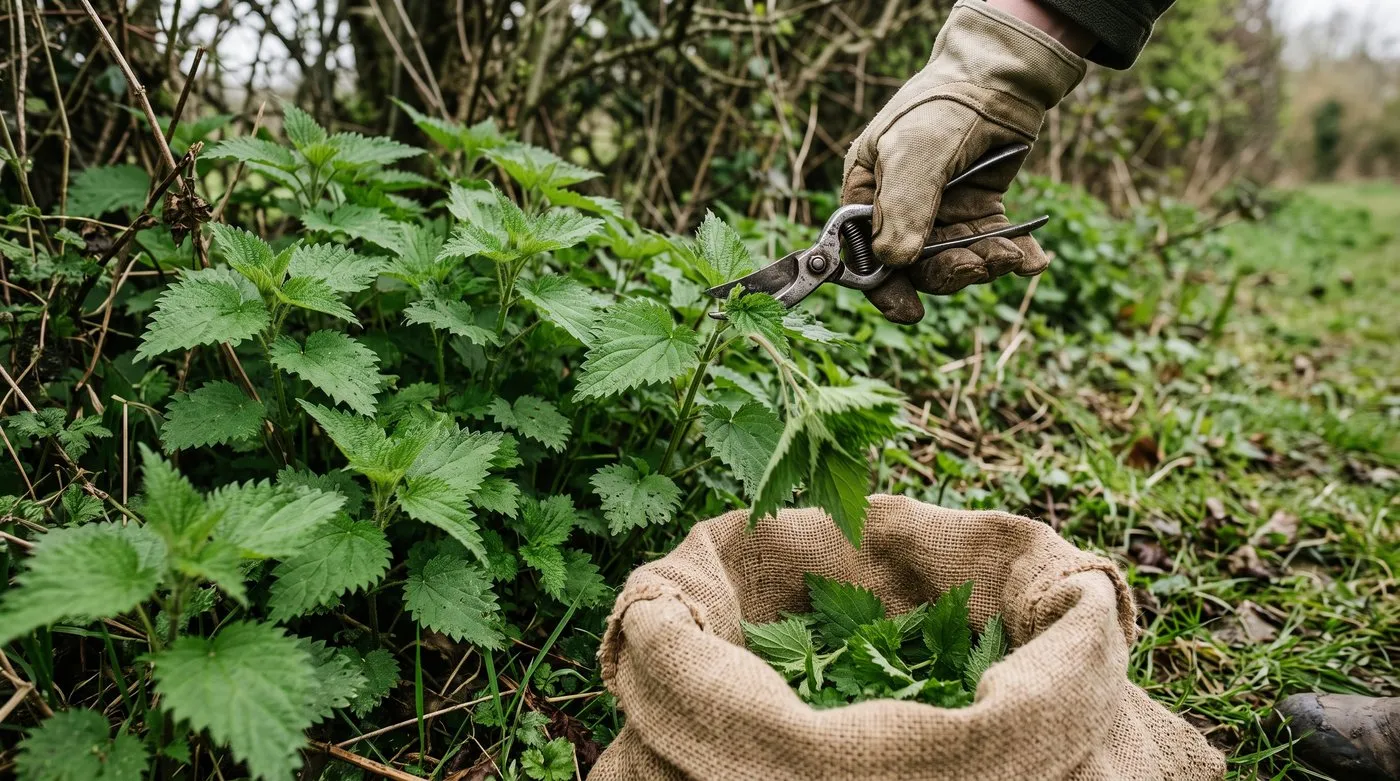
Pick nettles young, before they flower. Soft tips rot down far quicker than tough, stringy stems.
The combined feed recipe
For a large bucket:
- A good bucketful of fresh comfrey leaves
- A smaller amount of young nettles, roughly two parts comfrey to one part nettle
- Water to cover
Method: Pack the leaves in, weigh them down, cover with water and put the lid on. Leave for 4-6 weeks in summer, or longer in spring. Strain and store in labelled containers somewhere cool and dark.
Using it: Dilute about 1 part feed to 10 parts water and water it around the roots.
Month-by-month harvest and application calendar
This suits most of the UK. In Scotland and the north, everything runs a couple of weeks later.
| Month | Comfrey | Nettles | Feeding |
|---|---|---|---|
| January | Resting | Resting | Plan your comfrey bed and order root cuttings |
| February | First signs of growth | Young shoots | Plant root cuttings from late February |
| March | Leaves growing | Pick young tips | Start a nettle brew. Don’t cut comfrey yet |
| April | First cut on established plants | More young growth | Use nettle feed on young plants and brassicas. Start a comfrey brew |
| May | Cut | Starting to flower | First comfrey feed ready for tomatoes |
| June | Regrowing | Cut back for fresh growth | Feed fruiting crops weekly |
| July | Second cut | Pick regrowth | Busiest time. Feed tomatoes and courgettes weekly |
| August | Third cut possible | Pick regrowth | Keep feeding veg. Stop on perennials |
| September | Last cut by mid-month | Last pick | Feed less often |
| October | Let it die back | Compost the tops | Stop feeding |
| November | Resting | Resting | Put the bucket sludge on the compost heap |
| December | Resting | Resting | Order root cuttings for spring |
Common mistakes
Using it undiluted
Neat feed is far too strong and can scorch roots and leaves. Always dilute it. If you spill some neat feed around a plant, water the area well with plain water.
Starting too early in spring
In a cold shed in January or February, the leaves just sit there and go slimy rather than breaking down properly. Wait until late March, or use a greenhouse.
Using old, flowering nettles
Tough, flowering stems break down slowly. Pick young nettles, or strip the leaves off older stems and use just the leaves.
Leaves floating above the water
Leaves above the water line go mouldy instead of breaking down. Keep everything under the surface with a weight.
Judging it by colour
A brew made with lots of water looks paler than a thick concentrate. Go by time and smell rather than colour.
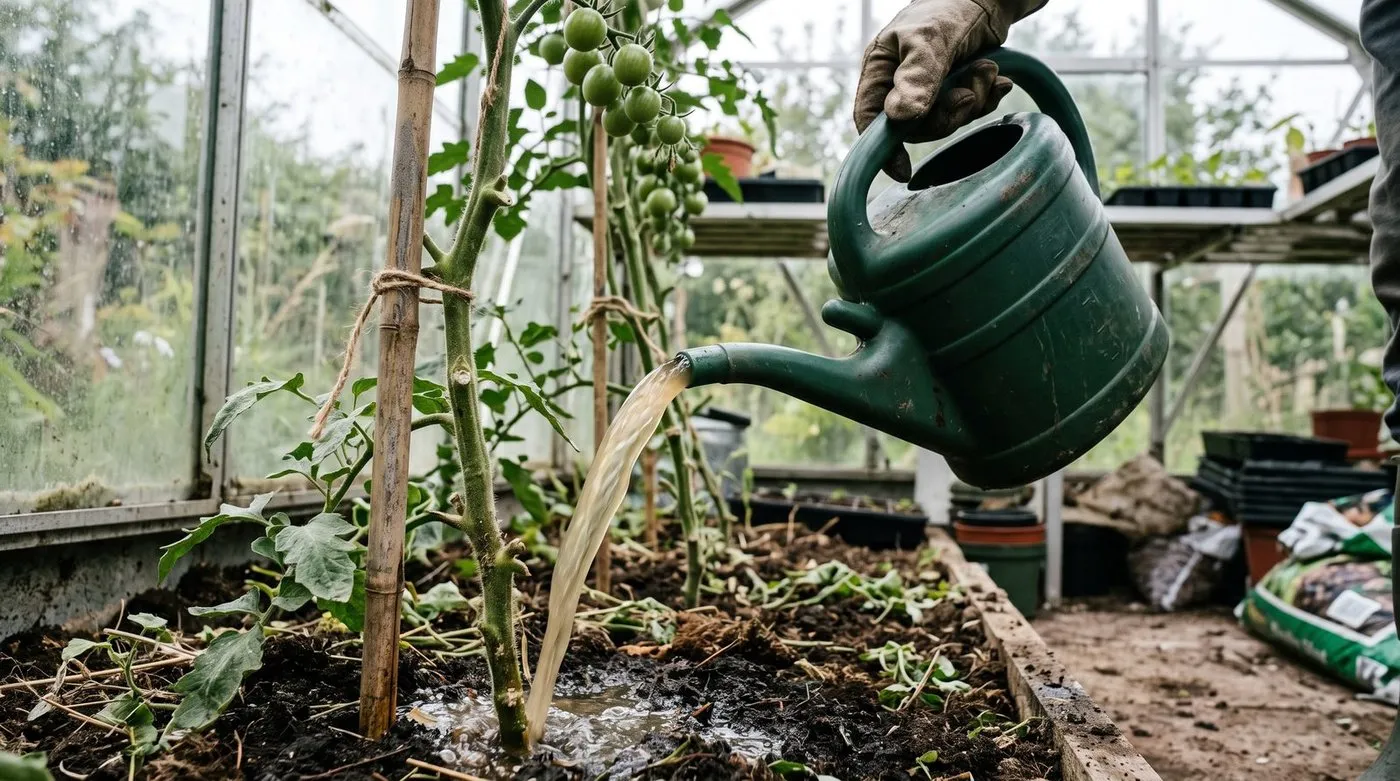
Watering diluted comfrey feed onto greenhouse tomatoes. Diluted, it turns a pale amber.
Fitting liquid feed into your yearly routine
Liquid feeds are a quick top-up. They work best alongside compost, mulch and healthy soil.
A simple year on the veg plot:
- March: Scatter a general organic fertiliser, such as fish, blood and bone, at the rate on the pack
- April to May: Nettle feed every two weeks on brassicas, leeks and leafy crops
- June to August: Comfrey feed weekly on tomatoes, courgettes, peppers and beans once they flower
- September: Stop liquid feeding and spread a layer of garden compost
- October to March: Let the worms work the compost in
Add crop rotation and your beds will need less and less bought feed. Pots are the exception, as they run out of food faster than open ground. Our container vegetable gardening guide covers feeding pots and grow bags.
The RHS guide to making liquid plant feeds is a handy extra read.
Frequently asked questions
How long does comfrey feed take to make?
About 3-5 weeks in warm summer weather. In a cool spring it can take 6-8 weeks or more. It’s ready when the liquid is dark brown and the leaves have mostly broken down. A strong smell is a good sign it’s working. Keep the lid on and stand it somewhere warm to speed it up.
What is the best comfrey variety for liquid feed?
Bocking 14 is the one to grow. It was selected by Lawrence Hills of the Henry Doubleday Research Association, now Garden Organic. It doesn’t set seed, so it stays where you plant it. It grows lots of leaf and bounces back quickly after cutting.
Can I use nettles and comfrey together?
Yes, a half-and-half mix makes a good all-round feed. Comfrey adds potash and nettles add nitrogen. Use it on leafy crops, brassicas and established flowers. For tomatoes and other fruiting crops, use more comfrey than nettle.
Does comfrey feed smell bad?
Yes, it smells very strong while it brews. Keep a tight lid on the bucket and keep it away from the house, patio and greenhouse door. Once diluted and watered on, the smell fades quickly. Nettle feed is a little less pongy than comfrey.
How often should I apply liquid comfrey feed?
Every 1-2 weeks from May to September. For hungry tomatoes and courgettes, feed weekly once fruit has set. For leafy crops and flowers, every two weeks is plenty. Stop feeding perennials and shrubs by late summer, so they don’t make soft growth before winter.
Can comfrey feed replace bought fertiliser?
For tomato-style potash feeding, it does a good job. It’s fairly low in phosphorus, though. In poor soil, give the plot a general organic fertiliser in spring as well. Keep adding compost each year and your soil will need less help over time.
Is comfrey liquid feed safe for all vegetables?
Yes, as long as you dilute it. Strong feed can scorch roots and leaves, especially on seedlings. Don’t use it on freshly sown rows, and wait until young plants are growing well. Root crops like carrots and parsnips rarely need extra feeding at all.
Can I make comfrey feed without a bucket lid?
You can, but it isn’t pleasant. The smell is much stronger, rain dilutes it, and flies can lay eggs in it. A simple lid, or a board weighed down with a brick, makes the job much nicer.
Related guides
For more recipe ideas and a crop-by-crop dilution guide, see our comfrey liquid feed recipe guide. For everything about the plant itself, read our guide to growing and using comfrey. And to grow more plants from your patch, see the Bocking 14 comfrey propagation guide.
Our team produces practical UK gardening guidance from source research, contributor records and established horticultural practice. Editorial standards are overseen by Matt W.