Key takeaways
- Ash from clean, untreated wood adds potash and lime to the soil
- Use a light dusting once a year, raked into bare soil in late winter
- Fruit bushes, fruit trees and brassicas benefit most
- Keep it away from blueberries, rhododendrons, chalky soil and potato beds
- Bin ash from coal, briquettes or treated wood, and don't use chimney soot
- Store cooled ash dry in a lidded metal bin, as hot ash can smoulder for days
Wood ash from clean, untreated wood is a useful free feed for the garden. It adds potash, which helps plants flower and fruit, and lime, which makes soil less acidic. Use a little, on the right plants, and it’s a great way to recycle what’s left in the woodburner. Use too much, or the wrong kind of ash, and it can do more harm than good.
This guide is all about ash from your own fire. For a wider look at free and natural feeds, see the guide to natural fertilisers for UK gardens.
What does wood ash do for soil?
Wood ash does two jobs at once. It feeds plants with potash and it makes soil less acidic, a bit like a gentle dose of garden lime.
Potash (potassium) is the K in the NPK on a fertiliser bag. It helps plants form flowers and fruit, which is why tomato feed is high in it. Ash has almost no nitrogen, because that burns off in the fire.
The liming effect comes from calcium in the ash. That’s helpful on acid soil but unwelcome on chalky soil or around acid-loving plants. Hardwood ash, from oak, beech or fruit wood, tends to be richer than ash from pine or spruce.
Which wood ash is safe to use?
This is the most important rule. Only use ash from clean, untreated wood.
Safe to use:
- Dry, untreated logs, hardwood or softwood
- Garden prunings, twigs and branches
- Plain paper and cardboard kindling
Never use ash from:
- Pressure-treated timber, such as fence posts and decking offcuts
- Painted, varnished or stained wood
- MDF, plywood, chipboard and other manufactured boards
- Old furniture, doors and skirting
- Coal, smokeless fuel or charcoal briquettes
- Driftwood, which is salty
If you’ve burnt any of these, put the ash in the household bin rather than on the garden.

A metal bucket with a lid is the safe way to collect ash. Hot embers can hide in ash for days.
How to store wood ash safely
Ash can stay hot for longer than you’d think, sometimes for days. Always collect it in a metal bucket or bin with a lid, never a plastic one or a paper sack. Stand it on a hard surface away from the house, fences and anything that could catch light.
Once it’s completely cold, keep it dry and covered in a lidded metal bin in the shed or garage. Rain washes the potash out, and wet ash turns caustic, so it can burn skin and plant stems. Keep the bin out of reach of children and pets.
Most woodburner owners fill a bin over the winter and spread the ash in late winter, ready for spring.
How much wood ash to put on the garden
Use a light dusting, roughly a handful per square metre, no more than once a year. A thin grey film on the soil is plenty. If the ground looks white, you’ve used too much.
Ash is concentrated and alkaline, so piling it on can push the soil too far the other way. Plants then struggle to take up iron and other nutrients, and leaves turn yellow.
Scatter it thinly on bare soil with a gloved hand or a scoop, then rake it lightly into the surface. Wear gloves, and avoid spreading on a breezy day so you don’t get a face full of dust. Keep ash off leaves and a few centimetres away from stems.

A thin ring of ash around a gooseberry bush in late winter gives it a potash boost before flowering.
Where to use wood ash in the garden
The best places are plants that love potash and don’t mind slightly less acidic soil.
Fruit bushes and rhubarb. Currants, gooseberries and rhubarb like a light dusting around them in late winter. Spread it out to the edge of the branches, not just at the stem. The guide to feeding fruit bushes covers the rest of their year.
Fruit trees. Apples, pears and plums appreciate a sprinkle over the root area in late winter. Keep it away from the trunk.
Brassica beds. Cabbages, sprouts, kale and cauliflowers like less acidic soil. A higher pH also helps reduce clubroot, a soil disease that swells and distorts brassica roots. The guide to brassica diseases explains the signs.
Fruiting veg. Tomatoes, courgettes, squash and beans enjoy the potash. Rake a little into their beds before planting.
Compost heap. A thin sprinkle over each new layer adds potash. Don’t overdo it, or the finished compost becomes too alkaline. The compost-making guide has more on getting the mix right.

A light sprinkle on each new layer of the compost heap is a handy way to use up a small amount of ash.
Where you should never use wood ash
Some places should never get ash, even once.
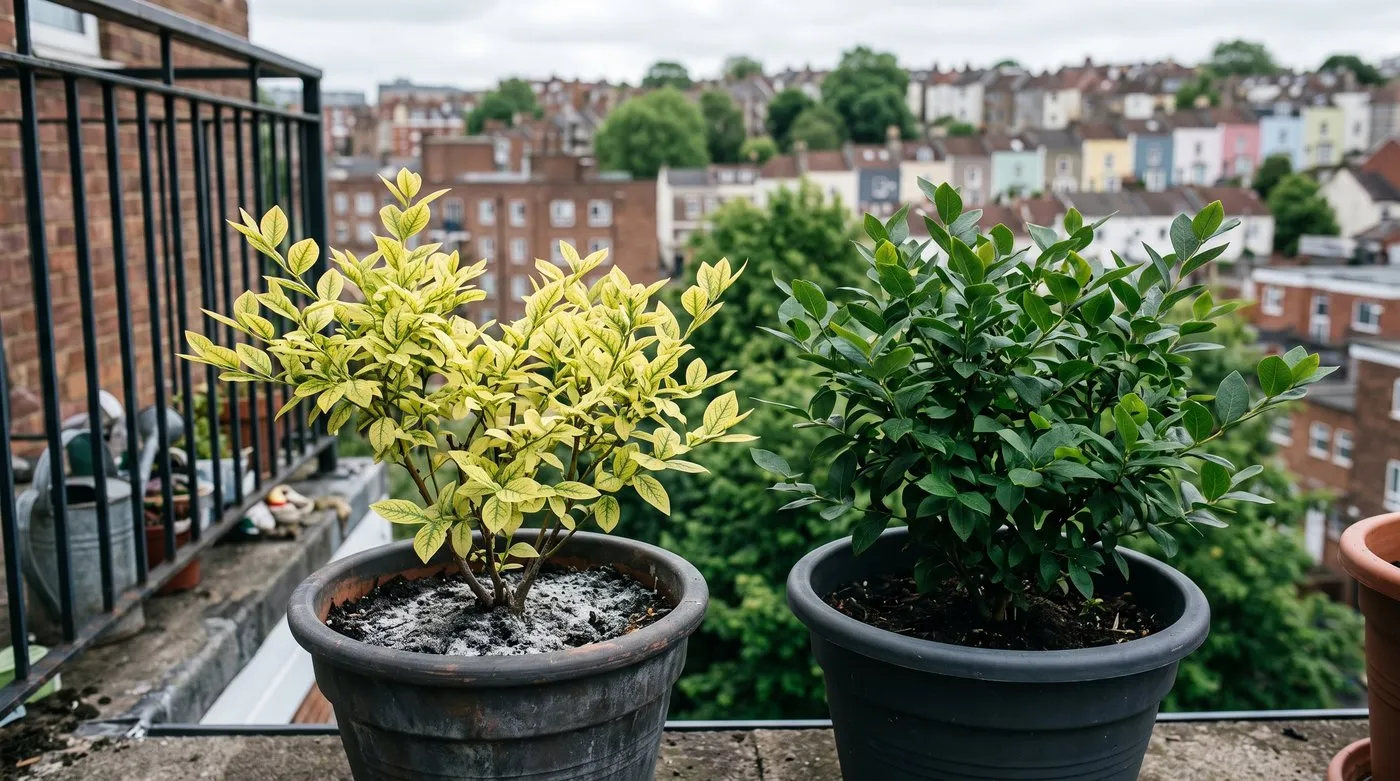
Blueberries turn yellow between the veins when the soil gets less acidic. Keep the ash bucket well away from them.
- Acid-loving plants. Blueberries, rhododendrons, azaleas, camellias, pieris, heathers and skimmia need acid soil. Ash turns their leaves yellow.
- Pots of ericaceous compost. Even a thin dusting undoes the acid conditions you paid for.
- Chalky or alkaline soil. It already has plenty of lime. Adding more makes things worse.
- Potato ground. Higher pH encourages potato scab, which leaves rough, corky patches on the skins.
- Seedlings. Fresh ash can scorch soft young plants.
Not sure what your soil is like? A simple pH test kit from a garden centre tells you in minutes. The guide to soil pH explained shows what the numbers mean.
When to spread wood ash
Late winter is best, from about mid-February to mid-March. Spring rain washes the potash down to the roots just as plants start growing.
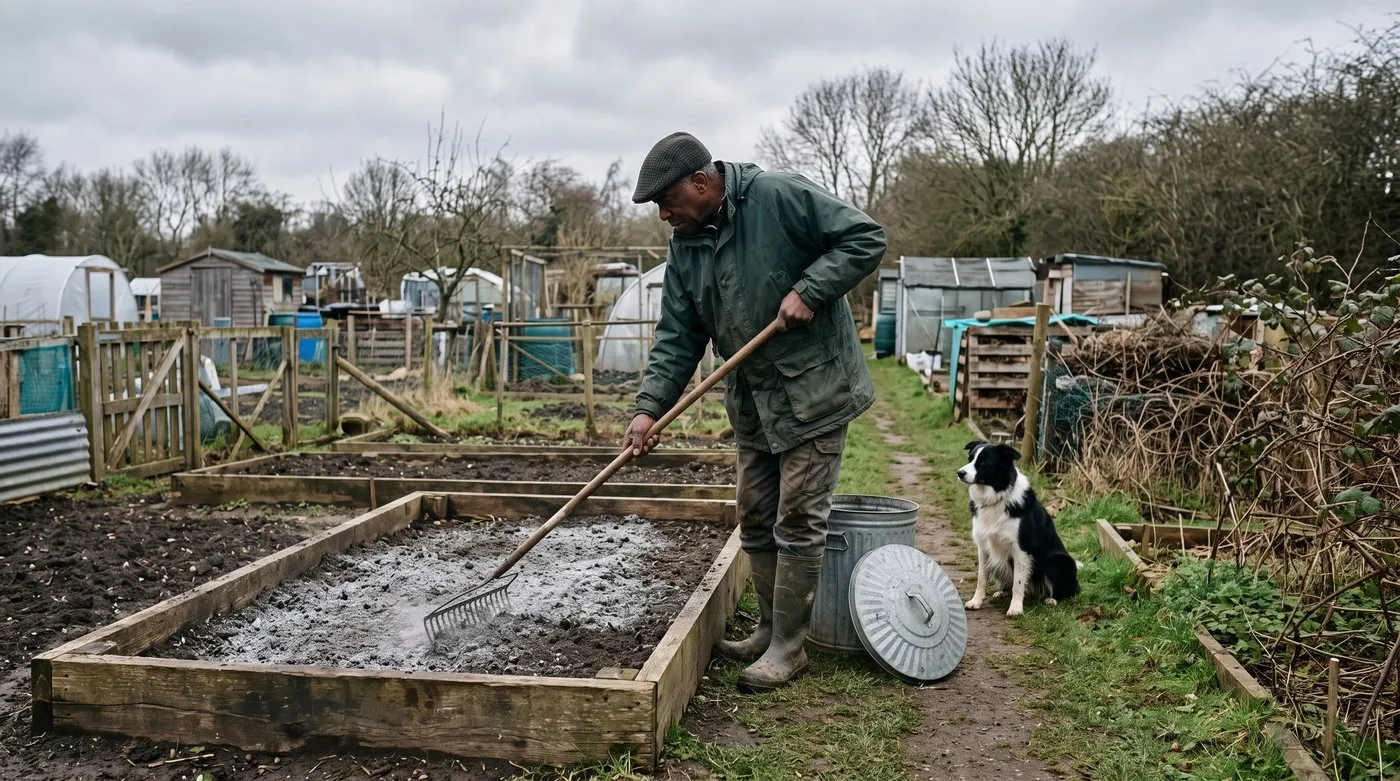
A still, dry day in late winter is perfect for spreading ash. Rake it lightly in and let spring rain do the rest.
Choose a dry, still day. Don’t spread ash on frozen ground, where it blows away, or on wet, sticky soil, which you’ll compact by walking on it. Bare beds between crops are ideal, as the ash lands on soil, not leaves.
Wood ash, garden lime or sulphate of potash?
Each one suits a different job. Pick by what your soil actually needs.
| Product | Adds potash? | Raises pH? | Best for |
|---|---|---|---|
| Wood ash | Yes | Yes, gently | Acid or neutral soil that needs a potash boost |
| Garden lime | No | Yes | Acid soil that just needs its pH raised |
| Sulphate of potash | Yes | No | Potash on any soil, including chalk and acid beds |
| Comfrey liquid feed | Yes, a little | No | Feeding tomatoes and beans in summer |
If you only need to raise pH, garden lime is easier to measure. If you need potash on chalky soil or around acid-lovers, sulphate of potash is the safe choice.
What about soot?
Soot is the black, sooty deposit swept from chimneys and flues. It’s not the same as ash, and it’s best kept off the garden.
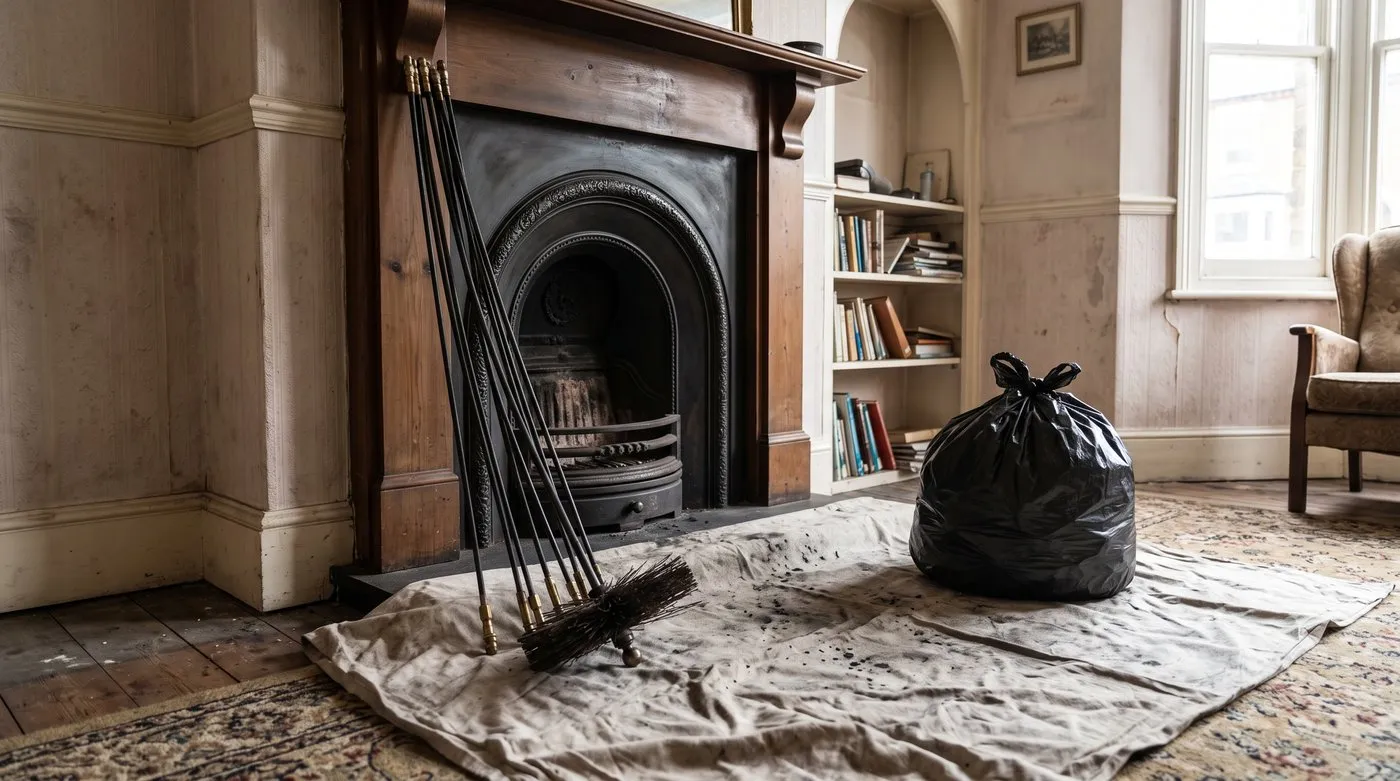
Chimney soot goes in the household bin, not on the veg patch. Save the clean wood ash for the garden instead.
Old gardening books recommend soot as a feed and slug barrier. Today, it’s known to contain tarry residues that you don’t want building up in a vegetable bed. Soot from coal fires is worse still. Bag chimney soot and put it in the household bin.
Bonfires, woodburners and the rules
You don’t need permission to use a woodburner or have a garden bonfire in most places. But there are a few rules to know.
- Smoke control areas. Many towns and cities are smoke control areas, where you can only burn approved fuels or use an exempt stove. GOV.UK explains the smoke control rules.
- Garden bonfires. These aren’t banned, but smoke that keeps bothering neighbours can count as a nuisance, and the council can act. Burn only dry garden waste on a still day, and never leave a fire unattended.
- Allotments. Many sites ban bonfires or limit when you can have one. The guide to allotment bonfire rules covers the details.
Composting or shredding garden waste is usually better than burning it. Save fires for woody material that won’t compost.
Wildlife note: Hedgehogs and other animals hide in piles of garden waste. Always move a bonfire pile to a fresh spot just before lighting it.

An incinerator keeps a bonfire tidy. Let the ash cool completely before you scoop it out.
Common mistakes with wood ash
- Using too much. A thick white layer makes soil too alkaline. A thin grey film is enough.
- Leaving ash out in the rain. The goodness washes away and wet ash turns caustic. Store it dry and covered.
- Using the wrong ash. Coal, briquettes and treated wood leave residues you don’t want. Use clean wood only.
- Dusting acid-lovers. Blueberries and rhododendrons yellow quickly. Keep ash well away.
- Storing warm ash in plastic. Hidden embers can melt the bin and start a fire. Use metal.
Frequently asked questions
Is wood ash good for the garden?
Yes, in small amounts on the right soil. Ash from clean, untreated wood contains potash and lime. It helps fruiting plants and raises the pH of acid soil. Use a light dusting no more than once a year, as too much makes the soil too alkaline.
Can I put wood ash on my vegetable garden?
Yes, in small amounts on most beds. The lime it contains raises pH, which helps reduce clubroot in brassicas. The potash helps tomatoes, courgettes and beans. Leave it off ground where potatoes will grow, as higher pH encourages potato scab.
What plants should never get wood ash?
Acid-loving plants such as blueberries and rhododendrons. Camellias, azaleas, heathers, pieris and other ericaceous plants dislike it too. Ash raises soil pH, which leads to yellow leaves and poor growth. Also skip it on chalky soil, which already has plenty of lime.
Is wood ash legal to spread on an allotment?
Yes, though site rules may limit it. Burning to make the ash is what needs checking. Many allotment sites ban bonfires or restrict what and when you can burn. Check your tenancy agreement and site rules first.
Can I use coal ash or barbecue ash in the garden?
No, keep coal ash and briquette ash off the garden. Coal ash can contain sulphur and heavy metals. Briquettes and fires lit with lighter fuel leave additives behind. Only use ash from clean, untreated wood.
Can I put soot from the chimney on the garden?
No, it’s best put in the household bin. Chimney soot contains tarry residues that you don’t want in a vegetable bed. Old books praise soot as a slug barrier and feed, but clean wood ash and compost do the job better.
Before you reach for the ash bucket, check what your soil needs with our guide to soil testing and pH adjustment, or browse more how-to guides.
Our team produces practical UK gardening guidance from source research, contributor records and established horticultural practice. Editorial standards are overseen by Matt W.