Key takeaways
- Your site rules come first, and some sites ban bonfires completely
- Where fires are allowed, it's usually dry, woody, plot-grown waste only, often October to March
- Smoke that keeps drifting into neighbours' homes and gardens can be a legal nuisance
- Never burn plastic, treated or painted wood, or waste brought from home
- Light only when the wind blows away from houses, and keep the fire small and hot
- A chipper, hot compost heap or council green waste bin deals with most plot waste instead
Bonfires cause more arguments on UK allotments than almost anything else. They bring complaints, catch the council’s eye and can get out of hand on dry days. The good news is the rules are fairly simple once you know them. Here’s what the law says, what sites usually allow, how to burn safely and the easy alternatives that deal with most plot waste with no smoke at all.
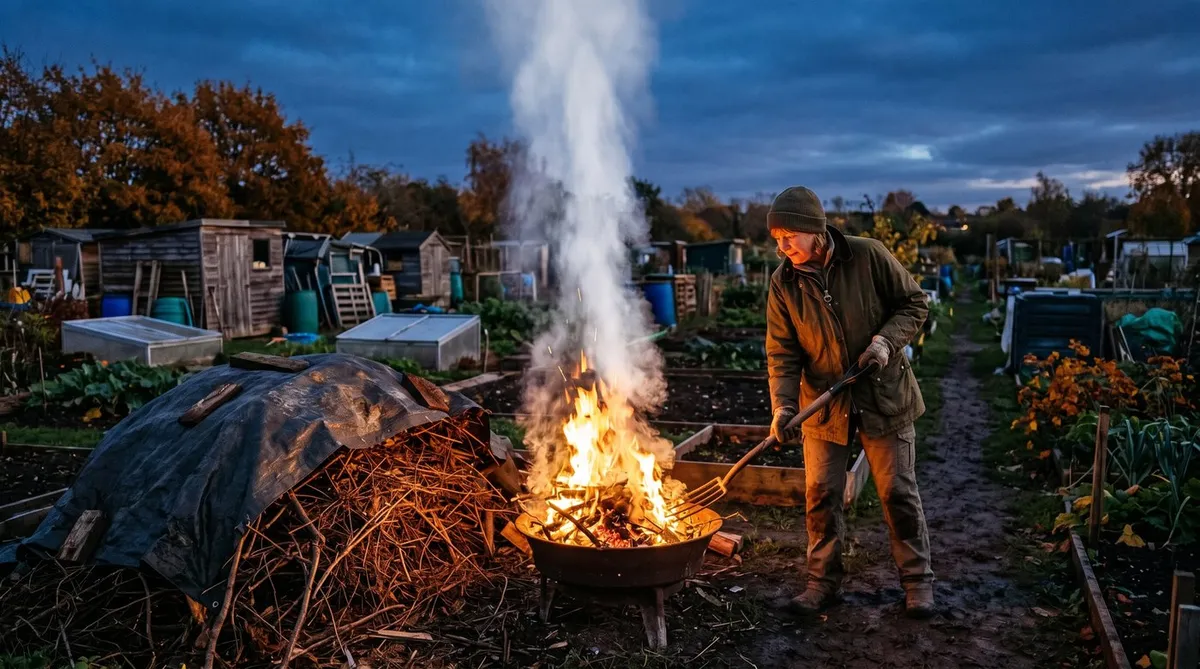
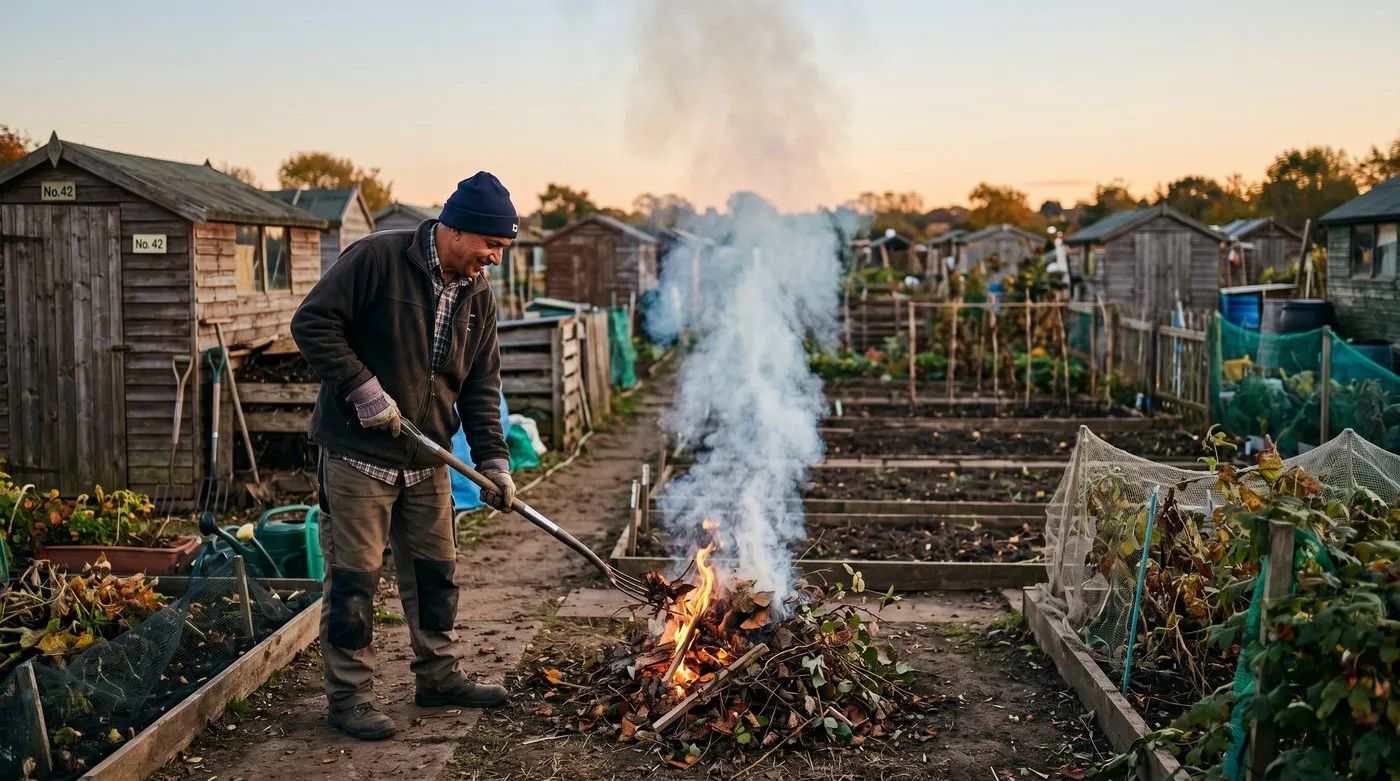 A small, hot fire of dry wood on an October evening, the kind most allotment sites allow.
What UK law says about allotment bonfires
There’s no national ban on bonfires in UK gardens or allotments. Instead, a few sets of rules apply: your site rules, the smoke nuisance laws and, in towns, Smoke Control Areas.
Your site rules come first. They’re part of your tenancy agreement. A typical rule says fires are only for waste that can’t be composted, only in certain months, only on set evenings, only with the wind blowing away from houses, and never left unattended. Some sites ban fires completely. Our guide to allotment rules covers other common conditions.
Smoke nuisance is a council matter. Under the Environmental Protection Act 1990, if smoke keeps spoiling a neighbour’s enjoyment of their home, the council can step in. They’ll usually give advice first. If it carries on, they can serve a notice ordering you to stop, and ignoring it can mean a fine and losing your plot.
Smoke Control Areas. Many town centres are Smoke Control Areas. These rules cover chimneys and stoves rather than garden bonfires, but the nuisance rules still apply. Your council website will tell you if your site is in one.
Never burn waste brought from outside the plot. This is the rule most often broken. Household rubbish, building waste and garden waste from home must not be burnt on the plot. That counts as illegal waste disposal, and the penalties are serious.
| Rule | What it covers | What can happen |
|---|---|---|
| Your site rules | When, what and how often you can burn | Losing your plot |
| Environmental Protection Act 1990 | Smoke nuisance and illegal waste | A notice to stop, then fines |
| Smoke Control Areas | Smoke in town centres | Council action |
When you can burn: the wind test and burn window
Many sites allow fires from October to March. Summer burning is often banned because of dry weather, fire risk and people enjoying their gardens. In the colder months, fewer people are outside and the ground is damp.
The wind test is your best friend. Only light up when the wind blows away from any house, road or footpath within about 100 metres. Stand where the fire will be, hold up a piece of dry grass and see which way it drifts. If it heads towards a home, don’t light. The wind can change quickly, so check again each time you add fuel.
Still air is worse than a breeze. With no wind, smoke hangs low and drifts into nearby gardens. A gentle, steady breeze is best. In strong wind, a fire can get out of control.
Time of day matters. Many sites name certain evenings. By then most neighbours have gone indoors, so there are fewer complaints than with daytime fires.
Keep it short. Aim to have the fire burnt out within about 30 minutes. A small, hot fire makes much less smoke than a big smouldering one.
Never use petrol, paraffin or anything similar to get the fire going. It’s dangerous and makes black smoke. Use dry kindling and screwed-up newspaper. If it won’t light without help, the wood is too wet.
What you can and cannot burn
Only burn dry, woody waste grown on your plot. Think dead branches, woody hedge cuttings, dried sweetcorn stalks, old raspberry canes and woody stems.
Don’t burn green or wet material. Fresh leaves, grass clippings, soft prunings and freshly cut hedge smoulder and smoke. Stack them under cover for 4-6 weeks to dry, or compost them.
Diseased material needs a hot fire. A slow, smouldering fire won’t reliably deal with diseased plants. Burn them in a small, hot fire, or bag them for the council waste bin if burning isn’t allowed.
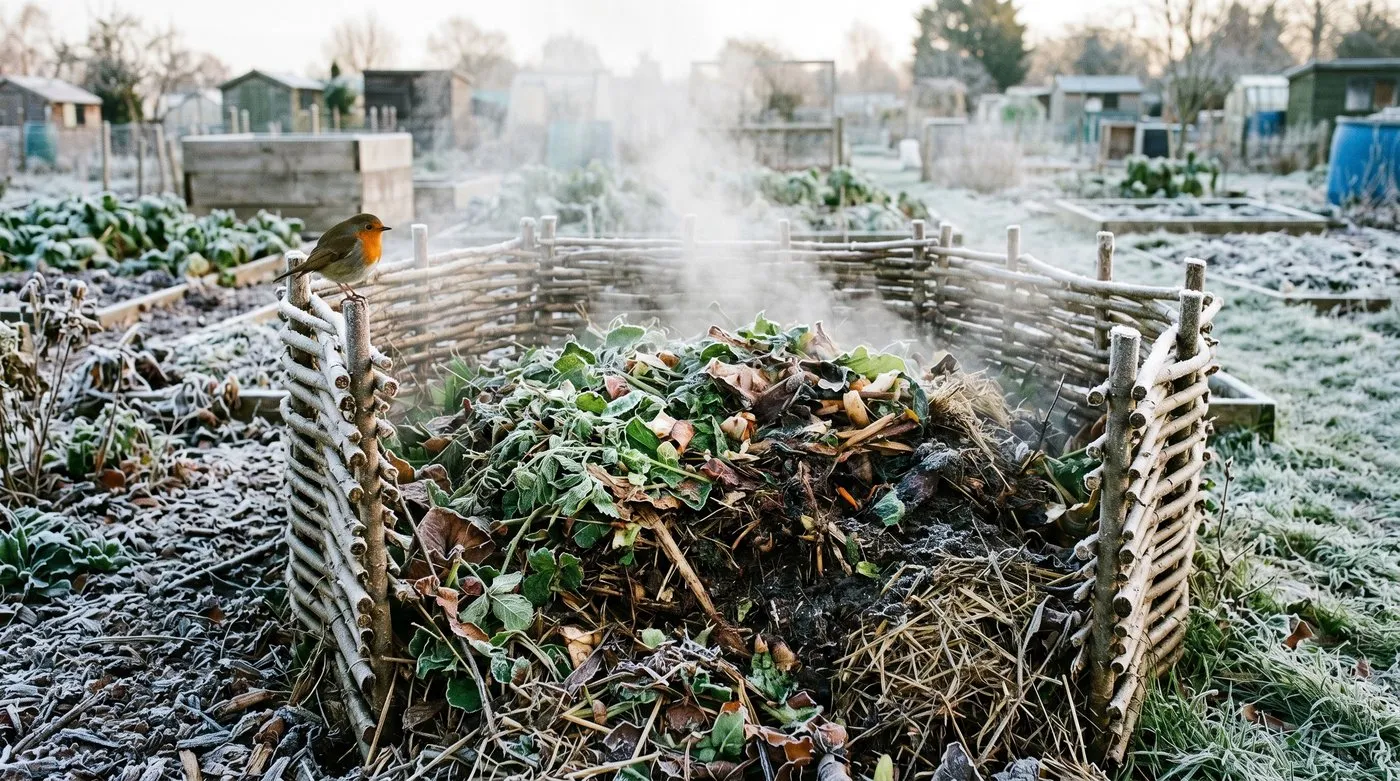 A steaming hot compost heap in February. A hot heap breaks down most plot waste without a bonfire.
Never burn plastic, treated or painted wood, tyres or carpet. They give off toxic fumes and burning them is against the law. Old fence panels are usually treated, so keep them off the fire.
Pick out the plastic every time. Plant labels, twine, polythene sheeting and old fleece often hide in a pile of prunings. Sort them out before you light.
| Material | Burn? | Why |
|---|---|---|
| Dry dead branches | Yes | Burns hot with little smoke |
| Dry woody prunings | Yes | Little smoke when dry |
| Brassica stumps | Only if dry | Otherwise compost them |
| Diseased plants | Yes, in a hot fire | Keeps disease off the compost heap |
| Green leaves and grass | No | Smoulders and smokes |
| Treated or painted wood | No | Toxic fumes, illegal |
| Plastic, fleece, polythene | No | Toxic fumes, illegal |
| Waste from home | No | Illegal waste disposal |
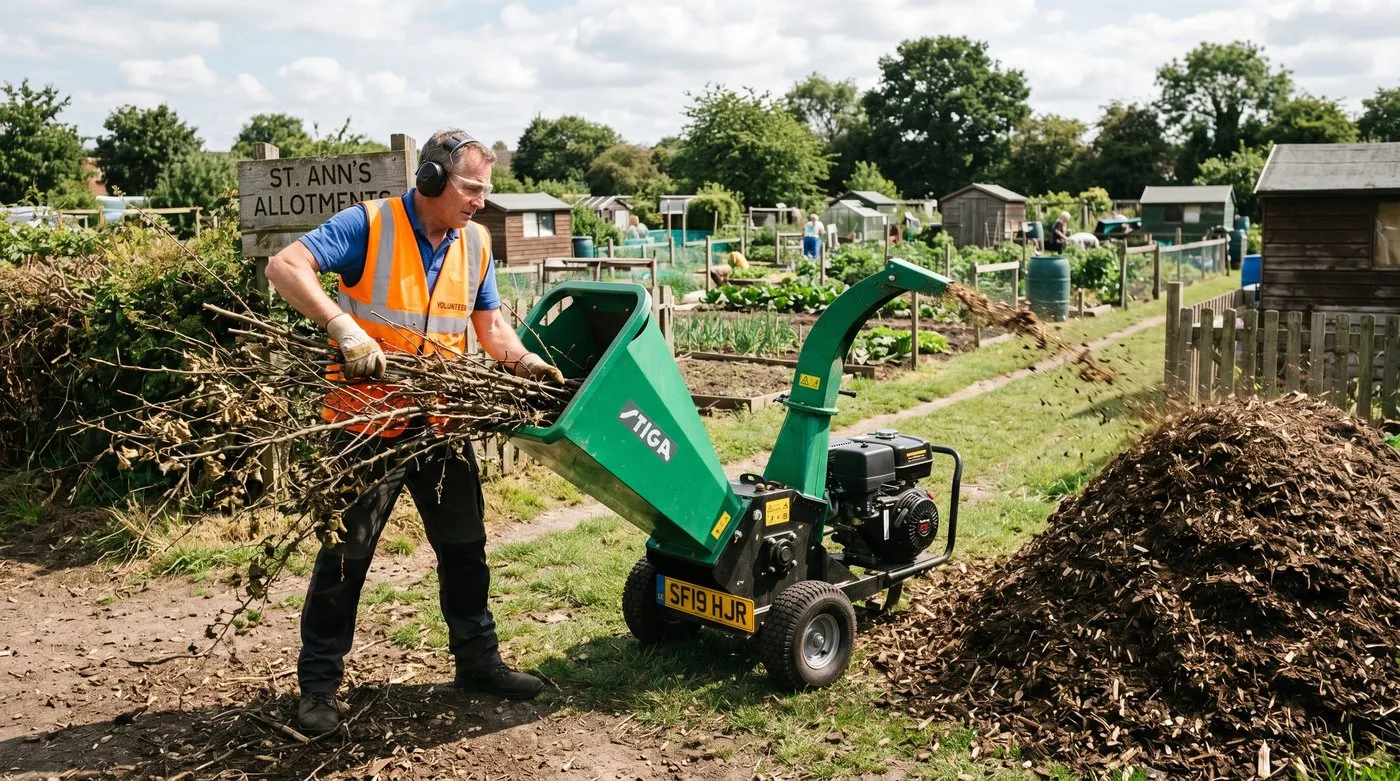 A garden chipper turns a big pile of prunings into useful mulch in an afternoon. Wear goggles and ear defenders.
Five alternatives that deal with most plot waste
1: Hire a chipper. Petrol chippers handle branches up to about 50mm thick. Hiring one for half a day costs roughly £40-£75. A big pile of prunings shrinks to a small heap of mulch, ready for paths or beds. If you’ve got lots to chip every year, buying one may make sense.
2: Hot composting. A big heap, at least a cubic metre, gets hot in the middle and breaks down most plot waste in a few months. Layer woody “browns” with leafy “greens” and turn it every couple of weeks. Bash brassica stumps with a hammer first. Our guide on how to make compost explains the method, and composting for wildlife shows how a heap helps hedgehogs and more.
3: Council green waste bin. Most councils run a garden waste collection for a yearly fee. It takes branches, leaves and most plot waste. Check what your council accepts and sign up on their website.
4: Hugel beds. A hugel bed is a raised bed built on top of buried branches. Dig a trench about 50cm deep, fill it with branches, then top with soil and compost. The wood rots slowly over a few years, feeding the bed above. It’s a great home for bigger prunings.
5: Share a chipper on site. Some sites keep a shared wood pile through the year, then hire a chipper once or twice to chip the lot. It’s cheap when everyone chips in. If your site doesn’t do this, why not suggest it?
| Alternative | Cost | Best for |
|---|---|---|
| Hire a chipper | Half-day hire fee | Woody waste |
| Hot composting | Free | Everything except diseased plants |
| Council green waste bin | Yearly fee | Mixed waste |
| Hugel beds | Free | Big prunings, new beds |
| Shared site chipper | Small share of the hire | Whole sites |
Smoke nuisance: what triggers a complaint
Smoke that keeps spoiling a neighbour’s enjoyment of their home can be a legal nuisance. The council looks at how often it happens, how long it lasts and how bad it is.
The council will usually talk to you first. Environmental Health may visit and give advice. If complaints continue, they can serve a formal notice. Ignoring it is a criminal offence.
Three signs your fire is causing trouble:
- Smoke crossing the boundary at head height or lower
- Smoke thick enough to cast a shadow
- Smoke that smells of plastic, paint or fuel
Most complaints come from people close by. Smoke tends to thin out with distance, except in still air. Sites very close to houses often don’t allow fires at all.
Take a photo. A quick picture of a small, hot fire with smoke blowing away from houses can help if anyone complains.
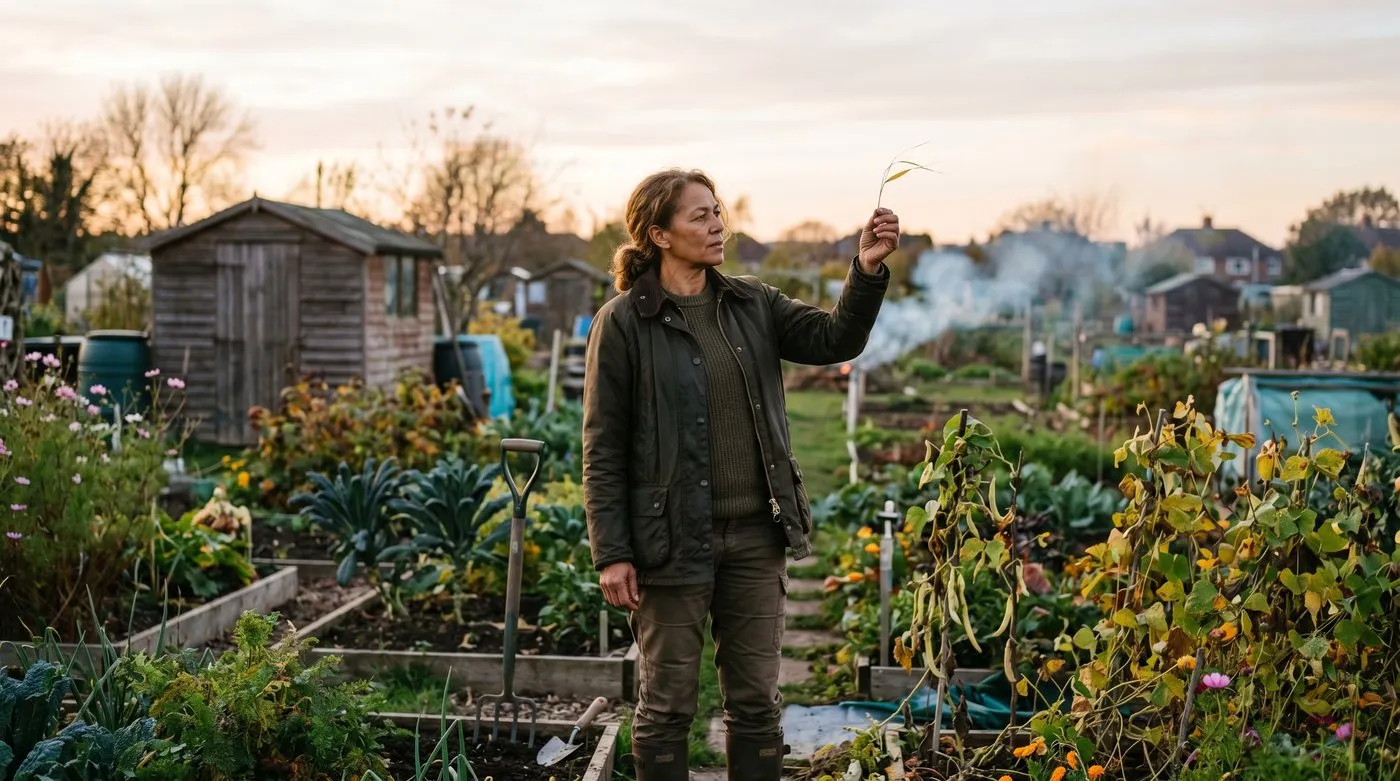 The wind test in action. A wisp of dry grass shows which way the smoke will go. If it’s heading for a house, don’t light.
Step-by-step: a safe, legal allotment bonfire
Step 1: check your site rules. Read your tenancy agreement and the site noticeboard. Make sure fires are allowed this month and on this day.
Step 2: check for a Smoke Control Area. Your council website will tell you. If you’re unsure, ask your site secretary before you burn.
Step 3: gather dry, woody material only. No green leaves, no plastic and nothing from home. If it’s damp, stack it under cover for 4-6 weeks first.
Step 4: pick your time. Choose an allowed evening and check the forecast. Skip still days and windy ones.
Step 5: do the wind test. Hold up some dry grass. If it drifts towards any house, road or footpath within about 100 metres, don’t light.
Step 6: tell your plot neighbours. A quick heads-up stops most bad feeling before it starts.
Step 7: start small. Light a small pile with kindling and newspaper, no fuel. Add more as it gets going.
Step 8: stay with it. Keep a fork, a hose or a bucket of water close by, and never leave the fire.
Step 9: keep it hot and short. Add small loads at a time and aim to be done in about 30 minutes.
Step 10: put it out properly. Soak it with water and don’t leave anything smouldering. Once the ash is cold, bury it or add it to the compost. Wood ash adds potash to the soil.
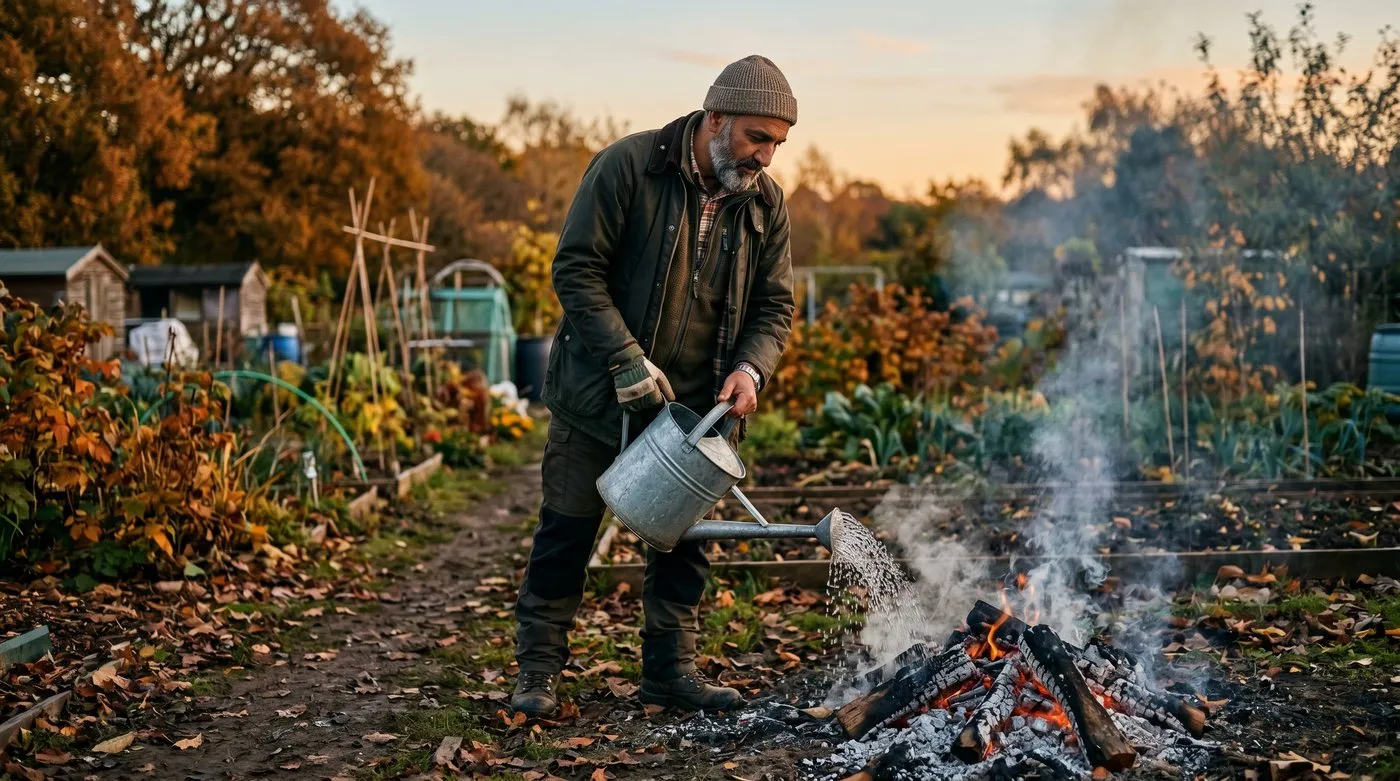 Soaking the fire before you go home stops embers blowing about and flaring up overnight.
Common mistakes to avoid
Burning wet stuff. It smoulders for hours and smokes everyone out. Dry it for 4-6 weeks first.
Building a huge pile. A big pile burns slowly and smokes for ages. Have a few small fires through the season instead.
Using petrol or paraffin. It’s dangerous and makes black smoke. Kindling and newspaper only.
Burning in still air. Smoke hangs low and drifts into gardens. Wait for a gentle breeze.
Bringing waste from home. It’s illegal waste disposal, and the penalties are serious.
Skipping the wind test. Thirty seconds with a bit of grass saves a lot of trouble.
Council differences across the UK
Rules vary a lot from council to council, and even between sites run by the same council. Some ban allotment bonfires completely. Others allow them only on set evenings, only in certain months or never in dry weather.
Always check your own council and site rules. Councils usually publish them on their allotments page, and your site secretary will know the latest. Don’t go by what a friend’s site allows.
Frequently asked questions
Can I have a bonfire on my UK allotment?
Only if your site rules allow it. Where fires are allowed, it’s usually dry, woody waste grown on your plot, often only from October to March and on set evenings. Some sites ban bonfires completely, so always check the rulebook first.
When are bonfires allowed on UK allotments?
That depends on your site, but autumn and winter evenings are typical. Many sites allow fires from October to March, on set evenings, with the wind blowing away from houses. Some ban burning in dry weather. Check your site rules each season.
What is a smoke nuisance under UK law?
It’s smoke that really interferes with your neighbours. If it keeps drifting into their homes or gardens, the council can step in under the Environmental Protection Act 1990. They can serve a notice telling you to stop, and ignoring it can lead to a fine and losing your plot.
What are the best alternatives to a bonfire on an allotment?
Chipping, hot composting, a council green waste bin and hugel beds. A hired chipper turns woody waste into mulch, and a hot heap breaks down most plot waste. Hugel beds use branches buried under soil. Most plots then only need a fire, if at all, for diseased material.
Can I burn diseased plants on the allotment?
Often yes, if your site allows fires. Diseased material that shouldn’t go on the compost heap, like blighted potato tops or clubroot-infected brassica roots, is the main reason to burn. Make it a small, hot fire, and bury the cool ash. If burning isn’t allowed, bag it for the council waste bin.
Our team produces practical UK gardening guidance from source research, contributor records and established horticultural practice. Editorial standards are overseen by Matt W.