Key takeaways
- A 13cm by 13cm hole in the bottom of your fence makes a hedgehog highway
- Log piles, leaf piles and wild corners make free nesting spots
- Feed meaty cat or dog food or hedgehog food, with water, never milk or bread
- Skip slug pellets, as slugs are hedgehog food too
- Check long grass, leaf piles and bonfires before cutting, moving or lighting
Hedgehogs need our gardens. They’ve lost a lot of hedgerows and field edges in the countryside, so gardens have become really important to them.
The good news is that helping them costs almost nothing. A hole in the fence, a pile of leaves and a dish of water are a great start. Here’s how to give them shelter, food and safe passage, season by season. If you’re already creating a wildlife garden, hedgehogs fit right in.
Why hedgehogs are declining
Hedgehogs are struggling mainly because of lost habitat, fenced-in gardens, roads and pesticides. Farmland has lost many hedgerows. New houses often have solid fences and walls they can’t get through. Lots are killed on roads. Pesticides cut down the insects they eat, and strimmers and bonfires injure them.
No single garden is big enough for a hedgehog. That’s why linking gardens matters so much. Something as simple as a hole in a fence opens up a much bigger patch for them to forage.
Creating a hedgehog highway
A hedgehog highway is a 13cm gap at the bottom of a fence or wall that lets hedgehogs pass between gardens. They travel a long way each night looking for food, mates and nest spots, and solid fences stop them dead.
How to make one
Cut a hole about 13cm by 13cm at the bottom of your fence. That’s big enough for a hedgehog but too small for most pets. A jigsaw or handsaw does the job. Sand off any rough edges.
With a brick wall, take out one brick at ground level, or ask a builder to. If your fence has a gravel board along the bottom, cut through that.
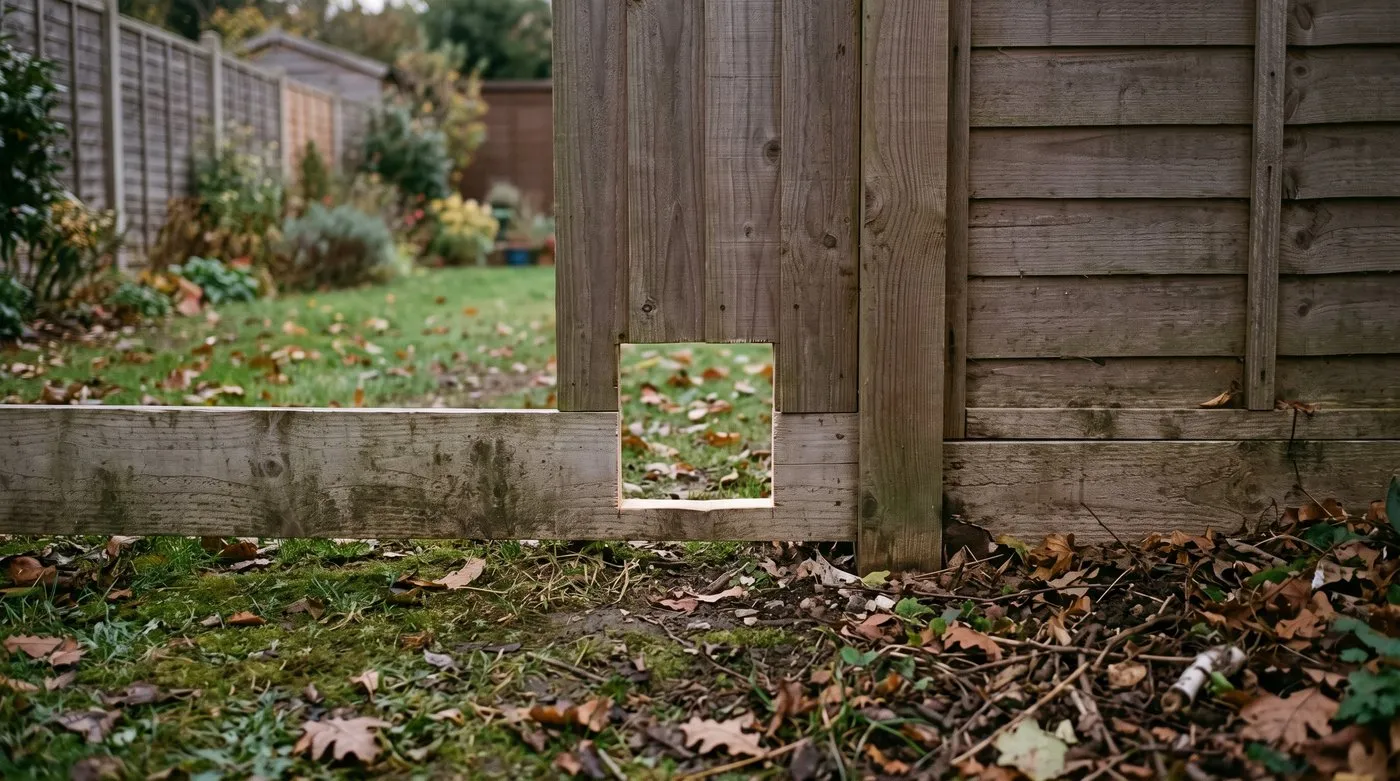
A hole about the size of a CD case is all a hedgehog needs. Sand off the rough edges so nothing gets snagged on the way through.
Getting neighbours involved
One hole is good. A whole street is even better. Have a chat with your neighbours about making matching holes. The Hedgehog Street campaign has free resources to help. Our guide to hedgehog highways covers setting up a street-wide network.
Pop a small sign by each hole so future owners know what it’s for.
| Highway type | How | Cost | Difficulty |
|---|---|---|---|
| Fence hole | Cut a 13cm hole in the gravel board | Free | Easy |
| Missing brick | Take out one brick at the base of a wall | Free | Easy to medium |
| Hedgehog tunnel | A pipe about 13cm wide through the fence base | Low | Medium |
| New fence gap | Leave a 13cm gap when you replace a fence | Free | Easy |
| Gate gap | Leave a 13cm gap under a gate | Free | Easy |
Shelter and nesting sites
Hedgehogs need somewhere to sleep by day, nests for raising young and snug spots to hibernate. A mix of natural shelter and a hedgehog house works best.
Log piles

Stack a log pile in a quiet corner against a hedge or fence, leaving gaps between the logs. It’s a hiding spot, and it also draws in beetles and woodlice for hedgehogs to eat. If you’re composting for wildlife, put the log pile near your compost heap.
Leaf piles
Hedgehogs build their nests from leaves. In autumn, rake leaves into piles in sheltered corners or under hedges instead of bagging them up.
Always check a leaf pile before you burn or move it. Turn it gently by hand or with a fork, starting from the edge.
Purpose-built hedgehog houses

A hedgehog house gives them a safe, dry place to nest. Buy one or make your own from untreated wood, as treated timber can contain chemicals that harm wildlife. Look for:
- Room inside of about 30cm by 30cm or more, for a nest of leaves
- An entrance about 13cm wide, with a tunnel or inner wall to keep out badgers and foxes
- Air holes in the sides
- A lift-off roof so you can clean it outside breeding and hibernation time
Put it somewhere shady and quiet, with the entrance facing away from wind and rain. Add a handful of dry leaves. Don’t put food inside, as it can attract predators. Try not to peek too often, or a hedgehog may abandon its nest.
Wild corners
Letting part of the garden go wild is one of the best things you can do. An uncut patch of grass, a bramble patch or a messy hedge bottom gives shelter and feeds the insects hedgehogs eat. Our guide to creating a wildflower lawn has tips on letting part of your garden grow naturally.
Feeding hedgehogs
Put out meaty cat or dog food, cat biscuits or hedgehog food, with fresh water. Check that meat is the first ingredient. Extra food helps most in dry spells, in autumn before hibernation and in spring when they wake up hungry.
What do hedgehogs eat in the wild?
Wild hedgehogs mostly eat beetles, caterpillars, earthworms and other creepy-crawlies. They eat some slugs too, but not as many as people think. Your food should only ever be a top-up.
That’s why habitat matters more than the food dish. Log piles, leaf litter, long grass and native plants all feed the insects hedgehogs hunt for. Hot, dry summers make worms and insects hard to find, so that’s when water and meaty food help most. Scatter a little food in the grass if you’d like them to forage naturally.
What to feed
- Meaty cat or dog food, wet is fine
- Cat or kitten biscuits, which they crunch easily
- Good hedgehog food, with meat listed first
What never to feed
- Milk, which upsets their tummies
- Bread, which does them no good
- Salty or processed leftovers from your plate

Setting up a feeding station
Put food out around sunset in a shallow dish, with water alongside. To stop cats and foxes pinching it, make a simple feeding station. An upside-down plastic storage box with a 13cm hole cut in one side works well. A few bricks inside, set out like a little maze, help keep cats out.
Spread food between a few dishes to stop squabbles. Wash bowls regularly and keep them separate from your own.
| Food | OK? | Tip |
|---|---|---|
| Meaty cat or dog food | Yes | Meat should be the first ingredient |
| Cat biscuits | Yes | Fine to leave out overnight |
| Hedgehog food | Yes | Pick a meat-based one |
| Fresh water | Always | Shallow dish, especially in dry weather |
| Milk | Never | Upsets their tummies |
| Bread | Never | No real goodness for them |
Removing garden hazards
Slug pellets, strimmers, bonfires, netting and steep-sided ponds cause most avoidable injuries. A few simple habits keep hedgehogs safe.
Slug pellets
Metaldehyde slug pellets were banned in the UK in 2022. It’s illegal to sell, store or use them, so take any old packets to your council tip and ask how they handle hazardous waste.
Most pellets now use ferric phosphate, but Hedgehog Street advises using no slug pellets or pesticides at all in a hedgehog-friendly garden. Slugs are hedgehog food anyway. Try barriers, picking slugs off at night and tougher plants instead. Our guide to getting rid of slugs covers chemical-free methods.
Strimmers and mowers
Always check long grass before you strim or mow. Hedgehogs snooze in long grass and under hedges by day, and they don’t run from machines. Walk through first and look carefully. Set the mower high for the first cut. Take any injured hedgehog straight to a vet.
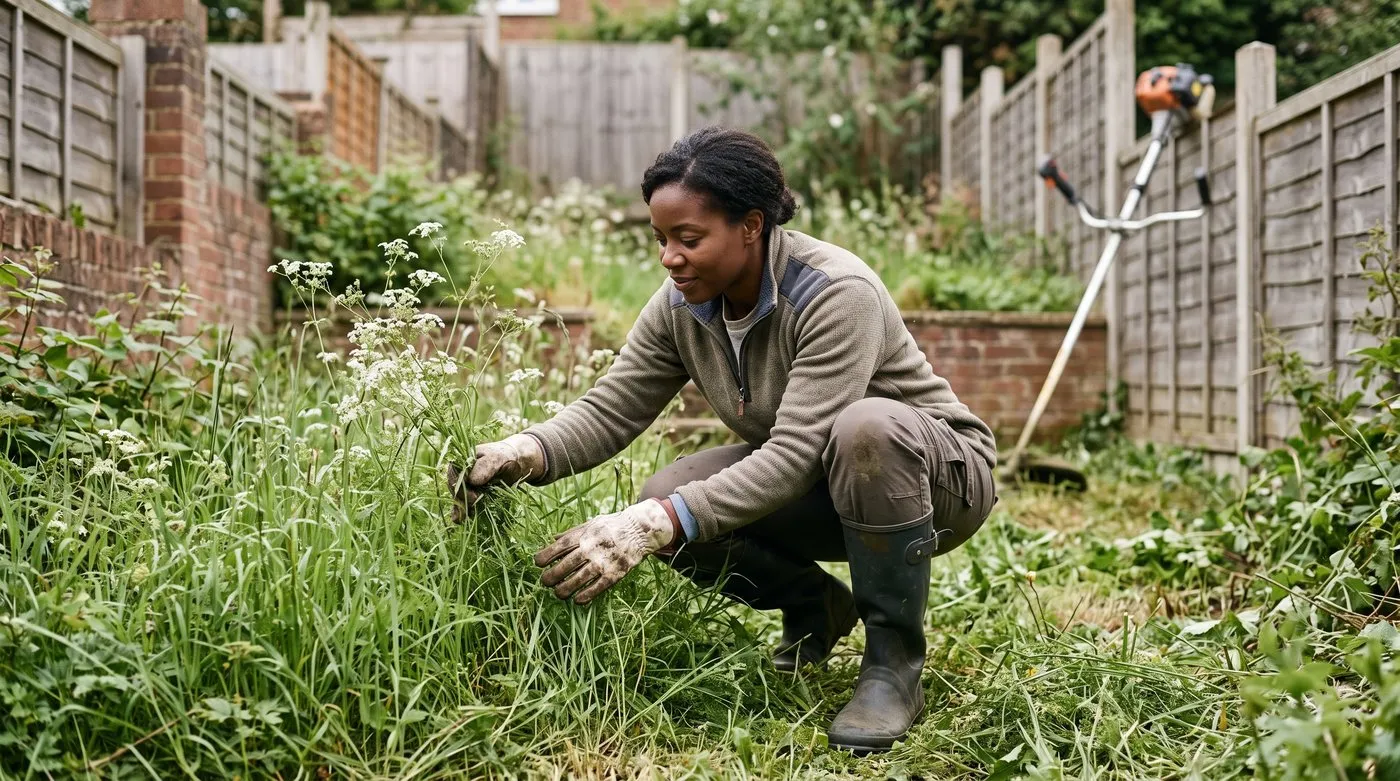
Hedgehogs snooze in long grass by day and won’t run from a strimmer. A slow walk-through first takes a minute and can save a life.
Bonfires
Never light a bonfire without checking for hedgehogs. A bonfire pile looks like the perfect nest. The safest plan is to build it on the day you light it. If a pile has been standing, move it by hand to a new spot just before lighting, checking every layer.
Garden netting
Fruit, bean and sports nets can trap hedgehogs, and the more they struggle the tighter it gets. Keep netting taut and off the ground, roll sports nets up after use and check netting every day.
Ponds and pools
Hedgehogs can swim, but they struggle to climb out of steep-sided ponds. Give them a gentle slope or a ramp, such as a rough plank or a pile of stones at one side. If you’re planning a pond, build in sloping edges from the start. Frogs and other wildlife benefit too.
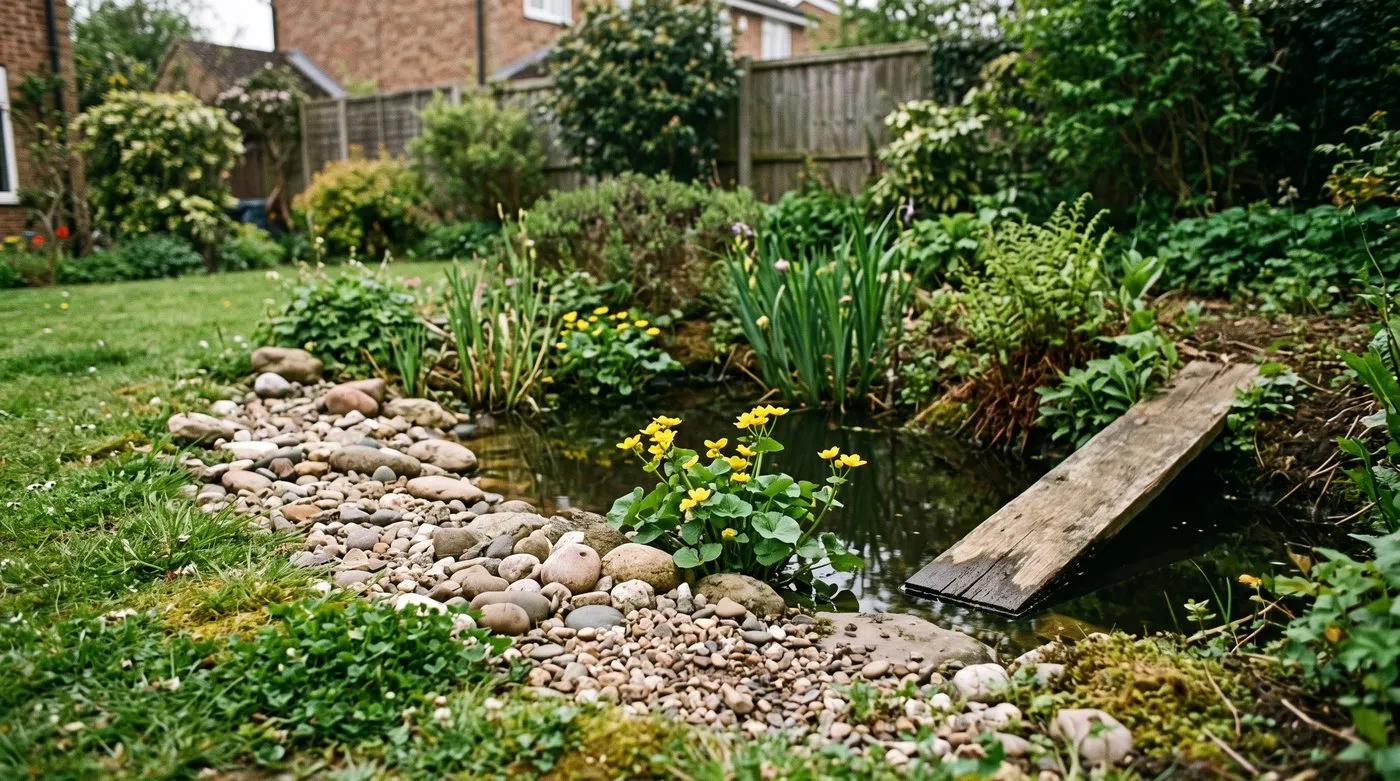
A pebble beach or a rough plank gives a hedgehog a way out if it tumbles in. Frogs and toads will use it too.
Drains and holes
Cover open drains, and check holes and trenches every morning during building work. Hedgehogs fall in and can’t get out.
How do I stop my dog hurting hedgehogs?
Keep your dog on a lead or watch it in the garden after dark, especially from spring to autumn. Don’t move hedgehogs somewhere else. Others will just move into the empty space.
Before letting the dog out at night, switch on a light or make some noise. That gives hedgehogs time to move off or curl up. If you know when your hedgehogs usually visit, perhaps from a wildlife camera, keep the dog in then. Training the dog to leave hedgehogs alone helps too, and a lead or muzzle after dark works for dogs that won’t. If a dog hurts a hedgehog, take it to a vet or call the BHPS helpline.

Flicking on the outside light and keeping the dog on a lead after dark gives visiting hedgehogs a chance to get out of the way.
Seasonal hedgehog care
What hedgehogs need changes through the year, from spring recovery to autumn feasting and winter sleep.
Spring (March to May)
Hedgehogs wake up in March and April, often thin and hungry. Food and water help them get back on their feet.
- Put food and water out every evening from March
- Check the garden before the first mow of the year
- Leave nests alone, as some hedgehogs sleep into April
- Keep hedgehog highways clear
Summer (June to August)
Summer is baby season. Hoglets usually arrive from June, and nursing mums forage hard.
- Keep feeding through summer
- Keep water topped up, especially in hot, dry weather
- Check long grass before every mow or strim
- Look out for hoglets exploring at dusk later in summer
Autumn (September to November)
Autumn is when hedgehogs fatten up for winter. Hoglets born late in the year are most at risk of being too small to survive hibernation.
- Keep feeding through autumn
- Leave fallen leaves in piles for nest building
- Don’t tidy log piles or compost heaps, as hedgehogs may already be nesting
- A small hedgehog out in late autumn may need help, so call the BHPS helpline for advice
Winter (December to February)
Most hedgehogs are hibernating now. Their body cools right down and everything slows.
- Leave leaf piles, log piles and compost heaps alone
- Never light a bonfire without checking
- Keep water out. Hedgehogs moving nest on mild nights may eat too
- Check garages and sheds for hedgehogs that may have crept in
| Season | Main job | Feeding | Check before |
|---|---|---|---|
| Spring | Clear highways, start feeding | Every evening from March | First mow of the year |
| Summer | Keep water out | Every night | Every mow or strim |
| Autumn | Leave leaves and logs alone | Keep feeding | Bonfire piles |
| Winter | Don’t disturb sleeping spots | Water, and food on mild nights | Sheds and garages |
Planting for hedgehogs
Thick, low planting and native plants give hedgehogs cover and feed the insects they eat.
Best hedgehog-friendly plants
- Native hedging, such as hawthorn, blackthorn and field maple, for food, shelter and nest sites. It suits a bee-friendly garden too.
- Ground cover, such as wild strawberry, bugle and hardy geraniums. A thick strip along the fence makes a sheltered route.
- Climbers, such as ivy on walls and fences, which shelter insects
- Wildflower patches, where long grass and flowers draw in the bugs hedgehogs eat
In small spaces, focus on thick ground cover and climbers along the edges.
Building a hedgehog house
You can make a simple hedgehog house from untreated scrap wood in an afternoon. Hard-wearing timbers such as larch, Douglas fir or red cedar work well.
Materials
- Untreated planks, at least 15mm thick
- Screws
- Roofing felt or a plastic sheet to keep the roof dry
Construction
- Cut a base 40cm by 30cm
- Cut two side panels 30cm by 20cm
- Cut a back panel 40cm by 20cm
- Cut a front panel 40cm by 20cm, with a 13cm by 13cm entrance at one end
- Cut an inner wall 20cm by 15cm to make a tunnel inside, which keeps predators out
- Cut a roof 45cm by 35cm so it overhangs the sides
- Screw it together and fix felt to the roof
- Put it somewhere shady and quiet, entrance away from the wind
- Add a few dry leaves, then pile more leaves and twigs over the top to keep it snug
When to call for help
Call the BHPS helpline on 01584 890 801 if a hedgehog is sleepy, lying out, wobbly, injured, trapped or has flies around it. A hedgehog out at night is usually fine.
Is it normal to see a hedgehog in the daytime?
Sometimes. A nursing mum may be out gathering food or nest material, and some are about near dawn and dusk in summer. But a hedgehog in full daylight that looks unwell needs help.
Watch from a distance for a few minutes. One that is trotting along, carrying leaves or eating is probably fine. One lying out in the open, sunbathing, wobbling, walking in circles or looking “drunk” needs urgent help. So does one with flies or eggs on it. A small, thin hedgehog out in late autumn or winter may be struggling too. If in doubt, follow the first aid steps below and ring the helpline.
First aid while you wait
The BHPS first aid advice is:
- Pick the hedgehog up with gardening gloves or a folded towel
- Put it in a high-sided box indoors with an old towel or fleece to hide under
- Add a filled hot water bottle wrapped in a towel, with room for the hedgehog to move away. Keep it warm, as a cold bottle chills the hedgehog
- Keep the box somewhere quiet
- Offer meaty cat or dog food and fresh water
- Call 01584 890 801 for advice and local rescuers. Out of hours, option 1 on the answerphone gives emergency numbers
If the hedgehog is clearly in pain or needs urgent help, take it straight to a vet. If you uncover a nest of hoglets, cover it back up and call the helpline before doing anything else. Never take healthy hedgehogs from the wild.
How hedgehogs help your garden
Hedgehogs eat beetles, caterpillars and other bugs, so they’re part of a healthy, balanced garden. They won’t solve every pest problem, but a garden that suits hedgehogs suits lots of other wildlife too.
Pair it with attracting birds and encouraging frogs and toads, and you’ll rarely need chemicals at all.
Now your garden is hedgehog-friendly, read our guide on how to make a hedgehog highway to link it to the rest of the neighbourhood.
Related reading: the same quiet corner suits a hibernaculum for frogs, toads and slow worms.
Frequently asked questions
What should I feed a hedgehog in my garden?
Meaty cat or dog food, cat biscuits or hedgehog food. Check that meat is the first ingredient. Never give milk, as it upsets their tummies, or bread, which does them no good. Put out a shallow dish of fresh water too.
How big should a hedgehog highway hole be?
About 13cm by 13cm, at the bottom of the fence. That’s big enough for a hedgehog but too small for most pets. Hedgehogs roam a long way each night, so they need gaps to reach lots of gardens.
When do hedgehogs hibernate in the UK?
Usually from October or November until March or April. Mild weather can keep them active into December. They often move nest during winter, so seeing one out isn’t always a worry. Never disturb a hibernating hedgehog.
Are slug pellets harmful to hedgehogs?
It’s safest not to use any. Metaldehyde pellets were banned in the UK in 2022 and are now illegal to sell, store or use. Most pellets today use ferric phosphate, but Hedgehog Street advises a hedgehog-friendly garden uses no slug pellets or pesticides at all.
What time do hedgehogs come out at night?
Usually around dusk, then they forage through the night. A nursing mother may be out in daylight gathering food or nest material, and some are about near dawn and dusk in summer. One that is wobbly, lying out, sunbathing or covered in flies needs help.
Should I put out a hedgehog house?
Yes, it gives them a safe place to nest. Put it somewhere shady and quiet against a hedge or fence. Choose one with an entrance tunnel or inner wall to keep predators out. Use untreated wood and don’t put food inside.
How do I know if hedgehogs visit my garden?
Look for their droppings. They’re dark and sausage-shaped, often with shiny bits of beetle in them. You might also spot tiny footprints in mud. A footprint tunnel or a wildlife camera by a feeding dish will tell you for sure.
Our team produces practical UK gardening guidance from source research, contributor records and established horticultural practice. Editorial standards are overseen by Matt W.