Key takeaways
- A hibernaculum is a frost-free shelter for frogs, toads, newts and slow worms
- Dig a pit about 50cm to 1m deep and 1 to 2m across, on ground that doesn't flood
- Fill it loosely with bricks, stones and logs, as the gaps are the living space
- Add two or three pipes as doorways, then cap with soil and turf
- Build it near a pond in late summer or early autumn
- Leave it completely alone from October to March
A hibernaculum is a part-buried mound of rubble and logs where cold-blooded wildlife can sit out the winter. Frogs, toads, newts and slow worms tuck into the gaps inside, safe from frost. It’s a cheap, satisfying project you can finish in an afternoon with a spade and a pile of old bricks.
This guide shows you where to put one, what to fill it with and how to build it, step by step. You’ll also find the common mistakes, like building in a soggy hollow, that turn a shelter into a trap. If you’re still deciding whether a pond comes first, our guide to building a wildlife pond pairs nicely with this one.
What is a hibernaculum and who uses it?
A hibernaculum is a sheltered, frost-free spot where animals spend the winter. The name comes from the Latin for “winter quarters”. Reptiles and amphibians can’t make their own heat, so in cold weather they slow right down. They need somewhere that won’t freeze or flood.
In a UK garden, these are the main visitors:
- Common frog: some winter in the mud at the bottom of ponds, others on land under logs and rubble.
- Common toad: shelters on land, often in loose soil, log piles and rubble.
- Smooth and palmate newts: hide in damp crevices under logs and stones.
- Slow worm: a legless lizard that loves compost heaps and rubble.
- Grass snake: uses warm, dry gaps, and often lays its eggs in compost heaps.
Beetles, spiders and other small creatures move in too, much as they would in a bug hotel. Our guide to frogs and toads in the garden explains what they get up to the rest of the year.
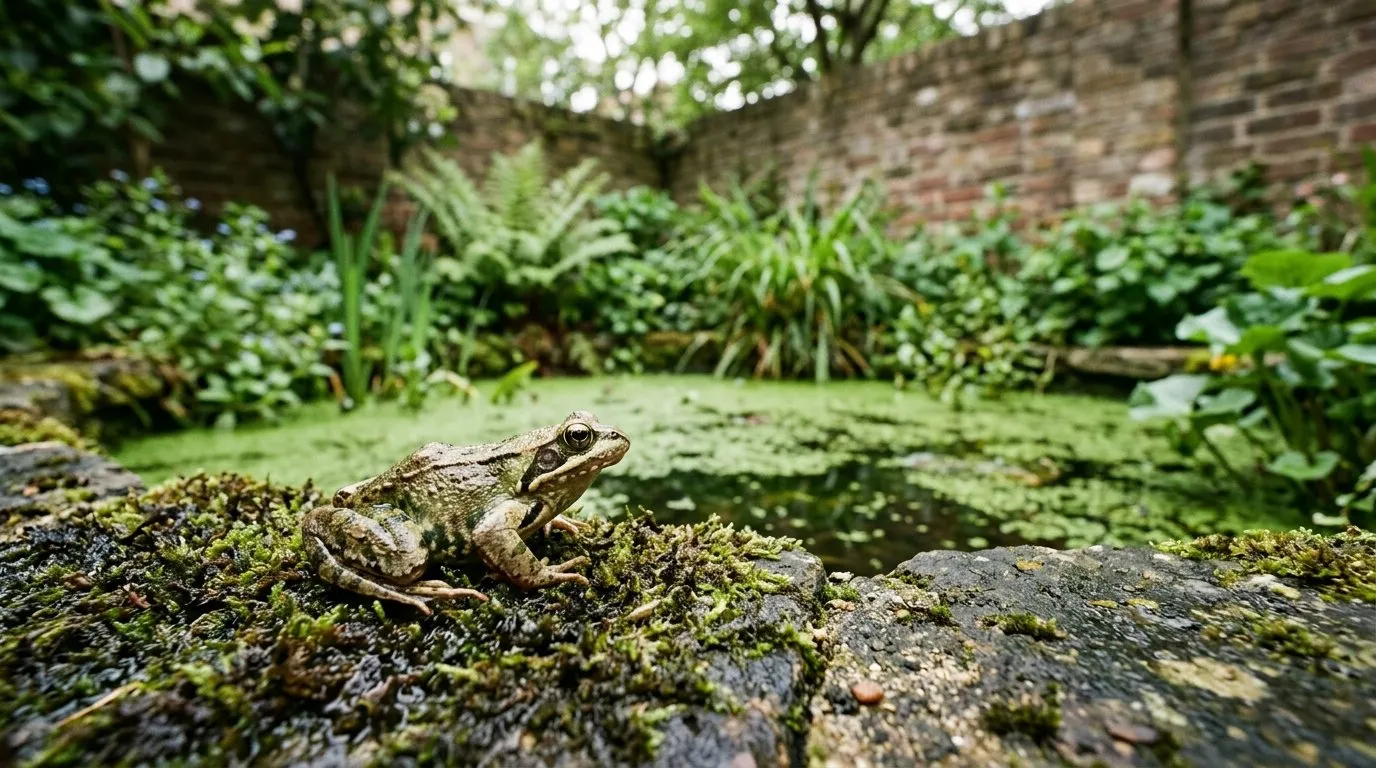
Frogs that breed in your pond will happily winter in a hibernaculum close by.
Where to put a hibernaculum
Near a pond, in a quiet corner, on ground that drains well. Those three things matter more than anything else.
Near water. Frogs, toads and newts move between ponds and land shelter each spring and autumn. A short trip means less risk from cats, birds and drying out. If you don’t have a pond, a hibernaculum still helps slow worms and toads.
Quiet. Pick a spot you don’t mow, dig or walk over. A back border, the base of a hedge or a fence corner all work.
Well drained. This is the big one. A mound in a wet hollow fills with water, and water turns to ice in a cold snap. Avoid low spots where puddles sit.
Sun on one side. Face one side of the mound south or south-west. Slow worms and lizards bask there in spring to warm up. The shadier side stays cool and damp, which suits frogs and newts.
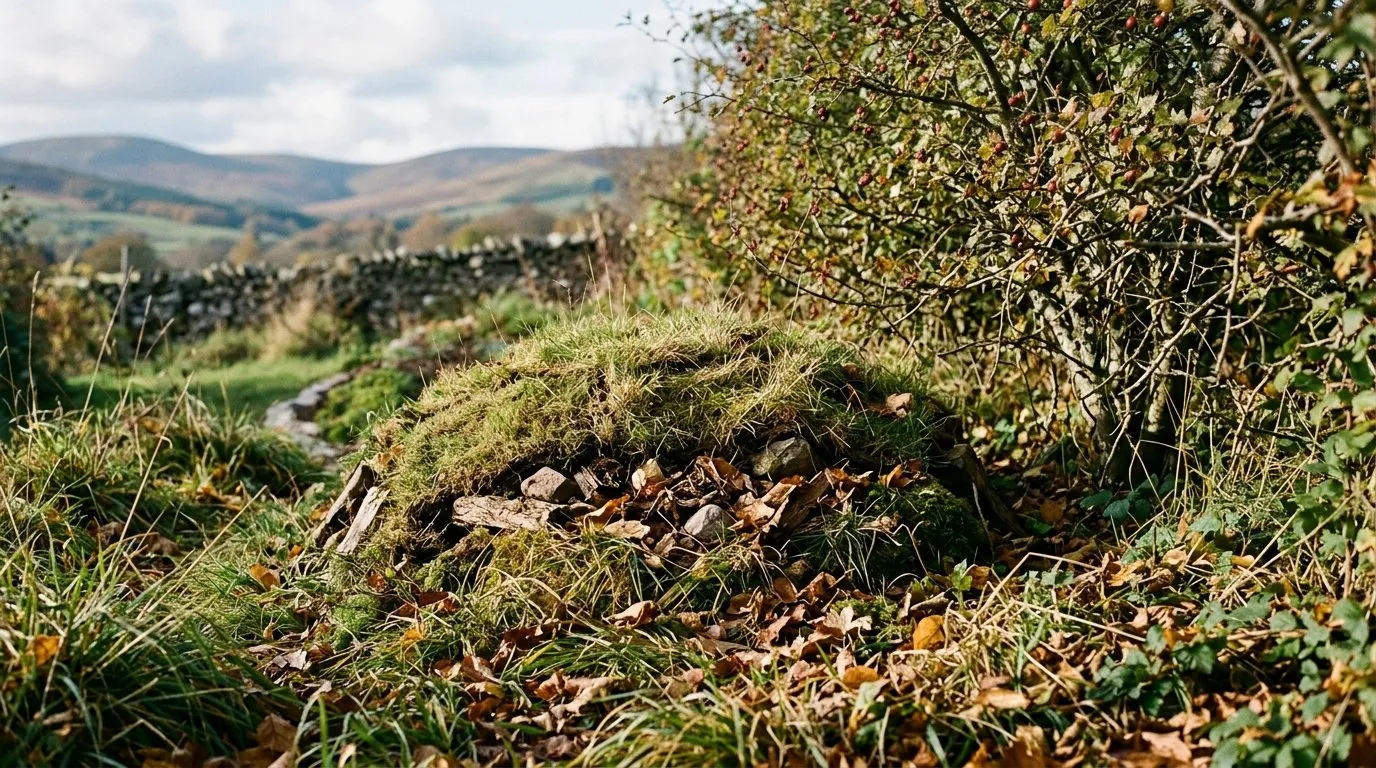
The foot of a hedge makes a quiet spot that nobody mows or digs, and the hedge gives cover for animals coming and going.
What you need to build one
You probably have most of this already. Ask around for leftover building rubble if not.
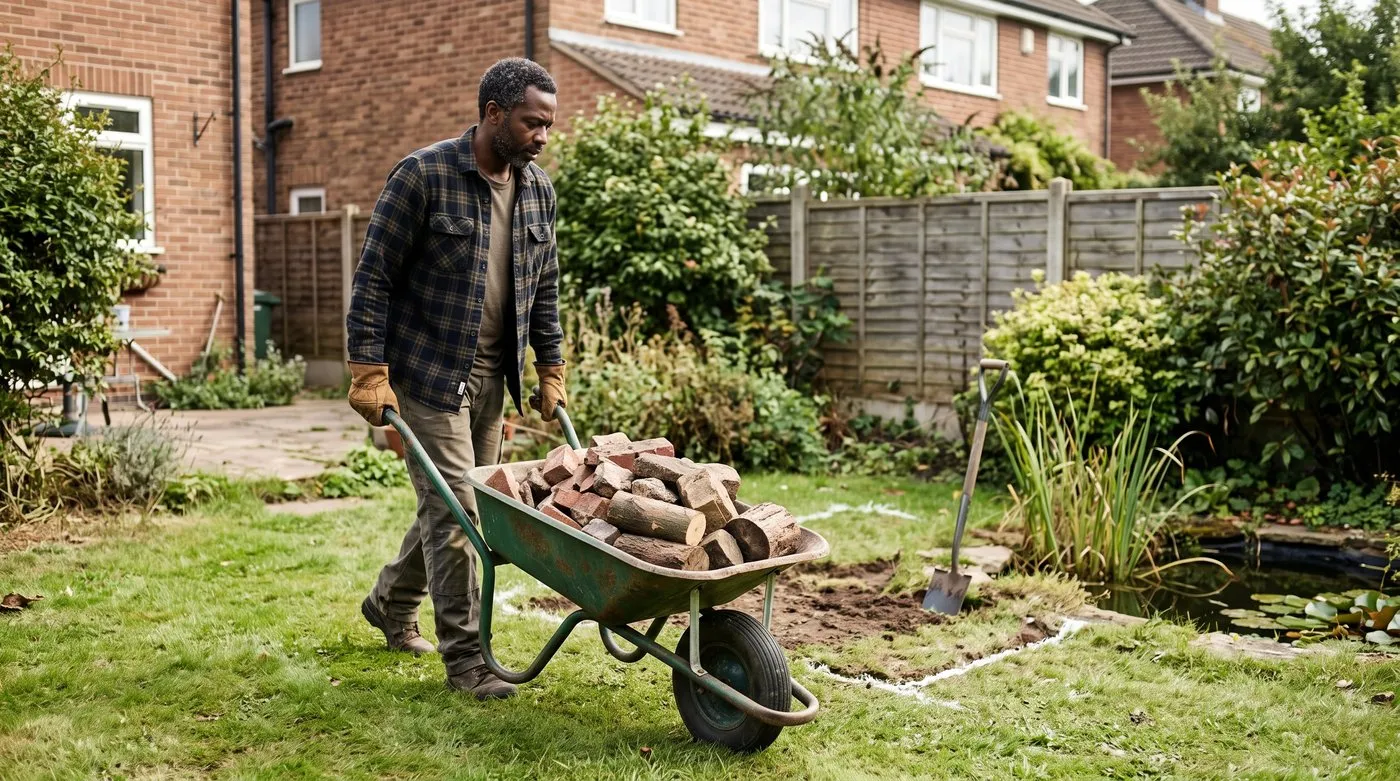
Old bricks, stones and logs are all you need, so ask neighbours for their leftover rubble.
- Hard fill: broken bricks, old paving, stones and chunky logs. Avoid anything treated, painted or sharp-edged like glass.
- Two or three pipes: old drainpipe or perforated land-drain pipe, about 10cm wide and 60-90cm long.
- The soil you dig out: keep all of it to cover the mound.
- Turf or wildflower seed to green the top.
- A spade, a wheelbarrow and gloves.
Got old tree stumps or big logs left over? They work well here, or as the start of a shady stumpery nearby.
How to build a hibernaculum step by step
It’s a one-afternoon job for one or two people. Go steadily, as rubble is heavy.
- Dig the pit. Make it about 50cm to 1m deep and 1 to 2m across. Pile the soil to one side.
- Fill it loosely. Layer bricks, stones and logs into the pit, leaving lots of gaps. Don’t pack it tight. The gaps are where animals live.
- Add the entrances. Push two or three pipes into the fill so they slope gently down from ground level into the gaps.
- Build the mound. Carry on stacking rubble and logs until the heap stands proud of the ground.
- Cover it. Pile the soil over the top, leaving the pipe ends open. Aim for a low mound, roughly 30-50cm high.
- Green it up. Lay turf over the soil, or sow wildflower seed and let grass creep in.
- Add basking spots. Set a few flat stones or a log on the sunny side.
Heavy clay? Dig shallower and build the mound taller and wider. That keeps the gaps above the wet winter ground.
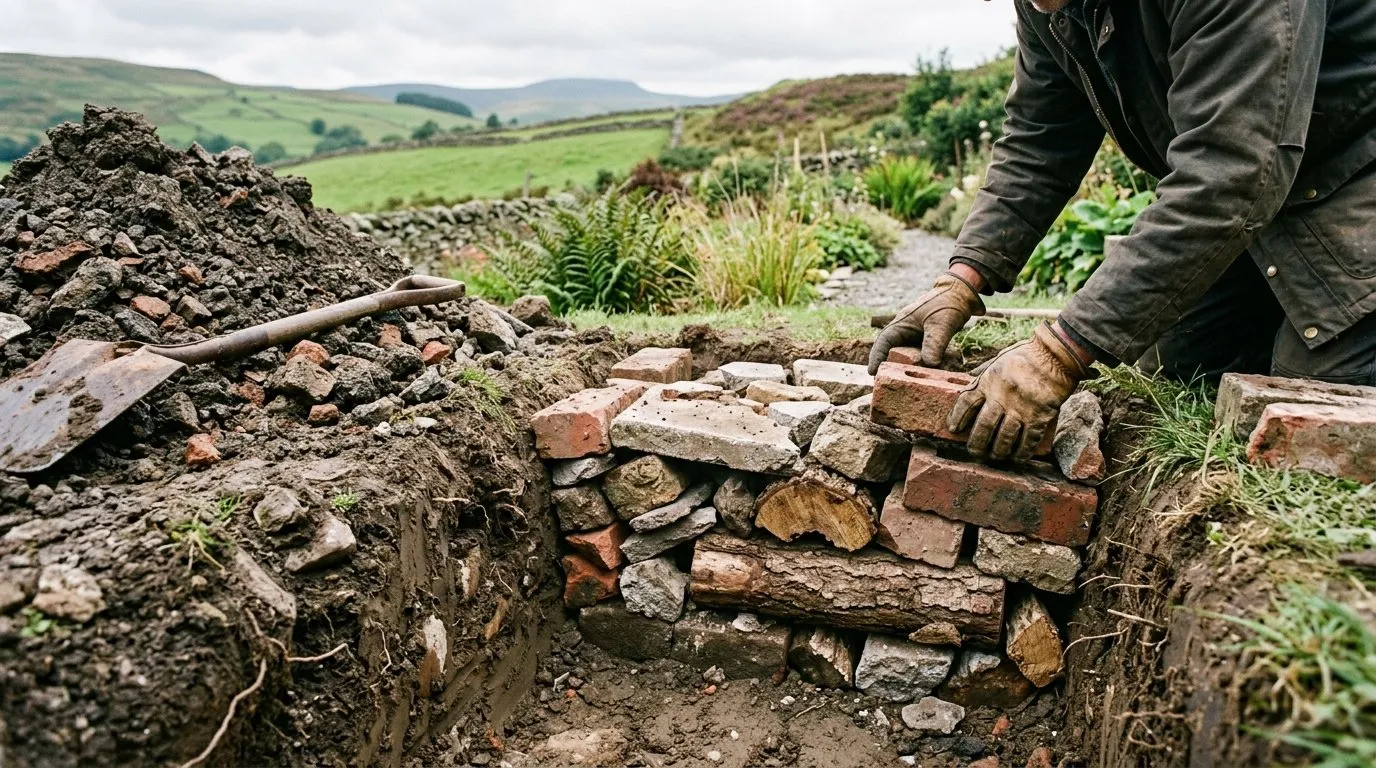
Stack bricks and logs loosely, leaving plenty of gaps. A solid block of rubble has no room for anything to live.
Why a hibernaculum keeps wildlife alive
The buried part stays above freezing, and the soil cap keeps it snug. Frost bites the top layer of soil, but the middle of a deep mound stays milder.

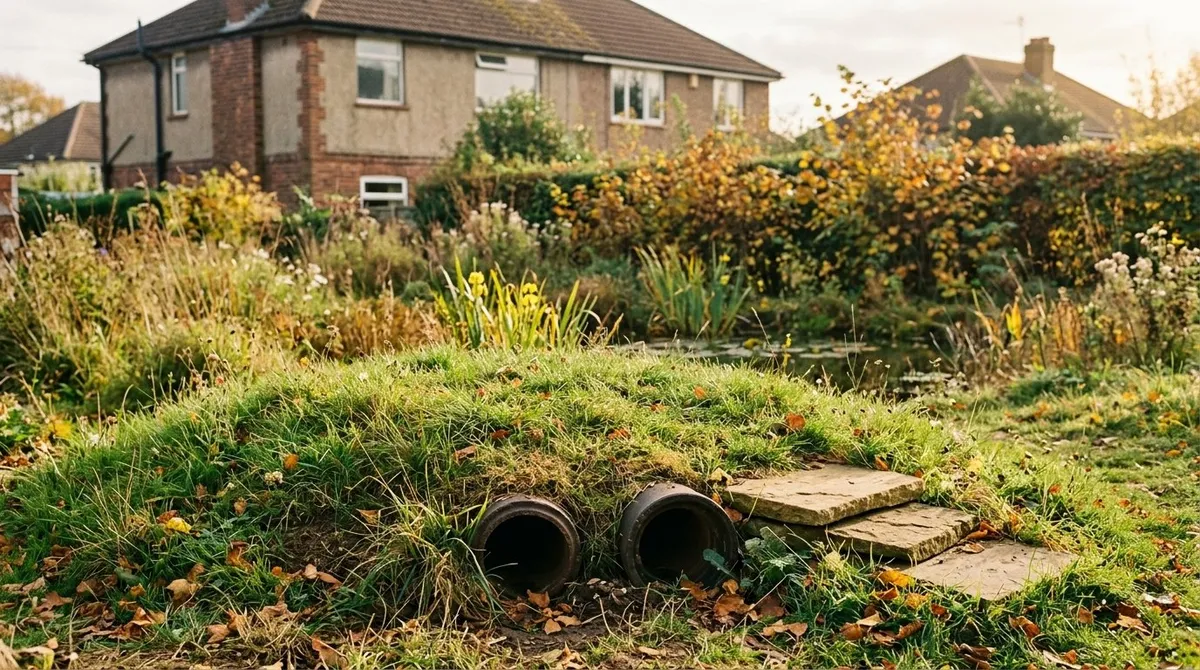
Before the soil goes on you can see the idea: a buried core of loose rubble with plenty of air gaps.
Damp matters. Frogs and newts breathe partly through their skin, which must stay moist. The damp soil and logs inside keep the air humid.
Dry patches matter too. Slow worms prefer the drier, slightly warmer parts nearer the top.
Drainage holds it all together. A flooded mound in a freeze becomes a block of ice. Good drainage keeps the gaps full of air, not water.
Entrances and basking spots
The pipes and the sunny edge make a big difference to how much the mound gets used.
Entrance pipes are the front doors. Slope them gently down into the core, and tuck the open ends among plants so animals can reach them under cover. Perforated pipe lets them slip out along the length too. Leave a few gaps between stones at the base as extra ways in.
Basking spots are for reptiles. Slow worms and lizards need to warm up in the sun before they can move and feed. Flat stones, old roof tiles or a log on the sunny side all work. A sheet of old corrugated tin or a rubber mat nearby also warms up, and slow worms love hiding underneath.
Keep long grass and low plants around the mound for cover. A wildlife log pile close by gives animals another safe place to hide on the way.
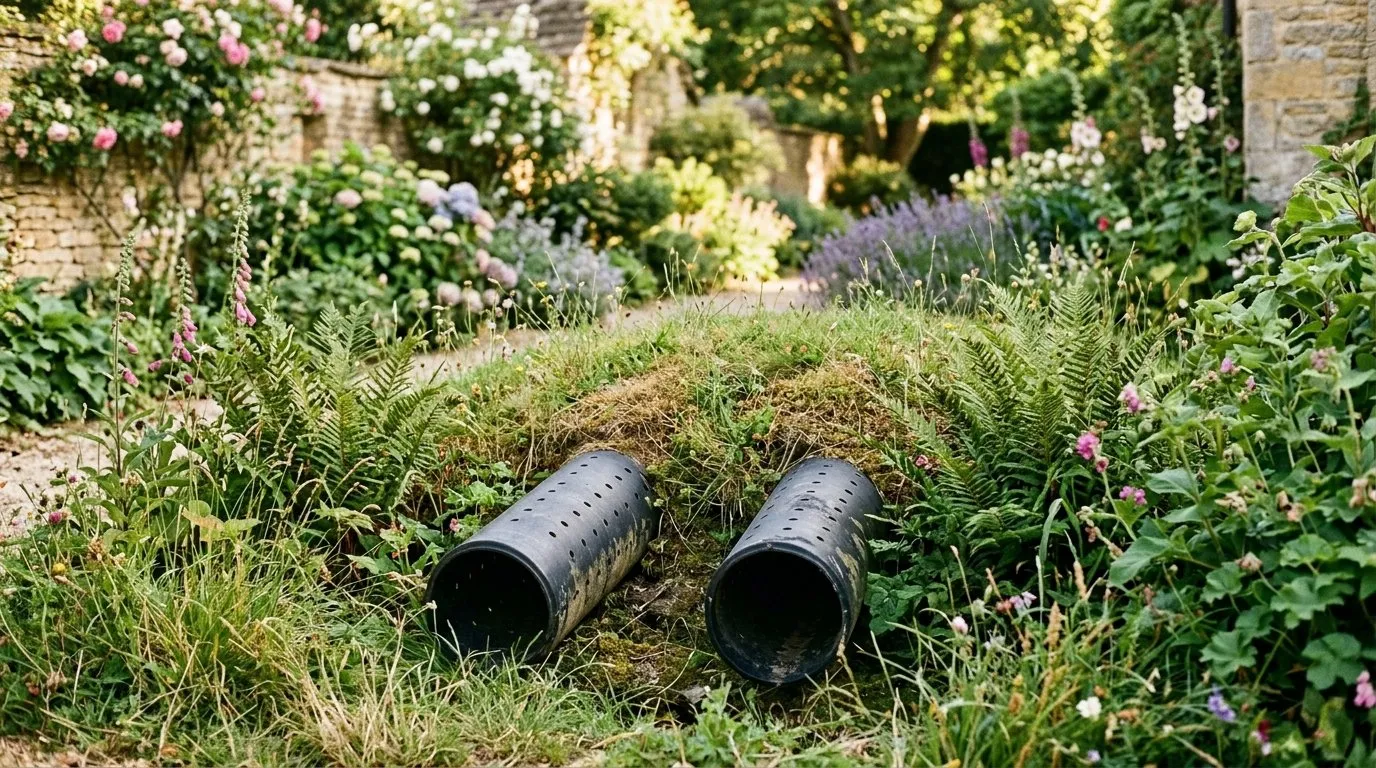
Pipes make easy doorways into the heart of the mound. Plants around the ends give cover on the way in.
Slow worms, grass snakes and the law
Slow worms, grass snakes and common lizards are protected by law. It’s an offence to kill or injure them on purpose. Great crested newts have even stronger protection, covering the animals and the places they live.
For gardeners this is rarely an issue. Building a shelter is just the kind of thing that helps them. The risk comes from disturbance. If you find a slow worm or newt while digging, stop and let it move off by itself. If you think you have great crested newts, leave their spots alone and get advice before doing any work there.
Don’t disturb a hibernaculum, compost heap or log pile between October and March. Animals inside are sluggish and can’t escape. Save any repairs for late summer.
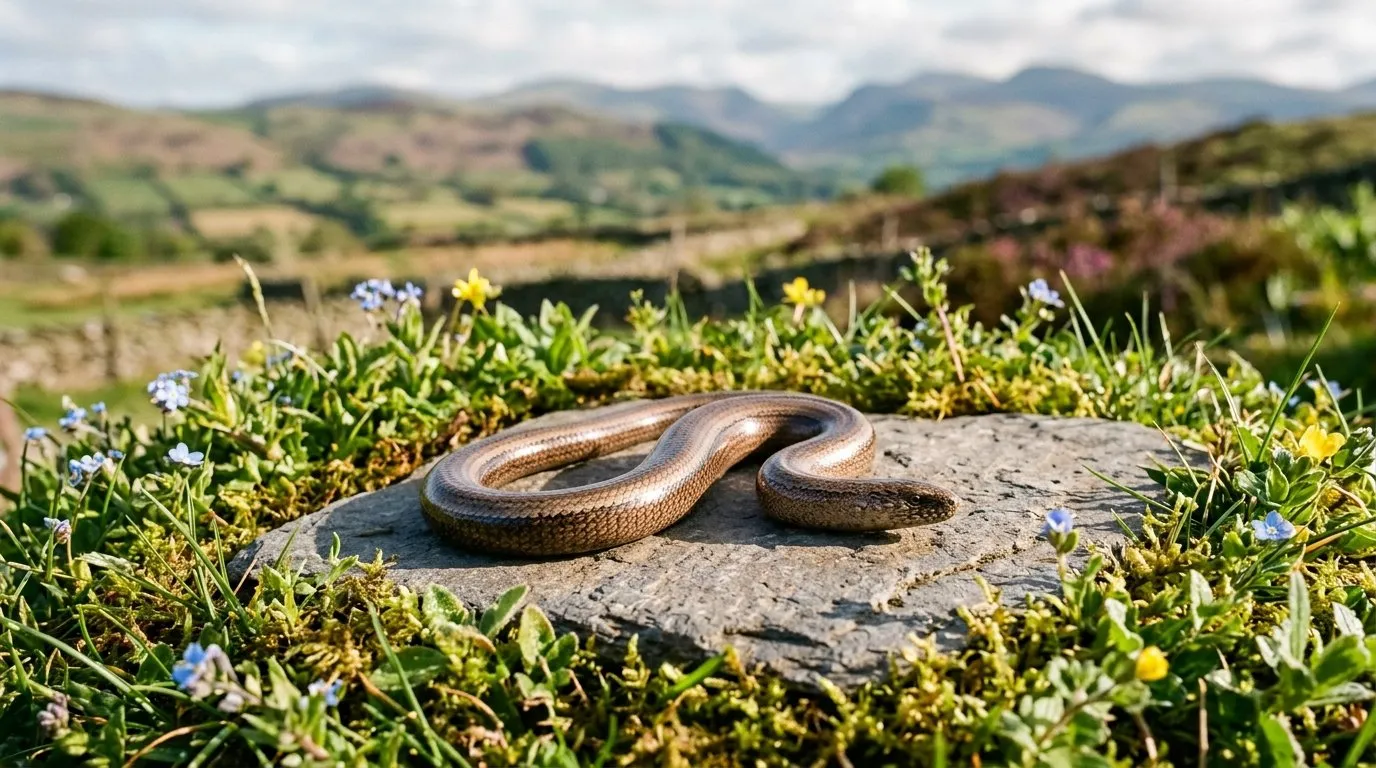
Slow worms bask on warm stones in spring. They’re harmless, protected and a big help with slugs.
Hibernaculum, log pile or compost heap?
All three give winter shelter. A hibernaculum gives the best frost protection because part of it is underground.
| Shelter | Who uses it | Effort | Frost protection |
|---|---|---|---|
| Hibernaculum | Frogs, toads, newts, slow worms | An afternoon with a spade | Good, as the core is buried |
| Compost heap | Slow worms, grass snakes, toads | Ongoing | Good, as rotting keeps it warm |
| Log pile | Toads, newts, beetles | An hour | Some, as it sits above ground |
| Rockery | Slow worms, lizards | A day or two | Less, as gaps are shallow |
No room to dig? An undisturbed compost heap built for wildlife or a log pile does much of the same job.
Hibernaculum calendar: what to do each month
| Month | What to do |
|---|---|
| January to February | Leave it alone. Animals are tucked up inside |
| March | Look for the first frogs and newts heading to the pond on mild, damp nights |
| April | Watch for slow worms basking on the sunny side |
| May to July | Keep basking stones clear of plants. Leave the cover around the mound |
| August | Best month to build a new mound or repair an old one |
| September | Finish any building. Animals start looking for winter homes |
| October | Stop all digging nearby. Let leaves gather round the base |
| November to December | Leave it alone |
Common hibernaculum mistakes
Building in a wet spot. Water collects, then freezes. Choose ground that drains well, or build up rather than down.
Packing the fill tight. A solid block has nowhere to live. Leave big gaps between bricks and logs.
Making it too shallow. A thin heap freezes right through. Dig down, or build a bigger mound.
Forgetting the entrances. A sealed mound gets little use. Add pipes and leave gaps at the base.
Tidying in winter. Rebuilding between October and March can kill whatever’s inside. Do all work in late summer.
Now you’ve built a winter refuge, read our winter wildlife garden guide for more ways to help garden creatures through the cold months. Browse all our wildlife gardening guides for more projects.
Frequently asked questions
What is a hibernaculum?
It’s a frost-free mound where wildlife can shelter through winter. In a garden it’s a pit loosely filled with rubble and logs, capped with soil and turf. Frogs, toads, newts and slow worms use the gaps inside.
How deep should a hibernaculum be?
Dig the pit about 50cm to 1m deep. That puts the middle of the mound below where frost reaches in most winters. On heavy clay, dig shallower and build the mound higher instead, so the gaps stay above any standing water.
Where should I put a hibernaculum in my garden?
Near a pond, in a quiet corner that drains well. Frogs, toads and newts move between water and land, so short trips are safer. Give one side of the mound sun for reptiles and keep it away from mowing and digging.
When should I build a hibernaculum?
Build it in August or September, before animals look for winter shelter. The ground is easy to dig and the mound has time to settle. From October to March, leave it completely alone.
Are slow worms snakes?
No, slow worms are legless lizards. Unlike snakes, they have eyelids and can shed their tails. They’re harmless, they eat slugs, and they’re protected by law, so never harm one.
What animals use a hibernaculum?
Mainly frogs, toads, newts and slow worms. Grass snakes and common lizards may use one too, as can beetles, spiders and other small creatures. Which ones turn up depends on what already lives near your garden.
Do hibernacula need to be near water?
It helps a lot for frogs, toads and newts. They breed in ponds and shelter on land, so a mound close to water keeps their journeys short and safe. Slow worms aren’t tied to water and will use one anywhere suitable.
Our team produces practical UK gardening guidance from source research, contributor records and established horticultural practice. Editorial standards are overseen by Matt W.