Key takeaways
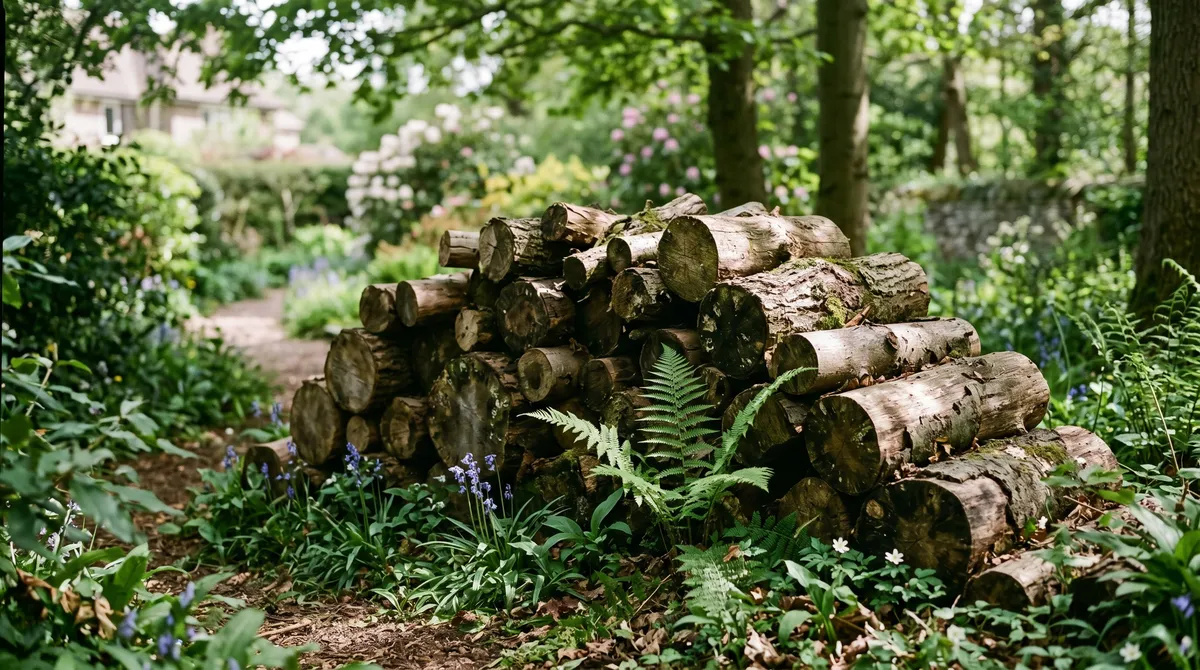
- Aim for a pile about 1m across and 1m high, using chunky logs
- Hardwood like oak, beech and birch lasts far longer than softwood
- Build it in shade, straight onto bare soil, never on plastic or paving
- Partly bury the bottom logs so stag beetle larvae can reach them
- Top up with fresh logs every few years rather than starting again
A wildlife log pile is one of the best things you can do for garden wildlife, and it costs little or nothing. It turns old logs into a home for beetles, toads, slow worms, wrens and maybe even a hedgehog. This guide shows you how to choose the wood, where to put the pile, how to build it, and how to look after it as it slowly rots.
Why a log pile helps so much wildlife
A bird feeder helps birds. A pond helps frogs. A log pile helps a whole crowd, because it changes as it rots, and each stage suits different creatures.
In the first year, woodlice and ground beetles move in under the bark. Then fungi start to soften the wood. After a few years, stag beetle larvae and lesser stag beetle larvae can feed on the buried, rotting parts. Later still, the pile goes soft and crumbly, perfect for slow worms and toads to tuck into. Eventually the bottom logs turn back into soil.
So the rotting is the whole point. Build it knowing it’s meant to fall apart slowly.
Hardwood or softwood: which logs to use
Hardwood is best. Oak, beech, birch, ash, sycamore and hornbeam all rot slowly and stay damp inside. Oak is the top choice for stag beetles. Birch rots a bit faster but is easy to get hold of from tree surgeons.
Softwood like pine, spruce, larch and leylandii rots quickly and crumbles within a few years. It’s not useless, but it won’t give you a long-lasting pile.
| Timber | How fast it rots | Good for stag beetles? |
|---|---|---|
| Oak | Very slow | Excellent |
| Beech | Slow | Excellent |
| Hornbeam | Very slow | Excellent |
| Birch | Medium | Good |
| Ash | Medium | Good |
| Sycamore | Medium | OK |
| Scots pine | Fast | Poor |
| Leylandii | Very fast | Poor |
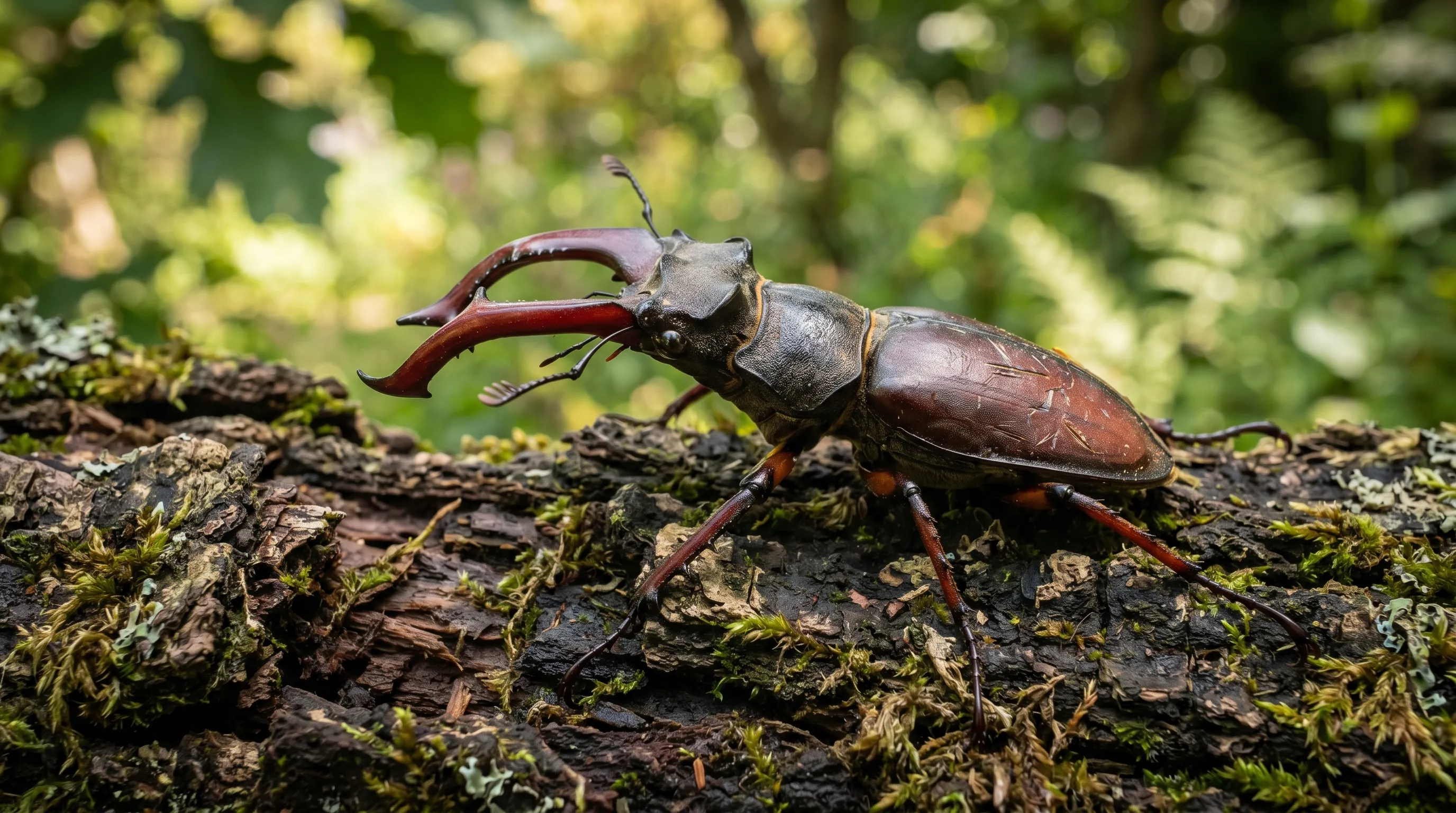 The stag beetle is the UK’s biggest beetle. Its larvae spend years feeding on buried, rotting hardwood.
How thick should the logs be?
Go for chunky logs, ideally thicker than 15cm. Thin logs dry out fast in summer and freeze quickly in winter. Thicker logs stay damp and steady inside, which is what beetle larvae need.
A good mix looks like this:
- Bottom layer: your biggest logs, 20-30cm across and about 50-80cm long. This is the long-term stag beetle home.
- Middle layers: medium logs, 10-20cm across, to fill the gaps.
- Top layer: smaller pieces plus twigs and brushwood.
If you can only get one size, pick the bigger logs. A pile of fat logs beats a pile of skinny ones every time.
How to build a wildlife log pile step by step
It takes an hour or two. The logs are often free from tree surgeons. Only take wood from woodland with the owner’s permission, and never from nature reserves.
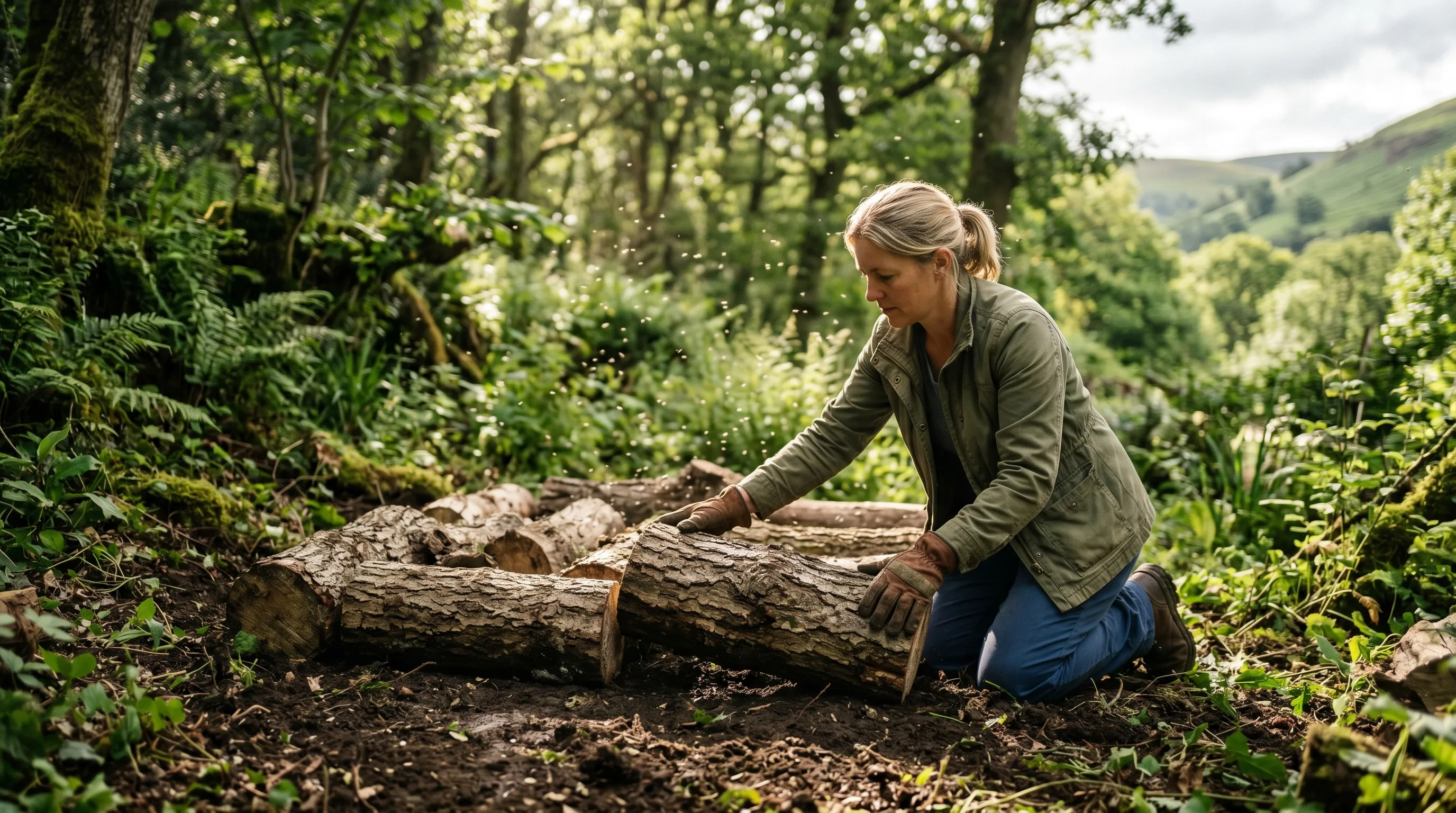 The bottom logs sit straight on bare soil. No membrane or weed fabric, as larvae need to reach the earth.
Step 1: Pick a spot
Choose a shady, quiet corner. North or east-facing is ideal. Avoid hot, dry, south-facing spots. If you can, put it fairly near a compost heap, pond or hedge, so wildlife can move easily between them.
Step 2: Clear the ground
Remove grass or plants from an area a little bigger than the pile. Leave the soil rough. Don’t put plastic, gravel or paving underneath. Wood needs to touch soil to rot properly and for larvae to burrow in.
Step 3: Lay the bottom logs
Put your biggest logs down first, in two rows on the bare soil. Twist or rock each one so it sinks a few centimetres into the earth. That contact lets fungi creep up into the wood.
Step 4: Stack the middle
Lay the next layer crossways, like a game of Jenga. Keep alternating. Use the medium logs here and build up to around 80cm. Leave gaps and hollows for toads, slow worms and hedgehogs to crawl into.
Step 5: Top it off
Add smaller pieces, twigs and brushwood on top to reach about 1m. The loose twigs give wrens and other small birds some cover. Don’t pack it down, as the air gaps are part of the design.
Step 6: Give it a head start (optional)
Scatter a handful of leaf mould or old compost into the pile. It can help get the rotting going.
Who will move into your log pile
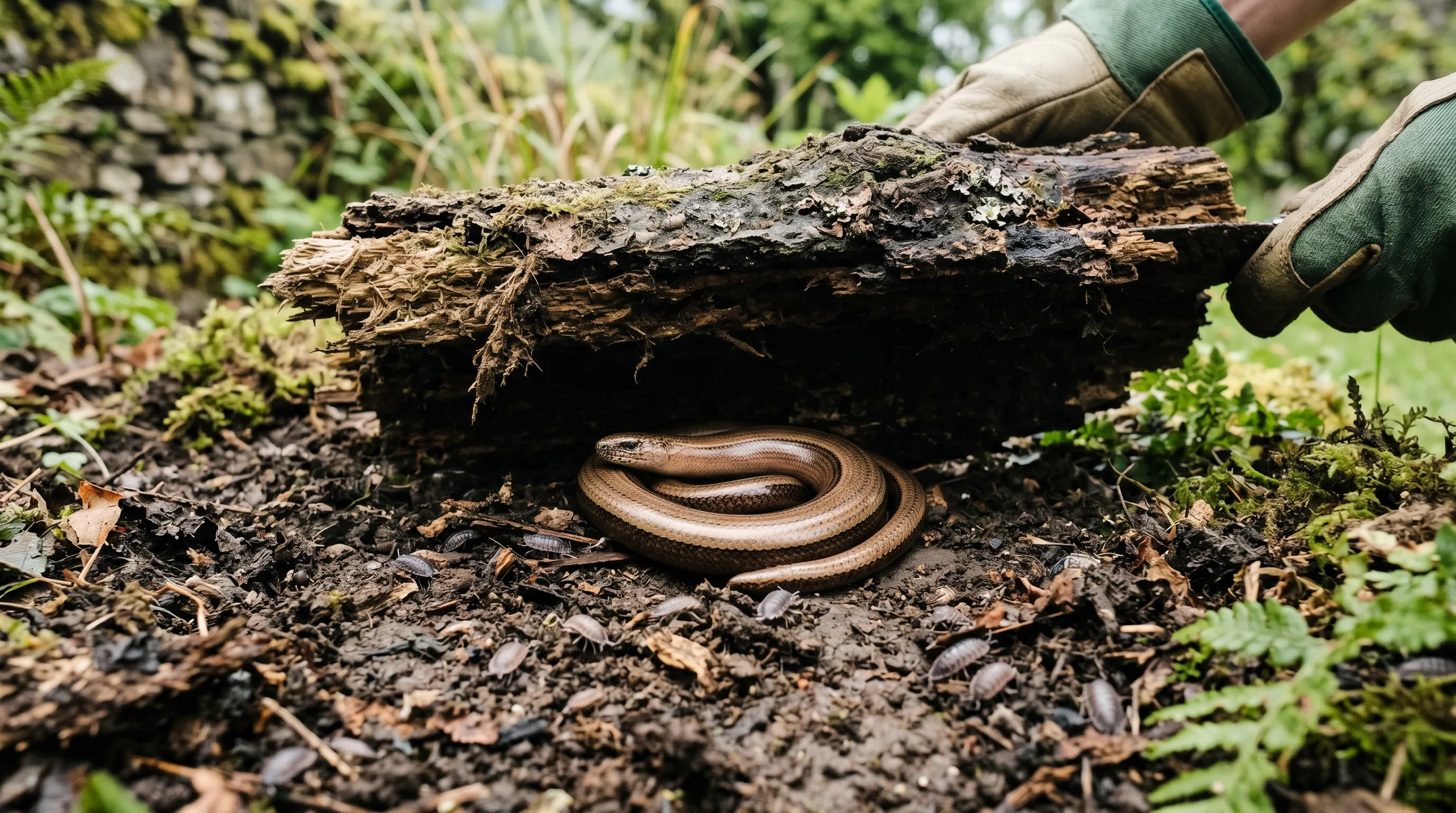 Slow worms are legless lizards, not snakes. They hide away in log piles over winter.
Stag beetles and lesser stag beetles
The stag beetle (Lucanus cervus) is the UK’s biggest beetle, and the males have those famous “antlers”. Females lay eggs in the soil next to rotting hardwood. The larvae then feed underground for several years before turning into adults. Lesser stag beetles do much the same. Stag beetles are mostly found in southern England.
Slow worms and toads
Slow worms and common toads shelter in the lower gaps of a log pile all year. Slow worms spend the winter tucked inside, roughly October to March. Toads use the damp, shady corners in summer and to sleep through winter. Slow worms are protected by law, so leave them be. Our frog and toad guide has more ways to help.
Hedgehogs and wrens
Hedgehogs may shelter in or beside a bigger pile, and they’ll happily snack on the beetles and slugs living there. Wrens hop in and out of the gaps hunting for insects.
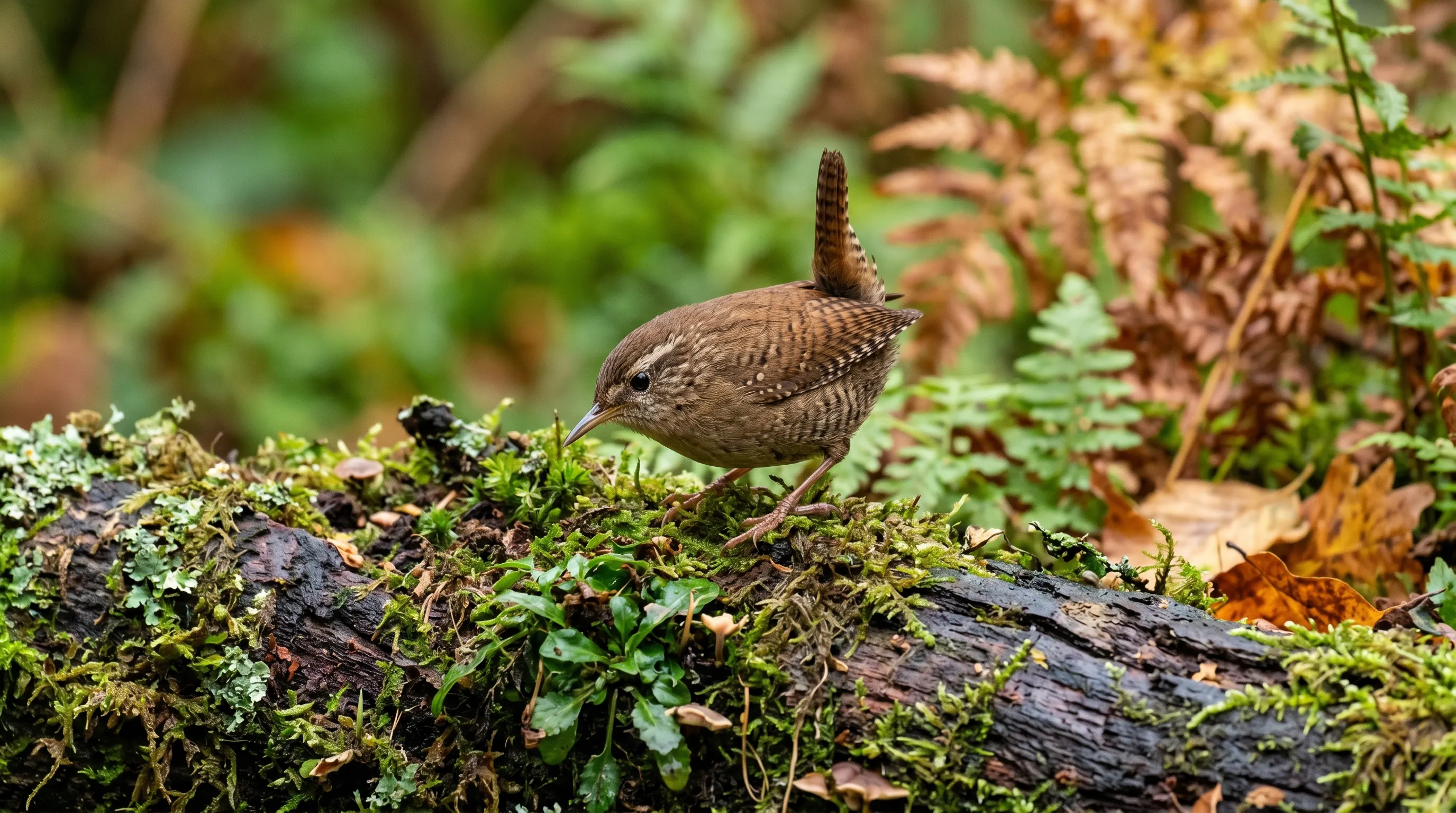 A wren hunting for insects among mossy logs.
Fungi, the clean-up crew
Fungi are what make the wood rot. Within a year or two you may spot turkey tail brackets, and later jelly fungi, candlesnuff and yellow stagshorn. Without fungi, the wood stays hard and the insects don’t move in.
Where to put the pile in your garden
A few simple rules:
- Near a compost heap, so toads and slow worms can move between the two.
- Near a pond, if you have one, so young frogs have somewhere to hide when they leave the water.
- Near a hedge, so birds can hop along it and drop in.
- Away from wooden sheds, fences and decking. Leave a gap of a metre or so, so the rot stays in the pile.
Looking after your log pile over the years
Mostly, you just leave it alone. The few jobs are about topping it up, not tidying it.
| Stage | What’s happening | What to do |
|---|---|---|
| First year | Fresh wood, bark still on | Leave it alone |
| Years 1-2 | Bark loosening, first fungi | Add a few new logs on top in autumn |
| Years 2-3 | Outer wood going soft | Don’t disturb, larvae may be inside |
| Years 3-5 | Wood going crumbly | Top up with medium logs in autumn |
| Years 5 onwards | Bottom logs turning to soil | Start a new pile next to the old one, don’t pull it apart |
Month-by-month calendar
| Month | Job |
|---|---|
| January | Leave alone. Animals may be hibernating |
| February | Have a look from a distance |
| March | Still leave it be while nights are cold |
| April | Birds may be nesting. No work on the pile |
| May | Ask tree surgeons for logs from spring jobs |
| June | Look out for stag beetles flying at dusk |
| July | Check the top for sinking. Nothing to add yet |
| August | Gather logs for an autumn top-up |
| September | Add new logs on top once nesting is over |
| October | Last top-up. Slow worms are settling in |
| November | No more disturbance. Hedgehogs may move in |
| December | Leave alone |
Dead hedges: a log pile for narrow spaces
No room for a 1m square pile? Try a dead hedge. Knock in two rows of hazel or chestnut stakes about 50-60cm apart, then fill the gap with prunings, brushwood and small logs, up to 1-1.5m high.
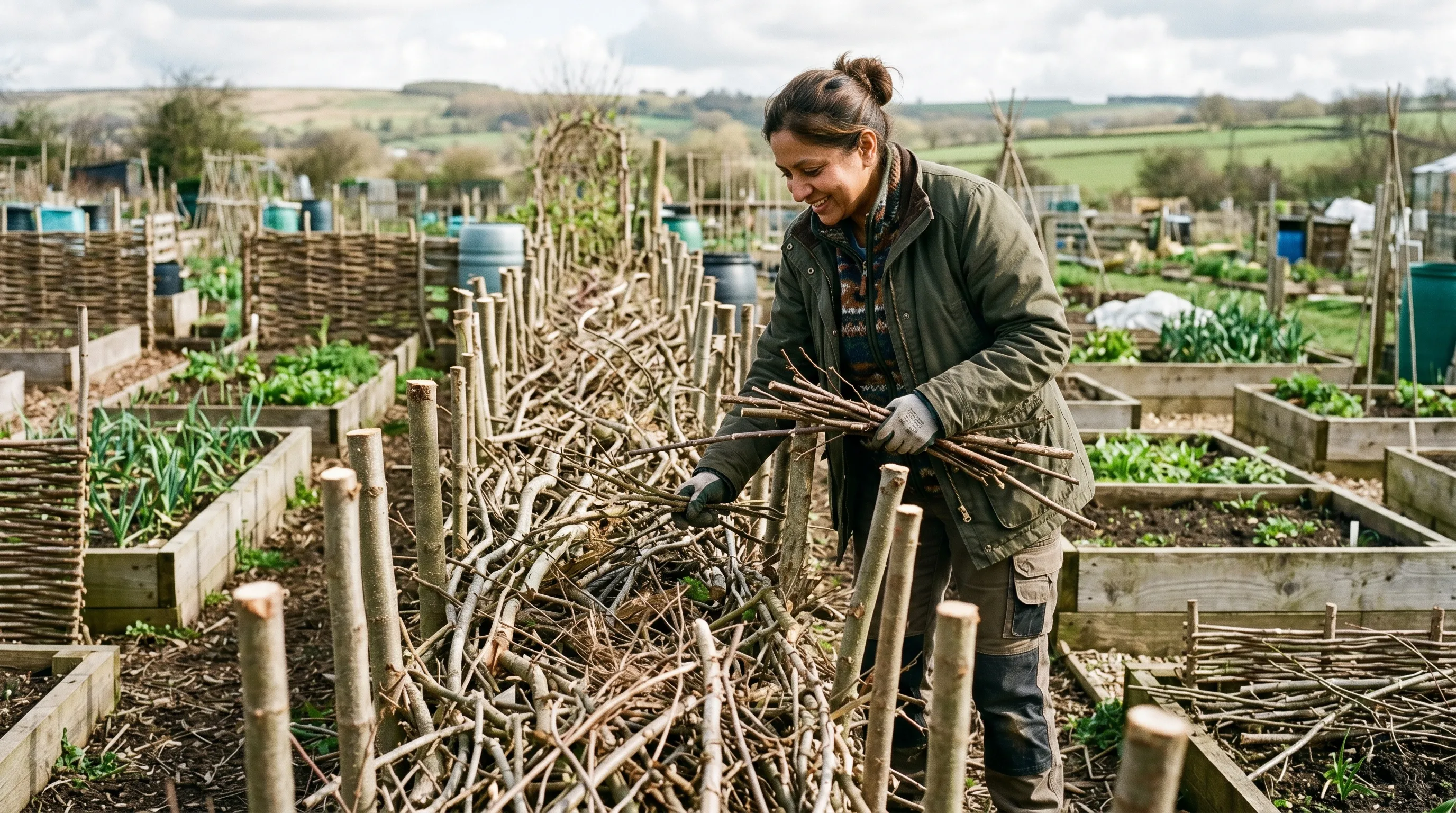 A dead hedge makes a handy windbreak and boundary, and wildlife loves it.
Dead hedges suit lots of the same small creatures, though stag beetles prefer the thicker logs of a proper pile. They’re great on allotments, along boundaries and in small town gardens. And they use up prunings you’d otherwise have to get rid of.
Our hedgehog highway guide explains how to link log piles and dead hedges between gardens with a simple 13cm gap in the fence.
Common log pile mistakes
Building on plastic or paving. The biggest mistake. The wood needs to touch soil, or it stays hard and lifeless.
Using treated or painted wood. Old fence posts, pallets and painted timber can contain preservatives that harm wildlife. If in doubt, leave it out.
Pulling it apart and starting again. The pile is at its best after a few years. Rebuilding it destroys larvae and winter hideaways. Always top up rather than rebuild.
Putting it in full sun. A sunny pile bakes dry in a heatwave. Shade keeps it damp and alive.
Tidying it. Loose bark, twigs and bits on the ground are homes too. Resist the urge to sweep up.
What a five-year-old pile looks like
A pile a few years old looks very different from a new one. The bark has dropped off, the outside of each log has gone soft, and fungi cover the surface. Inside, the wood is crumbly enough for larvae to tunnel through.
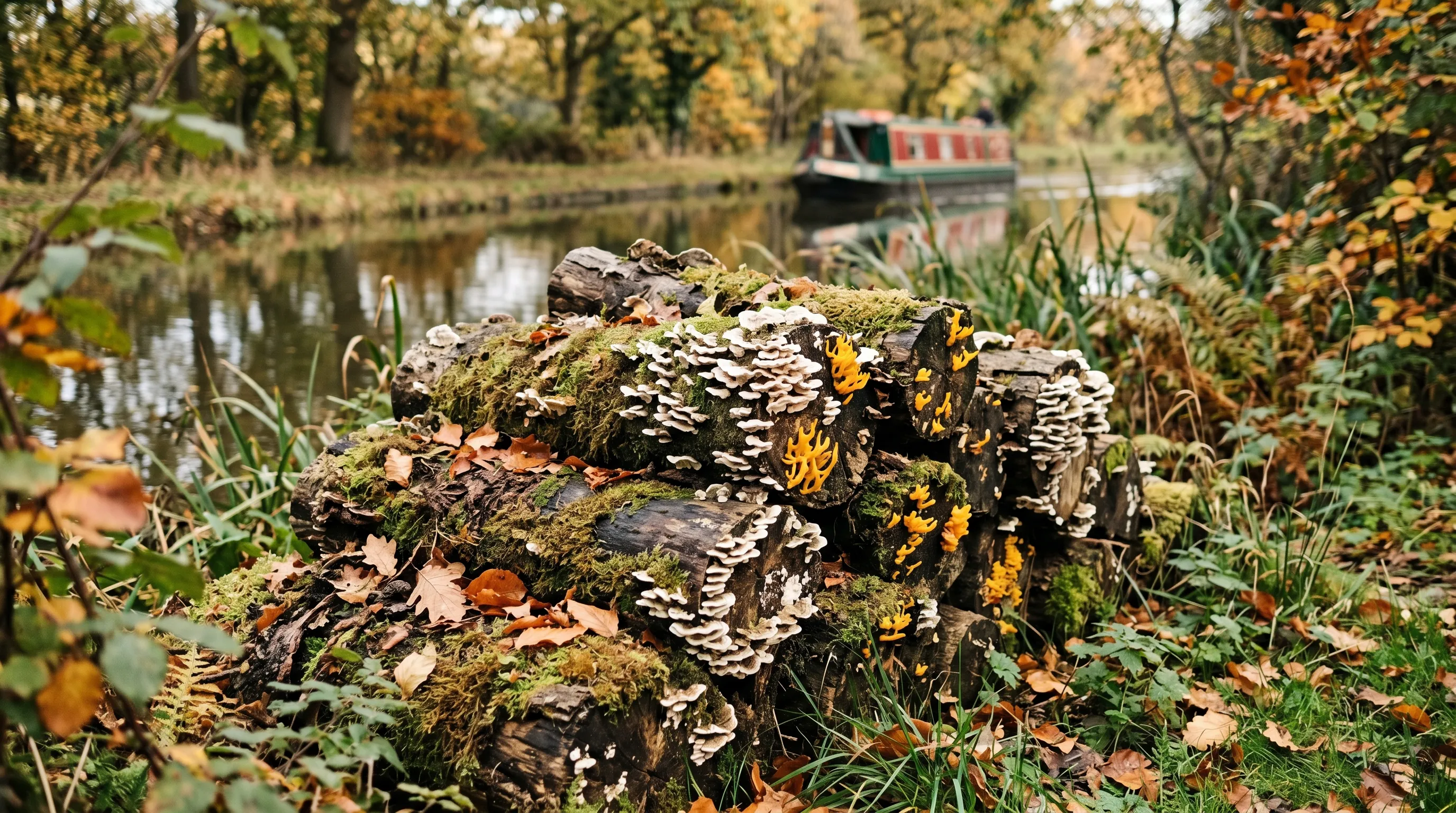 A mature pile covered in fungi. By now, it’s full of life.
The lesson is patience. A new log pile looks a bit dead. A five-year-old one is buzzing.
For logs, ask local tree surgeons, community woodland groups or your local Wildlife Trust. Some councils also offer free logs or wood chip to residents.
Build a log pile this weekend
You can make a useful log pile in an afternoon. Even a small stack of hardwood in a shady corner does real good. Remember the basics: hardwood, around 1m across and 1m high, on bare soil, in the shade. Then leave it alone.
Frequently asked questions
What is the best wood for a wildlife log pile UK?
Native hardwoods like oak, beech and birch are best. They rot slowly, stay damp and suit lots of insects and fungi. Stag beetle larvae especially love rotting hardwood. Avoid treated, painted or varnished wood. Softwood is fine to add, but it rots faster.
How big should a wildlife log pile be?
Around 1m across and 1m high suits most gardens. Bigger piles stay damper and help more wildlife. In a tiny garden, a few logs stacked together still help. Partly bury some of the bottom logs to make it better for beetle larvae.
Where should I put a wildlife log pile?
Put it in a shady, quiet corner, straight onto bare soil. Touching the ground keeps the wood damp and lets fungi and larvae move in. Under a hedge or tree works well. Never build it on plastic, decking or paving.
What animals use a log pile?
Lots, from tiny bugs to hedgehogs. Woodlice, centipedes, beetles and, in some areas, stag beetles live in or under the wood. Frogs, toads, newts and slow worms shelter there. Hedgehogs may use bigger piles, and wrens hunt for insects among the logs.
How long does a log pile last?
A hardwood pile lasts many years before the bottom logs rot away. Softwood breaks down faster. Add fresh logs to the top every few years to keep it going. Don’t pull an old pile apart to rebuild it, as creatures may be living in the rotting base.
Our team produces practical UK gardening guidance from source research, contributor records and established horticultural practice. Editorial standards are overseen by Matt W.