
Key takeaways
- Start with a minibeast hunt under a log or stone, as kids find something within moments
- Build a bug hotel in a sunny, sheltered spot in spring, ready for solitary bees
- Pond dip with a fine net and a white tray, and keep a grown-up beside any water
- Make pine cone bird feeders from November to April, in line with RSPB advice
- Warm summer evenings are perfect for moth and bat watching
- Always put creatures back where you found them, and wash hands afterwards
Garden wildlife activities for kids are one of the easiest ways to get children outside and curious. You don’t need a big garden or special kit. A log to lift, a pond net and a pine cone are plenty. This guide covers the best hands-on activities, what suits each age, and what to try in each season.
Which wildlife activities suit each age?
Younger children love quick, hands-on finds, and older children enjoy projects and recording what they see. Pick an activity that gives a result fast, then build up to longer ones.
| Age | Good activities | Supervision |
|---|---|---|
| 2 to 4 | Minibeast hunts, snail spotting, filling a bird bath, watching a feeder | Stay right beside them |
| 5 to 7 | Bug hotel building, pine cone feeders, leaf rubbings, simple bird spotting | Adult close by |
| 8 to 10 | Pond dipping, a nature journal, bird identification, butterfly counts | Adult nearby, always at water |
| 11 and up | Moth watching, bat spotting, mapping garden habitats, wildlife surveys | Adult around, especially after dark |
If you want growing projects too, the gardening projects for kids guide covers cress heads, bean teepees and potato buckets.
How to run a minibeast hunt
Lift a log or stone and you’ll find something straight away. That’s what makes a minibeast hunt the best first activity. Woodlice, centipedes, ground beetles, earwigs and slugs all hide in damp, dark spots.
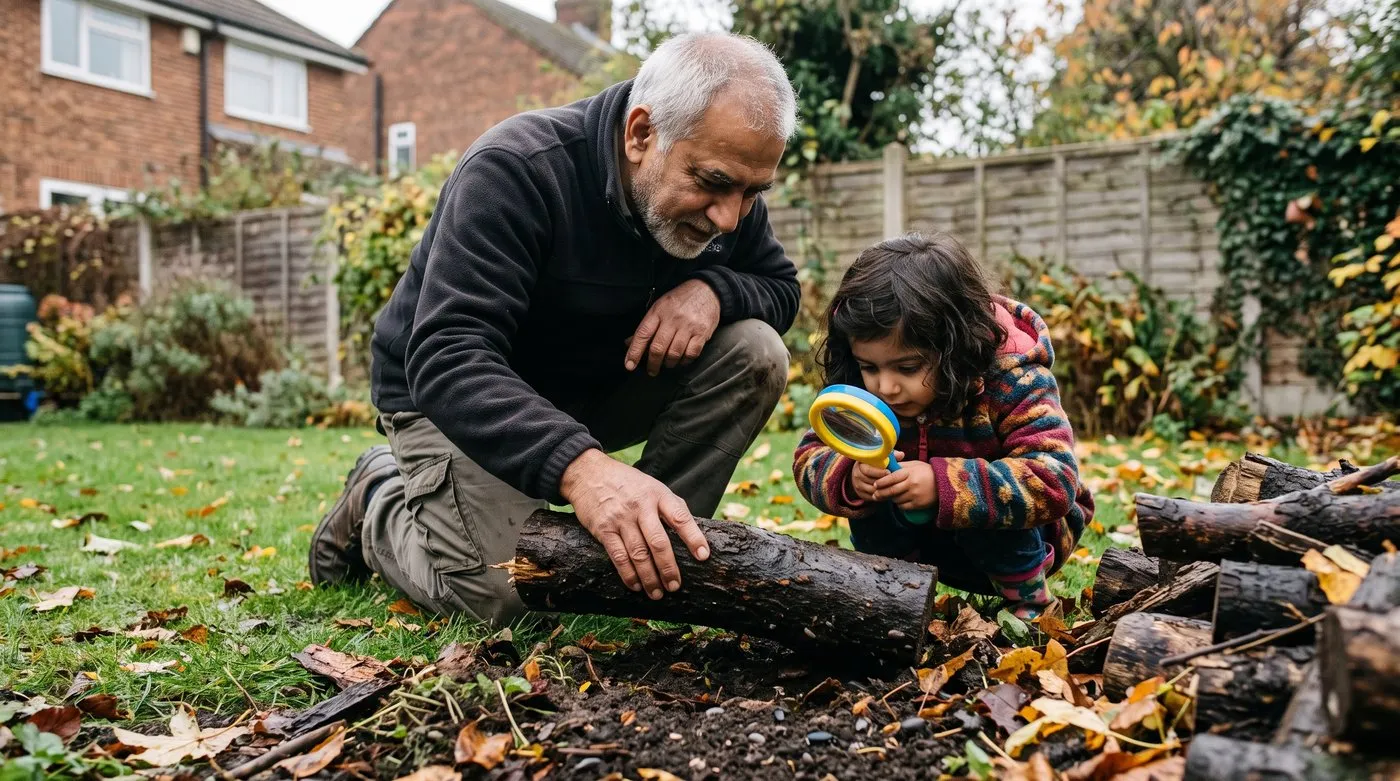
Lift a log and something is always there. Rolling it back afterwards keeps the woodlice and beetles safe.
Give each child a magnifying glass and visit a few different spots:
- Under logs and stones for woodlice, centipedes and beetles
- In long grass for spiders, caterpillars and, in late summer, grasshoppers
- On flowers for bees, hoverflies and butterflies
- In leaf litter for millipedes and springtails
- On walls and fences for spiders and harvestmen
Look gently, then roll the log or stone back exactly as it was, so the creatures underneath keep their home. A log pile in a shady corner gives you a hunting ground for years.
Children of 7 and over often enjoy a nature journal. Note the date, the weather and a quick sketch of each find. Over a year it becomes a lovely record of your garden.
How do you build a bug hotel with children?
Fill a wooden frame with natural materials and stand it somewhere sunny and sheltered. It’s a great spring project for children aged 5 and up, and insects can move in within weeks.
You will need:
- A frame: an old wooden crate or a few untreated pallets
- Tubes: hollow plant stems or bamboo canes cut to about 15cm
- Fillings: pine cones, bark, dry leaves, straw and rolls of corrugated cardboard
- A roof: an old tile or a piece of roofing felt to keep the rain off
Let the children choose which material goes in each section, and pack everything in tightly. Face the hotel south or south-east, as solitary bees need warmth to get going. From April to June, look for red mason bees packing the ends of the tubes with mud. The bug hotel building guide has more designs.

Bamboo canes in one section, pine cones in another. Letting children choose where everything goes is half the fun.
How do you go pond dipping with children?
Sweep a fine net slowly through the water, then tip the catch into a white tray of pond water. Every scoop brings up something wriggling, which is why children love it.
You will need a fine-mesh pond net, a white tray or washing-up bowl, a plastic spoon and a magnifying glass. A free identification sheet from the Freshwater Habitats Trust helps you name what you find.
Depending on the season, you might find pond snails, water boatmen, water beetles, dragonfly and damselfly larvae, tadpoles and newt tadpoles. Spring and summer are the busiest times.
Warning: Stay right beside young children at any pond, however shallow. Dip from a firm, shallow edge, and wash hands after pond dipping.
Keep the tray in the shade and put everything back gently once you’ve had a look. If you catch a large, dark, warty newt, it may be a great crested newt. They are protected, so put it straight back without handling it.
No pond yet? The guide to building a wildlife pond shows how, starting with a sunken washing-up bowl.

A shallow edge, a fine net and a white tray. The pale tray makes even tiny pond creatures easy to spot.
How do you make a bird feeder with children?
A pine cone feeder is the easiest bird project, and it suits children from about 3 upwards. Make them between November and April, when the RSPB says seed is fine to put out.
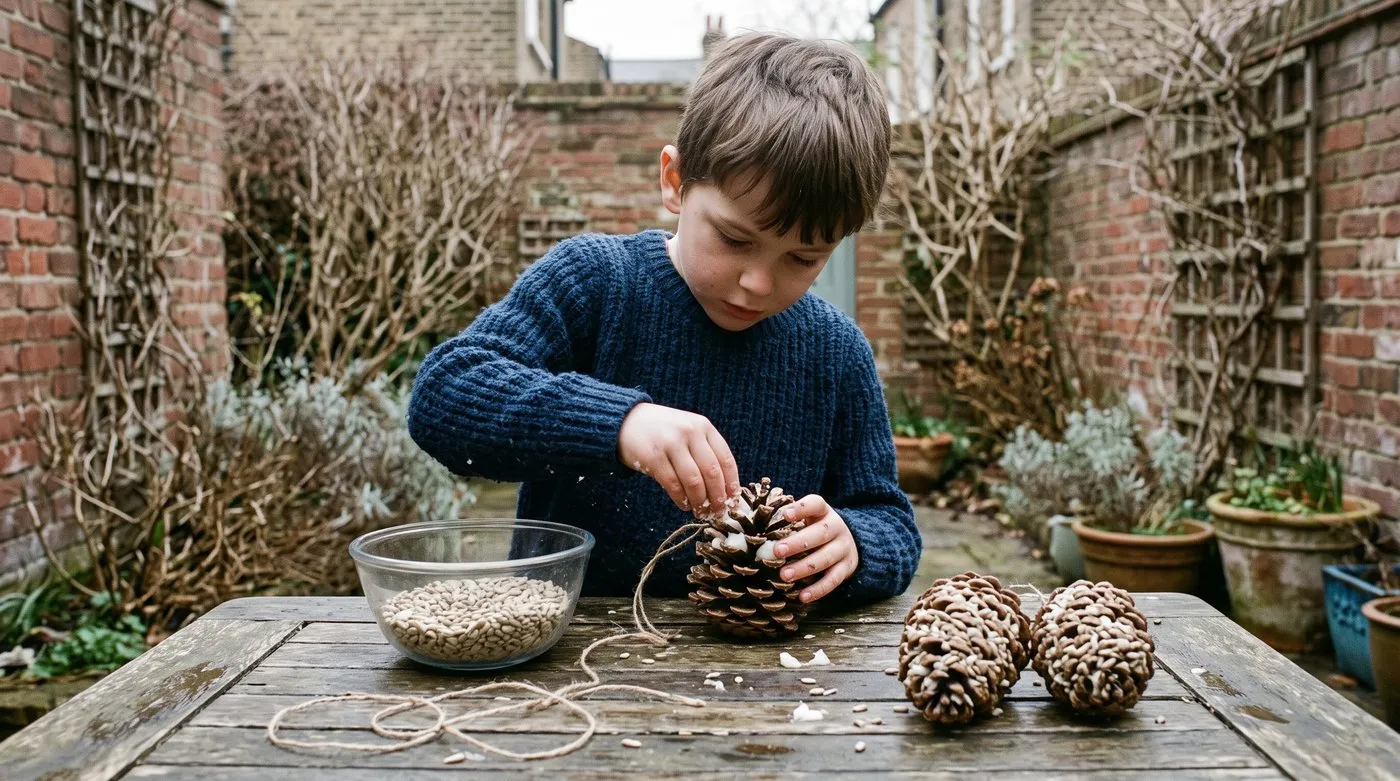
Lard, seed and a pine cone make a feeder in minutes. Hang it near a window so everyone can watch who visits.
- Tie string tightly around the top of a large, open pine cone.
- Press softened lard or suet into the gaps with a spoon or fingers.
- Roll the cone in sunflower hearts or a seed mix.
- Hang it from a branch at least 1.5m up, away from places cats can hide.
If you use peanut butter, pick a smooth one with no added salt or sugar, and skip it if anyone has a nut allergy. Hang the feeder where children can see it from a window. Blue tits, great tits and robins are usually first to find it.
From May to October, the RSPB now asks people to pause seed and peanuts, so take seed feeders down then. The RSPB bird feeding rules explained covers what to offer instead.
Night-time wildlife: moths and bats
Warm, still summer evenings are perfect for moth and bat watching with older children. It feels like a real adventure, and there is plenty to see.
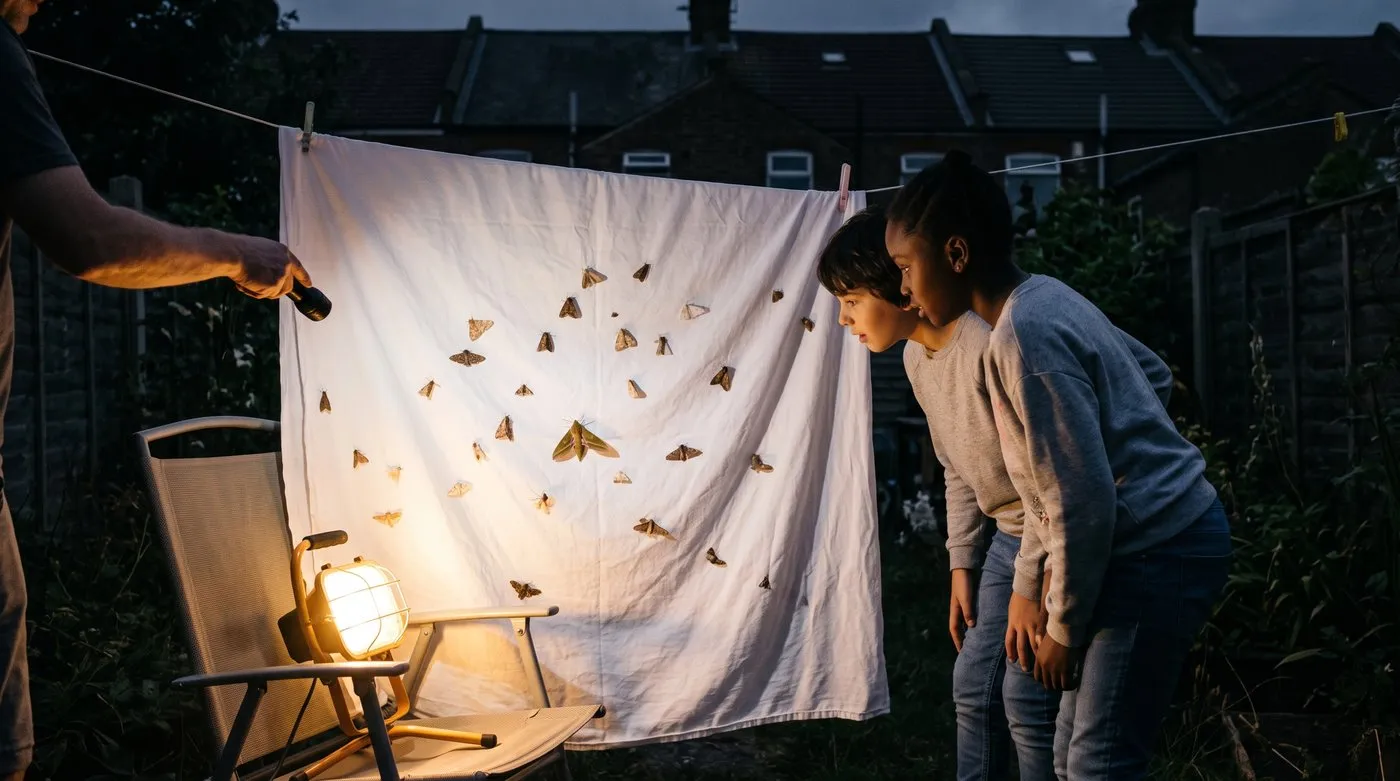
A white sheet and a bright light turn a summer night into a moth safari. Switch off afterwards and let them fly off.
For moths, hang an old white sheet over a washing line or fence and shine a bright torch or lamp onto it after dark. Moths settle on the sheet, and you can look at them closely before turning off the light. Let them fly off in their own time.
For bats, sit quietly in the garden around sunset from May to September. Small bats such as pipistrelles often zip along hedges and over lawns, catching insects. A bat detector turns their calls into clicks you can hear. The bat-friendly gardens guide explains how to bring more in.
Garden wildlife activities through the year
Every season brings something new to find. Planning around the calendar teaches children about nesting, migration and hibernation without a lesson in sight.
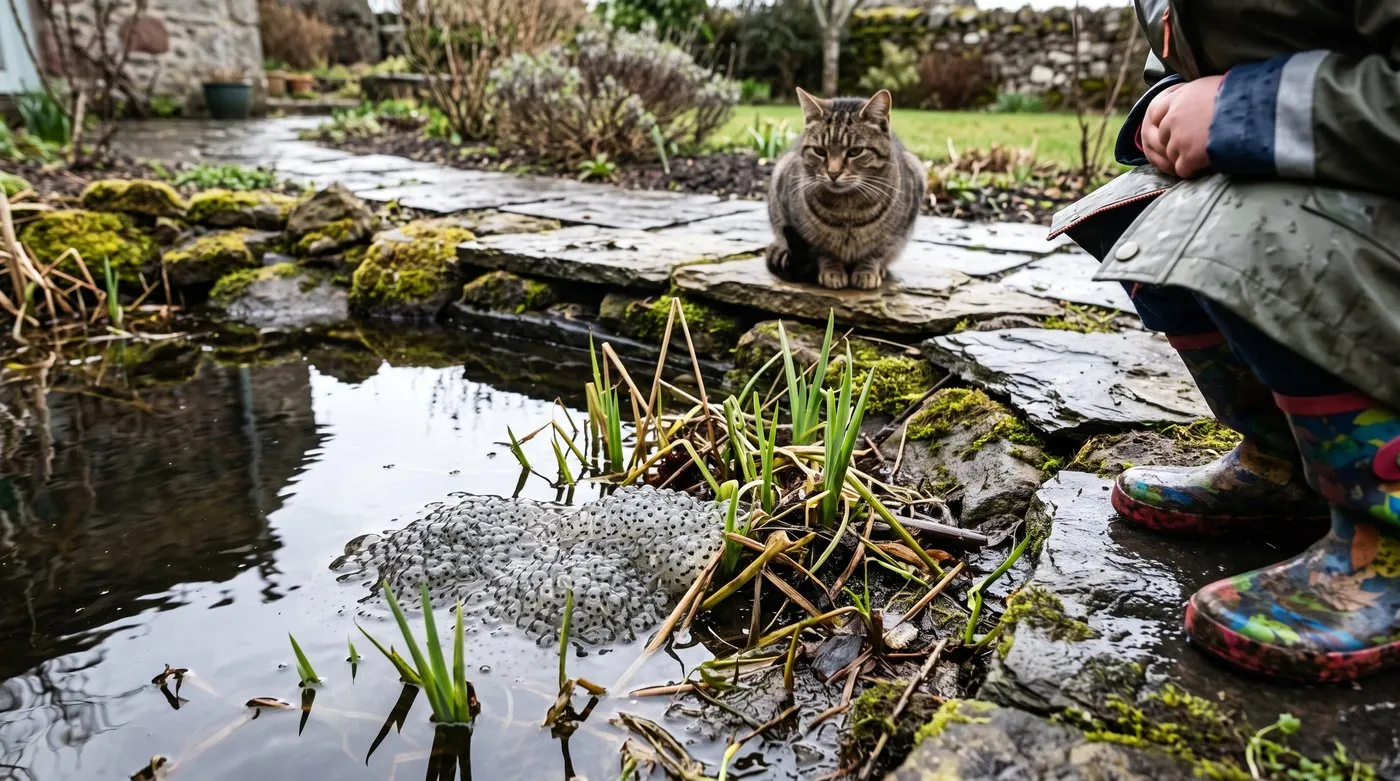
Frogspawn in March is one of the first signs of spring. Check the pond every few days to watch it turn into tadpoles.
| Season | Activities to try |
|---|---|
| Spring (March to May) | Look for frogspawn and tadpoles, build a bug hotel, watch birds carrying nest material, listen to the dawn chorus |
| Summer (June to August) | Pond dipping, butterfly spotting for the Big Butterfly Count in July and August, moth sheets, bat watching |
| Autumn (September to November) | Collect fallen leaves for rubbings, look for spiders’ webs on misty mornings, spot fungi, make a leaf pile for hedgehogs |
| Winter (December to February) | Pine cone bird feeders, a bird spotting tally, looking for footprints in frost, mud or snow |
For a growing project with a wildlife bonus, try growing sunflowers with children, as bees love the flowers and birds eat the seeds.
Common mistakes with kids’ wildlife activities
- Starting with a long project. Children lose interest if nothing turns up. Start with a quick minibeast hunt, then move on to building.
- Keeping creatures too long. Pond creatures overheat in a shallow tray. Look, then put them back where you found them.
- Leaving feeders dirty. Feeders need a clean every week to stop disease spreading between birds.
- Putting the bug hotel in shade. Solitary bees need warmth. Choose a sunny, sheltered spot.
- Tidying everything away. Log piles, leaf litter and a patch of long grass are where the wildlife lives. Leave one wild corner.
Gardener’s tip: Mix things up. Swap between hunts, builds and quiet watching so each session feels new.
What kit do you need?
Most garden wildlife activities need very little. These few things cover almost everything in this guide, and they last for years.
- A magnifying glass or bug viewer
- A fine-mesh pond net
- A white tray or washing-up bowl
- A notebook and pencils for a nature journal
- A torch, for moths and evening wildlife
- Pine cones, string and lard or suet for bird feeders
The wildlife hub has plenty more ideas for making your garden a better home for wildlife.
Frequently asked questions
What wildlife activities can toddlers do in the garden?
Simple minibeast hunts are perfect for toddlers. Lift a log or stone together and look at the woodlice and beetles underneath. Watching birds at a feeder, spotting snails after rain and filling a bird bath are also good fun. Keep sessions short and stay right beside them near any water.
How do you build a bug hotel with children?
Fill a wooden crate or stacked pallets with natural materials. Pack in hollow stems or bamboo canes about 15cm long, pine cones, bark and dry leaves. Add a roof to keep the rain off, and stand it in a sunny, sheltered spot facing south or south-east.
Is pond dipping safe for children?
Yes, with an adult right beside them. Dip from a shallow, firm edge and keep toddlers within arm’s reach, as even shallow water is a drowning risk. Keep catches in a shaded tray of pond water, put them back soon, and wash hands afterwards.
What birds will visit a homemade bird feeder?
Blue tits, great tits and robins are the most likely visitors. House sparrows, chaffinches and starlings often turn up too. Hang the feeder near a window so children can watch from indoors.
When is the best season for garden wildlife activities with kids?
Spring and summer have the most to find, but every season has something. Spring brings frogspawn and nesting birds. Summer is best for pond dipping, butterflies, moths and bats. Autumn and winter suit bird feeding, hedgehog spotting and looking for footprints.
What equipment do I need for garden wildlife activities?
A magnifying glass, a fine pond net and a white tray cover most activities. Add a notebook for a nature journal and a torch for evening wildlife. Recycled pots, string and pine cones do the rest.
Make room for hedgehogs next
Once the children are hooked, help them make the garden a home for one of the UK’s best-loved visitors. The guide to making a hedgehog-friendly garden shows you how.
Our team produces practical UK gardening guidance from source research, contributor records and established horticultural practice. Editorial standards are overseen by Matt W.


