
Key takeaways
- Start young children on fast crops such as cress, radishes and sunflowers
- Give each child their own pot or patch, labelled with their name
- Bean teepees, potato buckets and pizza beds suit children from about five
- Pumpkins and wildflower patches suit older children with more patience
- Teach children never to eat anything from the garden without asking an adult
Gardening projects for kids work best when they’re quick, hands-on and end with something to show off, eat or watch. A sunflower taller than Dad, a bucket of potatoes or a cress head with green hair will keep children coming back.
The 12 projects below are grouped by age, from toddlers to 12-year-olds. Most need nothing more than a windowsill, a pot or a small patch of ground. There’s a calendar at the end so you’ll always have something to do.

A raised bed or a patch of their own gives children something to look after, and a reason to check on it every day.
Gardening projects for toddlers aged 3-5
Young children need fast results and plenty to touch and smell. Choose big seeds, quick growers and short sessions of 15-20 minutes. Let them get muddy. That’s the whole point.
1. Cress head eggshells
Cress heads are the fastest win. Draw faces on clean, empty eggshells, fill them with damp cotton wool and scatter cress seed on top. Stand them in an egg box on a windowsill and keep the cotton wool damp.
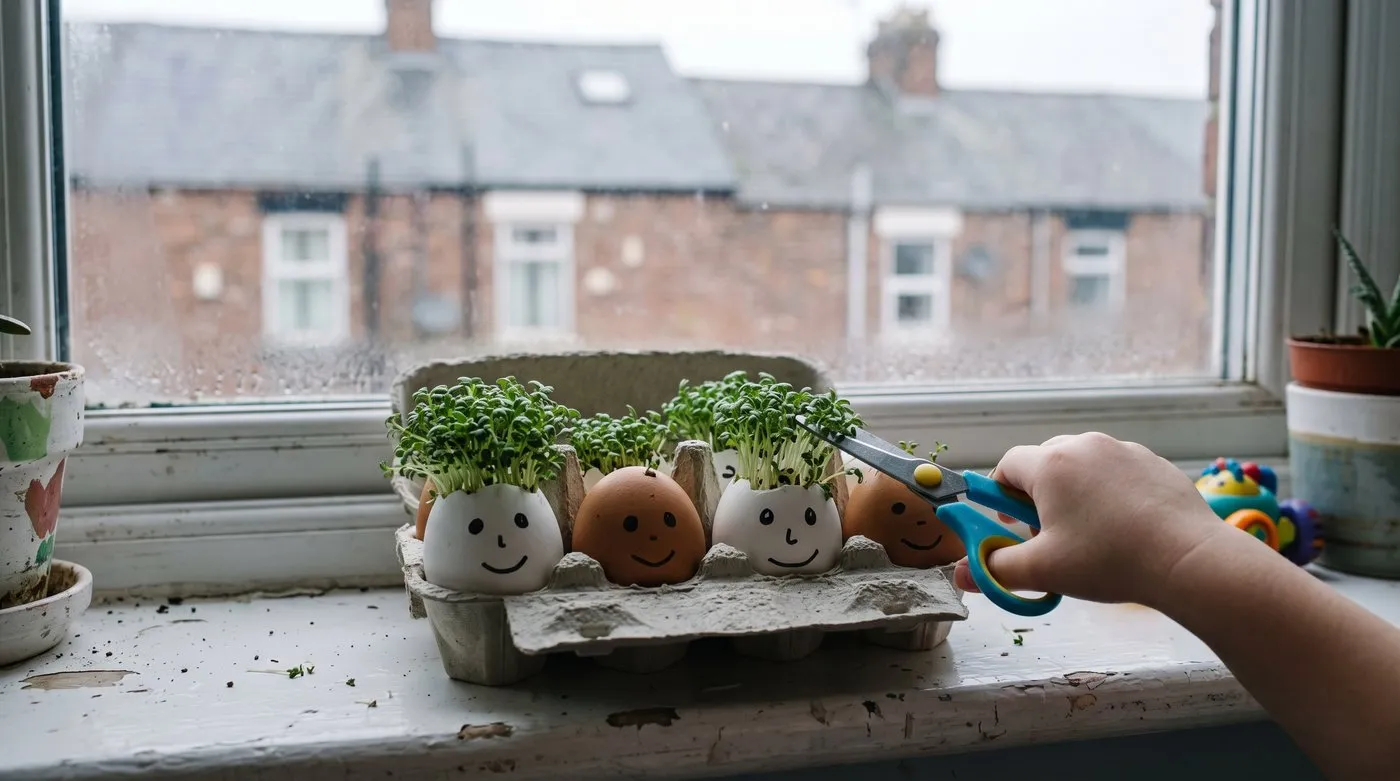
Cress heads are ready to snip in about a week, which is perfect for impatient little gardeners.
Shoots appear within a couple of days. After about a week, the green “hair” is ready to snip into egg sandwiches. Cress grows all year round indoors. The guide to growing cress has more ideas.
2. Sunflower race
A sunflower race keeps children hooked all summer. Each child sows a seed of a tall variety such as ‘Mammoth’ about 2cm deep in a small pot in April or May. Label each pot with a name.
Plant them out in a sunny spot after the last frost, against a fence and tied to a cane. Measure them every week and keep a chart on the fridge. This guide to growing sunflowers with children covers the whole race.

Measuring the sunflowers every week turns growing into a race, and a sneaky maths lesson.
3. Sensory herb pots
A few pots of herbs give instant rewards through smell and touch. Mint, lemon balm, chives and thyme are tough and easy. Buy small plants rather than seed for quick results, and let children rub the leaves and guess the smell. Keep mint in its own pot, as it spreads.
Gardening projects for children aged 5-8
Children of five to eight can manage projects that take a few weeks. They can sow smaller seeds, water regularly and use small hand tools with supervision. Give each child their own pot or patch so they feel it’s theirs.
4. Runner bean teepee
A bean teepee becomes a living den by late summer. Push six 2.4m canes into the ground in a circle about 1.2m across and tie the tops together. In late May or early June, sow two runner bean seeds about 5cm deep at the base of each cane.
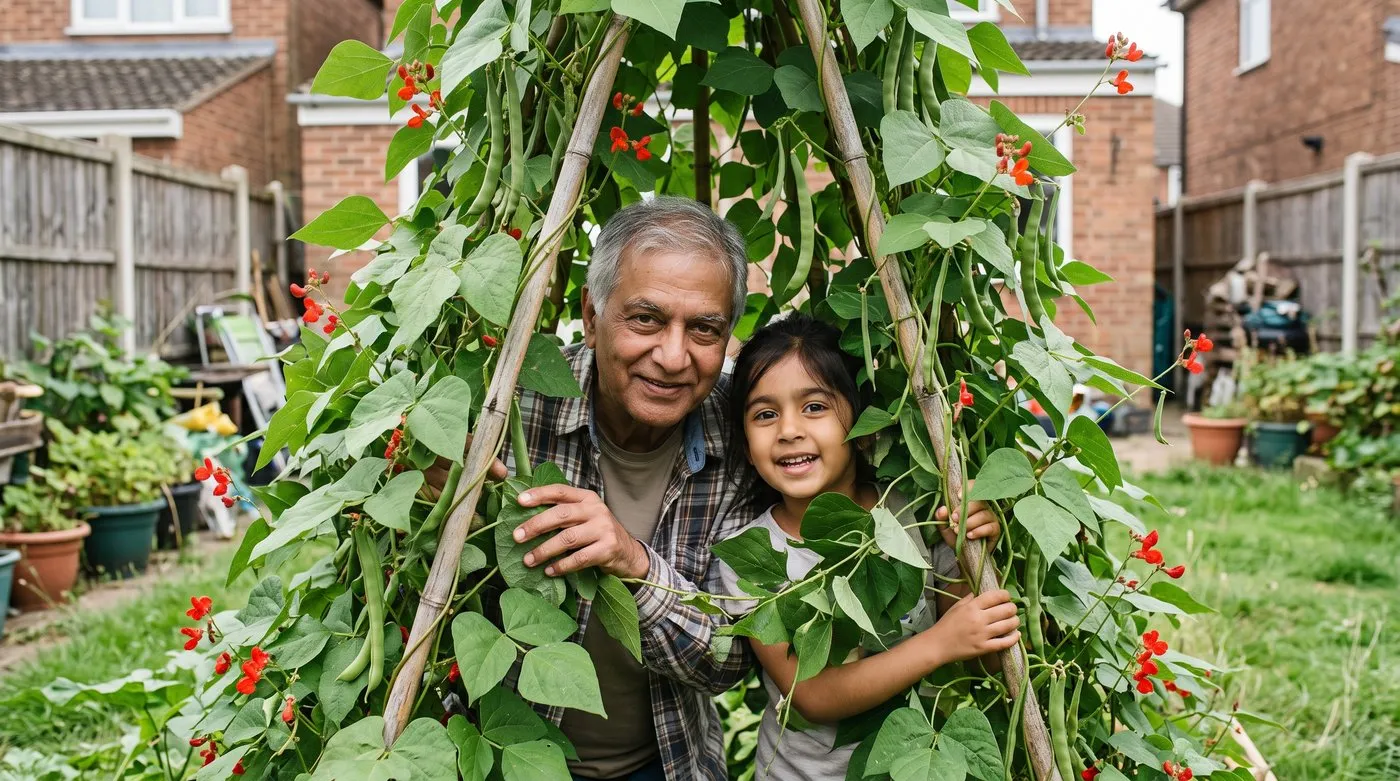
By August a bean teepee becomes a leafy den, with beans to pick right outside the door.
The stems twine around the canes as they climb. By August, the teepee is covered in red flowers and hanging beans. Pick the beans often, while they’re young and tender, to keep more coming. ‘Scarlet Emperor’ and ‘Painted Lady’ are colourful choices.
5. Pizza garden
A pizza garden is a small bed split into wedges, each with a pizza topping. Children choose the crops, look after them, then make a real pizza at the end of summer.
| Ingredient | When to start | Notes |
|---|---|---|
| Cherry tomatoes | Sow indoors in March, plant out late May | ’Gardener’s Delight’ is easy and sweet |
| Basil | Sow indoors in April, plant out in June | Needs warmth and shelter |
| Oregano | Buy a plant in spring | Comes back every year |
| Spring onions | Sow outside March to July | Ready in a couple of months |
| Peppers or chillies | Buy young plants in May | Best in a sunny, sheltered spot |
6. Fairy garden in a pot
A fairy garden is a tiny world in a wide pot or old sink. Children arrange small plants, pebble paths, twig fences and shells. It’s a lovely project for building patience and nimble fingers.
Use tiny plants such as creeping thyme, houseleeks (sempervivum) and small sedums. Mind-your-own-business makes a pretty mini lawn, but keep it in the pot, as it spreads. Add a few handfuls of grit to the compost for drainage.
Gardening projects for children aged 8-12
Older children can take on longer projects and follow instructions on their own. This is a good age to try real tools, such as a border spade, a fork and secateurs with a safety catch, with some guidance at first.
7. Potatoes in a bucket
Potatoes in a bucket give the best harvest moment of all. Tip the bucket out and dig through the compost for buried treasure.
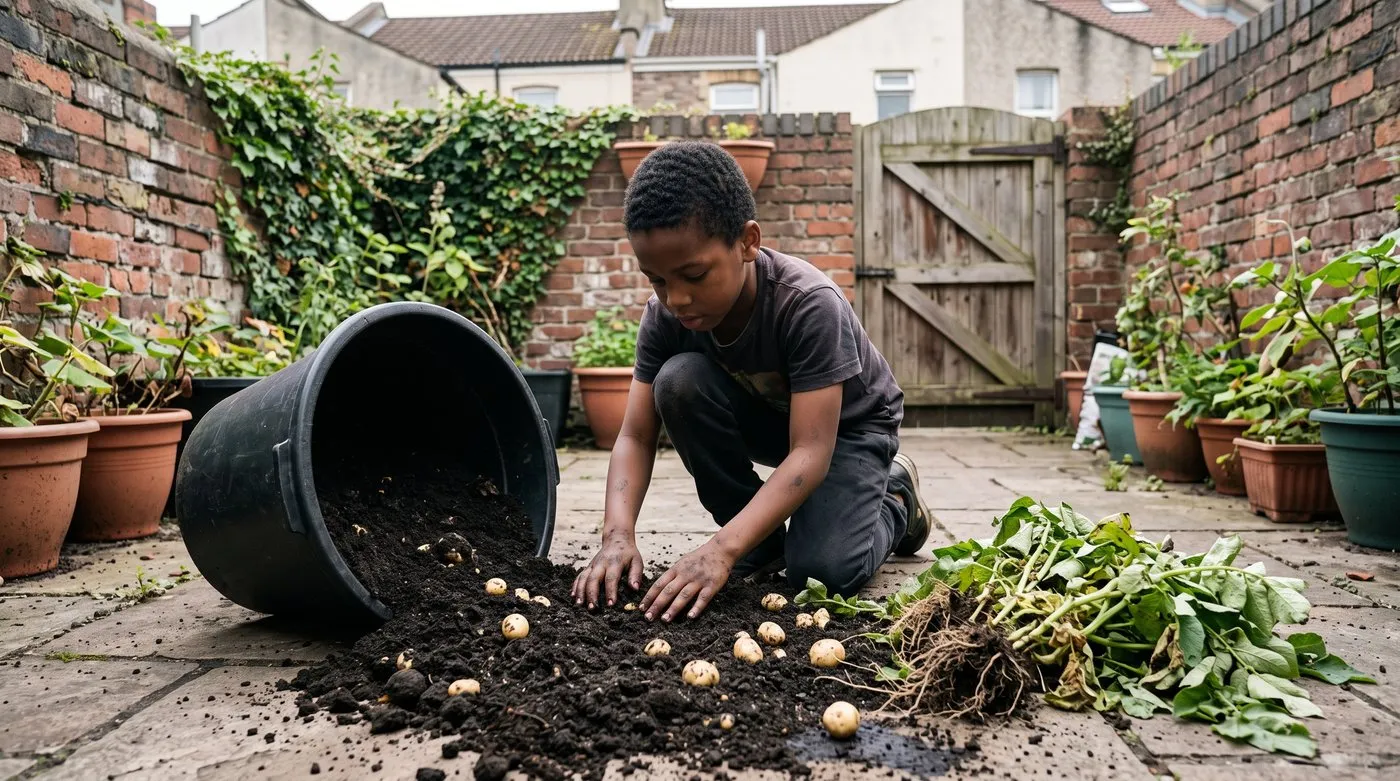
Tipping out the potato bucket is the best bit. Every handful of compost might hide another potato.
Drill drainage holes in a large bucket or tub. Add about 15cm of compost, set three chitted seed potatoes on top and cover with 10cm more. Keep adding compost as the shoots grow until the bucket is full. Plant first earlies such as ‘Rocket’ or ‘Charlotte’ in March or April. They’re usually ready in early summer, around when the plants flower. This guide to growing potatoes in buckets has the details.
Warning: Potato leaves, the small tomato-like berries and any green potatoes are poisonous. Tell children not to eat any part of the plant, and keep the harvested potatoes out of the light.
8. Windowsill herb garden
A windowsill herb garden works even without a garden. Basil, chives and parsley grow happily in small pots on a bright windowsill. Children can snip leaves for pizza, pasta and salads.
Water when the top of the compost feels dry. Basil likes warmth and hates cold draughts. Snip the tips often to keep the plants bushy.
9. Pumpkin growing
Pumpkins are the big summer project, ending with a Halloween lantern. Sow seeds on their edge in small pots indoors in late April, about 2cm deep. Plant out in early June, after the last frost, into rich soil with plenty of compost.
Each plant needs a lot of space, at least a couple of square metres. Water well in dry spells. Pick when the stalk feels woody and the skin is hard. ‘Jack O’Lantern’ is good for carving, and smaller types suit tight spaces. The guide to growing pumpkins and squash has more tips.

Pumpkins take all summer, but watching them swell and turn orange is worth the wait.
10. Wildflower patch
A wildflower patch brings bees and butterflies and changes through the seasons. Clear a small patch of weeds and grass, rake it fine and don’t add compost, as wildflowers like poor soil.
Mix the seed with dry sand so it spreads evenly, then scatter it in March, April or September. Press it in with a board rather than covering it. A cornfield mix of poppies and cornflowers flowers in the first summer. Perennial mixes take longer, flowering from the second year.
Wildlife projects for kids
Two wildlife projects round off the year nicely. For many more ideas, see these wildlife activities for kids.
11. Mini wildlife pond
A mini pond in a sunken washing-up bowl or old tub attracts pond skaters, water beetles and sometimes frogs. Sink it so the rim is level with the soil, and add stones or a log so creatures can climb in and out. Fill it with rainwater, as tap water feeds algae.
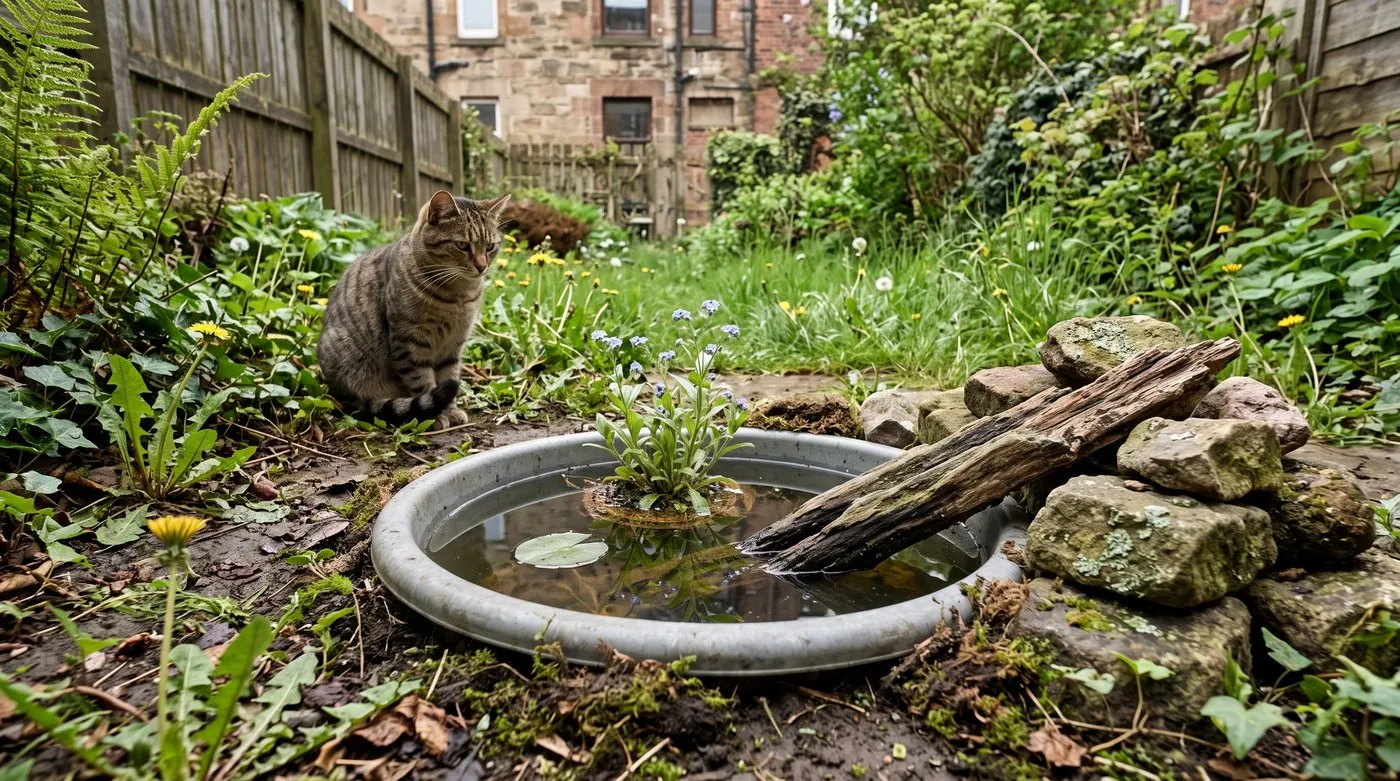
Even a sunken washing-up bowl makes a handy pond. The stones and log help creatures climb in and out.
Add a couple of small pond plants in baskets, such as water forget-me-not or a pygmy water lily. Don’t add fish, as they eat tadpoles. The guide to building a wildlife pond explains how to go bigger.
Warning: Never leave young children alone near water, even a tiny pond. Toddlers can drown in very shallow water, so cover or fence it when they’re about.
12. Pinecone bird feeder
A pinecone bird feeder is a quick winter project. Tie string around the top of a large pinecone. Press softened lard or suet into the gaps, roll it in bird seed and hang it from a branch.
Hang it at least 1.5m up, away from places cats can hide, and near a window so children can watch. Blue tits, great tits and robins often visit. If you use peanut butter, choose a smooth one without added salt or sugar. Skip it if anyone has a nut allergy. Clean up spilled seed and replace feeders regularly to keep birds healthy, and wash hands afterwards.
Year-round calendar of kids’ gardening projects
| Month | Indoors | Outdoors |
|---|---|---|
| January | Cress heads, browse seed catalogues | Make bird feeders, plan the garden |
| February | Chit seed potatoes on a windowsill | Clear a patch for spring |
| March | Sow tomatoes indoors | Plant potatoes in buckets, sow wildflowers |
| April | Sow sunflowers and pumpkins in pots | Plant potatoes, start a fairy garden |
| May | Sow runner beans in pots | Plant out sunflowers after the last frost |
| June | Pot up basil and herbs | Build a bean teepee, plant the pizza bed |
| July | Press flowers | Water, measure sunflowers, pick herbs |
| August | Save sunflower seeds | Pick beans, tomatoes and courgettes |
| September | Dry herb seeds | Sow wildflowers, tip out potato buckets |
| October | Plant bulbs in pots | Harvest and carve pumpkins |
| November | Start hyacinths in jars | Make leaf piles for hedgehogs |
| December | Grow cress | Count winter birds |
Hyacinth bulbs can make skin itchy, so wear gloves when handling them.
How gardening helps children learn
Gardening is a hands-on lesson in where food comes from. Children see seeds sprout, roots grow and flowers turn into seeds. It links neatly to the plant topics they cover at primary school.
Measuring sunflowers and counting beans brings in maths. Looking after a plant every day teaches patience and responsibility. And children who grow their own vegetables are often keener to try them.
Keeping kids safe in the garden
Tools. Give toddlers plastic trowels and small watering cans. Older children can use metal hand tools, then larger tools with supervision. Put tools away after use.
Plants. Teach children never to eat berries, seeds or leaves without asking an adult. Foxglove, laburnum, yew, monkshood, lily of the valley and castor oil plant are among the most poisonous. Consider moving them away from play areas.
Chemicals. Lock away fertilisers and any garden chemicals. Where children garden, use physical controls such as netting, hand-picking and beer traps for slugs.
Sun and water. Use sun cream, hats and drinks in summer. Always supervise children near water.
Common mistakes with kids’ gardening
Starting with slow plants. Children lose interest if nothing happens for weeks. Begin with cress, radishes and sunflowers.
Going too big. One pot or a small patch is plenty to start. Add more once they’ve kept it watered for a few weeks.
Correcting everything. Wonky rows and crowded seedlings are how children learn. Let them make mistakes.
Doing it for them. If the adult does all the sowing and watering, it isn’t the child’s project. Muddy hands are a good sign.
Forgetting to eat the harvest. The project isn’t finished until they’ve eaten the radish or snipped the cress.
Gardener’s tip: Make a short daily “garden check” part of the routine, such as straight after school. A few minutes of watering and looking every day builds the habit far better than the odd weekend session.
Frequently asked questions
What is the easiest plant for a child to grow?
Cress is the easiest plant for a child to grow. It grows on damp kitchen paper or cotton wool on a windowsill. Seeds sprout within a couple of days and are ready to snip in about a week.
What age can children start gardening?
Children can start as toddlers, with simple jobs like watering and digging. From about four or five, most can sow big seeds such as sunflowers and beans with a little help. Older children can look after their own pot or bed.
What vegetables can kids grow quickly?
Radishes are the quickest, often ready about four weeks after sowing. Cut-and-come-again salad leaves and pea shoots are fast too. All of them show growth within days, which keeps children interested.
How much does it cost to set up a kids garden?
Very little. A few seed packets, a bag of peat-free compost and some recycled pots are enough. Yoghurt pots and old buckets with drainage holes make good free containers.
Are any common garden plants dangerous for children?
Yes, some are poisonous if eaten. Foxglove, laburnum, yew, monkshood and lily of the valley are among the most toxic. Teach children never to eat anything from the garden without asking an adult.
What gardening projects work in winter?
Bird feeders, cress and hyacinths in jars are good winter projects. Children can also plan next year’s garden on paper and chit seed potatoes on a windowsill from late winter.
Ready to give your young gardeners a patch of their own? Our guide to raised bed gardening for beginners shows you how to set one up, and there’s more to grow in the growing hub.
Our team produces practical UK gardening guidance from source research, contributor records and established horticultural practice. Editorial standards are overseen by Matt W.


