Key takeaways
- Camping on your own lawn needs no booking, and the house is your back-up plan
- Put a roll mat or blanket under every sleeping bag, as the cold comes up from the ground
- Check the overnight low in the forecast, not the daytime high
- July and August usually give the mildest nights
- Keep fires, barbecues and stoves in the open air, well away from the tent
- Plan a few short activities, like a bug hunt and stargazing, then wind down with a story
Garden camping is the easiest family adventure there is, because the campsite is right outside your back door. Pitch a tent on the lawn on a warm Friday evening and it turns into a night children remember. If anyone gets cold, scared or needs the loo, the house is a few steps away.
Here’s how to pitch on a lawn, keep children warm through the night, feed everyone and fill the evening from dusk to lights out.
Is it safe to camp in your own garden?
Yes. It’s the safest place for a first camp, because an adult is always close by. You don’t need permission or a booking to camp on your own lawn.
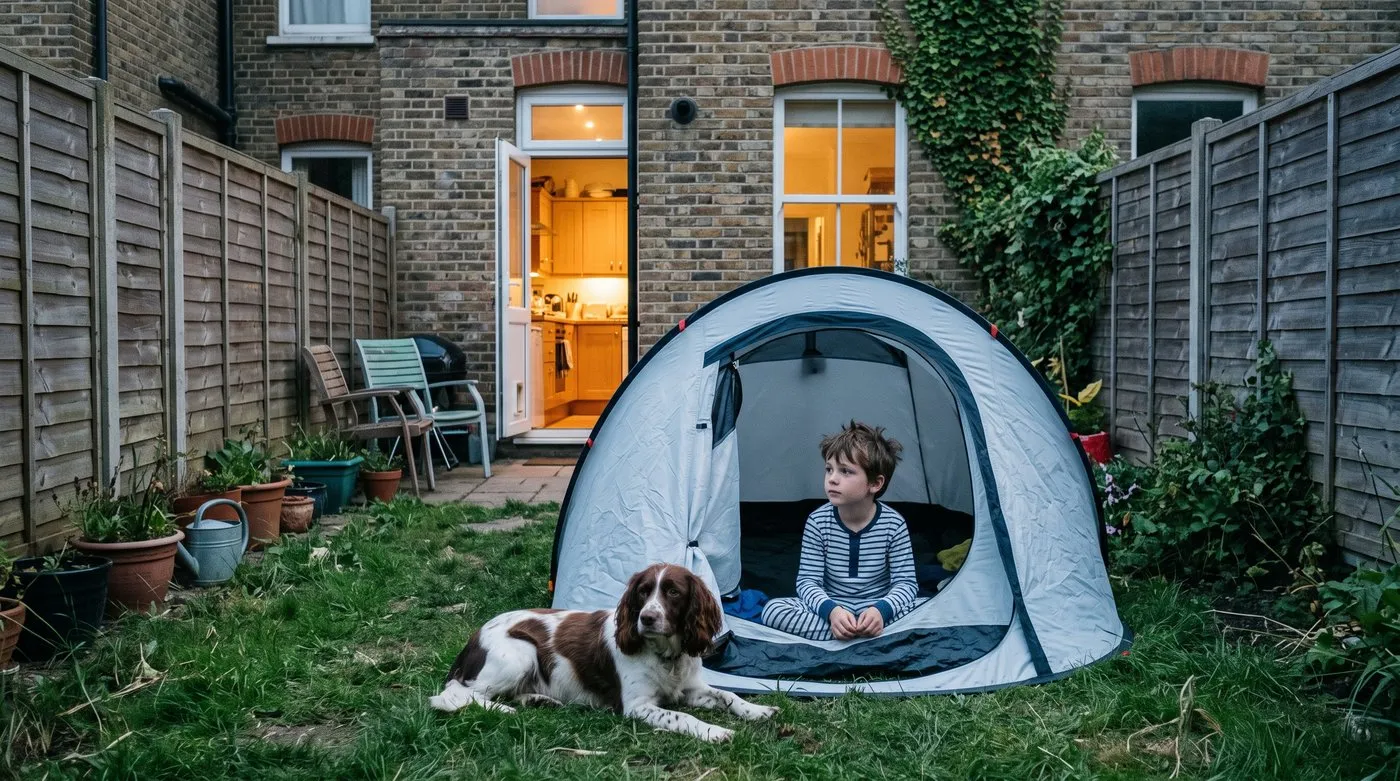
With the back door a few steps away, the garden is the perfect place for a first night under canvas.
A few checks make it even easier:
- Leave the back door unlocked so a nervous child can come inside in the night.
- Walk the lawn first and pick up anything sharp, from rose prunings to dog mess.
- Check overhead for branches that could drop in wind.
- Pair younger children with an older sibling or an adult in the tent.
If you rent, check your tenancy for anything unusual. Take the tent down between camps so the grass underneath doesn’t yellow.
What do you need for a garden camp?
Less than for a campsite trip, because the house supplies the rest. The basics are a tent, something to sleep on, something to sleep in, and light.
| Item | Simple option | Comfier option | Why it matters |
|---|---|---|---|
| Tent | Pop-up tent | Family dome or bell tent | Shelter. Pop-ups go up in minutes |
| Sleeping mat | Foam roll mat | Self-inflating mat | Keeps the cold ground away. The most important bit |
| Sleeping bag | 1 to 2 season bag | 3 season bag | Choose for the overnight low |
| Light | Wind-up torch | Rechargeable lantern | Safety and atmosphere |
| Extras | Pillows and a spare blanket | Hot water bottle, fleece onesie | Back-up warmth from home |
Raid the airing cupboard. A folded duvet under a child works as a mat in a pinch. A hot water bottle in the foot of a sleeping bag keeps small feet warm.

Let the children help peg out the tent. It gets them excited, and a small tent goes up in minutes.
How do you pitch a tent on a lawn?
Choose the flattest spot and avoid any dip where rain or cold air collects. A mown lawn is soft and level, so it’s easier than most campsite pitches.
- Lay a groundsheet or footprint to keep the tent floor dry and clean.
- Peg the corners with the pegs angled away from the tent, so they grip.
- Peg out the guy lines and tighten them so the tent doesn’t flap.
- Face the door away from the wind. UK winds often come from the south-west, so a door facing east is usually a good bet.
If the ground is rock hard in a dry spell, water the spot lightly an hour before, so the pegs go in. Planning a fire pit? Pitch the tent upwind of it, so smoke and sparks blow away from the tent.
How do you keep children warm in a tent at night?
Put something insulating underneath them first. A tent holds very little heat, and the cold mostly comes up from the ground.
Clear summer nights can turn surprisingly chilly, even after a hot day. Check the overnight low on the Met Office forecast before you decide. Then:
- Mat first. A foam roll mat or self-inflating mat under the sleeping bag makes the biggest difference. If you use an airbed, put a blanket or mat on top, as a bare airbed feels cold.
- Right bag for the night. A 2 season bag suits most mild summer nights. Choose a 3 season bag, or add a blanket, if the low looks chilly.
- Dry, warm night clothes. Swap the day’s damp clothes for fleece pyjamas, socks and a hat.
- Loo before bed. It saves a cold trip out at 2am.
If the forecast looks properly cold, save the camp for another weekend. A first camp should be fun, not a test.

Warm bedding, mats and a lantern are all you need. Whatever you sleep on, put a mat or blanket under you.
A dusk-to-bedtime garden camping plan
A loose plan stops the evening fizzling out before bedtime. Keep each activity short and let the night wind down naturally.
| Time | What to do |
|---|---|
| Early evening | Pitch the tent together and make up the beds |
| Teatime | Barbecue, picnic or tea carried out from the kitchen |
| Dusk | Watch for bats over the garden and listen for birds going to roost |
| After dark | Torch-lit bug hunt and a moth sheet |
| Late evening | Marshmallows, then stargazing from the lawn |
| Lights out | A story or shadow puppets in the tent |
Bat watching is best just after sunset on a warm, still evening. Our guide to bat-friendly gardens explains what you might see. For a moth sheet, hang a white sheet over a fence or washing line and shine a torch on it. Moths settle on it within half an hour on a mild night. Look, don’t catch, and switch off the light when you’re done.
You might spot a hedgehog snuffling across the lawn, too. Leave it be, and if you want to put something out, use meaty cat or dog food and fresh water, never milk. Our hedgehog-friendly garden guide has more tips. For plenty more ideas, see our wildlife activities for kids.

A white sheet and a torch turn the garden into a nature reserve after dark. Count the moths, then switch off the light.
Stargazing works best on a clear night once the garden lights are off. Give your eyes a little while to adjust to the dark. On a very light summer evening you may only see the brightest stars, so it’s worth staying up a little later.
What food is good for garden camping?
Keep it simple, let the children help, and remember the kitchen is right there if a plan goes wrong.
Marshmallows and s’mores are the classic. Toast a marshmallow, then sandwich it with a square of chocolate between two digestive biscuits. Use long forks and stay close to the children around the flame. Jacket potatoes wrapped in foil can go into the embers of a fire pit for about an hour.
For breakfast, a camping stove does bacon, eggs and a kettle for tea. Stand it on a paving slab or other stable, heatproof surface, never on grass, and keep it well away from the tent. Or just cook indoors and carry it out. If you have one, an outdoor kitchen or BBQ area makes camp catering easy.
Warning: Never use a stove, barbecue or heater inside a tent or in its doorway, even to take the chill off. They give off carbon monoxide, which you can’t see or smell and which can kill in an enclosed space.

Marshmallows over a fire pit on the patio, well away from the tent, with an adult close by the whole time.
If you’re adding a fire pit, our guide to fire-safe planting around fire pits covers where to put it and what to grow nearby.
When is the best time of year for garden camping?
July and August usually give the mildest nights. Late May, June and early September can work too, with an extra layer.
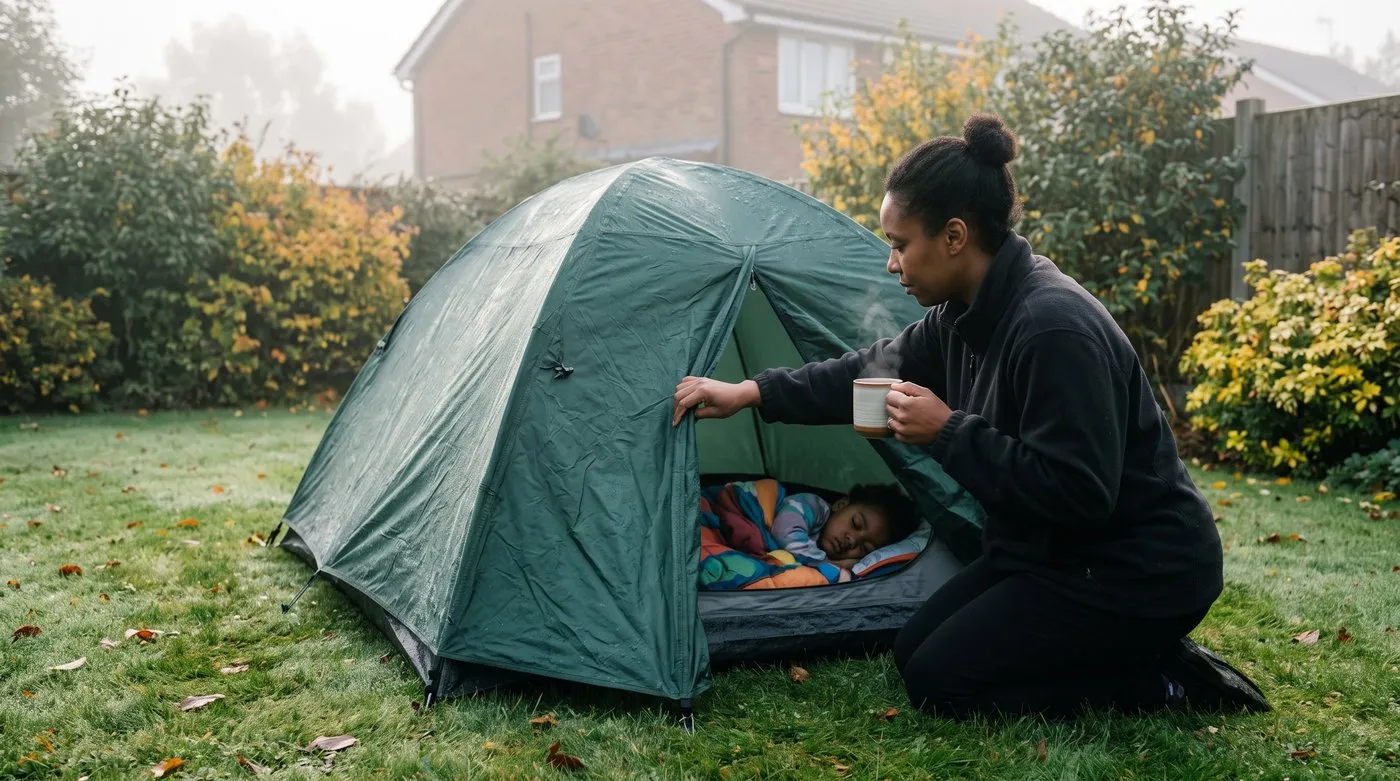
Early September can still be lovely for camping, though mornings turn dewy. Pack an extra layer for the night.
Outside those months, nights are often too cold for children to sleep comfortably. Nights also tend to be milder in the south of England than in Scotland and the north. Long, light June and July evenings are great for play but can make little ones hard to settle, so a tent with darker fabric helps.
Whatever the month, check the overnight forecast on the day. A cloudy night is often milder than a clear one.
Common garden camping mistakes
No mat under the sleeping bag. This is the top reason for cold, miserable children. Always put a mat or blanket underneath.
Trusting the daytime temperature. A hot afternoon tells you little about the night. Check the overnight low.
Getting cold before bed. Children who get chilly and overtired rarely settle. Get them into dry, warm layers before they cool down.
Pitching in a hollow. The lowest part of the lawn collects cold air and dew. Pick a flat, slightly higher spot.
No back-up plan. Make a bed up indoors and leave the back door unlocked. A child who knows they can go inside is far more likely to last the night.
Frequently asked questions
Is it legal to camp in your own garden in the UK?
Yes, you can camp in your own garden without permission or a booking. Wild camping rules apply to other people’s land, not yours. If you rent, check your tenancy for anything unusual. Take the tent down between camps so the lawn underneath recovers.
How cold does it get in a tent at night in summer?
A tent stays close to the outside temperature, so it can feel chilly. Clear nights lose heat faster than cloudy ones, so they turn colder. Check the overnight low in the forecast rather than the daytime high. Pack warm layers, a good sleeping bag and a mat for underneath.
What age can a child camp in the garden alone?
There’s no set age; it depends on the child’s confidence. Many children enjoy a garden sleepover with a friend or sibling from primary school age. Younger children usually want an adult in the tent. Leave the back door unlocked and check on them during the night.
How do you keep kids entertained when garden camping?
Plan a few short, simple activities as it gets dark. A torch-lit bug hunt, toasting marshmallows, shadow puppets and stargazing fill an evening easily. The novelty of sleeping outside does most of the work. Finish with a story in the tent so everyone winds down.
What is the best month for garden camping in the UK?
July and August usually give the mildest nights. June and early September can work well with an extra layer. Nights are often milder in the south than in the north. Light June and July evenings can make it harder for young children to settle.
Enjoyed your night under canvas? Keep the fun going in daylight with our gardening projects for kids, or find more ideas in our wildlife section.
Our team produces practical UK gardening guidance from source research, contributor records and established horticultural practice. Editorial standards are overseen by Matt W.