Key takeaways
- A greenhouse makes a bright, sheltered room for far more than tomatoes
- Sort out shading and ventilation before you buy any furniture
- Aim for roof vents covering about a fifth of the floor area, plus a low vent opposite
- A paved or slabbed floor makes seating, dining and workshop uses practical
- Power must come through a proper outdoor circuit fitted by an electrician
- Use toughened glass or polycarbonate if children will use the space
Greenhouse ideas usually stop at tomatoes and cucumbers. That’s a waste of a bright, sheltered room right there in your garden. With a few changes, a greenhouse can be a reading nook, a potting station, a winter home for tender plants or even a little bar.
Below are 11 ways to use one, which ideas work best in a British year, and how to deal with the big problem: summer heat. If you’re still choosing a greenhouse, start with our guide to the best greenhouses for UK gardens, linked at the end.
11 ways to use a greenhouse beyond growing
1. Reading nook. A chair, a rug, a small table and a blind. It’s lovely in spring and autumn. In high summer it’s too hot at midday unless it’s well shaded.
2. Potting and tool station. Staging along one side, hooks for tools and a bin for compost. It’s the easiest conversion and works all year round.
3. Dining spot. A bistro table for two, or a bigger table in a larger greenhouse. Evenings are best in summer, once the heat has eased. Keep the barbecue outside.
4. Winter plant hospital. A frost-free home for tender plants such as pelargoniums and fuchsias. Bubble insulation and a small thermostat-controlled electric heater keep it a few degrees above freezing.
5. Propagation nursery. A heated bench and trays of seedlings. Seedlings like humidity, so this doesn’t mix well with seating.
6. Winter sun seat. A single chair placed to catch the low winter sun. On a bright day the glass warms up nicely with no heating at all.
7. Home bar. Shelving, stools, lights and maybe a small fridge. You’ll need a proper outdoor power supply for the fridge and lights.
8. Workshop or studio. A bench and plenty of natural light. Damp air can rust steel tools, so keep them in a dry box or use a dehumidifier.
9. Children’s den. Cushions, storage and a safe floor. Ordinary greenhouse glass breaks into sharp shards, so switch to toughened glass or polycarbonate first.
10. Display house. Alpines, cacti or orchids on tiered staging. Each needs quite a different climate, so choose one group.
11. Drying room. In late summer, spread onions, garlic and seed heads on the staging to dry. Keep the vents open so air moves freely.
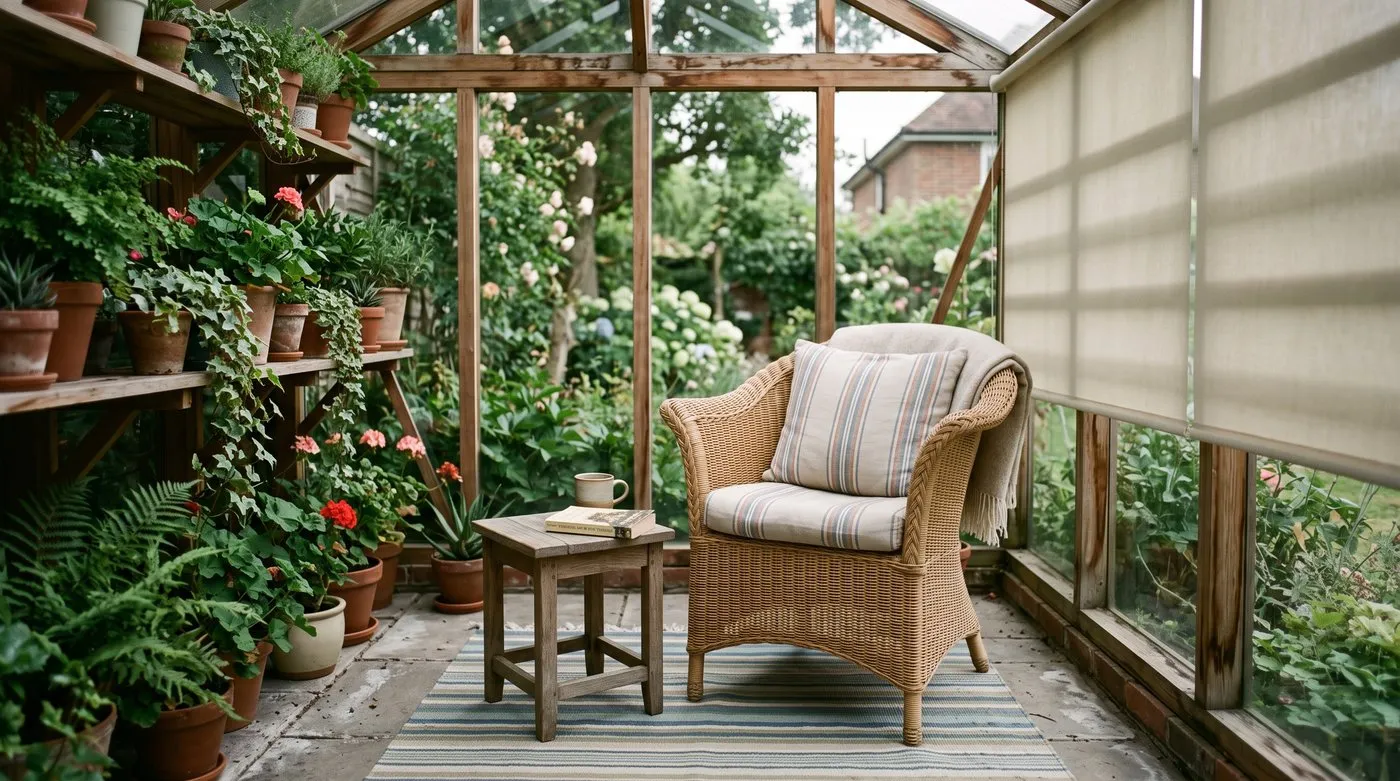
A wicker chair and a rug turn a greenhouse into a cosy reading spot. The blinds on the sunny side keep it comfortable.
Which greenhouse idea suits your garden?
Some ideas work all year, while others suit only certain seasons.
| Use | Best months | Main challenge | Needs power? |
|---|---|---|---|
| Potting and tool station | All year | Dust on the glass | No |
| Winter plant hospital | Autumn to spring | Keeping it frost-free | For a heater |
| Propagation nursery | Late winter to early summer | Humidity | For a heated bench |
| Display house | All year | Matching the climate to the plants | Sometimes |
| Winter sun seat | Autumn to spring | Too hot in summer | No |
| Reading nook | Spring, early summer, autumn | Summer heat | For lights |
| Workshop or studio | Most of the year | Damp on tools | Usually |
| Drying room | Late summer | Needs good airflow | No |
| Dining spot | Summer evenings | Heat in the day | For lights |
| Children’s den | Spring to autumn | Glass safety | No |
| Home bar | Summer | Power supply | Yes |
A potting station is the easiest win. It works every month, needs no power and doesn’t fight the way a greenhouse naturally behaves. The other ideas all need a bit more planning, mainly around heat.
How to stop a greenhouse overheating
Sunlight pours in through the glass and the heat gets trapped. That’s great in spring and a problem in July. To keep it comfortable, you need shading and ventilation together. Shading cuts the heat coming in. Ventilation lets out the heat that gets through.
Aim for roof vents covering about a fifth of the floor area. Many small greenhouses come with just one roof vent, which often isn’t enough. Adding a second roof vent and a louvre vent low down on the opposite side gets air flowing through. Automatic vent openers do the job for you when you’re out. Our guide to greenhouse ventilation goes into more detail.
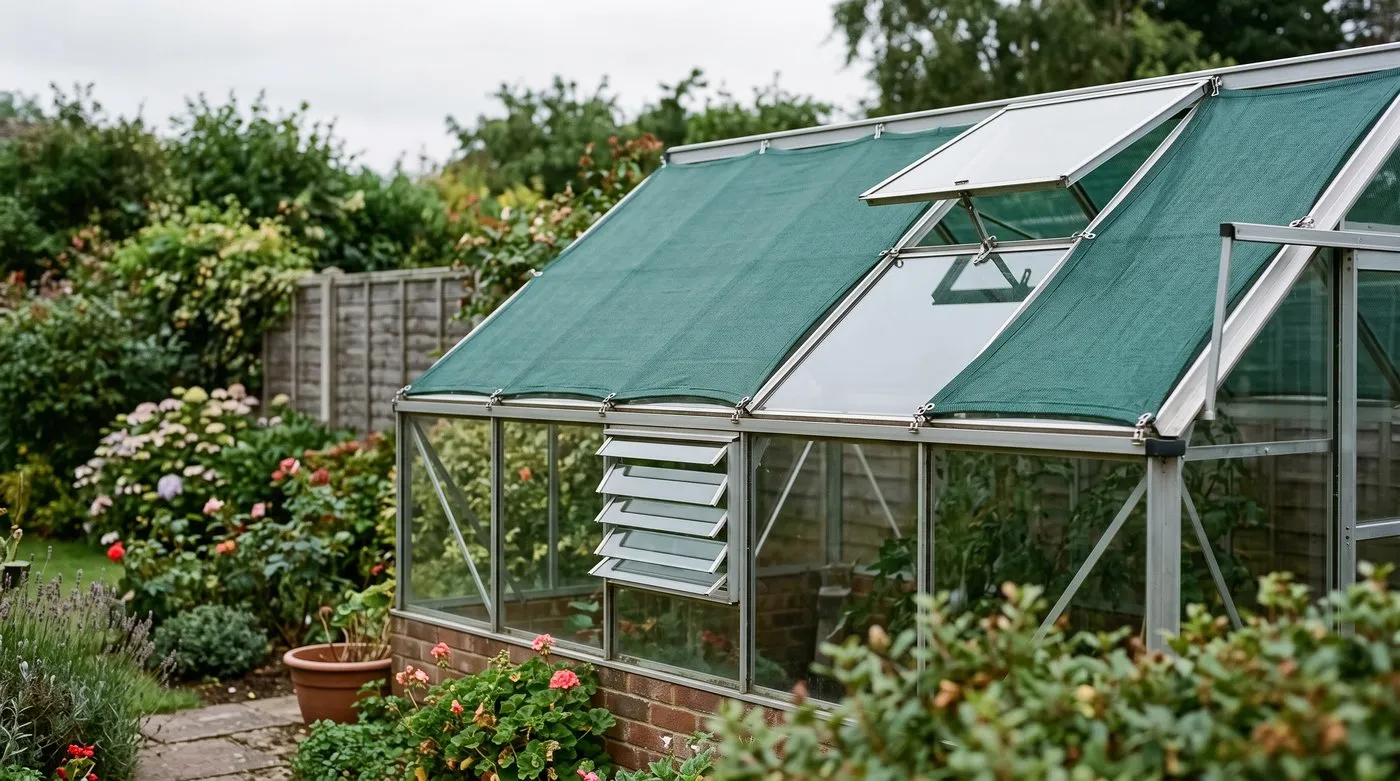
An open roof vent, a louvre vent low down and shade mesh on the roof work together to keep the heat down.
Which shading works best?
Shade paint is a white wash painted on the outside of the glass in late May and washed off in early autumn. It’s cheap and effective, though not the prettiest.
External shade mesh fixed outside the glass stops the sun before it gets in. It can be rolled back on dull days.
Internal blinds look the nicest, which matters in a seating room or bar. They’re the least effective at cooling, because the heat is already inside. Pair them with mesh or paint if you want the space properly cool.
Gardener’s tip: On a hot day, wet the floor in the morning. As the water evaporates, it cools the air for a while. This is called damping down, and it works best on a slab or brick floor.
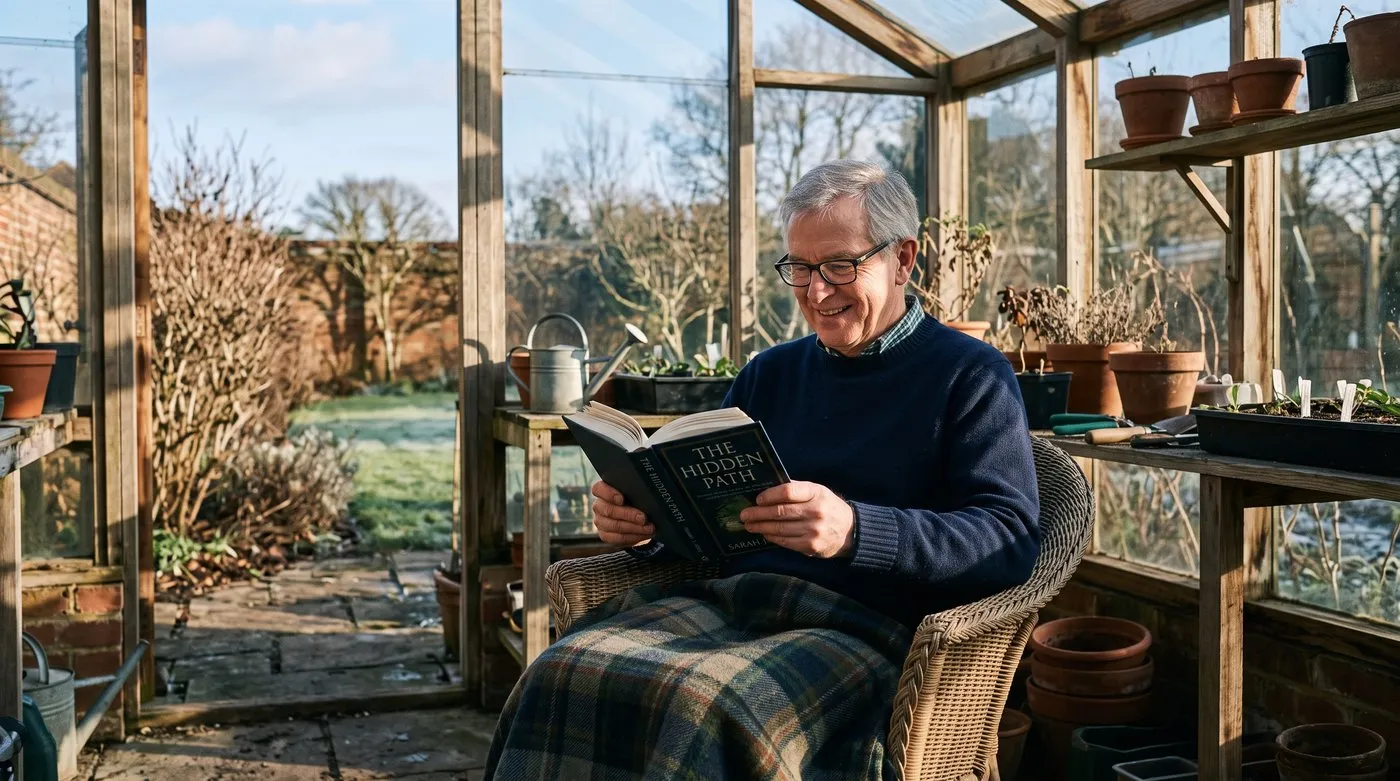
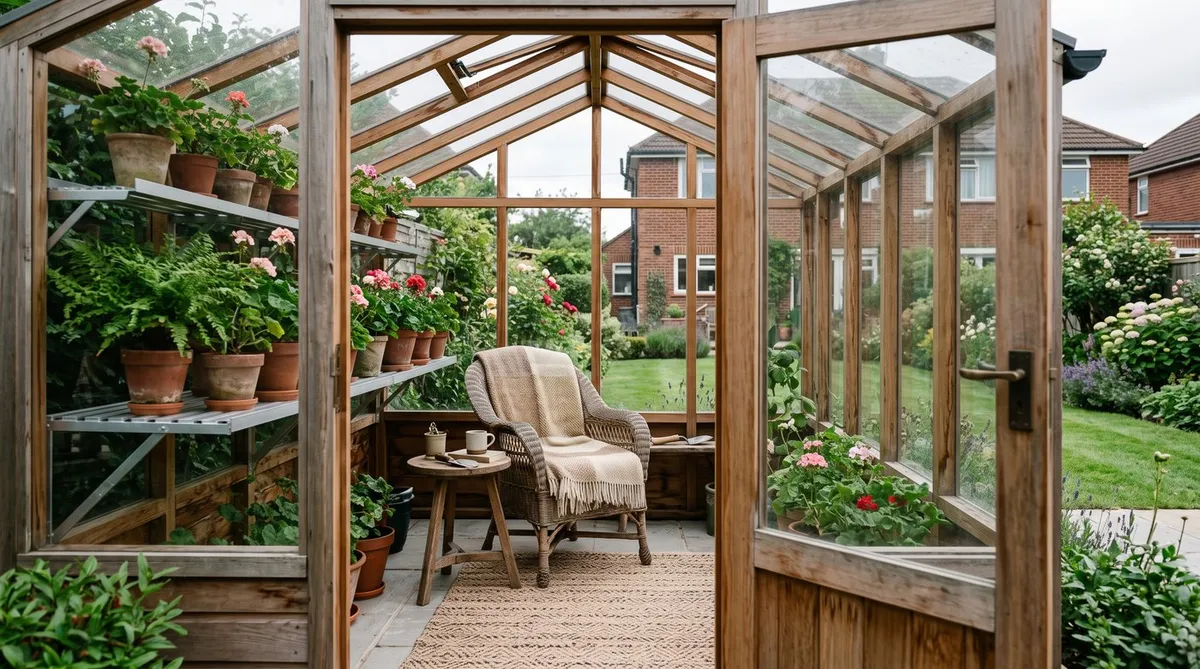
On a bright winter day, the sun warms the greenhouse enough for a comfortable read with no heater on.
Flooring, power and staging
These three choices decide whether a greenhouse gets used or fills up with empty pots.
Flooring. Bare soil suits growing but not sitting. Paving slabs or outdoor porcelain on a compacted base give a clean, level surface for furniture. They also hold the day’s warmth into the evening. The guide on building a greenhouse base explains the groundwork.
Power. A damp glass building and an extension lead from the house don’t mix. Have a qualified electrician run a proper outdoor supply with armoured cable, RCD protection and weatherproof sockets. Then you can safely run lights, a heated propagator, a heater or a fridge.
Staging. Fixed staging suits potting and propagation. Folding staging lets you clear the space for an evening meal. Tiered staging puts a display collection at eye level.

A potting station is the simplest greenhouse idea of all, and it’s useful every month of the year.
Using a greenhouse in winter
In winter a greenhouse is perfect for keeping tender plants safe from frost. Bubble insulation clipped inside the frame keeps it a few degrees warmer at night. Fit it in autumn and take it down in spring. Here’s how to insulate a greenhouse for winter.
For heat, a thermostat-controlled electric heater is the simplest choice. The greenhouse heating guide compares the options. Paraffin heaters give off lots of moisture, which encourages mould on plants.
Warning: If you sit in the greenhouse, only use electric heating on a proper outdoor circuit. Paraffin and gas heaters can produce carbon monoxide in a small closed space.
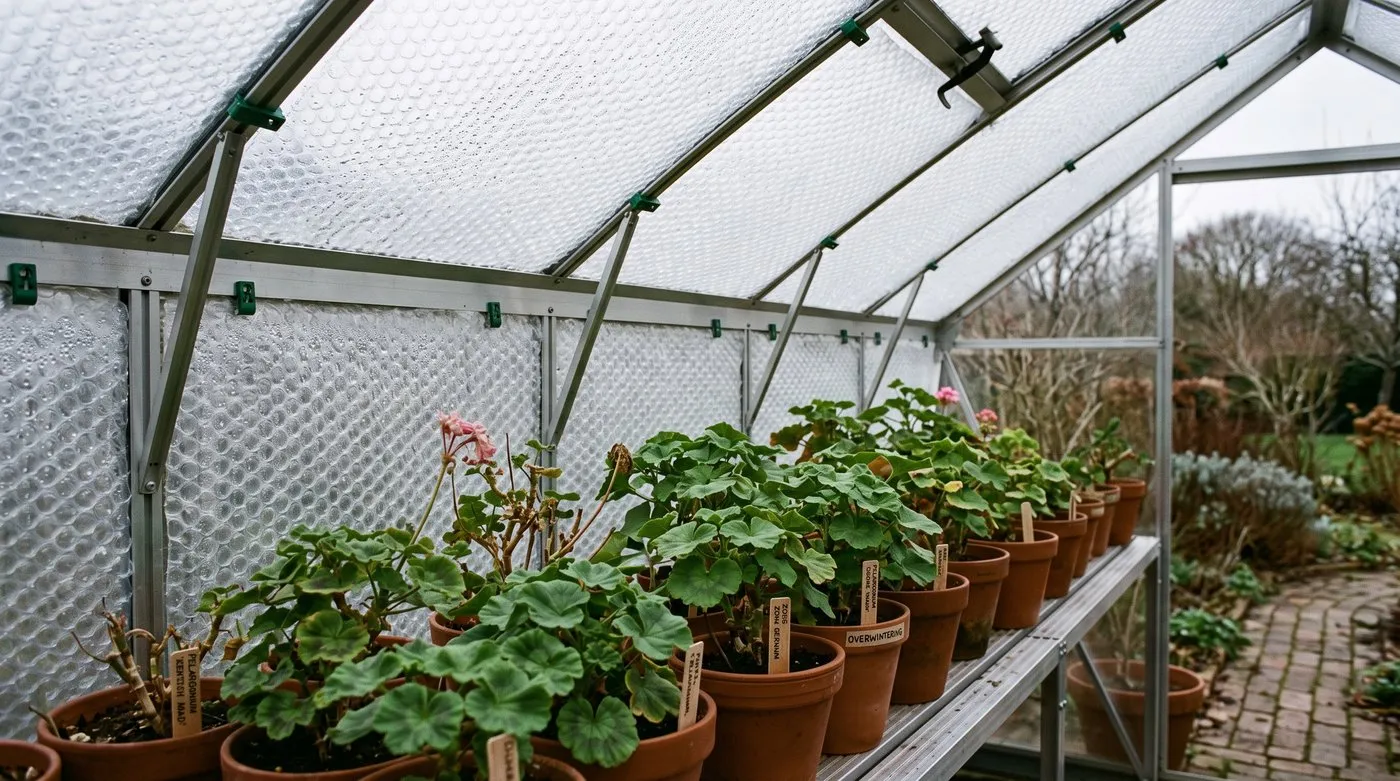
Bubble insulation helps keep tender pelargoniums safe from frost through the winter.
Why bigger greenhouses are easier to live with
Small greenhouses heat up and cool down very quickly, because there’s so little air inside. A larger greenhouse warms and cools more slowly, so it stays comfortable for longer. It also gives you room for a chair, a table and space to move.
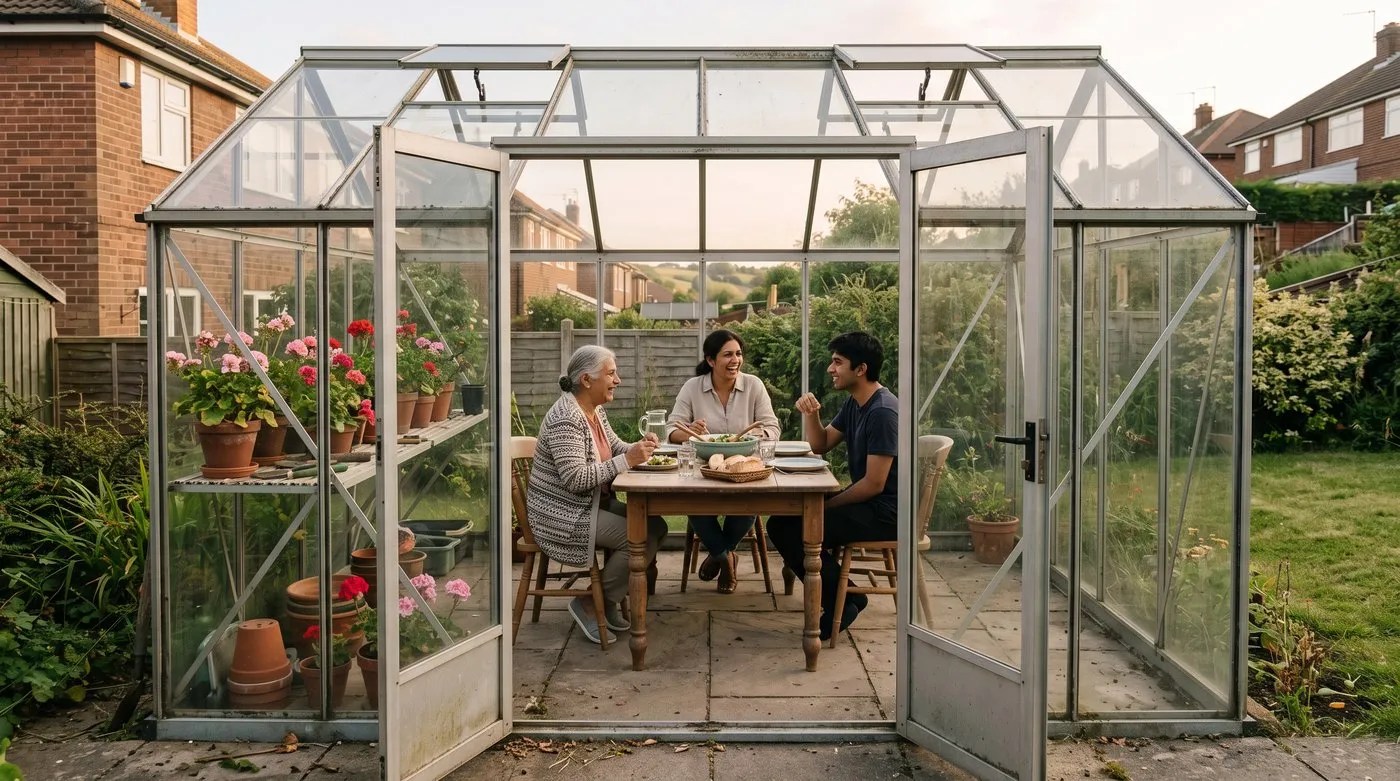
A bigger greenhouse stays comfortable for longer and leaves room for a table. Summer evenings are the best time to eat in one.
If you’re buying with a seating room in mind, go as big as your garden allows. The choice between glass and polycarbonate matters too, as explained in polycarbonate vs glass greenhouses.
Month-by-month calendar for a greenhouse room
| Month | What the greenhouse is good for |
|---|---|
| January | Winter plant hospital and sunny reading seat on bright days |
| February | Sowing seeds on a heated bench. Check insulation for gaps |
| March | Take down bubble insulation once nights are milder. Clean the glass |
| April | Propagation. Open vents on warm days |
| May | Put up shade paint or mesh by late May, before the first hot spell |
| June | Evening dining and seating once the day’s heat eases |
| July | Too hot at midday without full shading. Damp the floor in the morning |
| August | Dry onions and garlic. Automatic vent openers help while you’re away |
| September | A lovely month for sitting in it. Wash off shade paint |
| October | Move tender plants in. Fit bubble insulation |
| November | Workshop and storage. Keep tools dry |
| December | Frost protection for tender plants. Air it on mild days |
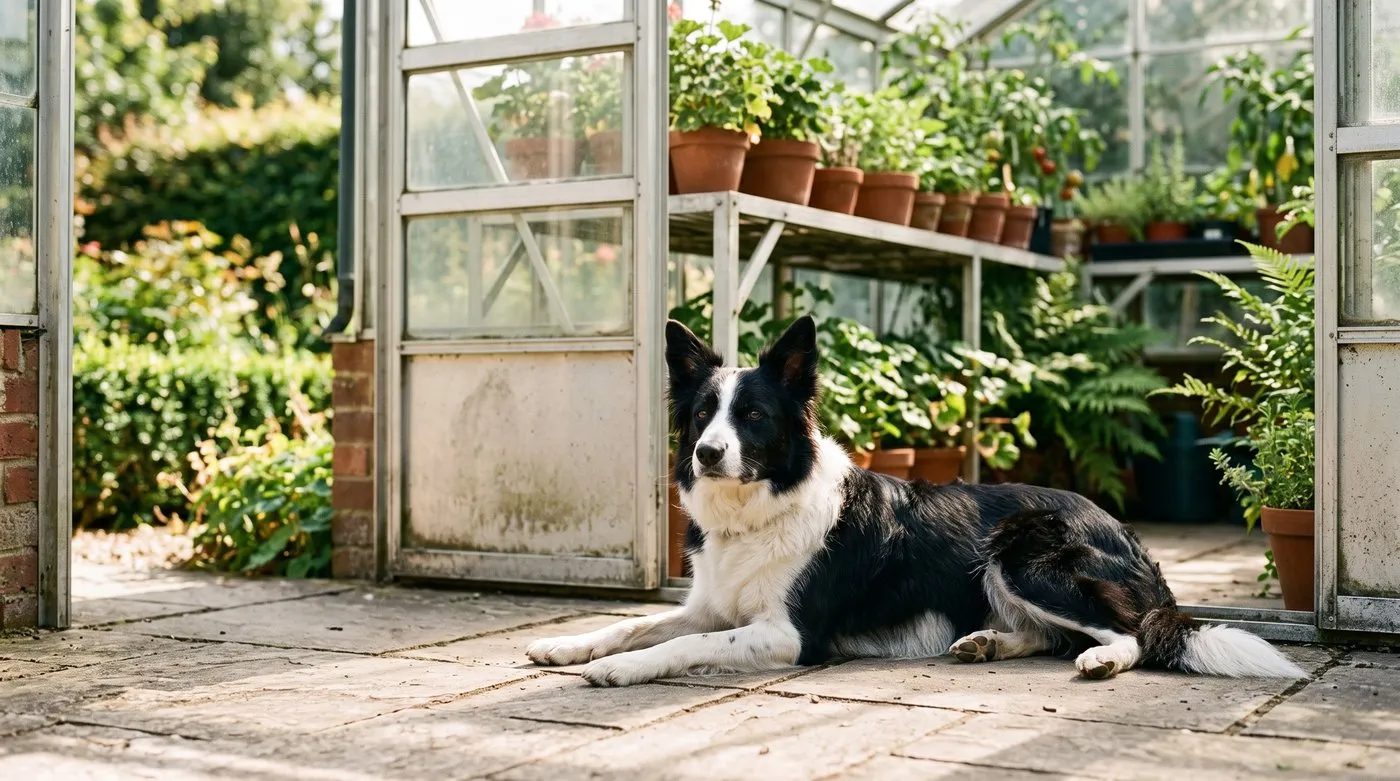
A paved floor is easy to keep clean, holds the day’s warmth and makes a cool resting spot for the dog in the shade.
Common mistakes when converting a greenhouse
Furnishing before shading. People buy the chair and rug first, then find the room unbearable in July. Sort the heat first.
Too few vents. Many small greenhouses don’t have enough roof vent. Add a second roof vent and a low louvre vent.
Running an extension lead from the house. It isn’t safe as a permanent supply in a damp glass building. Get a proper outdoor circuit fitted.
Ordinary glass with children around. Greenhouse glass breaks into long shards. Use toughened glass or polycarbonate if children will play inside.
Mixing climates. Seedlings want humid air and a seating room wants dry. Cacti want it dry and orchids want it damp. Pick one main use, or divide the space.
If you’d like a room you can use all year, see these garden room ideas for insulated options.
Frequently asked questions
What can you use a greenhouse for other than growing plants?
A greenhouse works well as a reading nook, potting station or workshop. It can also be a winter shelter for tender plants, a dining spot, a home bar, a children’s den or a display house. Each needs shading and ventilation to be comfortable in summer.
How hot does a greenhouse get in the UK summer?
Much hotter than outside on a sunny day. Without shade and open vents, the temperature soars well above the air outside. Shade paint or mesh, open roof vents and an open door bring it down.
Can you turn a greenhouse into a garden room?
Yes, with shading, good ventilation and a solid floor. It will still be too hot at midday in high summer and too cold in deep winter without heating. Treat it as a room for spring, early summer and autumn.
Do you need planning permission for a greenhouse in the UK?
Usually not in England. Most greenhouses count as permitted development, with limits. Within 2m of a boundary they must be no taller than 2.5m, and they can’t go in front of the house. Listed buildings, conservation areas and the rest of the UK have different rules, so check with your council.
What flooring is best for a greenhouse used as a room?
Paving slabs or outdoor porcelain on a compacted base work best. They give a level, clean surface for furniture. They also hold the day’s warmth into the evening.
Can you put electricity in a greenhouse?
Yes, but have a qualified electrician fit it. Outdoor power needs armoured cable, RCD protection and weatherproof sockets. Never run an extension lead from the house as a permanent supply.
How do you stop a greenhouse overheating in summer?
Use shading and ventilation together. Open roof vents and a low vent on the opposite side to get air moving. Add shade paint or external mesh from late May, and damp down the floor on hot days.
Still choosing a greenhouse? Our guide to the best greenhouse for UK gardens helps you pick the right size and material, and the garden design hub has more ideas.
Our team produces practical UK gardening guidance from source research, contributor records and established horticultural practice. Editorial standards are overseen by Matt W.