
Key takeaways
- Sow indoors from mid-April, or outdoors from late May once frosts are over
- Build a sturdy wigwam or row of 2.4m canes before you plant
- Water well at the roots while they flower, or the flowers drop off
- Pick every 2-3 days when pods are 15-20cm long to keep them coming
- Pinch out the tips when plants reach the top of the canes
- Scarlet Emperor is a reliable, tasty all-rounder
Runner beans are one of the most generous crops you can grow. A row of plants keeps you in beans from July until the first frosts, with plenty left over for the freezer. They’re pretty too, with scarlet, white or two-tone flowers that the bees love.
They’ve been an allotment favourite for generations. They’re easy, cheap to grow from seed, and happy in most soils. Here’s how to support, sow, plant, water and pick them. For more varieties, see our runner bean variety comparison, covering Firestorm, Moonlight, White Lady and ones for pots.
Best runner bean varieties for the UK
Some varieties give bigger crops, some taste better, and some just look lovely. All five below do well across the UK.
Scarlet Emperor is the classic. It gives heavy crops of long, smooth pods with great flavour, and bright red flowers. If you only grow one, make it this.
Enorma is the show bench favourite, with very long pods that stay tender. The flavour is a bit milder than Scarlet Emperor.
Painted Lady is an old variety with lovely red and white flowers. The pods are a little shorter, but the flavour is excellent. It’s perfect where your bean frame is on show.
White Lady has pure white flowers and pale green, mild-tasting pods that stay tender even when bigger. It’s a little less vigorous, so it suits shorter supports.
Firestorm is a modern variety that sets pods well in hot weather. It’s a good pick for a sheltered, sunny garden or the warmer south-east.
Variety comparison table
| Variety | Pods | Flowers | Copes with heat | Good for |
|---|---|---|---|---|
| Scarlet Emperor | Long | Red | Fairly well | Reliable crops |
| Enorma | Very long | Red | Fairly well | Shows, big pods |
| Painted Lady | Medium | Red and white | Well | Looking pretty |
| White Lady | Long | White | Fairly well | Mild flavour, shorter supports |
| Firestorm | Long | Red | Very well | Hot gardens |
Tip: Grow two varieties. Scarlet Emperor gives you lots of beans, and Painted Lady adds beauty and flavour.
How to build a runner bean frame
Runner beans are strong climbers and need tall, sturdy supports. Without them, plants collapse and crop poorly. Put the frame up before you sow or plant.
Wigwam (tepee) method
A wigwam is great for small gardens and raised beds. It takes up little space and looks good too.
- Push 8-10 bamboo canes (2.4m long) into the ground in a circle about 90-100cm across
- Push each one about 30cm deep so it doesn’t blow over
- Gather the tops together and tie them firmly
- Plant one bean at the foot of each cane
- Wind young plants gently around their cane to get them started
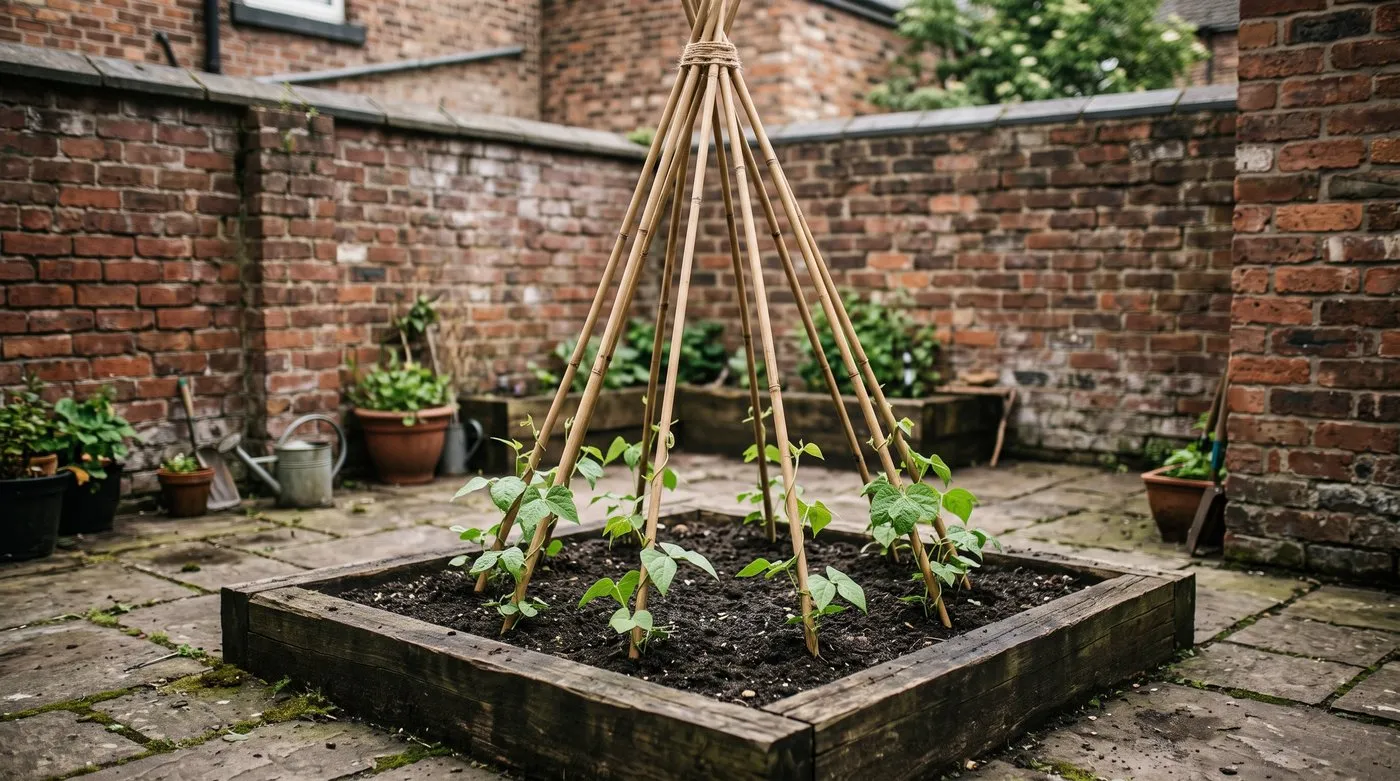
A wigwam fits a small garden and holds up a surprising crop. Push each cane about 30cm deep so it stands firm in summer winds.
Row frame method
A row holds more plants, so it suits allotments and anyone wanting plenty for the freezer.
- Push pairs of 2.4m canes into the ground, 30cm apart, along both sides of the row
- Cross each pair at the top to make an upside-down V
- Lay a cane along the top where the pairs cross and tie every join
- Space the pairs about 15cm apart along the row
- Plant one bean at the foot of each cane
Brace the frame at each end with stakes or guy ropes. A row of beans in full leaf catches the wind like a sail, and an unsecured frame can blow over in a summer storm.
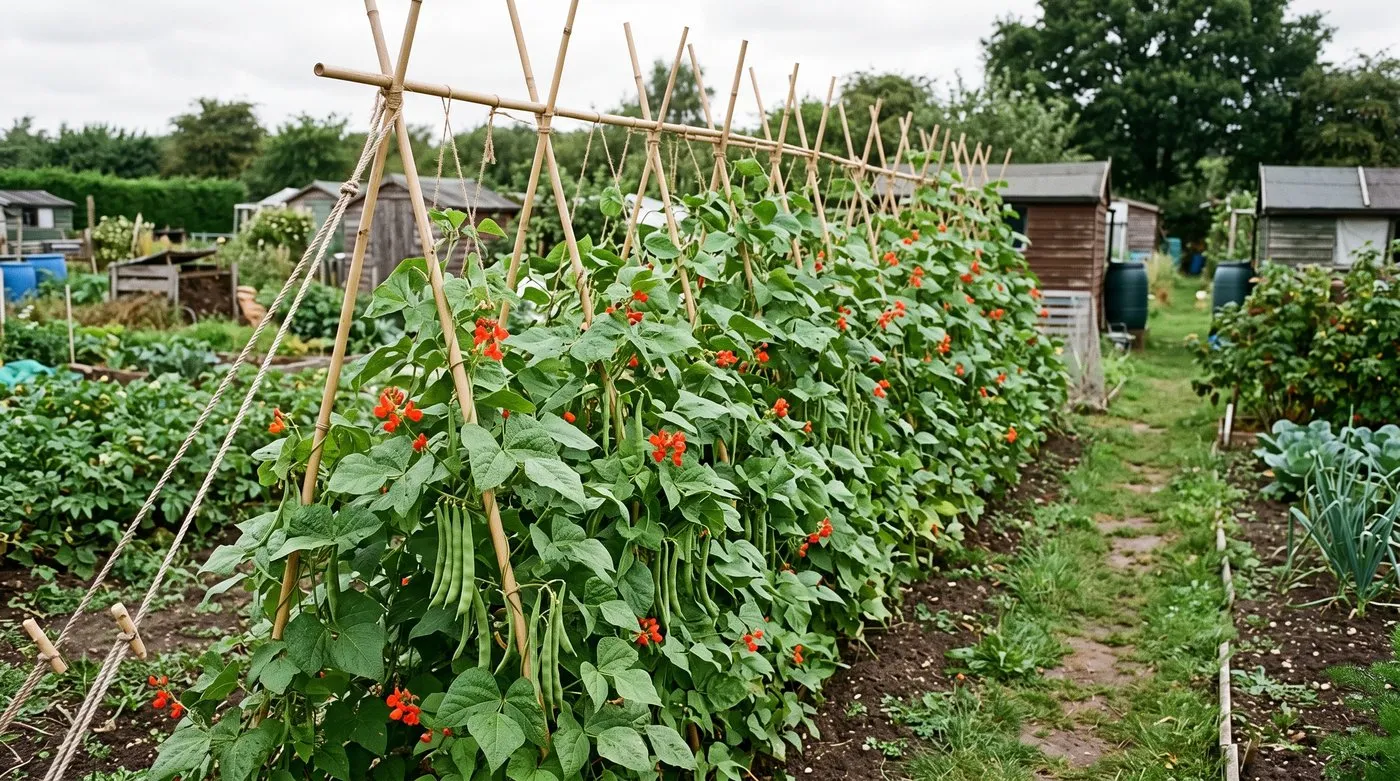
Crossed canes with a cane along the top make a strong row frame. Brace the ends, as a row in full leaf catches the wind like a sail.
Alternative supports
- Hazel poles are stronger than bamboo and last a few seasons
- String netting stretched between two posts works well but needs replacing each year
- Obelisks and arches look lovely but hold fewer plants
When and how to sow runner beans
Runner beans are killed by frost, so timing matters. Our seed sowing guide has more on sowing indoors.
Sowing indoors (mid-April)
Sowing indoors gives you a few weeks’ head start and earlier beans in July.
- Fill 9cm pots with peat-free multipurpose compost
- Push one bean 5cm deep into each pot
- Water well and stand them somewhere warm and bright, like a windowsill
- They usually come up in about a week or two
- Keep them in good light and water when the compost surface dries
- Harden them off for a week or so before planting out (see below)
Sow a few spares, in case some don’t come up or the slugs strike after planting.
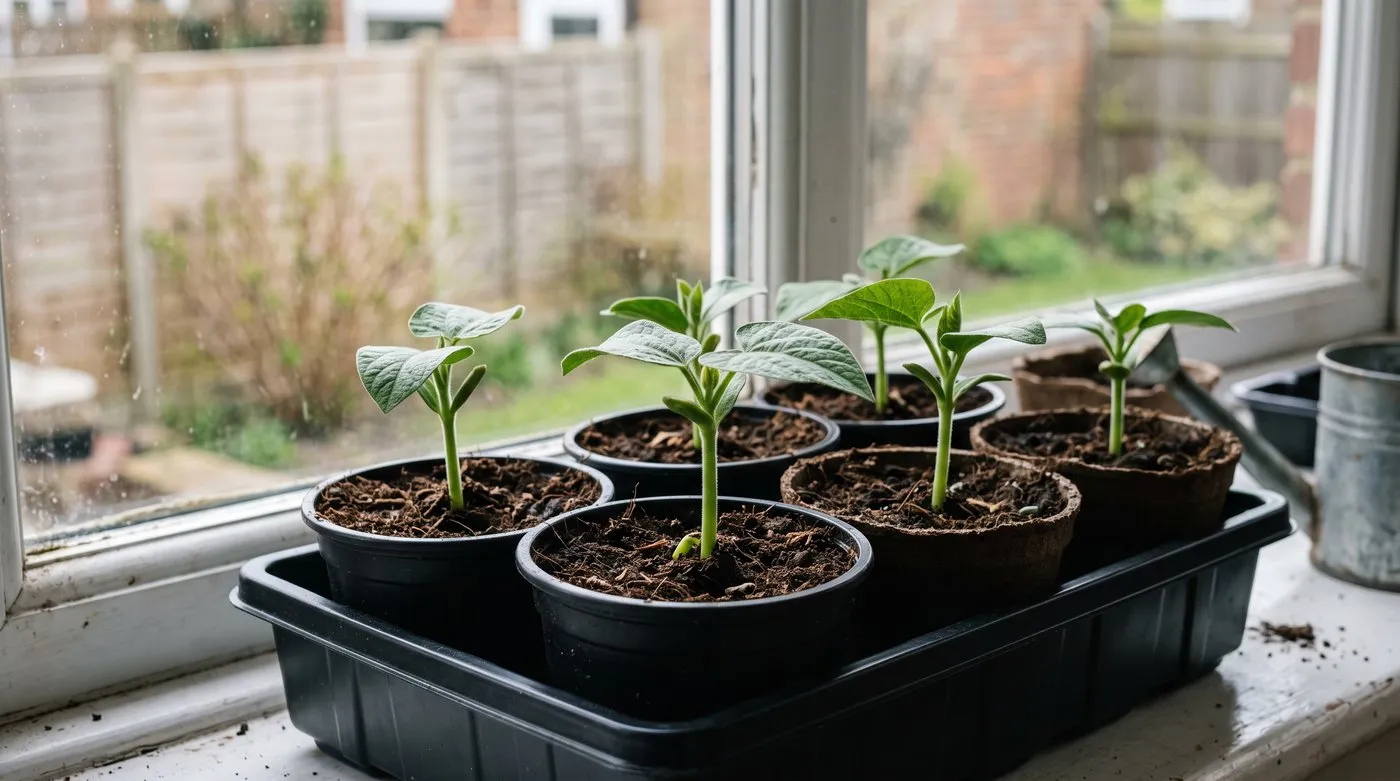
One bean per pot, 5cm deep, gives you strong plants a few weeks ahead. Sow a few spares in case some don’t come up.
Direct sowing outdoors (late May to early June)
Sowing straight outside is simpler, as there’s no hardening off. Wait until all frost risk has passed. In southern England that’s late May. Further north and in Scotland, wait until early June.
- Sow one bean 5cm deep at the foot of each cane
- If you have spare seed, sow two and remove the weaker one
- Water after sowing
- Protect from slugs with copper tape, beer traps or wildlife-friendly slug pellets
The RHS runner bean growing guide says beans come up best once the soil has warmed, which is usually late May in most of the UK.
Planting out after the last frost
Plant indoor-raised beans out once all frost risk is over. A late frost kills them outright, so check the forecast first.
Hardening off
Plants raised indoors need about 7-10 days to get used to outdoor life.
- Days 1-3: Put them outside in a sheltered spot during the day and bring them in at night.
- Days 4-7: Leave them out day and night somewhere sheltered. Cover with fleece if nights are chilly.
- Days 8-10: Plant out on a mild, cloudy day.
Planting
Dig a hole a little bigger than the root ball at the foot of each cane. Plant at the same depth as in the pot and water well. Add a mulch of garden compost around each plant to hold in moisture and keep weeds down.
Space plants 15cm apart in rows, or one per cane on a wigwam. Wind the stem gently around the cane. Runner beans twist anticlockwise as you look down on them, so go with their natural direction.
Watering and feeding runner beans
Watering is the secret to a great crop. Get it right and you’ll be picking beans by the armful.
Why watering matters during flowering
Runner bean flowers need moist roots to turn into pods. When the soil dries out, the plant drops its flowers. It’s the most common reason for a poor crop, and the easiest to fix.
- Water at the base of the plants, not over the leaves
- In dry weather, give a good soak every day while they flower and set pods
- Water in the evening, so less is lost to the sun
- Mulch with compost, straw or grass clippings to keep moisture in
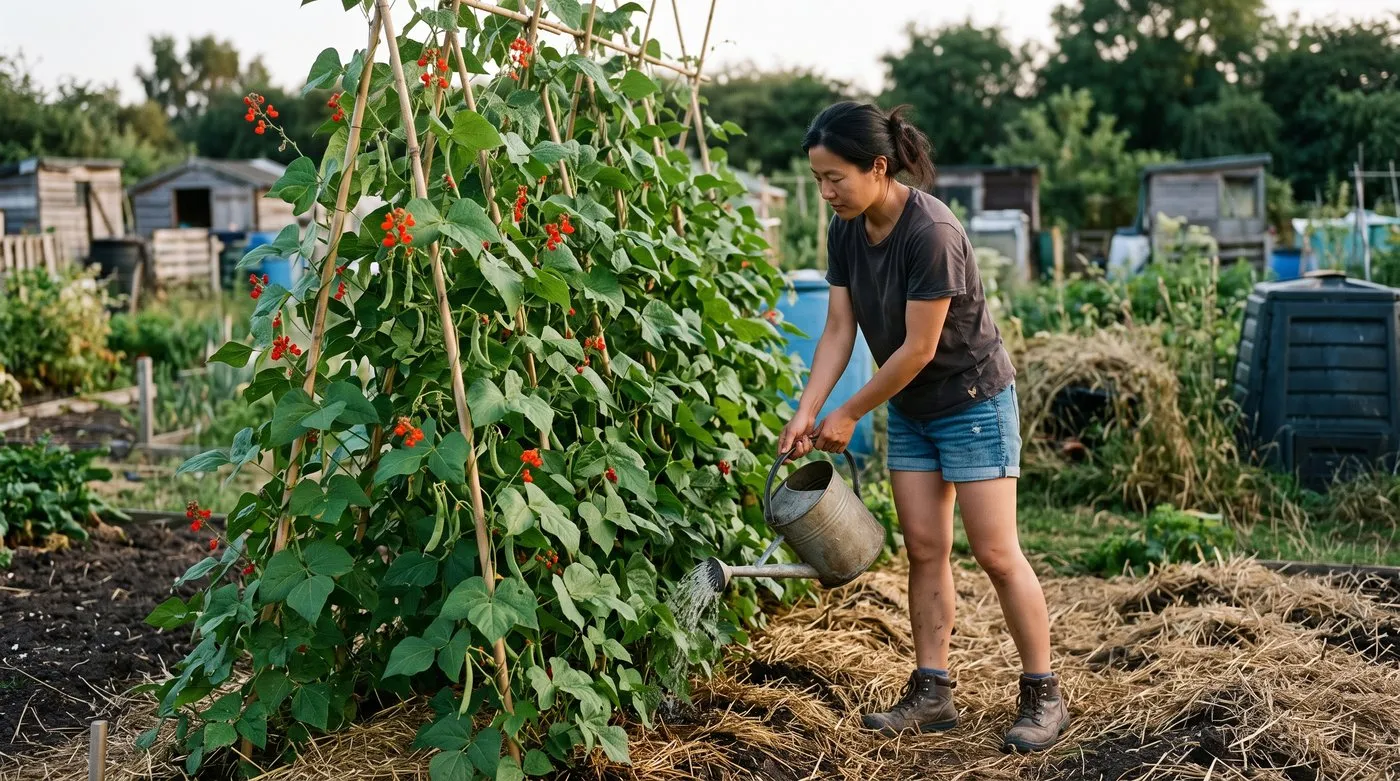
Dry roots make runner beans drop their flowers. A good soak at the base every evening in dry spells is the secret to a big crop.
Feeding
Runner beans make some of their own nitrogen with the help of tiny bacteria on their roots. So they need less feed than most veg.
- At planting: mix a handful of fish, blood and bone into the hole
- From first flowers: feed weekly with liquid tomato feed to help flowers and pods
- Avoid high-nitrogen feeds, which give lots of leaves and fewer beans
Tip: Dig a bean trench the winter before. Dig a trench about 30cm deep along the row and fill it with kitchen peelings, shredded cardboard and garden waste over winter. Cover it with soil in spring and plant on top. It holds moisture like a sponge all summer.
Month-by-month runner bean calendar
| Month | What to do |
|---|---|
| February-March | Get the bed ready. Dig in compost or manure. Put up supports. |
| April | Sow indoors from mid-April, one bean per 9cm pot. |
| May | Harden off indoor plants. Sow outdoors from late May in the south. |
| June | Plant out. Sow outdoors in the north. Tie in young plants. Water regularly. |
| July | First flowers. Water daily in dry spells. Start weekly feeds. Pinch out tips at the top. |
| August | Peak picking. Pick every 2-3 days. Keep watering and feeding. Watch for blackfly. |
| September | Keep picking. Leave a few pods for seed. |
| October | Last picking before the first frost. Clear plants and supports. |
Pinching out and training
When the plants reach the top of their supports, usually around mid-July, pinch out the growing tip with your finger and thumb. This stops them climbing and puts their energy into side shoots, flowers and pods.
Without pinching, they scramble over the top into a tangle, and the beans end up out of reach.
On a row frame, tie side shoots in along the strings. On a wigwam, the side shoots fill the gaps between canes. Remove shoots growing into the middle.
Harvesting runner beans
Picking is the fun part, and doing it often keeps the plants cropping for weeks.
When to pick
Pick pods when they’re 15-20cm long and the beans inside are just showing as small bumps. They’ll snap cleanly and be tender, with no strings.
Leave them much longer and they go tough and stringy, with big beans inside. Worse, the plant takes that as a sign to stop flowering.
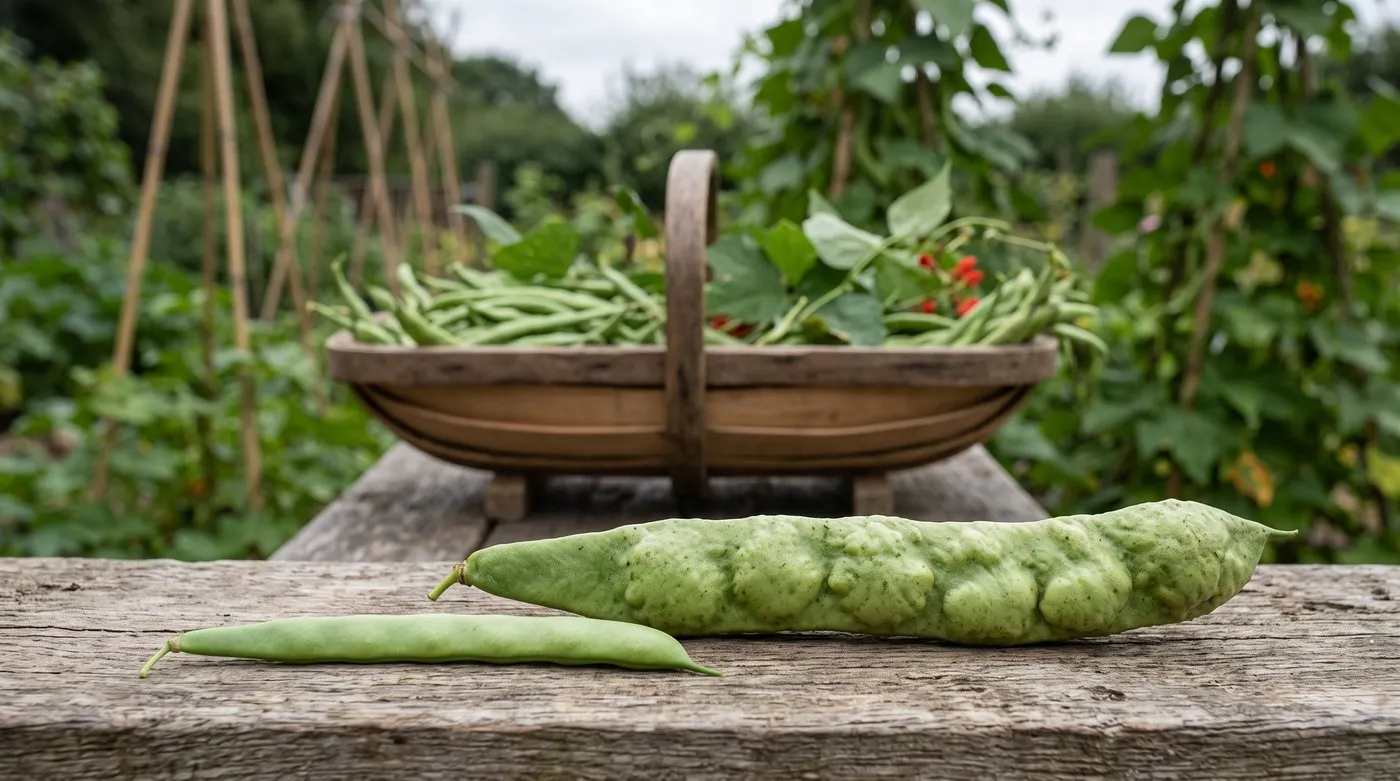
Pick at 15-20cm, when the beans are just small bumps. Pods left to get big and lumpy go stringy and tell the plant to stop flowering.
How to harvest
- Pick every 2-3 days in August and September
- Hold the stem with one hand and snap off the pod with the other, so you don’t pull the plant off its cane
- Use a bucket or trug rather than a bag, so the pods don’t bruise
- Check behind the leaves and at the back of the frame, where pods love to hide
A good row gives you more than you can eat, so plan for the extras.
Dealing with a glut
Runner beans freeze well. Top and tail them, slice them, blanch in boiling water for 2 minutes, cool in iced water, drain and freeze flat on a tray. Then tip them into bags.
They also make a great chutney with onions, mustard, turmeric and malt vinegar.
Flower drop: causes and solutions
The plant flowers beautifully, but no pods form. Here’s why, and what to do.
Heat stress
In very hot weather, the flowers often fail to set, even when bees visit. Sheltered, south-facing spots that trap heat are the worst.
What helps: mulch thickly to keep the roots cool, and water well. Choose varieties that cope better with heat, like Firestorm or Painted Lady.
Drought
Dry soil makes the plant drop flowers. Even a few days without water while flowering can do it.
What helps: water daily in dry spells while they flower, and mulch well. A leaky hose along the row makes life easy.
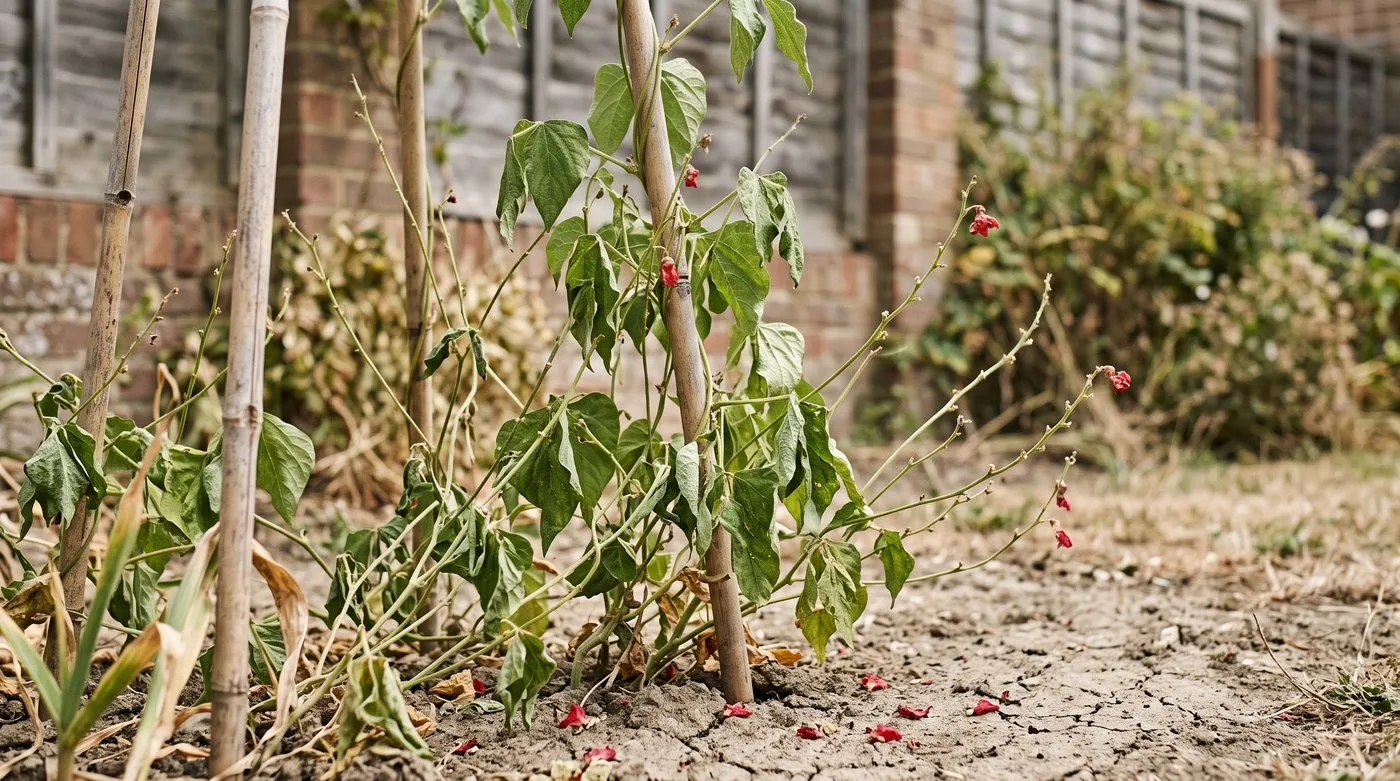
Bare flower stalks and dropped petals often mean dry roots. Daily watering in dry spells and a thick mulch usually sorts it out.
Poor pollination
Cold, wet or very windy weather keeps the bees away.
What helps: plant bee-friendly flowers nearby to bring pollinators in. In a long wet spell, gently shake the flower clusters to help pollination along.
Common mistakes growing runner beans
Sowing too early outdoors
Sown outside in April or early May, seeds can rot in cold soil or be killed by a late frost. Wait until late May in the south and early June further north. Our guide to what to plant in May helps with timing.
Not watering enough during flowering
The biggest cause of a poor crop. Once they’re flowering, runner beans are very thirsty. Thirsty plants flower but set hardly any pods.
Letting pods get too big
Big, old pods tell the plant its job is done, so it stops flowering. Pick every 2-3 days, and remove any tough ones you missed, even if you don’t want to eat them.
Planting in shade
Runner beans want full sun. In shade you get fewer flowers and fewer beans. Pick your sunniest spot.
Weak or short supports
A row of beans in full leaf and pod is heavy. Flimsy supports collapse in summer storms. Use 2.4m canes, push them 30cm deep and brace the ends.
Saving runner bean seed
Saving seed is easy and gives you next year’s beans for free.
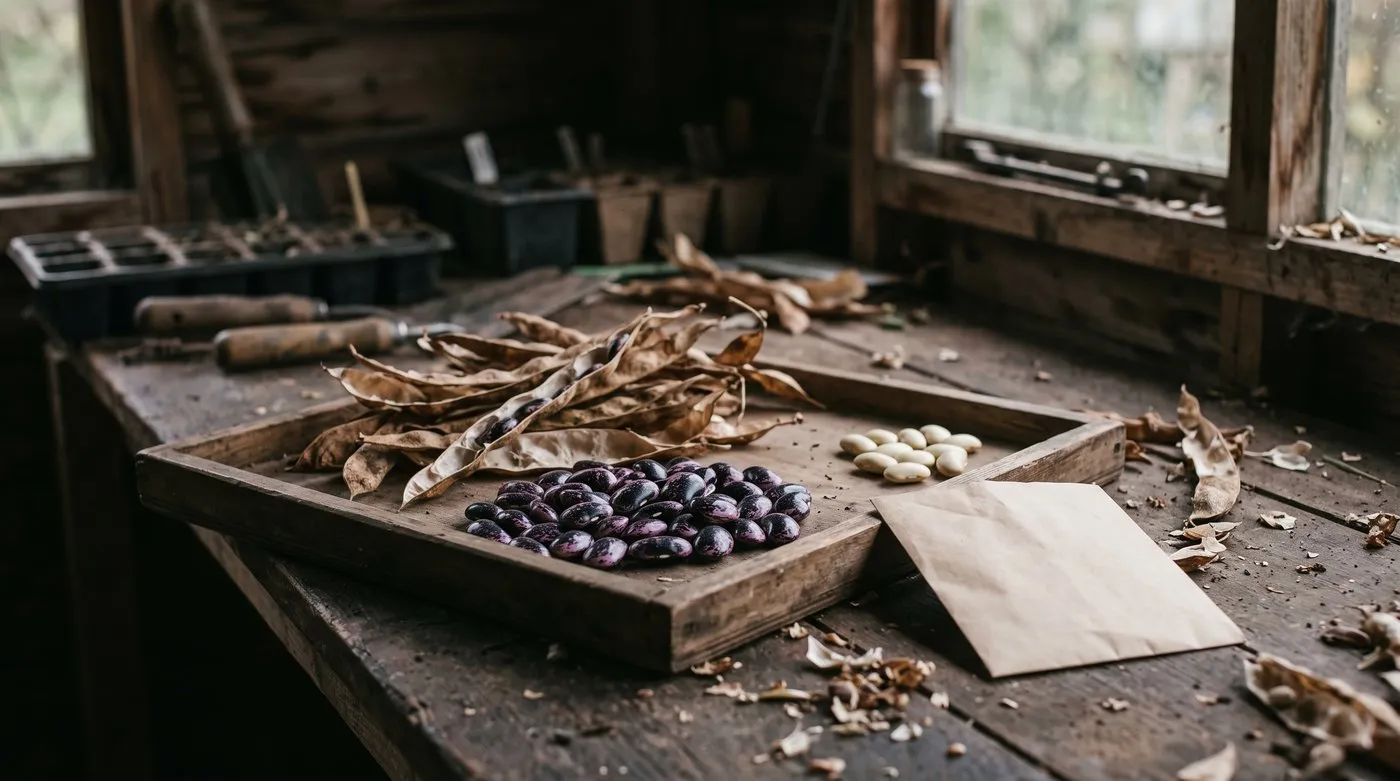
Leave a few pods on your best plant until they’re brown and crisp. Dry the beans for two weeks and store them in a paper envelope.
How to save seed
- Choose your strongest, healthiest plant with the best pods
- Leave 5-6 pods on it at the end of the season, from mid-September
- Let them dry on the plant until they’re brown, papery and crisp
- If frost threatens first, cut the stems and hang them in a dry shed to finish
- Shell the beans. Good ones are plump, smooth and brightly coloured
- Dry them on a tray indoors for 2 weeks
- Store them in a paper envelope (not plastic) somewhere cool, dark and dry
- Label with the variety and year
Throw away any shrivelled, discoloured or mouldy beans.
Tip: Runner beans can cross with each other. If you grew Scarlet Emperor next to Painted Lady, saved seed may give mixed flower colours. For true seed, grow just one variety, or keep them well apart.
Pests and problems
Blackfly cluster on the soft tips from June. Pinch out affected tips and wash colonies off with a jet of water. Ladybirds and hoverflies will help you out.
Slugs and snails go for young plants, especially just after planting out. Use copper tape, beer traps or wildlife-friendly slug pellets, and check plants in the evening for the first couple of weeks.
Halo blight shows as brown spots with a yellow ring on the leaves, spreading in wet weather. Pick off and bin affected leaves. Water the soil, not the leaves, and grow beans in a different spot each year.
Red spider mite can strike in hot, dry summers, leaving leaves mottled and yellow. Well-watered plants rarely have trouble.
Once you’ve got runner beans going, have a look at our guide to how to grow peas in the UK for another climbing crop to try.
Frequently asked questions
When should I sow runner beans in the UK?
Sow indoors from mid-April, or outdoors from late May. Indoor sowing gives you a few weeks’ head start. They can’t cope with frost, so don’t plant out until all risk has passed. In northern England and Scotland, wait until early June.
Why are my runner bean flowers dropping off?
Usually dry soil, hot weather or too few bees. Water at the base of the plants every day while they flower in dry weather. Mulch the roots with compost to keep them cool and moist. Bee-friendly flowers nearby help too.
How tall do runner bean supports need to be?
At least 2.4m tall. Bamboo canes, hazel poles or strong netting on a frame all work. Push canes 30cm into the ground so they stay put in the wind. Pinch out the tips when plants reach the top.
How often should I pick runner beans?
Every 2-3 days, once pods are 15-20cm long. Picking keeps the plant making more flowers and pods. If you leave pods to grow big and tough, the plant soon stops flowering.
Can I grow runner beans in pots?
Yes, in a big pot of at least 40 litres. A pot about 45cm across with 3-4 canes as a wigwam works well. Water twice a day in hot weather, and feed weekly with tomato feed once they flower.
What is the best runner bean variety for the UK?
Scarlet Emperor is a great all-rounder. It gives heavy crops of long, smooth pods with lovely flavour. Enorma is the one for extra-long show beans. Painted Lady is the prettiest, with red and white flowers.
Can I save runner bean seeds for next year?
Yes, it’s easy. Leave 5-6 pods on the plant at the end of the season until they’re brown and papery. Shell the beans, dry them indoors for two weeks, and store them in a paper envelope somewhere cool and dry.
Our team produces practical UK gardening guidance from source research, contributor records and established horticultural practice. Editorial standards are overseen by Matt W.


