
Key takeaways
- A marrow is simply a courgette left on the plant to grow big
- Sow indoors in mid to late April and plant out after the last frost
- Give trailing plants 1.2m of space and bush types about 90cm
- Water deeply twice a week and use tomato feed weekly once flowers appear
- Pick for storing when the skin is too hard to dent with a thumbnail
Marrows are a cheerful, easy crop for a UK garden or allotment. Each plant gives you several big fruits between August and October. They’re just courgettes left on the plant to grow up, so if you can grow courgettes, you can grow marrows. Their thick skin makes them great for stuffing, baking and keeping through winter.
All they ask for is warmth to get going, rich soil, plenty of water and lots of room. The vines can spread well over a metre, so plan your space before you sow.

Sow marrow seeds on their edge in 9cm pots of peat-free compost in mid to late April.
Which marrow varieties grow best in the UK?
Pick a variety for what you want: tasty kitchen marrows or a whopper for the village show. The RHS marrow growing guide is a handy place to browse more.
Long Green Bush is the old British favourite. Dark green striped fruit on a compact plant, with firm, mild flesh that’s lovely stuffed. Bush types only need about 90cm of space.
Long Green Trailing is the classic allotment marrow. It sprawls more but gives bigger fruit, and it’s the one you’ll often see at village shows.
Tiger Cross F1 is a modern variety with good disease resistance. It copes well with cooler UK summers, so it’s a good pick for beginners.
Badger Cross F1 has pale green and cream stripes. It crops well, keeps well and stands up to powdery mildew better than many.
For giant show marrows, buy a specialist giant strain from a show seed supplier. Atlantic Giant and Big Max are giant pumpkins, not marrows, so check the class rules before you enter one.
Variety comparison table
| Variety | Habit | Space needed | Disease resistance | Best for |
|---|---|---|---|---|
| Long Green Bush | Bush | About 90cm | Medium | Small gardens |
| Long Green Trailing | Trailing | 1.2-1.5m | Medium | Allotments, big plots |
| Tiger Cross F1 | Bush | About 90cm | Good | Beginners, cooler areas |
| Badger Cross F1 | Semi-trailing | About 1.2m | Good, copes with mildew | Storing, flavour |
How to sow marrow seeds indoors
Marrows hate frost, so start them indoors for a head start while the soil warms up. For more on the basics, see our guide to sowing seeds indoors.
When to sow: mid to late April in most of the UK. In Scotland or hilly areas, wait until late April or early May. Sow too early and you’ll have leggy plants stuck in pots with nowhere to go.
How to sow:
- Fill 9cm pots with peat-free multipurpose compost
- Water the compost well before sowing
- Push one seed on its edge 2cm deep (lying flat, it can sit in water and rot)
- One seed per pot is plenty
- Keep it warm, around 18-20C, on a sunny windowsill or in a propagator
- Seedlings usually pop up within about a week
Once they’re up, keep them in good light and turn the pots daily so they grow straight. Water when the top of the compost feels dry, but don’t keep it soggy, as that can make seedlings collapse.
When and how to plant marrows outside
Plant out after the last frost. That’s usually late May in southern and central England, and early June in northern England, Scotland and high gardens.
Hardening off
Spend 7-10 days hardening off first. Put the pots outside by day and bring them in at night. By the end of the week, leave them out overnight if no frost is forecast. Our hardening off guide walks you through it.
Planting out
Pick a spot in full sun with rich soil that holds moisture. Marrows are very hungry plants. Dig a hole twice the size of the root ball and mix a good spadeful of garden compost into the bottom.
- Spacing: 1.2m apart for trailing types, 90cm for bush types
- Depth: plant at the same level as in the pot, without burying the stem
- Water well after planting
- Cover with a cloche or fleece for the first couple of weeks if nights are cold
Marrows love raised beds. The soil warms faster in spring and drains better on heavy clay. Allow about 1.2m by 1.2m per plant.

Marrow vines spread a long way. Give each plant its own patch and mulch with straw to keep the soil moist.
How to feed and water marrow plants
Steady water and food give you the best marrows. Let them go thirsty or hungry and they’ll sulk and crop less.
Watering
Water deeply twice a week at the base of the plant. Keep water off the leaves, as wet leaves invite powdery mildew. Give each plant a good 10-15 litres when it’s fruiting, and water more often in a hot spell.
Mulch around the plant with a thick layer of straw, garden compost or well-rotted manure. It keeps moisture in and weeds down. Put it on in early June once the soil has warmed up.
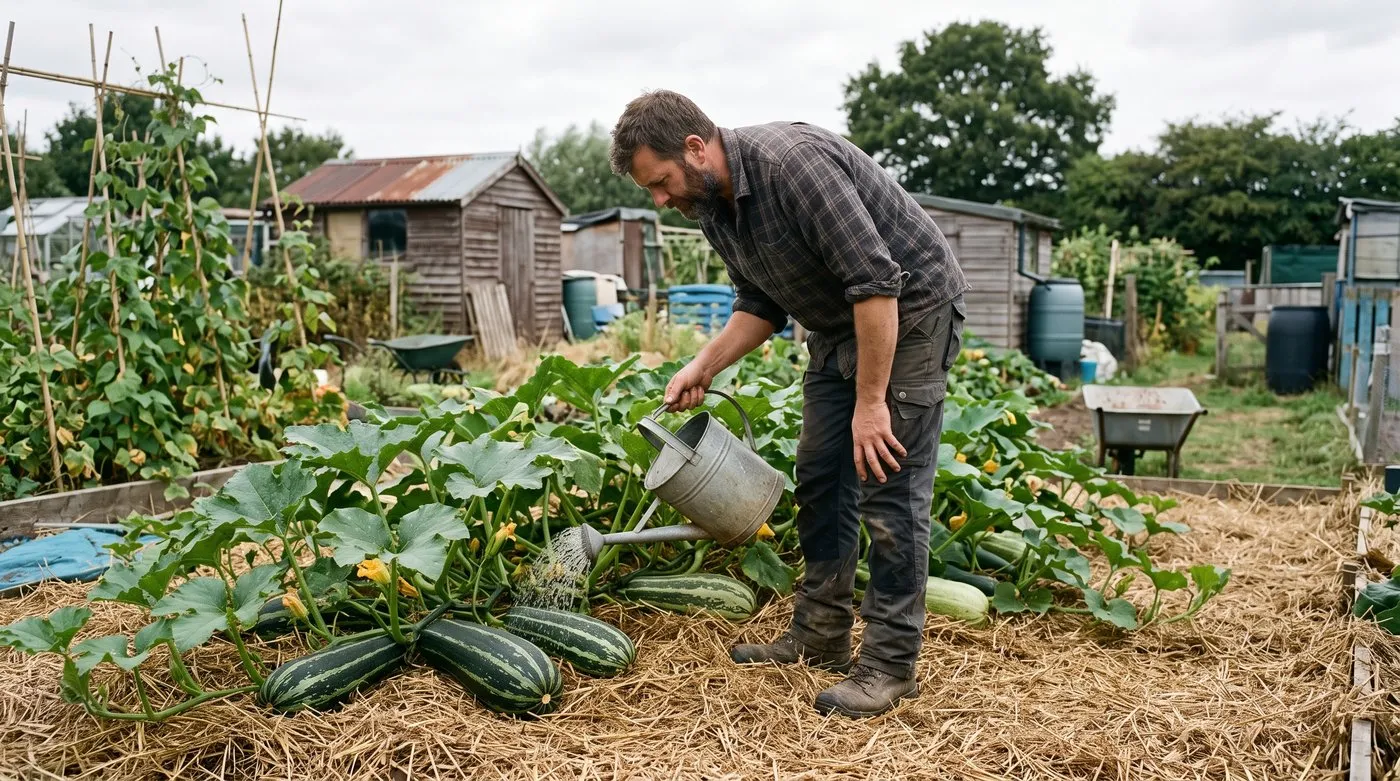
Water deeply twice a week at the base and keep the leaves dry to help avoid mildew. A straw mulch holds the moisture in.
Feeding
Start feeding when the first flowers appear, usually in late June.
| When | Feed | How often |
|---|---|---|
| Planting to first flower | Nothing extra, the compost is enough | - |
| First flowers onwards | Tomato feed | Weekly |
| Giant show marrows | Tomato feed plus seaweed feed | Twice a week |
Tomato feed is high in potash, which helps flowers and fruit. Skip high-nitrogen feeds, which give you lots of leaves and fewer marrows. Home-made comfrey feed works well too, watered on at the base.
How marrow pollination works
Marrows have separate male and female flowers, and bees carry pollen between them. Poor pollination is the usual reason marrows fail, especially in cool, wet summers when bees stay at home.
Spotting male and female flowers
- Male flowers sit on a thin, plain stem. They often appear a week or so before the females
- Female flowers have a tiny marrow just behind the petals
If a female flower isn’t pollinated, that baby marrow turns yellow, goes soft and rots. It’s not a disease, just a lack of pollen.
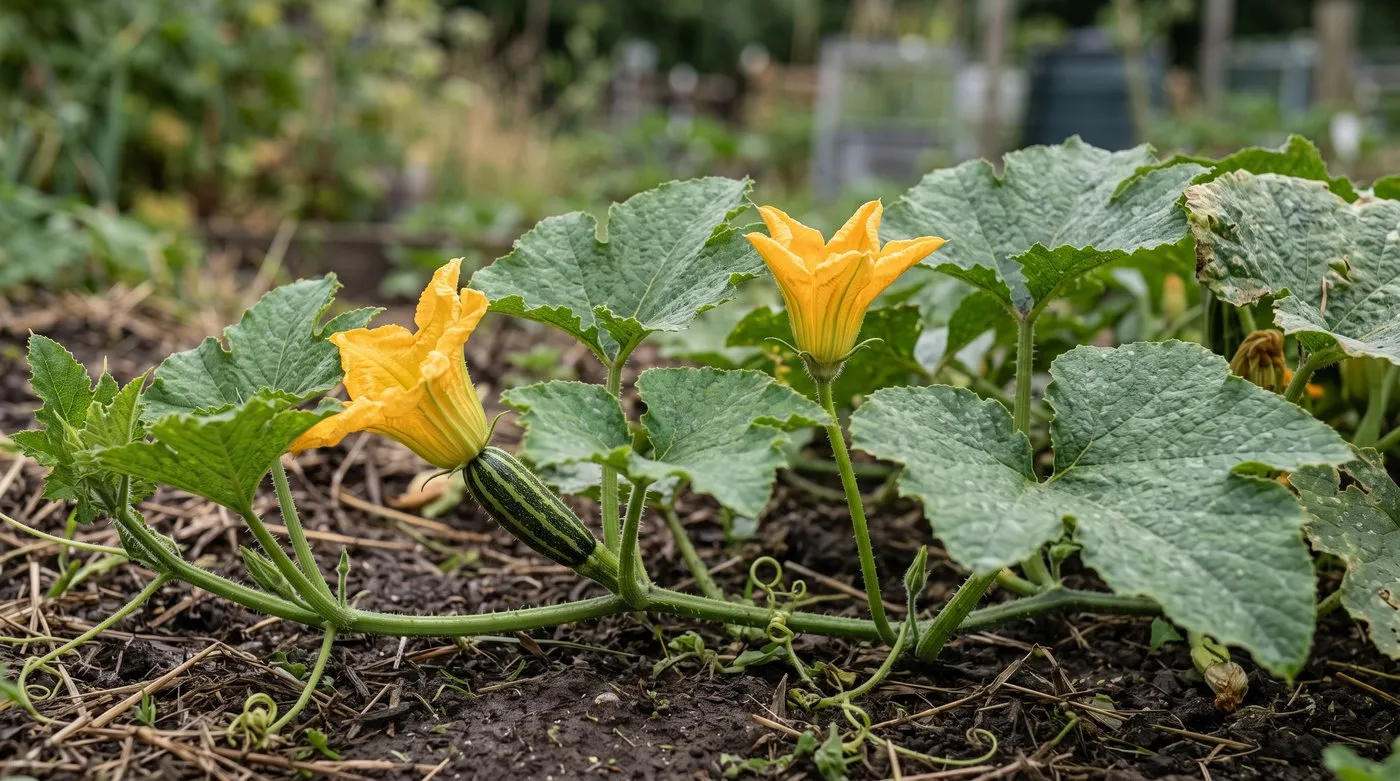
Female flowers have a tiny marrow behind the petals. If that baby fruit yellows and rots, it simply wasn’t pollinated.
How to hand-pollinate
In cool or cloudy spells, give nature a hand in the morning. It takes seconds.
- Find a fully open male flower early in the day
- Pick it and peel back the petals to show the pollen
- Dab the pollen gently into the centre of an open female flower
- One male flower can do two or three females
Growing companion plants like borage, nasturtiums and French marigolds nearby brings in more bees.
How to grow giant marrows for shows
Growing a giant marrow for the village show is great fun, and a bit different from growing for the kitchen. Our guide to show growing has more on getting ready for show day.
Choosing the right variety
Normal kitchen varieties won’t get huge, however well you treat them. Buy seed of a giant show marrow strain from a specialist supplier.
The giant marrow method
- Start early: sow in a heated propagator in late March, a couple of weeks before kitchen marrows
- Keep one fruit per plant. Pick off every other marrow as it forms, so all the plant’s energy goes into one
- Make a rich planting pit: dig a hole about 60cm deep and wide and fill it with equal parts compost, well-rotted manure and topsoil
- Feed twice a week with tomato feed plus seaweed feed from first flower
- Water every day in hot weather while the fruit is growing
- Shade the fruit with a board so strong sun doesn’t scorch and split the skin
- Lift it off the soil on a board or pallet so the underside doesn’t rot
Show preparation
Cut your show marrow on the morning of the show, leaving about 5cm of stem. Wipe it gently with a soft cloth and carry it on a bed of straw so it doesn’t bruise. Judges look at size, shape, colour and the condition of the skin.
When and how to harvest marrows
When you pick depends on whether you’re eating it now or storing it.
For cooking
Pick at 30-40cm long while the skin is still a little soft. These younger marrows have fewer seeds and moister, tastier flesh. They don’t keep long, so eat them within a week or two.
For storage
Leave marrows on the plant until late August or September. They’re ready when the skin is too hard to dent with your thumbnail and the stem feels woody.
How to harvest:
- Cut the stem with a sharp knife, leaving 5-10cm attached
- Handle gently, as bruised marrows rot in store
- Leave them in the sun for about a week if the weather allows, to toughen the skin

Leave harvested marrows in the sun for a week before storing so the skin toughens up.
Storing marrows through winter
A well-ripened marrow keeps for a few months if you store it right.
- Keep it somewhere cool, dry and frost-free, like a spare room, garage shelf or unheated porch
- Sit marrows on a slatted shelf or a tray of straw, not straight on concrete
- Don’t let them touch each other
- Check every month and use any soft ones first
- Don’t keep them in the fridge, as they don’t like the cold
That means a September harvest can keep you in stuffed marrow well into winter. For more ways to keep your crops, see our guide to preserving fruit and vegetables.
What to cook with marrow
Marrow gets called bland, but cooked well it soaks up flavour and keeps its shape better than courgettes.
Stuffed marrow
The British classic. Halve it lengthways, scoop out the seeds and fill with:
- Lamb mince with onion, garlic, tomato and herbs
- Rice and cheese with Cheddar, breadcrumbs and sage
- Spiced lentils with cumin, coriander and chilli
Bake at 180C for 40-50 minutes until the top is golden and the marrow is tender. One big marrow feeds a crowd.
Other uses
Chunks of marrow are lovely in curries and soups, and marrow is a traditional base for chutney. The firm flesh holds together well in slow-cooked dishes.
Common problems when growing marrows
Powdery mildew
White, dusty patches on the leaves from midsummer. It’s very common and usually turns up late in the season. Water at the base, not over the leaves, and space plants well so air can move. Pick off the worst leaves and keep the plant well watered.
Slugs and snails
Young plants and baby marrows are a favourite snack. Protect new plants for the first few weeks and lift fruit off the soil on tiles or straw. Our slug control guide has plenty of ideas.
Fruit rot
This happens when the underside sits on wet soil. Pop a tile, slate or thick layer of straw under each marrow as it grows.
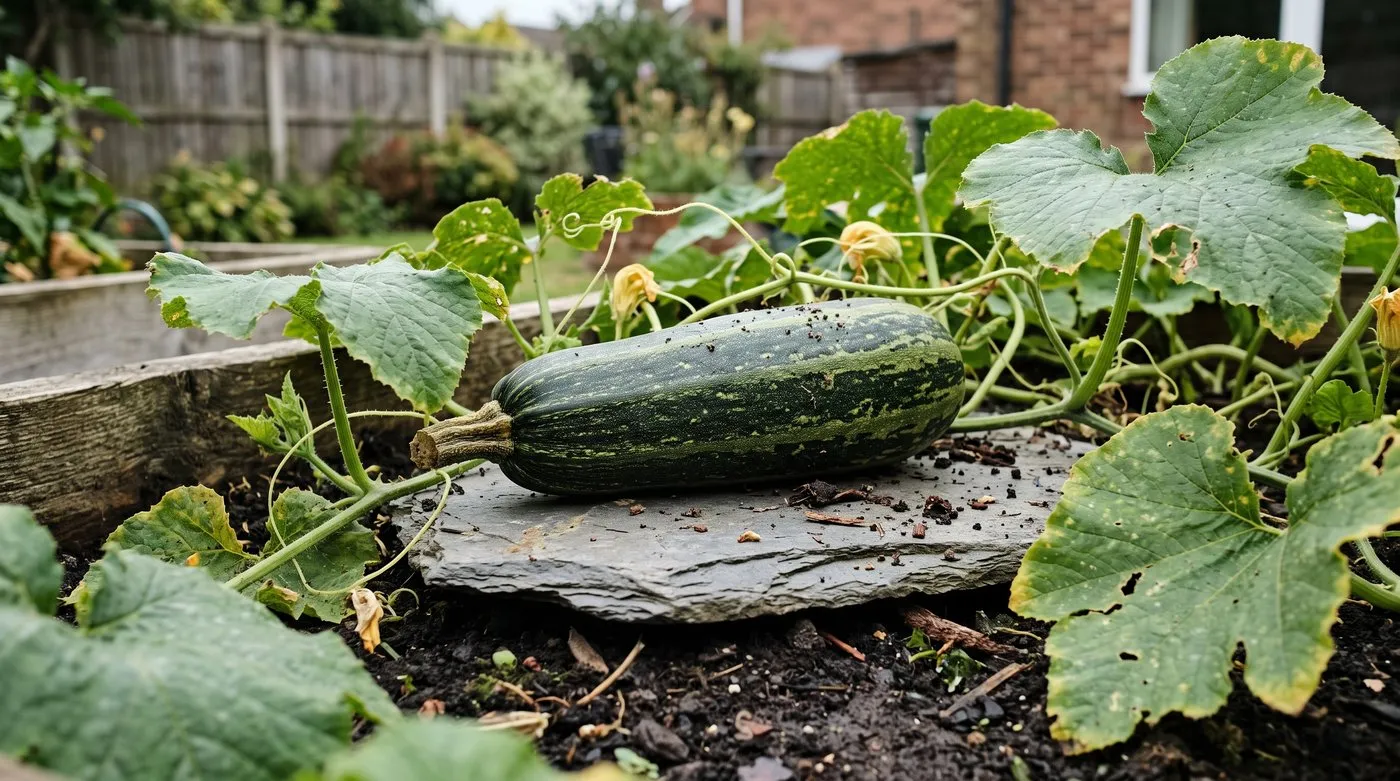
Slip a tile, slate or thick straw under each marrow as it grows. Keeping the underside dry stops it rotting.
Poor fruit set
Nearly always a pollination problem, not food or water. Hand-pollinate in the mornings during cool or wet spells. Growing two plants gives you more flowers and better odds.
Aphids
Greenfly can gather on shoot tips. Blast them off with a jet of water. Planting bee-friendly flowers nearby brings in ladybirds and other helpers too.
Month-by-month marrow growing calendar
| Month | What to do |
|---|---|
| January-February | Order seeds. Plan your space. Dig well-rotted manure into the bed. |
| March | Add compost to planting spots. |
| April | Sow indoors mid to late month, one seed per 9cm pot, on its edge, 2cm deep. |
| May | Harden off for 7-10 days. Plant out after the last frost (late May south, early June north). |
| June | Water well and mulch. First flowers appear late June, so start weekly feeding. |
| July | Hand-pollinate in cool weather. Put tiles under young marrows. Watch for mildew. |
| August | Pick cooking marrows at 30-40cm. Leave storage marrows to ripen. |
| September | Harvest storage marrows when the skin is hard. Leave them in the sun for a week. |
| October | Store your marrows. Clear old plants and add compost to the bed. |
| November-December | Eat stored marrows. Plan next year’s crop rotation. |
Frequently asked questions
When should I sow marrow seeds in the UK?
Sow them indoors in mid to late April. Push one seed on its edge into a 9cm pot of peat-free compost, 2cm deep. Keep it somewhere warm and it should come up in about a week. Plant outside after the last frost, which is late May in most of southern England and early June further north.
What is the difference between a marrow and a courgette?
A marrow is a courgette that’s been left to grow big. They’re the same plant. Courgettes are picked young and tender. Leave one on the plant for a few more weeks and it grows a tough skin, gets much bigger and turns into a marrow with firmer, seedier flesh.
How big do marrow plants grow?
Trailing types spread around 1.2-1.5m across. Give them at least 1.2m each way. Bush types stay smaller, at around 90cm across, so they suit smaller gardens.
How do I grow a giant marrow for a show?
Start with a giant show strain from a specialist seed supplier. Leave just one fruit on the plant and pick off the rest. Feed with high-potash feed twice a week, water every day in hot weather, shade the fruit from strong sun and sit it on a board off the soil.
Can I store marrows over winter?
Yes, ripe marrows with hard skins keep for a few months. Pick them when the skin won’t dent under your thumbnail. Leave them in the sun for a week to toughen up, then keep them somewhere cool, dry and frost-free. Check them every month and eat any soft ones first.
Why are my marrows rotting on the plant?
Usually because the fruit is sitting on wet soil. Slip a tile, slate or some straw under each one. If tiny marrows go yellow and rot before they grow, they weren’t pollinated, so hand-pollinate in cool or wet weather when bees aren’t about.
What can I cook with marrow?
Stuffed marrow is the classic. Halve it lengthways, scoop out the seeds, fill with seasoned mince or rice and cheese, and bake at 180C for about 45 minutes. Marrow is also great in curries, soups and chutneys, and holds its shape better than courgettes in slow-cooked dishes.
Our team produces practical UK gardening guidance from source research, contributor records and established horticultural practice. Editorial standards are overseen by Matt W.


