
Key takeaways
- Calabrese is the green-headed summer broccoli, not the hardy purple sprouting kind
- Sow a few plants every three or four weeks from March to July for heads from June to October
- Plant 30cm apart in rows 45cm apart, firmly, in soil that isn't acidic
- Cover with insect mesh from planting to keep cabbage white caterpillars off
- Cut the main head while the buds are tight and green
- Leave the plant standing and it sends out side shoots for several more weeks
Calabrese is the green broccoli you buy in the shops, and it’s one of the quickest brassicas to grow. Sow it from spring to midsummer and you can be cutting heads from June to October. Get the cut right and each plant carries on giving side shoots for weeks.
This guide is all about a long summer harvest: sowing little and often, keeping caterpillars off, and picking side shoots. For purple sprouting and the wider broccoli family, see the guide on how to grow broccoli and calabrese.
Calabrese or sprouting broccoli: which is which?
Calabrese forms one large green head in summer or autumn, then smaller side shoots. It’s quick, taking about three to four months from sowing. Sprouting broccoli is a different crop. It stands through winter and gives lots of small purple or white spears from late winter to spring.
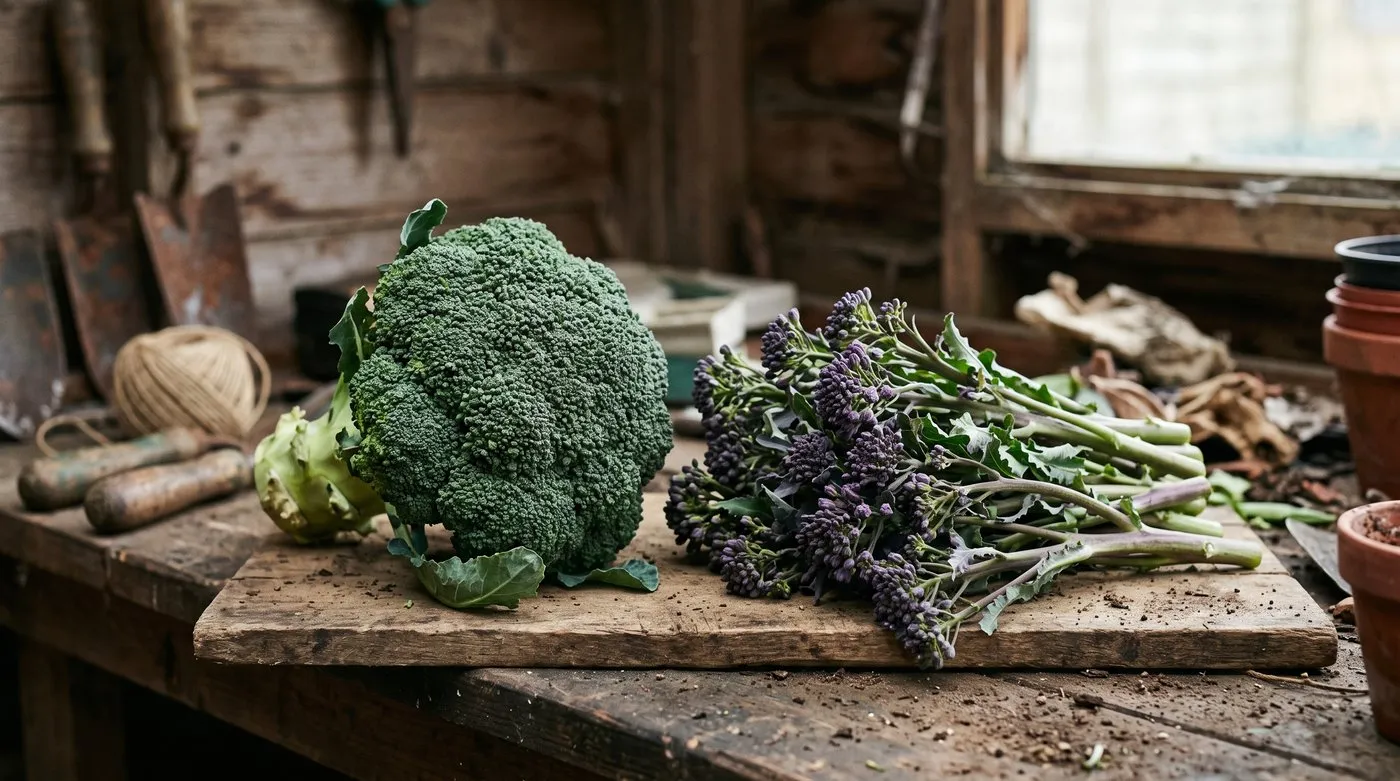
Calabrese (left) gives one big green head in summer. Purple sprouting gives lots of small spears in late winter and spring.
So if you want broccoli in summer, grow calabrese. If you want it in the hungry gap, grow purple sprouting broccoli. Many growers do both.
| Crop | Sow | Harvest | What you get |
|---|---|---|---|
| Calabrese | March to July | June to October | One big head, then side shoots |
| Purple sprouting broccoli | April to June | February to May | Lots of small spears |
| Romanesco | April to June | Late summer to autumn | One pointed lime-green head |
Which calabrese varieties to grow
F1 hybrids give the most even, reliable heads. Open-pollinated types are cheaper and crop over a longer spell, but heads vary more.
- Marathon F1 is a popular all-rounder with firm, dark green heads. It holds well and suits later sowings for autumn.
- Belstar F1 gives good-sized heads followed by plenty of side shoots.
- Ironman F1 is another reliable choice for summer and autumn heads.
- Green Sprouting is an older open-pollinated type with a smaller head and lots of side shoots.
Check the packet for the sowing window. Some varieties are bred for early crops, others for autumn.
When and how to sow calabrese
Sow calabrese from March to July. The trick for a long harvest is succession sowing: a few plants every three or four weeks instead of one big batch. One sowing tends to give a glut of heads all ready in the same fortnight.
Sowing in modules. Sow two seeds per cell, about 1cm deep, in peat-free seed compost. Thin to the strongest seedling. Early sowings need a greenhouse, cold frame or bright windowsill. Plant out after four to six weeks, once they have four or five true leaves. Harden them off first: the guide on hardening off seedlings shows how.
Sowing direct. From April, you can sow straight into the bed. Sow a few seeds where each plant will grow, then thin to one. Calabrese dislikes root disturbance, so this avoids any check to growth.

Modules give each seedling its own cell, so it goes into the ground with roots intact. That helps stop it bolting later.
Spacing, soil and planting out
Plant calabrese 30cm apart in rows 45cm apart. Closer spacing gives smaller heads. Plant into a sunny spot with firm soil that’s been enriched with compost or well-rotted manure.
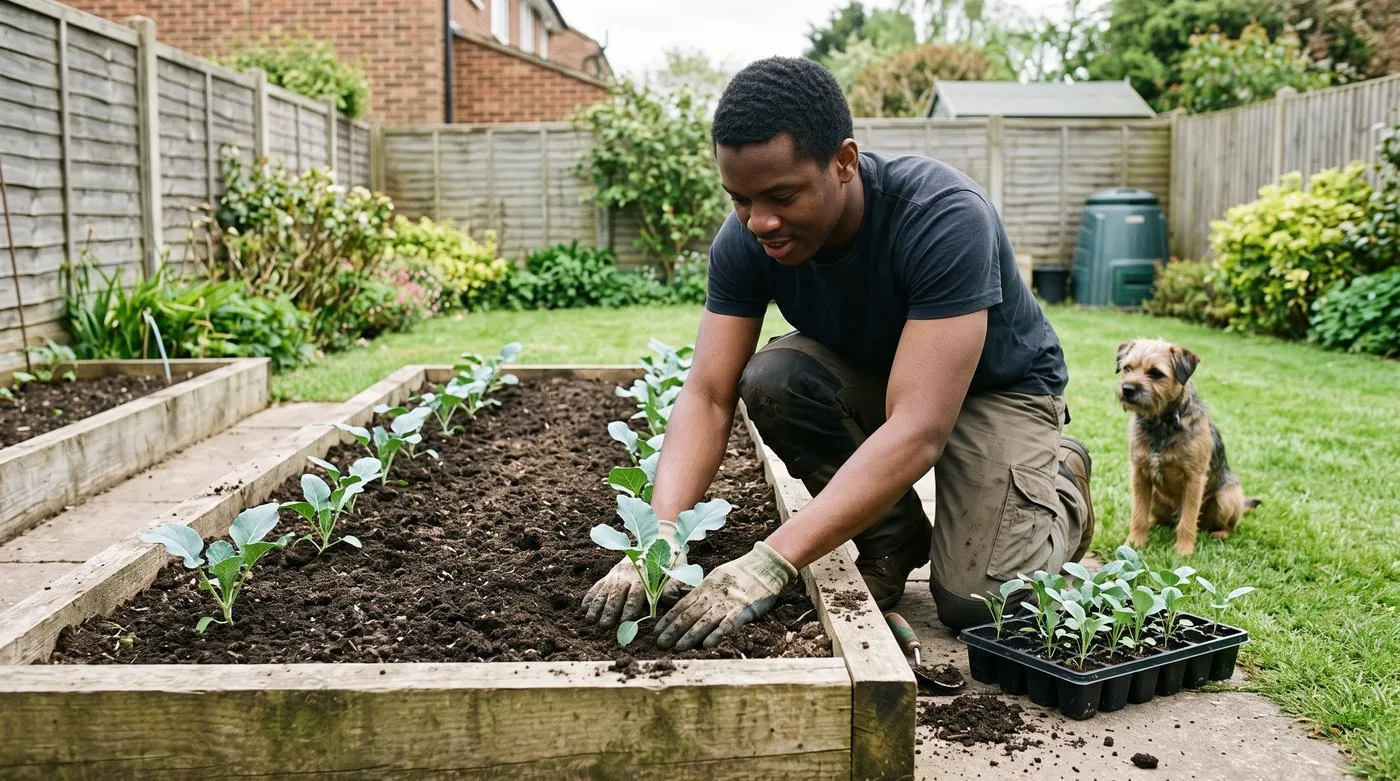
Firm each plant in well so it can’t rock in the wind. Brassicas hate loose, fluffy soil.
- Plant firmly. Set each plant so its lowest leaves sit just above the soil, then firm it in well. Brassicas don’t like loose, fluffy ground.
- Check your soil isn’t acidic. Brassicas grow best in soil that is neutral to slightly alkaline. On acid soil, add lime in autumn. The guide to garden lime covers how much.
- Rotate. Don’t grow calabrese where any cabbage-family crop grew in the last two or three years. The crop rotation planner makes this easy.
Water well after planting and keep watering in dry spells. A mulch of compost helps the soil stay moist.
Keeping pests off calabrese
The main pests are cabbage white caterpillars, pigeons, flea beetle and slugs. Netting is the simplest answer to most of them.
Cabbage white butterflies lay eggs on the leaves from spring to early autumn. Their caterpillars can eat their way into the heads. Cover plants with fine insect mesh on hoops from planting until harvest. Tuck the edges into the soil so there are no gaps. If you don’t use mesh, check under the leaves every few days and rub off the yellow egg clusters. The guide to cabbage white butterfly control has more.
Pigeons strip leaves, especially in autumn and winter. Mesh or netting keeps them off too.
Flea beetles pepper young leaves with tiny holes in dry weather. Fleece or mesh over young plants helps, as does watering in dry spells.
Slugs go for young plants. Planting out sturdy module-raised plants gives them a better start.
Club root is a soil disease that causes swollen, distorted roots and wilting plants. There’s no cure, and it stays in the soil for many years. Liming acid soil and raising plants in pots before planting out both help. The club root guide explains how to spot it.

Fine insect mesh on hoops keeps butterflies and pigeons off. Water straight through it, so you never need to lift it.
How to harvest calabrese and keep side shoots coming
Cut the main head while the buds are still tight and dark green. If you see yellow flowers starting to open, cut straight away, as quality drops fast.
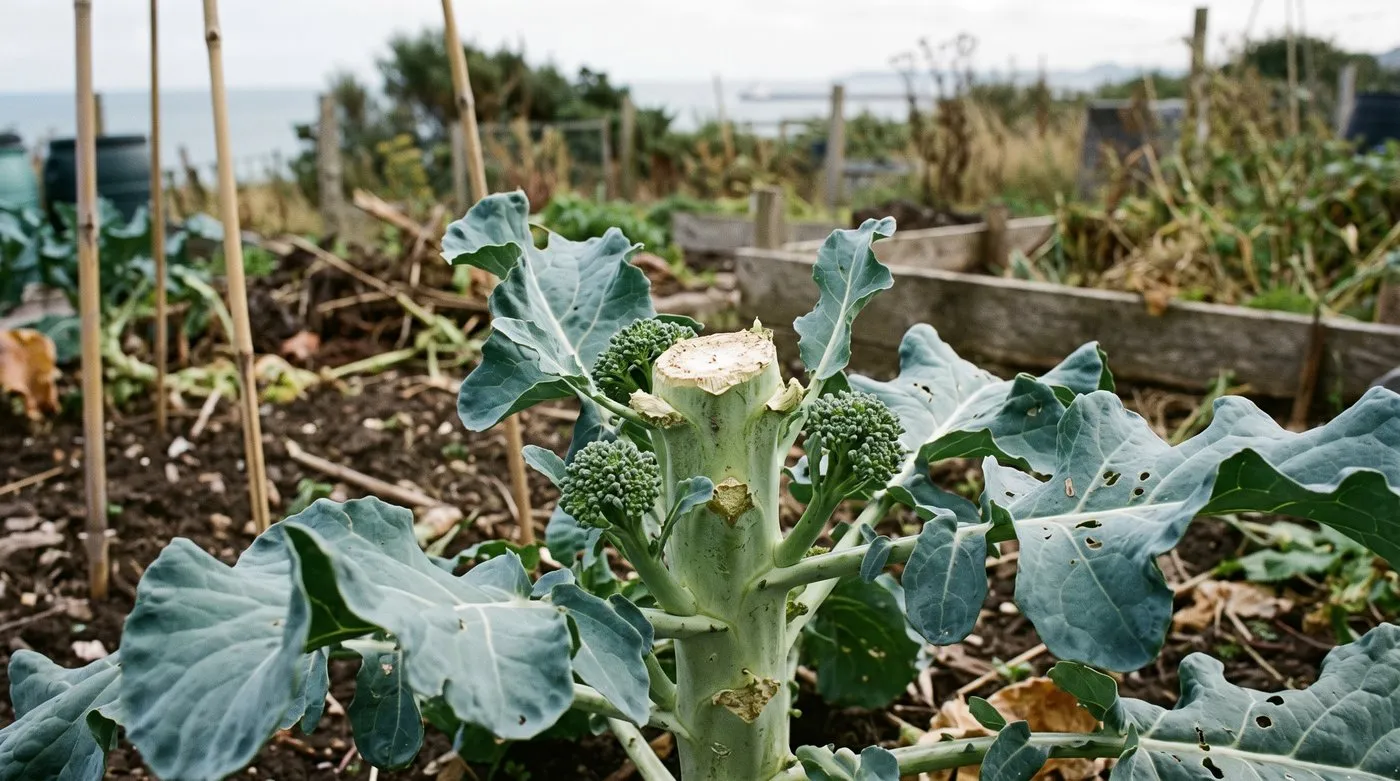
After the main head is cut, side shoots like these appear where the leaves meet the stem. Keep picking and more follow.
Use a sharp knife to cut the head with a short length of stem. Leave the plant and its leaves in the ground. Within a few weeks, smaller side shoots grow from where the leaves join the stem. Cut these when they’re a good size, and more will follow.
To keep side shoots coming:
- Water well in dry spells.
- Add a mulch of compost after the main cut.
- Pick side shoots often, before they flower.
Pick in the cool of the morning and keep heads in the fridge. Use them within a few days for the best flavour.

Cut the head with a short piece of stem and leave the rest of the plant standing. Side shoots soon follow.
Calabrese calendar for UK gardens
| Month | Job |
|---|---|
| February | Order seed. Check soil and lime acid beds if not done in autumn |
| March | First sowing in modules under cover |
| April | Plant out the first batch under fleece. Sow again |
| May | Plant out and sow again. Put mesh over plants |
| June | First heads from early sowings. Sow again |
| July | Last main sowing. Pick side shoots from early plants |
| August | Plant out the last batch. Keep picking heads and side shoots |
| September | Main heads from summer sowings. Watch for pigeons |
| October | Last heads and side shoots |
| November | Clear old plants and compost them. Pull out any with club root and bin them |
Common mistakes with calabrese
- Sowing everything at once. You get a glut, then nothing. Sow a few plants every three or four weeks.
- Leaving heads too long. Once the buds turn yellow, it’s flowering. Cut while tight.
- Pulling the plant after the first cut. Leave it in and you get weeks of side shoots.
- Leaving plants uncovered. Butterflies find them fast. Put mesh on at planting.
- Letting plants dry out. Dry, stressed plants run to flower early. Water well in dry spells and mulch.
Frequently asked questions
What is the difference between calabrese and broccoli?
Calabrese is the green-headed type of broccoli you buy in shops. It forms one big head in summer or autumn, then smaller side shoots. Sprouting broccoli is hardier, stands all winter and gives lots of small purple or white spears in late winter and spring.
When should I sow calabrese in the UK?
Sow from March to July for heads from June to October. Early sowings need starting under cover. Sow a few plants every three or four weeks rather than a whole row at once, so heads don’t all arrive together. Sowings much after July rarely mature before the cold sets in.
How long does calabrese take to grow?
Most varieties are ready about 12 to 16 weeks after sowing. Summer sowings usually grow faster than early spring ones. Side shoots then keep coming for several weeks after you cut the main head, as long as the plant has water.
Why is my calabrese flowering early?
Stress is the usual cause, such as drought, heat or a check when transplanted. Calabrese dislikes root disturbance, so plant module-raised plants before they get pot-bound. Water well in dry spells, mulch to keep the roots cool, and cut heads as soon as they’re ready.
Do I need to stake calabrese plants?
Usually not, if you plant firmly in firm soil. Set the plant so its lowest leaves sit just above the soil and firm it in well. On windy sites or light soil, a short cane or earthing up the stem stops plants rocking.
Will calabrese grow back after cutting?
Yes, most varieties send out side shoots after the main head is cut. Cut the head with a short length of stem and leave the plant and leaves standing. Small shoots form where the leaves meet the stem. Keep picking them and more follow.
Now your summer broccoli is sorted, add an autumn showstopper with the guide on growing Romanesco, or find more crops in the vegetable growing section.
Our team produces practical UK gardening guidance from source research, contributor records and established horticultural practice. Editorial standards are overseen by Matt W.


