
Key takeaways
- Calabrese gives big green heads in summer. Purple sprouting gives spears the following spring
- Sow in modules, as calabrese hates having its roots disturbed
- Plant firmly. Wobbly plants give small, loose heads
- Net plants with fine mesh as soon as they go in, against pigeons and butterflies
- After cutting the main calabrese head, keep picking side shoots every few days
Broccoli is one of the most rewarding brassicas you can grow, and you get two very different crops depending on the type. Calabrese gives big green heads in summer. Purple sprouting broccoli takes its time, but it crops from February to April in the hungry gap, when hardly anything else is ready.
Both grow well all over the UK. They don’t mind cold or frost, and they reward you well for firm planting, decent soil and protection from pigeons. If you’re starting a vegetable garden, calabrese is a great early crop. Purple sprouting is the one that makes you feel very pleased with yourself in March.
What is the difference between broccoli and calabrese?
The “broccoli” in supermarkets is actually calabrese. It makes one big green head on a thick stem and is picked in summer and early autumn.
Sprouting broccoli, usually purple and sometimes white, is the traditional British type. Instead of one big head, it gives lots of smaller spears on long stems over many weeks. Purple sprouting broccoli crops from late February to April, just when the veg patch is at its emptiest.
Calabrese is quick: sow in spring, eat in summer. Sprouting broccoli is sown in spring but not picked until the next year. That affects spacing, timing and how long each plant takes up your ground.
Tenderstem broccoli sits in between. It gives slim, long-stemmed spears over several weeks in summer. Treat it like calabrese, but give it a warmer spot.
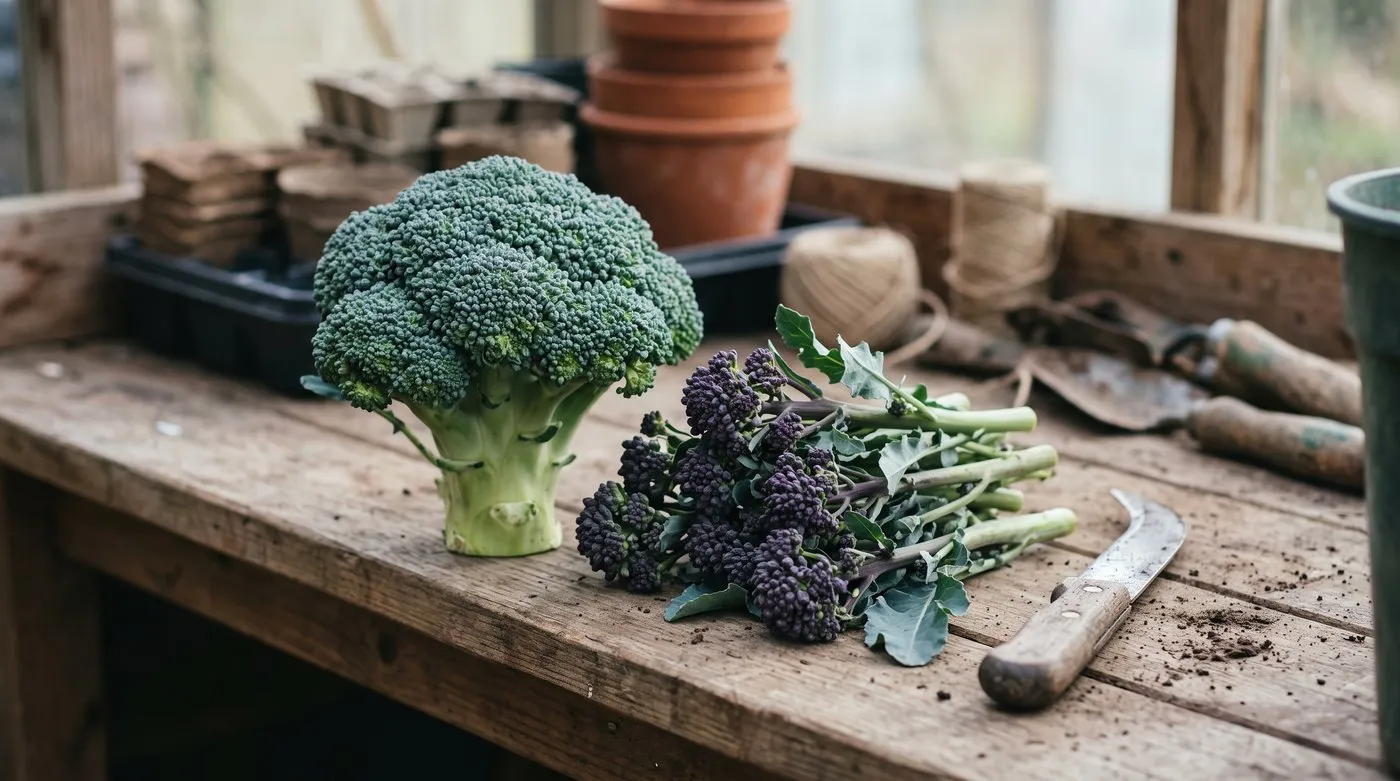
Calabrese gives one big head in summer, while purple sprouting gives lots of slim spears in late winter and spring. Growing both covers a good chunk of the year.
Best broccoli and calabrese varieties for UK gardens
Pick a calabrese for summer and a purple sprouting for spring. Both suit UK gardens really well.
Calabrese varieties
- Ironman F1: a popular, reliable choice with dense blue-green heads. Copes with cool summers and gives good side shoots.
- Marathon F1: similar to Ironman but a little later. Heads stay tight for longer, which helps in warmer southern gardens.
- Green Magic F1: early, with neat medium-sized heads. Great for sowing little and often.
- Belstar F1: medium to large heads, a good pick for organic growers.
- Tenderstem (such as Inspiration F1): slim stems with small florets over several weeks, from July to September. Likes richer soil and more warmth.
Purple sprouting broccoli varieties
- Early Purple Sprouting: the classic. Crops from late February in the south with plenty of deep purple spears.
- Red Arrow: an early type that crops evenly, often from mid-February.
- Claret: a late type that crops from March to May, carrying on after the early ones finish. Very hardy.
- White Star: white spears with a milder taste. Crops March to April. Not quite as tough as purple types, so give it a sheltered spot.
- Mendocino F1: a modern early purple sprouting with neat, even spears.
Broccoli and calabrese variety comparison
| Variety | Type | Sow | Pick | Best for |
|---|---|---|---|---|
| Ironman F1 | Calabrese | Mar to Apr | Jul to Sep | Reliable main crop |
| Marathon F1 | Calabrese | Mar to May | Jul to Oct | Warmer areas, later crop |
| Green Magic F1 | Calabrese | Mar to Jun | Jul to Oct | Sowing little and often |
| Belstar F1 | Calabrese | Apr to May | Aug to Sep | Organic growing |
| Tenderstem | Calabrese type | Apr to May | Jul to Sep | Stir-fries |
| Early Purple Sprouting | Sprouting | Apr to May | Feb to Apr next year | Hungry gap |
| Red Arrow | Sprouting | Apr to May | Feb to Mar next year | Earliest spears |
| Claret | Sprouting | Apr to May | Mar to May next year | Late spears |
| White Star | Sprouting | Apr to May | Mar to Apr next year | Milder flavour |
Handy tip: Grow both. Ironman or Green Magic for summer, plus Early Purple Sprouting for spring, gives you home-grown broccoli for much of the year.
How to sow broccoli and calabrese
Sow both types indoors in modules. It gives you the strongest plants.
Sowing calabrese (March to June)
Sow calabrese 1.5cm deep in module trays of seed compost, one seed per cell. Seedlings appear in about a week on a windowsill, in a greenhouse or in a cold frame.
Calabrese hates root disturbance. That’s the most important thing to know. Sow in modules or small pots, never open seed trays. Plant out before they get root-bound, ideally at about four to five weeks with four to six true leaves.
For a steady supply, sow seeds indoors every three weeks from March to early June. You’ll be picking from July to October. Later sowings dodge some of the worst butterfly weeks too.
Sowing purple sprouting broccoli (April to May)
Sow in April or May the same way. There’s no point sowing earlier, as the plants need a long, slow summer. Rushing them gives leggy, weak plants.
Seedlings are ready to plant out about five or six weeks later, when they’re 10 to 15cm tall with sturdy stems. Unlike calabrese, sprouting broccoli is fine sown in a row outdoors and moved later. Plant out into final spots in June or July.
Transplanting and spacing
Plant out at the right time, give them space and plant firmly. That’s the secret to good heads.
When to transplant
Plant calabrese out four or five weeks after sowing, when it has four to six true leaves. That’s from late April for early sowings under cover, through to July for later ones.
Plant out purple sprouting broccoli in June or July, before it outgrows its modules.
Spacing
Calabrese: 30 to 45cm apart in rows 45 to 60cm apart. Closer gives more, smaller heads. Wider gives bigger heads and better side shoots.
Purple sprouting broccoli: 60cm apart in rows 75cm apart. These are big plants by winter, up to about waist height. Crowding them invites disease.
Firm planting is critical
Press the soil down firmly round the stem. This matters more for broccoli than almost any other veg. Wobbly plants damage their roots, make small heads and blow over in winter storms.
After planting, tug a leaf gently. If the plant lifts, firm it again with your knuckles. Check after heavy rain or wind and re-firm as needed.
Water well at planting and keep the soil moist for the first two weeks. After that they’re fairly tough, though regular watering gives better heads.
In raised beds, the soft compost makes firm planting even more important. Draw a little soil up round the stems as they grow for extra support.
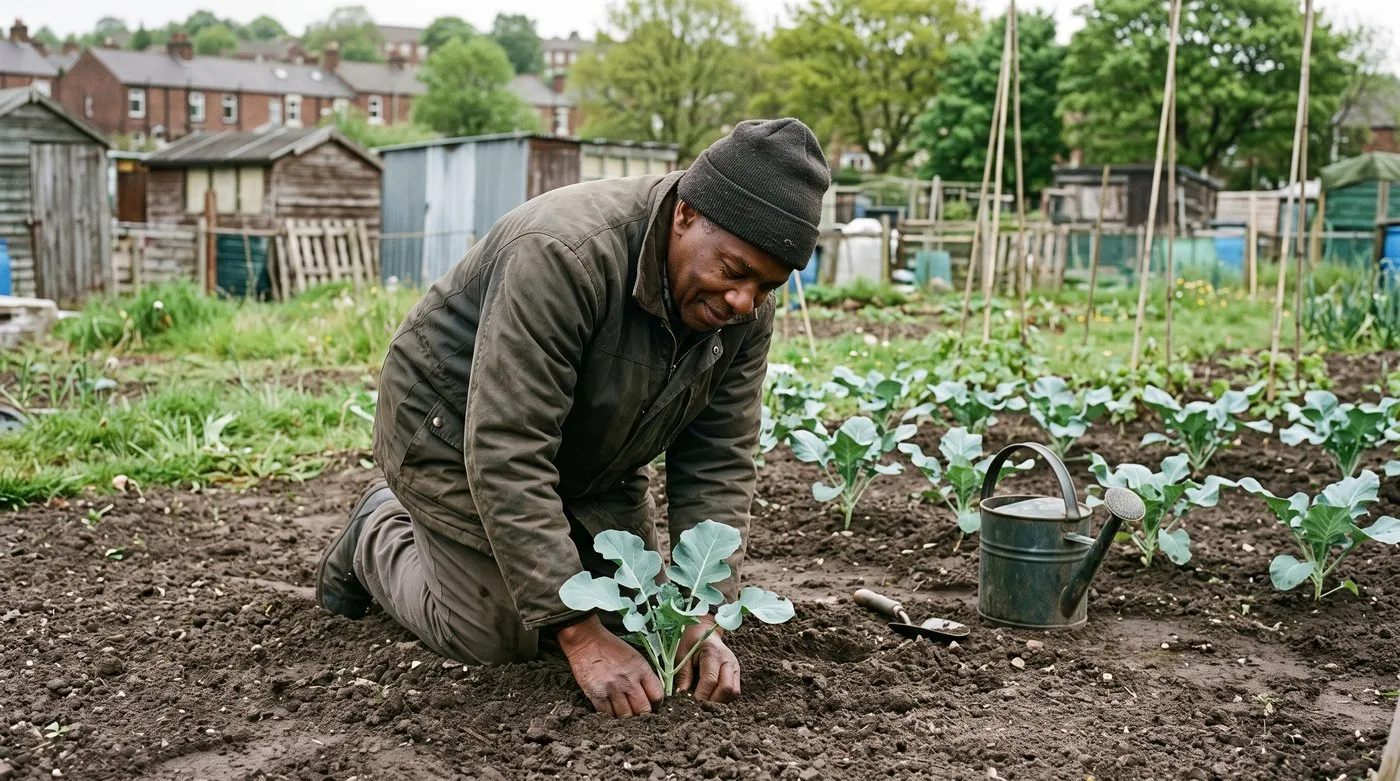
Firm the soil hard around each stem, then give a leaf a gentle tug. If the plant lifts, press it in again, as wobbly brassicas make small heads.
Feeding and ongoing care
Broccoli is hungry, so give it good soil and a feed or two.
Soil preparation
Dig in plenty of well-rotted compost or manure the autumn before. If you rotate crops, brassicas traditionally follow peas and beans.
If your soil is acid, add garden lime in winter. Brassicas like slightly alkaline soil, and it helps keep clubroot away too.
Feeding schedule
Scatter a balanced fertiliser before planting, at the rate on the pack. Give a high-nitrogen top-up, like pelleted chicken manure, four to six weeks after planting.
For calabrese, stop feeding once heads start to form, or you’ll get soft, leafy growth.
Purple sprouting broccoli likes another top-up in early autumn, and a final feed in late January as the spears start.
Watering
Water well in dry spells, giving a good soak once or twice a week. Patchy watering can make calabrese heads uneven or flower early. Mulch with compost or straw to hold in moisture. Our UK vegetable planting calendar helps you plan the season.
Protecting broccoli from pests
Pigeons, cabbage white caterpillars and cabbage root fly are the big three. Brassicas attract more pests than almost any other veg.
Netting against pigeons and butterflies
Netting is a must. Pigeons can strip leaves to the stem, and caterpillars munch holes through leaves and into heads.
Cover plants with fine mesh netting, 7mm or smaller, as soon as they’re planted. Support it on hoops so it doesn’t touch the leaves. Butterflies can lay eggs through netting that’s resting on the plants.
Lift the net to weed and feed, then put it back. Keep it on from planting until picking.
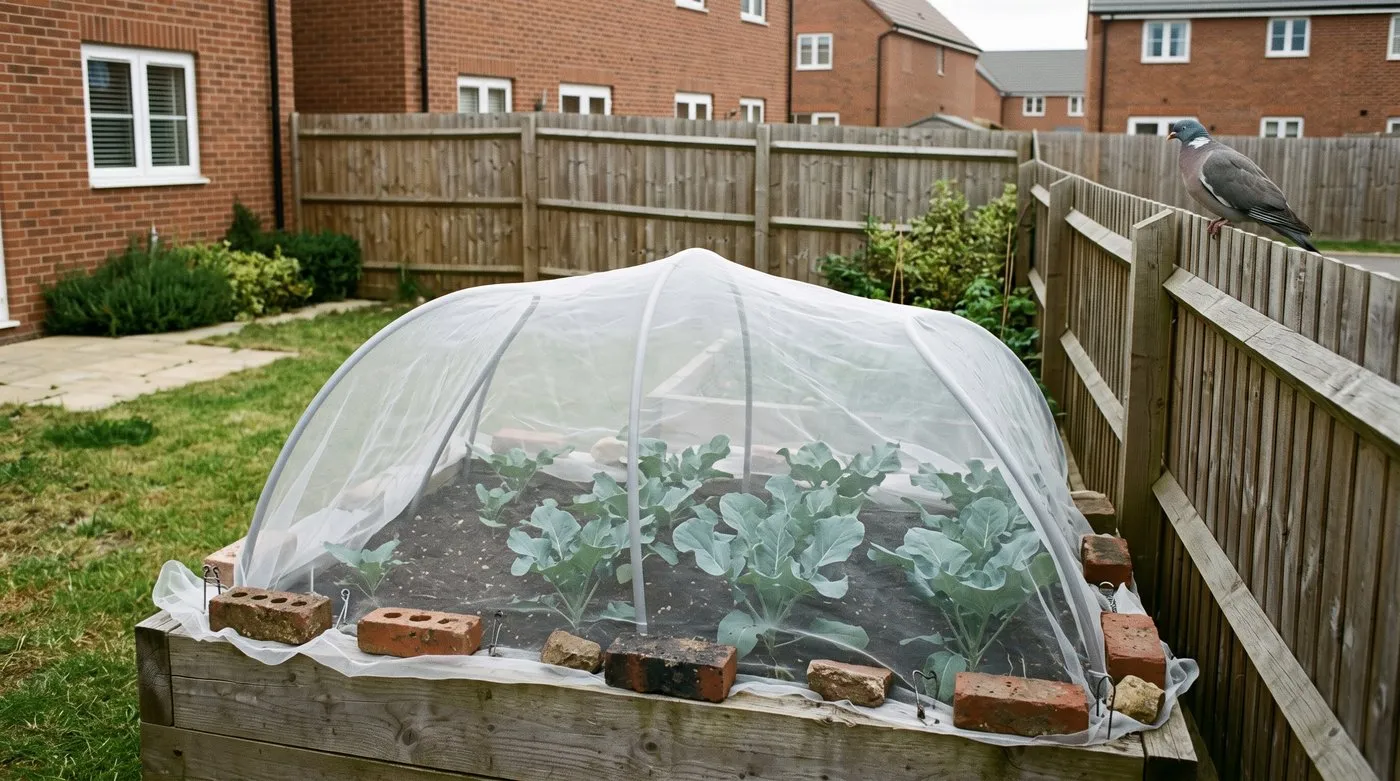
Hoops keep the mesh off the leaves so butterflies can’t lay eggs through it. Pin the edges down well, as pigeons will walk in under any gap.
Brassica collars for cabbage root fly
Cabbage root fly lays eggs at the base of the stem. The grubs eat the roots and the plant wilts and collapses, often before you’ve noticed anything.
Fit a brassica collar round each stem at planting. It’s a flat disc, about 15cm across, of felt, carpet underlay or cardboard. Cut a slit to the middle, slip it round the stem and press it flat on the soil. It stops the fly laying eggs next to the stem. Cardboard ones fall apart in the wet, so bought felt ones last better.
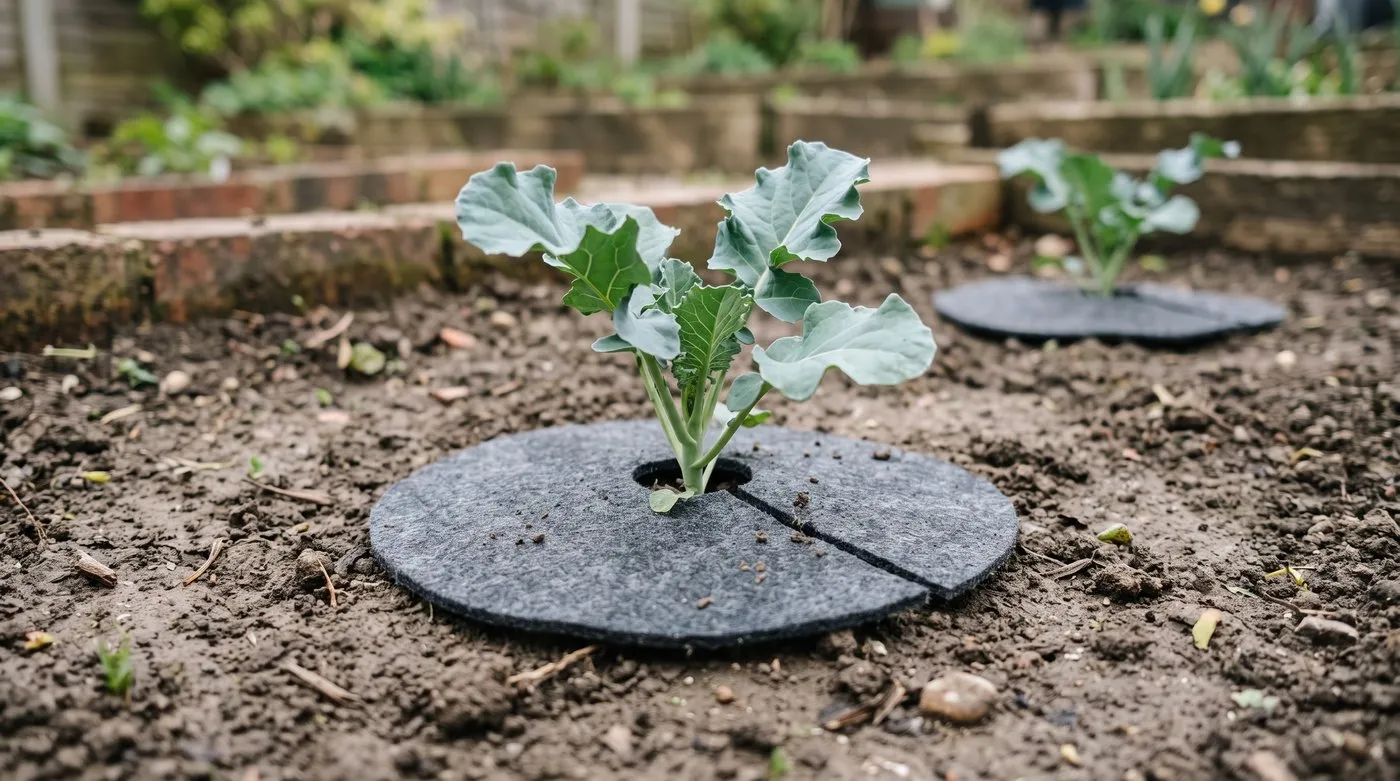
A collar pressed flat round the stem stops cabbage root fly laying eggs right by the roots. Fit it on planting day and leave it in place.
Caterpillar patrol
Even with netting, check under the leaves every week. Squash any clusters of yellow eggs and pick off caterpillars. Green ones are the small white. Yellow and black ones are the large white.
Bt sprays aren’t authorised for home gardeners in the UK. Fine mesh, hand-picking and letting birds and wasps help are what works.
Stopping clubroot
Clubroot is the worst brassica disease, and it stays in the soil for many years. It swells the roots into knobbly clubs, so the plant can’t take up water. Plants wilt on warm days, grow poorly and may die.
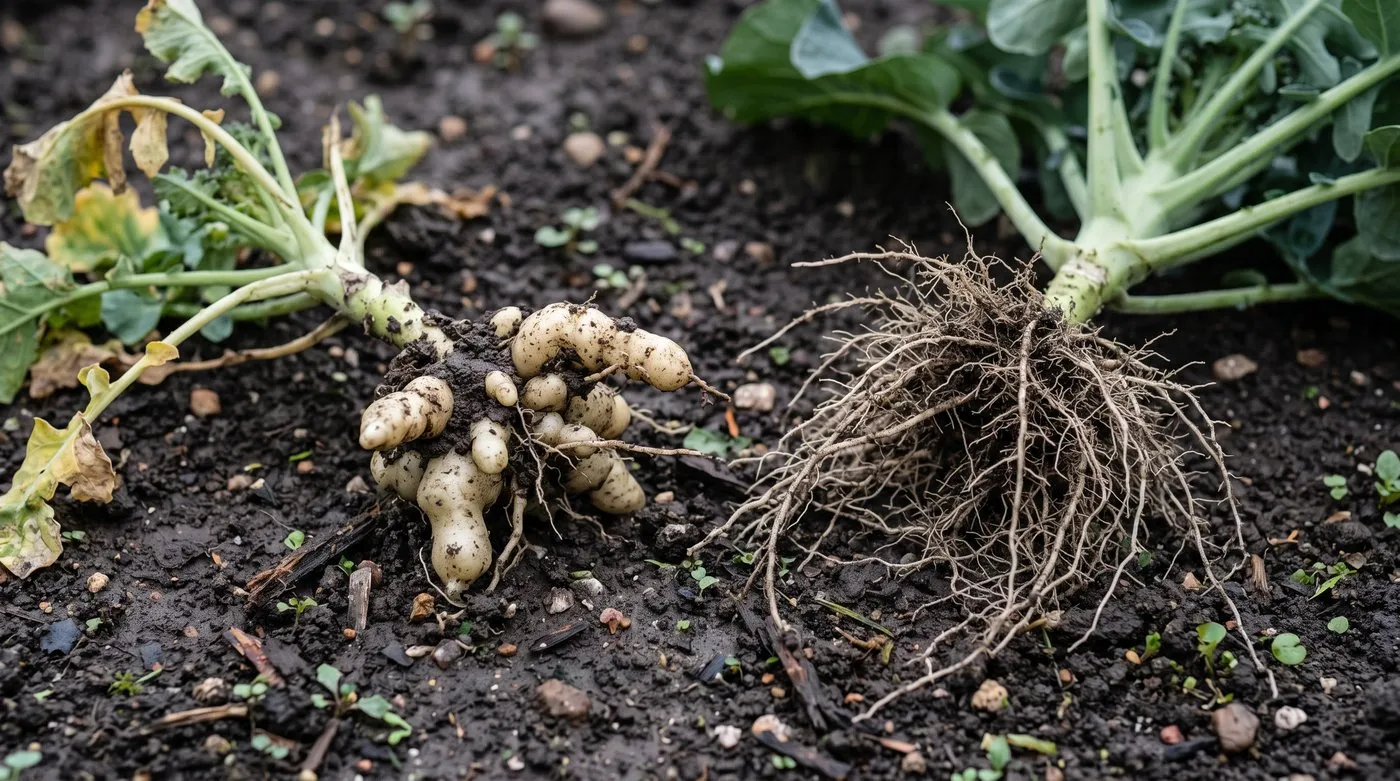
Swollen, knobbly roots mean clubroot, and it stays in the soil for years. Liming, good drainage and raising plants in clean compost are the best defence.
How to avoid clubroot
Prevention is everything. Add garden lime to make your soil slightly alkaline, and improve drainage on wet ground. Raise plants in pots of clean compost so they go out with a good root ball. Rotate brassicas around your beds, and check the roots of any bought plants. If clubroot is already in your soil, look for resistant varieties such as Monclano F1. The RHS clubroot page has more detail.
Month-by-month broccoli growing calendar
| Month | Calabrese | Purple sprouting broccoli |
|---|---|---|
| January | Order seeds | Feed. Re-firm plants loosened by frost. Check stakes |
| February | Prepare beds. Lime if needed | Start picking early varieties in mild areas |
| March | Sow first batch indoors in modules | Keep picking. Sow plants for next year |
| April | Sow second batch. Plant out March sowings under fleece | Keep picking. Sow for next year |
| May | Sow third batch. Plant out April sowings. Net | Last picks of late varieties. Clear finished plants |
| June | Plant out May sowings. Feed. Water in dry spells | Plant out new plants. Fit brassica collars |
| July | Start picking early varieties. Watch for butterflies | Plant out the last batch. Stake on windy sites. Net |
| August | Main picking. Cut heads and side shoots | Keep watered. Remove yellow lower leaves |
| September | Late picking. Clear finished plants | Draw soil up round stems for stability |
| October | Season over. Dig over cleared ground | Autumn feed. Check stakes before winter gales |
| November | Plan next year | Clear fallen leaves. Watch for pigeons |
| December | Read seed catalogues | Brush heavy snow off plants |
How to harvest calabrese and sprouting broccoli
Pick at the right moment and keep picking, and each plant gives much more.
Harvesting calabrese
Cut the main head when it’s tight and firm with the little buds still closed. If you see yellow flowers, you’ve left it too long. Cut the stem 10 to 15cm below the head with a sharp knife. Mornings are best.
Leave the plant in the ground. Side shoots grow from the leaf joints over the next few weeks. They’re smaller but just as tasty. Pick them every three or four days and the plant keeps making more.
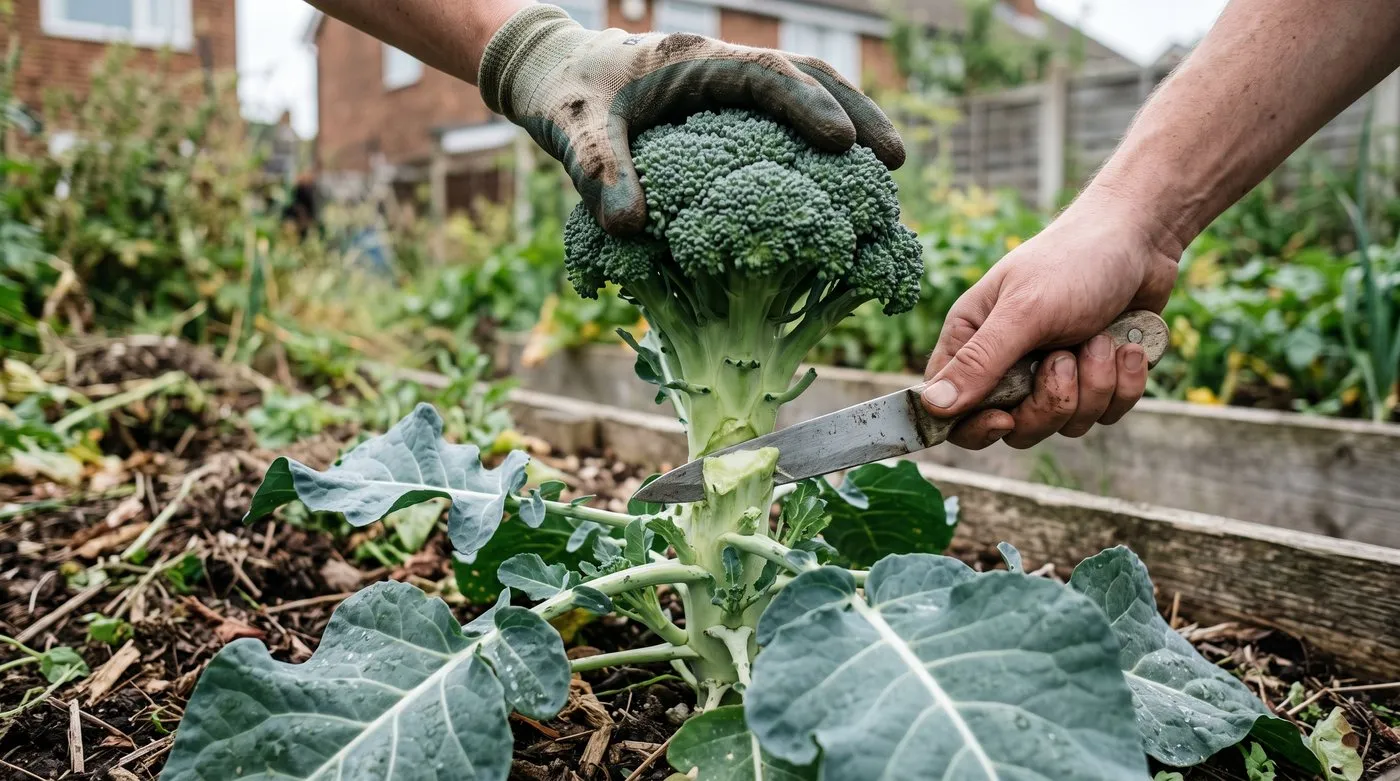
Cut while the buds are tight and leave the plant in. Side shoots will follow from the leaf joints for weeks if you keep picking.
Harvesting purple sprouting broccoli
Cut spears when they’re 10 to 15cm long with tight buds. Start with the central one and work outwards as more appear.
Pick every three or four days. The more you pick, the more you get, often for several weeks.
Don’t strip the leaves. The plant needs them to keep making spears. Just remove yellow or damaged lower ones.
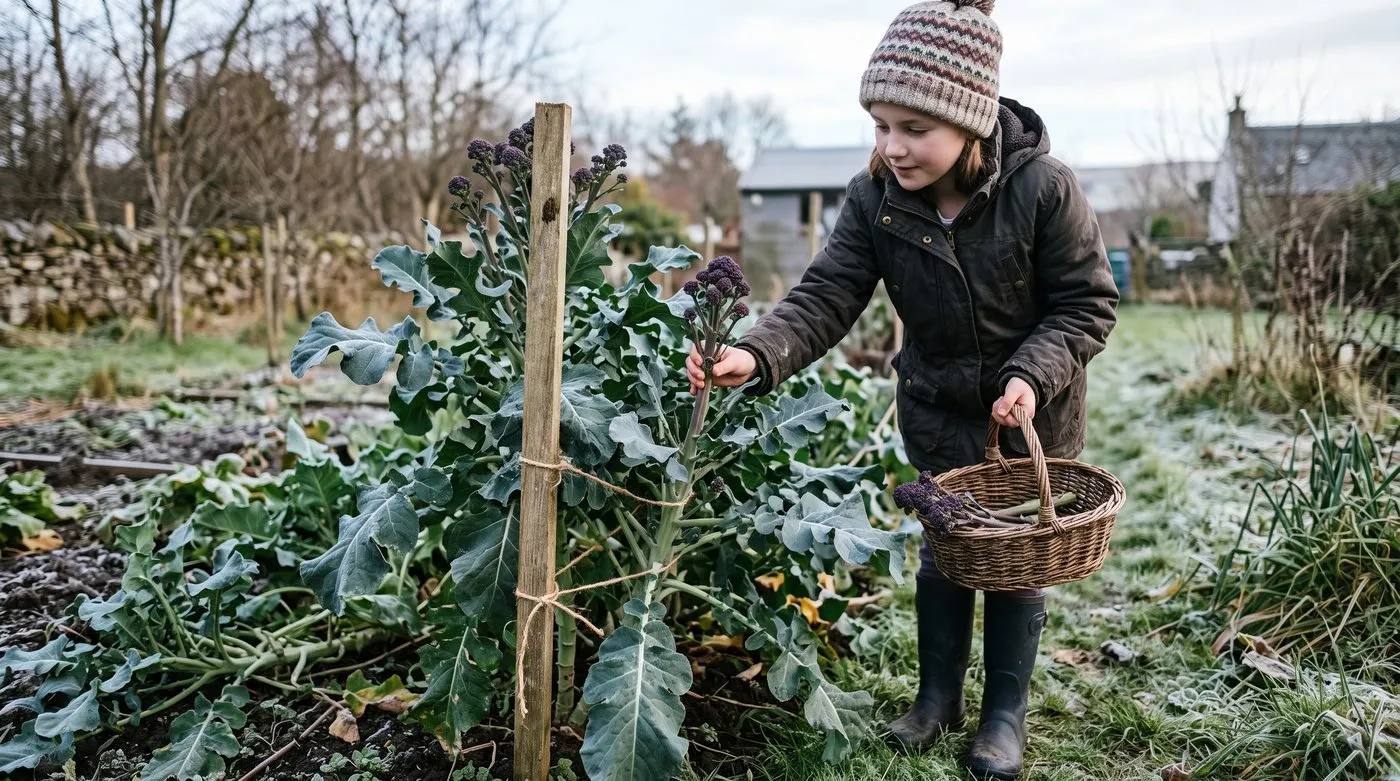
Start with the central spear and work outwards. The more you pick, the more the plant makes, often for weeks on end.
After harvest
Pull up finished calabrese in autumn and compost it if it’s healthy. Purple sprouting finishes in April or May. Chop the thick stems before composting, as they’re slow to rot.
Don’t leave brassica roots in the ground longer than you need to, as they can harbour pests and diseases.
Five common mistakes when growing broccoli
1. Planting too loosely
The number one cause of poor broccoli. If you can wiggle the stem, firm it again.
2. Forgetting to net
Unprotected broccoli is a free lunch for pigeons and caterpillars. Net from day one. By the time you spot the damage, it’s often too late.
3. Harvesting too late
Calabrese can go from perfect to flowering in a few days in warm weather. Check daily in summer. A slightly small head is much better than one that’s flowered.
4. Crowding purple sprouting broccoli
These plants get big. Less than 60cm apart means poor airflow, more disease and fewer spears.
5. Ignoring clubroot prevention
It’s much easier to prevent than cure. Lime, clean compost, rotation and checking bought plants all help. Once it’s in your soil, it’s there for years.
Growing broccoli in containers
Calabrese is the better choice for pots. Purple sprouting is possible but tricky.
Use a pot at least 45cm wide and 40cm deep per plant. Fill with John Innes No. 3 mixed with some multipurpose compost. The heavier compost stops the plant blowing over.
Feed weekly with a balanced liquid feed and water every day in summer, as those big leaves lose water fast.
Compact calabrese like Green Magic F1 suits pots best. Purple sprouting gets tall and top-heavy over winter, so stake it firmly and stand it against a sheltered wall.
Companion planting for broccoli
A few neighbours may help a little, but they’re not a replacement for netting.
Good companions to try:
- Onions and garlic are traditionally grown nearby to help mask the brassica smell from pests like cabbage root fly
- French marigolds bring in hoverflies, whose larvae eat aphids
- Dill and chamomile attract tiny wasps that go after caterpillars
- Nasturtiums are often grown as a decoy, as caterpillars and blackfly love them
Worth avoiding:
- Too many brassicas side by side gathers pests and diseases in one place. Spread your brassicas around different beds.
Storing and preserving broccoli
Fresh calabrese keeps a few days in the fridge. Stand the stems in a jar of water with a damp cloth loosely over the heads.
Freezing is the best way to keep it longer. Cut florets to a similar size, blanch for 2 minutes, then plunge into iced water. Drain, pat dry and freeze on a tray before bagging. It keeps for months.
Purple sprouting freezes well the same way. Blanch the spears for 1 to 2 minutes depending on thickness. The colour darkens a little, but it still tastes great.
Keep broccoli away from apples, pears and bananas. They give off a gas that makes broccoli turn yellow quickly.
Now you’ve got broccoli sorted, read our guide on growing cauliflower in the UK for your next brassica challenge.
Frequently asked questions
What is the difference between broccoli and calabrese?
Calabrese makes one big green head in summer. It’s the broccoli you buy in the supermarket. Purple sprouting broccoli gives lots of small spears over several weeks in late winter and spring, and takes most of a year to crop. Both are brassicas but they grow on very different timetables.
When should I sow calabrese in the UK?
Sow calabrese indoors in modules from March to April. Sow 1.5cm deep and plant out four or five weeks later, when seedlings have four to six true leaves. It hates root disturbance, so use modules, not seed trays. Sow a few more every three weeks until June for a steady supply.
When should I sow purple sprouting broccoli?
Sow purple sprouting broccoli in April or May. Start it in modules and plant out in June or July. It grows slowly through summer and autumn, then crops from February to April the next year. It takes up the ground for most of a year.
Why are my broccoli heads small and loose?
Usually because the plants weren’t planted firmly enough. Wobbly plants struggle to root well and make small, loose heads. Firm the soil round the stem at planting and check again after wind or rain. Hungry, crowded or thirsty plants also make smaller heads.
How do I protect broccoli from cabbage white butterflies?
Cover plants with fine mesh as soon as you plant them. Mesh of 7mm or smaller keeps out both large and small whites. Check under the leaves each week and rub off any yellow egg clusters. Keep the netting on until you pick.
How do I prevent clubroot in broccoli?
Prevention is key, as there’s no cure. Add garden lime in autumn to make the soil slightly alkaline, and improve drainage. Raise plants in pots of clean compost so they go out with a good root ball. Rotate brassicas around your beds, and check bought plants’ roots before planting.
How do I harvest calabrese to get side shoots?
Cut the main head while it’s tight and firm. Use a sharp knife and leave the plant in the ground. Side shoots grow from the leaf joints over the next few weeks. Pick them every three or four days and the plant keeps making more.
Our team produces practical UK gardening guidance from source research, contributor records and established horticultural practice. Editorial standards are overseen by Matt W.


