
Key takeaways
- Most chicory and radicchio stand happily through a UK winter outdoors
- Sow from mid-June to mid-July, as spring sowings tend to bolt
- Lift Witloof roots in November and force them in the dark for chicons in three to four weeks
- Radicchio turns red once the autumn nights get cold
- Sugarloaf chicory makes big, mild heads that keep for a few weeks after cutting
- They all like sun and well-drained soil
Chicory and radicchio are some of the most underrated crops in UK veg patches. These tough plants fill the gap from October to March, long after lettuce and other salads have finished. Their bitter leaves get even better after frost. And Witloof types give you crisp forced chicons through the darkest weeks of winter.
The chicory family is bigger than most people think. There are round red radicchio balls, long pointed Treviso, big green sugarloaf heads, pale forced chicons (sold as Belgian endive) and the crunchy shoots of puntarelle. They all grow well in Britain, and the RHS chicory guide calls them a straightforward crop.
This guide covers the types worth growing, when to sow, how to force chicons and how to harvest right through winter.
What types of chicory and radicchio can you grow in the UK?
There are five main types, each with its own use and season. Grow two or three and you’ll have bitter leaves for salads and cooking from autumn to spring.
Witloof (Belgian chicory) for forcing
Witloof is grown for its roots, which you force in the dark to make pale, torpedo-shaped chicons. The plants spend summer growing a deep root in the ground. In November you dig up the roots, trim the leaves and force them in pots somewhere dark and cool. Chicons appear in three to four weeks. The flavour is mild and nutty with a gentle bitterness. Brussels Witloof and Zoom F1 are reliable varieties.
Radicchio di Chioggia
Chioggia is the classic round radicchio, with deep red leaves and white veins in a tight, grapefruit-sized ball. Sow in June or July and the heads are ready by October. The red gets deeper after the first frosts. Cut heads keep for a couple of weeks in a cool shed. Palla Rossa and Rossa di Chioggia are reliable choices.
Radicchio di Treviso
Treviso has long, pointed leaves like a cos lettuce, in deep burgundy with white ribs. There are early (precoce) and late (tardivo) types. Early Treviso is ready in autumn and is a little tougher than Chioggia. Late Treviso is the prized one in Italian cooking, but it needs a longer season and is trickier in northern gardens.
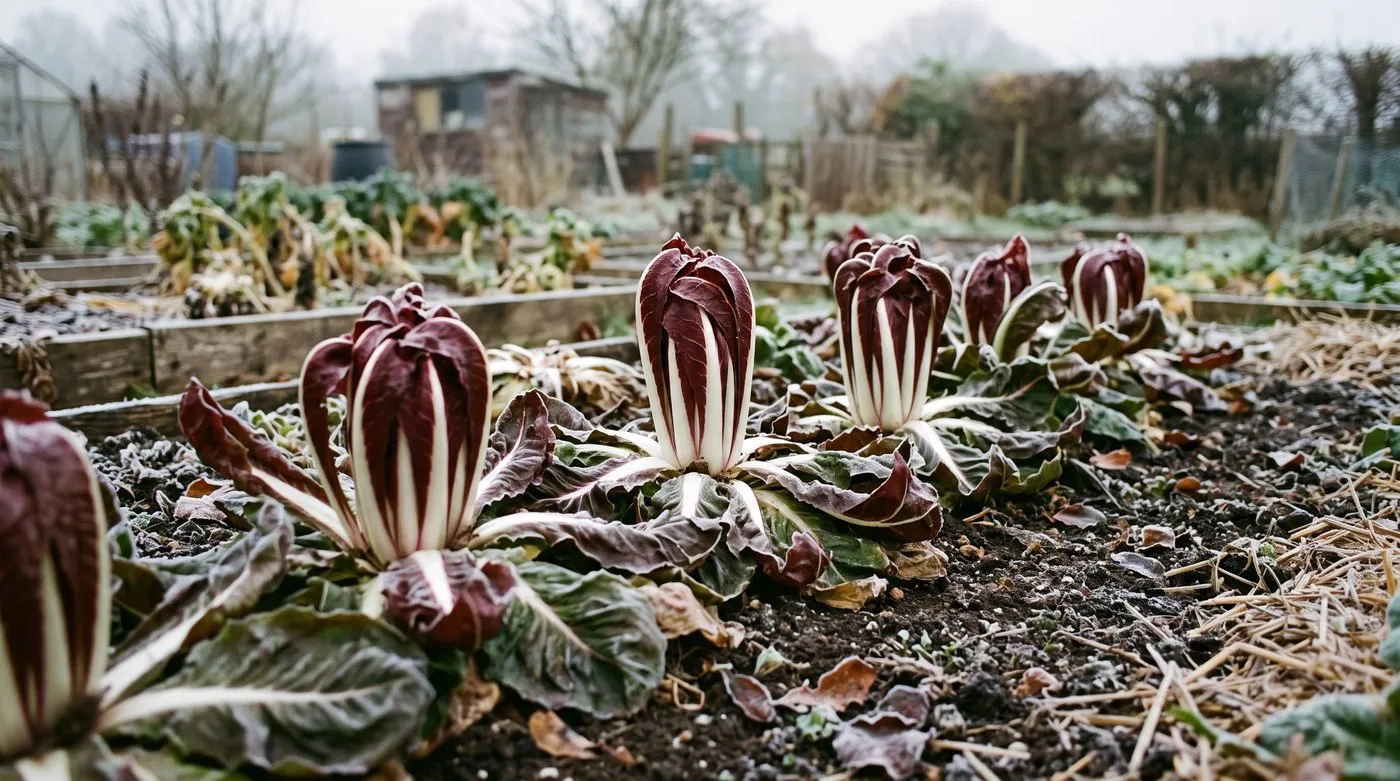
Treviso grows long and pointed rather than round. Early types are ready in autumn, while late Treviso needs a longer season and a milder spot.
Sugarloaf chicory (pan di zucchero)
Sugarloaf makes big, upright, pale green heads that look a bit like cos lettuce. The outer leaves are mildly bitter, while the pale heart is crisp and sweet. It’s the mildest chicory and a great starter if you’re new to bitter leaves. Sow in June or July and the heads are ready in about three months. It keeps well after cutting.
Catalogna and puntarelle
Puntarelle is a type of Catalogna chicory that sends up hollow, asparagus-like shoots from the middle in late winter. The shoots are a Roman favourite, eaten raw with an anchovy, garlic and lemon dressing. Catalogna also gives masses of dandelion-like leaves for cooking. They’re a little less hardy than other chicories, so give them a cloche in colder areas. Sow in June.
Chicory and radicchio types compared
| Type | Sow | Harvest | Hardiness | Best for |
|---|---|---|---|---|
| Witloof (Belgian) | May to June | Nov to Mar (forced) | Very hardy | Forcing indoors in winter |
| Radicchio di Chioggia | June to July | Oct to Dec | Very hardy | Red salad balls, grilling |
| Radicchio di Treviso (early) | June to July | Oct to Jan | Hardy | Salads, risotto |
| Radicchio di Treviso (late) | May to June | Dec to Feb | Fairly hardy | Special cooking |
| Sugarloaf | June to July | Sept to Nov | Hardy | Mild salads, storing |
| Puntarelle and Catalogna | June | Feb to Apr (shoots) | Needs cover in hard frost | Raw shoots, cooked greens |
| Grumolo | July | Mar to Apr | Very hardy | Spring salad rosettes |
Good to know: Grumolo is a little-known chicory that sits through winter as a flat rosette, then gives a flush of small, tender leaves in early spring. It’s very tough and fills the March and April gap before spring lettuce.
When and how to sow chicory and radicchio
Sow from mid-June to mid-July for autumn and winter harvests. This is the golden rule. Spring sowings tend to bolt as the days get longer and rarely make heads. Sowing in early summer gives plants time to grow before winter, while the shortening days stop them bolting.
Sowing in modules
Fill modules with seed compost and sow one seed per cell, 1cm deep. Keep them somewhere warm and seedlings appear in a week or so. Chicory doesn’t like its roots disturbed, so modules beat open trays. Plant out when seedlings have four or five true leaves, 30cm apart with 35cm between rows.
Sowing straight into the ground
In warm, settled weather you can sow direct. Make drills 1cm deep, water them and sow thinly. Thin to 30cm apart once seedlings have four true leaves. Direct-sown plants grow a stronger root, which is handy for Witloof you plan to force.
Soil and position
Chicory likes full sun and well-drained soil. It grows in part shade too, but the heads are smaller. Avoid freshly manured ground for Witloof, as it makes the roots fork. Dig in garden compost the autumn before instead. On heavy clay, add grit to help drainage. Chicory copes with poorer soil than most salads and rarely needs feeding.
To fit your chicory around other sowings, see our seed sowing calendar.

Sugarloaf chicory in a raised bed, standing firm through the first autumn frosts.
How to force chicory for winter chicons
Forcing Witloof is one of the most satisfying winter jobs. You get fresh, crisp chicons from November to March with no light, no heat and no outdoor space needed.

Chicons growing in the dark. Cut them when they’re 10-15cm tall and still pale and creamy.
Forcing step by step
-
Grow the roots: sow Witloof in May or June and let the plants grow all summer without picking any leaves. You want a fat root at least 3cm across at the top.
-
Lift the roots: in November, after the first frosts, dig them up carefully with a fork and shake off the soil.
-
Trim: cut the leaves back to 2cm above the crown. Trim the bottom of each root so it’s about 20cm long. Skip any roots thinner than 2cm.
-
Pot them up: stand three to five roots upright in a deep pot, at least 25cm. Fill around them with moist compost or sand and water lightly.
-
Block out the light: cover with an upturned pot of the same size, with the drainage holes taped over. A black bin bag works too. It must be totally dark, or the chicons turn green and bitter.
-
Keep cool: a shed, garage or cellar is ideal. Somewhere too warm makes them grow faster but looser and less crisp.
-
Harvest: chicons are ready in three to four weeks. Cut each one at the base when it’s 10-15cm tall. Some roots give a smaller second chicon. Compost the old roots.
Force a new batch every three to four weeks from November and you’ll have chicons until March. Keep the waiting roots in a box of damp sand in a cool shed.

Trim the leaves to 2cm and the roots to about 20cm, then stand them upright in moist compost. Cover them so it’s pitch dark, or the chicons turn green and bitter.
Growing radicchio for autumn and winter colour
Radicchio is easy once you get used to the late sowing time. Sow in summer, water through dry spells, then wait for the cold to bring out the colour.
Radicchio step by step
Sow Chioggia or Treviso in late June or early July, and thin or plant out 30cm apart. Water steadily through any dry spells in August, as uneven watering gives loose, floppy heads. By September the plants look big, green and spread out. Then in October the cold nights work their magic. The inner leaves tighten into dense red and white heads.
Don’t panic if your radicchio looks like a big floppy green plant in August. That’s normal. The red colour and tight heads only come once the weather turns properly cold. Patience pays off.
When the heads feel firm when you give them a gentle squeeze, they’re ready. Cut at the base, leaving a 2cm stump. Chioggia often grows a smaller second head from the stump. Treviso is a one-cut crop. Both keep for a couple of weeks somewhere cool.
For more winter picking ideas, see our guide to winter salads.
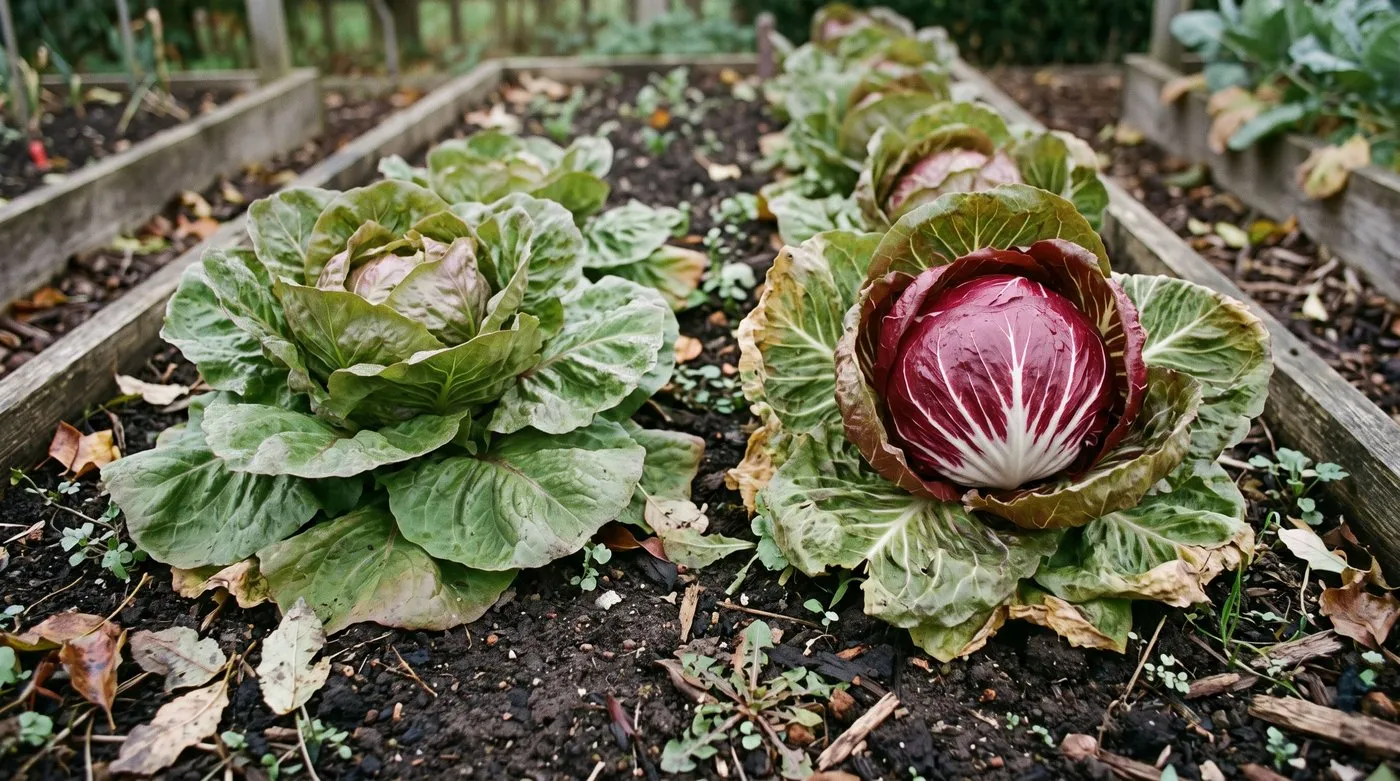
Radicchio often looks like a big green floppy plant through summer. The tight red heads only form once the nights turn properly cold.
Harvesting and storing chicory and radicchio
Each type is picked and stored a bit differently.
Harvest guide by type
-
Witloof chicons: cut at the base when 10-15cm tall. Eat fresh, or wrap in damp kitchen paper and keep in the fridge for up to 10 days.
-
Radicchio di Chioggia: cut the whole head when firm. The outer leaves protect the heart. Keeps a couple of weeks in a cold shed.
-
Radicchio di Treviso: cut the whole head. Keeps for a couple of weeks somewhere cool.
-
Sugarloaf: cut the whole head at the base. It keeps a few weeks in a cold shed or garage. The outer leaves may brown, but the heart stays crisp and sweet.
-
Puntarelle: cut the hollow shoots from the middle when they’re 15-20cm tall in late winter. The outer leaves can be cooked like spinach. Keep cutting and more shoots follow.
-
Grumolo: pick the small rosettes in March and April as a cut-and-come-again crop. You’ll get two or three pickings per plant.

The chicory family in all its colours: red radicchio di Chioggia, creamy forced chicons and green sugarloaf hearts.
Cooking and eating chicory and radicchio
Bitterness is what chicory is all about, but how strong it is varies a lot. Chicons and sugarloaf hearts are mild enough for raw salads. Chioggia and Treviso are more bitter, but cooking mellows them beautifully.
Best ways to use each type
Raw: chicons are perfect in winter salads with walnuts, blue cheese and pears. Sugarloaf hearts can stand in for cos lettuce. Puntarelle shoots are classic with anchovy, garlic, oil and lemon.
Grilled or roasted: quarter a Chioggia head, brush with olive oil and grill for a few minutes each side. The heat softens the bitterness. Halved Treviso roasted in a hot oven and wrapped in pancetta is a real treat.
In risotto: radicchio risotto is a classic from the Veneto. Stir shredded Treviso in for the last few minutes and the rice turns a lovely purple-pink.
Braised: quarter sugarloaf or Chioggia heads and braise gently in stock with a splash of balsamic vinegar. The bitterness turns rich and mellow.
Growing your own means you can try types you’ll hardly ever find in UK shops, like puntarelle, Grumolo and late Treviso. Grow them alongside hardy crops like kale and you’ll have fresh leaves right through to spring.
Common problems and pests
Chicory and radicchio are much less trouble than lettuce. Slugs aren’t as keen on the bitter leaves, and the tough plants shrug off most pests.
Slugs and snails: young seedlings are at risk. Protect new plants with nematodes or beer traps for the first few weeks. Bigger plants are rarely attacked.
Bolting: almost always from sowing too early (before mid-June) or a dry spell. Sow later and water steadily.
Rot: soggy soil can rot the crown. Improve drainage on clay and don’t overwater, especially in autumn when growth slows. Pull off any rotting outer leaves.
Aphids: sometimes hide in radicchio hearts in autumn. Blast them off with a jet of water and let hoverflies and ladybirds help out.
For more help on growing your own vegetables, including succession planting, explore our growing guides.
Month-by-month chicory and radicchio calendar
| Month | What to do |
|---|---|
| January | Force batches of Witloof roots. Cut chicons. |
| February | Keep forcing. Cut puntarelle shoots. Pick Grumolo. |
| March | Last forcing batches. Pick Grumolo. Order seed for summer. |
| April | Prepare beds and dig in compost. |
| May | Sow Witloof for forcing roots. Sow puntarelle. |
| June | Main sowing time for all types from mid-June. |
| July | Finish sowing by mid-July. Plant out module-grown seedlings. |
| August | Water steadily. Thin direct sowings. Plants look big and green. |
| September | Water less. Sugarloaf heads firm up. Radicchio starts to colour. |
| October | Cut sugarloaf. Radicchio colours after the first frosts. Lift Witloof roots. |
| November | Start forcing Witloof. Cut radicchio. Cloche puntarelle. |
| December | Keep forcing. Cut the last radicchio. Mulch around Grumolo. |
Chicory and radicchio fill the winter gap that catches out most veg growers. Once you’ve got the hang of the summer sowing window and forcing, they’ll earn a permanent spot on your plot. They ask for very little, put up with our worst weather and give you leaves you simply can’t buy.
Frequently asked questions
When should I sow chicory and radicchio in the UK?
Sow most types from mid-June to mid-July. This helps stop them bolting and gives you good plants for autumn and winter. Spring sowings often run to seed before making heads. Sow 1cm deep in modules or straight into the ground, and thin or plant out 30cm apart.
Can chicory and radicchio survive a UK winter?
Yes, most get through a normal UK winter outside. Radicchio, sugarloaf and Witloof all stand well through frost. Fleece or cloches help in a hard cold snap and keep the leaves looking good. Puntarelle is a bit less hardy and likes cover in hard frost. Good drainage matters more than the cold.
How do you force chicory to make chicons?
Lift Witloof roots in late autumn and grow them in the dark. Trim the leaves to about 2cm above the crown and stand the roots upright in pots of moist compost. Cover with an upturned pot to block out all light. Keep somewhere cool, like a shed or garage. Pale chicons are usually ready in three to four weeks.
Why has my radicchio not turned red?
It needs cold weather to colour up. Cooler nights and shorter days in autumn trigger the change. Plants sown too late may not be big enough by winter, so they colour poorly. Sow by mid-July so they’re a good size when autumn cools down. Some older varieties stay greener than newer ones.
Is chicory the same as endive?
No, but they’re close cousins. Chicory includes radicchio, Witloof, sugarloaf and puntarelle. Endive includes frisée and escarole. Both have a pleasant bitter taste. Chicory is generally tougher and better for winter growing in the UK.
What soil does chicory need?
Rich, well-drained soil in a sunny spot. It copes with heavier soil better than lettuce but hates being waterlogged. Dig in compost to open up heavy clay. Avoid freshly manured ground, which can make Witloof roots fork.
Can you eat chicory flowers?
Yes, they’re edible with a mild, slightly bitter taste. The bright blue flowers usually appear on plants left in the ground for a second year. Bees and hoverflies love them too. Scatter them fresh over salads. Wild chicory also flowers on UK grassland in mid to late summer.
Our team produces practical UK gardening guidance from source research, contributor records and established horticultural practice. Editorial standards are overseen by Matt W.


