
Key takeaways
- Endive comes in two types, curly frisée and broad-leaved escarole
- Sow from April to August for salads from early summer into winter
- Cover the heart with a pot or plate for about two weeks to make it pale and mild
- Escarole is tougher in cold weather, so grow it for autumn and early winter
- Keep plants watered, as dry soil makes them bitter and quick to flower
- Grow in sun or light shade, in good soil that drains well
Endive is one of the most overlooked salads in UK veg patches. It gives you crisp, slightly bitter leaves from early summer right through to December, filling the gap between summer lettuce and winter chicory. It copes with heat better than lettuce and shrugs off light frosts that finish most salads.
There are two main types: curly frisée with frilly, finely cut leaves, and broad-leaved escarole with wider, smoother heads. Both grow well all over the UK, and the RHS guide to endive is a handy extra read. The trick to enjoying it is blanching. You cover the heart for about two weeks, and the leaves turn pale, tender and mild.
What types of endive can you grow in the UK?
There are two groups, and knowing which is which helps you pick the right one for your plate.

Sowing endive into a shallow drill. Start from April for summer salads.
Curly endive (frisee)
Frisée has frilly, finely cut leaves in a dense rosette. The outer leaves are dark green and quite bitter. Once blanched, the heart turns pale yellow-white with a milder, nutty taste. It’s the one you see in French bistro salads.
Good varieties include Tres Fine Maraichere (very fine leaves, quick to grow), Pancalieri (an Italian heirloom that’s slow to flower) and Fine de Louviers (big heads, great for blanching). Frisée is a little less hardy than escarole.
Broad-leaved endive (escarole)
Escarole has wider, flatter leaves in a loose, lettuce-like head. It’s the tougher of the two in cold weather. It’s milder even before blanching, so it’s a good one to try if you’re new to bitter salads.
Good varieties include Batavian Full Heart (a classic with big, dense heads), Cornet de Bordeaux (upright and partly blanches itself) and Nuance (good for late autumn). Escarole takes a little longer to grow but makes bigger heads.
Endive variety comparison
Here’s a quick way to choose, depending on when you want to pick and how much bitterness you like.
| Variety | Type | Sow | Copes with cold? | Best for |
|---|---|---|---|---|
| Tres Fine Maraichere | Frisée | April to July | A little | Quick crops, fine leaves |
| Pancalieri | Frisée | May to July | A little | Summer, slow to flower |
| Fine de Louviers | Frisée | April to June | A little | Big blanched hearts |
| Batavian Full Heart | Escarole | April to August | Yes | Beginners, big heads |
| Cornet de Bordeaux | Escarole | May to August | Yes | Easy, partly self-blanching |
| Nuance | Escarole | June to August | Yes | Late autumn |
When and how to sow endive seeds
Endive comes up quickly in mild, warm soil, usually within a week or two. Cover the seed only lightly. It’s happy in summer warmth too, so it’s great for succession planting through the season.
Sowing indoors
For the earliest crops, sow indoors from late March. Sow two or three seeds per module in peat-free seed compost and keep them on a bright windowsill. Thin to the strongest seedling. Harden off the seedlings for a week or so, then plant out from late April.
Module-grown plants get going faster and are less likely to be eaten by slugs, which is handy on heavy clay.
Sowing outdoors
From April to August, sow straight into the ground. Make a drill about 1cm deep and water it first. Sow thinly, then thin seedlings to 30cm apart once they’re big enough to handle. Keep rows 35cm apart.
Our UK vegetable planting calendar shows what else to sow each month.
Sowing schedule
| Sow | Pick | Notes |
|---|---|---|
| Late March (indoors) | June to July | Plant out in late April |
| April to May (outdoors) | July to September | Main summer crop |
| June to July (outdoors) | September to November | Best for blanching |
| August (outdoors) | November to December | Cover with fleece from October |
June and July sowings often do best. They’re less likely to run to flower, and cooler autumn weather gives the tastiest leaves. Late-sown chicory and radicchio work the same way.
How to blanch endive for milder flavour
Blanching turns a sharp, bitter leaf into something most people love. Keep light off the heart for about two weeks and the middle leaves turn creamy white, tender and nutty.

An upturned terracotta pot keeps the light off. Leave it for about two weeks.
Step-by-step blanching
- Wait until the plant is fully grown with a good, full heart.
- Pick a dry day. Wet leaves under a cover can rot.
- Gather the outer leaves up and tie them loosely with twine.
- Pop an upturned plate, terracotta pot or bucket over the plant.
- Weigh it down if it’s windy.
- Leave for about two weeks. Have a peek after ten days.
- When the heart is creamy white to pale yellow, cut it straight away.
Handy blanching tips
Only blanch two or three plants at a time, as blanched endive doesn’t keep long. Start the next batch as you pick the first, and you’ll have a steady supply instead of a glut.
Terracotta pots are better than plastic buckets because they let some moisture escape. In a wet autumn, check under the cover every few days and pull off any yellowing outer leaves.
Cornet de Bordeaux partly blanches itself thanks to its upright shape. It’s still nicer with a proper cover, but you’ll get decent leaves without one.
How to care for endive plants
Endive is less fussy than lettuce, but it does like steady moisture and decent soil.
Soil and position
Grow it in good soil that drains well. Full sun suits spring and autumn crops. For summer crops, a spot with some afternoon shade stops it getting stressed. On heavy clay, a raised bed helps with drainage.
Dig in some garden compost a few weeks before sowing. Avoid freshly manured ground, as it makes soft, leafy growth that slugs love.
Watering and feeding
Water every couple of days in dry weather. Dry soil makes endive more bitter and quicker to flower. Water the soil in the morning, not the leaves, as wet leaves invite powdery mildew.
Feed plants in pots every couple of weeks with a liquid feed. In good soil, plants in the ground rarely need extra food.
Dealing with bolting
“Bolting” means running to flower. Heat, dry soil and sudden changes in weather all trigger it. Endive is slower to bolt than lettuce, though not as tough as spinach. To keep it leafy:
- Grow slow-to-flower varieties such as Pancalieri or Batavian Full Heart in summer
- Keep it watered, as even one dry spell can set it off
- Give June and July sowings some afternoon shade
- Plant module seedlings out before their roots start circling
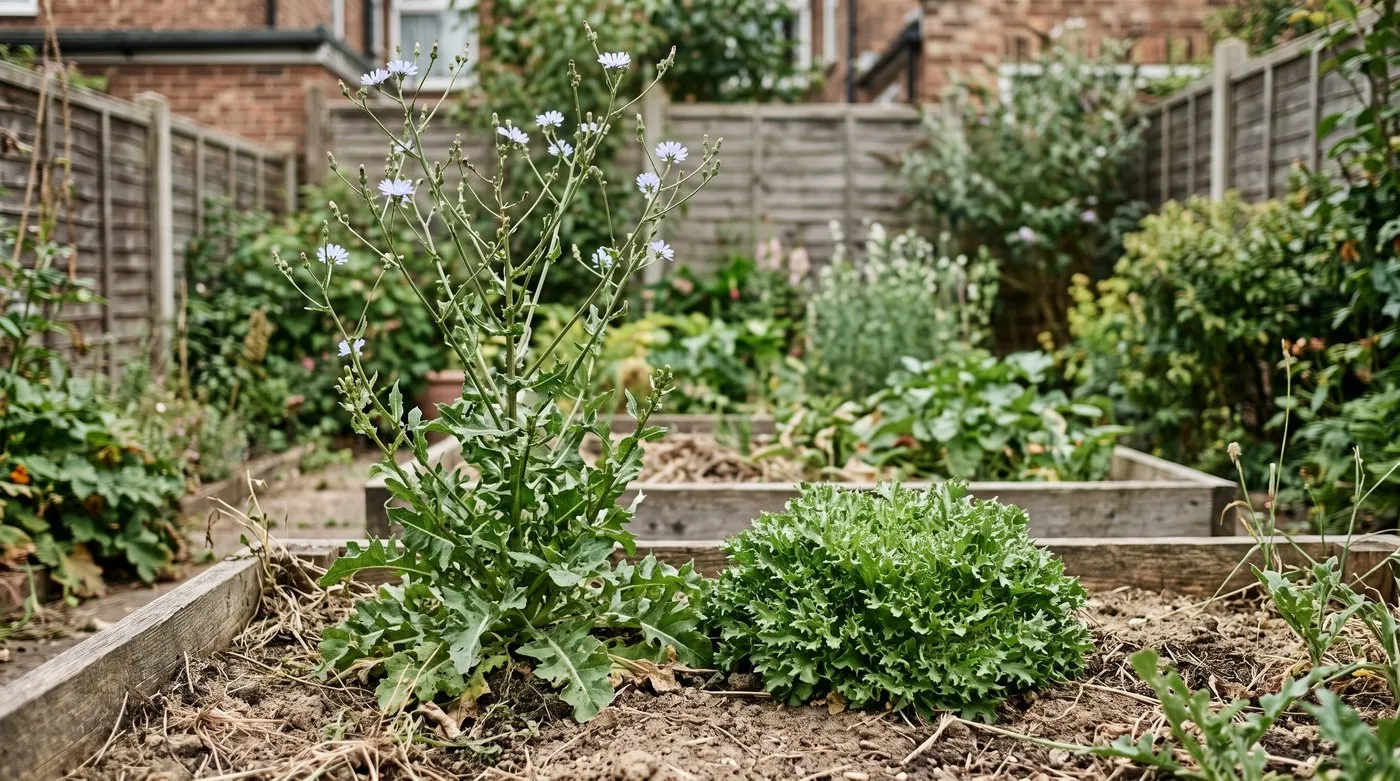
A tall stem shooting up from the middle means the plant has bolted and the leaves will turn bitter. Steady watering keeps the rest leafy for longer.
Pests and diseases
Endive gets many of the same pests as lettuce.
Slugs
Slugs are the main nuisance, especially on young plants. Nematodes watered on in spring help, and so does a torchlit slug hunt on damp evenings. Plants in containers are a bit easier to protect. Our guide on how to get rid of slugs has more ideas.
Aphids
Greenfly and blackfly sometimes gather under the leaves in warm, dry weather. Squash small groups by hand. Flowers nearby bring in hoverflies and ladybirds to help.
Powdery mildew
White, powdery patches appear in dry weather when air can’t move. Space plants 30cm apart, pick off affected outer leaves and water the soil rather than the leaves. Frisée is more prone than escarole.
Bottom rot
Leaves can rot under a blanching cover when the soil is soggy. Blanch only in dry weather, use terracotta rather than plastic and pull off any tatty leaves first.
Growing endive through autumn and winter
Endive really shines from September, when lettuce has flowered or been hit by frost. Plants sown from June to August keep cropping well into early winter.

Curly frisée (left) and escarole (right). The pale blanched hearts are the best bit.
Extending the season with fleece
Cover plants with fleece or cloches from mid-October. Escarole under fleece usually keeps going into December in most of the UK.

Fleece over hoops from mid-October keeps escarole going well into December. Check underneath now and then for slugs.
Cold frame growing
A cold frame is a great home for autumn endive. It keeps off frost and rain, and you can shade the glass to blanch the plants. Plant a few into a cold frame in July or August for the latest pickings.
Winter varieties
For late crops, choose escarole such as Nuance or Batavian Full Heart. Pick frisée before the hard frosts arrive in late autumn.
For more salads to pick through winter, such as lamb’s lettuce, mizuna and winter purslane, see our winter salad harvesting guide.
Harvesting endive
When to harvest
- Outer leaves: pick a few at a time once plants are a good size, for cooking or mixed salads
- Blanched hearts: cut the whole plant once the heart is pale, about two weeks after covering
- Baby leaves: cut when 5-8cm tall for a cut-and-come-again crop
How to harvest
Cut whole plants at the base with a sharp knife, ideally in the morning when the leaves are crisp. Store them unwashed in a bag in the fridge. Blanched hearts don’t keep as well, so eat them within a few days.
For baby leaves, cut about 3cm above the soil and they’ll usually regrow a couple of times. When the leaves get too bitter for salads, cook them like pak choi or Asian greens in stir-fries and soups.
What to do with endive in the kitchen
Blanched hearts are lovely raw with a sharp dressing, walnut oil and crumbled blue cheese. The French classic is frisée with warm bacon bits and a poached egg. Escarole is great in Italian soups or braised with garlic and olive oil. Cook the outer, more bitter leaves rather than eating them raw.
Frequently asked questions
What is the difference between endive and chicory?
They’re close cousins, but different plants. Endive includes curly frisée and broad-leaved escarole. Chicory includes radicchio, witloof and sugarloaf. Both taste a little bitter, but chicory is generally tougher in winter, while endive is usually ready sooner. Our chicory and radicchio growing guide covers the rest of the family.
When should I sow endive seeds in the UK?
Sow from April to August. Spring sowings give summer salads. Sowings from June to August are best for autumn and early winter, and they’re less likely to run to flower. Sow in modules indoors or straight into the soil, about 1cm deep.
How do you blanch endive to reduce bitterness?
Cover the heart so no light gets in. Do it on a dry day. Tie the outer leaves loosely, then pop an upturned plate, pot or bucket over the plant. After about two weeks the middle turns creamy white and much milder. Only blanch two or three plants at a time, as they don’t keep long once done.
Can endive survive frost in the UK?
Light frosts, yes, especially escarole. Curly frisée is a bit more tender, so pick it before hard frosts arrive. Cover plants with fleece or cloches from October and you can keep picking into December.
Is endive easy to grow in the UK?
Yes, and it copes with heat better than lettuce. It’s slower to run to flower in summer and shrugs off light autumn frosts. Blanching sounds fancy but just means covering the plant. Escarole such as Batavian Full Heart is a great one to start with.
Can I grow endive in pots?
Yes, in a pot at least 20cm deep and 25cm wide. Use peat-free compost with a little perlite mixed in, and grow one plant per pot. Water daily in warm weather and feed every couple of weeks. Pots are handy for blanching, as you can move them somewhere dark.
What pests and diseases affect endive?
Slugs are the main pest, especially on young plants. Greenfly sometimes gather under the leaves in summer. Powdery mildew shows up in dry weather when plants are crowded. Leaves can rot under a blanching cover if the soil is soggy. Space plants 30cm apart and water the soil, not the leaves.
Our team produces practical UK gardening guidance from source research, contributor records and established horticultural practice. Editorial standards are overseen by Matt W.


