Key takeaways
- Allow about a week for hardy crops and two to three weeks for tender ones like tomatoes
- Start with 2-3 hours outside in a sheltered spot, then add more time each day
- Bring seedlings in at night until nights stay above 5C
- A cold frame is the easiest way to do it
- Last frosts usually end by late April in the south but can run into May or June further north
- Plant out on a calm, cloudy day and water well
Hardening off is the bridge between sowing indoors and planting out. You simply get seedlings used to the outdoors a little at a time. Skip it, and weeks of care can be undone in one breezy afternoon as plants wilt and scorch.
Weak, stretched plants struggle more, so it helps to know the causes and fixes for leggy seedlings first. And if you’re raising seedlings for the first time, our guide to sowing seeds indoors covers the earlier steps.
What hardening off actually does
Hardening off toughens up a plant’s leaves and stems so they can cope with sun, wind and cooler nights. It does not make tender plants frost-proof. The changes take time, which is why the job takes one to three weeks.
Why indoor seedlings need toughening up
Seedlings raised indoors have had an easy life: steady warmth, still air and soft light. Their leaves are thin and their stems are soft.
Outside, wind dries leaves fast and bright sun can burn them. Given time, plants learn to hold on to water better, grow a tougher, waxier leaf surface and build sturdier stems from being blown about. A hardened plant also copes better with a cool night, though neither a hardened nor a soft tomato will survive a frost.
Gardener’s tip: Well-hardened plants look different. The leaves are darker green with a slight sheen, and the stems are stockier. If yours still look pale and soft after a week, give them another week.
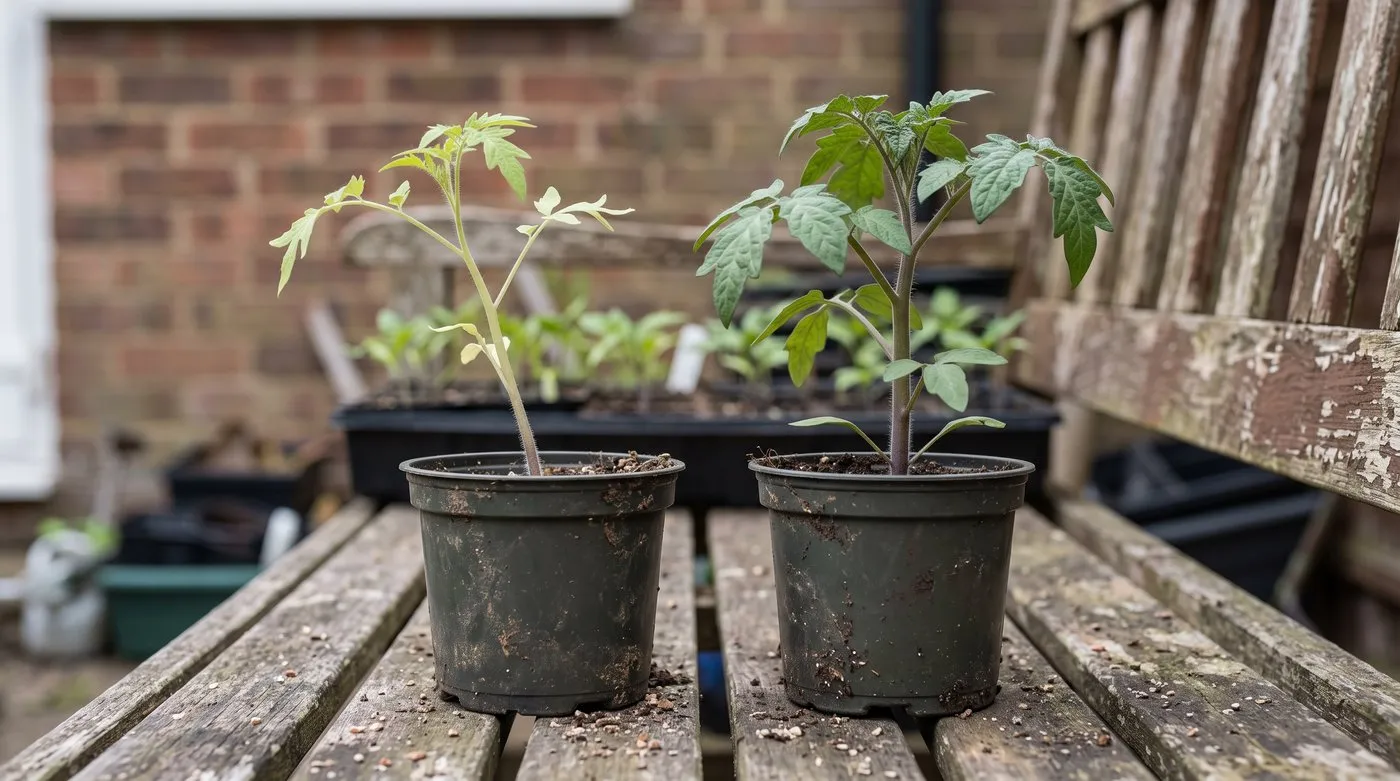
Hardened plants are darker green, stockier and slightly shiny. If yours still look pale and soft after a week, give them longer.
When to start hardening off
Start one to three weeks before your last frost, depending on the crop. The Met Office explains that the last air frost usually comes before the end of April in the south and on coasts. On northern and higher ground it often runs into May, and in a few places into June. Ground frost can strike later still on clear, still nights.
UK last frost dates by region
| Region | Rough last frost | Start hardening off |
|---|---|---|
| South-west England | Mid-April | Early April |
| South-east England and London | Late April | Mid-April |
| Midlands and East Anglia | Early May | Mid to late April |
| Wales | Mid-May | Late April to early May |
| Northern England | Mid to late May | Early May |
| Scottish Lowlands | Late May | Mid-May |
| Scottish Highlands | Early to mid-June | Late May |
These are only rough guides. Valleys and frost pockets run later than towns. Always check your local forecast, as one late frost will kill tomato plants whatever the average says.
How long each crop needs
| Crop | Hardening off | Bring in if nights drop below | Plant out |
|---|---|---|---|
| Tomatoes | 10-14 days | 5C | A week after last frost |
| Peppers and chillies | 10-14 days | 8C | Two weeks after last frost |
| Courgettes and squash | 7-10 days | 5C | A week after last frost |
| Cucumbers | 10-14 days | 10C | Two weeks after last frost |
| Runner beans | 7-10 days | 3C | After last frost |
| Sweetcorn | 7-10 days | 5C | A week after last frost |
| Cabbage and kale | 5-7 days | Copes with light frost | Mid-April onwards |
| Lettuce and salad | 5-7 days | Copes with light frost | Mid-April onwards |
Hardy crops like brassicas, lettuce and peas cope with light frost and need less time. Tender crops like tomatoes, peppers and courgettes are killed by frost, so give them the full two weeks or more.
Day-by-day hardening off schedule
This two-week plan suits tender crops raised on a windowsill, in a settled spring. If the weather turns cold, just stretch each stage out.
Week 1: Short visits outside
Days 1-2: Put seedlings in a sheltered spot out of direct sun and wind for 2-3 hours around midday. If your only shelter is a sunny wall, drape them with fleece. Bring them in by mid-afternoon.
Days 3-4: Go up to 4-5 hours. Let them have a little dappled sun. Keep them out of the wind. Bring them in before evening.
Days 5-6: Try 6-7 hours, including a couple of hours of gentle morning sun. A light breeze is fine now. Bring them in by early evening.
Day 7: Leave them out for most of the day. Bring them in at dusk if the night will drop below 8C.
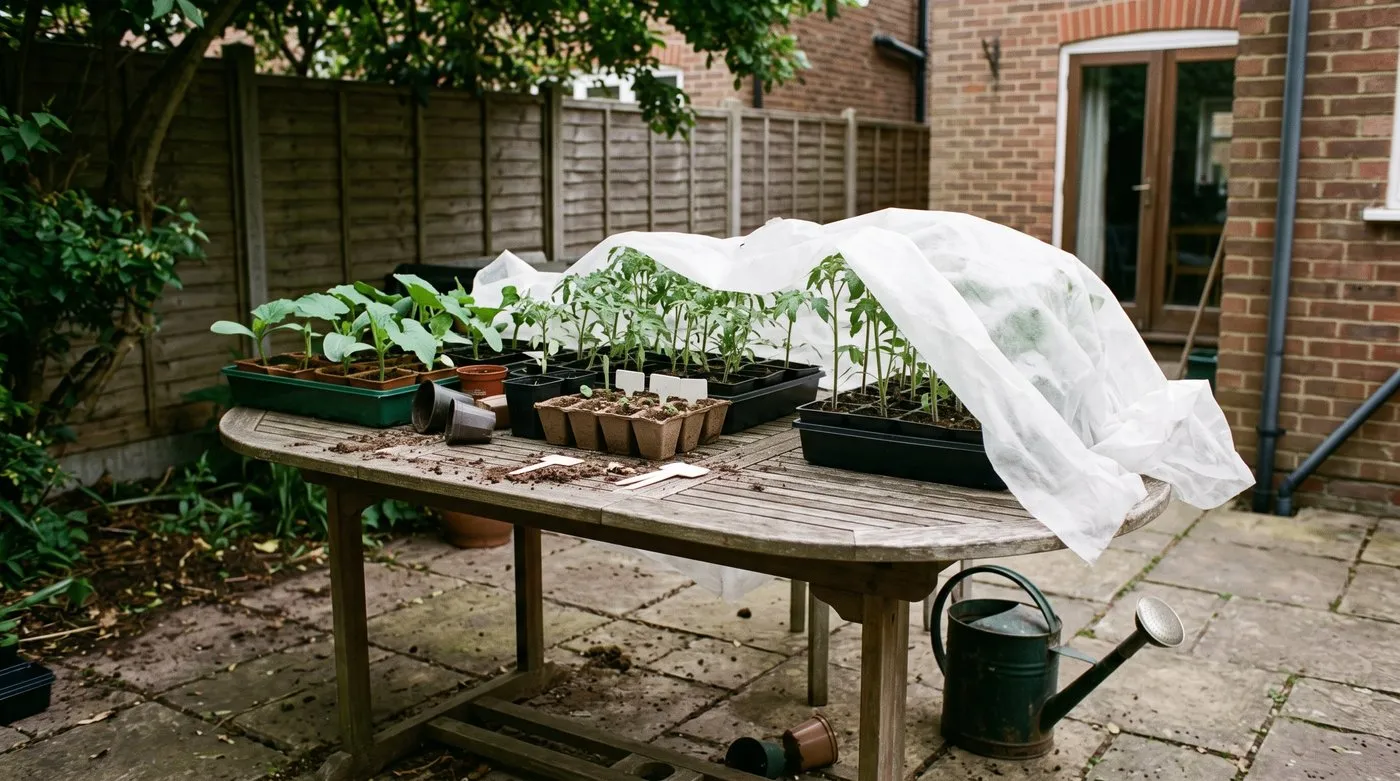
Start with a few hours in a sheltered, shady spot. Fleece over the trays softens the sun if your only shelter is a bright wall.
Week 2: Staying out longer
Days 8-9: Out all day and into the evening. Bring them in only if nights drop below 5C (8C for peppers and cucumbers).
Days 10-11: Leave them out overnight if it stays above 5C. Put them where they’ll be planted, so they get used to it.
Days 12-14: Out day and night. Keep watering. They should now be ready to plant out.

A cold frame makes things easy. Open the lid a crack at first, a bit more each day, and take it off in week two.
Changing the plan for the weather
UK springs rarely behave, so be ready to adapt.
Cold snap: Bring everything back in. Pick up where you left off when it warms up. Don’t try to push through.
Heavy rain: A shower is fine. Long downpours batter seedlings, so pop them in a porch, garage or closed cold frame.
Strong wind: Wind does the most damage. It snaps stems, tears leaves and dries plants out. On windy days, keep them tucked behind a wall or fence.
Hot spell: Watch for scorching and give them some afternoon shade.
Using a cold frame
A cold frame is the easiest way to harden off. You control the air and warmth just by moving the lid, with no carrying trays in and out.
What is a cold frame?
It’s a low box with no bottom and a clear lid of glass or plastic. It sits in a sunny spot. The lid traps the sun’s warmth by day and keeps off wind and light frost. Open it for more air, close it for more shelter.
Cold frame hardening off schedule
| Day | Lid |
|---|---|
| 1-2 | Closed, so plants get used to the light |
| 3-4 | Open a small crack on the sheltered side |
| 5-6 | Open about halfway |
| 7-8 | Fully open by day, closed at night |
| 9-11 | Open day and night if it’s frost-free |
| 12-14 | Lid off completely |
Choosing a cold frame
| Type | Good points | Downsides |
|---|---|---|
| Wooden with glass lid | Keeps warmth in well, looks nice | Heavy, glass can break |
| Aluminium with plastic panels | Light, tough, cheap | Not as warm |
| Home-made from old materials | Very cheap | Quality varies |
| Brick, Victorian-style | Very warm and permanent | Costly to build |
A cold frame is useful all year, for salads and for sheltering tender pots in winter. Our cold frame gardening guide has lots of ideas.
Gardener’s tip: No cold frame? An upturned clear storage box or a big cloche works for a few seedlings. Prop one edge up on a brick for air. It’s not pretty, but it does the job.
Which crops need the most hardening off?
It depends how tender the crop is and how cosy its start in life was.
Plants raised on a warm windowsill or in a propagator
These have had the easiest life and need the longest time. Our seed sowing calendar shows which crops start indoors.
- Tomatoes: At least two weeks. Cold nights turn the leaves purple and slow growth
- Peppers and aubergines: Two weeks. Very fussy about the cold, so wait for nights above 8C
- Cucumbers: Two weeks. One cold night can finish them
- Courgettes and squash: About 10 days. Tough later, but tender as seedlings
- Sweetcorn: About 10 days. Hates root disturbance, so harden off in the modules you sowed them in
- Basil: Two weeks. Blackens at the first hint of frost
Plants raised in an unheated greenhouse
These are already used to cooler days and need about a week.
- Runner beans: A week. Frost kills young plants
- Brassicas: 5-7 days. Naturally tough
- Lettuce and salad: 5-7 days. Cope with light frost once hardened
Crops sown straight outside
These never lived indoors, so they don’t need hardening off.
- Carrots, parsnips and radishes
- Peas and broad beans
- Beetroot, spinach and chard
- Most root vegetables
Do shop-bought plug plants need hardening off?
Usually, yes. Plug plants are often grown in heated glasshouses, so they’re just as soft as windowsill seedlings. Pot up small plugs when they arrive and grow them on under cover for a week or two first. Bedding sold outside at garden centres in late May may be partly hardened, but if it was kept indoors, give it at least a week. Tender bedding like begonias, busy lizzies and petunias needs the same frost-free date as tomatoes.

Bringing seedlings in at dusk in the first week. April nights often drop below 5C, which is too cold for tomatoes and peppers.
Signs of transplant shock
Look for wilting in damp compost, scorched leaves, a purple tinge, growth that stops, and lower leaves dropping. Even well-hardened plants can sulk a little, so here’s what each sign means.
Wilting even though the compost is damp
The roots can’t keep up with the water the leaves are losing to sun and wind. It usually sorts itself out in a day or two. If it carries on for more than three days, give the plant some shade and shelter.
Scorched or bleached leaves
White or brown patches on the top of leaves are sunburn. Those leaves won’t recover, but new, tougher leaves soon grow.
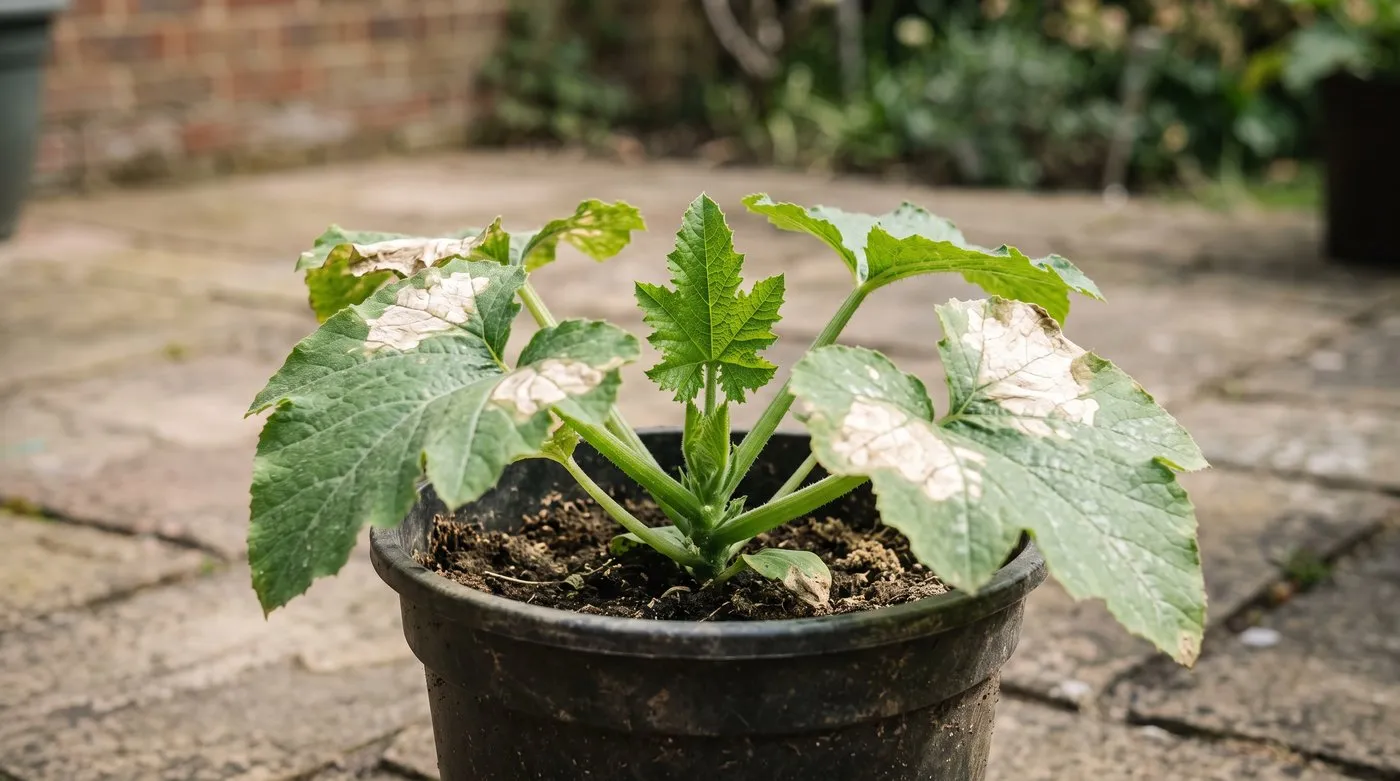
Bleached patches are sunburn. Those leaves won’t recover, but tougher new leaves soon take over.
Purple or bronze leaves
A purple tinge is a sign the plant is cold, and it’s common on tomatoes for the first few days outside. It fades as the weather warms.
Growth stops for a while
Plants often seem to pause for a week after planting out. That’s normal. They’re busy growing roots first.
Lower leaves dropping
A few yellow lower leaves falling off is just stress, and rarely serious. Fresh growth at the top tells you it’s recovering.
Common hardening off mistakes
Most mistakes come from rushing, forgetting about cold nights, too much wind or sun too soon, and letting pots dry out.
Rushing it
The most common slip. By May everyone’s itching to plant. But squeezing two weeks into three days causes shock that loses you the very time you hoped to save.
Forgetting about the nights
May days can be warm, but nights can still drop close to freezing. Check the forecast every evening. If frost or near-frost is due, bring plants in.
Too much wind too soon
Wind does more harm than cold to most seedlings. A gusty April day can snap stems on plants that have never felt a breeze. Keep them sheltered in week one.
Forgetting to water
Pots outside dry out much faster than on a windowsill. Check them morning and evening, especially on warm or windy days. Dry compost can kill seedlings faster than cold.
Full sun from day one
Even weak April sun can scorch leaves that grew behind glass. Start in shade, then dappled light, then morning sun, then full sun.
Planting out after hardening off
Once hardening off is done and your last frost has passed, it’s time to plant.
Pick the right day
Plant on a calm, cloudy day or in the late afternoon. Sun and wind on day one are hard work for new plants. Still, grey weather lets the roots settle in.
Water well
Water plants in their pots a couple of hours before planting. Water the hole before you put the plant in, then water again once it’s firmed in.
A little protection for the first week
Even hardened plants appreciate some help at first.
- Fleece: A layer over plants keeps them a little warmer and guards against light frost
- Cloches: Pop one over tender plants for the first week, and open it on warm days
- Windbreak: Netting on an exposed plot cuts the wind while roots settle
Our guide to growing runner beans has planting-out tips for beans, and the vegetable planting calendar gives dates for every common crop.

Planting out hardened-off courgettes in late May. A calm, cloudy day and plenty of water help them settle.
What should you do if frost is forecast after planting out?
Cover tender plants before dusk and uncover them in the morning. Two layers of fleece, an old sheet or a curtain all help, and cloches or upturned pots work for single plants. Weigh the edges down so the wind can’t lift them. Damp soil holds more warmth than dry, so water dry ground during the day. If leaves are blackened next morning, cut off the damaged bits. The plant often regrows from lower down.
Hardening off calendar for UK gardeners
| Month | What to do |
|---|---|
| March | Harden off early brassicas and lettuce in a cold frame or cold greenhouse |
| April | Start hardening off windowsill tomatoes and peppers |
| Early May | South and Midlands: harden off courgettes, squash, runner beans and sweetcorn |
| Mid-May | Southern England: plant out tender crops once frosts are over |
| Late May | Midlands: plant out tender crops. North: start hardening off |
| Early June | Northern England and Scotland: plant out tender crops |
| Mid-June | Scottish Highlands: plant out tender crops |
Making it easier next year
A permanent sheltered spot and a few notes make next spring a breeze.
Set up a hardening off spot
Pick a spot against a sunny wall or fence. Put a small table or bench there so trays are easy to move. A sheet of clear plastic overhead keeps the rain off, and a low windbreak on the open side helps too. Then it’s just trays out in the morning and in at night.
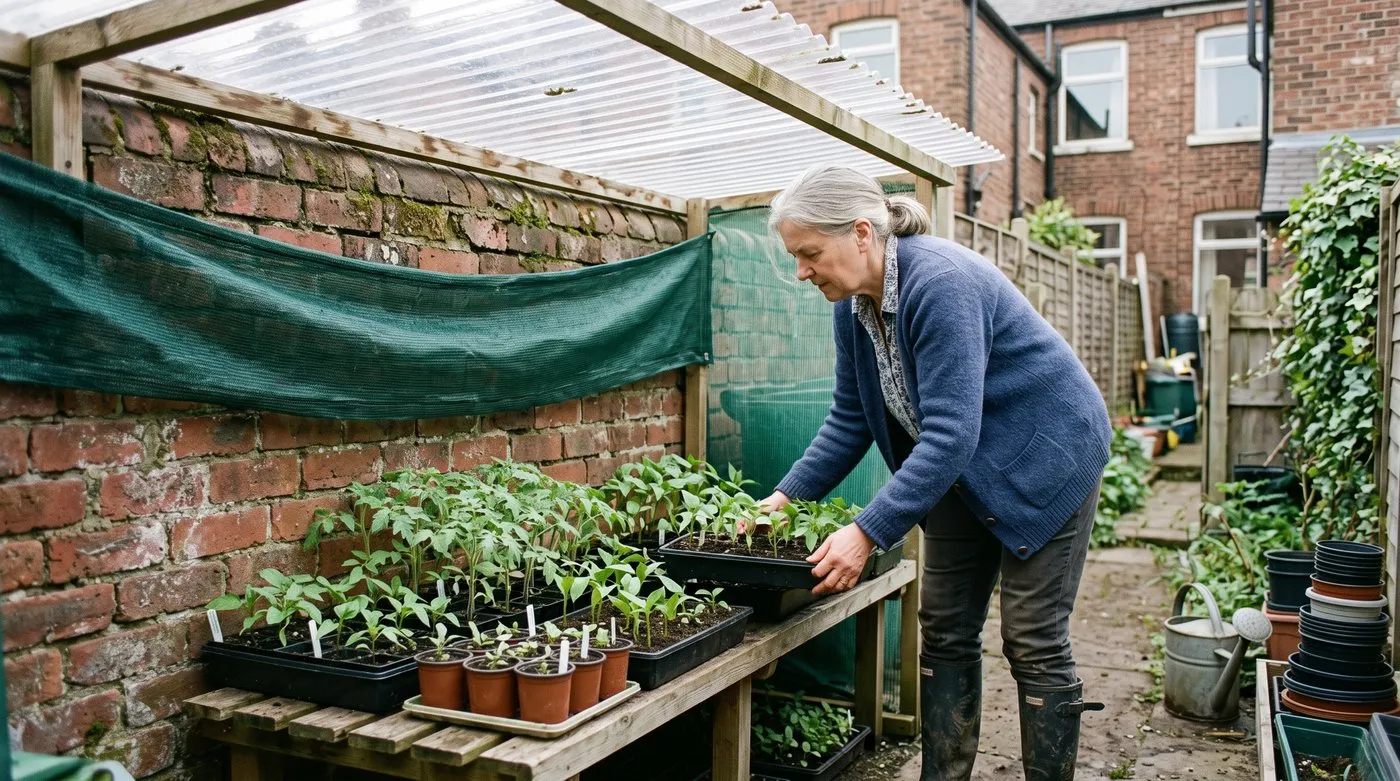
A permanent bench by a sunny wall makes hardening off easy. Add a clear roof and a windbreak and it’s just trays out and in.
Keep notes
Jot down when you started each crop, when you planted out, and any late frosts. After a season or two, you’ll know your own garden’s safe dates better than any average. Note which crops sulked, so you can give them longer next time.
Now you’ve mastered hardening off, read our guide on growing tomatoes in the UK for the next step once your plants are in the ground.
Frequently asked questions
How long does hardening off take?
About a week for hardy crops such as brassicas and lettuce. Tender plants raised in warmth, such as tomatoes and peppers, need at least two weeks, and the RHS suggests two to three. Rushing it can set plants back by weeks.
What temperature can I put seedlings outside UK?
Start once daytime temperatures are above about 10C. Don’t leave them out overnight until nights reliably stay above 5C. Tender crops like tomatoes, peppers and courgettes can be harmed below 5C, even without a frost.
Do I need a cold frame to harden off seedlings?
No, but it makes the job much easier. You just open and close the lid to give more or less air. Without one, use a sheltered patio, porch or the side of a wall out of the wind. Bring plants in each evening for the first week.
What is transplant shock in seedlings?
It’s the setback plants get when moved outside too suddenly. Look for wilting in damp compost, scorched leaves, a purple tinge and growth that stops. Bad cases can kill seedlings. Hardening off slowly prevents it.
When should I plant out seedlings in the UK?
After your last frost, once hardening off is done. As a rough guide, that’s mid to late May in southern England, late May in the Midlands and Wales, and early to mid-June in northern England and Scotland. Keep an eye on the forecast and wait if frost is due.
Can I harden off seedlings in a greenhouse?
Yes, an unheated greenhouse makes a good halfway house. It shelters plants from wind and the worst cold but lets them get used to cooler temperatures. Use it for the first stage, then move plants fully outside for the last 5-7 days.
What happens if I do not harden off seedlings?
They often wilt, scorch and stop growing. Going straight from a warm windowsill to sun, wind and cold nights is a big shock. Some seedlings die, and the rest can take weeks to recover, losing the head start you gave them.
Our team produces practical UK gardening guidance from source research, contributor records and established horticultural practice. Editorial standards are overseen by Matt W.