Key takeaways
- Leggy seedlings are stretching for light, usually because it is too warm and too dim
- Take seedlings off the propagator heat as soon as most have come up
- Grow on somewhere cooler and bright, and turn windowsill trays every day
- Sowing a few weeks later, or adding a grow light, stops most stretching
- Leggy tomatoes can be repotted deeper, as they root along the buried stem
- Legginess is not damping off, which rots the stem at compost level
Leggy seedlings are the commonest spring setback for anyone sowing indoors. Those pale, tall, floppy stems mean the seedlings have too little light for the warmth they are in. It isn’t your compost or your feeding. The good news is that it is easy to fix, and most leggy seedlings can be saved.
What leggy seedlings look like
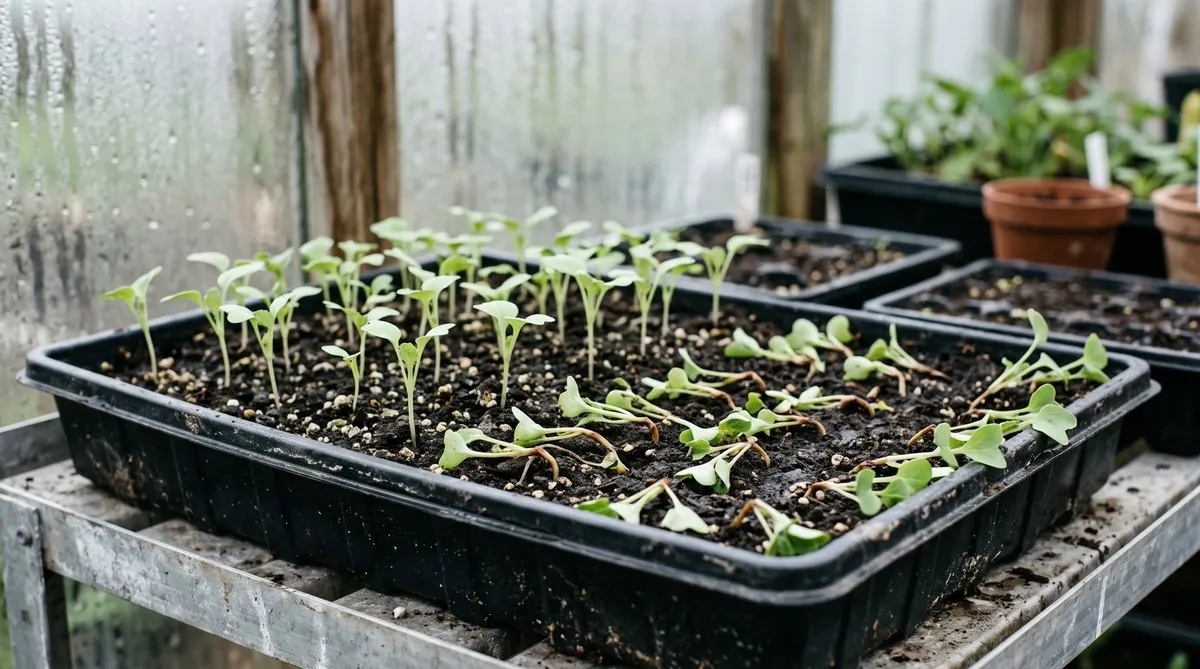
Leggy seedlings have long, thin, pale stems with a big gap between the compost and the first leaves. They often lean or flop over. Gardeners call this stretching etiolation. It isn’t a disease: the seedling is simply racing upwards to find more light.

Same seedlings, different light. The one on the left grew in a dim spot; the one on the right had plenty of light.
What causes seedlings to go leggy?
Low light is the root cause, but a few habits make it much worse:
- Too much warmth after germination. Heat speeds growth, and in poor light that growth all goes into the stem.
- Sowing too early. In January and February the days are short and the sun is weak. A windowsill can’t give enough light.
- Light from one side. A window pulls every stem towards the glass.
- Sowing too thickly. Crowded seedlings shade each other and all stretch together.
- Leaving them in small cells too long. Cramped roots slow everything down. The guide to fixing root-bound seedlings shows what to look for.
Feeding won’t help. Extra fertiliser on a seedling short of light just makes more soft, stretched growth.

A heated propagator is brilliant for getting seeds up. Move the trays off the heat as soon as most seedlings appear.
How to stop seedlings going leggy
Most stretching stops once you change three things: light, warmth and timing.
- Take seedlings off the heat early. Germinate warm, then move trays somewhere cooler, around 15-18°C for most crops, as soon as most have come up.
- Give them the brightest spot you have. A south-facing windowsill is best. Turn the tray round every day.
- Add a grow light for early sowings. An LED grow light gives even light from above. Hang it close to the seedlings as the maker suggests and run it on a timer.
- Sow thinly. Thin to one strong seedling per cell early on.
- Wait a few weeks. From around late March, a bright windowsill gives most seedlings enough light on its own.
The guide to grow lights for seed starting explains the set-up. If you are choosing kit, the LED grow lights guide covers the options.
Brushing and a breeze for sturdier stems
Seedlings grow shorter and thicker when they are gently moved. Outdoors the wind does this. Indoors you can do it yourself.
Once a day, run your hand or a sheet of card lightly across the tops of the seedlings, back and forth a few times. A small fan on a low setting for a few hours a day does the same job. Moving air also helps keep damping off away.

A gentle brush across the tops each day is like a breeze outdoors, and helps stems firm up.
How to rescue leggy seedlings you already have
What you do depends on the plant.
Tomatoes are the easy ones. Their stems grow roots wherever they are buried. Pot them on into a deeper pot, burying the bare stem up to just below the seed leaves. Within a couple of weeks they will have a bigger root system and a sturdier stem.
Brassicas such as cabbage, kale and broccoli can go in a little deeper when you pot them on or plant them out, with the stem buried up to the seed leaves.
Beans, peas and sweetcorn shouldn’t be buried deeper, as the stems can rot. Give them more light, a cooler spot and a thin cane for support.
For everything, move them to better light, keep them cooler and start brushing. New growth will come through stockier.

Tomatoes are the easiest to rescue. Bury the leggy stem and it will root along its length.
Leggy seedlings or damping off?
Legginess and damping off can look alike at first, but they are very different. A leggy seedling is long and thin all the way up and still growing. Damping off is a fungal rot. The stem goes brown and pinched at compost level, the seedling flops over and dies, and it can spread through the tray.
Watch out: If seedlings collapse with a brown, shrivelled base, remove them straight away. Water less, improve the airflow and use tap water rather than stored rainwater for young seedlings.
The damping off guide covers prevention in more detail.
Hardening off without undoing your work
Stocky indoor seedlings still need hardening off before they go outside. Over one to two weeks, put them out in a sheltered spot for a few hours, then for longer each day. A cold frame makes it easy: open the lid by day and close it at night. Outdoor breezes finish the job of firming them up.
The guide on how to harden off seedlings gives a day-by-day plan.

A cold frame with the lid propped open is the easy way to get indoor seedlings used to life outside.
When to sow indoors without stretching
| Time of year | Light for seedlings | What to do |
|---|---|---|
| January to February | Very low | Only sow with a grow light |
| Early to mid March | Still low | Grow light helps, or wait a couple of weeks |
| Late March to April | Good on a bright sill | Windowsill sowing works, turn trays daily |
| May to August | Strong | Sow freely, harden off promptly |
| September to October | Falling | Watch for stretching on late sowings |
| November to December | Very low | Grow lights for any indoor sowing |
For when to sow each crop, see the seed sowing calendar. More sowing help is on the growing hub.
Common mistakes with leggy seedlings
- Sowing in January without extra light. Waiting a few weeks costs nothing.
- Leaving trays on the propagator. The heat that sprouts seeds stretches seedlings once they are up.
- Never turning the tray. Windowsill seedlings bend towards the glass.
- Feeding instead of fixing the light. More food just means more soft growth.
- Burying the wrong plants. Deep potting suits tomatoes, not beans or sweetcorn.
Now you know how to keep seedlings stocky, read the guide to sowing seeds indoors for the right technique from day one.
Frequently asked questions
Why are my seedlings tall and thin?
They are stretching because there isn’t enough light for the warmth. A warm room with dim late-winter daylight is the usual cause. Move them somewhere cooler and brighter, turn the trays daily, or add a grow light.
Can leggy seedlings be saved?
Yes, most leggy seedlings can be saved. Tomatoes can be repotted deeper so the bare stem is buried. Others need more light, a cooler spot and sometimes a small cane for support. New growth comes through sturdier once conditions improve.
Should I bury leggy tomato seedlings deeper?
Yes, tomatoes can be buried up to their seed leaves. Tomato stems grow roots wherever they are buried, so the plant ends up sturdier. Don’t do this with beans, peas or sweetcorn, which can rot.
What temperature stops seedlings going leggy?
Grow seedlings on cooler than you germinated them, around 15-18°C for most. Warmth is great for getting seeds up, but too much afterwards pushes soft, stretched growth. Move trays off the propagator as soon as most seedlings appear.
Is legginess the same as damping off?
No, they are different problems. A leggy seedling is long and thin but still healthy. Damping off is a fungal rot that pinches the stem at compost level, so the seedling flops and dies.
Do grow lights stop leggy seedlings?
Yes, a grow light is the most reliable fix for early sowings. Hang it close above the seedlings as the maker suggests and run it on a timer. It gives even light from above, so seedlings grow straight as well as short.
Why do seedlings lean towards the window?
They grow towards the brightest light. On a windowsill that is the glass, so stems bend sideways. Turn the tray around every day, or light seedlings from above, to keep them upright.
Our team produces practical UK gardening guidance from source research, contributor records and established horticultural practice. Editorial standards are overseen by Matt W.